39 résultats
151955380Inglewood CA: North American Aviation Inc. January 15 1944. 8vo. Approx. 250 pp sections all separately paginated. Sepia-tinted illustrated title w/ mylar printed overlay with Restricted & Report No. With 100s of text illustrations plates 1 large folding of P-51C diagrams several large folding many illustrations in colour colour charts graphs each section w/ tan thumb tabs. Publisher’s brown simulated leather 6-ring binder gilt stamping on front cover rounded corners yapp edges slight shelfwear very slight interior toning still NF copy. First edition of this remarkably scarce flight manual for the famed Mustang P-51B and P-51C fighter which established Allied air superiority over Nazi Germany in World War II. The P-51B/C the Mustang Mk III was outfitted with a Rolls Royce Merlin engine allowing it to achieve remarkable performance at altitudes above 15000 feet and beginning in late 1943 were the key bomber escort fighters for the US Army Air Force 8th Air Force in raids over Germany. This flight manual prepared for Mustang pilots and ground personnel contained general descriptions of the airplane sequence of operations to be followed operation of guns bombs and radio emergency operating instructions and charts designed for long-range flying and auxiliary fuel tanks. No copies located in Worldcat; See: Gardner Hatch & Frank Winter P-51 Mustang 1993. North American Aviation, Inc., hardcover
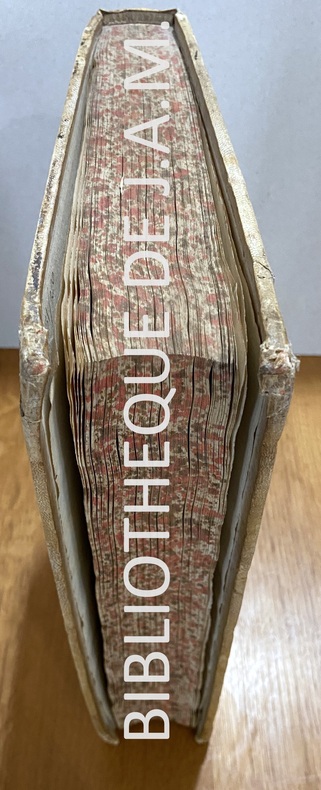
1558118122Lyon, N. Edoard 1558 In-4 32 x 21,5 cm. Reliure de l’époque veau havane, dos à nerfs encadrés de petits fers dorés, pièce de titre maroquin havane, [24]-718-[62] pp., bandeaux, lettrines, table des chapitres, table des principales matières. Manque page de titre, mouillures angulaires.
1518100733<p> Small broadside about 6 x 8 1/2 printed on one side about ten partial lines of text including title Proclamation!. Minor toning slight creasing a little uneven small margin on the left side a couple of minor nicks; overall very good. While Kentucky may have been neutral at the start of the war after the Confederates invaded the state they turned toward the Union. This small broadside reminds people they needed to register with the "home guard." It also reminds people that failure to register will result in being disarmed. This order was passed under the threat of an impending invasion of Kentucky by General Braxton Bragg's Army of Tennessee. The broadside is signed in print by Major P. G. Bracht. </p> Observer and Reporter Power Press Print
1518100733<p> Small broadside about 6 x 8 1/2 printed on one side about ten partial lines of text including title Proclamation!. Minor toning slight creasing a little uneven small margin on the left side a couple of minor nicks; overall very good. While Kentucky may have been neutral at the start of the war after the Confederates invaded the state they turned toward the Union. This small broadside reminds people they needed to register with the "home guard." It also reminds people that failure to register will result in being disarmed. This order was passed under the threat of an impending invasion of Kentucky by General Braxton Bragg's Army of Tennessee. The broadside is signed in print by Major P. G. Bracht. </p> Observer and Reporter Power Press Print books
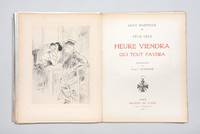
1516140915Paris: Maison du Livre 1915-16. Rare complete and in such good condition First edition first printing one of 100 on Japon paper this copy unnumbered. This illustrated collection of poems from the First World War was sold for the benefit of artists and craftsmen of the book industry who were wounded in that war. The contributing authors include Émile Verhaeren for Crime allemand Léon Bloy for Nous ne sommes pas en état de guerre Robert de Montesquiou for Nouvelles offrandes blessées and Marcel Boulenger for La belle santé. Folio in 12 parts. 12 engraved frontispieces after various artists including Théophile-Alexandre Steinlen Louis Legrand and Henri Gervex and a loosely inserted engraving after Carlos Schwabe titled "In Memoriam" and left blank to "receive the name of a beloved departed" title pages printed in red and black. Each part in its original colour card wrappers titles in black on colour backgrounds within decorative frames of claws and German spiked helmet untrimmed; with gilt-printed pictorial bifolio collective title page. Housed in custom cloth-backed blue card chemise. Ink stamp from a Rheims printer to front of chemise. light toning to collective title the wrappers otherwise remarkably bright unfaded and fresh internally clean; a near-fine set. hardcover
1539YRG-405In-12 plein vélin, dos lisse 582 pages, lettrines, fin de paragraphe en pyramide inversé, quelque rousseurs éparses, ainsi de des surlignages ancien et des annotation essentiellement dans le livre des macchabées reliure postérieur.
1539006744Lyon Steph Dolet 1539 petit In-folio cuir Bon
1509Pharsale-Lucain-1509Édition rare et authentique de la Pharsale de Lucain, en format in folio, reliée en plein vélin blanc d’époque. Dos à 5 nerfs, reliure Janséniste, titré à la main au dos. Toutes tranches mouchetées, très frais. Petit trou d'envol au mors du plat supérieur arrière, trois dernières pages fendues en bas de marge, ainsi qu'un petit trou dans la marge. Rousseurs en marge sur le dernier cahier. Texte sur deux colonnes, lettrines.
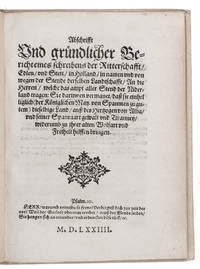
157417001Germany 1574. Modern boards. 4to. With a woodcut arabesque ornament on the title-page woodcut interlaced tailpiece at the end and 1 woodcut gothic decorated initial. Set in fraktur types with incidental schwabacher. Rare second or third edition of the German translation of an anti-Alva anti-Spain pamphlet written by the nobility of Holland and representatives of its cities addressed to the States in Dutch Staten the provincial governments of and all magistrates in the seventeen provinces of the Low Countries promulgated at Delft on 12 September 1573 as noted at the end of the text but not printed even in the original Dutch before 2 October 1573 when William the Silent Prince of Orange wrote to his brothers that the pamphlet was being printed Groen van Prinsteren. That is just before Alva was dismissed on 19 October and left the country on 18 December 1573. The text was first published in Dutch: Delft Aelbrecht Hendricksz. October 1573 TB 1289 Knuttel 210 and soon after: Dordrecht Jan Canin 1573 TB 1290 Knuttel 211 both under the title: Copie eens Sendtbriefs der Ridderschap Edelen ende Steden van Hollandt aen die Staten vanden Landen van Herwaerts overe hough it has sometimes been supposed it was printed in Delft it seems more likely to have been printed in Germany so that it does not appear in Valkema Blouw Typographia Batava or the various pamphlet catalogues. There appears to be only one copy in the Netherlands at Utrecht University Library.Blind stamp on the title-page. Apart from some browning a very good copy of an important but little-known pamphlet.l USTC 608308 3 copies; VD16 N1634 same 3 copies; cf. N1632-33; WorldCat 257783005 630546807 837235844 730242093 6 copies including the same 3; 1130127579 links to images of an Utrecht UL copy; cf. Groen van Prinsteren Archives 4 p. 215 1573 Dutch ed.; Knuttel 212 1573 German ed. Picarta 1573 German ed.; TB 1289-1290 1573 Dutch eds.; Wagenaar Vaderlandsche historie 6 pp. 452-453 Dutch ed. hardcover
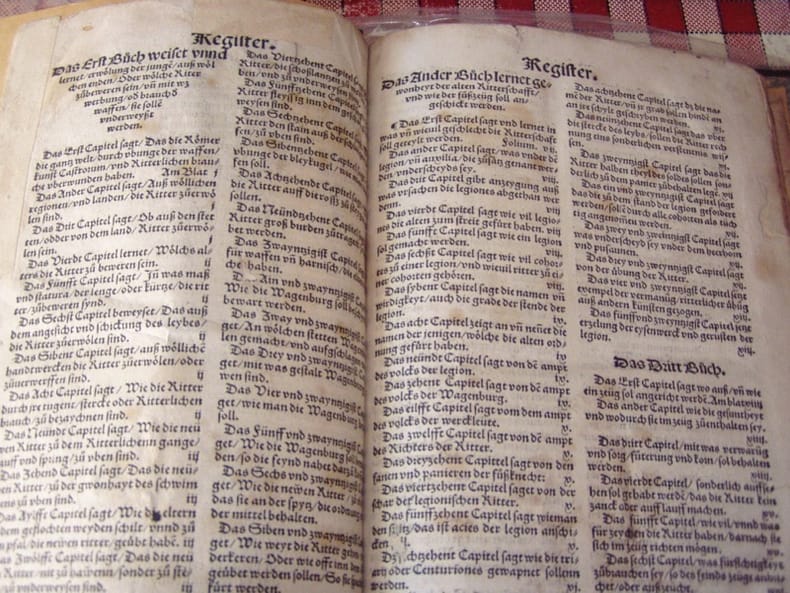
1534278361534 Heinrich Stainer?, Augsbourg Augspurg, 1534 Folio; pleine toile posterieure ( fin XIXE s)- [295 x 210 mm], 34 Pages de texte + 121 illustrations ht (recto-verso) + 3 in texte (gravures sur bois) are issue (250 x 175 mm) illustrating Vegetius’ treaty. Diving suit, bathyscaph and inventive war machines. A very rare series of 121 woodcuts of very nice craftsmanship due to Hans Knapp and M. Scharzenberg.A superb series, very rare, defauts ; page de titre, frontispice; 2 pages de texte de la table et 2 feuillets d'illustrations manquants ,derniére planche dechirée mais restaurable.Very rare,dans l'etat.Il faut 129 planches ht ?-: [4], XXX, [66] Blatter : zahlreiche Illustrationen ; 2It is around the years 1511- that Hans Knapp printed this series in Erfurt.In 1511, he edited a German version of Vegetius’ text illustrated with 121 full-page woodcuts. The illustration of the 1511 German edition served as a model for the 16th century edition but without the 74 extra woodcuts (1512). Of beautiful craftsmanship, this is a wonderful display of the art of war at the beginning of the 16th century. The soldiers are represented in action, with their armors and machines of war.The lively scenes, full of picturesque details, are for the most part due to Hans Knapp himself, whereas some are signed with the monograms PVM et MS (Melchior Scharzenberg). The most surprising engravings are dedicated to contemporary diving equipment: diving suits, underwater fishing, underwater combat, waterproof boots, ancestor of the bathyscaph. On two very intriguing figures, we can see the use of flint and the first version of an inflatable mattress.
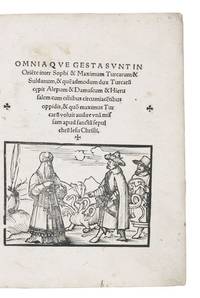
1526000453<p>Rare German Anti-Ottoman Propaganda Pamphlet on the Defense of Christendom<br />Germany 1526.</p><p>12mo. One title leaf and 17 ff. 36 pp. Text in early New High German Frühneuhochdeutsch. Nineteenth-century marbled boards. Very Good. Ex-library with two small marginal stamps.</p><p>Extremely rare sixteenth-century political and military propaganda tract directed against the Ottoman Empire printed at the height of Ottoman expansion into Central Europe following the Battle of Mohács 1526. No printer or place stated.</p><p>According to Carl Göllner Turcica: Die europäischen Türkendrucke des XVI. Jahrhunderts only one copy is recorded dated 1526 VD 16 no. 1881 underscoring the exceptional rarity of this work.</p><p>The pamphlet addresses the urgent question of how the Holy Roman Empire Deutsches Reich should organize its defense against the Ottomans. While it discusses military preparedness and strategic resistance to the Turks the core focus of the text lies in the economic and social burden of war specifically:</p><p>How the costs of military defense should be financed<br />The responsibility of the Christian Church and the Vatican<br />Contributions expected from the German territorial states<br />The allocation of financial obligations among different social classes within German society<br />The work reflects contemporary anxieties surrounding the Ottoman threat and provides valuable insight into early modern fiscal-military thought confessional politics and the rhetoric of defending Christendom against Islam. It is an important source for the study of Reformation-era political discourse anti-Ottoman propaganda and the social history of warfare in sixteenth-century Europe.</p><p>A remarkably scarce survival of early German political printing concerning the Ottoman question.</p> hardcover
157128345Nuremberg 1571. Engraving printed on two sheets of laid paper joined. Engraver's monogram at the lower left. Early manuscript caption in English in the lower margin. Plate mark: 11 x 16 inches. Sheet size: 14 5/8 x 18 3/8 inches. Very rare German news-sheet map depicting the Turkish fleet invasion of Cyprus in 1570.<br/> <br/> Exceptionally scarce engraved German broadside map depicting the Ottoman fleet sailing to Venetian-controlled Cyprus in 1570. The early English manuscript caption in ink just below image reads: "The representation of the Turkish Navall Army in ye year 1570 going forth to meet the Venetian fleet." Cyprus then under Venetian rule was a strategic point for controlling shipping and trade in the Eastern Mediterranean. The Ottomans ruled by Sultan Selim II had long desired the island. Following a series of warnings and demands the Ottoman fleet commanded by Müezzinzade Ali Pasha and Lala Mustafa Pasha sailed for Cyprus in late June 1570. Depicted here the Turkish fleet was composed of an estimated 350-400 ships and upwards of 100000 men. Following sieges and massacres at Nicosia Kyrenia and Famagusta the island was taken by August 1571. Although the invasion was long-heralded the Venetian fleet failed to prevent the invasion or the subsequent fall of Cyprus to the Turks. However they subsequently raised the support of the "Holy League" of the Catholic maritime states in the Mediterranean and defeated the Ottoman fleet at the Battle of Lepanto in October 1571 off the western coast of Greece. The victory of the Holy League prevented the Ottoman Empire expanding further along the European side of the Mediterranean though did not end their possession of Cyprus. Jenichen who signed the map with his monogram 'BI' was the leading German publisher of news-sheet maps. Jenichen and compatriot Matthias Zündt took particular interest in the conflict and produced views and maps of it that equaled and surpassed those of their Italian counterparts. Given their ephemeral nature all are rare and desirable. We can locate only one other example of this engraving appearing at auction in recent times Sotheby's London 29 April 2014 lot 157 £60000.<br/> <br/> Hollstein XL B 128; G.K. Nagler Die Monogrammisten v. 1 p. 818-819; Andresen II Nr. 276; Drugulin II 364; s.a. Meurer Jenichen S. 50. unknown
1518G4TESVVUF9FDBasel: Pamphilus Gengenbach 1518. 19th-century pink wrappers. 4to. With woodcut illustration on title-page. Rare 16th-century news pamphlet on the Ottoman-Mamluk War 1516-1517. The booklet relates the events from June 1516 to July 1517 followed by an account of Sultan Selim's visit to Jerusalem. During the Ottoma-Mamluk war the Ottoman Sultan Selim I known as "the Grim" conquered Syria and defeated the Mamluk Sultan in the Battle of Ridaniya. He subsequently captured and sacked Cairo thereby placing the holy cities Mecca and Medina under Ottoman rule which marked the beginning of Ottoman power in Arabia.With two bookplates some browning otherwise in very good condition.l Göllner 115; USTC 679549; VD 16 O 738. Pamphilus Gengenbach, unknown
157128345Nuremberg 1571. Engraving printed on two sheets of laid paper joined. Engraver's monogram at the lower left. Early manuscript caption in English in the lower margin. Plate mark: 11 x 16 inches. Sheet size: 14 5/8 x 18 3/8 inches. Tear extending from the right margin closed with small void in excellent facsimile small worm hole within the image. Very rare German news-sheet map depicting the Turkish fleet invasion of Cyprus in 1570.<br/> <br/>Exceptionally scarce engraved German broadside map depicting the Ottoman fleet sailing to Venetian-controlled Cyprus in 1570. The early English manuscript caption in ink just below image reads: "The representation of the Turkish Navall Army in ye year 1570 going forth to meet the Venetian fleet." Cyprus then under Venetian rule was a strategic point for controlling shipping and trade in the Eastern Mediterranean. The Ottomans ruled by Sultan Selim II had long desired the island. Following a series of warnings and demands the Ottoman fleet commanded by Müezzinzade Ali Pasha and Lala Mustafa Pasha sailed for Cyprus in late June 1570. Depicted here the Turkish fleet was composed of an estimated 350-400 ships and upwards of 100000 men. Following sieges and massacres at Nicosia Kyrenia and Famagusta the island was taken by August 1571. Although the invasion was long-heralded the Venetian fleet failed to prevent the invasion or the subsequent fall of Cyprus to the Turks. However they subsequently raised the support of the "Holy League" of the Catholic maritime states in the Mediterranean and defeated the Ottoman fleet at the Battle of Lepanto in October 1571 off the western coast of Greece. The victory of the Holy League prevented the Ottoman Empire expanding further along the European side of the Mediterranean though did not end their possession of Cyprus. Jenichen who signed the map with his monogram 'BI' was the leading German publisher of news-sheet maps. Jenichen and compatriot Matthias Zündt took particular interest in the conflict and produced views and maps of it that equaled and surpassed those of their Italian counterparts. Given their ephemeral nature all are rare and desirable. We can locate only one other example of this engraving appearing at auction in recent times Sotheby's London 29 April 2014 lot 157 £60000.<br/> <br/>Hollstein XL B 128; G.K. Nagler Die Monogrammisten v. 1 p. 818-819; Andresen II Nr. 276; Drugulin II 364; s.a. Meurer Jenichen S. 50. unknown books