2 260 résultats
189029191Chicago 1890. Oblong folio. 10 3/4 x 13 inches. 152 albumen photographs most 7 x 9 inches mounted recto and verso of each leaf within the album. Images captioned in manuscript on the mount below the image many signed in white ink or in the negative by Taylor. Expertly bound to style in half dark purple morocco over period cloth covered boards spine lettered in gilt marbled endpapers<br/> <br/>A remarkable album of early Chicago photography by John W. Taylor: a significant photographic record of Chicago in the late 19th century.<br/> <br/>A major photographic record of the city of Chicago and its architecture in the late 19th century almost entirely the work of the significant photographer John W. Taylor with his imprint in the negative. Taylor was a bookseller and stationer before advertising himself as a commercial photographer in the late 1880s. He concentrated his work on Chicago-area architecture and city infrastructure. Today he is recognized as a pioneering photographer of architecture working in Chicago at the very beginning of the skyscraper era. This superb photograph album presents a fairly comprehensive view of Chicago's architecture and life during one of the city's most interesting and vibrant periods from the highest of the skyscrapers to the interiors of pig pens in the stockyards with numerous residences parks lush interiors the 1893 World's Fair and more in-between. Taylor's importance as one of the earliest significant architectural photographers is addressed in Peter Bacon Hales' Silver Cities: Photographing American Urbanization 1839-1939: "Photographers of the older generation managed to retain their identities even as they adjusted to their more prosaic role as visual adjuncts to the architects who designed the buildings they photographed. J.W. Taylor of Chicago for example made an extensive survey of the "modern" buildings of Chicago and its environs many of which traveled throughout the globe as architects and engineers converged on the city in the later 1800s and beyond to see the miracle of the Chicago style of building. Taylor's pictures went as far as Melbourne Australia in the collection of Australian architect E.G. Kilburn who made his pilgrimage to the architects' mecca in 1889. Kilburn stared sketched and took notes; then he brought back photographs by Taylor of everything from the Pullman company town to the Palmer House." Chicago has been an especially important architectural center since the period represented in this collection. After the Great Chicago Fire of 1871 destroyed most of the buildings in the downtown area a special class of architects and engineers flocked to the city resulting in an architectural boom unequaled in the history of 19th century urban development. Hallowed names such as Louis Sullivan Dankmar Adler John M. Van Osdel Daniel Burnham William W. Boyington William LeBaron Jenney John Wellborn Root William Holabird Martin Roche Edward Baumann Harris W. Huel Solon Spencer Beman and Clinton J. Warren stamped their unique architectural character on the Chicago landscape. Each of these architects is amply represented in the photographs contained herein. There is even one photograph of the magnificent lobby of the Rookery Building considered the grandest lobby in Chicago at the time. This view is especially interesting to architectural historians because this interior was remodeled a short time later in 1905 by Adler & Sullivan's former head draftsman Frank Lloyd Wright. The late 19th century was also a transitional time in building construction when architects were beginning to leave behind cast iron frames and experiment with steel-frame construction and large areas of plate glass especially in the "Commercial Style" made famous by Sullivan and others in the Chicago School. As a result some of the earliest modern skyscrapers are found in Chicago. A general summary of the photographs in the album is as follows: forty-two buildings including the Masonic Temple the tallest skyscraper in the world at the time the Woman's Temple the Rookery Building the Chamber of Commerce the Monadnock Building the Northern Hotel the Home Insurance Building the Tacoma Building the Caxton Building the Pullman Building the Oakland Hotel the Grand Pacific Hotel Palmer House the Auditorium Building Marshall Field's the Lester Building the Hotel Metropole Libby Prison the New Regiment Armory depots and churches; seven downtown street scenes; seventeen residential streets including Lake Shore Dr. and Michigan Ave. and residences of prominent citizens including Potter Palmer and Lambert Tree; twenty parks pavilions and recreation scenes; three of Grant Monument and its unveiling; ten Lincoln Park scenes some with animals; three of Garfield Park; ten featuring World's Fair building construction; nine views of the October 1892 World's Fair dedication showing ceremonies and a large parade; two scenes of boating; twelve views of stockyards and meat processing six exterior and interior views of an auditorium; eight interiors including Palmer House and a bank; and three scenes of horse racing at Washington Park. Taylor's photographs reside in the collections of the Art Institute of Chicago fifty-six images and the Chicago History Museum 150 images. The subject matter of those collections and the present work overlap significantly testament to the prodigious nature of Taylor's output. For example this collection has a significant number of images related to the World's Columbian Exposition a.k.a. the Chicago World's Fair of 1893; the Chicago History Museum collection contains no images from this monumental event in Chicago's history. A truly remarkable record of Chicago architecture by a significant photographer. unknown books
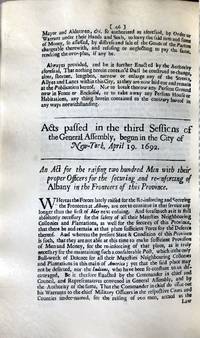
18943187New York: Theodore Low de Vinne for The Grolier Club 1894. Printed on vellum. Folio 285 x 185 mm. 6 leaves clxiii 1; 4 84 4 4 6 11 pp. 1 leaf. 2 blank leaves at front and 4 at back. Title with Grolier Club device three engraved vignettes by Max Rosenthal in the first part Fowler's introduction unsigned lithograph on a separate leaf at the end of the introduction included in the pagination showing William Bradford's tombstone woodcut or linocut ornamental initials final leaf with De Vinne press device. Bound in black morocco t.e.g. others untrimmed by Denis Gouey blind-stamped signature on lower pastedown. Provenance: personal copy of the printer Theodor Low De Vinne bookplate; Bernard Breslauer inserted collation notes on The Ritz London stationery and carbon copy of a letter sent by him to Decherd Turner July 19 1997 plus a clipping from the bookseller's catalogue from which he purchased the book; sale Christie's New York part 3 27-28 June 2005 lot 1134. A fine association copy: the exemplaire de tête printed on vellum retained by the printer for his private collection from a total edition of 315 copies of which 312 copies on hand-made paper and three copies on vellum of a facsimile of the founding laws of the colony of New York. The first part consists of a long historical introduction by Robert Ludlow Fowler. The Facsimile was made from the Lenox Library copy as explained in a two-page note from the Publication Committee pp. 172-173. The book was published by the Grolier Club on the occasion of its tenth anniversary and the other two vellum copies were auctioned off at the tenth annual members' meeting on 21 February 1894. A copy of the Grolier Club invitation to that meeting as well as the 4-page illustrated prospectus for the book both of which were printed by de Vinne are loosely inserted along with the aforementioned documents from Bernard Breslauer. Mr. Breslauer collected books on vellum and in the inserted 1997 letter to Decherd Turner he announced his acquisition of this his fifth Americanum on vellum.Theodore Low de Vinne was one of the nine founding members of the Grolier Club and he printed most of its publications until his death. "His encyclopedic understanding of the craft his advancement of its technology and design his appreciation of its history his business leadership and his many writings earned him among his contemporaries the designation `Dean of American Printers'" APHA website The De Vinne Centennial Feb. 16. 2014. (Theodore Low de Vinne for) The Grolier Club hardcover books
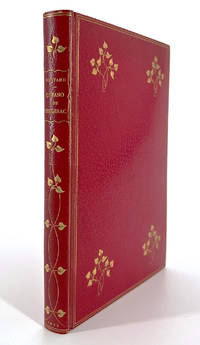
1898570Paris: Librairie Charpentier et Fasquelle 1898. First Edition. Fine. 12mo 7 3/4 x 5 1/4 in.192 x 133 mm 225 pp. 1898 Riviere and Son binding in red crushed morocco Art Nouveau leaf-spray devices gilt to spine and covers gilt fillets on turn-ins and binder's mark which reads "R. Riviere & Son for L.S. Montagu 1898" t.e.g others untrimmed marbled endpapers original wrappers bound in at rear. A beautifully-bound first edition of the classic French play about the large-nosed Cyrano obliged to help another more handsome man woo the beautiful Roxanne who Cyrano already loves. Rostand's play stages the tragic complicity between two halves of man puts into question the existence of justice or happy love in this world but ends with the evidence of hope: in the guise of Christian it is the soul of Cyrano that Roxanne loved. This drama in five acts saw its first production on December 27th 1897 with the leading role played by Constant Coquelin who went on to play the role 410 times and toured the play in North America. The dedication of this book reads " C'est à l'âme de CYRANO que je voulais dédier ce poème. Mais puisqu'elle a passé en vous COQUELIN c'est à cous que le dédie. E. R." I wanted to dedicate this poem to the soul of CYRANO. Since that soul has passed through you COQUELIN I dedicated to you. E.R. Rostand was elected to the prestigious Académie Française the following year making him the youngest member to date at age 31. <br /> Cyrano has been performed all over the world and has seen many cinematic adaptations including the 1950 production starring Jose Ferrer winner of the 1950 Oscar for the Best Actor. <br /> <br /> The binder's mark indicates that this copy prepared in London specifically for the library of L. S. Monatagu Louis Samuel 2nd Baron Sawythling: 1869-1927 a prominent member of the British Jewish community a financier and political activist. Librairie Charpentier et Fasquelle unknown
1900164421Berlin, Hirschwald, 1852-1900. M. 53 Taf., zahlr Textabb. u. graph. Darst. Einheitl. Hlwd.-Doppelbde. m. goldgepr. Rtit. u. marmor. Decken. Sign. a. Innendeckel. St. a. Tit. Fehlen: d. jeweils dazugehörigen Supplementbde.zu Folge 3.
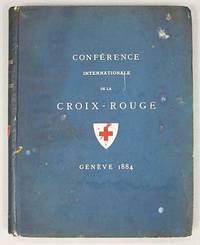
188541347Genève: Au Siège Comité International de la Croix-Rouge 1885. 1st edition. PRESENTATION copy INSCRIBED from Barton "To my friend / Dr. Joseph Gardner / with sentiments of esteem and cordial regard. / Which words cannot express. / Clara Barton. / Washington D. C March 15 1889." Further a 2 line quote by Barton underneath "As the best of all fortune has come squiggly underline in the past / My heart only prays that the present may last." concluded with her "C. B.". Original publisher's blue cloth binding with silver stamped lettering to spine & front board accompanied by an impressed silver & red Red Cross logo. Housed in a custom chemise & 1/4 leather slipcase with marbled paper boards. Volume shows wear & evidence of dampstaining. Rear hinge paper starting at bottom. An About VG copy. Chemise & slipcase - Fine. xix 1 blank 444 pp. Text in French. 4to. <br/><br/>Scarce Red-Cross volume of which OCLC records 5 institutional holdings none in the US inscribed to Dr Joseph Gardner a prominent Indiana citizen and early friend/benefactor of Clara Barton as well as patron of the recently-formed American Red Cross founded in 1881 and of which Barton was president when this volume was inscribed. <br /> <br />Barton had a long-standing friendship with the Gardners with her one-time sectetary Enola Lee becoming the 3rd Mrs. Joseph Gardner. <br /> <br />In 1893 Dr. Gardner donated a large plot of his land in Indiana to the American Red Cross which Barton envisioned becoming a central-states headquarters/warehouse for the organization. All was to come to naught however as the plot was never developed & ulitmately sold to settle back taxes et al. Such was to later cause Barton problems however as she was accused of financial malfeasance which ultimately contributed to her 1904 retirement from the Red Cross. Cf. Cavinder MORE AMAZING TALES OF INDIANA pp. 79 - 80. <br /> <br />Early inscribed Barton material is somewhat uncommon in the trade. We are pleased to be able to offer this volume documenting the friendship between these two civic-oriented individuals. Au Siège Comité International de la Croix-Rouge hardcover books
1835604644Leipzig, Dyk, 1774-1835. M. 1 Taf. 2 Arten von uniformen Ppbdn. d. Zt., Reg. in 2 versch. Ppbdn. d. Zt. u. 1 Hldrbd. Teilw. St. a. Tit. Stellenw. braunfl. Bd. 23 hint. Einbd.-Decke beschäd. Bd. 28 einige S. wasserrandig. Bd. 31 hint. Einbd. berieben. Einige Bde. bestoßen. Fehlt: Reg. zu Bd. 19-24 u. 27.
1844604643Leipzig u. Prag, Hirschfeld, 1844-79. M. mehr. lith. Taf. Versch. geb. Kanten u. Ecken z. T. bestoßen, einige Bde. stark wassergeschäd. od. m. gering. Beschäd.; 105/108 ohne Rücken. Teilw. St. a. Tit. Es fehlen: Bd. 20 Forum Nr. 2-3; 92 Inh.
1838604664Salzburg u. Innsbruck, Mayr, 1790-1838. Hldr., Pp. d. Zt od. OBr. Meist m. Bibl.-St. S. teilw. braunfl. Einbde häufig beschäd. u. bestoßen. 1811 Bd. 2 vord. Deckel u. Tit. lose, Rücken fehlt. 1822 Bd. 4 ohne Deckel, Rücken stark beschäd., Vorsatz u. Tit. beschäd. 1790 Bd. 1 bis S. 22 u. ab S. 300 m. Wurmfraß. 1838 Bd. 1 fehlen Extrabeilage Nr. 26 u. Bd. 2 fehlen Extrabeilagen 36-44. Bd. 3 fehlen Nr. 71-78 u. im Ergänzungsbd. 40 fehlen Nr. 1028-1033.
1848637594Nürnberg, Schrag, 1818-1848. Kl.-8°. M. insges. 87 Taf. u. mehr. Tab. u. Textill. 94 einheitl. Ppbde. d. Zt. m. goldgepr. u. meist rotem Rsch. Einbde. angestaubt, Ecken bestoßen u. Kanten berieben. Wenige Rücken m. Fehlst. u. wenige Rsch. verblasst. Ehemal. Bibliotheksex. m. St. a. Tit. od. Vorsatz. Zahlr. Bde. haben Bleistiftanstreich. Papier (so auch Taf.) häufig braun- u. teilw. stark braunfl. Bd. 2 d. 1. Reihe ist 2. Aufl. (1828), alle anderen Bde. sind 1. Aufl. Es fehlen: 1. Reihe: Bd. 3, 7, 16-17. 2. Reihe: Bd. 10, 33-34, 47-48.
1842414595Stuttgart u. Leipzig, Ebner & Seubert u. Wiegand, 1842-78. M. zahlr. lith. Taf., zahlr. Ill., Tab. u. Curven (diese auch teilw. a. Taf.). 3 Taf. fehlen. Jg. 1-6 in einheitl. Ppbdn. d. Zt., Jg. 7, 9, 11 u.13 in einheitl. Hlwdbdn., sonst abweich. in abweich. Hlwdbd. N.F. 1- 3 in Hldr. Einbde. teils beschabt. Die Bde. d. Forts. in einheitl. Hlwdbdn. m. goldgepr. Rtit. Rücken teilw. etwas beschäd. Rücken u. Vorderdeckel von Jg. 19 fehlen. M. mehr. St. Fast durchgängig (teils großfläch.) m. Wasserfl. od. Stockfl. In Jg. 14 d. ersten Reihe fehlen d. S. 1-172.
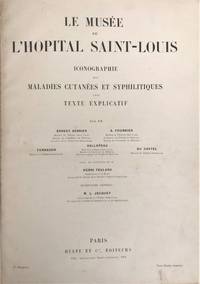
1895M13445Paris:: Rueff et Cie 1895-97. 1895. Folio. 2 iv 346 pp. 50 chromolithographic plates 23 engravings 18 photogravures. Contemporary half crimson gilt-stamped morocco marbled boards raised bands. Very good. RARE. First edition. A MASTERPIECE OF PHOTO-CHROMOLITHOGRAPHY. "The authors of this book were senior doctors at the Hôpital Saint-Louis. Besnier presided over the 4th International Congress of Dermatologists held in Paris in 1900. The museum had been founded by Devergie in 1865. During his 25 year long career Devergie commissioned water colour paintings of the major skin diseases for use in his lectures. It was not long before these were supplemented by photographs and moulages. Between 1867 and 1894 the Italian moulage artist M. Baretta 1834-1925 produced 1800 such models. He devised the internal colouring technique. This is a technique whereby the colours are applied in between the layers of wax. The effect is one of transparency and greater similarity to the colour of human skin Zanca and Tagliavini. The various separate lesions have been portrayed exceptionally well. Less attention was paid to facial expressions. The museum now has a collection of 4667 moulages at its disposal Dahm. The finest among them were reproduced in this book. The printing technique used was photochromy." – Franz Ehring Skin Diseases: 5 Centuries of Scientific Illustration. pp. 176-177. "Ernest Besnier was born in Honfleur in 1831. He studied in Paris and was a celebrated pupil of Hardy and Bazin. Having been graduated in 1857 he turned his attention exclusively to dermatology and by 1872 had become a chief at l'Hôpital Saint Louis." "Besnier was active in all phases of dermatology. Although essentially French in his diathetic thinking he was responsible for translating Kaposi's text into French with masterful annotations by himself. His monograph on psoriasis his work on atopic dermatitis. and his work on eczema entitle him to his place as the leading French dermatologist of his time." - Shelley & Crissey Classics in Clinical Dermatology p. 246. "Ernest Besnier was the unquestioned master of French dermatology towards the end of the 19th century. When he took over the leadership of the Parisian dermatology clinic in 1873 French dermatology had lost its premier position and fallen behind the Vienna school not only in regards to research and teaching but also in terms of space and equipment. Besnier reformed French dermatology incorporating many advances from Vienna such as establishing laboratories for bacteriology mycology and histopathology and encouraging basic research. As he retired just before the turn of the century French dermatology had closed the gap." "Ernest Henri Besnier was born on 21 April 1831 in Honfleur a small village in the Normandy. Since his father was a customs official the family moved frequently including stays in Marseille and Orleans. Besnier studied medicine in Paris and advanced to Interne des Hôpitaux in 1853. His teachers included Ernest Bazin Philippe Boyer and Henri-Louis Royer whose niece Besnier married a few years later. In 1857 his doctoral thesis on the diagnosis and therapy of ileus was accepted. He continued to address mainly internal medicine themes. Named Medecin des Hôpitaux in 1863 he published between 1864 and 1872 studies ranging from cholera to diseases of the spleen to rheumatic diseases to gall stones becoming one of the best known internists in France. As signs of recognition he was elected Vice-President of the Societe anatomique in 1861 and Secretary-General of the Societe Medicale des hôpitaux in 1864. He served as a military physician in the Franco-Prussian War of 1870/1871 and was awarded the highest military honor being named a Chevalier de la Legion d'Honneur." "When Bazin retired as head of dermatology clinic at Hôpital Saint-Louis at the end of 1872 Besnier was the highest ranking faculty member and entitled to the position. Although no one dreamed he would desert internal medicine for dermatology he accepted the challenge. With little experience but great energy he started his new job on 1 January 1873. Within a few months he had read the entire dermatologic literature concentrating on the works of Bazin and Erasmus Wilson; he profited greatly from the immense clinical experience of his colleague Charles Lailler who tactfully assumed the role of the old experienced tutor. Besnier also benefited from working together with Adrien Doyon the founder and editor of the Annales de Dermatologie et de Syphiligraphie; Doyen made him aware of the great advances in dermatology in Germany and Austria. With Besnier' encouragement Doyen translated into French Moriz Kaposi's textbook from 1880 Pathologie und Therapie der Hautkrankheiten. Besnier employed his by now encyclopedic knowledge of the dermatologic literature to provide commentaries which enhanced Doyen's translation. The French edition appeared just one year later 1881 and dominated the training of dermatologists in France for the next two decades and helped to reduce the differences between the French and German-speaking schools of dermatology. In 1881 Besnier also became editor of the Annales de Dermatologie et de Syphiligraphie and was named a member of the medical academy." "Kaposi's Clinic in Vienna was the model of a modern dermatology clinic for Besnier. In 1882 he asked Doyen for a detailed report over the Viennese clinic which was published in the Annales de Dermatologie et de Syphiligraphie and including information not only about the teaching program and costs of inpatient care but also covered such details as patient clothing the size of hospital rooms and how instruction signs were posted on the walls. When compared to Vienna the conditions in Hôpital Saint-Louis were primitive. Besnier described his outpatient clinic as a sleazy ramshackle hut completely unworthy of a great capital city. He demanded the construction of new inpatient wards and emphasized the importance of a histopathology laboratory. He also established the first laboratory for bacteriology and mycology at Hôpital Saint-Louis. Besnier demanded a change from purely descriptive dermatology turned against the nosologic speculations of his predecessor Bazin which he felt had lost validity through the groundbreaking work of Pasteur and demanded the incorporation of knowledge from bacteriology and histopathology into dermatology. In addition he tried to get dermatology incorporated into general medical education so that medical students could not graduate without some exposure to dermatology – that had not been the case previously." "Besnier's daily activities were highly regimented. He arrived every morning at 8:45; once a week he made inpatient rounds while the other days were devoted to specialty clinics. After each patient contact Besnier washed his hands and cleaned under his fingernails. He was always carefully dressed and reserved. his students including Louis Brocq Raymond Sabouraud Lucien Jacquet 1860-1914 George Thibierge Felix Balzer 1849-1929 and Emile Leredde 1866-1926 consider him the ideal academic teacher. He stimulated them to produce many papers. His lectures were clear and contained a great deal of clinical and histopathological information embedded in a broad theoretical background. They attracted a wide range of listeners ranging from pharmacists and medical students to guest physicians from abroad. in 1888 Besnier started weekly meetings on Thursday for all physicians working at Hôpital Saint-Louis during which all the interesting cases of the week were discussed. Out of this meeting evolved in 1889 the Societe francaise de Dermatologie et de Syphiligraphie with Besnier as a founding father. He served initially as Vice-President and then became President in 1892." "Besnier published very little. In 1879 he described the diagnostic possibilities made available by histologic examination and coined the term biopsy. In 1889 he described the diagnostic possibilities made available by histologic examination and coined the term biopsy. In 1889 he described lupus pernio which was recognized a few years later as a manifestation of sarcoidosis and in 1892 he provided the first precise description of atopicdermatitis. In order to properly describe this illness Besnier stated that one had to break away from the tyranny of Willan's and consider not only the primary lesions but all the findings. He stated that the central symptom is pruritus intensive pruritus waxing and waning often worse in the evening with seasonal remissions and exacerbations. The lesion morphology in contrast had little meaning; instead he pointed out that one absolute fundamental characteristic was that none of the lesions associated with or triggered by the illness were specific. Besnier did not use the terms lichen or eczema employing instead lichenification and eczematization to emphasize that the skin changes were not specific but instead banal lesions which resulted from itching and scratching. The disease often started in early childhood and took a variable but chronic course. Sometimes the disease left the skin and presented then primarily as emphysema bronchitis asthma hay fever or less often gastrointestinal problems. Since he felt a congenital tendency towards pruritus existed which then could appear in varying degrees of severity Besnier designated the disease as Prurigo diathesique." – Loser Plewig and Burgdorf Pantheon of Dermatology pp. 89-93. Franz Ehring Skin Diseases: 5 Centuries of Scientific Illustration. pp. 176-177; Loser Plewig and Burgdorf Pantheon of Dermatology pp. 89-93; Shelley & Crissey Classics in Clinical Dermatology p. 246. Rueff et Cie, 1895-97. hardcover books
1876603571Leipzig, Engelmann, 1876. 4°. M. 20 (1 farb.) lith. Taf. XVI, 382 S. Hlwd. m. goldgepr. Rtit. St. verso Tit. u. a. wenigen Textseitenrändern. Gutes u. sauberes Ex.
1868GF357931868 Paris - Cadart et Luce - 1868 - Bel album de 11 eaux-fortes toutes marges: format 31,5 x 48,5 cm - La couverture papier est effrangée mais les eaux-fortes sont intactes -
1840604713Berlin, Oemigke, 1796-1840. M. mehr. Portr. u. zahlr. (teils kol.) Taf. Pp. Jg. 2 Hldr. Einbde. berieben. Stellenw. wasserrandig od. braunfleckig. Es fehlen: Jg. 19, 20 u. 36/2 je 1 Taf.; Jg. 21, 22, 24/2, 26, 27/1, 28, 29/1, 31/1, 32, 33, 34/1, 35, 36/1 je 1 Portr.
1842187844Paris, 1830-1842. Fol. 64 (47 farb./1 als Doppeltaf.) lith. Taf. Lose in 4 Pp.-Mappen, diese in Hlwd.-Mappe m. Stoffschließbändern u. hs. Deckelbeschriftung. Vorderdeckel m. Sign. Tafeln teilw. auf Leinen aufgezogen, stellenw. gebräunt bzw. (mitunter auch stärker) stockfl. Wenige Taf. m. Anmerk. Ohne Text.
1814101246P., Adrien Le Clère, 1814-1849, 130 vol. in-8°, reliures demi-basane naturelle et cartonnages disparates, reliures frottées, rousseurs éparses sur qqs volumes, C. de bibl., état correct. Très rare
1813145283Wien, Camesina/Heubner u. Volke, 1813-17. M. 9 (7 handkolor.) Kpfr.-Taf. XX, 636; XVI, 680 S. Mod. marmor. Ppbde. unt. Verwend. alter Rsch. Mehrf. gest. Bibl.-Ex. Teils leicht stockfl. Bde. in d. Höhe leicht voneinander abweichend.
1835604776Erfurt/Weimar, 1821-1835. M. mehr. Abb., Tab. u. Taf. In 15 einheitl. Hlwdbdn. m. RTit. u. St. Abweichend Bd. 31-33 (in 1 Hldrbd. ohne Rücken). Einbde. leicht bestoßen.Seiten braunfl. u. altersgemäß nachgedunkelt. ES FEHLT: No 105 (= No. 18 v. Bd. 5).
1821627496O.O. (Landshut/ Würzburg, Thomann/ Becker), o.J. (1821-36). Gr.-Fol. 58 lith. Taf. Hldr. Einbd. berieben. Kanten bestoßen. Hint. Einbd.-Decke beschäd. Rücken u. vord. Einbd.-Decke v. Buchblock losgelöst. Schließbänder fehlen. Ohne d. Textbände!
1836174718London, Underwood, 1828-1836. M. 1 gest. Portr.) u. 33 (st. 42/davon 15 kolor.) lith. Taf. Uniforme Ppbde. d. Zt. m. Rsch. u. Rsign. Letzter Bd. abweichend. Einbde. bestoßen. Gebräunt, teils braunfl. Es fehlen: Ser. 2 Bd. 4 Nr. 87 u. Ser. 3 Bd. 2 Nr. 254-257 sowie Nr. 271 (bis Schluß?). In diesem Band S. 558-572 jeweils m. geringen Textverl.
1826219155Altenburg u. Leipzig, Literar. Comtoir u. Brockhaus, 1799-1826. 4°. In 26 einheitl. Hldrbdn., 8 Bde. abweichend geb. Teilw. St. a. Tit. 23 Rücken beschäd. bzw. bestoßen. Fehlt: Repertorium zu Jg. 1804.
188261972Cleveland Ohio 1882. Four pages approximately 350 words in part: "Advance sheets of Mr. Blaine's address reached her yesterday morning. Thronging emotions and memories made my heart stand still. It was the anniversary of the last day the Gen'l passed in our Mentor Ohio home . hopes ambitions aspirations pure & high and almost assured all swept away -- nothing left but tears." Garfield took office in March 1881 was shot in July and died a lingering death in September. Mrs. Garfield thanks Mr. Blaine for his wonderful words and his tribute to her husband's life and character. A beautiful poignant letter. Still very good. Folded for mailing some browning at folds. 9782. <br/><br/> unknown books
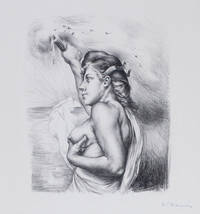
189527882n.d. ca. 1895. First Edition. Limited to an unspecified number of which this is no. 16. Original etching; sheet size approx. 60.75x45cm.; image area 28x22.5cm. Signed with limitation number in blue pencil by the artist. A Fine copy mounted in archival mat. Symbolist image by the French anarchist painter and engraver Charles Maurin. According to a previous dealer this image was produced for the anarchist newspaper Les Temps Nouveaux edited by Jean Grave. Image depicts the personification of freedom "la Marianne" shown here in profile and partially in deshabille her left hand clutching her breast while her right hand holds up a torch. unknown books
1894032468Toronto: J. Ross Robertson 1894. Book. Very Good. Cloth. 8vo - over 7¾ - 9¾" tall. 6 Volumes. Maroon and blue cloth with blind tooled decorative designs to front; gilt to front and spine. Illustrated throughout with line drawings foldout pictures and photographs diagrams maps sheet music. Vol 1: 1894 maroon cloth re-backed with most of original spine intact 561 pp. Vol 2: 1896 blue cloth 1128 pp. Vol 3: 1898 limited to 500 copies thus blue cloth 596 pp.; corners pushed and chipping to head and heel of spine. Vol 4: 1904 614 pp. Vol 5: 1908 maroon cloth free endpaper torn 589 pp. Vol 6: 1914 maroon cloth 592 pp . Generally covers lightly scuffed; some corners pushed. Insides clean and square. A very good set. J. Ross Robertson Hardcover