6 566 résultats
8vo; pp. 157; illustrazioni in b/n nel testo; legatura editoriale cartonata con titolo al dorso; sovraccoperta figurata.<BR>In ottimo stato.<BR>Prima edizione.
Publishers cloth. 8vo. 252 pages. 22 cm. First edition. With 18 black and white plates. Subtitle: On the work of Sue Ryder on behalf of displaced persons in Germany. With plates, including portraits. A biography and history of the relief work done by Sue Ryder for Displaced Persons and Holocaust Suvivors. Born in Yorkshire in 1924, Sue Ryder served with the Special Operations Executive (SOE) during the Second World War. Established by Winston Churchill in 1940, the SOE promoted and coordinated resistance activity in German occupied Europe. Her life's mission became clear after World War II. During the post-war reconstruction in Europe, she worked as a volunteer amongst displaced and stateless refugees. During this time she opened her first home, St Christopher's in Germany. It was designed as a haven for refugees, many of whom were survivors of concentration camps. On her return to England, she established the Sue Ryder Foundation with the aim to provide care where it is needed most. Sue Ryder was married for many years to war hero and fellow charity founder the late Leonard Cheshire VC, who died in 1992. Lady Ryder was made a life peer in 1978 and was a Companion of the Order of St Michael and St George in 1975. She also received the Order of the British Empire (OBE) in 1957. (Sue Ryder Foundation) Subjects: Refugees. Britain. Biographies. Ryder. Social issues. Refugees. Organizations S. I. R. World War 1939-1945. German camps and prisons. Britain. Biographies. Ryder. Social issues. Refugees. Organizations S. I. R..World War 1939-1945. German camps and prisons. Outer edges lightly soiled, light wear to cloth. Without jacket. Very good condition. (HOLO2-100-15) XX
1st edition, original cloth, 4to, xix+ 288+ (2) pages. On title page: Brzezin memorial book. Illustrations throughout. Yiddish, with English introduction. There once was a town of Jewish tailors Brzezin. From early dawn until late at night one could hear the music of the Singer sewing machines. It was the music of hard work, of intense anxiety, of a hard life, but also of noisy youth, semi-intellectuals, observant Jews, Hasidim who lived and had aspirations in the small Jewish town Brzezin. The Nazi savages extinguished this life forever, transformed it into ashes. Only a few Jews from the tailoring town Brzezin, by some miracle, remain, scattered over the entire world, individuals who were witnesses to the German cannibalism. May these words, frail in print, but inscribed not with ink but with blood, be a modest contribution to the matseve [gravestone] for my native town, Brzezin. Brzezin was one of the oldest and most popular Jewish communities in Poland. When this community was established, it carried the name Krakowek [Little Krakow]. At that time, the community extended from the Strykower highway to beyond the Jewish besoylem [cemetery] to the surrounding hills. The Polish noblewoman, Anna Lasocka, had brought the first weavers from afar into this community. Then the community developed even further and began to broaden its borders. At that time, the town already carried the name Brzezin. Jewish tailors came to Brzezin from many places, and after several generations, the town developed its own type of tailoring industry, by which it was known all over the world. A cottage industry was the main occupation here. As early as 1772, Brzezin was famous for its mass production in tailoring. Until 1914 the great Czarist Russia was flooded with the inexpensive products of Brzeziner tailors. In the years between the two world wars, the export of Brzezin industry was spread over many lands in Europe and into other parts of the world. In this, the great Jewish magaziners [owners of clothing enterprises] exporters such as Frankensztejn, Tuszynski, Sulkowicz, and others played a great role. The Jews in Brzezin did not only work, they also participated actively in the socio-political and cultural life of the town, had their representatives on the town council in town hall, and had their religious and secular educational, cultural, and social organizations. Materially, it was a life of Jewish poverty, but spiritually, socially, and culturally, it was rich. (translated from book) SUBJECT(S) : Holocaust, Jewish (1939-1945) -- Poland -- Brzeziny (Lo´dz´) ; Jews. OCLC: 19306453. Light wear on cover, some wear on spine. Good Condition Overall. (YIZ-16-6A)
1st edition, original cloth, 4to, xix+ 288+ (2) pages. Illustrations throughout. Yiddish, with English introduction. There once was a town of Jewish tailors Brzezin. From early dawn until late at night one could hear the music of the Singer sewing machines. It was the music of hard work, of intense anxiety, of a hard life, but also of noisy youth, semi-intellectuals, observant Jews, Hasidim who lived and had aspirations in the small Jewish town Brzezin. The Nazi savages extinguished this life forever, transformed it into ashes. Only a few Jews from the tailoring town Brzezin, by some miracle, remain, scattered over the entire world, individuals who were witnesses to the German cannibalism. May these words, frail in print, but inscribed not with ink but with blood, be a modest contribution to the matseve [gravestone] for my native town, Brzezin. Brzezin was one of the oldest and most popular Jewish communities in Poland. When this community was established, it carried the name Krakowek [Little Krakow]. At that time, the community extended from the Strykower highway to beyond the Jewish besoylem [cemetery] to the surrounding hills. The Polish noblewoman, Anna Lasocka, had brought the first weavers from afar into this community. Then the community developed even further and began to broaden its borders. At that time, the town already carried the name Brzezin. Jewish tailors came to Brzezin from many places, and after several generations, the town developed its own type of tailoring industry, by which it was known all over the world. A cottage industry was the main occupation here. As early as 1772, Brzezin was famous for its mass production in tailoring. Until 1914 the great Czarist Russia was flooded with the inexpensive products of Brzeziner tailors. In the years between the two world wars, the export of Brzezin industry was spread over many lands in Europe and into other parts of the world. In this, the great Jewish magaziners [owners of clothing enterprises] exporters such as Frankensztejn, Tuszynski, Sulkowicz, and others played a great role. The Jews in Brzezin did not only work, they also participated actively in the socio-political and cultural life of the town, had their representatives on the town council in town hall, and had their religious and secular educational, cultural, and social organizations. Materially, it was a life of Jewish poverty, but spiritually, socially, and culturally, it was rich. (translated from book) SUBJECT(S) : Holocaust, Jewish (1939-1945) -- Poland -- Brzeziny (Lo´dz´) ; Jews. OCLC: 19306453. Light wear on cover, Good Condition Overall. (YIZ-16-6)
Later Cloth. 8vo. 292 pages. 21 cm. First Portuguese edition. Translated from the Russian, this documentary in the form of a novel details the massacre at Babi Yar, a large ravine outside the city of Kiev where 100, 000 Jews, Gypsies, and Communists were mass murdered in 1941. Subjects: Babi Yar Massacre, Ukraine, 1941 - Fiction. War stories. Russian fiction - Translations into Portuguese. Historical fiction. Soviet Union - History - German occupation, 1941-1944 - Fiction. OCLC lists four copies worldwide (Biblio Senado Federal; Gratz Col; Univ Pittsburgh; Boston Pub Libr) . Previous owners signature on endpage; otherwise clean and fresh. Good + condition. (HOLO2-99-19)
19613054184Tübingen, Wunderlich, 1961. 387 S. Mit Abbildungen. Lwd.
2008R240120096ARMAND COLIN. 2008. In-8. Broché. Bon état, Couv. convenable, Dos satisfaisant, Intérieur frais. 155 pages - quelques photos noir et blanc hors texte - annotations/soulignements au crayon dans le texte. . . . Classification Dewey : 943.086-IIIe Riech. Hitler, 1933-1845
Stiff paper wrappers. 8vo. 77, [5], 24 pages. 25 cm. Serial Publication. The Center for Research and Studies on the History of the Second World War was founded on 13 December 1967. Its task was to take all necessary measures to collect, preserve and study documents or archives relating to the Second World War in Belgium, its antecedents, background and consequences [Moniteur Belge (Belgian law gazette) ], 10 February 1968, n° 29, p. 1259-1260) . Originally, the Center was attached to the General Archives and was placed under the direction of the Department of National Education. This issue of the Journal of the Center, Number 10, October 1980, contains the dossiers and expositions of the various committees at the Center, new additions to the Archives and Collections, Recent Publications and Conferences of the Center, A Chronicle on Resistance during the Second World War, Notes from over a dozen lectures at the Center, and a bibliography of recent publications related to Belgium in the Second World War. Includes 4 pages of photographic plates. Subjects: World War, 1939-1945 - Periodicals. World War, 1939-1945 - Belgium - Periodicals. Covers lightly soiled, with bumped outer edges. Clean and fresh. Good condition. (HOLO2-100-6)
Stiff paper wrappers. 8vo. 54, 52 pages. 25 cm. Serial publication. The Center for Research and Studies on the History of the Second World War was founded on 13 December 1967. Its task was to take all necessary measures to collect, preserve and study documents or archives relating to the Second World War in Belgium, its antecedents, background and consequences [Moniteur Belge (Belgian law gazette) ], 10 February 1968, n° 29, p. 1259-1260) . Originally, the Center was attached to the General Archives and was placed under the direction of the Department of National Education. This issue of the Journal of the Center, Number 11, December 1981, contains the dossiers and expositions of the various committees at the Center, new additions to the Archives and Collections, Recent Publications and Conferences of the Center, A brief biography of the anti-nazi Cardinal Van Roey, Notes from over a dozen lectures at the Center, and a bibliography of recent publications related to Belgium in the Second World War. Subjects: World War, 1939-1945 - Periodicals. World War, 1939-1945 - Belgium - Periodicals. Light wear to covers. Good + condition. (HOLO2-100-7)
5944413e année - N° 20-21 - 1er décembre 1936 - Revue bimensuelle publiée par le C.C. du Parti Communiste Français (S.F.I.C) - Imp. Centrale, 5, rue Erard, Paris (12e) - bimensuel - in-8 broché Sommaire : Front Populaire avant tout ! (Jacques Duclos) - Triomphe du socialisme et de la Démocratie (J. Staline) - La duperie tragique (Florimond Bonte) - Quelques problèmes du rapprochement franco-allemand (André Seigneur) - Le IIIe Reich et l'Espagne (S. Erckner) - Le Front Populaire vit ! (Fernand Fontenay) - Pour l'union de la Jeunesse laborieuse (Léonce Granjon) - Réponses au Cardinal Liénart (Arthur Ramette, Mar. Desrumeaux, Joseph Hentges) - Le pacifisme de Hitler (xxx) - Où en est l'application du Programme du Front Populaire (xxx) - ...
6074112e année - N° 3 - 1er février 1935 - Les publications Révolutionnaire. Editions du Parti Communiste français - Revue bimensuelle publiée par le C.C. du Parti Communiste Français (S.F.I.C) - Imp. Centrale, 5, rue Erard, Paris (12e) - bimensuel - in-8 broché - Avec le supplément Sommaire : Nos morts. V.-V. Kouibychev (avec un hors-texte)Pour le VIIe Congrès de l'I.C.. De la stabilisation ébranlée au deuxième cycle de révolutions et de guerres (suite et fin) - Les Sarrois ont-ils voté pour Hitler ? (J. Berlioz) - La campagne contre les ouvriers immigrés (Arthur Ramette) - La lutte revendicative et le "plan" (Gaston Monmousseau) - Le chemin historique du groupe zinoviéviste (Albert Radier) Mouvement communiste : Sur le recrutement (G. Roucaute) - Pour des procédés d'agitation toujours meilleurs (A. Seigneur) - Panorama du moisSupplément : Dossiers de l'agitateur N° 2 du 1er février 1935
5960110e année - N° 7 - 1er avril 1933 - Revue bimensuelle publiée par le C.C. du Parti Communiste Français (S.F.I.C) - Imp. Centrale, 5, rue Erard, Paris (12e) - bimensuel - in-8 broché Sommaire : La marche vers la guerre Hitler n'exterminera pas le marxisme ! (Berlioz) - Vers le front unique de la lutte (Tabier) - Les mineurs luttent (Dubois) - Sous le signe du dollard défaillant (Dupuy) Coin marxiste-léniniste : Marx et la question nationale et coloniale (Magyar)Mouvement communiste : L'activité du Parti à la campagne (Mourre)Les dossiers de l'agitateur : L'année de crise 1932 (fin) (G. Polizer) - La crise économique. 1. La France. 2. La crise mondiale (G. P.) - La S.F.I.O. et les crédits militaires (T. A.) - Panorama du mois La vie des cahiers Boîte aux lettres
5949413e année - N° 7 - 15 Avril 1936 - Revue bimensuelle publiée par le C.C. du Parti Communiste Français (S.F.I.C) - Imp. Centrale, 5, rue Erard, Paris (12e) - bimensuel - in-8 broché - 1 hors-texte Sommaire : A Ernst Thaelmann pour son 50e anniversaireC'est de la France qu'il faut parler (Jacques Duclos) - La défense du franc (Georges Politzer) - De La Rocque copie Hitler (Jean Seinforin) - L'acte d'accusation contre Thaelmann (Emile Belfort) - La vie de Fritz Heckert (Wilhelm Pieck) - Interview avec M. Chastenet - ...
1996R260192537IMP LOOS HUMBLOT. 1996. In-4. Broché. Bon état, Couv. convenable, Dos satisfaisant, Intérieur frais. 91 pages augmentées de nombreuses illustrations en noir et blanc dans et hors texte -. . . . Classification Dewey : 943.086-IIIe Riech. Hitler, 1933-1845
Original Publishers Cloth. 8vo. 314 pages. 22 cm. First American Edition. Fiction. On the morning of the Allied victory in Europe at the end of the Second World War, the Polish inmates of a slave labor camp at Papenburg, near the Dutch border of Germany, exultantly throw off their shackles. The Camp of All Saints becomes, overnight, an island of victors in the ocean of defeated Germany. This is their last victory. Wild rejoicing is followed by a saturnalia of reprisals when by rape, plunder, torture and murder the Poles exact vengeance from their former captors. Then the victors relapse into the quiescent servility of the stateless, to wait vainly for visas to a new life. And the Germans, technically defeated, flourish while the DPs at the camp despair. jacket. Translated by Norbert Guterman. Very Good Condition in like jacket. A beautiful copy. (HOLO2-93-10)
1945R100071485Office français d'édition. 1945. In-8. Broché. Etat d'usage, Couv. défraîchie, Dos abîmé, Papier jauni. 251 pages + 60 planches de photos en noir et blanc + 1 carte en noir et blanc hors texte dépliante - coins frottés - renfort adhésif sur le dos - pliures sur les plats - 1er plat tâché.. . . . Classification Dewey : 943.086-IIIe Riech. Hitler, 1933-1945
Mm 125x190 La storia definitiva di un uomo che stendendo una rete tra Gestapo, esercito, marina e spionaggio riuscì quasi a distruggere Hitler -- Collana "Il Cammeo" - Volume in copertina rigida con sovraccoperta editoriale illustrata a colori, 408 pagine con 11 illustrazioni fuori testo. Traduzione di Letizia Berrini. Opera in ottime condizioni. SPEDIZIONE IN 24 ORE DALLA CONFERMA DELL'ORDINE.
1981R260192339BALLAND. 1981. In-4. Cartonné. Etat d'usage, Couv. convenable, Dos satisfaisant, Quelques rousseurs. 594 pages - Jaquette abimée -. Avec Jaquette. . . Classification Dewey : 943.086-IIIe Riech. Hitler, 1933-1845
74441Coll. "Presses Pocket" n° 1697, Paris, éd. Librairie académique Perrin, 1978, in-12, cartonnage souple, couv. ill. coul. éditeur, 446 pp., table des matières, L'histoire de l'amiral Canaris, chef de l'espionnage nazi durant la seconde guerre mondiale. Pas courant Très bon état
16028Paris, Librairie Académique Perrin, 1970. Fort in-8, cartonnage ett jaquette illustrée de l'éditeur, 727 pp.
Paris, Librairie Académique Perrin, 1970. Fort in-8, cartonnage ett jaquette illustrée de l'éditeur, 727 pp. Edition originale. Cartes et planches hors-texte. Etat neuf.
Perrin Grand Livre du Mois 2012, In-8 relié cartonnage souple éditeur, 225 pages, avec un index. Très bon état.
8vo., First US Edition, with plates and endpaper charts, small unobtrusive personal book-stamp on half-title; cloth, gilt back, a very good, clean copy in unclipped dustwrapper, the latter lightly browned at edges. The best single-volume biography, first published as 'Canaris: Patriot im Zwielicht', Munich 1976. Notable for its debunking of the view that Canaris was an anti-Hitler activist (but reinforcing the facts of his several collaborations with German resistance movements)
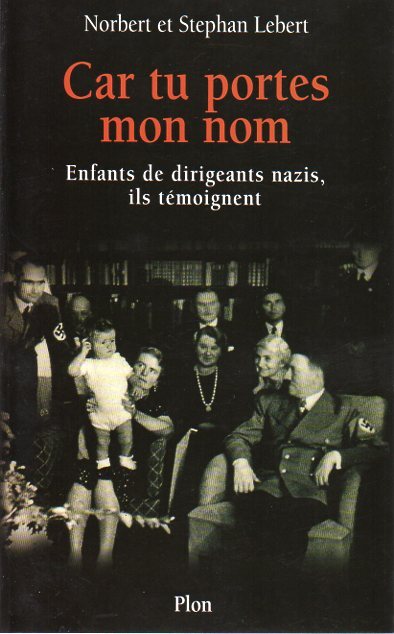
14653Plon, 2002 - In-8, broché, couverture glacée ( réunion de famille autour du Führer ) 200 pages, bel exemplaire.
194022177ABBln. Warneck 1940. 451 Tsd. 8°. 160 S. einige Abbildungen a. Tafeln. OLeinen, Kopf Farbschnitt, Silberaufschrift a. Deckel u. Rü., Ecken leicht best. leicht fleckig, Gebrauchssp., im Ganzen gut erhalten.