MareMagnum
Colic VéliborLivre Rare Book
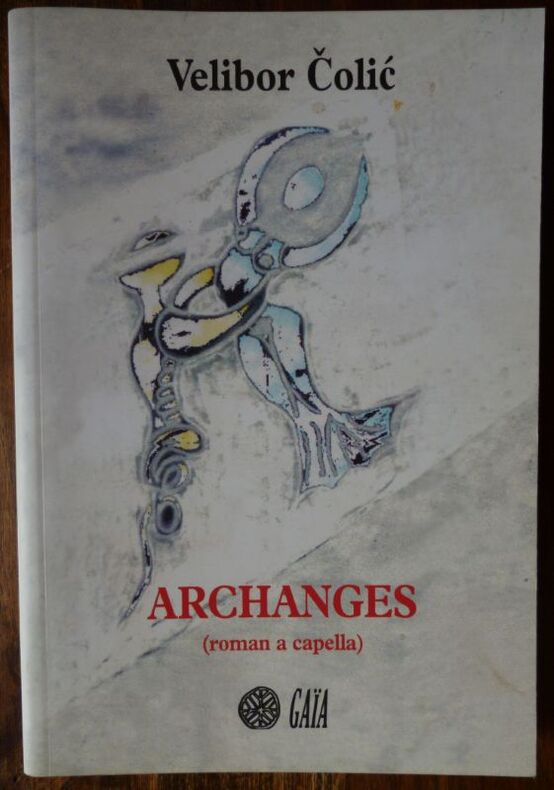
- Archange (roman à capella)
12284- Gaïa, 2008 - In-8, élégant livre broché, couverture souple ill et pagination bois de rose158 pages, très bel exemplaire.
347 résultats
Beograd, Publicisticko i Izdavacko Preduzece "Jugoslavija", 1953, un fascicolo in-4, br., pp. 87, (3). Con numerose illustrazioni in b.n. e a colori nel t. e tavole a colori applicate. Minimi difetti al dorso.
12284- Gaïa, 2008 - In-8, élégant livre broché, couverture souple ill et pagination bois de rose158 pages, très bel exemplaire.
New English Original bdg. HC. 4to. (29 x 21 cm). Proceedings in Turkish. 247 p., b/w ills. 1. International Alija Izzetbegoviç Symposium. Papers.= Uluslararasi Aliya Izzetbegoviç Sempozyum. Bildiriler. 11-12 October, 2008, Istanbul - Turkey.
Outside dimensions 10.75" x 14.5". Unmarked with light wear and soiling. An attractive vintage copy. Book
1995LFA00d7bUn ouvrage de 300 pages, format 240 x 320 mm, relié cartonnage sous jaquette couleurs, illustré, publié en 1995, bon état
Very Good Turkish, Ottoman (1500-1928) Paperback. Chipped on margins. Some owner notes. Otherwise a good copy. Roy. 8vo. (24 x 18 cm). In Ottoman script. 32 p. This rare book includes the royal travel of Sultan Abdülmecid in 1262 AH [1846 AD] to Roumelia. From Edirne, Abdülmecid proceeded to Eski Zagra (Stara Zagora), Kizanlik (Kazanluk), Gabrova (Gabrovo), Tirnova (Turnovo), Rusçuk (Ruse), Silistre (Silistra), and Varna. The route of the 1846 tour followed closely, except in reverse order, Mahmud II's tour of 1837. According to witness accounts, along the way, the sultan was greeted everywhere with poetic recitations and songs of praise and prayer, both in Ottoman and Bulgarian. The pride of place among welcoming parties invariably fell on students, of all creeds, most clad in white uniforms, some in solemn church-going attire, with flowers and green branches in their hands. At every stop, ceremonial cannon salvos were fired during the day and elaborate firework illuminations were performed at night. In the town of Kizanlik, known then as now for the most fragrant roses and the best rose oil, the sultan's visit coincided, possibly by design, with the rose harvesting season. So the locals sprinkled rose water and poured rose oil before the sultan's cavalcade. According to Hristo Stambolski, in the three days of the sultan's stay in town, no rose harvesting was done so that the whole area would be exquisitely scented in his honor. For his part, the sultan had doctors vaccinate all children against smallpox in public before sending each one off with a small gift of money. Even people with rare diseases were, on occasion, summoned to the sultan's presence so his doctors could cure them. The sublime visit caused the locals, who were unaccustomed to direct contact with the center of power, quite a stir. The most detailed account, albeit from a hostile source, relates the sultan's visit to Rusçuk, which, at four days, may have also been the longest. According to Nayden Gerov, the greeting ceremonies proceeded on a communal basis, with the Jews being placed closest to the town walls, next to them the Armenians, then the Bulgarians, and finally, the Muslims, situated the farthest from town, yet being the first to see and welcome the sultan. As the sultan approached, each group of youngsters would in turn sing for him, everyone else bowing profusely. Based on Gerov's description, it seems that Abdülmecid was dressed in a slightly more luxurious fashion than during state ceremonies in Istanbul. ((Source: Sultan Abdülmecid's Tour of Rumelia and the Trope of Love by Stephanov). The sultan began to travel by the way of the gate of Yedikule in Istanbul in May 6, 1846. He followed the way of Ayastefanos, Silivri, Çorlu, Burgaz, Edirne, Zagra-i Atik, Kizanli, Trnova, Rusçuk, Silistre, Rusçuk, Shumnu, and Varna and came back to Istanbul by way of the sea on June 14, 1846. During this travel, the Sultan listened to people's problems and ordered the authorities to be solved with those problems. He received successful military and administrative authorities in settlements on the way of travel and rewarded them. He also received the governors of Serbia, Eflak and Bogdan, and the representatives of foreign states. With this travel, the Sultan aimed to strengthen the connection to the center of people and administrators in provinces. Özege 17910. First Edition.
Very Good Croatian Paperback. Demy 8vo. (21 x 15 cm). In Croatian. 52 p. Kasim Hadzic (Zaostar near Priboj (Novopazarski Sandzak, 1917 - Sarajevo 1990)) was a sharia judge and teacher, graduated from the Great Madrasa in Skopje in 1937, and graduated from "Visem islamskom serijatsko-bogoslovnom ucilistu" [i.e. the Higher Islamic Sharia Theological College] in Sarajevo in 1941. In the summer of 1941 he served as mayor of Priboj during the short-lived rule of the Independent State of Croatia in Sandzak, and since 1942 he has been an intern at the District Sharia Court in Sarajevo. From 1942 to 1945 he was the editor of the Sarajevo Croatian Muslim weekly 'Osvit' [i.e. Dawn]. He has been a teacher at the Gazi Husrev-Beg Madrasa in Sarajevo since 1957. He died in Sarajevo.
Very Good Serbo-Croatian Paperback. Roy. 8vo. (23 x 15 cm). In Aljamiado (Serbo-Croatian in Arabic letters), Arabic, and Persian with an introduction in Arabic. The third revised edition of the Waqf Directorate in Sarajevo. 104 p., 4 unnumbered b/w plates. "Ilmihal" [i.e. Catechism] recommended to all who want to know and learn Islamic ceremonies and practice. Learn how to pray, what are basic principles of the Islamic faith, what are the Islamic duties, what are the Islamic holidays, what constitutes proper Islamic behavior, and lots more. This extremely rare catechism book printed in Sarajevo in Croatian with Arabic letters (Aljamiado). This book is one of the late examples of Aljamiado literature beginning in early Andalusia and constitutes one of the rarest examples of the Ottoman book tradition. Aljamiado or Aljamía texts are manuscripts that use the Arabic script for transcribing European languages, especially Romance languages such as Mozarabic, Portuguese, Spanish or Ladino, and Bosnian with its Arebica script. According to Anwar G. Chejne, Aljamiado or Aljamía is "a corruption of the Arabic word ?ajamiyah (in this case it means foreign language) and, generally, the Arabic expression ?ajam and its derivative 'Ajamiyah are applicable to peoples whose ancestry is not of Arabian origin". During the Arab conquest of Persia, the term became a racial pejorative. In linguistic terms, the Aljamía is the use of the Arabic alphabet to transcribe a Romance language. It was used by some people in some areas of Al-Andalus as an everyday communication vehicle, while Arabic was reserved as the language of science, high culture, and religion. The systematic writing of Romance-language texts in Arabic scripts appears to have begun in the fifteenth century, and the overwhelming majority of such texts that can be dated belong to the sixteenth century. A key aljamiado text was the mufti of Segovia's compilation Suma de los principales mandamientos y devediamentos de nuestra santa ley y sunna, of 1462. In later times, Moriscos were banned from using Arabic as a religious language and wrote in Spanish on Islamic subjects. Examples are the Coplas del alhichante de Puey Monzón, narrating a Hajj, or the Poema de Yuçuf on the Biblical Joseph (written in Aragonese). Aljamiado played a very important role in preserving Islam and the Arabic language in the life of the Moriscos. After the fall of the last Muslim kingdom on the Iberian peninsula, the Moriscos (Andalusian Muslims in Granada and other parts of what was once Al-Andalus) were forced to convert to Christianity or leave the peninsula. They were forced to adopt Christian customs and traditions and to attend church services on Sundays. Nevertheless, some of the Moriscos kept their Islamic belief and traditions secretly through the usage of Aljamiado. In 1567, Philip II of Spain issued a royal decree in Spain, which forced Moriscos to abandon using Arabic on all occasions, formal and informal, speaking and writing. Using Arabic in any sense of the word would be regarded as a crime. They were given three years to learn the language of the Christian Spanish, after which they would have to get rid of all Arabic written material. Moriscos translated all prayers and the sayings of their prophet Mohammed into Aljamiado transcriptions of the Spanish language while keeping all Qur'anic verses in the original Arabic. Aljamiado scrolls were circulated amongst the Moriscos. Historians came to know about Aljamiado literature only in the early nineteenth century. Some of the Aljamiado scrolls are kept in the Spanish National Library in Madrid. The word aljamiado is sometimes used for other non-Semitic languages written in Arabic letters. For example, Bosnian and Albanian texts written in Arabic script during the Ottoman period have been referred to as aljamiado. However, many linguists prefer to limit the term to Romance languages, instead of using Arebica to refer to the use of Arabic script for Slavic languages... Not in OCLC.
Fine English Paperback. Pbo. Roy. 8vo. (24 x 16 cm). In Turkish and English. 2 volumes set: ([Lii], [v], 1330, [16] p.). A bibliography of Bosnia-Herzegovina.= Bosna-Hersek bibliyografyasi. A very heavy set.
Very Good English Paperback. Roy. 8vo. (24 x 17 cm). In English. [2], [xiii], 128 p., 1 folding map. A survey of Islamic cultural monuments until the end of the 19th century in Bosnia. Foreword by Enes Karic. Preface by Ekmeleddin Ihsanoglu. This is a record of the waqfs that were set up in Central and Northern Bosnia during the Ottoman period and their affiliated institutions such as mosques, schools and cemeteries.
189612070Paris, Librairie Hachette et Cie, 1896 ; in-4, demi-chagrin maroquiné havane à coins, dos à nerfs, titre doré (reliure de l'époque) ; (4), VIII, 350 pp., 154 illustrations dont 9 à pleine page, 2 cartes dont 1 dépliante hors-texte en couleurs.
55831Paris, 1896, EDITION ORIGINALE, librairie Hachette et Cie, in-4, demi-chagrin orange à coins, plats papier "cailloux" rose/jaune/gris, titre doré sur dos (reliure moderne), couverture conservée, VIII + 350 pp, 154 illustrations dont 9 en pleine page, 2 cartes dont 1 grande dépliable hors-texte en couleurs, très bon état de la reliure, manques à la couverture ancienne, restaurations au papier, rousseurs sur la grande carte dépliable, tranches non rognées; les livres sur cette partie de l'ancienne Yougoslavie sont très rare et celui-ci est un extraordinaire voyage décrivant l'architecture et les coutumes du pays; belles photographies en noir
New English Paperback. Demy 8vo. (21 x 14 cm). In English. 196 p. Ahvâl-i gazavât der diyâr-i Bosna: The Bosnian frontier at wars of 1736-1739 Ottoman-Russo-Austro: A case study on Ömer Bosnavi's work. The book was accepted by YÖK as Master thesis in 2014 and published as book firstly by Lambert Press in January, 2016. After acceptance of thesis in 2014, a few studies published but Ömer Bosnavi's work was firstly published by me. Therefore first original transcription involve in that book. That study aims to offer an outline of the Ottoman-Russo-Austro War in 1736-1739 and also attempts to portray the Bosnia Frontier, an important subregion the Austro-Ottoman war. To provide a more detailed understanding of the Bosnian frontier, the first transcription of Ömer of Novi's "Ahval-i Gazavat Der Diyar-i Bosna" was included as a primary source in the study. While the Ottoman Empire was engaged in the Persian Wars in the 1730s, both Austrian and Russian Empires pursued a hostile policy the Ottoman Empire in accordance with the terms of a treaty of alliance in 1726. Upon the invasion of Crimea by Russians, the Ottomans declared a war against Russia in 1736. After Austria completed the preparations of the war, and joined in the battle on the side of Russia in 1737. In the beginning of the war, Austrians occupied the fortress of Nish and organized campaigns in such regions as Wallachia, Vidin, and Bosnia. But the fortress of Nish was successfully taken back by the Ottomans, yet unsuccessful campaigns in the Vidin and Wallachia, and especially in Bosnia after the defeat of Hildburghasuen by the Governor of Bosnia Hekimoglu Ali Pasha in the Battle of Banja Luka changed the course of the war. Following the siege of Belgrade by Ivaz Pasha, the grand vizier, and a positive consequence of joining of Hekimoglu in the siecle, Austria was ultimately forced to make peace in 1739.
64 pages. Features: Strangers in a Strange Land; From Richard to Sara With Love; U.S. Marines and Their F/A-18s - air, on land and sea; Hot Hawks over Bosnia; Action Over Bosnia - Prowlers at the Tip of the Spear; A Short Sea Story - Underwater Ejection; and more. Clean and unmarked with light wear. A quality copy. Magazine
br. "Dopo l'inattesa sentenza della Corte di giustizia dell'Aja che solleva la Serbia da ogni responsabilità nel genocidio di Srebrenica, un diario di viaggio e di vita scritto da una ragazza nata e cresciuta nella ex enclave dove l'11 luglio 1995 si è consumato il genocidio dei cittadini d'origine musulmana. Con questo libro Elvira Mujcic "ha voluto far conoscere ed esprimere le conseguenze dell'immane eccidio di Srebrenica rivivendolo in se stessa, nei propri sogni e incubi, nei suoi amori giovanili e nelle sue disillusioni. Questo libro è una rara testimonianza proprio perché, a differenza di molti altri testi analoghi, ha trovato un'adeguata espressione letteraria" (Dalla prefazione di Predrag Matvejevic).
New English Paperback. Demy 8vo. (21 x 14 cm). In Bosnian. 244 p. Alahimanet Bosno: Migracija Bosnjaka na teritoriju Osmanskog carstva. U misaonom svijetu Bosnjaka nastala je istinska pomutnja kada su 1878. godine prepusteni upravi Austro-Ugarske. Osmanlije su se povlacile sa prostora Balkana zbog cega su Bosnjaci, kao muslimanska zajednica usred Evrope, osjecali se nezasticeno. Cekati povratak Osmanlija donekle ih je tjesilo. Ipak, sta ako se ne vrate? Sta ako privremeno prepustenu upravu ne budu mogli preuzeti ponovo? Upravo tada bi se morali naci odgovori na sljedeca pitanja: Gdje je domovina Bosnjaka? Da li je to Bosna kao naslije?e predaka ili je to zemlja Osmanlija gdje bi mogli zivjeti u skladu sa muslimanskim identitetom? U ovoj knjizi, u svjetlu arhivskih izvora govori se o raspravama Bosnjaka o migraciji, o putovanju u "zemlju snova", mjestima u Anadoliji i Rumeliji u kojima su se nastanili, o novom zivotu, radosti, tugi, sreci i razocarenjima.
New French Paperback. 4to. (29 x 21 cm). Articles in French. 274 p., b/w ills. Anatolia Moderna VIII.= Yeni Anadolu VIII. Edites sous la direction de Stephane Yerasimos, avec la collaboration de Jean-Louis Bacque-Grammont, Aksel Tibet. Contents: DOSSIER : RECHERCHES SUR LE QUARTIER DE TOPHANE ET L'ARTILLERIE OTTOMANE. Avant-propos / Jean-Louis BACQUE-GRAMMONT et Stephane YERASIMOS. LA FONDERIE DE CANONS ET LE QUARTIER DE TOPHANE. TEXTES ET IMAGES. COMMENTES: I. La description de Tophane par Evliya Çelebi / Jean-Louis BACQUÉ-GRAMMONT, Textes et images commentés, II. Mosquees, mescid et monuments remarquables situés entre la limite de Galata et le centre de Findikli, d'après Hüseyn Ayvasaray" et Mehmed Raif / Jean-Louis BACQUE-GRAMMONT, Textes et images commentés, III. Recherches sur l'histoire du quartier de Findikli / Cengiz ORHONLU, Textes et images commentés, IV. Autres témoignages / Ela GÖNEN, Sur la réhabilitation et l'avenir de la Fonderie Impériale d'Istanbul (Tophane-I Amire). Index de Textes et Images. Commentés, Textes et images commentés / Jean-Louis BACQUÉ-GRAMMONT, PROGRAMMES: Une famille de notables de la région d'Aydin : les Cihanoglu et l'architecture / Ayda AREL.
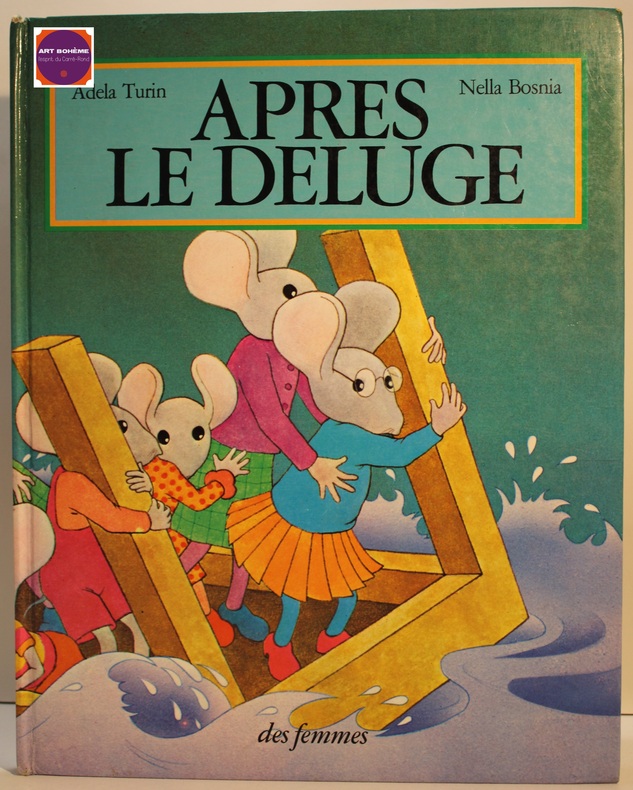
19753031Des femmes 1975 Cartonnage rigide glacé illustré éditeur Bon état général - Traces crayon gris 2e de couverture - coiffes et coins légèrement frottés 388 g
1975ROD0125024EDITIONS DES FEMMES. 1975. In-4. Relié. Bon état, Couv. convenable, Dos satisfaisant, Intérieur frais. Environ 34 pages augmentées de nombreuses illustrations en couleurs dans le texte.. . . . Classification Dewey : 843.0692-Livres d'enfants
1974LFA-126740034N° 76 (Novembre 1974) : 86 pages, format 215 x 285 mm, illustré, broché couverture couleurs, bon état
1996LFA-126746935N° 328 (Novembre 1996) : revue de 78 pages, format 215 x 285 mm, illustrée, brochée couverture couleurs, bon état
2001LFA-126746973N° 376 (Mars 2001) : revue de 78 pages, format 215 x 285 mm, illustrée, brochée couverture couleurs, bon état
In-8, brossura, sovracoperta, pp. LX,75,(5), con 90 illustrazioni in bianco e nero nel testo e 1 carta geografica fuori testo. In buono stato (good copy).
2742723595.Gpaperback. Good. Access codes and supplements are not guaranteed with used items. May be an ex-library book. paperback
Q-8426435696Editorial Lumen 1900. Hardcover. New. In shrink wrap. Looks like an interesting title! Editorial Lumen hardcover