54th Massachusetts InfantryBiblio.com
505 résultats
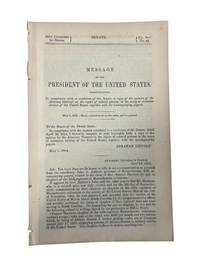
1864214721864. Lincoln Abraham. Message of the President of the United States. on the Rights of Colored Persons in the Army 1864 documents federal policy and legal interpretation concerning the status and compensation of African American soldiers and officers during the Civil War and provides direct evidence of how the U.S. government addressed racial inequality within the Union Army. Transmitting Attorney General Edward Bates' formal opinion the document centers on the case of Reverend Samuel Harrison chaplain of the 54th Massachusetts Volunteer Infantry and addresses the broader question of whether Black service members were entitled to the same recognition and pay as their white counterparts. Issued during active wartime mobilization of United States Colored Troops the pamphlet supports research into African American military service Civil War law and the evolving federal stance on racial equality within military institutions.<br /> <br /> Lincoln Abraham. Message of the President of the United States Communicating. a Copy of the Opinion of the Attorney General on the Rights of Colored Persons in the Army. Washington: Government Printing Office 1864. Disbound pamphlet 9 pages. The text includes the full opinion of Attorney General Edward Bates affirming that "Mr. Harrison was the lawfully appointed and qualified chaplain of the 54th Massachusetts regiment" and therefore entitled to full compensation. The case arose when Harrison despite his commissioned status was paid only ten dollars per month and one ration under interpretations of the July 17 1862 law governing Black enlistment. Bates rejects this limitation stating that denial of proper pay would constitute "a plain violation of the purpose of Congress." Accompanying documents include War Department orders issued by Secretary of War Edwin M. Stanton authorizing the recruitment of African American regiments under Governor John A. Andrew of Massachusetts as well as a muster-in roll confirming Harrison's official appointment.<br /> <br /> Issued at a moment when the Union relied increasingly on African American troops this document records the tension between discriminatory policy and federal efforts to formalize Black military service within established legal frameworks. The case of Samuel Harrison connected to the 54th Massachusetts one of the most prominent Black regiments of the war highlights both institutional inequities and the mechanisms through which they were contested at the highest levels of government. The inclusion of legislative interpretation executive transmission and military documentation within a single publication makes it a concentrated record of how civil rights questions were adjudicated during wartime illustrating the gradual expansion of legal recognition for African American service members. Light toning and minor edge wear from disbinding; overall condition very good. unknown
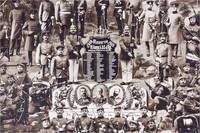
3733807<p>Metz Alsace-Lorraine German Empire: Gebrüder Notton Römerstr. 10 1908. Composite silver process photograph. Mount: 18¾ x 23½ inches. Image: 14¼ x 17¾ inches. Light rubbing to edges of mount with minor wear at bottom right; margins foxed; small mark at bottom extending faintly into image; very good.</p> <p>This is a rich and complex composite photograph from 1908 captioned with the words “Zur Erinnerung an Meine Dienstzeit†which translates to “In remembrance of my service time.†It was created for the 10th Company 8th Württemberg Infantry Regiment Grand Duke Frederick of Baden’s Regiment—possibly light infantry as in “Jäger infanterieregiment.†This regiment was based in Strasbourg in Alsace-Lorraine and served within the Imperial German Army. </p> <p>The surnames of these men are: Baibel Baierl Bauer Berger Jos. Burger Joh. Bumb Büchel Dirr Dirschedl Echtler Feibler Forster Fuchs Gaibl Ganslmeier Gundel Habender Hagl Haub Haüselmeier Herzog Hiemer Huber Jacob Janker Keim Kirchbauer Klemm Knott Kopp Kraus Kreckl Kübel Laubhardt Laubenbacher Lautner Lippert Maier Joh. Maier Seb. Merkel Miehling Moosburger Petermann Pfeilschifter Pflug Prior Rachl Rauschecker Ries Rommel Schmid Schmidt Schnabel Scholz Schraudolf Schweiber Stegmeier Sutter Ulm Weber Weindl Wenniger Wohlfarth Zieringer Zeilinger Zirngibl.</p> <p>The photograph presents a multitude of uniformed soldiers in a staged setting designed to resemble a military encampment or a gathering. The arrangement of soldiers is not casual but highly structured with officers shown with swords and details prominently positioned in the foreground. Many of the men are shown hoisting enormous beer steins with rather serious expressions.</p> <p>The photograph also features regimental flags and other military regalia which were symbols of pride and unity for the unit. The arrangement of soldiers in rows with some seated and others standing is typical of military portraiture of the time intended to display the order and discipline of the troops.</p> <p>The backdrop of the photograph features a bucolic scene a blend of a real outdoor setting and painted backdrops. This kind of photography allowed for the superimposition of studio-taken images onto a different background giving the impression that all individuals were present at a single location. Such methods were used to create cohesive unit photographs when it was not possible to gather everyone at once.</p> <p>The inclusion of phrases like “Mit Gott für König und Vaterland†With God for King and Fatherland reinforces the patriotic sentiment of the era and the soldiers’ commitment to their country and monarch. Other phrases such as “Die Well ist grofs Die Welt ist schön; Wer weifs ob wir uns wiedersehn!†“The world is big the world is beautiful; Who knows if we will see each other again!†reinforce the romanticism of military service.</p> <p>From a photographic history perspective the image represents the advancements in photo montage techniques at the turn of the 20th century. The image quality clarity and composition indicates that the photographers Gebruder Notton used a large-format camera which was capable of capturing detailed group portraits.</p> <p>A rather remarkable photograph encapsulating the military ethos of the German Empire during a period of intense nationalism and militarism leading up to the First World War.</p> unknown
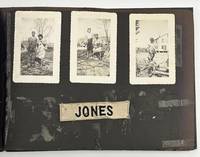
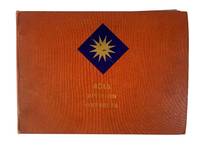
19603443Kansas and Germany 1960. Very good. Twenty-two leaves illustrated with 167 photographs most mounted and captioned in white ink with a handful of loose images and one cloth nameplate. Some images removed. Oblong folio. Contemporary dark blue leatherette triple-ruled gilt borders on front cover string tied. Faint manuscript title on front cover reads "Book of the Past." Front cover detached some edge wear. Minor chipping to initial leaves first two leaves detached photos in generally nice condition. A unique collection of photographs documenting the military service of Private Eugene Jones an African American soldier in Company B of the 26th Infantry known as the Blue Spaders for the spade-like device on the unit's insignia. According to the manuscript captions written on the inside front cover which include his serial number Private Jones hailed from New York City and was stationed in Baumholder Germany as part of the 26th Infantry's 1st Battle Group. The 26th Infantry regiment was sent to Berlin and other spots in Germany in the early 1960s as part of the United States' efforts to reinforce West Germany against the Cold War forces in East Germany. Company B was likely some kind of support unit as Baumholder is located in the far-western portion of Germany much closer to France than Berlin.<br /> <br /> The present photo album contains numerous images of Jones' fellow soldiers most identified by name in manuscript captions. Other photographs picture the unit during their brief training at Fort Riley in Kansas before deploying to Germany. Once in Baumholder the soldiers are pictured in the bivouac area on the streets playing baseball with various women on base and in the barracks on patrol unloading Jeeps at the airstrip and more. One photo shows the exterior of the Baumholder Department Store. Some of the later pages contain earlier photographs showing some of Jones's friends and family from New York; these pages appear to have been ported over from another photo album. The only non-photographic item in the album is Jones's cloth nameplate.<br /> <br /> An interesting photographic record of service in an integrated unit in Cold War Germany. unknown
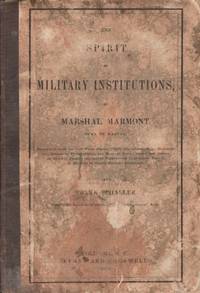
186432582Columbia: Evans and Cogswell 1864. Stiff wraps. Good. 12mo. 278 pages. Stiff paper boards with title on the front cover. Black cloth spine. Covers are worn and discolored. It appears the covers are facsimiles. Light to moderate foxing to the contents. Pencil inscription on the right front flyleaf reads "Col. Samuel W Milton from the publishers." <br /> <br /> The author wrote this book during his recovery from wounds in battle. He dedicates this work to Jefferson Davis. Jefferson Davis thanks the author and calls him "a master of the art of war" on page 12. Confederate imprint.<br /> <br /> Parrish & Willingham 4953; Confederate Hundred 60; Sabin 44651. The previous owner served as an Assistant Adjutant General under Samuel Cooper from 1863 to the end of the war. From Find A grave dot com taken from the Biography of Eminent Men of the Carolinas: <br /> <br /> Samuel Wickiff how it is spelled in the obit Melton was born in Yorkville S. C. February 7 183 hard to read. Receiving his early education in Yorkville he graduated from the South Carolina college in the class of 1852. He edited the Chester Standard published in Chester in 1852 and 1854. Then he returned to Yorkville and established the Yorkville Examiner on January 1 1855 running it until 1858 when he sold out to Lewis M. Grist. In the meantime in 1857 he was admitted to the bar and commenced the practice of law with his brother C. D. Melton at Chester continuing until the war broke out. He enlisted in the Confederate army in 1861 on the staff of Gen. M L. Bonham as aid-de-camp accompanying him to Virginia remaining with him until after the first battle of Bull Run. Subsequently he went on the staff of Maj. Gen. Gustavius W. Smith commanding the Second corps he having the rank of major. He remained with Gen. Smith until February 1863 and was then assigned to duty in the office of the adjutant and inspector general of the Confederate army at Richmond where he remained until the close of the war. He was in the first battle of Bull Run in the Peninsular campaign in the battles around Richmond at Seven Pines the campaign in 1863 in North Carolina and temporarily on the staff of Gen. Beauregard at the battle of Drury's Bluff. The chief duties however from early in 1862 to the close of the war were in the adjutant general's office in Richmond. Evans and Cogswell unknown
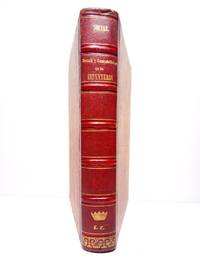
185837012Barcelona: Imprenta de Luis Tasso 1858.- 247 p. 676 p. de formularios y estados; 4º mayor 29 x 22 cm; Media Piel chagrén época lomo dorado con corona iniciales y greca al pie.- RARO libro que es en sí el primer tratado completo de contabilidad militar impreso en España. Los cantos de las tapas y las esquinas con rozaduras y pequeños deterioros diversos pero restaurados en lo posible. Interior impecable. EJÉRCITO Y TEMAS MILITARES Libro en español Imprenta de Luis Tasso hardcover
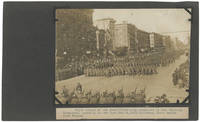
1919CAT0119New York: Underwood and Underwood 1919. First Edition. Gelatin silver prints 7 ¾ x 5 ½ inches each on 11 ½ x 7 inch black paper mounts captioned with affixed text. Very Good. Two WWI-era press photographs related to the Negro 15th Infantry Division of the New York National Guard a.k.a. the 369th US Infantry Regiment and their white commander Colonel William Hayward. One photograph shows the division on parade in New York following their return from combat duty in France in 1919 the other is a well-known image of Hayward who organized the all-black unit and served as its leader. Fighting for a record-breaking 191 consecutive days alongside French troops in the trenches the regiment became known as the “Harlem Hellfighters.†<br /> <br /> The opportunity for African-Americans to serve in WWI arose from the Selective Service Act of 1917 which drafted all men between the ages of twenty-one and thirty. Special segregated training camps were established and units were formed. The US National Archives states that 200000 African-Americans served in Europe during WWI but only 42000 saw combat. When the 15th Infantry arrived in France in 1918 Hayward was committed to the idea that his unit would fight on the front lines. After General Pershing refused to integrate them with the full US army Hayward pushed for another assignment under French command. Unlike many other segregated divisions in WWI the 15th aka 369th was eventually sent to the trenches. Its members' distinguished service brought honor and fame. Before leaving the US in 1917 the regiment had not been allowed to participate in the New York National Guard’s farewell parade. When they returned victorious Hayward ensured they were publicly honored. <br /> <br /> Both with various press stamps to versos. Small closed tear of about a half inch to upper edge of parade picture good overall. Hayward portrait with some rippling at edges very good overall. Underwood and Underwood unknown
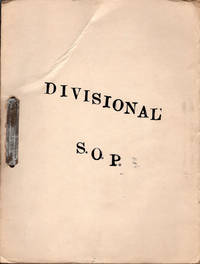
195245343Fort Benning Georgia & Korea: Privately published by the 3rd Infantry Division & the 15th Infantry Regiment 1952. 1952. KOREAN CONFLICT. First editions. Original soft covers binder punch-bound at gutter margin with steel sliding Accu-fasteners numerous annotations and corrections in ink and pencil from the library of Hiro Wakabayashi 1930-2017 Japanese-American and Korean Conflict veteran with his name in ink on title page. Volume one Divisional S.O.P. has approximately 250 pp. separate paginations per section; Volume two Regimental S.O.P. has approximately 200 pp. separate paginations some in pencil pen tipped-in or mounted form samples. First volume is a mimeograph copy; second volume is typescript copy on onion skin paper tipped-in and mounted samples forms graphs charts diagrams. Regimental Standard Operating Procedures manuals for logistics during the Korean War for the Third Infantry Division 15th Infantry Regiment. The 15th Infantry Regiment sailed for Korea from Fort Benning Georgia in August 1950 covered the withdrawal of X Corps from the Chosin Reservoir in 1950 fought to the 38th parallel in 1951 fought battles in the Kumsong sector until the armistice was signed in 1953. These logistics manuals detail all of the procedures for supply officers transportation engineering supply operations ordnance quartermaster division including forms procedures and samples of all possibilities with Army rules governing each instance. Of particular interest are the extended sections on procedures and operational issues for MASH units covering evacuation hospitals medical and dental services disease prevention sanitation medical reports physical examinations and even psychiatric services and procedures. The 15th United States Infantry Regiment is a parent regiment with lineage back to the American Civil War first activated in Wheeling West Virginia. During the Korean War the 3rd Division was known as the Fire Brigade due to its rapid response to crises and received ten Battle Stars with eleven members receiving Medals of Honor. Privately published by the 3rd Infantry Division & the 15th Infantry Regiment, 1952. paperback
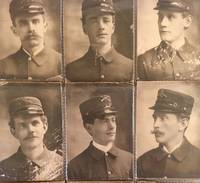
1898List319Massachusetts 1898. The 2nd Massachusetts Volunteers mustered into service in May 1898 and within a month saw significant action in Cuba at the Battle of El Caney. They were one of three volunteer units from Massachusetts to see action on the Santiago Campaign. The regiment was inexperienced - 55% were untrained recruits. The lack of experience combined with their rifles giving off a very visible black smoke led to a heavy casualties in the Battle of El Caney. After an encampment near Santiago de Cuba in which a large number of the soldiers became ill with disease - estimates are as high as 65% - the regiment returned home in August. Historians have noted that soldier demographics changed considerably from the Civil War to the Spanish American war as the smaller number of troops and the lack of a draft led to a more enthusiastic army with higher morale. <br /> <br /> The photographs in this group are interesting as a typological grouping of images of untrained soldiers and also for their historical value as most contain identifications to versos. The highlight of the group is forty-four uniformly mounted portraits of soldiers nearly all identified measuring 3 ¾ x 2 ½ inches each. Other photographs include a large portrait of Captain Frederick E. Pierce with the blindstamp of Goldsmith Studio Springfield Massachusetts and a 3 ¼ x 3 ¼ inch square card of Capt. Pierce in Camp Turner. Also included are two slightly larger photographs on similar mounts. <br /> <br /> Overall an interesting group. Good condition overall with assorted chips and wear. unknown
1830013641London: Henry Colburn and Richard Bentley 1830 Book. Illus. by Foldout Map and Three Illustrations. Good Minus. 3/4 Leather. 1st Edition. 12mo - over 6¾ - 7¾" tall. Original 3/4 leather over maroon cloth on boards. Marbled page edges. Five raised bands on spine with gilt and embossed decoration. Minor wear to edges and corners of leather. Top of spine a little frayed. Previous owner's bookplates in front. Front hinge broken but still holding. Medium hinge break between pgs. 120-121. Bad hinge break between pgs. 288-289. Rear hinge cracked. Foldout lithographed map of Nova Scotia counties is in very good condition - just a few extra folds at one edge. Captain Moorsom spent five years in Nova Scotia initially as an officer in the 52nd Regiment. This book is his observances of the people climate geography and economic prospects of the colony written in the form of letters home to friends in England. One biographer calls it "the most complete picture available of Nova Scotia during the 1820s." Some Nova Scotians were upset at some of his comments but Joseph Howe defended Moorsom since he'd promoted the colony in England. This book is on consignment so no discounts apply. It will be sent insured so expect a request for "extra shipping" to cover that cost. Henry Colburn and Richard Bentley hardcover
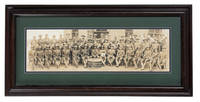
1918List1733Ohio 1918. Silver gelatin photograph in glass-fronted frame image measures 24 ¼ x 6 ⅞ inches. Matted and framed not examined out of frame. The 317th Engineer’s Band was a part of the 317th Engineer Regiment an element of the 92nd Division which was composed of over 15000 African-American soldiers from across the country. The 92nd was one of two African-American regiments to fight in the war the other being the 93rd and was unique in that it was under the command of the United States. The 317th Engineer Regiment was organized in November 1917 at Camp Sherman Ohio several months before this photograph was taken and saw action in Europe as part of the 92nd. Camp Sherman was the third largest training camp in the country at the time with over 2000 buildings capable of housing 40000 men and 12000 horses. As well as being the training site for units of the 92nd also known as the Buffalo Division it served as the training site entire 83rd 84th 95th and 96th divisions. It later became a trade school. <br /> <br /> The 317th Engineer’s Band performed locally around Chillicothe and at other military functions eventually becoming known according to a contemporary newspaper account as one of the best bands in the army. They traveled to Indianapolis to perform in March of 1918. A New York Times article from 1918 mentions them briefly and describes them as ‘famous’ but does not elaborate. They performed at the ‘Colored Club’ in Chillicothe a social club for African-American servicemen in a converted hotel. We find no other record of this image. unknown
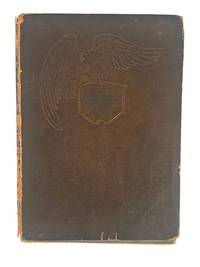
1919216951919. Victory: History of the 805th Pioneer Infantry by Paul S. Bliss published in 1919 documents the service of an African American regiment of the American Expeditionary Forces during the final year of World War I. The volume records the organization deployment and wartime duties of the 805th Pioneer Infantry a Black regiment formed during the rapid expansion of the United States Army in 1918. Composed of African American enlisted soldiers serving under white officers in a segregated military structure the regiment deployed to France during the closing phase of the war and performed engineering construction and logistical work in areas affected by active combat operations. Regimental histories such as this were produced soon after the war to preserve the institutional record of individual units and to commemorate the contributions of the soldiers who served within them.<br /> <br /> Bliss Paul S. Victory: History of the 805th Pioneer Infantry American Expeditionary Forces. St. Paul Minnesota: Paul S. Bliss 1919. First edition. The book presents rosters portraits and photographs documenting the regiment's organization and activities while serving in France. The 805th Pioneer Infantry was organized at Camp Funston Kansas in July 1918 and deployed overseas during the Meuse Argonne campaign. Although classified as a pioneer unit responsible for construction and engineering tasks the regiment often worked in forward operational areas exposed to enemy fire. Photographs in the volume depict companies of the regiment in formation including an image titled "Company C at Brieulles sur Meuse" along with scenes of soldiers repairing damaged structures posing with captured German artillery and assembling for inspection during a visit by General John J. Pershing. Portrait collages identify numerous enlisted men and officers of the regiment while an illustrated frontispiece portrays African American soldiers advancing with fixed bayonets across a shell damaged battlefield landscape.<br /> <br /> Regiments such as the 805th Pioneer Infantry formed part of the broader mobilization of African American soldiers during World War I when more than 350000 Black men served in the United States Army in segregated units. Pioneer infantry regiments were frequently assigned labor and engineering duties supporting front line operations including road construction trench repair and logistical supply work. Printed regimental histories produced after the war served as commemorative records preserving the service of these units and documenting the participation of African American soldiers in the American Expeditionary Forces. Volume bound in original embossed leather boards with gilt and blind stamped decoration and heavy card stock leaves printed on recto only. Includes color printed pages depicting regimental and national flags. Spine worn and partially split with rubbing to board edges and scattered foxing and toning to leaves; contents remain intact. Overall good condition. The book provides an extensive visual and documentary record of an African American regiment serving in the United States Army during World War I. unknown
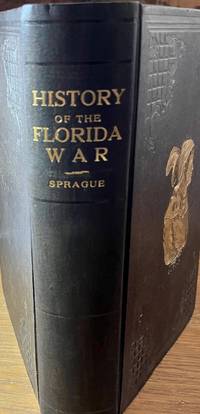
184834406New York: D. Appleton and Company 1848. Hardcover. Good. Octavo. 1 557 pages 1 page blank 32 pages publisher catalog 1. Frontispiece and Illustrations. Folding map of lower Florida. Restored. Dark brown cloth hardcover with decorative blind stamped borders and gilt illustration of Oseola on the front cover. Gilt title and publisher name stamped on the newer brown cloth spine. Frontispiece title page prliminary pages folding map and publisher catalog in back have moderate foxing. Light toning to the rest of the text. Map has a very small chip bottom edge and an approx. A 5"-6" closed split on a lower fold below Key Largo with no loss of content. D. Appleton and Company hardcover
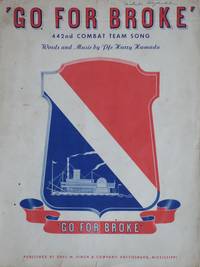
1944List2436Hattiesburg: Earl M. Finch 1944. Sheet music measuring 12 x 9 inches 4 pp. Signature of a Nabuko Hayashida on front cover. Slight tears at fold some toning two small pinholes very good overall quite attractive. Very Good. In Hawaii in May 1942 a battalion of Nisei volunteers was assembled for service in World War Two despite earlier failures of efforts to recruit Japanese-Americans due to the Army’s labeling of Nisei recruits as 4-C enemy aliens. Designated as the 100th Infantry Battalion they were deployed to North Africa in June 1943 integrating with the 34th Division in active combat. Their subsequent deployment to Italy in September 1943 exposed them to intense warfare earning them the moniker of the "Purple Heart Battalion" due to their notably high casualty rate.<br /> <br /> In January 1943 the U.S. War Department officially declared the establishment of the segregated 442nd Regimental Combat Team RCT which was comprised of Nisei volunteers originating from Hawaii and the mainland. The culmination of this initiative transpired in June 1944 when the 442nd RCT merged forces with the 100th Infantry Battalion in Europe subsequently absorbing the latter into its structure. The notable achievements of Nisei soldiers in combat operations prompted the reinstatement of the draft in January 1944 specifically targeting Nisei detainees to augment the ranks of the 442nd. Over time the 442nd RCT expanded to encompass the 2nd 3rd and 100th Battalions; the 522nd Field Artillery Battalion; the 232nd Engineering Company; the 206th Army Band; Anti-Tank Company; Cannon Company; and Service Company. <br /> <br /> Offered here is a very scarce piece of sheet music entitled “Go For Broke†which was written by the Hawaiian musician Harry Hamada reflecting the slogan of the 442nd and performed by Shelby and others during the war as part of efforts to boost morale. Hamada would feature in the 1951 movie “Go For Broke†as Masami alongside several other veterans of the 442nd. This publication of “Go For Broke†is from 1944 seven years before the movie’s release. The piece is dedicated to Colonel C.W. Pence. Hamada was a Hawaiian musician who performed with a band called the Shelby Hawaiians or the Shelby Serenaders. They performed as early as 1943. The Hattiesburg Mississippi merchant Earl M. Finch who ran an Army and Navy store close to Camp Shelby befriended Hamada and other members of the 442nd and acted as a sponsor for the group and eventually published this version despite his business being a dry goods merchant house and not a publishing house. The group with the support of Finch performed throughout the country to lift morale. At some point Hamada penned this composition likely in 1944 as we find no reference to it in 1943 articles and Finch published it - Hamada’s composition would become the theme song of the 442nd and Hamada would perform at the Halloran General Hospital in New York and the Walter Reed Hospital in Washington D.C. in 1944 likely performing this composition. Another composition called “Go For Broke†exists as well and it is unclear to what degree Hamada’s work caught on among the regiment. <br /> <br /> We find two records of Finch’s published version of the composition one listed as part of an online remembrance of the 442nd by the Smithsonian Institution https://americanhistory.si.edu/explore/stories/day-remembrance-70-years-after-executive-order-9066 which appears to have been on loan from the National Japanese American Historical Society and another copy held at Stanford though not listed in OCLC. Finch’s story is also interesting and is the subject of a remembrance on a 100th Battalion History page online https://www.100thbattalion.org/history/stories/earl-finch/. We find no copies listed in OCLC. Overall a very scarce piece of Japanese-American wartime history. Earl M. Finch unknown
191964551Bordeaux France: V. Cambette 1919. Presumed first edition/first printing. Wraps. Good. No dust jacket as issued. Cover has some wear scuffing and soiling. 16 pages. Page 46 is signed by Brant E. Wilcox Captain 327th Infantry Personnel Adjutant and Henry E. Hackney Captain 327th Infantry Adjutant Not in Dornbusch! Likely to have had only a limited number printed. This roster of officers compiled from records of the Personnel Office 327th Infantry was published to further cement the bonds of fellowship and friendship between the officers of this regiment to honor the memory of those to made the Supreme Sacrifice and to provide those officers who were deprived of the privilege of serving overseas with some idea of the regiment's engagements with the enemy. The Regiment was organized at Camp Gordon on 2 Sept. 1917. The Regiment participated in the St. Mihiel Offence and the Meuse-Argonne Offensive and claime the longest contiuous time that any regiment of the American Expeditionary Forces participated in any offensive. V. Cambette paperback
1944220931944. 40th Infantry Division Pacific campaign photograph album documenting combat operations and daily military life of U.S. Army forces during World War II. The 40th Infantry Division served extensively in the Southwest Pacific Theater participating in campaigns across New Guinea New Britain and the Philippines as Allied forces advanced against Japanese defensive positions. The photographs record amphibious landings artillery operations destroyed towns and the collaboration between American troops and Filipino guerrilla forces during the campaign to liberate the Philippines. The album therefore documents the operational environment of Pacific warfare including jungle terrain fortified Japanese defensive networks and the logistical systems required to sustain prolonged combat across island battlefields.<br /> <br /> Photograph album containing approximately 200 original black and white photographs documenting operations of the 40th Infantry Division during the Pacific campaigns of World War II. Each photograph is sequentially numbered in white ink at the lower corner and corresponds to descriptive entries in a photographic index within the album. Early images depict American Red Cross workers disembarking from landing craft and greeted by U.S. soldiers illustrating the presence of female support personnel assigned to medical and relief operations. Additional photographs record amphibious landing scenes aerial views of destroyed towns in Luzon artillery and tank operations and soldiers operating mounted machine guns overlooking jungle valleys. Several images depict Japanese military casualties reflecting the intense close combat that characterized fighting across the Pacific islands. A printed military map within the album shows Japanese tunnel and cave fortifications in the Zambales Mountains illustrating defensive positions encountered during operations in the Philippines.<br /> <br /> The album also documents logistical and civilian dimensions of the campaign. Photographs show ships unloading cargo Filipino guerrilla units marching through urban streets and groups of local porters assisting Allied forces in moving supplies through mountainous terrain. Weapons and equipment visible in the images include field artillery pieces mortars and armored vehicles such as the M4 Sherman. One photograph depicts African American soldiers accompanied by scout dogs operating in jungle terrain illustrating the presence of Black servicemen serving within the segregated structure of the wartime U.S. Army. Other photographs show tent encampments mess areas interactions with local populations and the recovery of prisoners of war following combat operations. The photographs collectively present a visual record of combat logistics and daily military life during the Pacific campaigns. Album contains approximately 200 photographs with indexed numbering. Light handling wear visible to album and photographs consistent with wartime field compilation. Overall condition very good. unknown
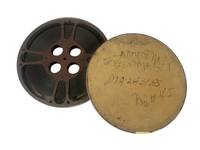
1945232061945. Capra Frank. Japanese-Americans a 1945 wartime military screen magazine segment film reel highlighting Japanese American service in the U.S. Army's information and morale boosting film distributions during the final year of World War II. Produced for exhibition to servicemen as part of Army-Navy Screen Magazine No. 45 the segment is also an example of the wartime contributions of legendary Italian-American filmmaker Frank Capra one of Hollywood's most influential directors best known for It Happened One Night Mr. Smith Goes to Washington and It's a Wonderful Life. During World War II Capra became a major figure in official U.S. military filmmaking directing or supervising films that translated government policy and Allied war aims into accessible emotionally forceful cinema for soldiers and civilians. Here his Army film work presents Nisei troops not as an isolated human-interest subject but as participants in a broader program joining military projection democratic rhetoric and controlled public acknowledgment of Japanese American loyalty after mass incarceration. The film's focus on the 100th Infantry Battalion the 442nd Regimental Combat Team battlefield casualties and a widow receiving the Silver Star shows how Capra's wartime production apparatus helped frame Japanese American military service for uniformed audiences in 1945.<br /> <br /> Capra Frank producer. Japanese-Americans. Segment from Army-Navy Screen Magazine No. 45. U.S. Army Signal Corps Army Pictorial Service 1945. Black and white sound film reel 16mm. Present on a large reel in metal can the lid handwritten in grease pencil "ARMY/NAVY SCREEN MAG." and "NO #45." The identified segment shows a spokesman in Hawaii praising Japanese Americans in the U.S. Army a war widow receiving a Silver Star scenes of Nisei troops in the Italian campaign the 100th Infantry Battalion entering Livorno wounded men being evacuated and General Mark Clark citing soldiers of the 34th Infantry Division. The physical reel remains tightly wound; the present housing and handwritten can notation directly support identification to issue no. 45.<br /> <br /> Issued at a time when Japanese Americans were serving in segregated units even as many of their families remained confined under wartime exclusion policy the segment shows how Capra's Army film production participated in reconciling racial tension and patriotic messaging to American servicemen. Japanese American servicemen are honored here as heroes and patriots. Light wear and dust to can; reel housed and tightly wound; surface inspection only. A strong piece of World War II military film notable both for its Japanese American subject matter and as a sample of Frank Capra's influential wartime propaganda work for the U.S. Army. unknown
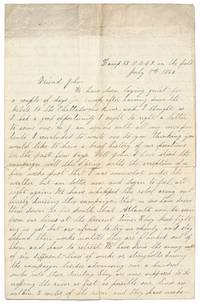
1864438776Atlanta Georgia 1864. Very Good. Autograph Letter Signed. Folio. 4pp. Partial splitting at the edges of one vertical and two horizontal folds about very good. A detailed and historically important long letter written in the field by Union soldier Harvey Rodgers just two weeks before he was killed at the Battle of Atlanta on July 22 1864.<br /> <br /> Rodgers was mustered into service in 1861 as a Corporal in the 54th Regiment Ohio Volunteer Infantry Zouaves Company A commanded by 1st Lt. Judson McCoy referred to as “Jud†in the letter. In the letter written to his “Friend John†on four easily legible folio pages Rodgers describes Confederate and Union Army maneuvers and skirmishes immediately after the Battle of Kennesaw Mountain fought from June 19 – July 2 1864 during the lead-up to the Battle of Atlanta which began on July 21st:<br /> <br /> “… Well John I have stood the campaign well this Spring … We have whipped the rebel army out finely … that is we have drove them so far South that Atlanta can be seen from our lines … I suppose you have heard about our making a charge on the 27th June … I do not wish to be in anymore such places … we lay in camp until the 2nd of July when our Division moved … very near due south of the Kennesaw mountain. That night Jud with our Company was on picket. We heard the cars very plain but did not think they the rebel army were evacuating the mountain and falling back … Next morning … We did not move forward until two o’clock when we advanced our lines two miles finding a small force of Cavalry in our front which we routed by charging them. The Regt. lost 1 killed 14 wounded …â€<br /> <br /> He describes a second skirmish on July 4th at which his Company fought in support of the Union army’s 16th Corps to advance Union lines and continues:<br /> <br /> “… On the 5th we were moved back again and brought further around on the right where we now lay. Our front lines are two miles further on. The rebels have a line of works between them and the Chattahoochee river … I expect we will have a pretty hard time before we get there and a hard time to cross the river …â€<br /> <br /> The Battle of Atlanta commenced on July 21 1864. Both Harvey Rodgers and Union Maj. Gen. James B. McPherson were killed during the battle on July 22nd. Rodgers' letter thus ends poignantly:<br /> <br /> “Well John my time is fast rolling around now and I begin to think I will soon get home again. Only two months and 8 days more … Still in that short time there are many dangers to undergo. I may be called on to go into several more charges. Perhaps of some one not to come out alive … There has not more than half a dozen days passed since the 10th of May but what we have been under the sound of artillery. The troops appear to be pretty well worn out and wish for the campaign to close yet they all want to get into Atlanta first …â€<br /> <br /> A compelling and ultimately heartbreaking eye witness account of General Sherman’s Atlanta campaign during the summer of 1864. Longer quoted extracts from the letter are available. unknown
1890000615bChicago Illinois IL. Good. 1890. Important archive of post Civil War GAR letters of the Chicago Mercantile Battery Light Infantry Chicago Illinois including two Medals of Honor winner's autographs Kretsinger and Stevens. This archive comes from the Dick Ransom estate from his former Civil War comrades specific to the GAR activities for the "Battery Boys." 1 Letter written on behalf of battery mate Dick Ransom by Gardner Willard and signed by 8 additional Chicago Mercantile Battery boys. Two of these signatures belong to Medal of Honor winners William Stevens and George Kretsinger. Other signatures include David Crego Orin Nash W. Brown Richard Powel Florus D. Meachem. Dated 1891. 2. Hand written letter in support of Dick Ransom and signed by battery mate J. H. Swan. 1891. 3. Dec. 15th 1890 carbon-type copy of a letter Ransom had sent to fellow battery comrade George Kretsinger. 4. great personal letter from fellow Battery comrade Henry C. Gray .single page ink dated Feb. 13 1888. 5. Wonderful period civil war letter from Battery Comrad to Ransom from Gardner G. Willard single sheet and dated during the civil war April 18th 1863. 6 wonderful 4 page letter from former Battery mate Chapin. Letter in ink dated Jan. 1876 being sent to Dick Ransom sharing Chapin's heart felt concern over the recent loss of Ransom's wife. 7. typed letter by Battery Mate James H. Swan in support of Dick Ransom. BIO NOTES: Dick Ransom; Residence Chicago IL; Enlisted on 8/7/1862 as a Private. On 8/29/1862 he mustered into Illinois Chicago Mercantile Light Artillery. He was discharged for disability on 3/24/1863. David R. Crego; First Lieutenant 8/29/62 through 2/6/63. Orrin Nash: 8/29/1862 through 7/10/65. William L. Brown : 8/29/1862 through 7/10/65. Richard Powel; On 10/5/1863 he mustered into IL Chicago Merc He was discharged for disability on 6/17/1864. Florrus D. Meachem; Served 8/29/1862 through 7/10/65. James H. Swan; Enlisted on 8/29/1862 as a 1st Lieutenant. George Kretsinger; Entered service at: Chicago Ill. Birth: Herkimer County N.Y. Date of issue: 20 July 1897. Citation: Carried with others by hand a cannon up to and fired it through an embrasure of the enemy's works. Medal of Honor Winner. Henry C. Gray; Enlisted on 8/15/1862 as a Private. Gardner G. Williard; Enlisted on 8/5/1862 as a Private. James H. Swan; Enlisted on 8/29/1862 as a 1st Lieutenant. Generally very good though a stain has affected a few items none touching signatures.; Manuscript; 4to - over 9¾" - 12" tall; KEYWORDS: HISTORY OF HANDWRITTEN MANUSCRIPT DOCUMENT LETTER AUTOGRAPH WRITER HAND WRITTEN DOCUMENTS SIGNED LETTERS MANUSCRIPTS HISTORICAL HOLOGRAPH WRITERS AUTOGRAPHS PERSONAL PERSONAL HISTORY MEMOIR MEMORIAL DIARY JOURNAL DIARIES JOURNALS LOG LOGS KEEPSAKE AMERICANA Civil War War Between the States VICKSBURG MANASSASS BULL RUN LINCOLN ILLINOIS MERCHANTILE ILLINOIS INFANTRY GAR GRAND ARMY OF THE REPUBLIC VETERANS . unknown
1934000530Borden Hants Hampshire England. Good. 1934. Original Wraps. On offer is a handwritten notebook-style instruction manual as titled on the cover "Fencing Lessons Foil - Sabre - Epee". The inside front cover has a pastedown fully identifying the writer: "Serjeant T. Wells of the 1st BATTALION OXFORDSHIRE & BUCKINGHAMSHIRE LIGHT INFANTRY. 19th Sept. to 13th Dec. 1934. Instructors Gartzen and Harkinson". An Index of the 67 page book shows that besides the lessons in the three sword types there are chapters on the Army Fencing Union Pitches and Arenas and Bayonet Team Competitions. We are led to believe that this book is also a manual for the Instructor trainee as most pages have three columns headed: Pupil Master Remarks. The remarks appear to be helpful hints for the Instructor in dealing with the pupil. There are a number of hand drawn illustrations including charts tables graphs and such plus there are quite a few little. 1.5" x 1" photographs which were cut from elsewhere and glued in as part of the lesson. In addition to the identification on the cover and inside front cover the back cover has Sjt. Wells handwritten address being we believe Bordon Hants Hampshire. Boards are cracked in the hinges and the netting shows but otherwise in very good shape. Provenance: From the library of a famed Hungarian fencing master instructor Olympian and coach. Superb fencing collectible.; Manuscript; 4to - over 9¾" - 12" tall; Manuscript Handdrawn HANDWRITTEN MANUSCRIPT DOCUMENT LETTER AUTOGRAPH DIARY JOURNAL LOG KEEPSAKE WRITER HAND WRITTEN DOCUMENTS SIGNED LETTERS MANUSCRIPTS HISTORICAL HOLOGRAPH WRITERS DIARIES JOURNALS LOGS AUTOGRAPHS PERSONAL MEMOIR MEMORIAL PERSONAL HISTORY FENCING FENCERS SWORD FIGHTING SABRE EPEE FOIL CUTLASS FENCING MASTER OLYMPICS OLYMPIAN antiquité contrat vélin document manuscrit papier Antike Brief Pergament Dokument Manuskript Papier oggetto d'antiquariato atto velina documento manoscritto carta antigüedad hecho vitela documento manuscrito papel. . paperback
186358199Camp near Brooks Station Saturday April 11 1863. Fine original condition. 15-1/2 x 9-3/4 inches. ".Yesterday I witnessed one of the grandest sights that I ever beheld. Our whole corps was reviewed by the President Generals Hooker McLain Howard Steinway Secretary Seward and an innumerable host of Brigadier Generals and it was a sight that has paid me for coming to war." The spectacle is described in great detail. Private Penfield was soon to be captured at Chancellorsville spending 12 days as a prisoner of war before being exchanged. He survived the war to carry on his father's carriage making business in Monroe Connecticut and later founded a small private academy. unknown
171858200Various places including Camp Sprague Camp Brightwood and Douglas Hospital Washington D.C. July 10 1861 - June 7 1862. Fine original condition; postage clipped from envelopes. 8vo. The first letter is written from Hopeville Connecticut prior to enlistment. Subsequent letters describe the trip to Washington D.C. the camp there R.I. prisoners taken at Bulls Run; the capture of a spy bad news from "Missouria" entrenchment work rumors of the death of Jeff Davis passing within 30 ft. of Lincoln "He looks just like the pictures I have seen of him" and many other interesting details. Green had become a hospital orderly by early 1862 and describes hospital conditions sightseeing in wartime Washington and news from the battlefields. unknown
186458358Various places including Methuen Lawrence Andover Boston and Lowell Massachusetts 1864-1865. modern calf antique with original gilt-lettered label "Company Clothing" laid down on front panel. Folio. Two pages list "Price of Clothing Camp & Garrison Equipage Year 1864." Following are 204 pages one to a soldier listing name company place and date of enlistment articles of clothing issued value itemized date of clothing issue and signature of soldier and witness. In some cases date of discharge desertion or demise is also noted. A "colored" under cook is also listed along with the soldiers. hardcover
1943214881943. African American MilitaryWWII African American U.S. Army soldiers photo archive from Fort Huachuca Arizona 1943 documenting the lived experience of segregated military training during World War II. The archive shows Black army soldiers in training for the 93rd Infantry Division one of only two African American infantry divisions organized during the conflict. While the division is not explicitly named in the photographs contemporary handwritten annotations identify Fort Huachuca and the 1943 date strongly suggesting the men pictured were a part of that unit.<br /> Archive comprises 46 original black and white snapshot photographs measuring approximately 2.5 x 3.5 inches to 3.25 x 5 inches several bearing manuscript identifications of location and named soldiers. The images depict Black servicemen in standard World War II U.S. Army dress including M 1941 and M 1943 field jackets wool service uniforms garrison caps and M1 steel helmets. Rank insignia are clearly visible across multiple photographs including private first class corporal technician fifth grade staff sergeant and other non commissioned officer grades. Identified individuals include Sgt. Aaron C. Morton Sgt. William U. Dean Sgt. Lockleau and Sgt. Asbury the latter humorously photographed overturned on a barracks railing with a caption noting his antics. Several images show non commissioned officers posed with younger recruits underscoring internal mentorship and command structure within segregated companies. One photograph captures a soldier manning an M1919 Browning .30 caliber machine gun reflecting weapons training and infantry preparedness. Other images depict barracks life informal camaraderie saluting poses and interactions that convey unit cohesion during stateside training.<br /> <br /> Fort Huachuca functioned as a central site for Black military training during the years of segregation prior to the Korean War. The 93rd Infantry Division would later deploy to the Pacific Theater where elements engaged in security operations and combat patrols under conditions shaped by discriminatory assignment practices. These photographs document the formative training phase preceding overseas service capturing visible evidence of rank progression technical specialization and heavy weapons instruction within Black units. The presence of named non commissioned officers enhances the archive's value for regimental research. Minor curling and light edge wear to several photographs; manuscript annotations remain legible; overall very good. A substantial visual record of African American military service within the segregated U.S. Army during World War II mobilization. unknown
19170001391Camp MEADE USS AGAMEMNON EUROPEAN THEATER. Good. 1917. Hardcover. On offer is an original and simply sensational manuscript relic of World War I being the handwritten diary of Sgt. John Reed of the 316 Infantry Band. Over 120 pages fully written in neat dense hand Reed details his experiences 'To Whom It May Concern'. He begins July 5th retrospectively explaining his being drafted November 3rd 1917 and then spending an easy 8 months at Camp Meade for him it was an easy transition into the Army life as he had already served in the US Regulars. From July 5th on he writes with dedication to a very abrupt end June 8th 1918. Reed is a super diarist has a great personality and is a dedicated American. One cannot help admire this soldier. The very first writings on the free endpaper states: Advance into Germany Millions of trained fighters Eagerness to crush Prussianism Righteousness and readiness to serve Immense Resources Crushing blows delivered to Huns Army unconquerable Navy superb Safety for Democracy for World spelling out the word AMERICANS. Here is a snippet: 'Sept 29th Our infantry was still advancing and fighting like tigers it wasn't interesting for me to stay in the supply loo so I started all alone for the front my revolver and lots of ammunition was my only friend. I walked until I got to a town that we had just captured but 'Bosh' still bombarding it heavily while looking around for wounded friends I found out that by this time Charlie Miller was still ahead of me and well and fighting like an old regular. I also met my old friend Hal Anderson working day and night as a stretcher bearer he was tired out and hungry as I send a man back after food for him and seven others as I am writing this 'Bosh' are still bombarding with monster bullets bursting all around us.' 'Sept 30th I only crawled out of a hole twice all day and that was at mess time. This day the Germans bombarded our field hospital killing many of the hospital wounded lads. Hospital had been put to close too the front.' near Verdun. Of course there is the mundane - but it is never really mundane - dinner in the rough is described as a rabbit with its neck broken the French woman cutting out the eyes the house they waited in during a bombardment the rain the mud and the waiting. Being in the band there are many concerts but they seem secondary to the action and the observations. Oblong flipbook style in this 5.25"x 2.5" also includes an actual photograph not a copy of his 316 Infantry Band Unit. Also included: a First Edition copy of the U.S. official issued song book entitled "Songs of the Soldiers and Sailors. Issued by the Commissions on Training Camp Activities of the Army and Navy departments. First Printing 1917. Also included is a newspaper clipping that Sgt. Reed had tucked away in his journal. It includes information about his company's orders to go to France.; 48mo - over 3" - 4" tall; KEYWORDS: CAMP MEADE USS AGAMEMNON ARMY BAND EUROPEAN THEATER VIMY VERDUN BOSH WORLD WAR I WWI WORLD WAR ONE WORLD WAR 1 HANDWRITTEN MANUSCRIPT DOCUMENT LETTER AUTOGRAPH DIARY JOURNAL LOG KEEPSAKE WRITER HAND WRITTEN DOCUMENTS SIGNED LETTERS MANUSCRIPTS HISTORICAL HOLOGRAPH WRITERS DIARIES JOURNALS LOGS AUTOGRAPHS PERSONAL MEMOIR MEMORIAL PERSONAL HISTORY AMERICANAAls antiquité contrat vélin document manuscrit papier Antike Brief Pergament Dokument Manuskript Papier oggetto d'antiquariato atto velina documento manoscritto carta antigüedad hecho vitela documento manuscrito Papel . hardcover