505 résultats
1966728458PN. New. 1966. Soft Cover. Date is original print. This is a reprint edition. . PN paperback
1963723716PN. New. 1963. Soft Cover. Date is original print. This is a reprint edition. . PN paperback
1970739309PN. New. 1970. Soft Cover. Date is original print. This is a reprint edition. . PN paperback
1020830379.Ghardcover. Good. Access codes and supplements are not guaranteed with used items. May be an ex-library book. hardcover
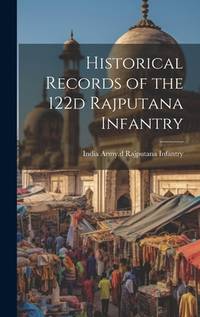
0267026730.Ghardcover. Good. Access codes and supplements are not guaranteed with used items. May be an ex-library book. hardcover
0483943266.Gpaperback. Good. Access codes and supplements are not guaranteed with used items. May be an ex-library book. paperback
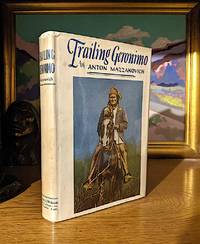
193110483Hollywood California: A. Mazzanovich 1931. First Printing of the Revised 3rd Edition. Hardcover. Near fine/very good. 8vo. pp. 25-112 illustrations 115-320 text maroon cloth color frontispiece of Geronimo mirrors the illustration on the dust jacket. Two other frontispiece illustrations; Lieutenant Chas. B. Gatewood & the author. -- Private book plate pasted to the first free endpaper. Minor rubbing to the tips of the spine. Dust jacket has a small piece rubbed of at top of the spine. Book is internally clean and sound. A. Mazzanovich hardcover
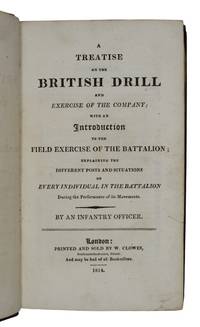
1814AQ22779London: Printed and sold by W. Clowes 1814. 3 vi-xxxii 351pp 1. Without half-title. With 82 engraved figures on five folding plates. Contemporary gilt-tooled calf. Lightly rubbed and marked corners bumped head of spine scorched. Marbled endpapers armorial bookplate of Thomas Francis Fremantle third Lord Cottesloe 1862-1965 to FEP manuscript shelf-marks to front blank fly-leaf tear to leaves K9-10 - touching text without loss of sense. The uncommon first edition of an exhaustive and authoritative manual on British Army drills; published in the penultimate year of the Napoleonic Wars. A second edition appeared in 1816. In his prefatory remarks the anonymous infantry officer bemoans the 'little attention which is sometimes bestowed to the instruction of the troops' and the 'careless manner in which the drill and exercise are often carried on' situations which he hopes his book may rectify. The usual databases record copies at five locations BNF Buffalo California Canadian Museum of History and Mississippi. . First edition. 12mo. Printed and sold by W. Clowes unknown
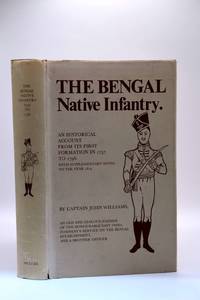
1970mon0000972658Muller 1970. Hardcover. Very Good. in x in x in. Facsimile edition of 1817 original. Pages clean and bright no markings light wear to edges. Dust Jacket unclipped. Muller hardcover
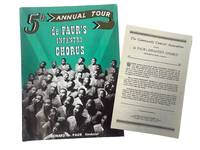
1951201621951. De Paur Leonard's 5th Annual Tour de Paur's Infantry Chorus materials 1951 document the postwar concert-touring system of an African American veterans' chorus that transformed wartime military performance into a nationally managed civilian musical enterprise. The archive documents African American choral touring through a souvenir booklet and concert program revealing how the chorus operated in practice through professional management printed repertoire performer biographies promotional photography and public commemoration of its touring record. De Paur had directed the chorus during World War II and contemporary coverage noted that the group's singers came from the 372nd Infantry and had given more than 2000 concerts in the Pacific Theatre before their postwar recording and concert career brought them to civilian audiences. The materials support research into African American military service concert management Black choral music spirituals wartime entertainment and the cultural transition from segregated military units to postwar public performance.<br /> <br /> The archive consists of two printed documents issued by Columbia Artists' Management: one twenty-four-page tour booklet and one four-page concert program together documenting de Paur's Infantry Chorus during its fifth-anniversary touring period. 1 De Paur Leonard. 5th Annual Tour de Paur's Infantry Chorus / Spring 1951. New York: Columbia Artists' Management Inc. 1951. Twenty-four-page booklet 9 x 12 inches with an introduction to the chorus biographies of de Paur and featured soloists two program lists and more than thirty black-and-white photographs including images from the chorus's South America and Caribbean tour a full-page photograph of de Paur conducting portraits of featured singers and a photograph of de Paur receiving a trophy from Columbia Artists Management president Frederick C. Schang Jr. commemorating the chorus's record-breaking 180-concert tour in 1948. The booklet closes with a fifth-anniversary statement thanking audiences for inviting the chorus "to come and sing for you" and for the "kind communion" found in sharing music language that frames the group's touring work as both professional achievement and collective cultural exchange. 2 De Paur Leonard. The Community Concert Association Presents de Paur's Infantry Chorus. New York: Columbia Artists' Management Inc. 1951-1952. Four-page program 6.25 x 9.5 inches with a full song list and brief background on de Paur and the chorus. The repertoire includes contemporary music Latin American folk songs World War II songs Negro spirituals and songs of faith with many arrangements attributed to de Paur; the spirituals include "No Bottom Steamboat Song" from John Henry for which de Paur served as original music director.<br /> <br /> The materials show the mechanisms of African American postwar concert circulation: a management agency packaging the chorus for community concert associations a printed booklet establishing institutional legitimacy photographic evidence of hemispheric touring and programs positioning spirituals alongside international folk material and wartime songs. University Musical Society records for a November 20 1951 de Paur Infantry Chorus concert similarly list repertoire ranging from Latin American songs and World War II material to African American spirituals confirming the breadth of the chorus's public programming during this period. Light wear toning and mild dampstaining to cover; contents remain complete and legible; overall very good. Focused African American music and military-history archive documenting how Leonard de Paur and a chorus of Black veterans carried wartime performance into postwar concert institutions recording touring and public commemoration. unknown
BOOKS017513IFort Benning Georgia: The Infantry School. HC. good blue buckram cloth w/light wear hardcover EX-LIB. Offered as a lot are eleven 11 different volumes of MAILING LIST including: Vol XIII-January 1937; Vol XIV-July 1937; Vol XVII-1939; Vol XVIII-July 1939; Vol XIX-February 1940; Vol XXI-February 1941; Vol XXII-July 1941; Vol XXIII; Vol XXV; Vol XXVII; Vol XVIII. The Infantry School unknown
1333930291.Gpaperback. Good. Access codes and supplements are not guaranteed with used items. May be an ex-library book. paperback
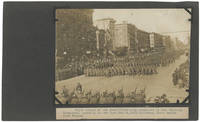
1919CAT0119New York: Underwood and Underwood 1919. First Edition. Gelatin silver prints 7 ¾ x 5 ½ inches each on 11 ½ x 7 inch black paper mounts captioned with affixed text. Very Good. Two WWI-era press photographs related to the Negro 15th Infantry Division of the New York National Guard a.k.a. the 369th US Infantry Regiment and their white commander Colonel William Hayward. One photograph shows the division on parade in New York following their return from combat duty in France in 1919 the other is a well-known image of Hayward who organized the all-black unit and served as its leader. Fighting for a record-breaking 191 consecutive days alongside French troops in the trenches the regiment became known as the “Harlem Hellfighters.†<br /> <br /> The opportunity for African-Americans to serve in WWI arose from the Selective Service Act of 1917 which drafted all men between the ages of twenty-one and thirty. Special segregated training camps were established and units were formed. The US National Archives states that 200000 African-Americans served in Europe during WWI but only 42000 saw combat. When the 15th Infantry arrived in France in 1918 Hayward was committed to the idea that his unit would fight on the front lines. After General Pershing refused to integrate them with the full US army Hayward pushed for another assignment under French command. Unlike many other segregated divisions in WWI the 15th aka 369th was eventually sent to the trenches. Its members' distinguished service brought honor and fame. Before leaving the US in 1917 the regiment had not been allowed to participate in the New York National Guard’s farewell parade. When they returned victorious Hayward ensured they were publicly honored. <br /> <br /> Both with various press stamps to versos. Small closed tear of about a half inch to upper edge of parade picture good overall. Hayward portrait with some rippling at edges very good overall. Underwood and Underwood unknown
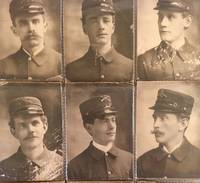
1898List319Massachusetts 1898. The 2nd Massachusetts Volunteers mustered into service in May 1898 and within a month saw significant action in Cuba at the Battle of El Caney. They were one of three volunteer units from Massachusetts to see action on the Santiago Campaign. The regiment was inexperienced - 55% were untrained recruits. The lack of experience combined with their rifles giving off a very visible black smoke led to a heavy casualties in the Battle of El Caney. After an encampment near Santiago de Cuba in which a large number of the soldiers became ill with disease - estimates are as high as 65% - the regiment returned home in August. Historians have noted that soldier demographics changed considerably from the Civil War to the Spanish American war as the smaller number of troops and the lack of a draft led to a more enthusiastic army with higher morale. <br /> <br /> The photographs in this group are interesting as a typological grouping of images of untrained soldiers and also for their historical value as most contain identifications to versos. The highlight of the group is forty-four uniformly mounted portraits of soldiers nearly all identified measuring 3 ¾ x 2 ½ inches each. Other photographs include a large portrait of Captain Frederick E. Pierce with the blindstamp of Goldsmith Studio Springfield Massachusetts and a 3 ¼ x 3 ¼ inch square card of Capt. Pierce in Camp Turner. Also included are two slightly larger photographs on similar mounts. <br /> <br /> Overall an interesting group. Good condition overall with assorted chips and wear. unknown
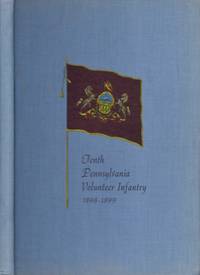
196334963n.p.: Chas. M. Henry Printing Company 1963. Hardcover. Good. Quarto. x 163 pages 1. Illustrated. Blue cloth hardcover with title and regimental flag illustration on the front cover. Light shelf wear and rubs to the blue cloth binding. End papers toned. Chas. M. Henry Printing Company hardcover
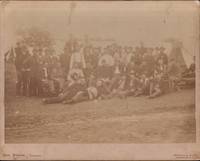
188332867Washington DC: Geo. Prince 1883. Photograph. Good. Photograph. 8" x 10" mounted albumen photograph. Light wear. Faint wooden sign in the photograph background reads "Indianapolis Light Infantry." "Indian Wars" written in pencil on the back of the photograph. Light edge wear to the photograph. Geo. Prince unknown
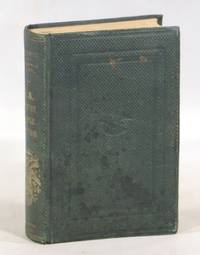
1863000013036Philadelphia: J.B. Lippincott & Co 1863. Later printing. Hardcover. Very Good. 32mo. 14 cm x 9 cm. 4 5-450 14 pages of publisher's advertisements 2 pp. Green pebble-grain publisher's cloth with the symbol of the War Department and several borders in blind on both boards gilt lettering and the War Department's symbol in gilt on the spine. Illustrated with a folding frontispiece and with 77 additional plates many of which are folding all illustrations and diagrams done in black and white. Completing the title page: "Including Infantry of the Line Light Infantry and Riflemen. Prepared under the Direction of the War Department Authorized and Adopted by The Secretary of War May 1 1861. Containing The School of the Soldier; The School of the Company; Instruction for Skirmishers; the General Calls the Calls for Skirmishers and the School of the Battalion; Including the Articles of War and a Dictionary of Military Terms. Broadfoot 591. With a contemporary inscription on the free front endpaper: "Mr. James Reynolds Book O U or Oct. 15th 1862". According to records found on Ancestry.com a James Reynolds enlisted in August of 1862 into the 25th Infantry of Connecticut and mustered in on November 11 of 1862. The entire regiment mustered out in Hartford on August 26th of 1863. The regiment saw action near Baton Rouge and helped carry out the siege of Port Hudson. A fascinating volume of U.S. military history crucial to the volunteers and drafted soliders of the Union Army. The manual instructs the soldiers on how to interpret bugle calls with sheet music printed inside how to engage in combat and on the general rules of conducting war. Spotting to the front board some of the plates with a wrinkle or two the frontispiece partially trimmed resulting in only nine of the ten companies depicted actually present. J.B. Lippincott & Co hardcover
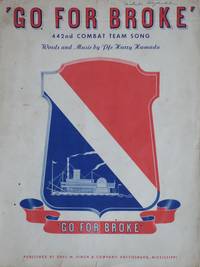
1944List2436Hattiesburg: Earl M. Finch 1944. Sheet music measuring 12 x 9 inches 4 pp. Signature of a Nabuko Hayashida on front cover. Slight tears at fold some toning two small pinholes very good overall quite attractive. Very Good. In Hawaii in May 1942 a battalion of Nisei volunteers was assembled for service in World War Two despite earlier failures of efforts to recruit Japanese-Americans due to the Army’s labeling of Nisei recruits as 4-C enemy aliens. Designated as the 100th Infantry Battalion they were deployed to North Africa in June 1943 integrating with the 34th Division in active combat. Their subsequent deployment to Italy in September 1943 exposed them to intense warfare earning them the moniker of the "Purple Heart Battalion" due to their notably high casualty rate.<br /> <br /> In January 1943 the U.S. War Department officially declared the establishment of the segregated 442nd Regimental Combat Team RCT which was comprised of Nisei volunteers originating from Hawaii and the mainland. The culmination of this initiative transpired in June 1944 when the 442nd RCT merged forces with the 100th Infantry Battalion in Europe subsequently absorbing the latter into its structure. The notable achievements of Nisei soldiers in combat operations prompted the reinstatement of the draft in January 1944 specifically targeting Nisei detainees to augment the ranks of the 442nd. Over time the 442nd RCT expanded to encompass the 2nd 3rd and 100th Battalions; the 522nd Field Artillery Battalion; the 232nd Engineering Company; the 206th Army Band; Anti-Tank Company; Cannon Company; and Service Company. <br /> <br /> Offered here is a very scarce piece of sheet music entitled “Go For Broke†which was written by the Hawaiian musician Harry Hamada reflecting the slogan of the 442nd and performed by Shelby and others during the war as part of efforts to boost morale. Hamada would feature in the 1951 movie “Go For Broke†as Masami alongside several other veterans of the 442nd. This publication of “Go For Broke†is from 1944 seven years before the movie’s release. The piece is dedicated to Colonel C.W. Pence. Hamada was a Hawaiian musician who performed with a band called the Shelby Hawaiians or the Shelby Serenaders. They performed as early as 1943. The Hattiesburg Mississippi merchant Earl M. Finch who ran an Army and Navy store close to Camp Shelby befriended Hamada and other members of the 442nd and acted as a sponsor for the group and eventually published this version despite his business being a dry goods merchant house and not a publishing house. The group with the support of Finch performed throughout the country to lift morale. At some point Hamada penned this composition likely in 1944 as we find no reference to it in 1943 articles and Finch published it - Hamada’s composition would become the theme song of the 442nd and Hamada would perform at the Halloran General Hospital in New York and the Walter Reed Hospital in Washington D.C. in 1944 likely performing this composition. Another composition called “Go For Broke†exists as well and it is unclear to what degree Hamada’s work caught on among the regiment. <br /> <br /> We find two records of Finch’s published version of the composition one listed as part of an online remembrance of the 442nd by the Smithsonian Institution https://americanhistory.si.edu/explore/stories/day-remembrance-70-years-after-executive-order-9066 which appears to have been on loan from the National Japanese American Historical Society and another copy held at Stanford though not listed in OCLC. Finch’s story is also interesting and is the subject of a remembrance on a 100th Battalion History page online https://www.100thbattalion.org/history/stories/earl-finch/. We find no copies listed in OCLC. Overall a very scarce piece of Japanese-American wartime history. Earl M. Finch unknown
186358199Camp near Brooks Station Saturday April 11 1863. Fine original condition. 15-1/2 x 9-3/4 inches. ".Yesterday I witnessed one of the grandest sights that I ever beheld. Our whole corps was reviewed by the President Generals Hooker McLain Howard Steinway Secretary Seward and an innumerable host of Brigadier Generals and it was a sight that has paid me for coming to war." The spectacle is described in great detail. Private Penfield was soon to be captured at Chancellorsville spending 12 days as a prisoner of war before being exchanged. He survived the war to carry on his father's carriage making business in Monroe Connecticut and later founded a small private academy. unknown
186458358Various places including Methuen Lawrence Andover Boston and Lowell Massachusetts 1864-1865. modern calf antique with original gilt-lettered label "Company Clothing" laid down on front panel. Folio. Two pages list "Price of Clothing Camp & Garrison Equipage Year 1864." Following are 204 pages one to a soldier listing name company place and date of enlistment articles of clothing issued value itemized date of clothing issue and signature of soldier and witness. In some cases date of discharge desertion or demise is also noted. A "colored" under cook is also listed along with the soldiers. hardcover
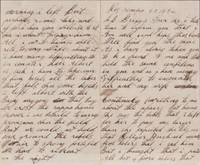
186235710Somewhere in Virginia: n/a 1862. n/a. Letter. Good. Paper. Approximately 9" x 75.". Folded. 3 pages of manuscript. Letter reads with spelling not corrected - December 22 1862 H. B. Briggs: Dear Sir I take time to inform you that I am well and hope these lines will find you the same. As I have always taken you to be a friend to me and still hold the same confidence in you. And As I have many difficulties to incounter here and my wife continues writing to me about the affairs at home. She says the debts that I left her to pay was larger than she expected. She tells me that Cliger Bushnell wants five dollars that I ow'd him. But I thought That I paid all but 4 more dollars that morning I left. But perhaps I mistake and if so I hope you will see to it for I want to pay him all I owe to him. I will write my wife about it. I have many difficulties to incounter here. Albert is sick. I have to take care of him besides all the labor that falls upon me. Besides I left Albert with the baggage wagons that day we cross the Rappahannock River. I was detailed to carry provisions upon the field but we could not hold our ground. The rebels were too strong fortified. We had to retreat in the night. I hope you will write Let me know what the prospects is for our country. You have the chance to be informed better than I do. I have to write upon my knapsak so excuse it. respectfully yours David Downs. These 3 page letter includes the stamped envelope with stamp and Washington D.C. postmark. The envelope is addressed "Mr. H. B. Briggs Westville Green Co. Ny York." Soldier record included with letter indicated David Downs was 38 when enlisted 8/27/1862 at Lexington NY as a Private. On 9/6/1862 he mustered into Company G Co. He was dishcharged on disability 3/16/1864. n/a unknown
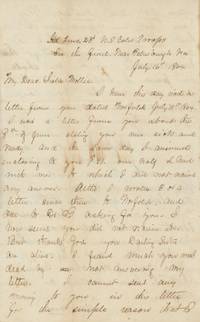
1864List2721Petersburg Virginia 1864. Single letter four 5 x 8 inch pages folded. Toning and some tears at folds overall excellent condition. M. Herbert Wood c. 1839–deceased was an officer of the 23rd Regiment United States Colored Infantry during the American Civil War. This regiment which consisted of African-American enlisted men with white officers was part of the 4th Division of the IX Corps organized at Camp Casey Virginia. Wood may also have served in the 25th Ohio regiment. A newspaper account from the time alleges that Wood a Mainer had married an Alabama woman who owned a considerable number of enslaved people and then “sold the negroes pocketed the proceeds turned abolitionist abandoned his wife and child and went back to Maine†before joining the Union army.1 Following the Civil War Wood purportedly asked President Andrew Johnson for a position but was denied after testifying that he would side with Congress over the President presumably concerning Reconstruction.<br /> <br /> This letter to Wood’s sister Mollie is dated July 16 1864 after the Battle of Spotsylvania Court House and shortly before the Battle of the Crater in which the 23rd suffered significant casualties. Wood describes the Regiment’s dire financial situation apparently having gone months without pay:<br /> <br /> “I cannot send any money to you in this letter for the simple reason that I have not any myself. We have not been paid since the last day of Feb and there is not an officer in the Regt that has 5 dollars but we shall be paid I hope soon it cannot be very long and I will then send you as much as you need.â€<br /> <br /> He also informs Mollie of some sad intelligence about her husband:<br /> <br /> “I do not wish or would not say one single word to injure your feelings but I very much fear that what I told you when we last met at New Berne has proved true. And that you are now a deserter’s wife. I have enquired of a great many officers who know him and to some who are Bro. Masons & have stated circumstances omitting name & place and all agree in saying that you will probably never hear from him again. We may all be mistaken however I hope we are.â€<br /> <br /> The Civil War saw quite a high desertion rate on both sides though many men eventually returned to their posts voluntarily or otherwise.<br /> <br /> 1 “A Specimen of the Impeachment of Witnesses†The Louisville Daily Journal April 15 1868. unknown
8180Undated 1840s. English. 12mo leaf dimensions 16 x 11 cm 60 pp. Stitched notebook of thirty leaves without covers. In fair condition aged and with wear to extremities of outer leaves. On laid Italian paper with the watermark of the Italian firm G. & C. Cini. Neatly written with the body of the writing in one hand and the mottos in another. Text clear and apparently complete. Begins: '1st. Regiment of Life Guards. Peninsular Waterloo. Scarlet Facings Blue. Returned from France January 1816.' A typical entry reads '58th. the Rutlandshire Regt. of Foot. Gibraltar with the Castle and Key. Montis Insigna sic Calpe. The Sphinx with the words. Egypt Maida Salamanca Vittoria Pyrenees Nivelle Orthes Peninsula. Returned from Ceylon June 1839. Facings Black.' Lists the first 99 regiments of foot as well as the rifle brigade West India regiments Ceylon Rifle Regiment Cape Mounted Riflemen and others. Notebook ends: 'New Army List for the Jannuary sic 1841.' The entries on the first seven leaves fourteen pages are numbered in pencil to 32. Origin unknown. Undated [1840s?]. [English.] unknown
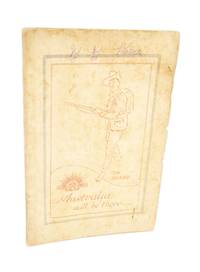
19184145Amesbury England: printed "In Camp" by the Battalion 1918. Octavo pamphlet in original printed wrappers 28 pp. illustrated. Covers chipped some foxing but good condition overall. Scarce First World War Australian Battalion history.</p> <p>The preface gives some indication of the production of the pamphlet being the work of Private H. MacPherson with sketches by Private W.H. Smith. The author writes: </p> <p>'This work is a continuation of the career of the 44th Battalion of the Australian Imperial Forces from Western Australia. We find that the Battalion is now absorbed by the 11th Brigade; consequently the publication assumes a Brigade aspect. We have endeavoured to portray the different affairs at the training camps with a splash of history interwoven.'</p> <p>Typical of such Battalion mementos produced in training camps in the English countryside this publication reflects the lives of soldiers at rest from the harrowing conditions across the channel in European battlefields. The author describes the terrain as similar to the Western plains of New South Wales and includes some information on Stonehenge and local hamlets. Light hearted digs at the officers and mixed with poems including one such verse named 'The Kaiser's Dream'. The pamphlet concludes with an illustrated page titled 'A London Girl's Opinion of the Australian Soldier' penned by one Nellie Ellis who is gushing in her enthusiasm for the ANZAC boys about town.</p> <p></p> <p>The pamphlet is rare and only three copies are held in Australian institutional collections at the State Libraries of New South Wales and Western Australia and also at the War Memorial in Canberra. It is not recorded in the Bibliography of Australin Army Unit Histories by Trigellis-Smith and others although Battalion histories for the 41st 42nd and 43rd are included. Likewise the pamphlet is not included in 1963 checklist Australian Military Bibliography by C.E. Dornbusch. However both Trigellis-Smith and Dornbusch note that an informal account of life in the 44th Battalion was published by one Captain Longmore Perth 1921.</p> <p>The pamphlet bears the colophon of Bennet Brothers printers in Salisbury. printed "In Camp" by the Battalion unknown
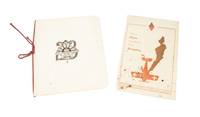
19184144France: unknown 1918. Postcard measuring 90 x 146 mm. printed on both sides; with a string tied folding Christmas card containing two leaves 113 x 143 mm. A few ink spots affect the postcard yet both items are in good condition. Two pieces of ephemera from the 23rd Battalion A.I.F. created just after the armistice of 11 November 1918. </p> <p>Raised in Victoria in March 1915 the 23rd Battalion served at Gallipoli between September to December of that year before redeployment to France. In July of 1916 the battalion suffered a horrific casualty rate over ninety percent during the battles of Pozieres and Mouquet Farm. By mid-1918 the 23rd was rolling back the German line at Amiens and Hamel a precursor of defeat and the armistice.</p> <p>The postcard reads "Just a Plane Good Wish I am Dropping" and is inscribed by one Frederick to Martha and Dad. Dated November 16th the card was sent just five days after the armistice was declared. The Christmas card contains two printed leaves depicting Mont de Cats in France opposite gum trees in Geelong.</p> <p>Instances of quality First World War ephemera are becoming increasingly scarce on the market. unknown unknown