271 résultats
19852082702114907448Whale Cavalry Military History Publishing Committee 1985. Soft Cover. Fine. Number of pages: 478 pages Size: 22cm Whale Cavalry Military History Publishing Committee paperback
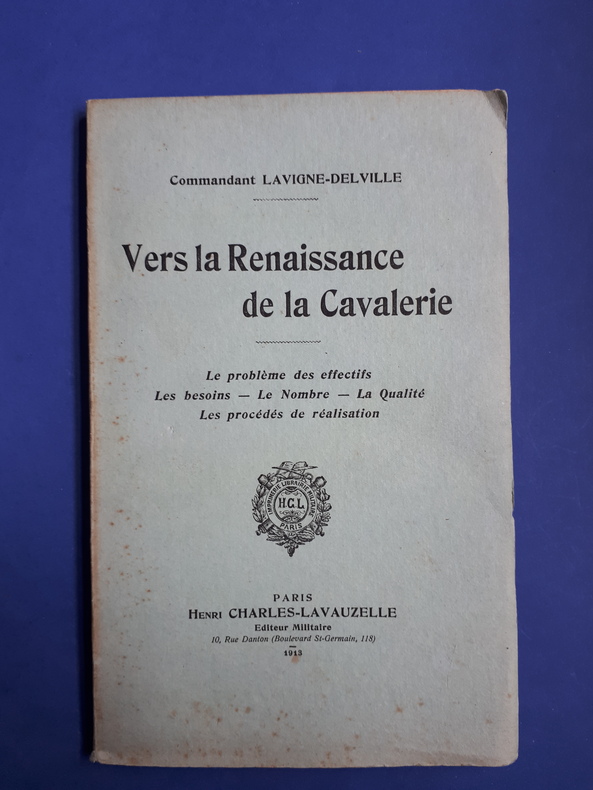
1913AA639Edité par Henri Charles-Lavauzelle, Paris, 1913 In-8° de 149 pp., Exemplaire broché.
1958126779Emile Hazan, 1958, in-12, xvi-398 pp, un portrait en frontispice hors texte, notice biographique, imprimé sur vélin, reliure demi-maroquin brun chocolat, dos à 4 nerfs soulignés à froid, titres et caissons dorés, tête dorée, dos uniformément passé, bon état
197633481Émile Hazan 1976 XIV- 443 pp, réimpression de l'édition Plon 1905
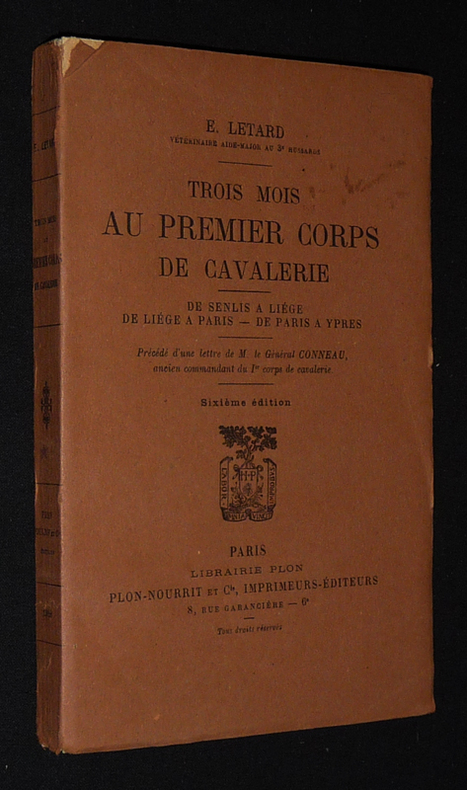
1919vh3147Librairie Plon Broché 1919 In-12 (12,2 x 18,9 cm), broché, 265 pages ; mors supérieur fendu en tête, chocs au quatrième plat, traces au premier plat, assez bon état. Livraison a domicile (La Poste) ou en Mondial Relay sur simple demande.
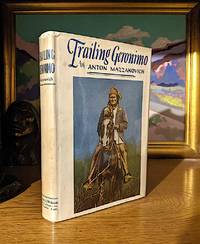
193110483Hollywood California: A. Mazzanovich 1931. First Printing of the Revised 3rd Edition. Hardcover. Near fine/very good. 8vo. pp. 25-112 illustrations 115-320 text maroon cloth color frontispiece of Geronimo mirrors the illustration on the dust jacket. Two other frontispiece illustrations; Lieutenant Chas. B. Gatewood & the author. -- Private book plate pasted to the first free endpaper. Minor rubbing to the tips of the spine. Dust jacket has a small piece rubbed of at top of the spine. Book is internally clean and sound. A. Mazzanovich hardcover
1926LFA-126726863Un ouvrage de 520 pages, format 115 x 175 mm, illustré, broché, publié en 1926, Libraie J.-B. Baillière et Fils, bon état
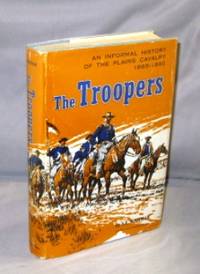
196226676<p>New York:: Hastings House Publishers 1962. First Printing of the First US Edition. A Fine copy in a Near Fine unclipped dust jacket with a small chip to the bottom edge of the front panel. The cavalry writes about in this book existed from 1865 to 1890 and was informally known as the Plains Cavalry. Formed at the end of the Civil War in 1865 the Plains Cavalry was charged with protecting American settlers railroaders wagon trains businesses gold seekers and others from Indian attacks. The Plains Cavalry was meant to operate primarily on the western frontiers of the expanding nation. At that time almost anything west of the Mississippi River was considered the frontier. Most Americans living east of the Mississippi had no idea of the danger deprivation or hardship encountered by those who lived on the other side of the river. This history is a clear-eyes description of the troopers as they really were.</p> Hastings House Publishers, hardcover
1926mon0000014194The Cavalry School 1926. Hardcover. Good. Covers show some darkening and fading and spine edges show some rubbing. Corners show some fraying rubbing and scuffing. Pages show some light browning. The Cavalry School hardcover
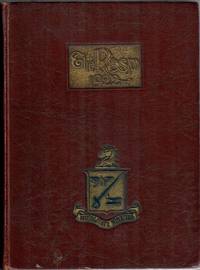
192232809Fort Riley KS: Cavalry School 1922. First edition. Hardcover leatherette embossed in gold. Very good covers shelf rubbed outer pages lightly worn. 272p many photos line ills. and ads. No jacket as issued. Small bookseller label in back. Doings at Fort Riley in the academic year 1921-22. Many articles and photos about the history of Fort Riley the classes field officers troop officers basic National Guard and Reserve tactics weapons riding with the A.F. in Germany polo building jumps and cross-country obstacles Saumur etc. Also school activities show results humor and cartoons. The texts are by students and various officers including Harry B. Chamberlin's "Observations on Riding and Training" and Major George S. Patton on "The Cavalryman" "you must become a horsemaster a scholar a high minded gentleman a cold blooded hero and a hot blooded savage if you would be a successful Cavalry leader". Dozens of photos of riders and horses mostly named the buildings the faculty and more. Dedicated to Colonel Hamilton S. Hawkins assistant commandant with his photo. Many local and military related ads. The sixth appearance of the Fort Riley yearbook which ceased publication in 1928. This year is very scarce. Heavy; shipping/handling will be extra. Please keep this in mind when ordering. Wells 6143.1. [Cavalry School] hardcover
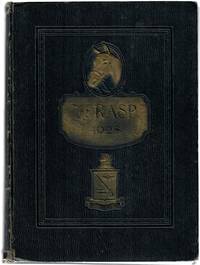
192830367Fort Riley KS: Cavalry School 1928. First edition. Hardcover leatherette embossed in gold. Fair shaken but binding will hold. 272p many photos line ills. and ads. Covers rubbed outer pages foxed. No d.j. as issued. The final appearaance of this Cavalry School yearbook which began publication in 1912. Dedicated to Commandant Brig. Gen. Charles J. Symonds with photo of him on horseback. Full-page photos of the other commanding officers. Doings at Fort Riley in the academic year 1927-28. School activities exercises show results. etc. told chiefly via many photos of men and horses and cartoons. Several pages with photos on flying and also the mechanization of the British cavalry. Two pages on shoeing the polo pony but overall very little on horsemastership. Heavy; shipping/handling will be extra. Please keep this in mind when ordering. Scarce. Wells 6143.1. [Cavalry School] hardcover
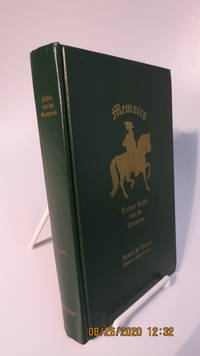
198420-081A facsimile reprint of this Memoir of Virginia's Turner Ashby. appears un-read. No markings. Tight binding. 12 Chapters through page 260 followed by several Sketches and memoirs Thomas Marshall A. W. McDonald Samuel B. Myers Geroge F. Sheetz & William E. Jones. 408 Pages with 11 unnumbered pages of an index & 3 pages of additional works by the publisher. Butternut Press hardcover
195287562Atlanta GA: Albert Love Enterprises c1952. Presumed First Edition First printing. Hardcover. Good. The format is approximately 9 inches by 12 inches. Dornbusch 411. Unpaginated. Endpaper map. Illustrations. Maps. Cover worn and soiled. Edges and corners rubbed. No dust jacket present. Large volume somewhat shaken. If sent outside of the U. S. this would require additional shipping charges. Includes a section on the History of the First Team prior to Korea going back to its precursor lineage units its formal organization in 1921 and its spectacular achievements during World War II. After a substantial text and pictorial section on the combat operations and military activities the volume ends with information on The Division Patch information on the Headquarters and Headquarters Company 1st Cavalry Division 5th Cavalry Regiment 7th Cavalry Regiment of Custer fame and Garry Owen 8th Cavalry Regiment; Headquarters and Headquarters Battery 1st Cavalry Division Artillery 61st Field Artillery Battalion 77th Field Artillery Battalion 82nd Field Artillery Battalion 99th Field Artillery Battalion 29th Antiaircraft Artillery Automatic Weapons Battalion 92d Antiaircraft Artillery Automatic Weapons Battalion 8th Engineer Combat Battalion 13th Signal Company 15th Quartermaster Company 15th Medical Battalion 15th Replacement Company 16th Reconnaissance Company 27th Ordnance Maintenance Company 70th Heavy Tank Battalion 71st Heavy Tank Battalion 191st Counter-Intelligence Corps Detachment 545th Military Police Company and 1st Cavalry Division Band. This is followed by the Roster First Cavalry Division which gives unit name street address and home town and state. The 1st Cavalry Division initially organized in September 1921 at Fort Bliss Texas was serving on occupation duty in Japan when the Korean War began in the summer of 1950. On 18 July 1950 elements of the division went ashore at P'ohang-dong South Korea moving quickly westward to block the enemy along the main Taejon-Taegu corridor which led back to the ports on the Sea of Japan. With unrelenting pressure from the enemy the division withdrew to Kumch'on and later east of the Naktong River where it held part of the front near Taegu on the Pusan perimeter. During the month of August "The First Team" successfully countered five major North Korean attacks in that section. In early September the division launched an attack against the "Walled City" a series of high mountain ridges along the perimeter which the enemy repelled. On 15 September however the United Nations began a new offensive with an amphibious landing at Inch'on near Seoul; with the opening of the second front the 1st Cavalry Division began a drive northwest of Taegu. Six days later the division broke out of the perimeter and North Korean pressure in the south ended. Pursuit of the enemy followed and on 27 September the division met the 7th Infantry Division at Osan. From there the 1st Cavalry Division shifted north to the Kaesong area near the 38th Parallel the dividing line between North and South Korea. On 9 October the 1st Cavalry Division was ordered to take Kumch'on in North Korea which fell on 14 October. Shortly thereafter the division reached P'yongyang the North Korean capital. Elements of the division linked up with the 187th Airborne Infantry at Sunch'on and other elements turned southwest to Chinnamp'o the main port of North Korea. Oon 1 November a new more savage conflict began. Waves of enemy forces swept over the 1st Cavalry Division area near Unsan and the division fell back to a line between the coast and the Taedong River valley. By 12 December the division had withdrawn to only six miles north of Seoul and in January 1951 it occupied positions south of Seoul in the Ch'ungju area. Seoul had been captured but the enemy did not cross the Han River. When the enemy failed to follow up its recapture of Seoul the 1st Cavalry Division undertook a reconnaissance in force resulting in a limited offensive north and west of the capital. By the end of February "The First Team" had reached the Hongch'on area in the central front midway between Seoul and the Sea of Japan. In February the 1st Cavalry Division pushed to the Hwach'on Reservoir north of the 38th Parallel and then went into reserve. On 22 April the Chinese Communists began a new offensive to dislodge the UN forces and the division was given the mission of defending Seoul and the area north of the city. The division pushed northward and by the end of May it was again in North Korea. The 1st Cavalry Division's next assignment was to attack the "Iron Triangle" an area from P'yonggang southeast to Ch'orwon and southwest to Kumhwa which served as a marshalling zone for the enemy. In December 1951 the 45th Infantry Division replaced the 1st Cavalry Division which then began redeploying to Hokkaido Japan. The last element of the 1st arrived in Japan in mid-January 1952. Albert Love Enterprises hardcover
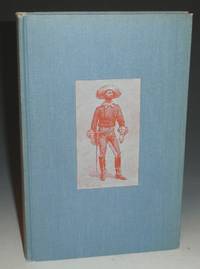
1957013054Portland Oregon: Champoeg 1957. Limited Edition. Octavo. Limited to 1000 copies. 74p. Edited by Edgard I. Stewart and Jane R. Stewart with a note on the Kicking Bear Pictography by Carl S. Dentzel. index. notes. folding maps Yellowstone and Missouri River Areas and Lt. Godfrey's Map of the Battle of Little Big Horn. Photographs illustrations etc. Subtitle of book continues: ". when Brigadier General Alfred H. Terry left Fort Abraham Lincoln Bismarck Dakota Territory until the return of the battered regiment a few days after September 24 1976 to the same place. Bound in blue cloth pictorial illustration mounted to upper board spine lettering gilt. A very good copy. Champoeg unknown books
1957013054Portland Oregon: Champoeg 1957. Limited Edition. Octavo. Limited to 1000 copies. 74p. Edited by Edgard I. Stewart and Jane R. Stewart with a note on the Kicking Bear Pictography by Carl S. Dentzel. index. notes. folding maps Yellowstone and Missouri River Areas and Lt. Godfrey's Map of the Battle of Little Big Horn. Photographs illustrations etc. Subtitle of book continues: ". when Brigadier General Alfred H. Terry left Fort Abraham Lincoln Bismarck Dakota Territory until the return of the battered regiment a few days after September 24 1976 to the same place. Bound in blue cloth pictorial illustration mounted to upper board spine lettering gilt. A very good copy. Champoeg unknown
197330986Bantam, New York, 1973. 177 Seiten / pp.; 8° , ca. 18 x 11 cm, kartoniert / Paperback
197912848London, Orbis Publishing, 1979, pt in-4°, 256 pp, abondamment illustré de cartes et de photos, cart. éditeur, jaquette illustrée
1979cr1058Osprey Publishing Men-at-Arms Album souple 1979 In-8 (18,5 x 25 cm.), album souple, couverture illustrée, illustrations couleurs et noir et blanc in-texte, 40 pages, texte en anglais ; coiffes et coins un peu frottés, couverture légèrement jaunie, quelques traces aux plats, intérieur frais, assez bon état. Livraison a domicile (La Poste) ou en Mondial Relay sur simple demande.
1952LFA-126717120Un ouvrage de 1222 pages, format 170 x 250 mm, relié cartonnage dos percaline, Impr. Kugelmann (Paris), bon état
1967LFA-126717125Un ouvrage de 1409 pages, format 170 x 250 mm, relié cartonnage dos percaline, Impr. Kugelmann (Paris), bon état
1949LFA-126717127Un ouvrage de 361 pages, format 170 x 250 mm, relié cartonnage dos percaline, Impr. Kugelmann (Paris), bon état
1954LFA-126717140Un ouvrage de 209 pages, format 165 x 255 mm, broché, Impr. M. Pailhé et ses Fils (Paris), bon état
1969LFA-126717141Un ouvrage de 229 pages, format 165 x 255 mm, broché, Impr. M. Pailhé et ses Fils (Paris), publié en 1969, bon état
1970LFA-126717142Un ouvrage de 253 pages, format 165 x 255 mm, broché, Impr. M. Pailhé et ses Fils (Paris), publié en 1970, bon état
1992LFA-126723688Un ouvrage de 132 pages, format 245 x 345 mm, illustré de gravures de La Guérinière, croquis parisiens de Crafty, relié cartonnage couleurs, publié en 1992, Collection "Splendeurs"