U S Committee on Veterans' AffairsBiblio.com
333 résultats
0656226447.Ghardcover. Good. Access codes and supplements are not guaranteed with used items. May be an ex-library book. hardcover
6rgzbDiamond Fields Advertising. Hardcover. Good/No Jacket. Signed by one of the Survivors K.R Thomas on page 94. 50th Anniversary: October 14 1899 to February 15 1900. Reunion Committee. No edition or date stated c1950. The boards are a little shelf rubbed minor marks and Dymo label on the spine. There is light foxing on the end papers. The text is legible. The binding is excellent. GK. Our orders are shipped using tracked courier delivery services. Diamond Fields Advertising hardcover
dola2690Seoul: 2010. First Edition. 3 Volumes. folio. 319 1; 463 1; 319 1. profusely illus. many colour. index. bds slipcase. some rubbing/soiling to covers & slipcase corners of slipcase worn. dola2690 [Seoul: 2010] unknown
1913000743Washington State WA ALASKA AK. Good. 1913. On offer is a remarkable reference treasure trove and artifact of the Civil War - a 1913-1932 ledger of 225 certificates of application for membership to the Daughters of Union Veterans of the Civil War 1861-1865. The book a 'Horn' Gum Stub File relates to Tent No. 4 The Department of Washington and Alaska. Each woman has listed the soldier's being their father's or in some cases their grandfather's names their length of service from call up to mustering out battalions regiments company reasons for discharge current address of relatives . The women that filled out these certificates were applying for membership and were required to provide handwritten information on their relations. All forms are detailed and such information included; soldiers dying in Andersonville disabilities for wounds and amputations service till the end of the war discharged by Secretary of War etc. etc. Each certificate is attached in the book by itself and not affecting any other certificate. The book proper is approx. 9 x 11 inches and each certificate is approx. 7 x 9 inches. Usual folds age blemishes small splits edge wear and the like associated with old paper. Overall G. ; Manuscript; 4to - over 9¾" - 12" tall; CIVIL WAR HANDWRITTEN MANUSCRIPT DOCUMENT LETTER AUTOGRAPH KEEPSAKE WRITER HAND WRITTEN DOCUMENTS SIGNED LETTERS MANUSCRIPTS HISTORICAL HOLOGRAPH WRITERS AUTOGRAPHS PERSONAL MEMOIR MEMORIAL PERSONAL HISTORY AMERICANA ARCHIVE WAR BETWEEN THE STATES BROTHER AGAINST BROTHER UNION VETERANS WASHINGTON ALASKA AUTOGRAPHS UNION SPOKANE YAKIMA SEATTLE BELLEVUE . unknown
1981153079Washington D.C.: U.S. Government Printing Office 1981. Paperback. Minor soil and name to front cover else very good sound condition. 900pp. U.S. Government Printing Office paperback
1334766533.Gpaperback. Good. Access codes and supplements are not guaranteed with used items. May be an ex-library book. paperback
0484551086.Ghardcover. Good. Access codes and supplements are not guaranteed with used items. May be an ex-library book. hardcover
123900Yorkton Saskatchewan: Yorkton Veterans Centennial Project 978-0-9784420-0-2 978-0-9784420-0-2 2007. Mass market paperback 272. Very good. 4to. The stories of veterans of World War II who were born in or live in Yorkton Saskatchewan and the surrounding area. Clean tight brightsolid copy with black and white photographs. Yorkton Veterans Centennial Project 978-0-9784420-0-2 Paperback
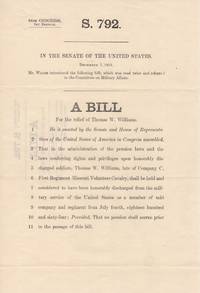
1922List2720Butte Montana 1922. Approximately 113 pieces: fifty-one letters to Thomas Williams; thirteen to various politicians mainly members of Congress; and twenty to Williams’ advocates mostly from Congresspeople; fifteen miscellaneous items including Grand Army of the Republic materials and Williams’ citizenship document; and fourteen empty envelopes. Materials date from between 1911 and 1922. Near fine with normal wear. Thomas W. Williams 1845–1931 was born outside of Swansea Wales and died in a Soldier’s Home in Los Angeles California. According to his obituary he came to the United States in about 1857 as a very young boy briefly left to learn blacksmithing in Toronto Canada and then returned stateside. He enlisted with the Union army at the outbreak of the Civil War shortly before he turned 16 and served in the 1st Missouri Cavalry of Volunteers Company C. After the war he was a resident of Butte Montana to or from which many of these letters are written.<br /> <br /> Offered here is a large lot of materials relating to Williams’ efforts late in life to secure a veteran’s pension for his service – or at least to have his 1864 dishonorable discharge expunged from his record. Williams enlists a number of people to help him with this task including fellow 1st Cavalry veteran Abraham Brokaw several local attorneys and the mayor of Butte. Their letters on Williams’ behalf are mainly addressed to congressmen mostly from Montana whose replies start out with polite deferrals—they would of course love to do anything in their power to help but these matters are difficult and now is simply not the right time—but devolve into accusations and firm denials.<br /> <br /> According to Williams he had served with Company C until his honorable discharge in May of 1864 at which point he immediately reenlisted. He received a thirty-day furlough on reenlistment and decided to visit his uncle in Hamilton Ontario as he had no other family on the continent. On attempting to return to his post:<br /> <br /> “As I was not of age my uncle held me and prevented me from returning to my command. I tried to get away so as to get back ran away twice but was recaptured twice my uncle having a letter from my mother instructing him to hold me as I would only be 19 on Sept 15 1864. I was branded as a deserter when I applied for a copy of my discharge.†December 11 1919<br /> <br /> His record prior to this he claims had been stellar as he lays out in an eleven-page notarized statement as part of his appeal May 3 1922. He describes being sent as a member of General Frémont’s bodyguard into the First Battle of Springfield:<br /> <br /> “we were sent to lexington to drive Price and the Rebels out of Mo. we camp about 20 miles away in a viliage before we reached Springfield and General Freemont called the Body guard out at 2 oclock in the morning for volenteers we came out . we did not know where we were going. after we had gone a few miles we had a fight with the Rebels pickets and whiped and drove them away and we went two or three miles towards Springfield . we made the charge and drove the rebels out there were 2200 of them. we laid out in the prairies all night without Hat Coat or Blanket to keep us warm and Held our Horses by the Bridel all nightâ€.<br /> <br /> The men “formed a camp near Springfield and you can see cut in a large rock the name of Camp Bliss which I cut and the dait of the year.†When Frémont was ordered back to Washington he ordered a dispatch sent from Springfield to Sedalia which Williams carried<br /> <br /> “132 miles from 8 oclock in the morning on our same Horses. and only one drink of water for our selves our Horses from the time we left camp that night untill 11 oclock when we arrived in Seidailia we then returned to Springfield with General Hunters comand escorted General fremont to Rollaâ€.<br /> <br /> The men go on “to Levenworth Kansas and the Bushwackers fought us all the wayâ€. They winter in Leavenworth and are then sent to “Independence Mo to drive Quantrell and his gang out of North Mo†– that is William Quantrill and his Raiders an infamous pro-Confederate guerilla group. Williams writes:<br /> <br /> “We left the Sargent of Co E. in Kansas City to get our mail and a citizen and his son was with him Quantrell gang captured them and striped the both and placed them in a fence corner and killed them Both and placed fence rail over them and Burned them up and left the Boy see them do this he came to our Captain Miles Kehoe who sent us out in squads on all the roads and we captured 9 of the Rebles Captain line them up and told the Boy to pick out the man that killed his father . they coart Marcheled him and Hanged him the next morning at 8 oclock Capt Kehoe let the others go and told them if they were caught in any thing But a fair fight he would Hang them tooâ€.<br /> <br /> Quantrill’s men heed Keogh’s warning and go much easier on six of the company’s men who are captured while searching for more feed for the horses:<br /> <br /> “Quantrals gang caught them after disarming took them to a farm house gave them supper and sent some of his men around and collected all the young ladies they could get and an old Mo fidler they danced all night and then Quantral gave them Brekfast and sent them to there camps this was the last trouble we had with him and his gangâ€.<br /> <br /> At this point Williams does admit to running into some trouble himself: another soldier “started to curse queen Victoria and I hit him . my Welch Blood could not stand to hear himâ€. Williams asks the soldier what he “would do to a man if he damned presedent Lincoln†and the soldier<br /> <br /> “went and swore I damned the president and I was Coart Marceled and sent to Alton then a Military Prison and at the Cort Marshal they did not alow me to say one word to protect myself when I arrived at Alton I explained the whole afair to the officer who had charge of this prison he advised me to write to president Lincolnâ€.<br /> <br /> Williams is shortly released from prison and sent back to his post at Little Rock; in later tellings of the story by Williams’ advocates including in a resolution of the Grand Army of the Republic Lincoln personally ordered Williams released. Willliams’ company fights in the Battle of Prairie D'Ane and then camps with “a comand of Jenensons coulered troopsâ€â€”probably Colonel Charles Jennison—who were “attacked by the rebles†and “shot at them and then went at them with Bainets and drove them for miles it was a Sight to see the dead rebles how they were Killedâ€. Shortly before his initial discharge Williams’ company goes on to Camden where:<br /> <br /> “some of our troops were on picket and those not on guard were asleep around a fire and the rebles made a charge and shot the Boys around the fire after that the Boys took logs and put Hats and overcoats on the logs and the Rebles tryed the same game But was caught in a trapâ€.<br /> <br /> Finally Williams is discharged reenlists and is furloughed and heads to Canada where his troubles begin.<br /> <br /> He first appeals to fellow 1st Missourian Abraham Brokaw since Brokaw could act as a witness to his claims. In their correspondence Brokaw sometimes recalls interesting anecdotes from the war including the “dirty irishman thief and libertine†Kelley “who the boys you will call to mind was going to hang at Little Rock for steeling our postals†April 18 1912 and a “band of gurillas from Ark. that had captured and was holding the little town†of Ozark Missouri who “had got word of our coming and left for parts unknown a few hours before our coming†January 26 1915.<br /> <br /> The letters to Williams and his advocates are frustrating – what he’s told is inconsistent and he makes little progress. First he has to get confirmation of his first honorable discharge which he seems to receive around September of 1916. Then he applies for a pension; however the office of the Bureau of Pensions writes to him the following year that his pension “claim was rejected November 13 1916 on the ground that you were never honorably discharged from the only contract of service you entered into during the Civil War†August 31 1917. A month later the Missouri Adjutant General writes a certificate of his service which “clears your record both here and in Washington†and congratulates him “on receiving at last your just due as a Veteran so richly merited†September 20 1917. By the end of the year though he is still trying to clear the desertion charge and has now resorted to trying to pass a bill in congress to do so. Montana Senator Thomas Walsh writes that “I have tried very hard to secure a favorable report . but have been unable to induce the Military Committee to take action thereon†December 11 1917.<br /> <br /> The congressmen to whom he appeals—including Senators Walsh Tom Stout and Henry Myers and Representatives Frank W Mondell Carl W Riddick and Henry Z Osborne—are less than helpful. They often claim that there is insufficient time remaining in the current congressional session remind him that such bills are difficult to pass even in favorable circumstances and ask him to furnish them with the same information he has already provided. After years of this Senator Myers suddenly tells Charles Juttner one of Williams’ advocates a very different story about Williams’ service:<br /> <br /> “The report of the War Department shows that in March 1863 Mr. Williams was tried by court-martial on a long list of serious charges and that he was found guilty on all of them; that he was sentenced to imprisonment at hard labor for the duration of the war or at least until his term of enlistment should expire and that other penalties were assessed against him one of which was that at the expiration of his term of imprisonment he should be dishonorably discharged from the Army. It appears however that after having been imprisoned nearly a year the remainder of his sentence was remitted and that he was allowed to rejoin his company and that he did rejoin it in February 1864. The records of the War Department however show that July 4 1864 at St. Louis while on furlough Mr. Williams deserted and never rejoined the army.†July 18 1921<br /> <br /> A letter from the War Department Adjutant General adds the details that he “was found guilty . of conduct prejudicial to good order and military discipline and of disobedience to orders†and that his sentence had included “a ball and chain weighing twelve pounds attached to his leg†and the forfeiture of all present and future pay and allowances January 16 1922.<br /> <br /> It is difficult to say which account is true. Myers however had given some telling further reason that Williams’ bill might have been rejected:<br /> <br /> “There is an intense prejudice in Congress against such bills. . The senators and representatives seem to think that such a bill is merely a prelude to an application for a pension and the expenses of the government are now so enormous and the expenses of providing for the veterans of the World War are so great . that there seems to be a general disposition in Congress not to increase the Civil War pension list any more by a single dollar.â€<br /> <br /> Overall a record of one veteran’s experience dealing with the federal government. Of interest to scholars of the American Civil War and postbellum civilian life both for its firsthand accounts of engagements in the trans-Mississippi theater and for the look it offers at the treatment of veterans. unknown
0266910882.Ghardcover. Good. Access codes and supplements are not guaranteed with used items. May be an ex-library book. hardcover
199398985Military Intelligence Service Veterans of Hawaii 1993. Book. Near Fine. Soft cover. Trade paperback in near fine condition. 50th Anniversary Reunion Edition. Military Intelligence Service Veterans of Hawaii Paperback
1334754578.Gpaperback. Good. Access codes and supplements are not guaranteed with used items. May be an ex-library book. paperback
0484779214.Ghardcover. Good. Access codes and supplements are not guaranteed with used items. May be an ex-library book. hardcover
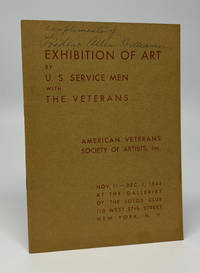
194412619New York: American Veterans Society of Artists Inc 1944. Staplebound. Near fine. Small octavo unpaginated 24pp. illustrated. A near fine copy in the publisher's stapled wraps. A smoker's copy with faint tobacco odor. Staples rusted else a sound clean example. SIGNED and generically INSCRIBED by Frederic Allen Williams then President of the organization as well as a contributing artist. A catalogue for the sixth such exhibition this one held during the height of America's involvement in World War II five months after D-Day. There are sixteen halftone illustrations depicting some of the work on display; mostly painting but some sculpture as well. While all of the art is competent some of it is truly impressive and it's clear that while the organization welcomed a range of talent most of the artists had some mastery of their form. Williams in his introduction to the catalogue writes: "The demoralizing influences of war are obvious throughout the country and have made a great impression on creative genius. As the clouds of war pass by art shall bloom again nurtured by the sanity of American Art tradition and fed by the passion of young blood. Stand by and support American Art." Williams was a privileged Bostonian and a veteran of World War I. While he didn't see actual combat there can be no question that the experiences of his comrades left a great impression on him and he became involved with the American Veterans Society of Artists. He was an early member of the artist set in Taos and his work was exhibited in countless mainstream museums during his lifetime. The pamphlet is scarce--in fact we find no holdings of this exact one in OCLC and just a handful of other near-contemporary ones. We also have had toruble finding examples of his signature outside of original artwork. As such a desirably scarce example. American Veterans Society of Artists, Inc unknown
0366709178.Gpaperback. Good. Access codes and supplements are not guaranteed with used items. May be an ex-library book. paperback
1334734097.Gpaperback. Good. Access codes and supplements are not guaranteed with used items. May be an ex-library book. paperback
0656085916.Ghardcover. Good. Access codes and supplements are not guaranteed with used items. May be an ex-library book. hardcover
1333002521.Gpaperback. Good. Access codes and supplements are not guaranteed with used items. May be an ex-library book. paperback
1332158234.Gpaperback. Good. Access codes and supplements are not guaranteed with used items. May be an ex-library book. paperback
B9781020126369Hardback. New. hardcover
B9781021601964Paperback / softback. New. paperback
0366709194.Ghardcover. Good. Access codes and supplements are not guaranteed with used items. May be an ex-library book. hardcover
0666423555.Ghardcover. Good. Access codes and supplements are not guaranteed with used items. May be an ex-library book. hardcover
0331238853.Ghardcover. Good. Access codes and supplements are not guaranteed with used items. May be an ex-library book. hardcover
ria9781020126369_inpHardcover. New. New Book; Fast Shipping from UK; Not signed; Not First Edition; This book is a comprehensive compendium of the minutes of the annual meetings of the United Confederate Veterans from 1898 to 1902. It covers the various topics that came up in the meetings including important decisions regarding the v hardcover