BRUBAKER, Ed - EPTING, Steve - PERKINS, MikeLivre Rare Book

1 160 résultats
20091160382009 Editions Marvel, Collection "Marvel Omnibus" - 2009 - Fort in-4, cartonnage bleu sous jaquette illustrée en couleurs de l'éditeur - Sans pagination, très nombreuses planches illustrées en couleurs - Ouvrage en anglais - PREVOIR UNE AUGMENTATION DE FRAIS DE PORT
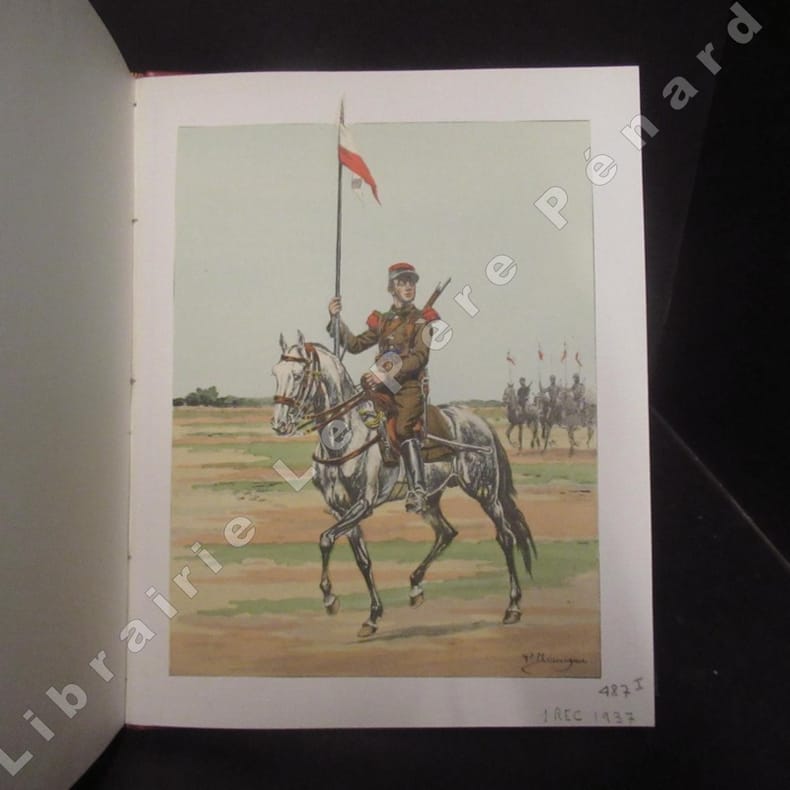
19581123451958 A Paris/Limoges/Nancy, Charles-Lavauzelle & Cie - 1958 - Fort in-4, demi basane rouge, 4 nerfs sautés avec titre et quelques décors dorés - Couverture d'origine en couleurs conservée - 355 p. + table + cahier avec illustrations reliées en fin d'ouvrage - Très nombreuses illustrations en couleurs et N&B, in et hors texte - L'un des 3500 exemplaires numérotés de 226 à 3725, sur papier Alfa - Exemplaire N°1878
19585794BBLeoni am Starnberger See, Druffel, 1958. 8° 247 S. OLwd. m. Or. Umschl. gut. Zust.
Pages 521-548. Features: Great cover photo of Churchill celebrating with the masses in Whitehall; Photo of Churchill celebrating with Royal Family at Buckingham Palace; Five photos of celabratory night lights on London; Photos of vast crowds outside Buckingham Palace; Two pages of photos of the King and Queen with celebrating crowds, visiting bombed sites, at Thanksgiving services and among their subjects in South London; Photos of the Royals taking carriage to St. Paul's; Page of photos of the Royal Family and other distinguished personages at the national thanksgiving in St. Paul's Cathedral; Article "Field-Marshal Montgomery as a Soldier'; Three photos of captive German cruisers at Copenhagen and two photos of the first U-Boat, U-249, arriving at Portland; Six photos of unconditional German surrender signing at Rheims; Eight photos of the last act of German surrender ratified in Berlin; Twelve joyous centrefold photos of celebrations in Holland, Denmark, Belgium, and Norway; Twelve amazing post-war photos include Soviet troops planting their flag atop the Brandenburg Gate, Former French men and women political prisoners in striped garb walking home from Berlin, Field-Marshal Montgomery being saluted by cheering Copenhagen crowds, American soldier standing beside partially completed V-2 rocket underground at Nordhausen, German prisoners (opponents of the Nazi regime) in striped garb walking to freedom, Glum crowd of German civilians in Luneburg listening to reading of terms of surrender, and an amazing photo of an American soldier of the Seventh Army walking uphill toward a burning Berchtesgaden, Hitler's Bavarian home; Photo of captured Field-Marshal Von Rundstedt and his son after their capture by the Seventh Army; Photo of the notorious Seyss-Inquart - Reichskommissar of the Netherlands during the German occupation - who was captured in Hamburg by the Royal Welch Fusiliers; Pages of photos documenting the liberation of the Channel Islands - scenes of surrender and rejoicing; Photos of personalities of the week include Princess Elizabeth talking to R.S.M. J. Baker, Charles Sweeny, A.E. Saunders, Sir Basil Brooke, Jemadar Parkash Singh, V.C., Ingleby Oddie, Count Schwerin Von Krosigk, James Doolittle, and Field-Marshal shaking hands with "Johnny" Johnson; Page of photos of prominent captured Nazis and anti-Nazis including Kurt Von Schuschnigg, M. Leon Blum and his wife, Pastor Niemoller, Field-Marshal Kesselring, and five photos of Goering, without his medals, after his personal surrender to the U.S. Seventh Army; Photo of Hamburg radio station, made famous by Lord Haw-Haw, now operated by the British - showing desk and microphone; Amazing photo of gaping hole in 15' of reinforced concrete atop submarine pen caused by 22,000lb bomb; Page of six photos of vast celebrating crowds in Paris; Page of scenes of celebration in Denmark; Page of photos of distinguished prisoners released by the U.S. Seventh Army includes M. Reynaud, Mme. Weygand, General Gamelin, M. Daladier, and General Weygand, General Bor-Komorowski and his chief of staff, General Pelczynski, The Master of Elphinstone and Lord Lascelles, Colonel De La Rocque of the Croix de Feu, M. Jean Borotra, and M. Michel Clemenceau; nostalgic ads; and more. Unmarked. Average wear. Coverfold taped. A sound vintage copy. Book
Pages 57- 84. Features: Nice colour Dunlop ad inside front cover features Charles Wood painting of naval plane spotter at work; Cover photo of the famous Sphinx gate of the Hittite period at Alaca Huyuk; One-page Karsh photo portrait of China's prime minister, T. V. Soong; Two-page artist's rendition of an aerial view of Japan's homeland; Two large photos of Allied warships struggling in mountainous seas; The City of the Dead - Berlin, the modern Pompeii - two pages of photos present horrific bomb damage; Article entitled "The British soldier in Germany"; Powerful display of Britain's armed might in Berlin - 5 photos; Two pages of fascinating illustrations show how British science and ingenuity contributed to defeat the Germans on sea, on land, and in the air; Dramatic centrefold illustration of "Glowworm" ramming the German cruiser "Hipper"; Seven photos of Potsdam, venue of the latest "big three" conference; Photos of personalities of the week include Maj. Gen. Claire L. Chennault, Signor Parri, Gen. William J. Slim, J. B. Chifley, Lt. Col. Sir Francis Shelmerdine, Lieut. Cmdr. G. B. Roope, the Regent of Iraq with the king and queen, Cpl. E. T. Chapman, the newly formed Council of Berlin, Marshall Rokossovsky, Marshall Zhukov, and Field Marshal Montgomery; Photo of Pres. Truman being cheered in Antwerp; Photo of US cruiser "Augusta" with Truman aboard, steaming through the English Channel, escorted by British warships; Photos of French liberated prisoners carrying a large wooden crucifix memorial to victims of brutality; Interior and exterior photos of Goering's private plane, now to be used to the benefit of sick French children; Three photos of the now peaceful beaches of Dunkirk; Three photos of the R. A. F. Jet propelled fighter, the Gloster Meteor, developed from the prototype E.28/39; photos of English silver and Chinese porcelain of great price; Article on "The bronze age in Anatolia"; Two pages of photos of artifacts from pre-Hittite Anatolia - proof of the high level of civilization 3500 years ago; Photo illustrated article on British production of the airman's octane fuel; Colour Johnnie Walker ad on back cover shows farmers loading horse- drawn wagon. Discrete archival tape repairs to Coverfold of outer advertising pages, otherwise unmarked with average wear. A sound vintage copy. Magazine
19881133221988 Editions Podzun - Pallas - 1988 - In-8, cartonnage toilé vert sous jaquette illustrée de l'éditeur - 207 pages - Très nombreuses illustrations et reproductions photographiques en N&B - Texte en allemand
199846312ABBerlin, Siedler, 1998. 1. Aufl. 22 cm. 312 S. : Ill. Gewebe, OU. Sehr guter Zust. 1
1998133298Berlin : Siedler, 1998. 312 S., Ill. Leinen, gebundene Ausgabe, SU.
1971246770Bonn : Stiftg Ostdeutscher Kulturrat, [um 1971]. 176 S. : mit Abbildungen und, Titelbild. ; 8 Originalbroschur.
189549876Wien-Leipzig, Wilhelm Braumüller, 1895. Gr.-8°. 34 S., OKart.
200266499Münster : Aschendorff 2002. 190 S. : Ill. ; 22 cm Top Zustand, Pp., gebundene Ausgabe, Hardcover/Pappeinband
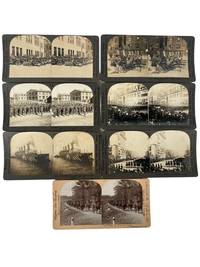
1918205021918. Buffalo Soldier regiments depicted in stereoview photographs from the World War I era document African American cavalrymen and infantry units serving in segregated formations of the United States Army during the early twentieth century. These images record soldiers from several historically significant Black military units including the 9th U.S. Cavalry the 10th Cavalry and the 369th Infantry Regiment. African American soldiers served in large numbers during World War I despite segregation in the armed forces and the war marked a turning point in public recognition of Black military service. The photographs capture cavalry movement machine gun training and celebratory returns from the European front preserving visual evidence of the military presence and public visibility of Buffalo Soldiers during the conflict.<br /> <br /> Archive consists of seven stereoview photographs published by the Keystone View Company during the World War I period. The views depict soldiers from the 9th U.S. Cavalry the 8th Regiment of Colored Troops the 10th Cavalry the Chicago Regiment of Colored Troops and the 15th Regiment of the 369th Infantry. Two stereoviews show Black machine gun companies operating Lewis guns one of the principal light machine guns used on the Western Front during the war. Another view shows Troop K of the 10th Cavalry moving on horseback at Camp Chickamauga in Georgia. Additional stereoviews depict African American soldiers returning from European service and marching in public celebrations including scenes of troops parading along major boulevards such as Fifth Avenue in New York.<br /> <br /> The Buffalo Soldier regiments had already established a long military record before the First World War. Units such as the 10th Cavalry formed part of the segregated Regular Army created after the Civil War and served in campaigns across the western United States during the Indian Wars later participating in the Spanish American War the Philippine American War and operations during the Mexican Revolution. World War I marked one of the final periods in which cavalry units remained visible in American military organization as mechanized armor and motorized vehicles soon replaced mounted troops. At the same time Black soldiers who returned from service were celebrated in wartime parades yet continued to face segregation and racial discrimination within American society. Stereoview cards remain well preserved with light age wear typical of early twentieth century photographic prints. Very good condition overall and a visually compelling record of Buffalo Soldiers during the World War I era. unknown
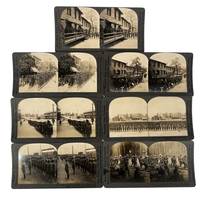
1918205031918. Keystone View Company. Buffalo Soldiers stereoview photographs World War I era document African American military service in the American Expeditionary Forces and place segregated Black troops within the broader Allied war effort in Europe. The images identify units of "Colored Troops" including engineers of the Signal Corps and depict formations logistical organization and moments of assembly such as soldiers "lined up for democracy." These photographs situate African American soldiers-many of whom descended from the Buffalo Soldier regiments established after the Civil War-within a transnational military environment that included French British and colonial forces. Scenes showing interaction with Moroccan and Indian troops on French roads reflect the multinational composition of Allied armies during the final phases of the war while the presence of Black American troops underscores their continued participation in major military operations despite segregation within the U.S. Army.<br /> <br /> France and possibly other European locations circa 1917-1919. Archive of seven stereoview photographs published by the Keystone View Company. Images depict African American soldiers in formation including lines for mess and organized ranks as well as mixed Allied groupings on roadways and near encampments. Stereographic format intended for three-dimensional viewing with printed captions identifying subjects and units. Photographs emphasize both structured military order and the varied roles occupied by Black troops particularly in engineering and support divisions.<br /> <br /> Produced during the final years of World War I these stereographs align with the expanded deployment of African American soldiers overseas and the broader visibility of Black troops within global conflict. While their service contributed to Allied operations these soldiers returned to a United States that maintained racial segregation and limited civil rights situating the archive within the larger history of African American military participation and postwar inequality. As visual records the images support research into race military organization and the international dimensions of the war. Light handling wear; overall very good condition. unknown
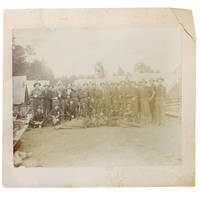
1890187391890. African American soldier photographed among members of a United States Army camp unit in the American West during the late nineteenth century providing visual documentation of Black participation within the military environment during the era of segregated service. African American soldiers served in the United States Army throughout the nineteenth century most prominently in units known as the Buffalo Soldiers which were formally organized after the Civil War. While Black soldiers were typically assigned to segregated regiments images occasionally record their presence in mixed military environments such as camps labor details or logistical units. The photograph captures a group of soldiers gathered in a temporary camp setting and includes a seated Black soldier identified by a contemporary handwritten note on the verso reading "Notice 'Black Soldier.'"<br /> <br /> Albumen sepia tone photograph mounted on photographer's board showing a group of American soldiers posed within a military encampment. Photograph measuring approximately 8.5 x 10 inches mounted on a photographer's board measuring approximately 10.75 x 10 inches. The men are dressed in clothing typical of western military and frontier settings of the late nineteenth century including dark buttoned shirts trousers supported by suspenders and boots. The African American soldier appears seated among the group with a cigarette in his mouth. The soldiers are gathered in a clearing surrounded by trees where rows of tents are arranged on raised wooden platforms suggesting an organized encampment. Cooking equipment stacked blankets plates and tankards are visible indicating a communal meal or informal gathering. One soldier holds what appears to be a long rifle with a visible barrel and wooden stock. Several soldiers sit or recline on the ground in the foreground while others stand behind them creating the appearance of an informal group portrait taken during daily camp life rather than a formal military arrangement. Handwritten note on the verso reads "Notice 'Black Soldier.'" Top right corner of the board cracked with tape repairs on the verso; slight water staining at the top left corner and damp staining at the lower left corner with partial cracking at the lower right corner. Image itself remains clear and largely unaffected. Overall condition good. The photograph preserves a visual record of African American presence within the late nineteenth century U.S. Army camp environment during a period when the armed forces remained formally segregated. unknown
77154Darmstadt : wbg Philipp von Zabern [2019]. 111 Seiten : Illustrationen ; 31 cm Karton 0
193318067BBHamburg, Deutsche Hausbücherei, 1933. 127 S. Pappband, guter, altersgemäßer Zustand, Vortitel gering Vortitel, Einband etwas beschmutzt u. berieben.
ria9781847345394_inpHardcover. New. New Book; Fast Shipping from UK; Not signed; Not First Edition; N/A hardcover
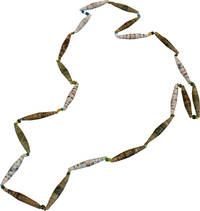
191821085London: St. Thomas' Hospital 1918. Very Good. London: St. Thomas' Hospital ca. 1918. Original necklace of twenty-one hand-made wallpaper beads each approx. 4cm. in length interspersed with colored glass beads. Wallpaper beads a bit browned else a fine piece of vernacular jewelry. <br /> <br /> Slightly later manuscript card attached to necklace stating "Necklace made of wall paper by a wounded soldier / In St. Thomas' Hospital London. 1914 - 1918 War." The hospital located on London's South Bank would indeed have seen many convalescing soldiers though we have been unable to find mention of other similar examples of soldier-made wallpaper beads this example possibly made to be sold at a local fundraiser or bazaar. St. Thomas' Hospital unknown
19933139417Ohne Ort (Bonn): Verlag Soldat im Volk (Förderungsverein deutscher Soldatenverbände e.V.) 1993. 208 Seiten. Gr. 8° (21 x 15 cm). Orig.-Broschur. [Softcover / Paperback].
19757181975 - broché - Editions Regain - 1975 - In-8 (19 x 13,5 cm) broché - 475 pages - Il est précisé, pour le nom de l'auteur : Georges Cabane d'ASSAS dans la Résistance - A PROPOS : Georges Cabane raconte l'histoire de résistants du sud de la France entre 1940 et 1944. À travers leurs actions clandestines contre l'occupation allemande, leurs arrestations et leurs combats pour la Libération, il rend hommage à leur courage et à leur engagement, tout en montrant que leur souvenir reste vivant malgré le temps.
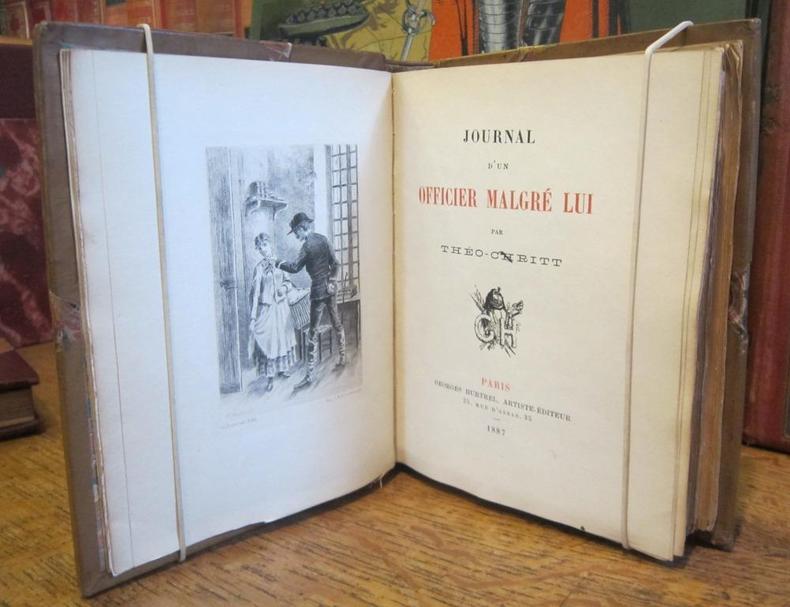
1887000311Paris Hurtrel 1887
19977355Gráficas Cubanas 1997. paperback. Bueno. Alicante 1997. Gráficas Cubanas. Sello del anterior propietario. Rústica. 424 pp. 21x14 Gráficas Cubanas paperback
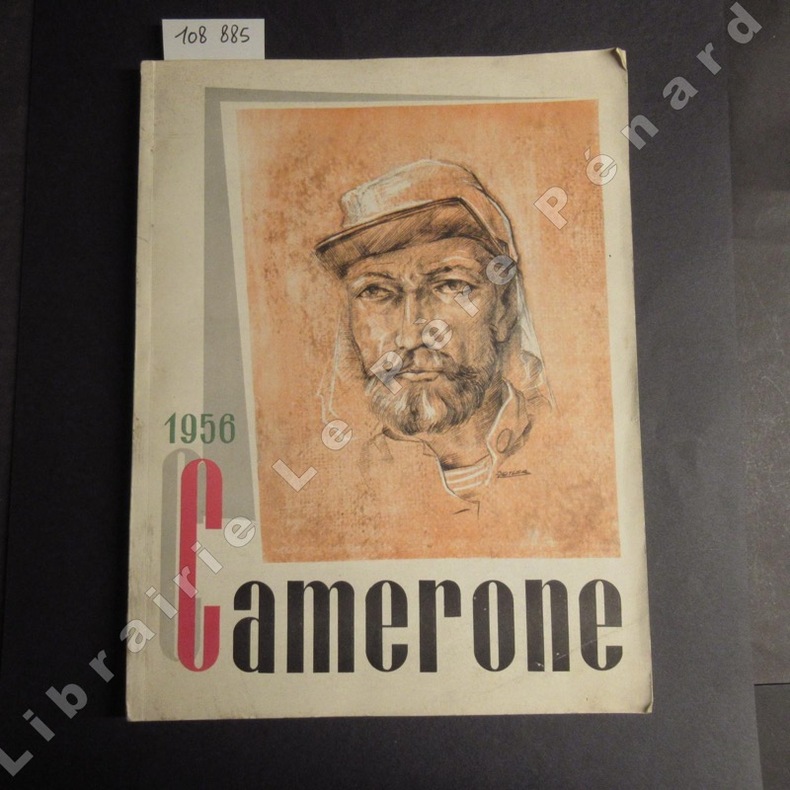
19561088851956 15 avril 1956 - Editée par le Service Information du Premier Régiment Etranger (Sidi-Bel-Abbès) - Imprimé sur les Presses de Képi Blanc - In-4, broché - Couverture illustrée (ZEITLER) - 208 pages - Illustrations et reproductions photographiques en noir et blanc
19591088861959 31 mars 1959 - Editée par le Service Information du Premier Régiment Etranger (Sidi-Bel-Abbès) - Imprimé sur les Presses de Képi Blanc - In-4, broché - Couverture illustrée - 212 pages - Illustrations et reproductions photographiques en noir et blanc
19601088871960 2 avril 1960 - Editée par le Service Information du Premier Régiment Etranger (Sidi-Bel-Abbès) - Imprimé sur les Presses de Képi Blanc - In-4, broché - Couverture illustrée - 154 pages - Illustrations et reproductions photographiques en noir et blanc