Czech-Slav soldier battlefieldBiblio.com
51 résultats
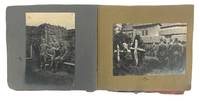
1917200631917. Czechoslovak Legion soldiers photographed during World War I document the participation of Czech and Slovak troops fighting alongside Allied forces in campaigns across Europe. Approximately seventy eight photographs record military life among soldiers associated with the Czechoslovak armed formations that emerged during the war as nationalist units seeking independence from the Austro Hungarian Empire. The images depict trench warfare troop encampments drills and daily life among soldiers whose political objective was the creation of an independent Czechoslovak state. The photographs illustrate the conditions and routines experienced by these soldiers during the conflict that ultimately contributed to the establishment of Czechoslovakia at the end of the war in 1918.<br /> <br /> Photographic album containing approximately seventy eight photographs measuring about 4.75 x 6.5 inches mounted on album leaves. The images depict soldiers in trench positions infantry movements across terrain and group formations during drills. Additional photographs show military camps outdoor meals mess areas and group portraits including one of a military band. Several photographs capture village architecture including houses courtyards and churches encountered by the soldiers during the campaign. The album also contains images of wartime medical care including a medic working with wounded soldiers a funeral scene with graves and cemetery crosses and a horse drawn wagon train traveling along a mountain road. Other photographs depict staged performances and theatrical scenes presented outdoors for soldiers.<br /> <br /> During World War I Czech and Slovak nationalist leaders organized volunteer military formations known collectively as the Czechoslovak Legions composed of soldiers drawn from prisoners of war and expatriate communities who sought to fight alongside the Allied powers against Austria Hungary. Their participation in the war strengthened international support for the creation of an independent Czechoslovakia which was established following the collapse of the Austro Hungarian Empire in 1918. Photographs of trench systems encampments and military drills in this album illustrate the entrenched character of warfare that dominated much of the conflict as armies constructed extensive defensive systems while attempting to break enemy lines through periodic assaults. Album containing approximately seventy eight photographs measuring about 4.75 x 6.5 inches. Album boards show chipping along the edges while photographs remain clear with strong contrast. Overall condition very good. unknown
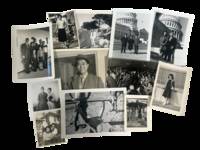
1940226451940. Japanese AmericanWWII Japanese American military service and postwar life photograph archive documenting Nisei participation in the United States armed forces and the reintegration of Japanese American families into public life after World War II 1940s-1960s. The photographs capture Japanese Americans in military uniform as well as family gatherings and civilian travel throughout wartime incarceration and postwar recovery and reintegration. The images document the lives of a generation of Nisei soldiers who served in units such as the 442nd Regimental Combat Team and the Military Intelligence Service whose wartime service occurred while more than 120000 Japanese Americans were forcibly removed and incarcerated under Executive Order 9066. The archive encapsulates the complex relationship between patriotic service and racial discrimination during WWII and the reintegration of Japanese Americans into civilian life during the mid twentieth century.<br /> <br /> Archive of 12 black and white photographs produced between the 1940s and 1960s. The images range in size from approximately 2 x 3 inches to 3.5 x 5 inches and include several photographs of Japanese American men in United States military uniform. Other photographs depict Japanese American families posed together in domestic and social settings including women dressed in fashionable postwar clothing typical of the 1950s. A small group of photographs shows Japanese American visitors standing in front of the United States Capitol building in Washington D.C. Several photographs bear numbers dates or personal names written on the verso in both Japanese and English.<br /> <br /> Japanese American military service during World War II was a central element in the broader struggle for Asian American civil rights after the war. Nisei soldiers serving in the 442nd Regimental Combat Team and the Military Intelligence Service played significant roles in combat operations in Europe and in intelligence translation work in the Pacific theater. At the same time their families and communities endured forced removal and incarceration under federal wartime policy. In the decades following the war Japanese American families rebuilt social networks reestablished businesses and professions and increasingly participated in civic life across the United States. Photographs documenting travel to symbolic national locations such as the United States Capitol reflect this period of renewed public presence and political engagement among Japanese Americans in the 1950s and 1960s. Minor edge wear and handling visible to several photographs with occasional annotations on the versos in Japanese and English; overall very good condition. This archive provides visual documentation of Japanese American wartime service and the reestablishment of civic identity during the postwar era. unknown
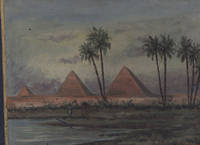
194045303Egypt & The Sudan: Photographs Taken By Donald Stone 1940-1944. 1940-1944. WORLD WAR II. First edition. 12" x 16" cloth string-tied album with an original color oil painting on the front cover of the Pyramids. Photographs by British soldier Donald Stone who was part of the RAF's 203 Group 1940-1944 headquartered in Khartoum. The album has 276 neatly mounted photographs with captions on both sides of 17 leaves each with a tissue guard. Additionally there are 23 loose photographs including 19 photographs of British planes in an envelop. These military photographs of aircraft were strictly forbidden during the War years. Also there are 2 pieces of printed ephemera including a menu for the 203 Group Xmas dinner in 1942 signed by the entire membership. An interesting album of people and places visited by this British airman throughout Egypt and the Sudan. Most of the photos are 2‑1/2" x 3-1/2" but many are larger. Laid-in is a three-page history of RAF Squadron 203. Very good with photographs in fine condition. Photographs Taken By Donald Stone, 1940-1944. hardcover
19582091202133001873Yomiuri Shimbun 1958. Soft Cover. Fine. Number of books: 1 Yomiuri Shimbun paperback
19262110502150306340Treasure Museum 1926. Soft Cover. Fine. Volume: 1 Treasure Museum paperback
19762091502133514338Shingenronsha Publishing Office 1976. Soft Cover. Fine. Number of books: 1 Shingenronsha Publishing Office paperback
19762092902141505125Shingenronsha Publishing 1976. Soft Cover. Fine. Size: 46 size Shingenronsha Publishing paperback
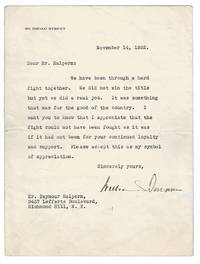
1932100747<p>New York November 14 1932. 1932. Very good. - Over 85 words typed on his 8-5/8 inch high by 6-1/2 inch wide "90 Broad Street" stationery. Addressing the young campaign volunteer Seymour J. Halpern William J. Donovan the future head of the Office of Strategic Services writes "We have been through a hard fight together. We did not win the title but we did a real job." He goes on to show his appreciation to the young autograph collector "I want you to know that I appreciate that the fight could not have been fought as it was if it had not been for your continued loyalty and support. Please accept this as my symbol of appreciation." Signed in full "William J. Donovan". Donovan ran for Governor of New York State to succeed FDR in 1932. A Republican he lost to Herbert Lehman. Folded in half for mailing the edges are soiled and there are tears to the edges of the fold. Very good.</p><p>To house his law firm in March of 1932 Colonel William J. Donovan leased a large suite of offices in the Stone & Webster Building at 90 Broad Street in New York City.</p><p>The American attorney diplomat soldier and intelligence officer William J. Donovan 1883-1959 is best known as the head of the OSS the Office of Strategic Services which was the war time precursor to the CIA. A veteran of World War I Donovan was awarded the Medal of Honor the Distinguished Service Cross the Distinguished Service Medal and the National Security Medal. In 1941 FDR established the Office of the Coordination of Information with Donovan as its director. Once the U.S. entered the war the COI became the OSS in June of 1942 with Donovan now a major general as its head. Donovan created the OSS as a military psychological warfare service to include both psychological and unconventional warfare. The service would soon include elements that would be called "special operations" the first phase of which would be intelligence penetration including research and analysis and propaganda followed by a second stage incorporating sabotage and subversion. This second stage would be followed by guerilla action commando raids and support of resistance movements.</p><p>An avid autograph collector in his youth the then 19-year old campaign volunteer the future Queens New York Republican Congressman Seymour Halpern 1913-1997 started his political career as a campaign aide to New York's powerful mayor Fiorella La Guardia and first served in New York's State Senate for 14 years before seeking a seat in the U.S. Congress. In Albany Halpern sponsored 279 bills that became law including measures on schools housing civil rights nutrition and mental health. A Liberal he was something of an anomaly as the lone Republican representative from New York City and generally garnered support from Labor Unions and endorsement from the Liberal Party. Yet he never even considered switching parties as he considered membership in the Republican Party a family tradition and commitment. While he found ample time for his private pursuits including painting and collecting autographs he took his legislative duties very seriously. Of these he was proudest of his co-sponsorship of the 1964 Civil Rights Act and of the original 1965 Medicare legislation.</p> [New York], November 14, 1932.
19812111902158500119Tsugu Village Office Aichi Prefecture 1981. Soft Cover. Fine. Number of pages: 184p. Size: 27cm Tsugu Village Office (Aichi Prefecture) paperback
19562092902143901540Gakufu Shoin 1956. Soft Cover. Fine. Number of books: 1 book Gakufu Shoin paperback
19562092902143801519Gakufu Shoin 1956. Soft Cover. Fine. Number of books: 1 book Gakufu Shoin paperback
194527245Vancouver B. C.: P. R. P. Very Good with No dust jacket as issued. 1945. First Edition. Softcover. No author. Closed tears to the wraps. Interior is "fine." B/W photos of ruined cities in Germany "actual photographs by a Canadian Soldier." a scarce bit of WW2 ephemera. ; Oblong 16mo 6" - 7" tall; 30 pages . P. R. P. paperback
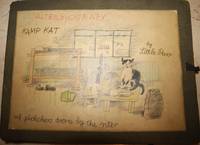
19430072801943. Hardcover. Cloth Box. Very Good. Inimitable and disarming tales that represent the pinnacle of outsider art and folk art with the naive drawings richly full of life as they speak of the daily routine at a British army camp during the Second World War from the point-of-view of a camp mascot cat who excels at mangling English in its creative attempts at phonetic spelling. Folios are oblong 41 by 30 cm each. The first folio contains "The Alterbyografy" a 56 pages long unpaginated with 54 illustrations including the folio cover 28 of which are full page 24 of which are half page. The second folio is entitled "Kamp Karacters" . This is 51 leaves with 92 illustrations including the cover 51 of which are full page 40 a third page generally with the area above entirely blank. Illustrations are rendered with colored pencil and crayon. The first manuscript is a continuous narrative of army life its humdrum rhythms and routines its various inanities its social life sports and other activities etc. while the second part is more character sketches. The second folio is even more visually driven than the autobiography. Another distinction between the two is that the autobiography is done with the leaves oblong while the character studies are applied with the leaves vertical. While one part isn't exactly a sequel to the other the two parts are truly complementary. The two folios are of a rough burlap material with a large title sheet mounted on their front cover. The folios have three flap folds to hold the loose sheets in plus ribbon ties on their right sides. hardcover
19582090502128701776Social Thought Study Group Publishing Department 1958. Soft Cover. Fine. Size: Paperback Number of books: 1 Social Thought Study Group Publishing Department paperback
1990Q-0887402526Schiffer Publishing Ltd 1990-10-01. Hardcover. New. In shrink wrap. Looks like an interesting title! Schiffer Publishing, Ltd hardcover
19812111902160602233Culture publishing company 1981. Soft Cover. Fine. The book is in fine condition. Culture publishing company paperback
19349936Glasgow: Kinnaird Press. Glasgow Kinnaird Press n.d. 1934. First Edition. First Impression. Hardback. A very good copy. Sargent it seems has this down as one of the worst written Utopias. I'll let you judge. Inscribed by the author in pencil to the front endpaper. Spine tanned a little bumping A few spots of foxing. 9936 Hyraxia Books. n.d. 1934 . Very Good. Hardback. 1st Edition. 1934. Kinnaird Press hardcover
19052111902160201333Toboukan 1905. Soft Cover. Fine. Volume: 1 Toboukan paperback
196494836London: War Office HM Stationary Office. Very Good. 1964. First Edition. Hardcover. Twelve softcover issues of the British Soldier Magazine January-December 1964 bound in red pebbly hardcover boards. Title in gilt on spine. All issues crisp and clean; some pages are browning. 4to. Heavy--will require additional postage if shipped outside the U. S. . War Office, HM Stationary Office hardcover
194544498Okayama: Photographed in many Japanese Locations with most of the loose photographs taken in Okayama Japan n. d. ca 1945. 1945. WORLD WAR II JAPAN. First edition. Blue cloth photograph album 124 silver gelatin photographs mostly 2 1/4" x 3 1/4" with 106 of them in corner mounts. A fascinating vernacular photograph album capturing scenes in American-occupied Japan just after the Second World War. Most of the photographs are captioned in white ink on the black album pages and organized in sections such as "Landmarks" "The People" "The Cities" “The Military” and “Personalities.” “Landmarks” include views of sites in Kokura Yakata Okayma Prefecture picturing shrines country homes water works the "International Military Tribunal Far East" and more. "The People" shows Japanese residents of all ages some in Western dress others in traditional Japanese garb standing in front of structures on the streets at a military checkpoint playing "yakkyu national game" baseball swimming and other activities. The section on the cities comprises street views in Okayama Kokura Fukuoka Hiroshima Yakata Tokyo Kyoto and Yokohama. Surprisingly the four shots of Hiroshima do not contain much evidence of destruction and provide a rare contemporary glimpse of areas of the city not leveled by Little Boy. Views of Tokyo include the Dai Ichi Building the Imperial Museum and an image of an American soldier "on the Ginza." The various views in the other cities show Japan's largest steel works a partially-demolished department store temples and the Yokohama wharf. The military section includes photographs of Okayama Post the "A.G. Office" barracks headquarters of the 24th Division in Kokura Kyushu the Kokura Arsenal and Post Exchange Fukuoka's 118 Station Hospital and more. The "Personalities" section is comprised of shots of American soldiers in and out of uniform almost all of them identified by their first names or nicknames. This section also includes photographs of "A.G. Girls" a few Japanese people identified by name American soldiers at the War Ministry Hotel in Tokyo U.S. soldiers at the "4th Repl. Depot" in Sobudai" and more. A handful of the captions and some of the loose photographs are captioned in Japanese. Some of the loose photographs are stamped on the verso "Jack Woytych" with his Wisconsin address though it is unclear whether this refers to the owner/photographer of the album or the printer of the photographs. Most of the loose photographs emanate from Okayama. A noteworthy collection of personal images from an American serving in Japan at the end of World War II. Moderate wear to the spine ends and spine panel light edge wear and rubbing to the extremities else a very good copy. Photographed in many Japanese Locations, with most of the loose photographs taken in Okayama, Japan, n. d. (ca 1945). hardcover
191927238Grosset & Dunlop New York 1919 Inner DJ Flap Lists Thru Outdoor Girls at Spring Hill Farm HBDJ 1919 Early Printing PreText Lists thru Hostess House GOOD/GOOD. AS-IS Book and jacket are both in good condition with browning edgewear rubbing and soil. SMALL TEARS TO Front DUSTJACKET DJ Spine Small chips tears wear Jacket now in mylar. 218 pages 7.5 x 5. Hard Cover. Gray cloth with red/green/gray illustration on front cover of 3 girls tent canoe coffee pot at lakeside Back DJ Lists thru Spring hill Farm light wear Interior nice tight light wear Fox. Hardcover. Good/Good. Grosset & Dunlop New York, hardcover
1928052736N. p. ca. 1928 1928. Soft cover. Very Good. Original b/w photograph. 9x14 cm. It shows Erkilet and two other men and a woman sitting around a table. Erkilet was an officer of the Ottoman Army and the general of the Turkish Army. In the fall 1941 he along with General Ali Fuad Erden visited the occupied territories in Ukraine including Crimea on invitation of Gerd von Rundstedt. From there he and other Turkish officers flew to Rastenburg to meet Hitler in person. In 1943 he published his essays on that trip under title "What I Saw on the Eastern Front". Being a staunch Turanist he was briefly detained for Panturkic activities in 1948 together with some other prominent Turanists. <br/> <br/> N. p. [ca. 1928] paperback
1928052735N. p. ca. 1928 1928. Soft cover. Very Good. Original b/w photograph. 9x14 cm. It shows Erkilet and many women and men with a child around him. Probably it's taken during a travel. Erkilet was an officer of the Ottoman Army and the general of the Turkish Army. In the fall 1941 he along with General Ali Fuad Erden visited the occupied territories in Ukraine including Crimea on invitation of Gerd von Rundstedt. From there he and other Turkish officers flew to Rastenburg to meet Hitler in person. In 1943 he published his essays on that trip under title "What I Saw on the Eastern Front". Being a staunch Turanist he was briefly detained for Panturkic activities in 1948 together with some other prominent Turanists. <br/> <br/> N. p. [ca. 1928] paperback
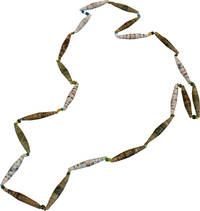
191821085London: St. Thomas' Hospital 1918. Very Good. London: St. Thomas' Hospital ca. 1918. Original necklace of twenty-one hand-made wallpaper beads each approx. 4cm. in length interspersed with colored glass beads. Wallpaper beads a bit browned else a fine piece of vernacular jewelry. <br /> <br /> Slightly later manuscript card attached to necklace stating "Necklace made of wall paper by a wounded soldier / In St. Thomas' Hospital London. 1914 - 1918 War." The hospital located on London's South Bank would indeed have seen many convalescing soldiers though we have been unable to find mention of other similar examples of soldier-made wallpaper beads this example possibly made to be sold at a local fundraiser or bazaar. St. Thomas' Hospital unknown
19552090502128701625Masushobo 1955. Soft Cover. Fine. Size: New book Number of copies: 1 Masushobo paperback