Czech-Slav soldier battlefieldBiblio.com
224 résultats
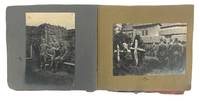
1917200631917. Czechoslovak Legion soldiers photographed during World War I document the participation of Czech and Slovak troops fighting alongside Allied forces in campaigns across Europe. Approximately seventy eight photographs record military life among soldiers associated with the Czechoslovak armed formations that emerged during the war as nationalist units seeking independence from the Austro Hungarian Empire. The images depict trench warfare troop encampments drills and daily life among soldiers whose political objective was the creation of an independent Czechoslovak state. The photographs illustrate the conditions and routines experienced by these soldiers during the conflict that ultimately contributed to the establishment of Czechoslovakia at the end of the war in 1918.<br /> <br /> Photographic album containing approximately seventy eight photographs measuring about 4.75 x 6.5 inches mounted on album leaves. The images depict soldiers in trench positions infantry movements across terrain and group formations during drills. Additional photographs show military camps outdoor meals mess areas and group portraits including one of a military band. Several photographs capture village architecture including houses courtyards and churches encountered by the soldiers during the campaign. The album also contains images of wartime medical care including a medic working with wounded soldiers a funeral scene with graves and cemetery crosses and a horse drawn wagon train traveling along a mountain road. Other photographs depict staged performances and theatrical scenes presented outdoors for soldiers.<br /> <br /> During World War I Czech and Slovak nationalist leaders organized volunteer military formations known collectively as the Czechoslovak Legions composed of soldiers drawn from prisoners of war and expatriate communities who sought to fight alongside the Allied powers against Austria Hungary. Their participation in the war strengthened international support for the creation of an independent Czechoslovakia which was established following the collapse of the Austro Hungarian Empire in 1918. Photographs of trench systems encampments and military drills in this album illustrate the entrenched character of warfare that dominated much of the conflict as armies constructed extensive defensive systems while attempting to break enemy lines through periodic assaults. Album containing approximately seventy eight photographs measuring about 4.75 x 6.5 inches. Album boards show chipping along the edges while photographs remain clear with strong contrast. Overall condition very good. unknown
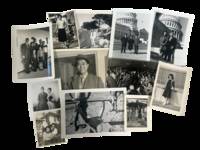
1940226451940. Japanese AmericanWWII Japanese American military service and postwar life photograph archive documenting Nisei participation in the United States armed forces and the reintegration of Japanese American families into public life after World War II 1940s-1960s. The photographs capture Japanese Americans in military uniform as well as family gatherings and civilian travel throughout wartime incarceration and postwar recovery and reintegration. The images document the lives of a generation of Nisei soldiers who served in units such as the 442nd Regimental Combat Team and the Military Intelligence Service whose wartime service occurred while more than 120000 Japanese Americans were forcibly removed and incarcerated under Executive Order 9066. The archive encapsulates the complex relationship between patriotic service and racial discrimination during WWII and the reintegration of Japanese Americans into civilian life during the mid twentieth century.<br /> <br /> Archive of 12 black and white photographs produced between the 1940s and 1960s. The images range in size from approximately 2 x 3 inches to 3.5 x 5 inches and include several photographs of Japanese American men in United States military uniform. Other photographs depict Japanese American families posed together in domestic and social settings including women dressed in fashionable postwar clothing typical of the 1950s. A small group of photographs shows Japanese American visitors standing in front of the United States Capitol building in Washington D.C. Several photographs bear numbers dates or personal names written on the verso in both Japanese and English.<br /> <br /> Japanese American military service during World War II was a central element in the broader struggle for Asian American civil rights after the war. Nisei soldiers serving in the 442nd Regimental Combat Team and the Military Intelligence Service played significant roles in combat operations in Europe and in intelligence translation work in the Pacific theater. At the same time their families and communities endured forced removal and incarceration under federal wartime policy. In the decades following the war Japanese American families rebuilt social networks reestablished businesses and professions and increasingly participated in civic life across the United States. Photographs documenting travel to symbolic national locations such as the United States Capitol reflect this period of renewed public presence and political engagement among Japanese Americans in the 1950s and 1960s. Minor edge wear and handling visible to several photographs with occasional annotations on the versos in Japanese and English; overall very good condition. This archive provides visual documentation of Japanese American wartime service and the reestablishment of civic identity during the postwar era. unknown
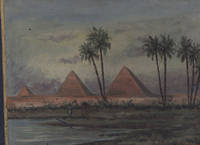
194045303Egypt & The Sudan: Photographs Taken By Donald Stone 1940-1944. 1940-1944. WORLD WAR II. First edition. 12" x 16" cloth string-tied album with an original color oil painting on the front cover of the Pyramids. Photographs by British soldier Donald Stone who was part of the RAF's 203 Group 1940-1944 headquartered in Khartoum. The album has 276 neatly mounted photographs with captions on both sides of 17 leaves each with a tissue guard. Additionally there are 23 loose photographs including 19 photographs of British planes in an envelop. These military photographs of aircraft were strictly forbidden during the War years. Also there are 2 pieces of printed ephemera including a menu for the 203 Group Xmas dinner in 1942 signed by the entire membership. An interesting album of people and places visited by this British airman throughout Egypt and the Sudan. Most of the photos are 2‑1/2" x 3-1/2" but many are larger. Laid-in is a three-page history of RAF Squadron 203. Very good with photographs in fine condition. Photographs Taken By Donald Stone, 1940-1944. hardcover
665331 July 1851; London. 12mo 3 pp. Good. Folded twice and with the blank verso of the second leaf of the bifolium a little grubby. A formal letter in the third person declining to present a petition to the House of Lords on the grounds that 'The Duke has no relation whatever with Honiton'. The date and the words 'Mr Aberdein' 'Honiton' ' which he retains' and 'Robert Aberdein Esq' are in Wellington's hand. 31 July 1851; London. unknown
DG-49-485865777821New. unknown
19582091202133001873Yomiuri Shimbun 1958. Soft Cover. Fine. Number of books: 1 Yomiuri Shimbun paperback
19262110502150306340Treasure Museum 1926. Soft Cover. Fine. Volume: 1 Treasure Museum paperback
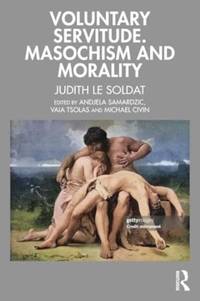
ria9781032666235_inpHardcover. New. New Book; Fast Shipping from UK; Not signed; Not First Edition; Le Soldat’s Voluntary Servitude. Masochism and Morality presents an extraordinary analysis of masochism the subject death drive and sexual discourse inspired by Freudian drive theory philosophy gender theory political science and hardcover
ria9781032666259_inpPaperback. New. New Book; Fast Shipping from UK; Not signed; Not First Edition; Le Soldat's Voluntary Servitude. Masochism and Morality presents an extraordinary analysis of masochism the subject death drive and sexual discourse inspired by Freudian drive theory philosophy gender theory political science and m paperback
47969809-nnew. unknown
2024x-1032666250Routledge 2024. Paperback. New. 320 pages. 9.18x6.12x9.21 inches. Routledge paperback
1032666250.Gpaperback. Good. Access codes and supplements are not guaranteed with used items. May be an ex-library book. paperback
19762091502133514338Shingenronsha Publishing Office 1976. Soft Cover. Fine. Number of books: 1 Shingenronsha Publishing Office paperback
19762092902141505125Shingenronsha Publishing 1976. Soft Cover. Fine. Size: 46 size Shingenronsha Publishing paperback
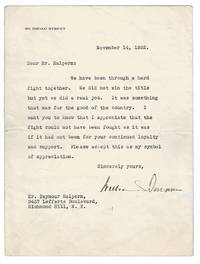
1932100747<p>New York November 14 1932. 1932. Very good. - Over 85 words typed on his 8-5/8 inch high by 6-1/2 inch wide "90 Broad Street" stationery. Addressing the young campaign volunteer Seymour J. Halpern William J. Donovan the future head of the Office of Strategic Services writes "We have been through a hard fight together. We did not win the title but we did a real job." He goes on to show his appreciation to the young autograph collector "I want you to know that I appreciate that the fight could not have been fought as it was if it had not been for your continued loyalty and support. Please accept this as my symbol of appreciation." Signed in full "William J. Donovan". Donovan ran for Governor of New York State to succeed FDR in 1932. A Republican he lost to Herbert Lehman. Folded in half for mailing the edges are soiled and there are tears to the edges of the fold. Very good.</p><p>To house his law firm in March of 1932 Colonel William J. Donovan leased a large suite of offices in the Stone & Webster Building at 90 Broad Street in New York City.</p><p>The American attorney diplomat soldier and intelligence officer William J. Donovan 1883-1959 is best known as the head of the OSS the Office of Strategic Services which was the war time precursor to the CIA. A veteran of World War I Donovan was awarded the Medal of Honor the Distinguished Service Cross the Distinguished Service Medal and the National Security Medal. In 1941 FDR established the Office of the Coordination of Information with Donovan as its director. Once the U.S. entered the war the COI became the OSS in June of 1942 with Donovan now a major general as its head. Donovan created the OSS as a military psychological warfare service to include both psychological and unconventional warfare. The service would soon include elements that would be called "special operations" the first phase of which would be intelligence penetration including research and analysis and propaganda followed by a second stage incorporating sabotage and subversion. This second stage would be followed by guerilla action commando raids and support of resistance movements.</p><p>An avid autograph collector in his youth the then 19-year old campaign volunteer the future Queens New York Republican Congressman Seymour Halpern 1913-1997 started his political career as a campaign aide to New York's powerful mayor Fiorella La Guardia and first served in New York's State Senate for 14 years before seeking a seat in the U.S. Congress. In Albany Halpern sponsored 279 bills that became law including measures on schools housing civil rights nutrition and mental health. A Liberal he was something of an anomaly as the lone Republican representative from New York City and generally garnered support from Labor Unions and endorsement from the Liberal Party. Yet he never even considered switching parties as he considered membership in the Republican Party a family tradition and commitment. While he found ample time for his private pursuits including painting and collecting autographs he took his legislative duties very seriously. Of these he was proudest of his co-sponsorship of the 1964 Civil Rights Act and of the original 1965 Medicare legislation.</p> [New York], November 14, 1932.
13427Both on letterhead of Old Quarries Avening Gloucestershire. 20 and 24 October 1940. Both items 2pp. 12mo. Both in good condition on lightly-aged paper with slight evidence of previous mounting. The first letter addressed to 'The Editor Cambridge Daily News' begins: 'When I received my L.L.D Degree from the University in June 1931 you published in your issue of June 6 some photographs of the procession to the Senate House on that occasion.' He is writing 'on the off chance' that 'original prints' survive 'as I am most anxious to obtain one for my Autobiography if it is in any way possible to do so'. In the second letter to 'Mr. Stuart' he thanks the editor for the trouble he has taken: 'The photograph is excellent and exactly what I wanted.' He is also 'much amused' by Stuart's 'reminiscence of the Hastings Election 1906 I assume but shocked to learn what I had entirely forgotten that I could ever have spoken against my old friend Freeman Willingdon!' Fareham was a Conservative and Willingdon a Liberal. He recalls that he has stayed with Willingdon 'in India & elsewhere so often since; and was his Sponsor when he took his seat as a "Viscount" in the House of Lords; some 15 years ago.' To prove that there is 'no permanent breach' he is sending a photograph taken when Willingdon 'gave away the Prizes at Cheltenham College - of which I was President'. Both on letterhead of Old Quarries, Avening, Gloucestershire. 20 and 24 October 1940. unknown
19812111902158500119Tsugu Village Office Aichi Prefecture 1981. Soft Cover. Fine. Number of pages: 184p. Size: 27cm Tsugu Village Office (Aichi Prefecture) paperback
265131959 . 'If he survives he may well be a great man at 40':Glubb Pasha gives his assessment of King Hussein of Jordan in 1959Three autograph documents by 'Glubb Pasha' giving a detailed and perceptive assessment of the character and situation of his erstwhile master King Hussein of Jordan 1935-1999 written to assist John Freeman 1915-2014 in preparing the interview with King Hussein broadcast in the BBC series 'Face to Face' on 1 January 1960. From the papers of the programme's producer Hugh Burnett 1924-2011. The first item is a long letter from Glubb to Burnett giving a thoughtful and perceptive assessment of Hussein's character and situation including a discussion of relations between Jordan and Britain and a comparison between Hussein and President Nasser of Egypt. The second item is a series of 34 potential questions which Glubb suggests be put to the king. The third item is the covering letter to the second describing the questions in it as 'ideas which I hope may be useful' and offering to involve himself in the preparation for the interview 'we have lots of time'. The fourth item is the printer's copy of the transcript of the interview as published in Burnett's 1964 book of the series.Sir John Bagot Glubb 1897-1999 is described in his entry in the Oxford DNB as 'servant of both Britain and Jordan' and 'the last in the long line of powerful British proconsuls'. In 1939 Glubb took command of the Arab Legion subsequently the Jordan Royal Army transforming it into the best-trained and most effective military force in the Arab world and himself leading it across the River Jordan to occupy the West Bank during the 1948 Arab-Israeli War. According to the ODNB Glubb 'was greatly reliant on King Abdullah's support which vanished when the king was assassinated on 20 July 1951. His son Talal reigned only a few months before abdicating and was succeeded by his son Hussein still only sixteen and a schoolboy at Harrow. Although Hussein respected Glubb the gap between their ages proved impossible to bridge and they soon fell out. Military and political developments were rapidly outgrowing Glubb and the influential foreign adviser to an oriental monarch was becoming an anachronism.' In 1956 Glubb was dismissed from his command and given 24 hours to leave the country. He returned to Britain with only £5 and did not receive a general's pension from either Britain or Jordan. Despite the manner of Glubb's dismissal the two documents present here reflect the 'exemplary dignity' with which the ODNB notes he always acted thereafter.The four items are in fair condition lightly aged and worn all four with punch-holes for binding.ONE: Autograph Letter Signed with Glubb's stylised curling signature. Mayfield Sussex; 5 December 1959. 6pp. foolscap 8vo. With Televsion Registry date stamp.A thoughtful assessment of King Hussein's character Addressed to 'Dear Burnett' and written 'In continuation of my previous notes on King Husain sic.'The letter covers:Hussein's 'extremely democratic & informal' nature on first coming back from England to assume the Jordanian throne: 'He liked jumping alone into his car without a hat and driving into the Town - perhaps to go to the cinema. The police the officials & the escort used to be in a frenzy looking for him. … I don't think he can do that so much now there seems to be too much risk of his being assassinated.'Hussein's 'attitude to everything' which is 'in schoolboy language' 'flat out': 'In 1953 1954 & 1955 there were several ugly incidents on the Jordan Israeli frontier villages being raided by the Israeli army & many people killed. In every case the king's first instinct was to jump into a car and drive himself to the frontier to see in person what was happening. … He was most anxious to meet the people and would get out of his car in the villages to talk with villagers and get their first hand knowledge.'His love of risk: 'He delighted to drive his car at breakneck speed along the roads at imminent risk to himself & the public. I do not know if he still does that.'His headstrong nature: 'Although however he was then 18 19 or 20 years old all the cabinet ministers & officials were afraid of him & unable to control him. … he always won. Thus although he did a great many foolish things from lack of experience there was no doubt that he had a remarkably strong & independent personality and was full of initiative.'How he was 'deceived by politicians into thinking that Britain was the enemy of his country' resulting in a breaking-off of relations between Jordan & Britain'. Of Hussein's dismissal of 'all the British officers' including Glubb himself he writes: 'He did this entirely on his own initiative using his own courage & will-power. The extremists merely gave him the ideas but he carried all the responsibility. Now he has discovered that he was deceived and is drawing near to Britain again - once more on his own responsibility.'His political position. Jordan has 'a parliament almost in theory like Britain' and 'The influence of his grandfather King Abdulla & his own power are not due to an "Oriental despotic constitution but to the personalities of their two characters.' Although Hussein 'now thinks Britain can be his helper he is an enthusiastic Arab nationalist.'The contrast between Hussein with President Nasser of Egypt. 'Nasser likes to brand everybody who does not bow to his personal leadership as being a traitor and a "colonialist tool" etc. This is a local political line. Hussein is as nationalist as Nasser but his personality will not allow him to be a subordinate of Nasser. Nasser is inclined to want only subordinates. King Husain also feels strongly about Israel and is of course bitterly opposed to the present Iraqi regime which began by murdering all his family - King Feisal of Iraq was his cousin.'Glubb sums up his opinion of Hussein's character: 'In brief the picture is one of a young man of considerable character still retaining a strong streak of teenage enthusiasm for jet aircraft and fast motor cars. He came to the throne at 17 and was swept off his feet by the usual anti-imperialist propaganda. Now gaining first hand experience he is becoming wiser.'Glubb concludes the letter: 'If he survives he may well be a great man at 40'.TWO: Autograph List by Glubb of thirty-three suggested questions for Freeman to pose to King Hussein. Without date place or signature but sent with Item Three below dated 3 December 1959 as its covering letter stating that Glubb is sending 'some ideas which I hope may be useful'. 13pp. foolscap 8vo. With slip carrying a further question numbered 8A. With a few minor emendations. Topics include: Hussein's time at Sandhurst his view on the British boarding school and military service; his activities as a pilot and 'driving in car races'; military affairs; ceremonial and recreation; King Abdulla. The first question indicates the respectful tone that Glubb considered the interviewer should adopt: '1. The people of Britain emended from 'England' admire the personal courage which Your Majesty has shown in facing your difficulties in Jordan. May I ask how you sir feel towards the British people' A number of questions concern military matters and the following reflects Glubb's personal knowledge: '12 Everybody expects Arabs to fight but many people are surprised that the Jordan Army is so completely mechanized and has its own workshops and technical services. In England such units are possible because the technicians exist in factories in civil life and the army can draw on them Is not this difficult in a largely agricultural country like Jordan' The conclusion of the document demonstrates Glubb's attempt to 'prime' the interviewer: "Thank you very much Sir and may I wish you every success to BREAKS OFF HERE Insert further back somewhere. 33. I am afraid that I am not very experienced in Arab affairs but we have the idea in Britain that King's sic in "The East" live in great state but rather isolated from their subjects. I think that perhaps this does not apply to Arab countries. Does Your Majesty succeed in getting about and meeting the people of the country Note. He is very keen on doing this.' Question 30 reads: 'Is it true sir that you were actually standing beside King Abdulla when he was assassinated'THREE: Typed Letter Signed from Glubb to Burnett. On letterhead of West Wood St. Dunstan Mayfield Sussex. 3 December 1959. 2pp. 12mo. With Television Registry date stamp. Covering letter to Item Two above. 'Here are some ideas which I hope may be useful. As it is not until 1st January we have lots of time. Please ring up or write or send my draft back with marginal notes or anything else you like which will help you.' In a postscript he explains that he has not typed Item Two 'to save time'.FOUR: Typed text prepared for publication of the section on 'KING HUSSEIN' in the book 'Face to Face Edited and introduced by Hugh Burnett' Jonathan Cape 1964. 2pp. foolscap 8vo. With instructions to the typesetter in pencil and red ink. Corresponding to the text as published on p.30 of the book. [ 1959 ] unknown
1015394922.Ghardcover. Good. Access codes and supplements are not guaranteed with used items. May be an ex-library book. hardcover
Z1-I-016-01520Bibliolife. Used - Like New. Used - Like New. Book is new and unread but may have minor shelf wear. Ships from UK in 48 hours or less usually same day. Your purchase helps support Sri Lankan Children's Charity 'The Rainbow Centre'. 100% money back guarantee. We are a world class secondhand bookstore based in Hertfordshire United Kingdom and specialize in high quality textbooks across an enormous variety of subjects. We aim to provide a vast range of textbooks rare and collectible books at a great price. Our donations to The Rainbow Centre have helped provide an education and a safe haven to hundreds of children who live in appalling conditions. We provide a 100% money back guarantee and are dedicated to providing our customers with the highest standards of service in the bookselling industry. Bibliolife unknown
45172431like new. unknown
20146On letterheads of 44 Byranston Square W. London 11 and 12 May 1911. The two letters in good condition on lightly aged paper. ONE: 2pp. 12mo. He begins by stating that he 'knew Leonard pretty well in the 2nd Life Guards. he was a good fellow but rough and wild - he came from Mullingar my local capital a good man with a horn but too heavy for a groom'. He could not give Leonard 'a better character than the regiment has done' and if 'his knee is too bad for him to soldier it probably would prevent him being a groom anywhere . he occasionally came before me for punishment - and as a fellow countryman I took an interest in him'. While 'he could no doubt do very well in service' Longford is not sure he would 'like to have him as a chauffeur perhaps he might drive a motor bus or a taxi cab. I have a sneaking liking for him as you may gather and he will probably descend on me here in a day or two'. TWO: 1p. 12mo. He is 'out of London in Ireland' the following day bt asks him to 'let Leonard come to me Sunday or Monday'. On letterheads of 44 Byranston Square, W. [ London ] 11 and 12 May 1911. unknown
1528535642.Gpaperback. Good. Access codes and supplements are not guaranteed with used items. May be an ex-library book. paperback
1148393692.Gpaperback. Good. Access codes and supplements are not guaranteed with used items. May be an ex-library book. paperback
19562092902143901540Gakufu Shoin 1956. Soft Cover. Fine. Number of books: 1 book Gakufu Shoin paperback