SALOMON Sellam -Livre Rare Book
13 résultats
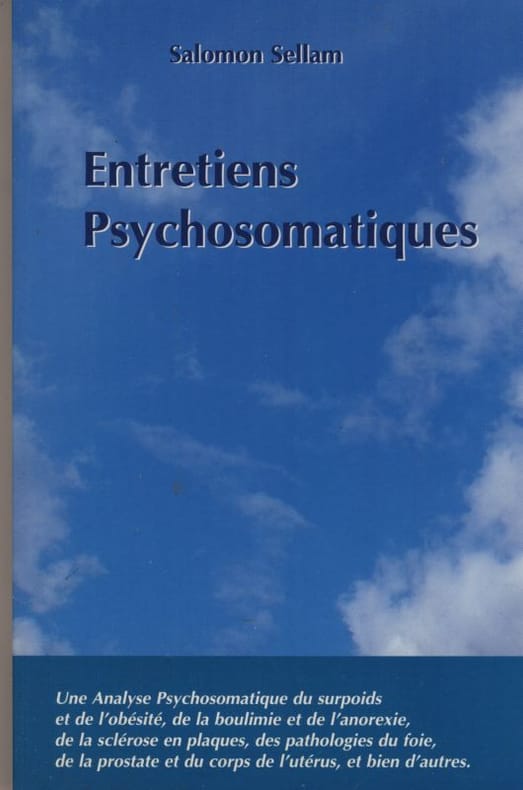
150257751502 Broché, comme neuf, 150x 230, 312 gr, 208 pages, Présentation de l'auteur voir photo de la couverture, ISBN: 2-9518265-0-8 - 9782951826502
1518ZB887519Albany: For the Editor by H. C. Southwick 1815-1816. 416 1 pp. leaf 79/80 lacking lower corner of text; bound in modern blue boards & beige cloth backstrip occasional old library hand stamp to a title page text age toned with an occasional light fox mark otherwise very good in the fine binding along with a matching clamshell slipcase; Sabin 88640. - If you are reading this this item is actually physically in our stock and ready for shipment once ordered. We are not bookjackers. Buyer is responsible for any additional duties taxes or fees required by recipient's country. Albany: For the Editor, by H. C. Southwick hardcover
1587910998CGWittenberg:, Ambrosius Kirchner, 1587. Holzschnitt, 27,5 x 38 cm, Blattgröße 30,5 x 39,5 cm. [2 Warenabbildungen]
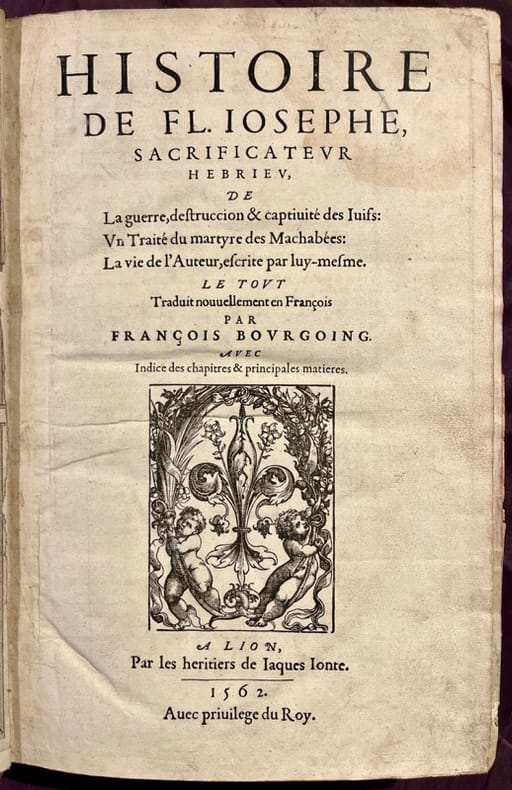
156220242A Lion, Pars les héritiers de Iaques Ionte, De l'imprimerie de Ian de Tournes, 1562. In-folio de [26]-707-[1]-[76] et [6]-348-[24] pages. Pleine basane fauve, dos à faux nerfs orné de filets et fleurons dorés, pièce de titre bordeaux, tranches rouges. Reliure 19e siècle.
1582M13446Vitaebergae:: Typis Zachariae Lehmani 1582. 1582. 16 cm. Small 8vo. 75 1 pp. Signatures: A-E A2 missigned A3; pages 35 and 37 both with "C3" Wellcome copy differs slightly lacks E8 blank. Plain wrappers. Laid into quarter green morocco cloth sides folding box 23 cm. Occasional early ink marginalia. Early ownership signature at foot of title. RARE: no record of copies found on market. First edition one of two known issues. VERY RARE & EARLY ACCOUNT ON PERSPIRATION CRYING & BLOOD. A classical account on perspiration crying and blood all fluids. O'Malley writes for the DSB 'such then curious but rational problems as why boys ought not to be forbidden to cry why sobbing usually accompanies weeping" - apparently referring to this work. Thorndike who notes the author's work on the classical writers Galen and Rasis notes further that he was not a physician who ascribed to the occult sciences: "he also discussed such questions as why boys should not be forbidden to cry why sobbing generally goes with tears. . ." p. 230. The Bayerische Staatsbibliothek copy has an added 2 leaves marked as signature "-2" which is a preface by Paulo Alberto Paulus Albertus not available in this copy but supplied in facs. The text refers to bloody sweat noted by Stolberg "Modern medicine acknowledges such phenomena as "hematidrosis" but premodern accounts of bloody sweating may well have to be taken in a much wider sense including what physicians today would consider as bleeding disorders." - Michael Stolberg 'sweat. Learned Concepts and Popular Perceptions 1500-1800" within: Manfred Horstmanshoff Helen King & Claus Zittel editors Blood Sweat and Tears: The Changing Concepts of Physiology from Antiquity into Early Modern Europe Brill 2012 p. 509. Alberti born in 1540 Naumburg Germany a year later his father died. He and his mother relocated to Nuremberg 1541. Remarkably the city paid for Alberti's education including his doctoral studies at the University of Wittenberg 1574 rising to become Professor of Philosophy and Physics in Wittenberg then Professor of Medicine and in 1582 becoming physician to Duke Friedrich Wilhelm of Saxony. His last residence was in Dresden where he passed away. He wrote tracts on the pancreas 1578 on the lacrimal apparatus De Lacrimis 1581. In 1585 he published Historia plerarunque partium humani corporis membratim scripta et in usum tyronum retractatius edita Vitaebergae excudebant Haeredes Iohannis Cratonis. ". . . some years later the German anatomist Salomon Alberti 1540–1600 published his studies of the lacrimal apparatus in a volume entitled De Lacrimis." "Initially tears were considered to be more or less similar in composition to other body fluids in particular sweat and urine." - Ad Vingerhoets Why Only Humans Weep: Unravelling the Mysteries of Tears 2013 pp. 51 but does not mention this text. - DSB. REFERENCES: Dictionary of Scientific Biography I p. 98 O'Malley; Durling 76. See: Hans Theodor Koch: Die Wittenberger Medizinische Fakultat 1502-1652 - Ein biobibliographischer Uberblick pp. 299-300 in Stefan Oehmig Medizin und Sozialwesen in Mitteldeutschland zur Reformationszeit Leipzig 2007; Evangelische Verlagsanstalt Leipzig; August Hirsch: Biographisches Lexikon 1884 Bd. 1 p 85; Fritz Roth: Restlose Auswertungen von Leichenpredigten fur genealogische und kulturhistorische Zwecke. Selbstverlag 1976 Bd. 9 p. 188; Lynn Thorndike A History of Magic and Experimental Science The Sixteenth Century VI New York 1941 pp. 229–230. Bibliotheque nationale France Catalogue general des livres imprimes de la Bibliotheque Nationale Paris 1897 p. 518. FFrye C188 Typis Zachariae Lehmani, 1582. hardcover
159453431Leipzig: Z. Barwaldt 1594. Second edition. Hardcover. Very good. Folio. 12 83 1. title in red and black. Marbled boards 19th century backed in vellum. Moderately embrowned throughout. A very good amply-margined copy.<br /> <br /> Second edition of an important historical chronical for the years 1551-1590 in the Baltic areas of Lithuania Livonia and Couland Latvia. References: VD16 - H1937. [Z. Barwaldt] hardcover
1582M13446Vitaebergae:: Typis Zachariae Lehmani 1582. 1582. 16 cm. Small 8vo. 75 1 pp. Signatures: A-E A2 missigned A3; E7. Lacks E8 blank. Plain wrappers. Laid into quarter green morocco cloth sides folding box 23 cm. Occasional early ink marginalia. RARE: no record of copies found on market. First edition one of two known issues. VERY RARE & EARLY ACCOUNT ON PERSPIRATION CRYING & BLOOD. A classical account on perspiration crying and blood all fluids. O'Malley writes for the DSB "such then curious but rational problems as why boys ought not to be forbidden to cry why sobbing usually accompanies weeping" -- apparently referring to this work. Thorndike who notes the author's work on the classical writers Galen and Rasis notes further that he was not a physician who ascribed to the occult sciences: "he also discussed such questions as why boys should not be forbidden to cry why sobbing generally goes with tears. . ." p. 230. The Bayerische Staatsbibliothek copy has an added 2 leaves marked as signature "-2" which is a preface by Paulo Alberto Paulus Albertus not available in this copy but supplied in facs. The text refers to bloody sweat noted by Stolberg "Modern medicine acknowledges such phenomenona as 'hematidrosis' but premodern accounts of bloody sweating may well have to be taken in a much wider sense including what physicians today would consider as bleeding disorders." -- Michael Stolberg "Sweat. Learned Concepts and Popular Perceptions 1500-1800" within: Manfred Horstmanshoff Helen King & Claus Zittel editors Blood Sweat and Tears: The Changing Concepts of Physiology from Antiquity into Early Modern Europe Brill 2012 p. 509. Alberti born in 1540 Naumburg Germany a year later his father died. He and his mother relocated to Nuremberg 1541. Remarkably the city paid for Alberti's education including his doctoral studies at the University of Wittenberg 1574 rising to become Professor of Philosophy and Physics in Wittenberg then Professor of Medicine and in 1582 becoming physician to Duke Friedrich Wilhelm of Saxony. He last residence was in Dresden where he passed away. He wrote tracts on the pancreas 1578 on the lacrimal apparatus De Lacrimis 1581. In 1585 he published Historia plerarunque partium humani corporis membratim scripta et in usum tyronum retractatius edita Vitaebergae excudebant Haeredes Iohannis Cratonis. ". . . some years later the German anatomist Salomon Alberti 1540–1600 published his studies of the lacrimal apparatus in a volume entitled De Lacrimis." "Initially tears were considered to be more or less similar in composition to other body fluids in particular sweat and urine." -- Ad Vingerhoets Why Only Humans Weep: Unravelling the Mysteries of Tears 2013 pp. 51 but does not mention this text. -- DSB. REFERENCES: Dictionary of Scientific Biography I p. 98 O'Malley; Durling 76. See: Hans Theodor Koch: Die Wittenberger Medizinische Fakultat 1502-1652 - Ein biobibliographischer Uberblick pp. 299-300 in Stefan Oehmig Medizin und Sozialwesen in Mitteldeutschland zur Reformationszeit Leipzig 2007; Evangelische Verlagsanstalt Leipzig; August Hirsch: Biographisches Lexikon 1884 Bd. 1 p 85; Fritz Roth: Restlose Auswertungen von Leichenpredigten fur genealogische und kulturhistorische Zwecke. Selbstverlag 1976 Bd. 9 p. 188; Lynn Thorndike A History of Magic and Experimental Science The Sixteenth Century VI New York 1941 pp. 229–230. Bibliotheque nationale France Catalogue general des livres imprimes de la Bibliotheque Nationale Paris 1897 p. 518. FFrye C188 Typis Zachariae Lehmani, 1582. hardcover books
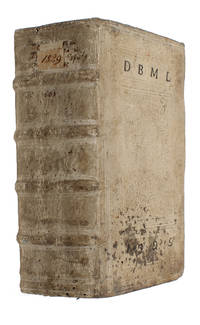
159860651Wittemberg, Meissner, 1595 & Wittemberg, Mullerus, 1597 & Frankfurt, Kopff, 1597 & Frankfurt, Saurius, 1598. 8vo. In contemporary blindstamped pigskin over wooden boards, four raised bands and title in contemporary hand to spine. Small paper label pasted on to spine indicating the inventory number in an estate library. All edges with chiseled ornamentation. ""DBML"" and ""1595"" to front board. Wear to extremities, a few worm holes to boards and miscolouring to lower part of front board. (26), 275, (10) pp." 116 ff. (22), 262, (4) pp. 261, (3) pp.
159860651Wittemberg Meissner 1595 & Wittemberg Mullerus 1597 & Frankfurt Kopff 1597 & Frankfurt Saurius 1598. 8vo. In contemporary blindstamped pigskin over wooden boards four raised bands and title in contemporary hand to spine. Small paper label pasted on to spine indicating the inventory number in an estate library. All edges with chiseled ornamentation. "DBML" and "1595" to front board. Wear to extremities a few worm holes to boards and miscolouring to lower part of front board. 26 275 10 pp.; 116 ff.; 22 262 4 pp.; 261 3 pp. <br/><br/><em>An interesting sammelband consisting of four all rare late 16th century works all focusing on aspects of Christian theology and doctrine particularly those related to the sacraments and the Church. Each title delves into different facets of the Christian faith collectively contribute to a comprehensive understanding of key elements in Christian theology emphasizing the importance of the sacrament of the Holy Supper or Eucharist the nature of the Church and the truth concerning the presence of the body of Christ in the sacraments. </em> hardcover
15943076<p>Wittenberg: Georg Muller 1594. Rare first edition of one of the earliest works on the subject of scurvy by the well-known anatomist undertaken to survey the incidence of the disease in the ducal territories around Wittenberg and consequently qualifying as an example of public health medicine. According to O’Malley Alberti was able to positively demonstrate the disease’s prevalence in the territory surveyed and astutely recommend citrus fruit as part of a preventative diet a benevolent property later recognized by James Lind in his Treatise on the Scurvy Edinburg 1753. “The book was known by James Lind and referred to by him in his celebrated treatise” O’Malley p. 98. Salomon Alberti 1540-1600 is best known for producing the first illustrations of the venous valves and for producing the first extensive printed account devoted solely to their function in his Tres Orationes Nuremberg 1585. The correct understanding of the venous valves was essential to Harvey’s concept of a systemic circulation of the blood. The work went through at least two 17th-century editions 1624; 1674 though the editio princeps appears to be the only one containing Alberti’s public disputation of 1591 with Ernestus Hettenbach which constitutes the first public announcement of his results. NUC lists NLM; OCLC adds UCLA Medical and Oxford for this edition.</p><p> Durling 81 giving incorrect no. of pages but correct signature run A-Q8 R4; not in Adams or Waller and first edition not at Wellcome; C. D. O’Malley in DSB I.98; Thorndike VI.229-30.</p> Georg Muller hardcover books
15943076<p>Wittenberg: Georg Muller 1594. Rare first edition of one of the earliest works on the subject of scurvy by the well-known anatomist undertaken to survey the incidence of the disease in the ducal territories around Wittenberg and consequently qualifying as an example of public health medicine. According to O’Malley Alberti was able to positively demonstrate the disease’s prevalence in the territory surveyed and astutely recommend citrus fruit as part of a preventative diet a benevolent property later recognized by James Lind in his Treatise on the Scurvy Edinburg 1753. “The book was known by James Lind and referred to by him in his celebrated treatise” O’Malley p. 98. Salomon Alberti 1540-1600 is best known for producing the first illustrations of the venous valves and for producing the first extensive printed account devoted solely to their function in his Tres Orationes Nuremberg 1585. The correct understanding of the venous valves was essential to Harvey’s concept of a systemic circulation of the blood. The work went through at least two 17th-century editions 1624; 1674 though the editio princeps appears to be the only one containing Alberti’s public disputation of 1591 with Ernestus Hettenbach which constitutes the first public announcement of his results. NUC lists NLM; OCLC adds UCLA Medical and Oxford for this edition.</p><p> Durling 81 giving incorrect no. of pages but correct signature run A-Q8 R4; not in Adams or Waller and first edition not at Wellcome; C. D. O’Malley in DSB I.98; Thorndike VI.229-30.</p> Georg Muller hardcover
1583ABC_50293Lyon: Jean de Tournes 1583. 18th- or 19th-century elaborately gold-tooled pebble-grained dark greenish-blue sheepskin with the titles and place and year of publication for both titles lettered in gold on the spine gold-tooled board edges and turn ins gilt edges marbled endpapers. 8vo. Ad 1: with the title in an ornamental woodcut border with the printers device including two vipers 233 half-page woodcut illustrations and 2 woodcut vignettes. Ad 2: with the title in a historiated woodcut border Cartier "Nains" with the same woodcut printers device Cartier Vipères I1 and 96 half-page woodcut illustrations including one repetition arabesque headpieces and a large woodcut on the last page Cartier "Lac damour. 2 works in 1 volume. With: 2 FONTAINE Charles & Bernard SALOMON. Figures du nouveau testament.Lyon Jean de Tournes 1579. Later edition of this well-known series of woodcut Bible illustrations to the Old Testament engraved by the famous woodcutter Bernard Salomon "le petit Bernard" ca. 1506-ca. 1561 working in Lyon especially for one of the most important Lyon publisher/printers Jean de Tournes 1504-1564. Another collaborator of De Tournes Claude Paradin ca. 1510-1573 is the author of the accompanying quatrains in French which are printed in italics. Claude Paradin is a genealogist and collector of "emblems" or devises published by De Tournes in 1551 as the influential collection Devises Heroïques. The first edition of the Quadrins historiques appeared in 1553 with 199 woodcuts the second and following editions in 1555 1558 and 1560 with 231 cuts. The series is also published with the quatrains in Italian English Spanish and Latin translations. Un pur chef doeuvre de lécole lyonnaise Brun.Ad 2: Fifth edition of the sequel series of woodcut Bible illustrations now to the New Testament also engraved by the famous woodcutter Bernard Salomon. This time the poet Charles Fontaine 1514-ca.1560 who lived in Lyon since 1540 and who was also a close collaborator of Jean de Tournes is the author of the accompanying 96 quatrains in French which are also printed in italics. The first edition of the Figures appeared in 1554 the third in 1558 and the fourth in 1559.With the armorial bookplate "Bibliotheca In memoriam Weiler Trautner Falkiana 1972" on the verso of the first flyleaf and the faint offsetting of a round pair of glasses between the final two leaves of ad 1. Several woodcuts slightly worn out slight browning and foxing throughout. Otherwise in good condition.l Ad 1: Brunet IV col. 995; Cartier Bibliogr. des éditions des De Tournes no. 452; Le livre illustr. De la Renaissance no. 132 2nd ed.; cf. Adams P-293 1st ed.; Brun Le livre illstr. en France 1930 p. 203; Fairfax Murray no. 615; ad 2: Cartier Bibliogr. des éditions des De Tournes II no. 593; Mortimer no. 95 cf. also no. 81; cf. Adams F-706; Brunet IV col. 995. Jean de Tournes, unknown
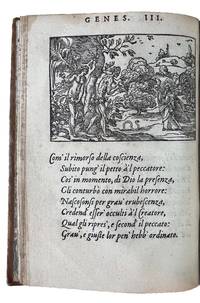
15544378Lyon: Giovanni di Jean I de Tournes 1554. 8vo 151 x 102 mm. Printer’s woodcut device on title Cartier 5 woodcut author portrait on title verso 228 half-page woodcuts by Bernard Salomon. Upper margins cut close touching an occasional headline title soiled and with repair to lower blank corner small wormhole through woodcuts of 30 leaves fols. A1-D6 larger wormhole in 7 leaves fols. L3-M1 P5 with a small hole in cut B5 with small burnhole affecting two words. Late 18th-century marbled sheep smooth spine gold-tooled in panels citron morocco gilt lettering-piece speckled edges marbled endpapers ribbon marker extremities rubbed head of spine cracked. Provenance: 18th-century price note; Dr. Alamartine surgeon of the Lyon hospitals 20th-century blindstamp on flyleaf.<br /> <br /> First Italian edition of the de Tournes / Salomon picture Bible Old Testament only. The poet Damiano Maraffi provided the verse paraphrases which accompany each woodcut; he did the same for the New Testament published by de Tournes in 1554 with fewer woodcuts 95. Maraffi dedicated this edition to Marguerite de France Duchesse de Berry youngest daughter of Francis I. The wood engraver Bernard Salomon nearly all of whose oeuvre was published by de Tournes was one of the few Renaissance illustrators to achieve fame during his lifetime. His Old Testament woodcuts first appeared in 1553 with Claude Paradin’s French verse text Quadrins historiques de la Bible and Quadrins historiques d’Exode. De Tournes republished the cuts with texts in Spanish 1553 English 1553 and German 1554 as well as Italian. Successive editions contain varying numbers of cuts. “Considerable work could be done on Salomon’s sources for these blocks. But the cumulative effect of Salomon’s carefully detailed scenes is that of an individual contribution to Bible illustration. Particularly interesting from the point of view of technique are the night scenes in Exodus and the storm over Noah’s ark†Harvard/ Mortimer French 81. <br /> <br /> A modest copy but with fine impressions of the woodcuts of one of the greatest sixteenth-century French illustrated books. Cartier Bibliographie des éditions des de Tournes 268; Adams M-507; USTC 840556; cf. Brun Le livre français illustré de la Renaissance 1969 pp. 77-70 & 131.<br /> <br /> Giovanni di [Jean I de] Tournes unknown