1 868 résultats
1-3957822637Dogma 1889. Paperback. New. 1st edition. 260 pages. German language. 8.27x5.83x0.59 inches. Dogma paperback
1020341068.Ghardcover. Good. Access codes and supplements are not guaranteed with used items. May be an ex-library book. hardcover

1023747677.Gpaperback. Good. Access codes and supplements are not guaranteed with used items. May be an ex-library book. paperback
1023745208.Ghardcover. Good. Access codes and supplements are not guaranteed with used items. May be an ex-library book. hardcover
50466252like new. unknown
1145171176.Gpaperback. Good. Access codes and supplements are not guaranteed with used items. May be an ex-library book. paperback
1019044799.Ghardcover. Good. Access codes and supplements are not guaranteed with used items. May be an ex-library book. hardcover
3744683311.Gpaperback. Good. Access codes and supplements are not guaranteed with used items. May be an ex-library book. paperback
3744683346.Gpaperback. Good. Access codes and supplements are not guaranteed with used items. May be an ex-library book. paperback
3744683338.Gpaperback. Good. Access codes and supplements are not guaranteed with used items. May be an ex-library book. paperback
374468332X.Gpaperback. Good. Access codes and supplements are not guaranteed with used items. May be an ex-library book. paperback
1017899789.Ghardcover. Good. Access codes and supplements are not guaranteed with used items. May be an ex-library book. hardcover
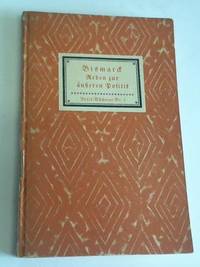
6c5832Insel Verlag Lpz. 1939. 89 S. Pappband Rücken leicht eingerissen und etwas berieben. - Insel-Bücherei Nr. 5/Bezugspapier 57 nach Jenne - unknown
0061313572.Gpaperback. Good. Access codes and supplements are not guaranteed with used items. May be an ex-library book. paperback
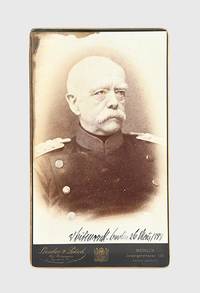
18851875851885. Signed by the Iron Chancellor A striking portrait boldly signed "Bismarck Berlin 26 März 1885" - a consequential day on which Bismarck ordered the expulsion of around 30000 non-naturalized Poles and Jews as part of his Germanization program in Prussia. The portrait was taken by the leading Berlin photographers Loescher & Petsch. Mounted on photographer's board with studio stamp in gilt at foot 321 x 186 mm. Slight staining and rubbing at extremities slight spotting. In very good condition. unknown
1020780002.Ghardcover. Good. Access codes and supplements are not guaranteed with used items. May be an ex-library book. hardcover
135795719X.Ghardcover. Good. Access codes and supplements are not guaranteed with used items. May be an ex-library book. hardcover
2007DADAX0548156166Kessinger Publishing 2007-07-25. hardcover. New. 6.00x1.13x9.00. Buy with confidence. Excellent Customer Service & Return policy. Kessinger Publishing hardcover
1020291834.Ghardcover. Good. Access codes and supplements are not guaranteed with used items. May be an ex-library book. hardcover
188584205Bismarck Dakota Territory: Bismarck Dakota 1885. Presumed one of multiple original issued. Ribbon. Fair/fragile. Format is approximately 2.5 inches by 6 inches. This is a period black memorial ribbon commemorating the death of civil war icon and 18th President of the United States General Ulysses S. Grant. It is a black satin ribbon which originally had a cartes de visite style photograph applied to the surface. This image has worn away. Written in silver is the inscription: Bismarck Dakota. IN MEMORIAM GENERAL U. S. GRANT Born April 27 1822. Died July 23 1885. It has a tear between the In Memoriam and the space where Grant's image had been. The top is frayed and it appears that a portion of the bottom has been lost. The funeral of Ulysses S. Grant was held on August 8 1885 in New York City Grant's funeral procession surpassed any public demonstration in the country up until that time with an attendance of 1.5 million people and additional ceremonies held in other major cities and communities. The day was described as a final triumphant end to the national drama begun by the Civil War as well as a day to praise Grant's role in preserving the Union. A newspaper editorial proclaimed that Grant's life did not need to be remembered in sculpture pictures prose or poetry because "the union is his monument." The theme of unity was advanced by President Cleveland when he appointed former Confederate Generals Joseph Johnston and Simon B. Buckner to join Union Generals William T. Sherman and Philip H. Sheridan as pallbearers. On August 8 1885 Americans awoke to the solemn sound of tolling bells. Most needed no reminder that this was the day of the funeral of Union general and twice-elected president Ulysses S. Grant. Befitting his already larger-than-life legacy 1.5 million people gathered in New York City to view Grant's funeral procession and the burial ceremonies. The spectacle replete with religious patriotic and nationalistic imagery and rhetoric was but the biggest of the thousands of memorial ceremonies held in the United States on that sad day. <br /> In large and small cities in bustling towns and dusty hamlets citizens had prepared and planned commemorations that complemented New York's. Whether lavish or simple these commemorations were much the same and usually included a procession lasting several hours that ended in a church or other public building. Against a backdrop that included a large picture of Grant a floral decoration a black-draped pulpit a minister a veteran and an elected official would offer eulogies. Prayers music and poems completed the memorial services. The thousands of eulogies and obituaries for Grant across the country stressed his Christian moral character his role in preserving the Union and his magnanimity at Appomattox. The praise for the last was especially loud as eulogists likened the sentiment for sectional reconciliation engendered by Grant's death to a final happy ending to the tragic national drama begun by the Civil War. "There is perhaps no parallel in the history of state funerals" an observer stated "where so many orations were delivered as at yesterday's obsequies." One minister captured a powerful and popular theme of Grant's life: "By a single act General Grant put himself above the wisest of American statesmen. That act was the terms he offered to Lee for the surrender of his Army. In a few clear simple lines he solved at once the problem of peace and the possible unity and fraternity of the American people." A newspaper editorial reflected the prevailing sentiment across the country when it proclaimed that Grant's life did not need to be remembered in sculpture pictures prose or poetry because "the Union is His Monument." The death and funeral of Ulysses S. Grant became a vehicle for a religiously tinged emotional and political reconciliation of North and South and as such is a critical event in the history of the political culture of the United States. "I am sorry General Grant is dead" proclaimed ex-Confederate general and pallbearer Simon Bolivar Buckner "but his death has yet been the greatest blessing the country has ever received now reunion is perfect." The reaction to Ulysses S. Grant's death also reveals a generation's connection between the memory of an event in this case the Civil War; a commemoration in this case Grant's funeral beginning with the deathwatch; and the articulation of a new or renewed basis for American nationalism. Implicit in the statements issued north and south by former Civil War generals and prominent politicians spoken by ministers of every denomination and splashed across the headlines of major newspapers was the important assumption that Grant's deathwatch and funeral forged reconciliation between the sections that in turn ensured the emergence of a powerful and united American nation. Ulysses S. Grant occupied a special place in the hearts and minds of American citizens living in 1885. Beginning in 1862 and continuing until his death Grant was the focus of constant attention and scrutiny. After his controversial terms as president Ulysses and his wife Julia embarked on a lengthy much-publicized tour around the world which ended with his triumphal return to America in 1879.<br /> <br /> The city of Bismarck had a special affinity for President Grant. On September 5 1883 a parade of national figures came together to lay the cornerstone for the new Dakota Territory Capitol in Bismarck. They included Henry Villard president of the Northern Pacific Railway; financier Jay Cooke; former President Ulysses Grant; Hunkpapa Lakota holy man Sitting Bull; and a German minister appearing for Chancellor Otto von Bismarck. More than 3000 people attended the ceremony. Former president Grant was on his way with Henry Villard to the completion ceremony of the Northern Pacific Railroad. It was less than two years later that the citizens of Bismarck mourned by death of Ulysses S. Grant. Bismarck, Dakota unknown
3662334259.Gpaperback. Good. Access codes and supplements are not guaranteed with used items. May be an ex-library book. paperback
2009834984Hatje Cantz. New. 2009. Hardcover. 3775724435 . FREE UPGRADE to Courier/Priority Shipping Upon Request - IN STOCK AND IMMEDIATELY AVAILABLE FOR SHIPMENT - Flawless copy brand new pristine never opened -- Text in English and German. 208 pages; 109 illustrations. -- with a bonus offer-- . Hatje Cantz hardcover
0656689420.Ghardcover. Good. Access codes and supplements are not guaranteed with used items. May be an ex-library book. hardcover
0243432623.Gpaperback. Good. Access codes and supplements are not guaranteed with used items. May be an ex-library book. paperback
200789851Dumont Literatur Und Kunst Verlag. New. 2007. Hardcover. 3832177728 . FREE UPGRADE to Courier/Priority Shipping Upon Request - IN STOCK AND IMMEDIATELY AVAILABLE FOR SHIPMENT - Flawless copy brand new pristine never opened -- Text in German and English with portions in German only. 200 pp. ; 117 ills. -- with a bonus offer-- . Dumont Literatur Und Kunst Verlag hardcover