Abrams CalendarsBiblio.com

94 résultats
1419724592.Gcalendar. Good. Access codes and supplements are not guaranteed with used items. May be an ex-library book. unknown
1523519029.Gcalendar. Good. Access codes and supplements are not guaranteed with used items. May be an ex-library book. unknown
1523519088.Gcalendar. Good. Access codes and supplements are not guaranteed with used items. May be an ex-library book. unknown
152351342X.Gcalendar. Good. Access codes and supplements are not guaranteed with used items. May be an ex-library book. unknown
1979128085Playboy 1979. Very Good . Vintage pinup calendars featuring stunning glamour photography of professional models both featuring Playboy Playmates for 1979 and 1981. Desktop editions 12 loose leaves in sturdy die-cut cardboard frames that double as wall-hangers perforated on the rear for desk and wall. Each month is a single leaf featuring a Playmate full-color laid into the frame through the rear. Electro-Nite Co. 1979 6x8 inches.Playboy Playmate Calendar 1981 5x7 inches ph. Ken Marcus and Richard Fegley.Very Good Plus overall light rubbing and toning each with opened top perforations on the rear. For mature consenting audiences. Playboy unknown
1523507829.Gcalendar. Good. Access codes and supplements are not guaranteed with used items. May be an ex-library book. unknown
1642525804.Gpaperback. Good. Access codes and supplements are not guaranteed with used items. May be an ex-library book. paperback
DADAX1642525804Wall Publishing 0000-00-00. Paperback. New. 8.50x0.07x8.50. Buy with confidence. Excellent Customer Service & Return policy. Wall Publishing paperback
1523519517.Gcalendar. Good. Access codes and supplements are not guaranteed with used items. May be an ex-library book. unknown
1523512148.Gcalendar. Good. Access codes and supplements are not guaranteed with used items. May be an ex-library book. unknown
1523518847.Gcalendar. Good. Access codes and supplements are not guaranteed with used items. May be an ex-library book. unknown
1889S6274Bologna:: Camberini et Parmeggiani 1889. 1889. At head of title: R. Academie des Sciences de L'Institut de Bologne. 4to. 20 pp. Paper brittle. Original printed wrappers; extremities chipped. Ex library rubber stamp and ms. notations on top cover. Very good. Camberini et Parmeggiani, 1889. unknown
13537Avignon an iii 1794 à 1795. Plaquette 19 x 12.5 cm 12 feuillets imprimés : éclipses annuaire les sanculottides le sixième jour des années sextiles tous les quatre ans 46 principes de morale et de politique nouvelle division des jours et des heures. Coins cornés et auréole claire sur certains feuillets. unknown
1523524324.GGood. Access codes and supplements are not guaranteed with used items. May be an ex-library book. unknown
1523508205.GGood. Access codes and supplements are not guaranteed with used items. May be an ex-library book. unknown
1523526297.Gcalendar. Good. Access codes and supplements are not guaranteed with used items. May be an ex-library book. unknown
20211-1523513241Workman Publishing 2021. Calendar. New. 320 pages. 5.51x5.43x2.72 inches. Workman Publishing unknown
1523513241.Gcalendar. Good. Access codes and supplements are not guaranteed with used items. May be an ex-library book. unknown
1650596103.Gpaperback. Good. Access codes and supplements are not guaranteed with used items. May be an ex-library book. paperback
1334862281.Gpaperback. Good. Access codes and supplements are not guaranteed with used items. May be an ex-library book. paperback
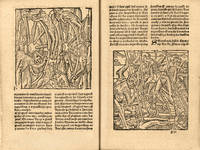
ABAA-75TH-VBF-12<p>Paris pour la veuve Jean Bonfons n.d. around 1569.</p><p>Small gothic 4to of 104 ll. lower corner of title and of l. 13 restored lower white part of last 7 ll. restored without affecting the text paper strip cut in the lower part of the last l. without affecting the text. Red morocco large gilt border with pelicans around the covers ribbed spine with gilt fleurons inner gilt border gilt edges. Binding signed by <em>Chambolle-Duru.</em></p><p>200 x 136 mm.</p><p><strong>A beautiful extremely rare Parisian gothic edition of this lavishly illustrated work which was extraordinarily successful in the 16th century.</strong></p><p>Brunet II 206; Bechtel C-37. Not in Fairfax Murray or Harvard <em>French Books</em>.</p><p>The present edition is not dated but it is known that Catherine Sergent the widow of Jean Bonfons worked as a bookseller-printer in Paris from 1568 date of her husband's death to 1572 date of his death. The Calendar at the beginning of the volume is given for 1569. We can therefore place with precision the publication of the Calendar around 1569.</p><p>The use of calendars spread from the 12th century onwards in books for clerical use such as psalters missals or martyrologies. At the end of the Middle Ages the Books of Hours always begin with a calendar indicating the religious feasts.</p><p>The calendars and compost of the shepherds are of a different nature. Published to "<em>teach the science of the shepherds which is the science of the soul of the body of the stars of life and death</em>"<strong> these books are in fact compilations for practical and moral use intended for a secular public.</strong> They are inspired by medieval works such as "<em>The Book of the Properties of Things</em>" by Bartholomew the Englishman the "<em>Great Macabre Dances</em>" the treatises preparing souls for the Last Judgment. They had recourse to astrology very present in the 15th and 16th centuries. The signs of the zodiac the anatomical plates the macabre dances or representations of the underworld the representations of agricultural or craft activities for each month of the year must enrich the text to guide Man towards his salvation. The first <em>Compost des bergers</em> was printed in Paris by Guy Marchant in 1491 before being republished many times in the following decades.</p><p><strong>All sixteenth century editions of this popular calendar are extremely rare. </strong>This one Gothic with two columns and with the title and calendar printed in red and black following the tradition of manuscripts is particularly rare.</p><p>Based on an equation established between the life of a man and the cycle of the year the text offers both a perpetual almanac and a rich collection of moral precepts practical advice and religious pieces.</p><p>The work first includes a prologue "of the auctor" justifying the fact that it transcribes the knowledge of the shepherds. The second prologue is that of the so-called master shepherd who presents a lesson in counting. Our <em>Compost</em> is followed by a calendar in the medieval tradition such as is found in the preamble of many Books of Hours.</p><p>In addition to the calendars mobile tables and phases of the moon the trees and branches of the virtues and vices the punishments of hell the book of the salvation of the soul chapters of anatomy phlebotomy dietetics etc. one finds there several poems or ballads such as the Dictz des oyseaux the Dictic des trespasses en forme de Balade & du Jugement les Dix commandemens de la Loy Lhystoire du Navire sur Mer le Dict du Mort les Dix commandemens du diable les Dix Nations Chrestiennes etc.</p><p><strong>The illustration of great interest is composed of a very beautiful woodcut showing three shepherds in the field</strong> guarding their flocks and conversing while observing the stars placed on the title <strong>of more than 80 woodcuts in the text including 8 large ones showing the penalties of hell of fifty decorated letters and 522 small ramps</strong> <em>for the tree of vices & mirror to know your sins. </em></p><p>The calendar has 12 woodcuts corresponding to the occupation of the months.</p><p>The cycle of 8 large woodcuts 105 x 97 mm is of particular iconographical interest. The first one shows <em>Lazarus telling Christ and the apostles at Simon's table the vision of his death. The 7 other engravings illustrate with violence realism and fantasy the torments of hell</em>.</p><p>Very diverse the whole of the engravings represent as much the occupations of the months with rural scenes scene of hunting or gallant scene as astronomical figures figures of medicine or anatomy the trees of the vices and the virtues. The typographical mark of the widow Bonfons is on the back of the last leaf cf. Silvestre n°125.</p><p><strong>Very interesting iconographic cycle of popular factory</strong> illustrating the cultural gap existing in 1569 between the cultivated elite penetrated by the Renaissance and the bourgeois of the cities still sensitive to the medieval imagination.</p><p>A beautiful copy of a mythical illustrated book.</p><p>This edition is cited by Brunet II 206 without collation and without location of copies. The USTC online catalog mentions only 2 copies in public collections one in London <em>British Library</em> the other at <em>Yale University </em>in the United States.</p><p><strong>A fine wide-margined copy in an elegant red morocco binding by Chambolle-Duru called "aux pélicans" made for baron Pichon</strong> 1897 n°293.</p><p>It bears an autograph note by the bibliophile on a flyleaf: "<em>This volume is from 1569. One has the proof on the back of the l. C where the almanac of Easter and the mobile feasts begins in this year B.J.P</em> ".</p><p><strong>FR</strong></p><p>Paris pour la veuve Jean Bonfons s.d. vers 1569.</p><p>Petit in-4 gothique de 104 ff. coin inf. du titre et du f. 13 restaurés partie inf. blanche des 7 derniers ff. restaurée sans atteinte au texte bande de papier découpée dans la partie inf. du dernier f. sans atteinte au texte. Maroquin rouge large roulette dorée aux pélicans encadrant les plats dos à nerfs orné de fleurons dorés double filet doré sur les coupes roulette dorée intérieure tranches dorées. Reliure signée de <em>Chambolle-Duru</em>.</p><p>200 x 136 mm.</p><p><strong>Belle édition gothique parisienne de la plus grande rareté de cet ouvrage abondamment illustré qui connut un extraordinaire succès au XVIe siècle.</strong></p><p>Brunet II 206 ; Bechtel C-37. Pas dans Fairfax Murray ni Harvard <em>French Books</em>.</p><p>La présente édition n'est pas datée mais l'on sait que Catherine Sergent la veuve de Jean Bonfons exerça la profession de libraire-imprimeur à Paris de 1568 date du décès de son époux à 1572 date de son décès.D'autre part le calendrier qui se trouve en tête de l'ouvrage est donné pour 1569. On peut donc situer avec précision la date de publication du présent Calendrier aux alentours de 1569.</p><p>L'usage des calendriers s'est diffusé à partir du XIIe siècle dans les livres à usage des clercs tels que les psautiers les missels ou les martyrologes. A la fin du Moyen-âge les Livres d'Heures débutent toujours par un calendrier qui indique les fêtes religieuses.</p><p>Les calendriers et compost des bergers sont de nature différente. Edités pour "<em>enseigner la science des bergers qui est science de l'âme du corps des astres de la vie et de la mort</em>" <strong>ces livres sont en fait des compilations à usage pratique et moral destinées à un public laïc.</strong> Ils s'inspirent d'ouvrages médiévaux tels que "<em>Le Livre des propriétés des choses</em>" de Barthélémy l'Anglais les "<em>Grandes Danses Macabres</em>" les traités préparant les âmes au Jugement Dernier. Ils ont recours à l'astrologie très présente aux XVe et XVIe siècles. Les signes du zodiaque les planches anatomiques les danses macabres ou représentations des enfers les représentations des activités agricoles ou artisanales pour chaque mois de l'année doivent enrichir le texte pour guider l'Homme vers son salut.</p><p>Le premier <em>Compost des bergers</em> fut imprimé à Paris par Guy Marchant en 1491 avant d'être réédité à de nombreuses reprises dans les décennies suivantes.</p><p><strong>Toutes les éditions du XVIe siècle de ce calendrier populaire sont extrêmement rares</strong>. Celle-ci gothique à 2 colonnes et dont le titre et le calendrier sont imprimés en rouge et noir suivant la tradition des manuscrits l'est tout particulièrement.</p><p>Fondé sur une équation établie entre la vie d'un homme et le cycle de l'année le texte offre à la fois un almanach perpétuel et un riche recueil de préceptes moraux conseils pratiques et pièces religieuses.</p><p>L'ouvrage comprend d'abord un prologue " de l'aucteur " justifiant le fait qu'il retranscrit le savoir des bergers. Le second prologue est celui du prétendu maître berger qui présente une leçon de comput.</p><p>Suit dans notre <em>Compost</em> un calendrier dans la tradition médiévale tel qu'on en trouve en préambule de nombreux Livres d'Heures.</p><p>Outre les calendriers tables mobiles et phases de la lune les arbres et branches des vertus et des vices les peines de l'enfer le livre du salut de l'âme des chapitres d'anatomie de phlébotomie de diététique etc. on y trouve plusieurs poèmes ou ballades tels les Dictz des oyseaux le Dictic des trespassez en forme de Balade & du Jugement les Dix commandemens de la Loy Lhystoire du Navire sur Mer le Dict du Mort les Dix commandemens du diable les Dix Nations Chrestiennes etc.</p><p><strong>L'illustration d'un grand intérêt se compose d'un très beau bois montrant trois bergers dans les champs </strong>gardant leurs troupeaux et devisant en observant les astres placé sur le titre <strong>de plus de 80 bois dans le texte y compris 8 grands montrant les peines de l'enfer d'une cinquantaine de lettrines ornées et de 522 petits rameaux ou branches</strong> pour <em>l'arbre des vices & miroir pour cognoistre ses pechez</em>.</p><p>Le calendrier comporte 12 bois correspondant à l'occupation des mois.</p><p><strong>Le cycle des 8 grandes gravures sur bois</strong><strong> 105 x 97 mm présente un intérêt iconographique tout particulier.</strong> La première figure <em>Lazare narrant au Christ et aux apôtres à table chez Simon la vision de son séjour des morts</em>. Les 7 autres gravures illustrent avec violence réalisme et fantaisie les supplices de l'enfer.</p><p>Très diverses l'ensemble des gravures représentent autant les occupations des mois avec scènes champêtres scène de chasse ou scène galante que des figures astronomiques des figures de médecine ou d'anatomie les arbres des vices et des vertus.</p><p>La marque typographique de la veuve Bonfons se trouve au verso du dernier feuillet cf. Silvestre n°125.</p><p><strong>Très intéressant cycle iconographique de facture populaire</strong><strong></strong> illustrant le décalage culturel existant en 1569 entre l'élite cultivée pénétrée de Renaissance et les bourgeois des villes encore sensibles à l'imaginaire médiéval.</p><p><strong>Bel exemplaire d'un illustré mythique.</strong></p><p>Cette édition est citée par Brunet II 206 sans collation et sans localisation d'exemplaires. Le catalogue en ligne USTC en signale seulement 2 exemplaires dans les fonds publics l'un à Londres British Library l'autre à l'université de Yale aux États-Unis.</p><p><strong>Bel exemplaire grand de marges dans une élégante reliure en maroquin rouge de Chambolle-Duru dite " aux pélicans " exécutée pour le baron Pichon</strong> 1897 n°293.</p><p>Il porte une note autographe du bibliophile sur une garde: " <em>Ce volume est de 1569. On en a la preuve au v° du fet C où l'almanach de Pâques et des fetes mobiles commence à cette année B.J.P </em>".</p> hardcover
2022DADAX1523515503Workman 2022-07-19. calendar. Used: Good. Workman unknown
1523514493-11-1Workman Publishing Company. Very Good. It's a well-cared-for item that has seen limited use. The item may show minor signs of wear. All the text is legible with all pages included. It may have slight markings and/or highlighting. Workman Publishing Company unknown
a405091935 World Calendar Association. 6 issues of this Journal bound in one volume. The 6 issues are Volume V Nos. 1 2 3 4 March 1935-December 1935 and Volume VI No. 2 3 August and October 1936. Octavo bound in red buckram. VG. hardcover
1523508981.Gcalendar. Good. Access codes and supplements are not guaranteed with used items. May be an ex-library book. unknown