4 232 résultats
196280604Washington DC: National Aeronautics and Space Administration c1962. Presumed First Edition First printing. Wraps. Good. Format is approximately 10.25 inches by 8.25 inches. 16 pages plus covers. Illustrated some in color. This is a college focused recruitment booklet. The date is assumed as there was an article in Aviation Week and Space Technology of June 2 1962 that used the phrase NASA.spearhead to space. This booklet is an invitation for college graduates with inquiring scientific minds.creative minds.to seek to join NASA's scientific and engineering staff. NASA offered rapid professional advancement early recognition rapid salary advancement support for graduate study and a choice of which NASA facilities to consider joining. The National Aeronautics and Space Administration NASA is an independent agency of the U.S. Federal Government responsible for the civilian space program as well as aeronautics and space research. NASA was established in 1958 succeeding the National Advisory Committee for Aeronautics NACA. The new agency was to have a distinctly civilian orientation encouraging peaceful applications in space science. Since its establishment most US space exploration efforts have been led by NASA including the Apollo Moon landing missions the Skylab space station and later the Space Shuttle. NASA is supporting the International Space Station and is overseeing the development of the Orion spacecraft the Space Launch System and Commercial Crew vehicles. The agency is also responsible for the Launch Services Program which provides oversight of launch operations and countdown management for uncrewed NASA launches. National Aeronautics and Space Administration paperback
196949368Washington DC: GPO 1969. fair to good. 238 wraps illus. tables appendices covers and edges foxed some foxing to a few pages mailing label on rear cover. Front cover creased. GPO paperback
195980611Washington DC: National Aeronautics and Space Administration 1959. Contemporary print. Photograph. Good. Sheet is approximately 8 inches by 10.5 inches. Black and white photographic image is approximately 9 inches by 6.5 inches. This is printed on photographic paper stock. The image is of a rocket in front of a gantry taken at night. There is a group of people gathered at the base of the rocket. This may be a photograph of the Mercury Redstone or the Mercury Atlas rocket. Mercury-Atlas was a subprogram of Project Mercury that included most of the flights and tests using the Atlas LV-3B launch vehicle. The Atlas was also used for one Mercury flight under the Big Joe subprogram. The photo is contemporary with Project Mercury. Project Mercury was the first human spaceflight program of the United States running from 1958 through 1963. An early highlight of the Space Race its goal was to put a man into Earth orbit and return him safely ideally before the Soviet Union. Taken over from the US Air Force by the newly created civilian space agency NASA it conducted twenty uncrewed developmental flights some using animals and six successful flights by astronauts. The program took its name from Roman mythology. The astronauts were collectively known as the "Mercury Seven" and each spacecraft was given a name ending with a "7" by its pilot. The Mercury-Redstone launch vehicle was the first crewed launch vehicle in the United States space program. The Mercury-Redstone provided NASA with an opportunity understand performance aspects of the Mercury spacecraft the effect of a weightless environment on astronauts and launch and recovery operations at Kennedy Space Center. Development of the Redstone missile began directly after the transfer of the Fort Bliss rocket team to Huntsville Alabama in 1950. The fuselage of the Redstone was developed in-house at the Army's Guided Missile Development Division with Chrysler serving as prime contractor. Peenemunde veteran William A. Mrazek was placed in charge of developing the structure that consisted of pressurized aluminum propellant tanks. The tail unit consisted of a riveted aluminum structure with four stabilizing fins and air rudders with carbon jet vanes extending into the exhaust stream. The initial flight test of the Redstone occurred on August 20 1953 at Cape Canaveral. Between August 1953 and November 1958 37 Redstone missiles were fired altogether with only 13 experiencing any sort of malfunction. On October 7 1958 NASA formally organized Project Mercury to place a manned space capsule in orbital flight around the Earth investigate man's reaction to this new environment and recover the capsule and the pilot safely. The Army agreed to provide ten Redstone and three Jupiter vehicles for NASA's manned space program. Funding for the eight Redstone boosters was provided to the Army Ordnance Missile Command at the Arsenal in January 1959. "Man-rating" for human spaceflight what was previously a ballistic missile was not an easy project. Requirements for the project included launching a two-ton payload to an apogee of 100 nautical miles. The vehicle also had to meet important criteria of safety during launch adequate human factors consideration and necessary performance margins. A key development decision involved using the Jupiter C variation of the Redstone for the project. The Jupiter C design included a propellant tank six feet longer than the Redstone a lighter overall structure and improved performance capable of 78000 pounds of thrust. The elongated tanks of the Jupiter C provided the vehicle with an engine burn time of 143.5 seconds a twenty seconds increase over the Redstone. On July 1 1960 a core group from the Army Ballistic Missile Agency ABMA transferred from the Army to NASA formally creating the Marshall Space Flight Center. With this transfer came overall responsibility for the Mercury-Redstone launch vehicles. By October of that year a status report on Marshall's involvement in Mercury noted that the first two Mercury-Redstones had been assembled by the Marshall Center with many of the components fabricated at Marshall. The Chrysler Corporation had assembled an additional six launch vehicles. The first four of the eight Mercury-Redstone vehicles had been static fired and the first Mercury-Redstone was on the launch pad at Cape Canaveral after a capsule-booster compatibility checkout in Huntsville. National Aeronautics and Space Administration unknown
196080610Washington DC: National Aeronautics and Space Administration 1960. Contemporary print. Photograph. Good. Sheet is approximately 8 inches by 10.5 inches. Black and white photographic image is approximately 9 inches by 6.5 inches. This is printed on photographic paper stock. The image is of a rocket between a gantry and another structure/tower. This may be a photograph of the Mercury Redstone or the Mercury Atlas rocket. Mercury-Atlas was a subprogram of Project Mercury that included most of the flights and tests using the Atlas LV-3B launch vehicle. The Atlas was also used for one Mercury flight under the Big Joe subprogram. The photo is contemporary with Project Mercury. Project Mercury was the first human spaceflight program of the United States running from 1958 through 1963. An early highlight of the Space Race its goal was to put a man into Earth orbit and return him safely ideally before the Soviet Union. Taken over from the US Air Force by the newly created civilian space agency NASA it conducted twenty uncrewed developmental flights some using animals and six successful flights by astronauts. The program took its name from Roman mythology. The astronauts were collectively known as the "Mercury Seven" and each spacecraft was given a name ending with a "7" by its pilot. The Mercury-Redstone launch vehicle was the first crewed launch vehicle in the United States space program. The Mercury-Redstone provided NASA with an opportunity understand performance aspects of the Mercury spacecraft the effect of a weightless environment on astronauts and launch and recovery operations at Kennedy Space Center. Development of the Redstone missile began directly after the transfer of the Fort Bliss rocket team to Huntsville Alabama in 1950. The fuselage of the Redstone was developed in-house at the Army's Guided Missile Development Division with Chrysler serving as prime contractor. Peenemunde veteran William A. Mrazek was placed in charge of developing the structure that consisted of pressurized aluminum propellant tanks. The tail unit consisted of a riveted aluminum structure with four stabilizing fins and air rudders with carbon jet vanes extending into the exhaust stream. The initial flight test of the Redstone occurred on August 20 1953 at Cape Canaveral. Between August 1953 and November 1958 37 Redstone missiles were fired altogether with only 13 experiencing any sort of malfunction. On October 7 1958 NASA formally organized Project Mercury to place a manned space capsule in orbital flight around the Earth investigate man's reaction to this new environment and recover the capsule and the pilot safely. The Army agreed to provide ten Redstone and three Jupiter vehicles for NASA's manned space program. Funding for the eight Redstone boosters was provided to the Army Ordnance Missile Command at the Arsenal in January 1959. "Man-rating" for human spaceflight what was previously a ballistic missile was not an easy project. Requirements for the project included launching a two-ton payload to an apogee of 100 nautical miles. The vehicle also had to meet important criteria of safety during launch adequate human factors consideration and necessary performance margins. A key development decision involved using the Jupiter C variation of the Redstone for the project. The Jupiter C design included a propellant tank six feet longer than the Redstone a lighter overall structure and improved performance capable of 78000 pounds of thrust. The elongated tanks of the Jupiter C provided the vehicle with an engine burn time of 143.5 seconds a twenty seconds increase over the Redstone. On July 1 1960 a core group from the Army Ballistic Missile Agency ABMA transferred from the Army to NASA formally creating the Marshall Space Flight Center. With this transfer came overall responsibility for the Mercury-Redstone launch vehicles. By October of that year a status report on Marshall's involvement in Mercury noted that the first two Mercury-Redstones had been assembled by the Marshall Center with many of the components fabricated at Marshall. The Chrysler Corporation had assembled an additional six launch vehicles. The first four of the eight Mercury-Redstone vehicles had been static fired and the first Mercury-Redstone was on the launch pad at Cape Canaveral after a capsule-booster compatibility checkout in Huntsville. National Aeronautics and Space Administration unknown
195980608Washington DC: National Aeronautics and Space Administration 1959. Contemporary print. Photograph. Good. Sheet is approximately 8 inches by 10.5 inches. Black and white photographic image is approximately 9 inches by 6.5 inches. This is printed on photographic paper stock. The image is of a rocket next to a gantry taken at night. There are many people visible at ground level. This may be a photgraph of the Mercury Redstone rocket. It is contemporary with Project Mercury. Project Mercury was the first human spaceflight program of the United States running from 1958 through 1963. An early highlight of the Space Race its goal was to put a man into Earth orbit and return him safely ideally before the Soviet Union. Taken over from the US Air Force by the newly created civilian space agency NASA it conducted twenty uncrewed developmental flights some using animals and six successful flights by astronauts. The program took its name from Roman mythology. The astronauts were collectively known as the "Mercury Seven" and each spacecraft was given a name ending with a "7" by its pilot. The Mercury-Redstone launch vehicle was the first crewed launch vehicle in the United States space program. The Mercury-Redstone provided NASA with an opportunity understand performance aspects of the Mercury spacecraft the effect of a weightless environment on astronauts and launch and recovery operations at Kennedy Space Center. Development of the Redstone missile began directly after the transfer of the Fort Bliss rocket team to Huntsville Alabama in 1950. The fuselage of the Redstone was developed in-house at the Army's Guided Missile Development Division with Chrysler serving as prime contractor. Peenemunde veteran William A. Mrazek was placed in charge of developing the structure that consisted of pressurized aluminum propellant tanks. The tail unit consisted of a riveted aluminum structure with four stabilizing fins and air rudders with carbon jet vanes extending into the exhaust stream. The initial flight test of the Redstone occurred on August 20 1953 at Cape Canaveral. Between August 1953 and November 1958 37 Redstone missiles were fired altogether with only 13 experiencing any sort of malfunction. On October 7 1958 NASA formally organized Project Mercury to place a manned space capsule in orbital flight around the Earth investigate man's reaction to this new environment and recover the capsule and the pilot safely. The Army agreed to provide ten Redstone and three Jupiter vehicles for NASA's manned space program. Funding for the eight Redstone boosters was provided to the Army Ordnance Missile Command at the Arsenal in January 1959. "Man-rating" for human spaceflight what was previously a ballistic missile was not an easy project. Requirements for the project included launching a two-ton payload to an apogee of 100 nautical miles. The vehicle also had to meet important criteria of safety during launch adequate human factors consideration and necessary performance margins. A key development decision involved using the Jupiter C variation of the Redstone for the project. The Jupiter C design included a propellant tank six feet longer than the Redstone a lighter overall structure and improved performance capable of 78000 pounds of thrust. The elongated tanks of the Jupiter C provided the vehicle with an engine burn time of 143.5 seconds a twenty seconds increase over the Redstone. On July 1 1960 a core group from the Army Ballistic Missile Agency ABMA transferred from the Army to NASA formally creating the Marshall Space Flight Center. With this transfer came overall responsibility for the Mercury-Redstone launch vehicles. By October of that year a status report on Marshall's involvement in Mercury noted that the first two Mercury-Redstones had been assembled by the Marshall Center with many of the components fabricated at Marshall. The Chrysler Corporation had assembled an additional six launch vehicles. The first four of the eight Mercury-Redstone vehicles had been static fired and the first Mercury-Redstone was on the launch pad at Cape Canaveral after a capsule-booster compatibility checkout in Huntsville. National Aeronautics and Space Administration unknown
195980609Washington DC: National Aeronautics and Space Administration 1959. Contemporary print. Photograph. Good. Sheet is approximately 8 inches by 10.5 inches. Black and white photographic image is approximately 9 inches by 6.5 inches. This is printed on photographic paper stock. The image is of a rocket lifting off next to a gantry taken at night. This may be a photograph of the Mercury Redstone rocket. It is contemporary with Project Mercury. Project Mercury was the first human spaceflight program of the United States running from 1958 through 1963. An early highlight of the Space Race its goal was to put a man into Earth orbit and return him safely ideally before the Soviet Union. Taken over from the US Air Force by the newly created civilian space agency NASA it conducted twenty uncrewed developmental flights some using animals and six successful flights by astronauts. The program took its name from Roman mythology. The astronauts were collectively known as the "Mercury Seven" and each spacecraft was given a name ending with a "7" by its pilot. The Mercury-Redstone launch vehicle was the first crewed launch vehicle in the United States space program. The Mercury-Redstone provided NASA with an opportunity understand performance aspects of the Mercury spacecraft the effect of a weightless environment on astronauts and launch and recovery operations at Kennedy Space Center. Development of the Redstone missile began directly after the transfer of the Fort Bliss rocket team to Huntsville Alabama in 1950. The fuselage of the Redstone was developed in-house at the Army's Guided Missile Development Division with Chrysler serving as prime contractor. Peenemunde veteran William A. Mrazek was placed in charge of developing the structure that consisted of pressurized aluminum propellant tanks. The tail unit consisted of a riveted aluminum structure with four stabilizing fins and air rudders with carbon jet vanes extending into the exhaust stream. The initial flight test of the Redstone occurred on August 20 1953 at Cape Canaveral. Between August 1953 and November 1958 37 Redstone missiles were fired altogether with only 13 experiencing any sort of malfunction. On October 7 1958 NASA formally organized Project Mercury to place a manned space capsule in orbital flight around the Earth investigate man's reaction to this new environment and recover the capsule and the pilot safely. The Army agreed to provide ten Redstone and three Jupiter vehicles for NASA's manned space program. Funding for the eight Redstone boosters was provided to the Army Ordnance Missile Command at the Arsenal in January 1959. "Man-rating" for human spaceflight what was previously a ballistic missile was not an easy project. Requirements for the project included launching a two-ton payload to an apogee of 100 nautical miles. The vehicle also had to meet important criteria of safety during launch adequate human factors consideration and necessary performance margins. A key development decision involved using the Jupiter C variation of the Redstone for the project. The Jupiter C design included a propellant tank six feet longer than the Redstone a lighter overall structure and improved performance capable of 78000 pounds of thrust. The elongated tanks of the Jupiter C provided the vehicle with an engine burn time of 143.5 seconds a twenty seconds increase over the Redstone. On July 1 1960 a core group from the Army Ballistic Missile Agency ABMA transferred from the Army to NASA formally creating the Marshall Space Flight Center. With this transfer came overall responsibility for the Mercury-Redstone launch vehicles. By October of that year a status report on Marshall's involvement in Mercury noted that the first two Mercury-Redstones had been assembled by the Marshall Center with many of the components fabricated at Marshall. The Chrysler Corporation had assembled an additional six launch vehicles. The first four of the eight Mercury-Redstone vehicles had been static fired and the first Mercury-Redstone was on the launch pad at Cape Canaveral after a capsule-booster compatibility checkout in Huntsville. National Aeronautics and Space Administration unknown
196080612Washington DC: National Aeronautics and Space Administration 1960. Contemporary print. Photograph. Good. Sheet is approximately 8 inches by 10.5 inches. Black and white photographic image is approximately 9 inches by 6.5 inches. This is printed on photographic paper stock. The image is of a rocket taking off at night. This may be a photograph of a sounding rocket. Rocket has two visible fins near that base of the rocket. The photo is contemporary with Project Mercury. Project Mercury was the first human spaceflight program of the United States running from 1958 through 1963. An early highlight of the Space Race its goal was to put a man into Earth orbit and return him safely ideally before the Soviet Union. Taken over from the US Air Force by the newly created civilian space agency NASA it conducted twenty uncrewed developmental flights some using animals and six successful flights by astronauts. The program took its name from Roman mythology. The astronauts were collectively known as the "Mercury Seven" and each spacecraft was given a name ending with a "7" by its pilot. The Mercury-Redstone launch vehicle was the first crewed launch vehicle in the United States space program. The Mercury-Redstone provided NASA with an opportunity understand performance aspects of the Mercury spacecraft the effect of a weightless environment on astronauts and launch and recovery operations at Kennedy Space Center. Development of the Redstone missile began directly after the transfer of the Fort Bliss rocket team to Huntsville Alabama in 1950. The fuselage of the Redstone was developed in-house at the Army's Guided Missile Development Division with Chrysler serving as prime contractor. Peenemunde veteran William A. Mrazek was placed in charge of developing the structure that consisted of pressurized aluminum propellant tanks. The tail unit consisted of a riveted aluminum structure with four stabilizing fins and air rudders with carbon jet vanes extending into the exhaust stream. The initial flight test of the Redstone occurred on August 20 1953 at Cape Canaveral. Between August 1953 and November 1958 37 Redstone missiles were fired altogether with only 13 experiencing any sort of malfunction. On October 7 1958 NASA formally organized Project Mercury to place a manned space capsule in orbital flight around the Earth investigate man's reaction to this new environment and recover the capsule and the pilot safely. The Army agreed to provide ten Redstone and three Jupiter vehicles for NASA's manned space program. Funding for the eight Redstone boosters was provided to the Army Ordnance Missile Command at the Arsenal in January 1959. "Man-rating" for human spaceflight what was previously a ballistic missile was not an easy project. Requirements for the project included launching a two-ton payload to an apogee of 100 nautical miles. The vehicle also had to meet important criteria of safety during launch adequate human factors consideration and necessary performance margins. A key development decision involved using the Jupiter C variation of the Redstone for the project. The Jupiter C design included a propellant tank six feet longer than the Redstone a lighter overall structure and improved performance capable of 78000 pounds of thrust. The elongated tanks of the Jupiter C provided the vehicle with an engine burn time of 143.5 seconds a twenty seconds increase over the Redstone. On July 1 1960 a core group from the Army Ballistic Missile Agency ABMA transferred from the Army to NASA formally creating the Marshall Space Flight Center. With this transfer came overall responsibility for the Mercury-Redstone launch vehicles. By October of that year a status report on Marshall's involvement in Mercury noted that the first two Mercury-Redstones had been assembled by the Marshall Center with many of the components fabricated at Marshall. The Chrysler Corporation had assembled an additional six launch vehicles. The first four of the eight Mercury-Redstone vehicles had been static fired and the first Mercury-Redstone was on the launch pad at Cape Canaveral after a capsule-booster compatibility checkout in Huntsville. National Aeronautics and Space Administration unknown
199877307Cleveland OH: National Aeronautics and Space Administration NASA Lewis Research Center Space Communications Program 1998. Presumed First Edition First printing of this Premier Issue. Wraps. Very good. 15 1 pages. Illustrations. Mailing information and ink notation on back cover. Minor wear and soiling noted. This is the premier issue of a quarterly publication of the Space Communications Program at the NASA Lewis Research Center. As such it has become an extremely rare item in the space and the collectibles markets. A substantial amount of this issue's content is related to ACTS the Advance Communications Technology Satellite. NASA is developing architecture technologies communication system technologies and subsystem and component technologies to enable NASA's future missions in science and human exploration. We develop space communication architectures via commercial ventures and international forums and we are a major supporter of extending the Internet into space. Technologies are being developed to support intelligent autonomous communications architectures that enable anytime anywhere operations and provide end-to-end information delivery from space directly to users. Through coordinated studies with other NASA centers government agencies industry and academia our scientists and engineers are designing feasible communication network architectures that enable the storage transmission and dynamic routing of large amounts of data at high rates among space assets and between space and ground assets. National Aeronautics and Space Administration, NASA Lewis Research Center, Space Communications Program paperback
200786117Kennedy Space Center FL: National Aeronautics and Space Administration Kennedy Space Center 2007. Presumed First Edition First printing. Wraps. Very good. The format is approximately 8.25 inches by 11 inches. 8 pages. Illustrations some in color. This includes information on STS-114 STS-121 STS-115 and STS-116 the 17th 18th 19th and 20th Space Station flights The write-ups include mission highlights EVAs Launch and Landing. A latter version of Volume 3 had 12 pages and included two more missions into 2007. This variant is now quite scarce having been superseded. The International Space Station ISS is the largest modular space station in low Earth orbit. The project involves five space agencies: the United States' NASA Russia's Roscosmos Japan's JAXA Europe's ESA and Canada's CSA. The ownership and use of the space station is established by intergovernmental treaties and agreements. The station serves as a microgravity and space environment research laboratory in which scientific research is conducted in astrobiology astronomy meteorology physics and other fields. The ISS is suited for testing the spacecraft systems and equipment required for possible future long-duration missions to the Moon and Mars. The Space Shuttle was a partially reusable low Earth orbital spacecraft system operated by NASA the National Aeronautics and Space Administration. Its official program name was Space Transportation System STS taken from a 1969 plan for a system of reusable spacecraft of which it was the only item funded for development. Operational missions launched numerous satellites conducted science experiments in orbit and participated in construction and servicing of the International Space Station ISS. The first of four orbital test flights occurred in 1981 leading to operational flights beginning in 1982. From 1981 to 2011 a total of 135 missions were flown all launched from Kennedy Space Center KSC in Florida. During that time period the fleet logged 1322 days 19 hours 21 minutes and 23 seconds of flight time. The longest orbital flight of the Shuttle was STS-80 at 17 days 15 hours while the shortest flight was STS-51-L at one minute 13 seconds when the Space Shuttle Challenger broke apart during launch. The cold morning shrunk an O-Ring on the right Solid Rocket Booster causing the external fuel tank to explode. The shuttles docked with Russian space station Mir nine times and visited the ISS thirty-seven times. The highest altitude apogee achieved by the shuttle was 386 milrd when deploying the Hubble Space Telescope. The program flew a total of 355 people representing 16 countries and with 852 total shuttle fliers. The Kennedy Space Center served as the landing site for 78 missions while 54 missions landed at Edwards Air Force Base in California and one mission landed at White Sands New Mexico. The first orbiter built Enterprise was used for atmospheric flight tests ALT but future plans to upgrade it to orbital capability were ultimately canceled. Four fully operational orbiters were initially built: Columbia Challenger Discovery and Atlantis. Challenger and Columbia were destroyed in mission accidents in 1986 and 2003 respectively killing a total of fourteen astronauts. A fifth operational orbiter Endeavour was built in 1991 to replace Challenger. The Space Shuttle was retired from service upon the conclusion of STS-135 by Atlantis on 21 July 2011. National Aeronautics and Space Administration, Kennedy Space Center paperback
198974608Lyndon B. Johnson Space Center Houston TX: National Aeronautics and Space Administration 1989. Presumed First Edition First printing. Wraps. Good. vii 1 44 pages plus covers. Illustrations most in color. Cover has some wear and soiling with edge tear at back. Format is approximately 8.5 inches by 11 inches. The Spacelab Life Sciences 1 SLS-1 mission originated with a call to the scientific community for experiments in 1978. Accepted experiments involved humans primates rodents amphibians and plants. The original payload configuration was reduced to include human passive rodent and basic biology experiments and engineering evaluations. Human experiments will address effects of micro-gravity on various physiological parameters during and postflight. Investigations with nonhuman subjects will study microgravity effects on the cardiopulmonary cardiovascular and musculoskeletal systems on the regulation of blood volume and erythropoiesis and on calcium metabolism and gravity receptors. SLS-1 was to serve as a stepping stone in establishing capabilities for flying nonhuman subjects and performing in-flight manipulations on these subjects without jeopardizing the crew environment. Fundamental technology incorporated in the animal holding facilities and laboratory work bench will be used in subsequent missions and in the future Space Station. Space Life Science-1 SLS-1 launched aboard Space Shuttle Orbiter Columbia STS-40 on June 5 1991 was the first Spacelab mission dedicated solely to life sciences research. The laboratory for the research took place in a module shown here carried in the cargo bay of the Columbia. The purpose of the mission was to study the mechanisms magnitudes and time courses of certain physiological changes that occur during space flight to investigate the consequences of the body's adaptation to microgravity and readjustment to Earth's gravity and to bring the benefits back home to Earth. The mission was designed to explore the responses of the heart lungs blood vessels kidneys and hormone-secreting glands to examine the causes of space motion sickness and study changes in the muscles bones and cells. Many studies started during SLS-1 provided data that served as the foundation for investigations on the International Space Station. National Aeronautics and Space Administration paperback
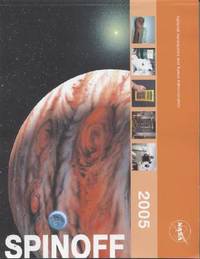
200586140Washington DC: National Aeronautics and Space Administration NASA Center for AeroSpace Information CASI Publications and Graphics Department 2005. Presumed First Edition First printing of this annual report. Trade paperback. Very good. Lynette Cook Front cover art. The format is approximately 11 inches by 8.5 inches. 167 1 pages. Illustrations most with color. Annual report on technology transfer or "technology twice used" inventions from NASA. Since 1976 Spinoff has profiled technologies that benefit from NASA investment and expertise. These developments have transformed into commercial products and services that are used throughout daily life from your cell phone camera to the memory foam in your mattress. When Congress created NASA it mandated the agency disseminate its innovations as widely possible. To that end the Technology Transfer Program was created in 1964 and it has functioned ever since making it NASA’s longest continuously operated mission. Early publications about NASA inventions made available to the scientific and engineering communities resulted in feedback indicating a broad interest in the private sector in adapting NASA technology for commercial uses. As products began to emerge NASA began preparing annual reports on these successes to present at congressional budget hearings. Spinoff has been published in a four-color editionand it has been released every year since 1976. All together since its first edition NASA has shared the stories of more 2000 products and services that began as or have benefited from NASA technology. In addition to the general public NASA sends copies of Spinoff to politicians representatives at the United Nations economic decision makers company CEOs academics scientists engineers professionals in technology transfer the news media and many others. The early black-and-white Technology Utilization Program Reports published in 1973 and ‘74 generated so much public interest that NASA decided to turn them into an attractive publication for a general audience. NASA SPINOFF now features dozens of success stories annually online and in its print publication demonstrating the wider benefits of America’s investment in its space program. The 2005 edition highlights Partnership Benefits in Health and Medicine Transportation Public Safety Consumer/Home/Recreations Environment and Resources Management; Computer Technology and Industrial Productivity/Manufacturing Technology. National Aeronautics and Space Administration, NASA Center for AeroSpace Information (CASI), Publications and Graphics Departmen paperback
201174113Amarillo TX: National Nuclear Security Administration Pantex Plant c2011. Presumed First thus. Patches. Very good. The patch is about 3.5 inches by 3.5 inches but the top is rounded so it is more like an arched window than a full square. It has a black border. The center has the image of the bomb a big dog and the text "B53" and "Last of the Big Dogs. On an orange border in black letters is "NNSA SS-21 Dismantlement DOE Pantex LANL LLNL SNL Y12 OST" From Wikipedia: The Mk/B53 was a high-yield bunker buster thermonuclear weapon developed by the United States during the Cold War. Deployed on Strategic Air Command bombers the B53 with a yield of 9 megatons was the most powerful weapon in the U.S. nuclear arsenal after the last B41 nuclear bombs were retired in 1976. The B53 was the basis of the W-53 warhead carried by the Titan II Missile which was decommissioned in 1987. Fifty B53s were retained during that time as part of the "hedge" portion of the Enduring Stockpile. The last B53 was disassembled on 25 October 2011 a year ahead of schedule. Development of the weapon began in 1955 by Los Alamos National Laboratory based on the earlier Mk 21 and Mk 46 weapons. In March 1958 the Strategic Air Command issued a request for a new Class C bomb to replace the earlier Mk 41. A revised version of the Mk 46 became the TX-53 in 1959. The Mk 53 entered production in 1962 and was built through June 1965. It entered service aboard B-47 Stratojet B-52G Stratofortress and B-58 Hustler bomber aircraft in the mid-1960s. From 1968 it was redesignated B53. Some early versions of the bomb were dismantled beginning in 1967. The B53 was also intended to be retired in the 1980s but 50 units remained in the active stockpile until the deployment of the B61-11 in 1997. At that point the obsolete B53s were slated for immediate disassembly; however the process of disassembling the units was greatly hampered by safety concerns as well as a lack of resources. In 2010 authorization was given to disassemble the 50 bombs at the Pantex plant in Texas. The process of dismantling the last remaining B53 bomb in the stockpile was completed in 2011. It was intended as a bunker buster weapon using a surface blast after laydown deployment to transmit a shock wave through the earth to collapse its target. Attacks against the Soviet deep underground leadership shelters in the Chekhov/Sharapovo area south of Moscow envisaged multiple B53/W53 exploding at ground level. It has since been supplanted in such roles by the earth-penetrating B61 Mod 11 a bomb that penetrates the surface to deliver much more of its explosive energy into the ground and therefore needs a much smaller yield to produce the same effects. The B53 was intended to be retired in the 1980s but 50 units remained in the active stockpile until the deployment of the B61-11 in 1997. At that point the obsolete B53s were slated for immediate disassembly; however the process of disassembling the units was greatly hampered by safety concerns and a lack of resources. The last remaining B53 bomb began the disassembly processes on Tuesday 25 October 2011 at the Energy Department's Pantex Plant. National Nuclear Security Administration, Pantex Plant unknown
200882252Washington DC: National Nuclear Security Administration 2008. Presumed First Edition First printing thus. Single sheet printed on both sides. Very good. This is an approximately 8.5 inch by 11 inch sheet of stiff card paper folded at the center to create four 5.5 by 8.5 inch panels. Illustrations are on the front and back panels. Text is on all panels. Marty was born February 191953 in St. Louis Park Minnesota. He was a graduate of Montgomery High School in 1971 the U.S. Naval Academy in 1975 and the George Washington University in 1981. Marty was a U.S. Naval officer for 20 years and civil servant for 20 years with 8 of those years in the Senior Executive Service of the U.S. Department of Energy. He retired for the third time in April 2018 after 4 years at Honeywell. Marty honorably served his country in a number of Uniformed Service civilian and private sector career. This event program marked his departure from the Office of Defense Programs to take on a critically important Department of Energy position at the United States Embassy in Beijing People's Republic of China where he was the Secretary's Representative and Senior DOE representative in China. Copies of such event programs rarely survive the event itself. Presiding at the departure event was Deputy Administrator for Defense Programs Robert L. Smolen and making the major presentation was Thomas P. D'Agostino Administrator of the National Nuclear Security Administration. The senior representative of the United States Department of Energy at the U.S. Embassy in Beijing China is responsible for leading a team to advance U.S. security and economic interests in the areas of energy science and technology and nuclear security and nonproliferation. In this role the senior representative is responsible for developing analyses and recommendations for the Secretary on key strategic initiatives with China related to the overall energy relationship. The representative is responsible for conducting in-depth analyses for comprehensive energy policy planning and strategic decision making on international energy policy and investment and trade issues. The representative provides insights briefings and other comprehensive analyses on key energy issues in China and Asia more broadly including on the issues of energy security clean energy development and deployment energy efficiency clean energy technology innovation and bilateral and multilateral cooperation initiatives among others. National Nuclear Security Administration unknown
200179902Washington DC: National Nuclear Security Administration Office of Defense Nuclear Nonproliferation 2001. Presumed First Edition First printing thus. Wraps. Very good. 19 13 pages. Mostly printed on both sides of a sheet. Sheets/project posters on several IPP projects are included at the back of this document. This year's report covers a year that involved a number of exciting developments in the Initiatives for Proliferation Prevention IPP program. The program receives a significant vote of confidence for its commercialization focus with for successful IPP projects attracting $56 million in private venture capital funds. These funds were in addition to the already substantial contribution from U.S. industry partners who more than match U.S. government funding on each new IPP project. The IPP program also resumed operation in Kazakhstan and Ukraine adding the scientific talent of these countries to the technology resource base now available to U.S. industry partners. The program's nonproliferation objectives are met with increasing success as a growing number of former Soviet weapons scientists are engaged both in the course of ongoing work as well as in the jobs that are being created by successfully completed IPP projects. Preventing the proliferation of weapons of mass destruction is a central part of US national security policy. A principal instrument of the Department of Energy`s DOE`s program for securing weapons of mass destruction technology and expertise and removing incentives for scientists engineers and technicians in the newly independent states NIS of the former Soviet Union to go to rogue countries or assist terrorist groups is the Initiatives for Proliferation Prevention IPP. IPP was initiated pursuant to the 1994 Foreign Operations Appropriations Act. IPP is a nonproliferation program with a commercialization strategy. IPP seeks to enhance US national security and to achieve nonproliferation objectives by engaging scientists engineers and technicians from former NIS weapons institutes; redirecting their activities in cooperatively-developed commercially viable non-weapons related projects. These projects lead to commercial and economic benefits for both the NIS and the US IPP projects are funded in Russian Ukraine Kazakhstan and Belarus. This booklet offers an overview of the IPP program as well as a sampling of some of the projects which are currently underway. National Nuclear Security Administration, Office of Defense Nuclear Nonproliferation paperback
201875546Washington DC: National Nuclear Security Administration Office of Safety Infrastructure and Operations 2018. Presumed First Edition First printing. Spiral bound. Very good. 58 pages. Illustrations color. Map. Acronyms. Clear plastic sheets at front and back covers. This 2018 Master Asset Plan MAP lays out the National Nuclear Security Administration's NNSA infrastructure vision and highlights strategic investments being made to achieve it. It is an update to the first-ever 2017 MAP which described how NNSA's infrastructure supports it's unique mission requirements and the gaps and mission risks inherent in that infrastructure. Safe reliable and modern infrastructure at NNSA's national laboratories and production plants is absolutely essential to accomplish our vital national security mission and ensure the well-being of our workforce. As the 2018 Nuclear Posture Review states there is no margin for further delay in improving the state of NNSA's infrastructure. Significant and sustained investments will be required during the next quarter century to recapitalize and revitalize the nuclear security enterprise. The Master Asset Plan assembles data into a single report that presents an integrated view of NNSA's infrastructure strategy. National Nuclear Security Administration, Office of Safety, Infrastructure, and Operations unknown
197733911Washington DC: NOAA Dec 1977. 1st edition. Folded color map. Fine. This is a color map of all the sectional maps available through NOAA as part of its National Ocean Survey. Includes bathymetric maps Florida coastal zone maps geophysical maps IHB-GEBCO plotting sheets marine boundary maps and charts marine weather service charts offshore mineral leasing maps storm evacuation maps tidal current charts definitions purchase instructions. As-new condition rare item <br/><br/>Folded size 6 x 10 unfolded 20 x 45 color-printed both sides. 18 panels. NOAA unknown
194289889Washington DC: Office of Price Administration U.S. Government Printing Office 1942. Presumed First Edition First issuance to this individual. Single sheet printed on one side. Fair. The format is approximately 5.25 inches by 6.5 inches folded--with War Ration stamps 19 20 and 22 still attached. Issued by Local Board 82-82 of Wayne County Michigan. This includes the Certificate of Registrar made out to Alena Alta Smith of the city of Detroit. She is reported to be 5 foot 6 inches 190 pounds with black eyes brown hair and 36 years old. She has signed the Certificate of Book Holder that is part of this sheet. This was issued on May 4 1942 by Oscar G. Christensen of Local Board No. 82-82 This was issued on the FIRST day of distribution! Detroit and the industrial region surrounding it was plunged into semi-darkness as all except street lights and in war factories went out for fifteen minutes during a blackout drill on May 4 1942. Civilians first received ration books—War Ration Book Number One or the "Sugar Book"—on 4 May 1942 through more than 100000 schoolteachers PTA groups and other volunteers. Sugar was the first consumer commodity rationed with all sales ended on 27 April 1942 and resumed on 5 May with a ration of 1 2 pound 8 oz per person per week half of normal consumption. Bakeries ice cream makers and other commercial users received rations of about 70% of normal usage. Coffee was rationed nationally on 29 November 1942 to 1 pound every five weeks about half of normal consumption in part because of German attacks on shipping from Brazil. As of 1 March 1942 dog food could no longer be sold in tin cans and manufacturers switched to dehydrated versions. As of 1 April 1942 anyone wishing to purchase a new toothpaste tube then made from metal had to turn in an empty one. By June 1942 companies also stopped manufacturing metal office furniture radios television sets phonographs refrigerators vacuum cleaners washing machines and sewing machines for civilians. By the end of 1942 ration coupons were used for nine other items: typewriters gasoline bicycles shoes rubber footwear silk nylon fuel oil and stoves. Meat lard shortening and food oils cheese butter margarine processed foods canned bottled and frozen dried fruits canned milk firewood and coal jams jellies and fruit butter were rationed by November 1943. Many retailers welcomed rationing because they were already experiencing shortages of many items due to rumors and panics such as flashlights and batteries after Pearl Harbor. Ration Book Number Five is a very rare ration book only issued to very few people. By the end of 1942 ration coupons were used for nine other items: typewriters gasoline bicycles shoes rubber footwear silk nylon fuel oil and stoves. Meat lard shortening and food oils cheese butter margarine processed foods canned bottled and frozen dried fruits canned milk firewood and coal jams jellies and fruit butter were rationed by November 1943. Many retailers welcomed rationing because they were already experiencing shortages of many items due to rumors and panics such as flashlights and batteries after Pearl Harbor. Ration Book Number Five is a very rare ration book only issued to very few people. Office of Price Administration, U.S. Government Printing Office unknown
194289902Washington DC: Office of Price Administation 1942. Presumed First Edition First printing thus. Single sheet printed on both sides. Good. The format is approximately 5 inches by 1.375 inches. Rare surviving item of War Rationing ephemera. This was originally attached to an application to obtain War Ration Book No. 3. The Office of Price Administration OPA was established within the Office for Emergency Management of the United States government by Executive Order 8875 on August 28 1941. The functions of the OPA were originally to control money price controls and rents after the outbreak of World War II. President Franklin D. Roosevelt inaugurated the Council of National Defense Advisory Commission on May 29 19404 to include Price Stabilization and Consumer Protection Divisions. Both divisions merged to become the Office of Price Administration and Civilian Supply OPACS within the Office for Emergency Management by Executive Order 8734 on April 11 1941. Civil supply functions were transferred to the Office of Production Management. It became an independent agency under the Emergency Price Control Act January 30 1942. The OPA had the power to place ceilings on all prices except agricultural commodities and to ration scarce supplies of other items including tires automobiles shoes nylon sugar gasoline fuel oil coffee meats and processed foods. At the peak almost 90% of retail food prices were frozen. It could also authorize subsidies for production of some of those commodities. Rationing is the controlled distribution of scarce resources goods or services or an artificial restriction of demand. Rationing controls the size of the ration which is one person's allotted portion of the resources being distributed on a particular day or at a particular time.<br /> Rationing in the United States was introduced in stages during World War II with the last of the restrictions ending in June 1947. In the summer of 1941 rationing in the United Kingdom increased because of military needs and German attacks on shipping in the Battle of the Atlantic. The British government appealed to Americans to conserve food to help the UK. The Office of Price Administration OPA warned Americans of potential gasoline steel aluminum and electricity shortages. It believed that with factories converting to military production and consuming many critical supplies rationing would become necessary if the country entered the war. The OPA established a rationing system after the attack on Pearl Harbor on 7 December. The work of issuing ration books and exchanging used stamps for certificates was handled by some 5500 local ration boards of mostly volunteer workers selected by local officials. Many levels of rationing went into effect. Some items such as sugar were distributed evenly based on the number of people in a household. Other items like gasoline or fuel oil were rationed only to those who could justify a need. Restaurant owners and other merchants were accorded more availability but had to collect ration stamps to restock their supplies. In exchange for used ration stamps ration boards delivered certificates to restaurants and merchants to authorize procurement of more products. Each ration stamp had a generic drawing of an airplane gun tank aircraft carrier ear of wheat fruit etc. and a serial number. Some stamps also had alphabetic lettering. The kind and amount of rationed commodities were not specified on most of the stamps and were not defined until later when local newspapers published for example that beginning on a specified date one airplane stamp was required in addition to cash to buy one pair of shoes and one stamp number 30 from ration book four was required to buy five pounds of sugar. The commodity amounts changed from time to time depending on availability. Red stamps were used to ration meat and butter and blue stamps were used to ration processed foods. <br /> To enable making change for ration stamps the government issued "red point" tokens to be given in change for red stamps and "blue point" tokens in change for blue stamps. The red and blue tokens were about the size of dimes 0.63 in and were made of thin compressed wood fiber material because metals were in short supply. There was a black market in stamps. To prevent this the OPA ordered vendors not to accept stamps that they themselves did not tear out of books. Buyers however circumvented this by saying sometimes accurately as the books were not well-made that the stamps had "fallen out". In actuality they may have acquired stamps from other family members or friends or the black market. Most rationing restrictions ended in August 1945 except for sugar rationing which lasted until 1947 in some parts of the country. Office of Price Administation unknown
1856059977New York: Harper & Brothers Publishers 1856. Reprint. Hardcover. Very Good -/No Jacket as Issued. Brown full leather cover with gold lettering. Marbled edges. 429pp. plus 9 pages of ads. Book has rubbing to the covers and spine as well as foxing to it's pages. Front and back hinge starting. Part of front pasted down end-paper is missing it's been rubbed. Dampstaining to portions of the text body. Text does not contain underlining and/or notes. It is in very good condition for when it was published. Full refund if not satisfied. Harper & Brothers Publishers hardcover
19944515Bowie MD: Heritage Books Inc 1994. Paperback. Facsimile reprint of 1941 edition. 325 pp. Fine condition corners crisp no creases no markings. A clean fresh copy. Looks new. <br/><br/> Heritage Books Inc paperback
1945124175New York: Wm. H. Wise & Co. Inc. Very Good. 1945. Hardcover. A Very Good edition that has aging to the pages and boards and some rubbing to the outer edges of the boards ; The Writer's Program of the Work Projects Administration in the City of New York publishes American Wild Life Illustrated a coffee table book with stunning full-color images of animals in their natural habitats.; 8vo; 749 pages . Wm. H. Wise & Co. , Inc. hardcover
199567850Washington DC: National Aeronautics and Space Administration 1995. Presumed first edition/first printing. Wraps. Good. No dust jacket. Cover has some wear and soiling. Tabs folced. Includes illustrations. Approximately 200 pages. Contains the two-day agenda and presentations from the first day Sessions 1 and 2. Occasional footnotes. This appears to be the first volume of a two volume proceedings of a NASA sponsored conference held in Washington DC. National Aeronautics and Space Administration paperback
196263828United States National Aeronautics and Space Administration 1962. Wraps. Good. No dust jacket. Cover has some wear and soiling. Includes illustrations. Unpaginated 40 pages plus covers United States, National Aeronautics and Space Administration paperback
19400006886Washington DC : GPO 1940. First edition. 4to 51 71 257 158 150 98 pages black cloth dampstained bottom margin of book block. With Wind Drift Grid laid in. Note: heavy will require extra shipping fees. <br/><br/>Bound with DIGEST OF CIVIL AIR REGULATIONS FOR PILOTS. C.A.B. Bulletin no. 22 4th Ed. GPO 1941. With Cram Brimm's CIVIL PILOT TRAINING MANUAL. C.A.B. Bulletin no. 23. GPO 1940. With Jones AERODYNAMICS FOR PILOTS. C.A.B. Bulletin no. 26. GPO 1940. With Anderson PILOT'S AIRPLANE MANUAL. C. A.B. Bulletin no. 27. GPO 1940. With Nichols. PILOT'S RADIO MANUAL. C.A.B. Bulletin no. 29. GPO 1940. Foldouts diagrams maps. GPO hardcover
63-7589Washington DC: United States General Services Administration 2006. 8vo. Oblong. Soft Covers 36 pp. Very Good. Color Plates. From the Peter Selz collection. Washington, DC: United States General Services Administration, [2006]. paperback