Federal Housing AdministrationBiblio.com

660 résultats
2021BN242073Ocotillo Press 2021. 2021. Softcover. FHA Single Family Housing Policy Handbook 17 Aug 2021 <br/><br/>FHA Single Family Housing Policy Handbook 17 Aug 2021 Federal Housing Administration Ocotillo Press paperback
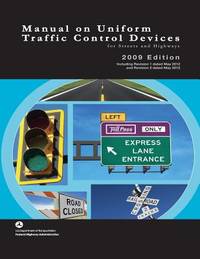
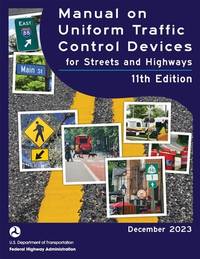
2013BN240121DATAMOTION PUB LLC 2013. 2013. Softcover. Manual on Uniform Traffic Control Devices for Streets and Highways - 2009 Edition with 2012 Revisions <br/><br/>Manual on Uniform Traffic Control Devices for Streets and Highways - 2009 Edition with 2012 Revisions U. S. Department of Transportaton Federal Highway Administration DATAMOTION PUB LLC paperback
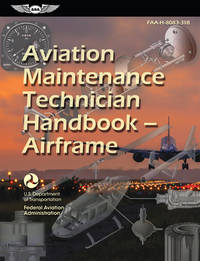
2023SKU1709545Aviation Supplies & Academics Inc 2023-09-19. paperback. Good. 8x2x10. Textbook May Have Highlights Notes and/or Underlining BOOK ONLY-NO ACCESS CODE NO CD Ships with Tracking Aviation Supplies & Academics, Inc paperback
2023SKU1714262Aviation Supplies & Academics Inc 2023-09-19. paperback. New. 8x2x10. New Book Ships with Tracking Aviation Supplies & Academics, Inc paperback
20072081502111900688travel to china 2007. Soft Cover. Fine. Number of pages: 2457p Size: A4 hardcover book travel to china paperback
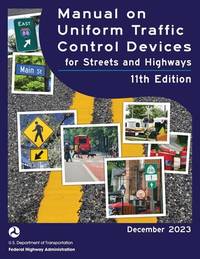
2023SKU1708778Independently Published 2023-12-19. paperback. Good. 8x2x10. Textbook May Have Highlights Notes and/or Underlining BOOK ONLY-NO ACCESS CODE NO CD Ships with Tracking Independently Published paperback
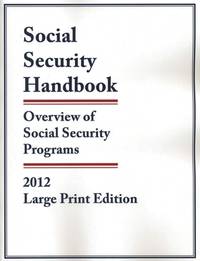
2012BN182065Rowman & Littlefield 2012. 2012. Softcover. Social Security Handbook 2012 <br/><br/>Social Security Handbook 2012 Social Security Administration Rowman & Littlefield paperback
2023SKU1713495Independently Published 2023-12-19. paperback. New. 8x2x10. New Book Ships with Tracking Independently Published paperback
2008030744Routledge 2008. VOLUME 3 ONLY. SEE OUR PHOTOS. Cover is Near Fine with only light shelfwear. Square and tight. Bright and shiny. FINE inside. NO owner's name or bookplate. NOT a library discard. NOT a remainder. Pages are fresh crisp clean and unmarked. Subtitle: "Volume III: Education of Working Women and of Middle Class Girls." From the publisher: "'Nineteenth Century British Women's Education' brings together key documents in the Victorian feminist campaign to establish and improve girls' and women's education. Drawing widely on articles from the feminist and established press government papers newspapers professional and association journals as well as memoirs addresses pamphlets and reviews this collection gives researchers access to nineteenth-century debates on improving girls' and women's education and women's work as educators. The collection is divided overall into two sections both of which incorporate materials that argue for the improvement of girls' and women's education as well as arguments made against education for girls and women. In examining the campaign to establish higher education for women the first volumes include the writings of such primary figures as Emily Davies Lydia Becker Barbara Bodichon Jessie Boucherett Josephine Butler Frances Power Cobbe Millicent Garrett Fawcett Maria Grey and Emily Shirreff in addition to illustrating the significance of institutions such as Girton and Newnham Colleges. Later volumes document women's work as educators and include writings by Mary Carpenter Dorothea Beale Frances Mary Buss and the Shirreff sisters Maria and Emily gifted educators of girls at the elementary and secondary levels and women whose educational practice embodied the arguments they made on behalf of girls' education. These volumes also chart the importance of the Governesses' Benevolent Institution the Schools Inquiry Commission and the 'Journal of Women's Education Union' in charting the increasing organization and professionalization of women teachers. Edited and with new introductions by Susan Hamilton and Janice Schroeder 'Nineteenth Century British Women's Education' is destined to be an invaluable reference resource to all future scholars of feminism and the history of education.". Reprint of the 2007 original. Hardcover. Near Fine - Fine condition/No dust jacket as issued. Illus. by NOT a library discard. 8vo. viii 349pp. Great Packaging Fast Shipping. Routledge Hardcover
2017x-1634877810Cognella Academic Publishing 2017. Paperback. New. 252 pages. 10.00x7.99x0.53 inches. Cognella Academic Publishing paperback
200580249Washington DC: National Aeronautics and Space Administration Exploration Systems Mission Directorate 2005. Draft Rev. 1. Disbound held together with a binder clip. Very good. vi 121 pages single-sided. Tables. Figures some with color. The Exploration Systems Mission Directorate known as ESMD at NASA Headquarters in Washington oversees the Constellation human research exploration technology development and lunar precursor robotic programs as well as the Commercial Orbital Transportation Services Project. The Constellation Program oversees work performed at a variety of NASA centers prime contractors and subcontractors located around the country. This work includes the Orion crew exploration vehicle the Ares I launch vehicle ground operations mission operations and extravehicular activity systems. The Constellation Program abbreviated CxP is a canceled crewed spaceflight program developed by NASA the space agency of the United States from 2005 to 2009. The major goals of the program were "completion of the International Space Station" and a "return to the Moon no later than 2020" with a crewed flight to the planet Mars as the ultimate goal. The program's logo reflected the three stages of the program: the Earth ISS the Moon and finally Mars—while the Mars goal also found expression in the name given to the program's booster rockets: Ares the Greek equivalent of the Roman god Mars. The technological aims of the program included the regaining of significant astronaut experience beyond low Earth orbit and the development of technologies necessary to enable sustained human presence on other planetary bodies. Constellation began in response to the goals laid out in the Vision for Space Exploration under NASA Administrator Sean O'Keefe and President George W. Bush. O'Keefe's successor Michael D. Griffin ordered a complete review termed the Exploration Systems Architecture Study which reshaped how NASA would pursue the goals laid out in the Vision for Space Exploration and its findings were formalized by the NASA Authorization Act of 2005. The Act directed NASA to "develop a sustained human presence on the Moon including a robust precursor program to promote exploration science commerce and US preeminence in space and as a stepping stone to future exploration of Mars and other destinations." Work began on this revised Constellation Program to send astronauts first to the International Space Station then to the Moon and then to Mars and beyond. <br /> <br /> This Systems Engineering Management Plan is a rare surviving technical document from this canceled program. It addressed the System Engineering and Integration SE&I Approach the SE&I Roles and Responsibilities Pre-Phase A Systems Engineering and Integration Phase A Phase B Phase C Phase D and Phase E. These phases addressed safety and mission assurance systems management Systems Analysis Simulation-Based Acquisition Research and Technology Development Requirements Definition Test and Verification Operations Sustaining Engineering Functional Analysis Manufacturing and Assembly Launch Site Operations and Logistics Capability Development. National Aeronautics and Space Administration, Exploration Systems Mission Directorate unknown
201080985Washington DC: National Nuclear Security Administration Defense Programs 2010. Presumed first compilation--The number of copies made is unknown. Three Ring Binder. Good. Attendance list of 12-13 2011 Jan Surveillance Summit in front pocket--more than 30 names. List of 19 filled tabs 31 tabs present for 20-31 do not appear to have ever been filled. Tabbed items include: Effective Surveillance Program Memo dated 26 April 2010 then SNL LLNL and LANL responses then Requirements Workload Planning document of 22 Oct. 2010 followed by LLNL SRS KCP LANL PX SNL. Y12 NSO responses to the 22 Oct Memo followed by Summary of responses to 22 Oct Memo then followed by FYNSP responses from LLNL LANL and SNL followed by a Consolidated FYNSP responses. The 19th tab has the slides for workload meeting. Additional material in rear pocket: Surveillance Enterprise Governance 34 hard copy vugraphs 4 to a page--with some ink notations One page on NNSA Nuclear Weapons Surveillance Program 2 copies--one with notes on back One vugraph on FY 11 Surveillance Requirements and Over Targets with substantial notes Additional information on Consolidated Six Year Surveillance Requirements 12 sheets Greenaugh e-mail on Requirements workload 2 pages staples Illinger e-mail on Baselining New Surveillance Requirements 3 pages stapled Mangum e-mail on Surveillance Numbers 3 pages stapled 1 page on requires by site and funding program E-mail from Mangum on surveillance numbers 2 pages stapled with notes e-mail from Sinkular on NA 12 update 2 pages stapled with notes. Notes on November 5 2010 Goodrum Memo Teleconference and one page hardcopy vugraph on FY 11 Surveillance comparison. The use of data from surveillance of our nuclear weapons enables us to predict how the weapons will perform over time without nuclear explosive testing. This capability has improved significantly over the past decade and provides us with the capability to ensure an effective nuclear stockpile. Surveillance information is critical for the predictive models used in the annual nuclear weapon assessment process. These tools and the detailed quantitative modeling they support serve as key elements of the capability to maintain a safe secure and effective U.S. nuclear weapons stockpile without underground nuclear explosive testing. The National Nuclear Security Administration NNSA annual assessment process has evolved significantly since the end of underground nuclear explosive testing to ensure an effective nuclear weapons stockpile. The current approach aims to achieve a comprehensive science-based understanding of nuclear weapon systems. Surveillance tools and models play critical roles in providing information essential to assessing weapon safety security and performance changes that would impact military effectiveness without performing underground nuclear explosive tests. These surveillance tools aid in the understanding of two conditions of weapons systems: the "as-built" and "as-aged" conditions. The "as-built" condition reflects the frequency and severity of original design or manufacturing defects. The "as-aged" condition reflects the evolution of age-related changes in materials components and subsystems that can alter performance. Over the last few years several advances in this area have contributed to a better understanding of the condition of our existing nuclear weapons and the ways in which the current condition could affect safety reliability or performance. Through the weapons surveillance program the U.S. has in-depth knowledge of the core components housed within weapons by using technologies such as nondestructive laser gas sampling and high-resolution computed tomography. System tests also assess the functionality of all major non-nuclear components. National Nuclear Security Administration, Defense Programs unknown
200275230Washington DC: National Nuclear Security Administration Office of Defense Programs 2002. Copy of Team Files. CD-R. Very good. This CD contains a treasure trove of information on High Explosive operations and facilities at the Lawrence Livermore National Laboratory the Los Alamos National Laboratory Sandia National Laboratories the Nevada Test Site and the Pantex Plant. This CD has the files that are excel spread sheets PDF files JPG files Power Point files and Word files. The material includes the scope team membership information from the sites information on sizing etc. This information was developed to address consolidation options between nuclear weapon laboratories and plants with an aim to reduce some costs. Major high explosive operations included research and development explosive testing detonator and small quantity production and 'main charge' production for nuclear weapons. Posted on-line--Los Alamos demonstrated the first use of plastic-bonded explosives in a nuclear explosion in 1956. This development allowed the shift from precision machined cast explosives to formulations containing high concentrations of high-energy density compounds with reduced sensitivity more uniformity and better mechanical characteristics. Since the 1960s Livermore has been researching and developing safer HE for Livermore-designed weapons. The plastic coating that binds the explosive granules typically 5 to 20% of each formulation by weight is what gives each PBX its distinctive characteristics. Pressing a PBX molding powder converts it into a solid mass with the polymer binder providing both mechanical rigidity and reduced sensitivity to accidental detonation. The choice of binder affects hardness safety and stability. The TATB-based formulations of Livermore's LX-17 and Los Alamos's PBX 9502 are "insensitive" high explosives IHE; others are termed "conventional." National Nuclear Security Administration, Office of Defense Programs unknown
201080986Washington DC: National Nuclear Security Administration Defense Programs 2010. Presumed First Edition First printing --number of copies assembled is unknown. Three Ring Binder. Very good. The Table of Contents is: MTP 32 vugraphs 4 per page PS 59 vugraphs 4 per page KCP 20 vugraphs 1 per page PX 55 vugraphs--various paginations--1 per page SRS 41 vugraphs--various paginations--1 per page Y12 41 vugraphs--various paginations--1 per page LANL 38 vugraphs--various paginations--1 per page LLNL 48 vugraphs--various paginations--1 per page SNL 158 vugraphs--various paginations--1 per page Agenda 3 pages and Participant list 1 page. In the back pocket is a November 2010 Updated to the NDAA of FY 2010 Section 1251 Report and a stapled seven sheet compilation of Budget Requirements. Some material was marked Official Use Only but this limitation is understood to not longer apply due to the passage of time and public dissemination of comparable information. Approximately 2 inches of material in the binder. The Production Support Program is a DSW Program that funds multi-system manufacturing-based activities that provide individual site production capabilities and capacity for the LEPs LLC production weapon surveillance and weapon assembly and disassembly operations. The Production Support Program also enables the modernization of production capabilities to improve efficiency and ensure that manufacturing operations meet future requirements. This includes maintenance/calibration services for manufacturing operations to meet DoD War Reserve requirements. Collectively these activities directly support execution of systems engineering concepts and production integration. The Production Support Program provides DSW with the capability to conduct life extension work stockpile surveillance dismantlement work neutron generator production and detonator cable assembly production. The Management Technology and Production MTP Program's work scope is a multi-system production-based program that promotes nuclear security enterprise integration and enhances efficiency. MTP activities provide the products components and/or services for multi-weapon system surveillance laboratory/flight test data collection and analysis; weapons reliability reporting to DoD; DSW requirements tracking and execution; management and operation; and stockpile planning. The MTP Program funds plant and laboratory personnel to sustain the stockpile through activities related to surveillance; weapons response process improvements; engineering authorizations; safety assessments; use control technologies; containers; base spares; studies and assessments for nuclear operation safety; production of weapon components for use in multiple weapons systems; and transportation/handling gear for use in multiple weapons systems. The MTP Program also includes activities that benefit the nuclear security enterprise mission as differentiated from Production Support activities which support internal site-specific production missions. National Nuclear Security Administration, Defense Programs unknown
200359621Washington DC: U. S. Department of Energy 2003. Wraps. Very good. No dust jacket. Removed from shrinkwrap for cataloguins. Includes a "Dear Interested Party" distribution letter. 3 volume set. 3 volume set. Includes: illustrations maps. Various paginations. Includes a Summary 57 pages and 2 volumes. Volume I approximately 700 pages; Volume II approximately 200 pages. DOE/EIS-236-S2. The National Nuclear Security Administration is responsible for the safety and reliability of the U. S. nuclear weapons stockpile including production readiness required to maintain that stockpile. This document addresses issues associated with constructing a new facility for the manufacturing of a key nuclear weapon component. This proposed facility proved to be controversial and did not recieve Congressional support and funding. However it retains significant value as a source of unclassified information about the use of plutonium and associated plutonium operations in the United States nuclear weapon program. U. S. Department of Energy paperback
201776194Washington DC: United States National Nuclear Security Administration Defense Programs 2017. Presumed First Edition First printing thus. Wraps. Very good. Various paginations approximately 400 pages. Figures. Tables. Appendices. List of Acronyms. This had previously been Marked Unclassified Controlled Nuclear Information but this marking has been struck through on every page where it had appeared. The National Nuclear Security Administration requires a sustained production capacity of no fewer than 80 pits per year PPY by 2030. NNSA is developing and installing capability at LANL in Plutonium Facility PF-4 to produced 30 ppy by 2026. The Analysis of Alternatives AOA for meeting pit production requirements completed in September 2017 assessed alternatives to close this identified mission gap in the NNSA's pit production capability. The AoA is a post Critical Decision CD-0 pre-CD-1 activity to identify a preferred alternative for conceptual design in preparation for the Deputy Secretary of Energy to make a program decision at CD-1. The pit named after the hard core found in fruits such as peaches and apricots is the core of an implosion nuclear weapon - the fissile material and any neutron reflector or tamper bonded to it. Some weapons tested during the 1950s used pits made with U-235 alone or in composite with plutonium but all-plutonium pits are the smallest in diameter and have been the standard since the early 1960s. Between 1954 and 1989 pits for US weapons were produced at the Rocky Flats Plant; the plant was later closed due to numerous safety issues. In 1996 the pit production was also relocated to Los Alamos. The current LANL production of new pits is limited to about 20 pits per year though NNSA is pushing to increase the production for the Reliable Replacement Warhead program. The US Congress however has repeatedly declined funding. Up until around 2010 Los Alamos National Laboratory had the capacity to produce 10 to 20 pits a year. United States, National Nuclear Security Administration, Defense Programs paperback
200288245Las Vegas NV: U.S. Department of Energy National Nuclear Security Administration Nevada Operations Office 2002. Presumed to be one of some limited number of multiple originals produced. CD in a paper envelope with a clear plastic face. Very good. This disc has no distribution limitation information on its front. This CD contains one file with an approximately 70 page document that has color illustrations tabular data and briefing slides at the end. There may be a hardcopy version of this given the DOE/NV number. The content addresses the then current test readiness maintaining current posture enhancing test readiness and provided several appendixes including Threshold Test Ban Preparations and Authorization Basis including Underground Nuclear Test Standards Safety Basis Safety Management and a Device-Specific Nuclear Explosive Safety Study. Table 4 is a summary of the cost study results in Millions. The Department of Energy submitted a report to the Senate Armed Services Committee on May 20 calling for the United States to shorten the time it would take to conduct a nuclear test to 18 months in order to provide a "reasonable level of flexibility" for the Bush administration. Congress requested the report in November 2002 instructing Secretary of Energy Spencer Abraham to draw up plans that would enable the department to test within six 12 18 or 24 months. Currently the United States can conduct a nuclear test within 24-36 months of a presidential directive to do so. Congress also asked Abraham to determine in consultation with the secretary of defense which readiness period would be optimal. The 18-month recommendation "reflects what is achievable and cost effective" according to the report which was prepared by the National Nuclear Security Administration NNSA a semiautonomous agency within the Energy Department. The report indicated that 18 months is the minimum amount of time needed to evaluate a problem identified in the U.S. nuclear stockpile propose a solution and "execute a test that would provide the information needed to certify the ‘fix.'" The recommendation is "consistent with realistic testing schedules" established during previous U.S. nuclear testing which ceased in 1992. By contrast shortening test readiness to six or 12 months would require a "substantial diversion of personnel and facilities at the laboratories" according to the report. That would "represent a major redirection of the stockpile stewardship program" which is intended to maintain the nuclear arsenal in the absence of testing. Adopting a testing posture of a year or less would be "most relevant.if the President might direct that testing resume for political reasons." The report also noted that the shorter readiness period would be considerably more expensive. The transition to shorten the current 24-36 month readiness posture expected to take three years is already underway. NNSA conducted an Enhanced Test Readiness Cost Study in July 2002 to determine the steps and funding required to shorten the readiness posture and the Nuclear Weapons Council a consultative group of officials from the Energy Department and the Pentagon approved the plan to transition to an 18-month readiness window in September 2002 according to the report. The Bush administration asked for funds to begin moving to a shorter test readiness posture in its fiscal year 2004 budget request. Charles Anson Franklin NNSA spokesman said that the current readiness posture of 24-36-months was "a policy decision of the previous administration. This administration has made a policy decision of an 18-month readiness period." He added "It's been out there—it's not been a surprise.We've been talking about moving to an 18-month readiness posture since 2001." The changes will be fully implemented by the end of fiscal year 2005 and will cost $83 million with an additional $25-30 million needed annually to sustain the heightened state of scientific technological and personnel preparedness according to the report. The report examined a speedier transition but concluded that reaching the 18-month readiness posture sooner would cost more and disrupt other programs because of the limited number of nuclear weapons personnel. U.S. Department of Energy, National Nuclear Security Administration, Nevada Operations Office unknown
2001DADAX0865878927Government Institutes 2001-08-01. 2001 ed. paperback. New. 6.26x1.22x8.92. Buy with confidence. Excellent Customer Service & Return policy. Government Institutes paperback
2023SKU1714573Claitor's Pub Division 2023-12-01. paperback. New. 8x2x11. New Book Ships with Tracking Claitor's Pub Division paperback
2002313941Bonneville Power Administration 2002. Trade Paperback Comb bound -- SHIPPING ONLY IN U.S. AND BY MEDIA MAIL ONLY -- Very Good -- Ex-Library -- Tight with only lightest of wear -- 1" thick with maps and illustrations throughout -- Grand Coulee -- Bell 500 kV Transmission Line Project -- Draft Enviornmental Impact Statement DOE/EIS-3044. Trade Paperback. Very Good. Ex-Library. Bonneville Power Administration Paperback
201186133Washington DC: National Aeronautics and Space Administration 2011. Xerox-style reproduction presumably one of only a few press kits produced. Stapled at upper left corner. Very good. ii 164 pages plus covers. This also has the logo of the United Space Alliance on the front cover. STS-135 ISS assembly flight ULF7 was the 135th and final mission of the American Space Shuttle program. It used the orbiter Atlantis and hardware originally processed for the STS-335 contingency mission which was not flown. STS-135 launched on July 8 2011 and landed on July 21 2011 following a one-day mission extension. The four-person crew was the smallest of any shuttle mission since STS-6 in April 1983. The mission's primary cargo was the Multi-Purpose Logistics Module MPLM Raffaello and a Lightweight Multi-Purpose Carrier LMC which were delivered to the International Space Station ISS. The flight of Raffaello marked the only time that Atlantis carried an MPLM. This press kit covers the Space Shuttle History; STS-135 Mission Timeline Profile and Objectives; Mission Personnel; STS-135 Atlantis Crew; Payload Overview; Rendezvous and Docking; Spacewalks; STS-135 Experiments; Shuttle Reference Data; Launch & Landing; Acronyms & Abbreviations; Media Assistance; Public Affairs Contacts; and The Future. Although the mission was authorized it initially had no appropriation in the NASA budget raising questions about whether the mission would fly. On January 20 2011 program managers changed STS-335 to STS-135 on the flight manifest. This allowed for training and other mission specific preparations. On February 13 2011 program managers told their workforce that STS-135 would fly regardless of the funding situation via a continuing resolution. Until this point there had been no official references to the STS-135 mission in NASA documentation for the general public. During an address at the Marshall Space Flight Center on November 16 2010 NASA administrator Charles Bolden said that the agency needed to fly STS-135 to the station in 2011 due to possible delays in the development of commercial rockets and spacecraft designed to transport cargo to the ISS. "We are hoping to fly a third shuttle mission in addition to STS-133 and STS-134 in June 2011 what everybody calls the launch-on-need mission. and that's really needed to buy down the risk for the development time for commercial cargo" Bolden said. The mission was included in NASA's 2011 authorization which was signed into law on October 11 2010 but funding remained dependent on a subsequent appropriations bill. United Space Alliance signed a contract extension for the mission along with STS-134; the contract contained six one-month options with NASA in order to support continuing operations. The federal budget approved in April 2011 called for US$5.5 billion for NASA's space operations division including the shuttle and space station programs. According to NASA the budget running through September 30 2011 ended all concerns about funding the STS-135 mission. On July 21 2011 NASA hosted an employee appreciation event outside OPF-2 with Atlantis parked. Cheryl Hurst the director of education and external relations at KSC spoke first and invited Susan Lambert to lead the crowd with the American national anthem. A pledge of allegiance followed from KSC children and NASA Administrator Charles Bolden and KSC Director Robert Cabana spoke to the shuttle program employees. During the event Rita Wilcoxson and Patricia Stratton were presented with highest NASA honors: the Distinguished Service Medal and the Distinguished Public Service Medal respectively. The citations on both were identical stating "for continuous outstanding leadership contributions provided to the nation's space shuttle program". A public "welcome home" ceremony was held for the crew at Houston's Ellington Field Hangar 990 on July 22. National Aeronautics and Space Administration unknown
200475433United States Department of Energy National Nuclear Security Administration Office of Defense Programs 2004. Presumed First Edition First printing thus. DVD. Very good. DVD has 40 files and many of them are folders. On July 13-14 2004 the Caltech ASC Level 1 Center hosted an ASC TriLab V&V Workshop in La Jolla CA to discuss and compare what the NNSA laboratories and the ASC Level 1 University Centers are learning with respect to code verification and validation. About 50 people participated in the workshop. Presentations were organized into four sessions and moderated by key V&V personnel from the NNSA labs and ASC Centers: 1 V&V Program Overviews Jamileh Soudah ASC HQ - Chair 2 Code and Solution Verification Tomek Plewa University of Chicago Flash Center - Chair 3 Validation Experiments Dan Meiron Caltech ASC Center - Chair 4 Validation and Uncertainty Quantification Tony Giunta Sandia - Chair The workshop began with V&V overviews presented by speakers from Los Alamos Lawrence Livermore and Sandia National Laboratories and the ASC Level 1 Alliance Centers at Caltech the University of Chicago the University of Illinois Stanford University and the University of Utah. These baseline presentations were followed by talks addressing approaches and lessons learned in code and solution verification designing and implementing validation experiments and what has been accomplished and remains to be done in uncertainty qualification. At the end of the workshop Dan Meiron Caltech hosted a discussion to summarize commonalities across the lab and university programs and identify collaborative efforts that might follow this workshop. The workshop began with V&V overviews presented by speakers from Los Alamos Lawrence Livermore and Sandia National Laboratories and the ASC Level 1 Alliance Centers at Caltech the University of Chicago the University of Illinois Stanford University and the University of Utah. These baseline presentations were followed by talks addressing approaches and lessons learned in code and solution verification designing and implementing validation experiments and what has been accomplished and remains to be done in uncertainty qualification. At the end of the workshop Dan Meiron Caltech hosted a discussion to summarize commonalities across the lab and university programs and identify collaborative efforts that might follow this workshop. The purpose of this document is to provide a synopsis of the key issues discussed during the workshop. The intent is not to review the substance of the technical presentations which are available from the Caltech V&V Workshop web site and CD but to provide a record of the important issues raised during the workshop discussion and interaction. Input for this synopsis comes primarily from the summary session moderated by Dan Meiron and notes taken during the course of the workshop sessions. United States Department of Energy, National Nuclear Security Administration, Office of Defense Programs unknown
20212081502111903972Shanghai Ancient Book Publishing House 2021. Soft Cover. Fine. The book is in fine condition. Shanghai Ancient Book Publishing House paperback
2013DADAX1466627972Medical Information Science Reference 2013-01-31. 1. hardcover. New. 8.50x0.81x11.00. Buy with confidence. Excellent Customer Service & Return policy. Medical Information Science Reference hardcover
20092081502111900527Bunbutsu 2009. Soft Cover. Fine. Number of pages: 175p Size: A4 Soft Cover book Bunbutsu paperback