Agricultural Research AdministrationBiblio.com
4 232 résultats
1396041141.Ghardcover. Good. Access codes and supplements are not guaranteed with used items. May be an ex-library book. hardcover
1391990153.Ghardcover. Good. Access codes and supplements are not guaranteed with used items. May be an ex-library book. hardcover
1396098186.Ghardcover. Good. Access codes and supplements are not guaranteed with used items. May be an ex-library book. hardcover
1396030352.Ghardcover. Good. Access codes and supplements are not guaranteed with used items. May be an ex-library book. hardcover
1391213696.Ghardcover. Good. Access codes and supplements are not guaranteed with used items. May be an ex-library book. hardcover
1396103139.Ghardcover. Good. Access codes and supplements are not guaranteed with used items. May be an ex-library book. hardcover
1396014225.Ghardcover. Good. Access codes and supplements are not guaranteed with used items. May be an ex-library book. hardcover
1940020793Newark New Jersey: The Historical Records Survey / Work Projects Administration WPA 1940. NOT a library discard. Very Good condition but for 2 inch piece missing from cloth at foot of the spine Not bad -- PHOTOS UPON REQUEST. Square and tight. Hinges are perfect. NO owner's name or bookplate. Pages are crisp and clean. No underlining. No highlighting. No margin notes. 1940. First Edition. Prepared by The New Jersey Historical Records Survey Project Division of Professional and Service Projects Work Projects Administration WPA. Bound in the original textured yellow wraps with a maroon cloth spine. 8.25" wide by 10.75" tall. First Edition. Softcover. Near Very Good condition. 52pp mostly printed on rectos only. Great Packaging Fast Shipping. The Historical Records Survey / Work Projects Administration (WPA) Paperback
1333497172.Gpaperback. Good. Access codes and supplements are not guaranteed with used items. May be an ex-library book. paperback
026693336X.Ghardcover. Good. Access codes and supplements are not guaranteed with used items. May be an ex-library book. hardcover
193752347Galena: City of Galena 1937. Paperback. Small 4to. Rebound in red cloth with gilt front board lettering with original stiff blue pictorial front wrapper bound in. 79pp. Frontispiece illustrations linoleum-block engravings small color foldout map at rear. Very good. Binding rather edgeworn and a bit rubbed mainly along spine; original front wrapper and text block quite nice and tight; foldout map at rear bears some discreet archival mends on verso; mild ex-library with very few markings. Tight and decent first edition of this Federal Writers' Project city guide long thought to have been written anonymously by the then-obscure young writer Nelson Algren 1909-81 who went on to far greater fame as the “Poet of the Chicago Slums†author of “The Man with the Golden Arm†1949 and other classic Chicago fiction. One of the most desirable of the WPA city guides. The Richard Delson plates are simple but striking and powerful; the often-absent color map at rear is bright and handsome. And while Jerre Mangione's "The Dream and the Deal: The Federal Writers' Project 1935-1943 1972 repeats Algren's exaggeration that he wrote the "Galena Guide" historian Richard F. Bales tackles this issue anew relying on primary source material and close textual analysis in his essay "Who Wrote the Galena Guide" pp. 180-194 in his 2024 "Nelson Algren: His Life Work and Colleagues" to persuasively settle the issue. He finds Algren's claim inaccurate and misleading concluding that "Algren edited the the Guide he even revised and rewrote the Guide." Deaccessioned from the library of the very city it celebrates. DYKES 81. City of Galena paperback
ET-JF2S-O63SHardcover. Very Good. Minimal shelf wear to book and jacket. hardcover
200002407Boston: Allyn and Bacon 2000. Hard Cover. Very Good. No Jacket Great text or reference book for administrators in education. <br/><br/> Allyn and Bacon hardcover
2012033364U.S. National Aeronautics and Space Administration 2012. Hardcover. Fine/Fine. Octavo Oblong. Book and jacket in fine condition. <br/> <br/> U.S. National Aeronautics and Space Administration hardcover
201186129Washington DC: National Aeronautics and Space Administration 2011. Xerox-style reproduction. Presumed to be one of only a few copies made for media representatives. Stapled at upper left corner. Very good. 25 1 pages. Illustrations. Contents include Media Services Information; Quick Facts; Jupiter at a Glance; Why Juno; Mission Overview; Mission Phases; Spacecraft; Science Overview; Missions to Jupiter; and Program/Project Management. Juno is a NASA space probe orbiting the planet Jupiter. It was built by Lockheed Martin and is operated by NASA's Jet Propulsion Laboratory. The spacecraft was launched from Cape Canaveral Air Force Station on August 5 2011 UTC as part of the New Frontiers program. Juno entered a polar orbit of Jupiter on July 5 2016 UTC to begin a scientific investigation of the planet. After completing its mission Juno will be intentionally deorbited into Jupiter's atmosphere. Juno's mission is to measure Jupiter's composition gravitational field magnetic field and polar magnetosphere. It will also search for clues about how the planet formed including whether it has a rocky core the amount of water present within the deep atmosphere mass distribution and its deep winds which can reach speeds up to 390 mph. Juno is the second spacecraft to orbit Jupiter after the nuclear powered Galileo orbiter which orbited from 1995 to 2003. Juno is powered by solar panels commonly used by satellites orbiting Earth and working in the inner Solar System whereas radioisotope thermoelectric generators are commonly used for missions to the outer Solar System and beyond. For Juno however the three largest solar panel wings ever deployed on a planetary probe play an integral role in stabilizing the spacecraft as well as generating power. During the science mission infrared and microwave instruments will measure the thermal radiation emanating from deep within Jupiter's atmosphere. These observations will complement previous studies of its composition by assessing the abundance and distribution of water and therefore oxygen. This data will provide insight into Jupiter's origins. Juno will also investigate the convection that drives natural circulation patterns in Jupiter's atmosphere. Other instruments aboard Juno will gather data about its gravitational field and polar magnetosphere. The Juno mission was planned to conclude in February 2018 after completing 37 orbits of Jupiter but now has been commissioned through 2025 to do a further 42 additional orbits of Jupiter as well as close flybys of Ganymede Europa and Io. The probe was then intended to be deorbited and burnt up in Jupiter's outer atmosphere to avoid any possibility of impact and biological contamination of one of its moons. The Juno spacecraft's suite of science instruments will: Determine the ratio of oxygen to hydrogen effectively measuring the abundance of water in Jupiter which will help distinguish among prevailing theories linking Jupiter's formation to the Solar System; Obtain a better estimate of Jupiter's core mass which will also help distinguish among prevailing theories linking Jupiter's formation to the Solar System; Precisely map Jupiter's gravitational field to assess the distribution of mass in Jupiter's interior including properties of its structure and dynamics; Precisely map Jupiter's magnetic field to assess the origin and structure of the field and the depth at which the planet's magnetic field is created. This experiment will also help scientists understand the fundamental physics of dynamo theory; Map the variation in atmospheric composition temperature structure cloud opacity and dynamics to pressures far greater than 100 bar 10 MPa; 1500 psi at all latitudes; Characterize and explore the three-dimensional structure of Jupiter's polar magnetosphere and auroras; and Measure the orbital frame-dragging known also as Lense-Thirring precession caused by the angular momentum of Jupiter and possibly a new test of general relativity effects connected with the Jovian rotation. National Aeronautics and Space Administration unknown
195988472Washington DC: U. S. Government Printing Office 1959. Presumed First Edition First printing. Wraps. Good. The format is approximately 10.5 inches by 8.5 inches. 32 pages plus covers. Wraps. Illustrations photographs and drawings. Diagrams. Tabular Data. Some wear and soiling to covers. On July 29 1958 President Eisenhower signed an act of Congress creating the National Aeronautics and Space Administration. The act declared "that is is the policy of the United States that activities in space should be devoted to peaceful purposes for the benefit of mankind." On October 1 1958 this new agency was established. This 1959 initial publication there were later editions/versions is thus one of the earliest official NASA publications. This work briefly presents a historical perspective then discusses Sounding Rockets Satellites and Space Probes Manned Space Flight Human Factors and Future Explorations. NASA traces its roots to the National Advisory Committee for Aeronautics NACA. Despite being the birthplace of aviation by 1914 the United States recognized that it was far behind Europe in aviation capability. Determined to regain American leadership in aviation the United States Congress created the Aviation Section of the U.S. Army Signal Corps in 1914 and established NACA in 1915 to foster aeronautical research and development. Over the next forty years NACA would conduct aeronautical research in support of the U.S. Air Force U.S. Army U.S. Navy and the civil aviation sector. After the end of World War II NACA became interested in the possibilities of guided missiles and supersonic aircraft developing and testing the Bell X-1 in a joint program with the U.S. Air Force. NACA's interest in space grew out of its rocketry program at the Pilotless Aircraft Research Division. The Soviet Union's launch of Sputnik 1 ushered in the Space Age and kicked off the Space Race. Despite NACA's early rocketry program the responsibility for launching the first American satellite fell to the Naval Research Laboratory's Project Vanguard whose operational issues ensured the Army Ballistic Missile Agency would launch Explorer 1 America's first satellite on February 1 1958. The Eisenhower Administration decided to split the United States' military and civil spaceflight programs which were organized together under the Defense Department's Advanced Research Projects Agency. As the United States' premier aeronautics agency NACA formed the core of NASA's new structure by reassigning it its 8000 employees and three major research laboratories. NASA also proceeded to absorb the Naval Research Laboratory's Project Vanguard the Army's Jet Propulsion Laboratory JPL and the Army Ballistic Missile Agency under Wernher von Braun. This left NASA firmly as the United States' civil space lead and the Air Force as the military space lead. U. S. Government Printing Office paperback
1493746308.Gpaperback. Good. Access codes and supplements are not guaranteed with used items. May be an ex-library book. paperback
1493746340.Gpaperback. Good. Access codes and supplements are not guaranteed with used items. May be an ex-library book. paperback
19336pfljPrinted by the Government Printer Zomba Nyasaland 1933. Paperback. Very Good. NYASALAND - PROTECTORATE. Publication of 35 pages. The wraps are a little shelf rubbed. The text remains clear and bright. In good condition for its age. Staple-bound. GK. Our orders are shipped using tracked courier delivery services. Printed by the Government Printer Zomba, Nyasaland paperback
19336peyrPrinted by the Government Printer Zomba Nyasaland 1933. Paperback. Very Good. Original Report: NYASALAND - PROTECTORATE. Inserted in the book is a loose page stamped by the CHIEF SECRETATY'S OFFICE ZOMBA NYASALAND with Compliments dated 1933. Publication of 35 pages. The wraps are a little shelf rubbed tears minor creases and edge worn. The text within is clear and bright. In good condition for its age. Staple bound. GK. Our orders are shipped using tracked courier delivery services. Printed by the Government Printer Zomba, Nyasaland paperback
19346peyqPrinted by the Government Printer Zomba Nyasaland 1934. Paperback. Very Good. Original Report: NYASALAND - PROTECTORATE. Publication of 44 pages. Stamp mark from previous owner slightly faded from age. The wraps are a little shelf rubbed and minor foxing. It appears as if there is some insect damage on the top edge of the book. There are minor annotations within the book the text remains clear and bright. In good condition for its age. Staple bound. GK. Our orders are shipped using tracked courier delivery services. Printed by the Government Printer Zomba, Nyasaland paperback
1992BOOKS352144Brussels Belgium: Imschoot books. Good/NO DUSTJACKET. 1992. . Paperback. 4to. 528 pp. cover some shelf wear edges some shelf wear and rubbed corners and spine tips rubbed and bumped spine creased rear cover creased bottom rear lead corner chipped otherwise good; Former owner's name penned on title page otherwise pages clean and unmarked. . Imschoot, books paperback
194362746Washington DC: United States Government Printing Office 1943. Presumed first edition/first printing. Wraps. Fair. No dust jacket as issued. Cover nearly separated barely connected at staple. Cover has some soiling. iii 65 p. 78th Congress 1st Session House Document No 302. Includes a statistical summary. United States Government Printing Office paperback
198857909Washington DC: United States Department of Defense Defense Technology Security Admin 1988. Spiralbound. Good. No dust jacket as issued. Pagination starts with page ii front cover appears counted as page 'i'. Cover has minor wear and soiling. Includes: illustrations diagrams. Various paginations approximately 1/2 inch of material. Figures. Glossary. HI-TRAC 90 Pub. No. 002. United States, Department of Defense, Defense Technology Security Admin unknown
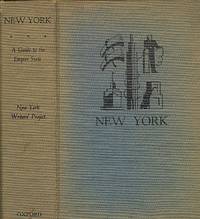
19409981<p>New York: Oxford University Press. Very Good. 1940. First Edition. Hardcover. Faint toning to the covers and spine - see image. ; Book is in excellent condition - as is the folded map in the rear pocket. Richly illustrated and includes maps historical essays and travel itineraries. It blends practical travel information with literary and historical commentary. These WPA guides are now valued as cultural artifacts offering a snapshot of American life in the 1930s and 1940s. They reflect a unique collaboration between government scholars and writers to preserve regional histories and promote civic pride. ; 8vo 8" - 9" tall; 782 pages .</p> Oxford University Press hardcover