4 232 résultats
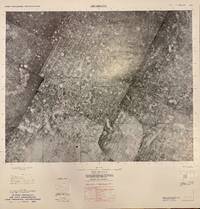
1974333138Washington DC: Defense Mapping Agency Topographic Center 1974. unbound. Orthophotograph. 26 1/4" x 25 3/8"<br/> <br/> Aryabhata was produced by the Defense Mapping Agency and is available for viewing through resources supported by NASA such as the Lunar and Planetary Institute. The Aryabhata crater on the Moon is a submerged impact crater in the eastern Mare Tranquillitatis named after the ancient Indian astronomer Aryabhata with only its arc-shaped eastern rim visible above the lunar mare due to lava flows.<br/> <br/> Defense Mapping Agency Topographic Center unknown
199183822Washington DC: National Aeronautics and Space Administration 1991. Presumed First Edition First printing before correction to replace Discovery with Atlantis. Single sticker sheet printed on both sides. Good. RARE with Discovery attribution. Approximately 5 inches at its highest and 4 inches at its widest. Some soiling noted. STS-43 the ninth mission for Space Shuttle Atlantis was a 9 day mission whose primary goal was launching the TDRS-E satellite TDRS-5. The flight also tested an advanced heatpipe radiator for potential use on the then-future space station and conducted a variety of medical and materials science investigations. Apparently Space Shuttle Discovery was originally intended to fly this mission. From the text on the sticker's peelable back the STS-43 insignia portrays the evolution and continuity of the U.S. space program by highlighting 30 years of American manned spaceflight experience from Mercury to the Space Shuttle. The emergence of the shuttle Discovery from the outlined configuration of the Mercury space capsule commemorates this special relationship. The energy and momentum of launch are conveyed by the gradations of blue which mark the shuttle's ascent from Earth to space. Once in Earth orbit Discovery's cargo bay opens to reveal the Tracking and Data Relay Satellite which appears in gold emphasis against the white wings of Discovery and the stark blackness of space. As primary mission objective the Tracking and Data Relay Satellite System will enable almost continuous communication from Earth to space for future space shuttle missions. The stars on the insignia are arranged to suggest this mission's STS number: four stars left of Shuttle and three starts to the right. NOTE: Later versions of the sticker properly reference the Shuttle Atlantis! The five astronauts are named on the front: Blaha Baker Lucid Adamson and Low. John Elmer Blaha born August 26 1942 in San Antonio Texas is a retired United States Air Force colonel and a former NASA astronaut. He is a veteran of five space missions aboard the Space Shuttle and Mir. Michael Allen Baker born October 27 1953 is a retired captain in the United States Navy former NASA astronaut and the International Space Station Program Manager for International and Crew Operations at NASA's Johnson Space Center. Shannon Matilda Wells Lucid born January 14 1943 is an American biochemist and retired NASA astronaut. At one time she held the record for the longest duration stay in space by an American as well as by a woman. She has flown in space five times including a prolonged mission aboard the Mir space station in 1996; she is the only American woman to have served aboard Mir. George David Low February 19 1956 - March 15 2008 was an American aerospace executive and a NASA astronaut. In addition to holding some technical assignments he logged more than 700 hours in space including stints on the Columbia the Atlantis and the Endeavour Space Shuttles before he left NASA in 1996. James Craig Adamson born March 3 1946 is a former NASA astronaut and retired Colonel of the United States Army. James Adamson flew on two missions STS-28 and STS-43 and completed 263 orbits and 334 hours in space. In terms of mission highlights the primary payload TDRS-E attached to an Inertial Upper Stage IUS was deployed about six hours into flight and the IUS propelled the satellite into geosynchronous orbit. TDRS-5 became the fourth member of the orbiting TDRS cluster. Secondary payloads were Space Station Heat Pipe Advanced Radiator Element SHARE II; Shuttle Solar Backscatter Ultra-Violet SSBUV instrument; Tank Pressure Control Equipment TPCE and Optical Communications Through Windows OCTW. Other experiments included Auroral Photography Experiment APE-B Protein Crystal Growth Ill PCG Ill; Bioserve / Instrumentation Technology Associates Materials Dispersion Apparatus BIMDA; Investigations into Polymer Membrane Processing IPMP; Space Acceleration Measurement System SAMS; Solid Surface Combustion Experiment SSCE; Ultraviolet Plume imager UVPI; and the Air Force Maui Optical Site AMOS experiment. TDRS-E which became TDRS-5 on orbit was successfully boosted to geosynchronous orbit at more than 22000 miles 35400 km 22000 mi above Earth by two firings of the Inertial Upper Stage IUS booster the last of which occurred approximately 12½ hours into the mission. TDRS then deployed its antennas and solar panels and separation from the IUS took place less than 45 minutes later. National Aeronautics and Space Administration unknown
199247164Washington DC: NASA c. 1992. First Edition. First Printing. very good. 535 & 537 wraps 2-vol. set illus. diagrams slight wear and soiling to covers. NASA Conference Publication 3136. The Conference was held in San Jose CA and was sponsored by NASA the Technology Utilization Foundation and NASA Tech Briefs Magazine. NASA paperback
201080985Washington DC: National Nuclear Security Administration Defense Programs 2010. Presumed first compilation--The number of copies made is unknown. Three Ring Binder. Good. Attendance list of 12-13 2011 Jan Surveillance Summit in front pocket--more than 30 names. List of 19 filled tabs 31 tabs present for 20-31 do not appear to have ever been filled. Tabbed items include: Effective Surveillance Program Memo dated 26 April 2010 then SNL LLNL and LANL responses then Requirements Workload Planning document of 22 Oct. 2010 followed by LLNL SRS KCP LANL PX SNL. Y12 NSO responses to the 22 Oct Memo followed by Summary of responses to 22 Oct Memo then followed by FYNSP responses from LLNL LANL and SNL followed by a Consolidated FYNSP responses. The 19th tab has the slides for workload meeting. Additional material in rear pocket: Surveillance Enterprise Governance 34 hard copy vugraphs 4 to a page--with some ink notations One page on NNSA Nuclear Weapons Surveillance Program 2 copies--one with notes on back One vugraph on FY 11 Surveillance Requirements and Over Targets with substantial notes Additional information on Consolidated Six Year Surveillance Requirements 12 sheets Greenaugh e-mail on Requirements workload 2 pages staples Illinger e-mail on Baselining New Surveillance Requirements 3 pages stapled Mangum e-mail on Surveillance Numbers 3 pages stapled 1 page on requires by site and funding program E-mail from Mangum on surveillance numbers 2 pages stapled with notes e-mail from Sinkular on NA 12 update 2 pages stapled with notes. Notes on November 5 2010 Goodrum Memo Teleconference and one page hardcopy vugraph on FY 11 Surveillance comparison. The use of data from surveillance of our nuclear weapons enables us to predict how the weapons will perform over time without nuclear explosive testing. This capability has improved significantly over the past decade and provides us with the capability to ensure an effective nuclear stockpile. Surveillance information is critical for the predictive models used in the annual nuclear weapon assessment process. These tools and the detailed quantitative modeling they support serve as key elements of the capability to maintain a safe secure and effective U.S. nuclear weapons stockpile without underground nuclear explosive testing. The National Nuclear Security Administration NNSA annual assessment process has evolved significantly since the end of underground nuclear explosive testing to ensure an effective nuclear weapons stockpile. The current approach aims to achieve a comprehensive science-based understanding of nuclear weapon systems. Surveillance tools and models play critical roles in providing information essential to assessing weapon safety security and performance changes that would impact military effectiveness without performing underground nuclear explosive tests. These surveillance tools aid in the understanding of two conditions of weapons systems: the "as-built" and "as-aged" conditions. The "as-built" condition reflects the frequency and severity of original design or manufacturing defects. The "as-aged" condition reflects the evolution of age-related changes in materials components and subsystems that can alter performance. Over the last few years several advances in this area have contributed to a better understanding of the condition of our existing nuclear weapons and the ways in which the current condition could affect safety reliability or performance. Through the weapons surveillance program the U.S. has in-depth knowledge of the core components housed within weapons by using technologies such as nondestructive laser gas sampling and high-resolution computed tomography. System tests also assess the functionality of all major non-nuclear components. National Nuclear Security Administration, Defense Programs unknown
200275230Washington DC: National Nuclear Security Administration Office of Defense Programs 2002. Copy of Team Files. CD-R. Very good. This CD contains a treasure trove of information on High Explosive operations and facilities at the Lawrence Livermore National Laboratory the Los Alamos National Laboratory Sandia National Laboratories the Nevada Test Site and the Pantex Plant. This CD has the files that are excel spread sheets PDF files JPG files Power Point files and Word files. The material includes the scope team membership information from the sites information on sizing etc. This information was developed to address consolidation options between nuclear weapon laboratories and plants with an aim to reduce some costs. Major high explosive operations included research and development explosive testing detonator and small quantity production and 'main charge' production for nuclear weapons. Posted on-line--Los Alamos demonstrated the first use of plastic-bonded explosives in a nuclear explosion in 1956. This development allowed the shift from precision machined cast explosives to formulations containing high concentrations of high-energy density compounds with reduced sensitivity more uniformity and better mechanical characteristics. Since the 1960s Livermore has been researching and developing safer HE for Livermore-designed weapons. The plastic coating that binds the explosive granules typically 5 to 20% of each formulation by weight is what gives each PBX its distinctive characteristics. Pressing a PBX molding powder converts it into a solid mass with the polymer binder providing both mechanical rigidity and reduced sensitivity to accidental detonation. The choice of binder affects hardness safety and stability. The TATB-based formulations of Livermore's LX-17 and Los Alamos's PBX 9502 are "insensitive" high explosives IHE; others are termed "conventional." National Nuclear Security Administration, Office of Defense Programs unknown
201080986Washington DC: National Nuclear Security Administration Defense Programs 2010. Presumed First Edition First printing --number of copies assembled is unknown. Three Ring Binder. Very good. The Table of Contents is: MTP 32 vugraphs 4 per page PS 59 vugraphs 4 per page KCP 20 vugraphs 1 per page PX 55 vugraphs--various paginations--1 per page SRS 41 vugraphs--various paginations--1 per page Y12 41 vugraphs--various paginations--1 per page LANL 38 vugraphs--various paginations--1 per page LLNL 48 vugraphs--various paginations--1 per page SNL 158 vugraphs--various paginations--1 per page Agenda 3 pages and Participant list 1 page. In the back pocket is a November 2010 Updated to the NDAA of FY 2010 Section 1251 Report and a stapled seven sheet compilation of Budget Requirements. Some material was marked Official Use Only but this limitation is understood to not longer apply due to the passage of time and public dissemination of comparable information. Approximately 2 inches of material in the binder. The Production Support Program is a DSW Program that funds multi-system manufacturing-based activities that provide individual site production capabilities and capacity for the LEPs LLC production weapon surveillance and weapon assembly and disassembly operations. The Production Support Program also enables the modernization of production capabilities to improve efficiency and ensure that manufacturing operations meet future requirements. This includes maintenance/calibration services for manufacturing operations to meet DoD War Reserve requirements. Collectively these activities directly support execution of systems engineering concepts and production integration. The Production Support Program provides DSW with the capability to conduct life extension work stockpile surveillance dismantlement work neutron generator production and detonator cable assembly production. The Management Technology and Production MTP Program's work scope is a multi-system production-based program that promotes nuclear security enterprise integration and enhances efficiency. MTP activities provide the products components and/or services for multi-weapon system surveillance laboratory/flight test data collection and analysis; weapons reliability reporting to DoD; DSW requirements tracking and execution; management and operation; and stockpile planning. The MTP Program funds plant and laboratory personnel to sustain the stockpile through activities related to surveillance; weapons response process improvements; engineering authorizations; safety assessments; use control technologies; containers; base spares; studies and assessments for nuclear operation safety; production of weapon components for use in multiple weapons systems; and transportation/handling gear for use in multiple weapons systems. The MTP Program also includes activities that benefit the nuclear security enterprise mission as differentiated from Production Support activities which support internal site-specific production missions. National Nuclear Security Administration, Defense Programs unknown
194389911Washington DC: Office of Price Administration U.S. Government Printing Office 1943. Presumed First Edition First issuance to this individual. Front and back covers printed on one side with stamp sheets inside. Fair. The format is approximately 11.5 inches by 4.25 inches This has sheets of removable stamps originally within. MANY War Ration stamps remain some with numbers and letter some with numbers and illustrations. Office of Price Administration stamp present on front with number 144930EL different from number on the booklet! This was issued undated. Signed by Arcelia C. Ditzler. War ration books varied in design and content throughout the war years. Some were simple booklets with basic information while others included more elaborate instructions and patriotic messages. The stamps inside were often brightly colored and featured images of everyday items like shoes and cooking oil serving as a constant reminder of the sacrifices being made for the war effort. War Ration Book Two - January 1943 was the property of the United States Government. It is unlawful to sell or give it to any other person or to use it or permit anyone else to use it except to obtain rationed goods for the person to whom it was issued. Persons who violate Rationing Regulations are subject to $10000 fine or imprisonment or both. By 1944 whisky had disappeared from liquor store shelves as distilleries converted to the production of industrial alcohol. New car production was banned beginning January 1 1942 as former auto plants switched to the production of military vehicles. This is believed to belong to Arcelia Ceora “Celia†Chapman Ditzler Born 8 Sep 1854 in Ohio who died Aug 1952 Shelby County Illinois. This War Ration Books listed Shelbyville Illinois as Mrs. Ditzler's city and state. The 1943 war ration book is a unique and valuable collectible item that offers a glimpse into the United States’ war effort during World War II. The 1943 war ration book was issued to the American public in 1943 as part of the United States’ war effort. It was used to allocate food fuel and other essential resources to ensure fair distribution and minimize waste. The book contained a series of coupons which could be redeemed for specific goods and services such as gasoline tires sugar and coffee. Civilians first received ration books—War Ration Book Number One or the "Sugar Book"—on 4 May 1942 through more than 100000 schoolteachers PTA groups and other volunteers. Sugar was the first consumer commodity rationed with all sales ended on 27 April 1942 and resumed on 5 May with a ration of 1 2 pound 8 oz per person per week half of normal consumption. Bakeries ice cream makers and other commercial users received rations of about 70% of normal usage. Coffee was rationed nationally on 29 November 1942 to 1 pound every five weeks about half of normal consumption in part because of German attacks on shipping from Brazil. As of 1 March 1942 dog food could no longer be sold in tin cans and manufacturers switched to dehydrated versions. As of 1 April 1942 anyone wishing to purchase a new toothpaste tube then made from metal had to turn in an empty one. By June 1942 companies also stopped manufacturing metal office furniture radios television sets phonographs refrigerators vacuum cleaners washing machines and sewing machines for civilians. By the end of 1942 ration coupons were used for nine other items: typewriters gasoline bicycles shoes rubber footwear silk nylon fuel oil and stoves. Meat lard shortening and food oils cheese butter margarine processed foods canned bottled and frozen dried fruits canned milk firewood and coal jams jellies and fruit butter were rationed by November 1943. Many retailers welcomed rationing because they were already experiencing shortages of many items due to rumors and panics such as flashlights and batteries after Pearl Harbor. Ration Book Number Five is a very rare ration book only issued to very few people. By the end of 1942 ration coupons were used for nine other items: typewriters gasoline bicycles shoes rubber footwear silk nylon fuel oil and stoves. Meat lard shortening and food oils cheese butter margarine processed foods canned bottled and frozen dried fruits canned milk firewood and coal jams jellies and fruit butter were rationed by November 1943. Many retailers welcomed rationing because they were already experiencing shortages of many items due to rumors and panics such as flashlights and batteries after Pearl Harbor. Ration Book Number Five is a very rare ration book only issued to very few people. Office of Price Administration, U.S. Government Printing Office unknown
200359621Washington DC: U. S. Department of Energy 2003. Wraps. Very good. No dust jacket. Removed from shrinkwrap for cataloguins. Includes a "Dear Interested Party" distribution letter. 3 volume set. 3 volume set. Includes: illustrations maps. Various paginations. Includes a Summary 57 pages and 2 volumes. Volume I approximately 700 pages; Volume II approximately 200 pages. DOE/EIS-236-S2. The National Nuclear Security Administration is responsible for the safety and reliability of the U. S. nuclear weapons stockpile including production readiness required to maintain that stockpile. This document addresses issues associated with constructing a new facility for the manufacturing of a key nuclear weapon component. This proposed facility proved to be controversial and did not recieve Congressional support and funding. However it retains significant value as a source of unclassified information about the use of plutonium and associated plutonium operations in the United States nuclear weapon program. U. S. Department of Energy paperback
197659736Energy Research and Development Administration 1976. Wraps. Good. No dust jacket. Cover has some wear and soiling. 2 volume set. Includes illustrations. Various paginations approximately three inches combined in the two volumes. ERDA-1542. This Environmental Statement has been prepared by the Energy Research and Development Administration as the lead agency with the collaboration of the Department of State which was primarily concerned with the portions of the Statement involving foreign policy considerations; the Nuclear Regulatory Commission which was primarily concerned with the portions of the Statement involving export licensing activities; and the Export-Import Bank which was primarily concerned with the portions of the Statement involving export financing. Energy Research and Development Administration paperback
201776194Washington DC: United States National Nuclear Security Administration Defense Programs 2017. Presumed First Edition First printing thus. Wraps. Very good. Various paginations approximately 400 pages. Figures. Tables. Appendices. List of Acronyms. This had previously been Marked Unclassified Controlled Nuclear Information but this marking has been struck through on every page where it had appeared. The National Nuclear Security Administration requires a sustained production capacity of no fewer than 80 pits per year PPY by 2030. NNSA is developing and installing capability at LANL in Plutonium Facility PF-4 to produced 30 ppy by 2026. The Analysis of Alternatives AOA for meeting pit production requirements completed in September 2017 assessed alternatives to close this identified mission gap in the NNSA's pit production capability. The AoA is a post Critical Decision CD-0 pre-CD-1 activity to identify a preferred alternative for conceptual design in preparation for the Deputy Secretary of Energy to make a program decision at CD-1. The pit named after the hard core found in fruits such as peaches and apricots is the core of an implosion nuclear weapon - the fissile material and any neutron reflector or tamper bonded to it. Some weapons tested during the 1950s used pits made with U-235 alone or in composite with plutonium but all-plutonium pits are the smallest in diameter and have been the standard since the early 1960s. Between 1954 and 1989 pits for US weapons were produced at the Rocky Flats Plant; the plant was later closed due to numerous safety issues. In 1996 the pit production was also relocated to Los Alamos. The current LANL production of new pits is limited to about 20 pits per year though NNSA is pushing to increase the production for the Reliable Replacement Warhead program. The US Congress however has repeatedly declined funding. Up until around 2010 Los Alamos National Laboratory had the capacity to produce 10 to 20 pits a year. United States, National Nuclear Security Administration, Defense Programs paperback
194558610Washington DC: United States Petroleum Administration for War 1945. Wraps. Good. No dust jacket as issued. Includes a TL signed by Ralph K. Davies Acting Petroleum Administrator. Cover has some wear and soiling. v 214 i.e. 294 p. incl. maps diagrs. 2 fold. 27 cm. Some illustrations in color. Occasional footnotes. The papers herein were presented by the Petroleum Administration for War PAW to the Special Committee on November 28 29 and 30 1945. Except for the closing statement by the Petroleum Administrator the papers were not read to the Committee in full but were placed on the Committee's records and presented to the Committee in summary. The committee provided the PAW with an opportunity to present the story of what was done by that agency during the Second World War and to provide a foretaste by way of suggestion as to what the nation might expect of the industry in the future. United States, Petroleum Administration for War paperback
196479107Washington DC: United States Department of the Interior Defense Electric Power Administration 1964. Presumed First Edition First printing. Wraps. Good. vi 243 3 pages. Maps with some color Tables Figures. Notations on front cover and title page. Cover worn. RARE. This is the report of an engineering study on the vulnerability of the nation's electric power systems to attack by nuclear weapons. It was authorized by the Dept. of Defense Office of Civil Defense and the Dept. of the Interior Defense Electric Power Administration. The Office of Civil Defense realizing the necessity of having essential ventilation and illumination in community shelters sought a valid estimate of the electric power service that would be available under conditions following a nuclear attack. The results of this study were intended to provide the requisite estimate. It also contains useful information on the ability of the electric power industry to furnish power for decontamination and recovery during the survival period following the first 15 days of shelter confinement. The Defense Electric Power Administration was selected to perform this study because of its recent experience in conducting related studies. Representatives from more than 1500 operating companies contributed more than 50000 person hours to obtain and analyze much of the technical information and supporting data for the material contained in this report. This study was the most complete analysis made to date 1964 of the effects of an assumed full-scale nuclear attack on the nation's electric power industry. These effects were examined in detail to find out what they mean to the entire electric power industry in terms of physical damage to the generating plants transmission lines and related facilities. The report contains: Summary and Conclusions Study Problem Study Method Generating Capacities Preattack and Surviving Populations by States and Regions Time-Phased Load Capacity and Balance; Regional Summaries by States Time-Phased and Load Capacity and Balance:: Composite and National Summary of All Regions Time-Phased. This report illustrates the restrictive influence of the attack on such factors as power service capability interrelationship between electric power systems and restorational time. It takes into consideration a high-level national attack with nuclear weapons and evaluates its effects on generation facilities substation transformers transmission facilities and interconnections. This overall insight into conditions that will have to be met should be useful to the electric power industry when considering plans and programs to reduce vulnerability to attack and to provide service when and where needed postattack. The results of this study are of special significance to national security because they bear directly on the feasibility of a sound national fallout shelter program. In another sense the value of this study goes beyond the data contained in the report. As the first nationwide effort of its kind it established standards methods and format which can be used to guide future combined industry/government surveys to update or expand information on the vulnerability of electric power systems. The usefulness and validity of the study were increased by directing inquiry to the smallest practical reporting unit--the county. United States Department of the Interior, Defense Electric Power Administration paperback
1947211455Washington DC: Government Printing Office 1947. Hardcover. VG. Some toning to spine and bumping to board corners. Octavo. Hardcover. Bound in red cloth with gilt stamped titles and government seal. xviii 1010 pages. Historical reports on war administration / War Production Board ;; General study no. 1; Variation: Historical reports on war administration United States. War Production Board ;; General study no. 1.; Administrative histories of World War II civilian agencies of the federal government ;; reel 53. Government Printing Office hardcover
200288245Las Vegas NV: U.S. Department of Energy National Nuclear Security Administration Nevada Operations Office 2002. Presumed to be one of some limited number of multiple originals produced. CD in a paper envelope with a clear plastic face. Very good. This disc has no distribution limitation information on its front. This CD contains one file with an approximately 70 page document that has color illustrations tabular data and briefing slides at the end. There may be a hardcopy version of this given the DOE/NV number. The content addresses the then current test readiness maintaining current posture enhancing test readiness and provided several appendixes including Threshold Test Ban Preparations and Authorization Basis including Underground Nuclear Test Standards Safety Basis Safety Management and a Device-Specific Nuclear Explosive Safety Study. Table 4 is a summary of the cost study results in Millions. The Department of Energy submitted a report to the Senate Armed Services Committee on May 20 calling for the United States to shorten the time it would take to conduct a nuclear test to 18 months in order to provide a "reasonable level of flexibility" for the Bush administration. Congress requested the report in November 2002 instructing Secretary of Energy Spencer Abraham to draw up plans that would enable the department to test within six 12 18 or 24 months. Currently the United States can conduct a nuclear test within 24-36 months of a presidential directive to do so. Congress also asked Abraham to determine in consultation with the secretary of defense which readiness period would be optimal. The 18-month recommendation "reflects what is achievable and cost effective" according to the report which was prepared by the National Nuclear Security Administration NNSA a semiautonomous agency within the Energy Department. The report indicated that 18 months is the minimum amount of time needed to evaluate a problem identified in the U.S. nuclear stockpile propose a solution and "execute a test that would provide the information needed to certify the ‘fix.'" The recommendation is "consistent with realistic testing schedules" established during previous U.S. nuclear testing which ceased in 1992. By contrast shortening test readiness to six or 12 months would require a "substantial diversion of personnel and facilities at the laboratories" according to the report. That would "represent a major redirection of the stockpile stewardship program" which is intended to maintain the nuclear arsenal in the absence of testing. Adopting a testing posture of a year or less would be "most relevant.if the President might direct that testing resume for political reasons." The report also noted that the shorter readiness period would be considerably more expensive. The transition to shorten the current 24-36 month readiness posture expected to take three years is already underway. NNSA conducted an Enhanced Test Readiness Cost Study in July 2002 to determine the steps and funding required to shorten the readiness posture and the Nuclear Weapons Council a consultative group of officials from the Energy Department and the Pentagon approved the plan to transition to an 18-month readiness window in September 2002 according to the report. The Bush administration asked for funds to begin moving to a shorter test readiness posture in its fiscal year 2004 budget request. Charles Anson Franklin NNSA spokesman said that the current readiness posture of 24-36-months was "a policy decision of the previous administration. This administration has made a policy decision of an 18-month readiness period." He added "It's been out there—it's not been a surprise.We've been talking about moving to an 18-month readiness posture since 2001." The changes will be fully implemented by the end of fiscal year 2005 and will cost $83 million with an additional $25-30 million needed annually to sustain the heightened state of scientific technological and personnel preparedness according to the report. The report examined a speedier transition but concluded that reaching the 18-month readiness posture sooner would cost more and disrupt other programs because of the limited number of nuclear weapons personnel. U.S. Department of Energy, National Nuclear Security Administration, Nevada Operations Office unknown
261343New York: M.B. Brown Printing and Binding Company. Original poster. Color lithograph. 21.5 x 14 inches.<br/> <br/> WWI era slogan. This poster is vivid blue with white text. Good condition with collection inventory number in margin.<br/> <br/> M.B. Brown Printing and Binding Company unknown
1999OVU6165Buildings and the Arts Center of Expertise Fine Arts Program. Good. 1999. Paperback. Soft cover published in 1999 by U S General Services Administration. 475 pages 3.3 lbs oblong quarto. Spine is creased and has some wear along edges covers have some small scrapes and scuffing and upper corners in back of book are bumped toward rear. Book is in good plus condition. Also included are letters and documents from GSA dealing with New Deal artwork a 34 page article dealing with legal title to New Deal artwork and a partial index of artists.; 8.25" x 10.9" x 1.5"; 475 pages . Buildings and the Arts Center of Expertise, Fine Arts Program paperback
1943RWOROHI00drpOxford University 1943. Very Good. Work Projects Administration. The Ohio Guide. NY: Oxford University 1943. 2nd printing. 634pp. Indexed. Illustrated. 8vo. Book condition: Very good with gently bumped spine ends. Small sticker-stamp on rear free endsheet. Dust Jacket Condition: Good with small losses in spine ends and top corners. . Rear pocket glued to rear pastedown with large fold-out map inside. Oxford University unknown
1941004832Oxford University Press . First Printing. Unclipped DJ in archival cover large and small chip on the spine corner chips edge wear. Fine map in rear pocket. . Fine. Hardcover. 1st Edition. 1941. Oxford University Press hardcover
1941GA001198INew York: Hastings House. Near fine in a very good plus dust jacket. 1941. First edition. Hardcover. Dust jacket missing some chips on the back panel. Inscribed by Corse to Senator Pepper and rare thus. . Hastings House hardcover
2017x-1634877810Cognella Academic Publishing 2017. Paperback. New. 252 pages. 10.00x7.99x0.53 inches. Cognella Academic Publishing paperback
6664179like new. unknown
1999SONG0865876746Government Institutes 1999-08-01. Fifth. paperback. Used: Good. 8.58x1.07x10.86. Buy with confidence. Excellent Customer Service & Return policy. Government Institutes paperback
1999DADAX0865876746Government Institutes 1999-08-01. Fifth. paperback. New. 8.58x1.07x10.86. Buy with confidence. Excellent Customer Service & Return policy. Government Institutes paperback
1940043713Manchester NH: Granite State Press 1940. First edition undated ca. 1940. Collected traditions of French Canadians who relocated to New Hampshire including feasts and festivals songs religious observations etc. Blue cloth printed in darker blue and white 49 pages black and white illustrations. Very good condition with only light edgewear good hinges firm text block clean pages no names or other markings. First Edition. Hard Cover. Very Good. 8vo - over 7¾" - 9¾" tall. Granite State Press Hardcover
2008030744Routledge 2008. VOLUME 3 ONLY. SEE OUR PHOTOS. Cover is Near Fine with only light shelfwear. Square and tight. Bright and shiny. FINE inside. NO owner's name or bookplate. NOT a library discard. NOT a remainder. Pages are fresh crisp clean and unmarked. Subtitle: "Volume III: Education of Working Women and of Middle Class Girls." From the publisher: "'Nineteenth Century British Women's Education' brings together key documents in the Victorian feminist campaign to establish and improve girls' and women's education. Drawing widely on articles from the feminist and established press government papers newspapers professional and association journals as well as memoirs addresses pamphlets and reviews this collection gives researchers access to nineteenth-century debates on improving girls' and women's education and women's work as educators. The collection is divided overall into two sections both of which incorporate materials that argue for the improvement of girls' and women's education as well as arguments made against education for girls and women. In examining the campaign to establish higher education for women the first volumes include the writings of such primary figures as Emily Davies Lydia Becker Barbara Bodichon Jessie Boucherett Josephine Butler Frances Power Cobbe Millicent Garrett Fawcett Maria Grey and Emily Shirreff in addition to illustrating the significance of institutions such as Girton and Newnham Colleges. Later volumes document women's work as educators and include writings by Mary Carpenter Dorothea Beale Frances Mary Buss and the Shirreff sisters Maria and Emily gifted educators of girls at the elementary and secondary levels and women whose educational practice embodied the arguments they made on behalf of girls' education. These volumes also chart the importance of the Governesses' Benevolent Institution the Schools Inquiry Commission and the 'Journal of Women's Education Union' in charting the increasing organization and professionalization of women teachers. Edited and with new introductions by Susan Hamilton and Janice Schroeder 'Nineteenth Century British Women's Education' is destined to be an invaluable reference resource to all future scholars of feminism and the history of education.". Reprint of the 2007 original. Hardcover. Near Fine - Fine condition/No dust jacket as issued. Illus. by NOT a library discard. 8vo. viii 349pp. Great Packaging Fast Shipping. Routledge Hardcover