4 232 résultats
201186130Washington DC: National Aeronautics and Space Administration 2011. Xerox-style reproduction. Assumed to be one of only a few produced for media representatives. Stapled at upper left corner. Very good. 63 1 pages. Illustrations. Mars Science Laboratory MSL is a robotic space probe mission to Mars launched by NASA on November 26 2011 which successfully landed Curiosity a Mars rover in Gale Crater on August 6 2012. The overall objectives include investigating Mars' habitability studying its climate and geology and collecting data for a human mission to Mars. The rover carries a variety of scientific instruments designed by an international team. Contents include Media Services Information; Quick Facts; Mars at a Glance: Mars Science Laboratory Investigations; Mission Overview; Comparing Two Mars Rover Projects; Spacecraft; Mars Science Laboratory Landing Site; Recent Current and Upcoming Missions; Mars Science: A Story of Changes; Historical Mars Missions; and Program/Project Management. For several reasons a different landing system was chosen for MSL compared to previous Mars landers and rovers. Curiosity was considered too heavy to use the airbag landing system as used on the Mars Pathfinder and Mars Exploration Rovers. The MSL engineers came up with a novel alternative solution: the sky crane. The sky crane system lowered the rover with a 25 ft tether to a soft landing—wheels down—on the surface of Mars. This system consists of a bridle lowering the rover on three nylon tethers and an electrical cable carrying information and power between the descent stage and rover. As the support and data cables unreeled the rover's six motorized wheels snapped into position. At roughly 25 ft below the descent stage the sky crane system slowed to a halt and the rover touched down. After the rover touched down it waited two seconds to confirm that it was on solid ground by detecting the weight on the wheels and fired several pyros small explosive devices activating cable cutters on the bridle and umbilical cords to free itself from the descent stage. The descent stage then flew away to a crash landing 2100 ft away. The sky crane concept had never been used in missions before. National Aeronautics and Space Administration unknown
200256499Washington DC: NASA 2002. very good CD-ROM's in fair to good plastic cases. 7 CD-ROM disks 7 CD-ROM disks in plastic cases--cases for disks 1 2 5 & 6 are cracked but no damage to CD-ROM's. The Nimbus 7 Limb Infrared Monitor of the Stratosphere LIMS radiance profile dataset of 1978/79 was reconditioned and reprocessed to Version 6 profiles of temperature and species that are improved significantly over those from Version 5. NASA unknown
13073Washington DC: GPO n.d. very good. 8" x 10" 1 photo 1 signed color photograph. GPO unknown
198013065Washington DC: GPO 1980. very good. 8" x 10" 1 photo 1 signed color photograph. GPO unknown
197546110Washington DC: NASA 1975. First Edition. First Printing. fair. 859 wraps illus. diagrams references covers worn and soiled slightly cocked damp staining at edges. This was prepared at Goddard Space Flight Center. The Symposium was held in Silver Spring MD and was sponsored by the Institute of Environmental Sciences The American Institute of Aeronautics and Astronautics The American Society for Testing and Materials and the National Aeronautics and Space Administration. NASA paperback
197246119Washington DC: NASA 1972. First Edition. First Printing. good. 23 cm 1071 wraps illus. references covers somewhat worn and soiled some edge soiling. This symposium was sponsored by the Institute of Environmental Sciences The American Institute of Aeronautics and Astronautics; The American Society for Testing and Materials; and the National Aeronautics and Space Administration. NASA paperback
197872350Washington DC: National Aeronautics and Space Administration Scientific and Technical Information Office 1978. Presumed First Edition First printing. Hardcover. good. 11" x 14" vii 1 160 pages profusely illus. some in color tables Cover has some fading. Some pages has slight corner creasing. No dust jacket present. 3D viewer in pocket at rear boards have some edge wear. Oversized item requires more shipping charges if sent overseas. The Viking program consisted of a pair of American space probes sent to Mars Viking 1 and Viking 2. Each spacecraft was composed of two main parts: an orbiter designed to photograph the surface and a lander designed to study the planet from the surface. The orbiters also served as communication relays for the landers. The Viking program grew from NASA's earlier Voyager Mars program. Viking 1 entered Mars orbit on June 19 1976 with Viking 2 following suit on August 7. After orbiting Mars for more than a month and returning images used for landing site selection the orbiters and landers detached; the landers then soft-landed. The Viking 1 lander touched down on the surface of Mars on July 20 1976 and was joined by the Viking 2 lander on September 3. The orbiters continued imaging and performing other scientific operations from orbit while the landers deployed instruments on the surface. Pictures from the Viking 1 and Viking 2 Landers as well as an account of the decade leading up to the Mars pictures by Tim Mutch leader of the Viking Lander Imaging Team. The Viking landers were the first completely successful spacecrafts to land on Mars. Before Viking arrived at Mars landing sites were chosen for both Viking landers. On July 20 1976 Viking lander 1 arrived at its chosen site in the western part of Chryse Planitia. On August 7 1976 Viking lander 2 touched down on Utopia Planitia. Each of the Viking landers carried a series of science packages which included a weather station a seismometer a chemical analysis package two cameras a soil composition package and a biological experiment package. Within minutes of lander 1's touch down the first picture was taken in case something happened to the spacecraft. This picture showed what looked like a sandy dusty surface with rocks up to 10 cm in diameter. The two cameras on each lander were mounted on opposite sides of the space craft. This allowed stereoscopic images to be taken which could be used to calculate distances from the lander to the features in the pictures. National Aeronautics and Space Administration, Scientific and Technical Information Office hardcover
200485216Washington DC: National Nuclear Security Administration c2004. Presumed First Edition First printing thus. DVD. Very Good/In plastic case. Face of the CD/DVD states: To open double cline the "My Computer" icon on the desktop double click Drive D: double click ;nnsa catalog". There are images of weapons and platforms and technology images. Additional text reads The Nation's Applied Technology Complex. National Security Solutions Provider. Many customers many capabilities one enterprise. The National Nuclear Security Administration issued this catalogue in 2003-2004 and an updated version in 2005 to present information that its Nuclear Security Enterprise provided complete integration of design development application testing and production and that it provided customers of the Nuclear Weapons Complex with access to unsurpassed expertise. Customers were assured that they would receive more than the highest quality product; they were assured of security and safety throughout the entire process--from design to manufacturing to final delivery. NNSA asserted that it was this complete suite of design manufacturing and testing technologies that made it unique. At the time it was encouraging DOD Intelligence Community agencies and others with appropriate requirements to explore working with the NNSA and its management and operating contractors. National Nuclear Security Administration unknown
201376279Las Vegas NV: National Nuclear Security Administration Nevada Field Office/National Security Technologies Office of Public Affairs 2013. Presumed First thus. DVD-RW. Very good. This has two files. One of JVE historic photographs as a powerpoint presentation with about 160 images. The second file is a WMV format and is about a 40 minute video of Ambassador Paul Robinson's remarks shown at the commemoration. The United States part of the Joint Verification Experiment carried out in 1988 as the Kearsarge event in Operation Touchstone. Twenty-five years later before tensions increased between Russia and the United States a joint commemoration of the event was held at the Nevada Nuclear Security Site formerly the Nevada Test Site. The objective of the JVE was to calibrate the seismic yield estimation capability of underground nuclear explosions conducted in both countries. It involved the unprecedented US yield measurement of a Soviet nuclear explosion at its then nuclear test site in Kazakhstan and the reciprocal Soviet yield measurement of a US nuclear explosion at the Nevada Test Site. JVE provided the first opportunity for scientists from US and Soviet nuclear weapons laboratories to meet and work cooperatively. At the Nevada Test Site and at the follow-on experiment at the Soviet Semipalatinsk Test Site they developed confidence-building steps that made possible the ratification of the TTBT in 1990. Both Russians and Americans agree that cooperation between US and Soviet nuclear weapons scientists began with the JVE and the follow-on discussions on the TTBT verification mechanisms during the Geneva negotiations. National Nuclear Security Administration, Nevada Field Office/National Security Technologies, Office of Public Affairs unknown
201180403Washington DC: National Nuclear Security Administration 2011. Presumed First thus. Held together with a binder clip. Very good. Volume 3 ONLY. C. Deeney's copy per cover sheet. While stated as Volume 3 this appears to be a stand-alone item documenting the Third Review Panel Meeting. It is labeled on the cover shee as NIC Preliminary Data. The agenda covers June 2 and June 3 2011. Among the topics and presentations at tabs are NIC Overview by E. Moses NIC Technical Framework by J. Lindl Ignition Tuning Experiments by N. Landen Progress on Target Layering by J. Atherton Implosion Experiments by J. Edwards and ITF/ITFX Assessment by J. Lindl and NIC FY11 Go-Forward Schedule by J. Atherton. The presentations are printed with four frames per page with substantial use of color. The National Ignition Facility NIF is a large laser-based inertial confinement fusion ICF research device located at the Lawrence Livermore National Laboratory in Livermore California. NIF uses lasers to heat and compress a small amount of hydrogen fuel with the goal of inducing nuclear fusion reactions. NIF's mission is to achieve fusion ignition with high energy gain and to support nuclear weapon maintenance and design by studying the behavior of matter under the conditions found within nuclear weapons. NIF is the largest and most energetic ICF device built to date and the largest laser in the world. The National Ignition Campaign NIC was a multi-institution effort established under the National Nuclear Security Administration of DOE in 2005 prior to the completion of the National Ignition Facility NIF in 2009. The scope of the NIC was the planning and preparation for and the execution of the first 3 yr of ignition experiments through the end of September 2012 as well as the development fielding qualification and integration of the wide range of capabilities required for ignition. Besides the operation and optimization of the use of NIF these capabilities included over 50 optical x-ray and nuclear diagnostic systems target fabrication facilities experimental platforms and a wide range of NIF facility infrastructure. The goal of ignition experiments on the NIF is to achieve for the first time ignition and thermonuclear burn in the laboratory via inertial confinement fusion and to develop a platform for ignition and high energy density applications on the NIF. The goal of the NIC was to develop and integrate all of the capabilities required for a precision ignition campaign and if possible to demonstrate ignition and gain by the end of FY12. The goal of achieving ignition can be divided into three main challenges. The first challenge is defining specifications for the target laser and diagnostics with the understanding that not all ignition physics is fully understood and not all material properties are known. The second challenge is designing experiments to systematically remove these uncertainties. The third challenge is translating these experimental results into metrics designed to determine how well the experimental implosions have performed relative to expectations and requirements and to advance those metrics toward the conditions required for ignition. At project completion in 2009 NIF lacked almost all the diagnostics and infrastructure required for ignition experiments. About half of the 3 yr period covered in this review was taken up by the effort required to install and performance qualify the equipment and experimental platforms needed for ignition experiments. Ignition on the NIF is a grand challenge undertaking and the results presented here represent a snapshot in time on the path toward that goal. The path forward presented at the end of this review summarizes plans for the Ignition Campaign on the NIF which were adopted at the end of 2012 as well as some of the key results obtained since the end of the NIC. National Nuclear Security Administration unknown
1866014703Troy New York: Wm. H. Young 1866. Fair condition lacking the front wrap with small edge chips and light stains to a few preliminary pages. Several pages are dog-eared. 5.75" wide by 9" tall. This 47-page pamphlet contains information on the Rensselaer Polytechnic Institute in 1865-66 with descriptions of departments and programs faculty etc. There is a register that identifies each enrolled student their hometown and current address in Troy. Among the students is Frederic S. Cozzens Jr. 1846-1928 who went on to become one of America's best nineteenth century marine illustrators. There are also lists of all school graduates from 1826 through 1865 a calendar of events details of curriculum courses of study rules fees library etc. The date of publication "July 1866" is printed at the foot of the title page. First Edition July 1866. Softcover sewn. Fair condition. 47pp. Wm. H. Young Paperback
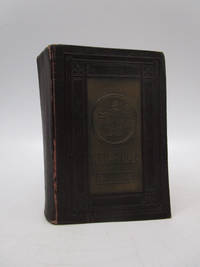
1938035581Atlanta GA: Foote & Davies Company 1938. First Thus. Leather. Very Good. Rare. First Thus. Burgundy leather with gold gilt panel on front cover with fraternity seal name and date of publication 1938. This is the 70th Anniversary Edition. x thick 1528pp. Previous owner's name written on front free end-paper. There is no other writing in the book. Full refund if not satisfied. Foote & Davies Company hardcover
200775574Los Alamos NM: Los Alamos National Laboratory 2007. Concurrence Draft. DVD. Very good. This disk includes the Summary Volume 1 chapters 1-11 Volume 2 Appendices A-M and Volume 3 Comment Response Document. The disk contains 2358 KB. NNSA proposes to continue operating Los Alamos National Laboratory LANL which is located in Los Alamos County in north-central New Mexico. NNSA has identified and assessed three alternatives for continued operation of LANL: 1 No Action 2 Reduced Operations and 3 Expanded Operations. The Expanded Operations Alternative includes the impacts of actions to implement the March 2005 Compliance Order on Consent Consent Order entered into by DOE the LANL management and operating contractor and the State of New Mexico to address the investigation and remediation of environmental contamination at LANL. NNSA intends to implement actions necessary to comply with the Consent Order regardless of whether it implements other actions analyzed as part of the Expanded Operations Alternative. Expanded Operations is NNSA's Preferred Alternative. Under the No Action Alternative NNSA would continue the historical mission support activities conducted at LANL at currently approved operational levels. Under the Reduced Operations Alternative NNSA would eliminate some activities and limit the operations of other activities. Under the Expanded Operations Alternative NNSA would operate LANL at the highest levels of activity currently foreseeable including full implementation of mission assignments. Under all of the alternatives the affected environment is primarily within 50 miles 80 kilometers of LANL. Analyses indicate little difference in the environmental impacts of the alternatives on many resource areas. The primary discriminators are public risk due to radiation exposure collective worker risk due to radiation exposure socioeconomic effects due to LANL employment changes electrical power and water demand waste management and transportation. Los Alamos National Laboratory unknown
201374122Washington DC: United States Department of Energy National Nuclear Security Administration 2013. Presumed First thus. Coin. Very good. The Joint Verification Experiments occurred in 1988. One occurred in the U.S. and one in Russia. A 25th anniversary commemoration was held at the National Nuclear Security Site formerly the Nevada Test Site in 2013. This coin was given out to a select few participants officials and organizers. Coin has a 1.5 inch diameter. On one side the center image is the Department of Energy logo with two outer rings with text. The outermost ring text is "Building Trust and Confidence National Nuclear Security Admiistration" The other side has a center image with the dates 1988-2013 Russian and U.S. flags and the atomic symbol and an outer ring with the following text "25th Aniversary U.S.-Russia Joint Verification Experiment". Agreement Between the United States of America and the Union of Soviet Socialist Republics on the Conduct of a Joint Verification Experiment May 31 1988. Reaffirming the statement of the Secretary of State of the United States and the Foreign Minister of the Union of Soviet Socialist Republics of December 9 1987 Proceeding from the agreement to conduct a joint Verification Experiment hereinafter referred to as JVE for the purpose of the elaboration of effective verification measures for the Treaty Between the United States of America and the Union of Soviet Socialist Republics on the Limitation of Underground Nuclear Weapon Tests hereinafter referred to as the 1974 Treaty on the Limitation of Underground Nuclear Weapon Tests the parties have agreed in part as follows: 1. For purposes of the JVE there shall be two nuclear explosions one at the U.S. Nevada Test Site and one at the USSR Semipalatinsk Test Site each hereinafter being referred to as a JVE explosion. 2. The planned yield of the JVE explosion at each test site shall be not less than 100 kilotons and shall approach 150 kilotons. 3. Each Party shall have the opportunity to measure on the basis of reciprocity the yield of the JVE explosion conducted at the other Party's test site using teleseismic methods and at the other's test site using hydrodynamic yield measurement methods. 4. Each Party shall also perform teleseismic measurements with its national seismic station network for both JVE explosions. To assist in teleseismic measurement the Parties shall exchange data on five nuclear explosions conducted after January 1 1978 but before January 1 1988 to include yield date and time geographic coordinates depth of burial and associated geological and geophysical data. For each of these historical explosions the Parties shall exchange teleseismic recordings taken at five designated stations on each side including station corrections and the best network seismic magnitude. 5. Each Party shall perform hydrodynamic yield measurements within the satellite hole provided for that purpose of the JVE explosions at both Parties' test sites using the methods it has identified in this Agreement. DONE at Moscow on May 31 1988 in two copies each in the English and Russian languages both texts being equally authentic. FOR THE UNITED STATES OF AMERICA George P. Shultz FOR THE UNION OF SOVIET SOCIALIST REPUBLICS E. Shevardnadze. United States, Department of Energy, National Nuclear Security Administration unknown
201773761Albuquerque NM: United States Department of Energy National Nuclear Security Administration Office of Defense Programs 2017. Presumed First Edition First printing if Issue B. Spiral bound. Very good. Various paginations approximately 150 pages. Illustrations. Some pages laminated. This Compilation includes Level 2 Federal Requirements Level 3 Contractor Agreements and Tools for Product Realization. The Defense Programs Business Process System DPBPS Portal as the mechanism for implementing DOE Order O 452.3 Management of the DOE Nuclear Weapons Complex. The Portal delivers business requirements and processes specific to the Deputy Administrator for Defense Programs DP for directing managing operating and executing programs at the nuclear weapons production facilities and laboratories within the Nuclear Security Enterprise NSE. The DPBPS shall be the official web-based repository housing the business requirements processes and tools to perform DP activities within the Enterprise. M&O Contractors develop Level 4 content to specify and further details needed for site compliance. b. Content posted in the DPBPS shall become contractually binding on the effective date informed through the Site Impact Analysis T014 process and authorized by the PADAMA. NNSA publishes the content after PADAMA authorization and before the effective date to allow contractors time to bring site-specific processes into compliance. The DPBPS' content apply to all federal organizations responsible for maintaining and enhancing the safety reliability and performance of the United States nuclear weapons stockpile including the ability to design produce and test in order to meet national security requirements. Field Office Contracting Officers are responsible for including this policy in the Managing & Operating M&O Contractor contracts for the National Security Enterprise sites. The Contractor Requirements Document CRD sets forth requirements of this directive that apply to contracts. The CRD must be included in contracts of National Security Enterprise M&O Contractor sites performing work under the Defense Programs. United States, Department of Energy, National Nuclear Security Administration, Office of Defense Programs unknown
200268511Washington DC: United States Department of Energy 2002. Presumed first edition/first printing. Wraps. Very good. No dust jacket. Cover has slight wear and soiling. Includes: illustrations diagrams index. 2 volumes. Volume 1 Chapters 1 throught 11 approximately 350 pages; Volume 2 Appendices A through K approximately 200 pages. Various paginations. References. Glossary. TA-18 supported important defense nuclear safety and other national security mission responsibilities. The operations at TA-18 enabled DOE personnel to gain knowledge and expertise in advanced nuclear technologies that supported: nuclear materials management criticality safety; emergency response in support of counterterrorism activities nuclear safeguards arms control; and criticality experiments. Technical Area 18 housed at the time the Western Hemisphere's largest collection of machines for conducting nuclear safety evaluations. Under the right conditions at Techncial Area 18 usingfissile material experiments capable of maintaining a self-sustaining nuclear fission chain reaction had been achieved. As part of the national response to the September 11 2001 terrorist attacks the Department of Energy proposed to relocate the Technical Area 18 operational capabilities and materals to a new location. This environmental impact statement was part of that process. United States Department of Energy paperback
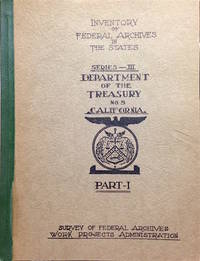
194054637San Francisco: the Survey 1940. xi 98 v to 432 v to 703 iv to 844p. 8 x 10 inch cardstock wraps original binder's tape spines; neatly ex-library a neat clean set. Customs procurement public health coast guard mint internal revenue; includes rough guides to Los Angeles and San Francisco narcotics field enforcement division archives. the Survey unknown
45625NY: Rand McNally 1919. 8vo.; illustrated wraps softcover; 44 pages; black and white photographic illustrations and map of Long Island; wraps and pages 1 and 2 are foxed else very good. <br/><br/> NY: Rand McNally, 1919 paperback
200575219Washington DC: United States Department of Energy National Nuclear Security Administration 2005. Presumed First Edition First issuance thus. VHS Tape. Very good. This is a standard VHS tape approximately 4 inches by 7 inches with a hand written label stating Surveillance Training - SFIs 45 min. No classification or information use limitation on label or tape sleeve. The tape has been partially played but not rewound. Significant Finding Investigations were addressed in DOE/IG-0535 Audit Report Management of the Stockpile Surveillance Program's Significant Finding Investigations December 2001. The Directors of the three nuclear weapons laboratories annually assess and report the condition of the weapon systems for which their laboratories are responsible. A critical event in this process is the identification of a defect or malfunction during surveillance testing. This is especially important when dealing with an aging weapons stockpile. Departmental procedures require preliminary tests or evaluations to establish whether a Significant Finding Investigation SFI should be initiated. Such investigations are then conducted to determine the identified problem's cause and impact and to recommend corrective actions. Weapons surveillance began in the US in the mid-1960s when weapons testing was done through underground explosions of nuclear devices. Such testing continued until the early 1990s. If tests on a weapon system show an anomaly - a possible problem with a part that could jeopardize the system operation - with a system evaluation engineer SEE is notified. It is the SEE's job to determine if the anomaly could affect the surety safe use or reliability of the weapon. If the SEE makes that determination he/she opens a "significant finding investigation SFI. The responsibility of the investigation team is to determine the cause and impact of the defect and to make recommendations for corrective actions. United States Department of Energy, National Nuclear Security Administration unknown
200388242Washington DC: National Nuclear Security Administration Office of Defense Programs Office of Defense Science 2003. A unique CD no indication of how many copies might have been made. CD in a paper envelop with clear plastic face. Very good. On this disc entitled in sharpee 2/12/03 NNSA Test Readiness is a 26 vugraph briefing with graphics that was given to the Foster panel. There are no distribution limitations on the outside of the disc or on any vugraphs contained therein. John Stuart Foster Jr. born September 18 1922 is an American physicist best known as the fourth director of Lawrence Livermore National Laboratory and as Director Defense Research and Engineering under four Secretaries of Defense and two Presidents. In 1952 Foster was recruited to Lawrence Livermore Laboratory by founder Edward Teller and became a division leader in experimental physics. He was promoted to associate director in 1958 and director of the Livermore Laboratory and associate director of the Lawrence Berkeley National Laboratory in 1961 in which positions he served until 1965. Foster was appointed director of defense research and engineering a position then considered the number-three job in the Department of Defense by Secretary of Defense Robert S. McNamara in October 1965. He continued in this position until June 1973 serving under Presidents Johnson and Nixon and under Secretaries of Defense McNamara Clifford Laird and Richardson. From 1973 Foster was vice president science and technology of TRW retiring in 1988. From 1973 until 1990 he was a member of the President's Foreign Intelligence Advisory Board. He was a long-serving member of the Defense Science Board of which he served as chairman from January 1990 to June 1993. Foster continues to advise and mentor scientists at Livermore into the 2020s. From an Arms Control Association article found online: The Department of Energy submitted a report to the Senate Armed Services Committee on May 20 2003 calling for the United States to shorten the time it would take to conduct a nuclear test to 18 months in order to provide a "reasonable level of flexibility" for the Bush administration. Congress requested the report in November 2002 instructing Secretary of Energy Spencer Abraham to draw up plans that would enable the department to test within six 12 18 or 24 months. Currently the United States can conduct a nuclear test within 24-36 months of a presidential directive to do so. Congress also asked Abraham to determine in consultation with the secretary of defense which readiness period would be optimal. The 18-month recommendation "reflects what is achievable and cost effective" according to the report which was prepared by the National Nuclear Security Administration NNSA a semiautonomous agency within the Energy Department. The report indicated that 18 months is the minimum amount of time needed to evaluate a problem identified in the U.S. nuclear stockpile propose a solution and "execute a test that would provide the information needed to certify the ‘fix.'" The recommendation is "consistent with realistic testing schedules" established during previous U.S. nuclear testing which ceased in 1992. By contrast shortening test readiness to six or 12 months would require a "substantial diversion of personnel and facilities at the laboratories" according to the report. That would "represent a major redirection of the stockpile stewardship program" which is intended to maintain the nuclear arsenal in the absence of testing. Adopting a testing posture of a year or less would be "most relevant.if the President might direct that testing resume for political reasons." The report also noted that the shorter readiness period would be considerably more expensive. The transition to shorten the current 24-36 month readiness posture expected to take three years is already underway. NNSA conducted an Enhanced Test Readiness Cost Study in July 2002 to determine the steps and funding required to shorten the readiness posture and the Nuclear Weapons Council a consultative group of officials from the Energy Department and the Pentagon approved the plan to transition to an 18-month readiness window in September 2002 according to the report. The Bush administration asked for funds to begin moving to a shorter test readiness posture in its fiscal year 2004 budget request. National Nuclear Security Administration, Office of Defense Programs, Office of Defense Science unknown
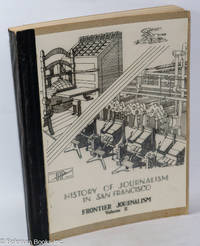
1939316975San Francisco: Works Progress Administration 1939. Paperback. ii 171p. wraps illus. very good condition 8.5x11 inches mimeographed on one side only as issued. Works Progress Administration paperback
194309950Cincinnati: The Wiesen-Hart Press 1943. Very Good/Very Good. octavo 570 pages; publisher's maroon cloth printed in gilt; map end papers; dust jacket price-clipped; first edition second printing. "Compiled by the workers of the Writers' Program of the Work Projects Administration in the state of Ohio." Illustrated in black and white American Guide Series. Owner name and address label on ffep; inner hinges starting. Dust jacket spine slightly faded The Wiesen-Hart Press unknown
194177907Stanford University: James Ladd Delkin 1941. Hardcover. 207p. first edition chronology glossary bibliography index inserted plates in photogravure very good first edition stated with minor toning on end papers in decorated green cloth boards in price-clipped dj. American Guide Series. James Ladd Delkin hardcover
193721931William Penn Association 1937. Hardcover. Good. 0x0x0. Stated first edition. Hardcover no dust jacket. Light shelfwear to covers with light wear to head and foot of spine and corners. Small tear to front endpaper. Pages show toning to edges and gutter. No writing to text. 704 pages index b&w photos and illus. There are 2 folded maps laid in by rear pocket. Pocket has a tear along one ege. Larger is colored map of the city smaller is b&w map of highway bypasses around the city. Second map is scarce. William Penn Association hardcover
197839009Indiana State Library. Very Good with no dust jacket. circa 1978. Hardcover. Index typed by the Public Library of Fort Wayne and Allen County. Index of names and businesses extracted from eleven historical sources. ; MCN32087; 704 pp . Indiana State Library hardcover