8 361 résultats
1963ZB455963NASA 1963. 25 pp. softcover very good. - If you are reading this this item is actually physically in our stock and ready for shipment once ordered. We are not bookjackers. Buyer is responsible for any additional duties taxes or fees required by recipient's country. NASA paperback
0331390043.Ghardcover. Good. Access codes and supplements are not guaranteed with used items. May be an ex-library book. hardcover
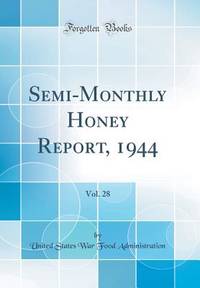
0656658592.Ghardcover. Good. Access codes and supplements are not guaranteed with used items. May be an ex-library book. hardcover
1332920357.Gpaperback. Good. Access codes and supplements are not guaranteed with used items. May be an ex-library book. paperback
50182206like new. unknown
50149245like new. unknown
036569648X.Ghardcover. Good. Access codes and supplements are not guaranteed with used items. May be an ex-library book. hardcover
0332587878.Ghardcover. Good. Access codes and supplements are not guaranteed with used items. May be an ex-library book. hardcover
200575219Washington DC: United States Department of Energy National Nuclear Security Administration 2005. Presumed First Edition First issuance thus. VHS Tape. Very good. This is a standard VHS tape approximately 4 inches by 7 inches with a hand written label stating Surveillance Training - SFIs 45 min. No classification or information use limitation on label or tape sleeve. The tape has been partially played but not rewound. Significant Finding Investigations were addressed in DOE/IG-0535 Audit Report Management of the Stockpile Surveillance Program's Significant Finding Investigations December 2001. The Directors of the three nuclear weapons laboratories annually assess and report the condition of the weapon systems for which their laboratories are responsible. A critical event in this process is the identification of a defect or malfunction during surveillance testing. This is especially important when dealing with an aging weapons stockpile. Departmental procedures require preliminary tests or evaluations to establish whether a Significant Finding Investigation SFI should be initiated. Such investigations are then conducted to determine the identified problem's cause and impact and to recommend corrective actions. Weapons surveillance began in the US in the mid-1960s when weapons testing was done through underground explosions of nuclear devices. Such testing continued until the early 1990s. If tests on a weapon system show an anomaly - a possible problem with a part that could jeopardize the system operation - with a system evaluation engineer SEE is notified. It is the SEE's job to determine if the anomaly could affect the surety safe use or reliability of the weapon. If the SEE makes that determination he/she opens a "significant finding investigation SFI. The responsibility of the investigation team is to determine the cause and impact of the defect and to make recommendations for corrective actions. United States Department of Energy, National Nuclear Security Administration unknown
75434CD. As new. This item is still in its original plastic wrap. The rear of the sleeve lists the contents: Overview Defense Applications and Modeling; Simulation and Computer Science Integrated Computing Systems University Partnerships Special Projects ASCI's future ASCI's Multidisciplinary Applications. Among the subsections are: Visualization Technilogies at the Los Alamos National Laboratory Visualization Technologies at Sandia National Laboratories ASCI White at Lawrence Livermore National Laboratory Science at the Level 1 Alliances and Technology Prospectus. The U.S. Department of Energy DOE established the Accelerated Strategic Computing Initiative ASCI in 1996. The goal of ASCI is to simulate the results of new weapons designs as well as the effects of aging on existing and new designs all in the absence of underground nuclear tests. The ASCI is an applications-driven effort with a goal to develop reliable computational models of the processes involved in the design manufacture and degradation of nuclear weapons. Based on discussions with scientists and engineers with expertise in weapons design manufacturing and in computational physics a goal of simulating full-system three-dimensional nuclear burn and safety simulation processes by the year 2004 was established. A number of applications-based milestones were identified to mark the progress from current simulation capabilities to full-system simulation capabilities. Codes development to simulate casting material aging safety forging welding of microstructures and so on. unknown
0484584227.Ghardcover. Good. Access codes and supplements are not guaranteed with used items. May be an ex-library book. hardcover
61771Washington DC; Boca Raton FL: National Archives Trust Fund Board; Social Issues Resources Series Inc. Hardcover. Good. No dust jacket as issued. Slipcase has been damaged but the contents are in good condition. vii 79 p. Includes illustrations. Glossary. Annotated bibliography. Time Line. In addition to the 86 page booklet there are a series of f54 acsimile documents all present provided for classroom use. This is the fourth in a special series to make National Archives records available to the public in appropriate forms in part through the work of its Office of Educational Programs in producing a series of supplementary tearching units. National Archives Trust Fund Board; Social Issues Resources Series, Inc hardcover
0267634161.Ghardcover. Good. Access codes and supplements are not guaranteed with used items. May be an ex-library book. hardcover
1330184238.Gpaperback. Good. Access codes and supplements are not guaranteed with used items. May be an ex-library book. paperback
199468541Washington DC: United States Department of Energy Energy Information Administration 1994. Presumed first edition/first printing. Wraps. Very good. No dust jacket. Covers have slight wear and soiling. 2 volume set. xiii 91 v159 p. Includes illustrations. Glossary. From an EPA website: "Reformulated gasoline RFG is gasoline blended to burn more clearly than conventional gasoline and to reduce smog-forming and toxic pollutants in the air we breathe. The RFG program was mandated by Congress in the 1990 Clean Air Act amendments. The first phase of the RFG program began in 1995 and the second current phase began in 2000. RFG is required in cities with high smog levels and is optional elsewhere. RFG is currently used in 17 states and the District of Columbia. About 30 percent of gasoline sold in the U.S. is reformulated. The air quality benefits RFG has achieved represent a significant part of the country's smog reduction strategy. The RFG program combined with other industrial and transportation controls aimed at smog reduction is contributing to the long-term downward trend in U.S. smog levels. About 75 million people breathe cleaner air because of RFG." United States Department of Energy, Energy Information Administration paperback
0265092019.Ghardcover. Good. Access codes and supplements are not guaranteed with used items. May be an ex-library book. hardcover
0260446041.Ghardcover. Good. Access codes and supplements are not guaranteed with used items. May be an ex-library book. hardcover
0265083729.Gpaperback. Good. Access codes and supplements are not guaranteed with used items. May be an ex-library book. paperback
0265057663.Gpaperback. Good. Access codes and supplements are not guaranteed with used items. May be an ex-library book. paperback
0331008122.Ghardcover. Good. Access codes and supplements are not guaranteed with used items. May be an ex-library book. hardcover
0267702795.Ghardcover. Good. Access codes and supplements are not guaranteed with used items. May be an ex-library book. hardcover
0259943088.Gpaperback. Good. Access codes and supplements are not guaranteed with used items. May be an ex-library book. paperback
0260414905.Ghardcover. Good. Access codes and supplements are not guaranteed with used items. May be an ex-library book. hardcover