8 361 résultats
1870nf1898Paris chez Guillaumin, 14, rue de Richelieu, Paris, Chez Dumoulin, 13 quai des Grands-Augustins Broché 1870 In-8 broché, II et 214 pages ; dos manquant, des manques à la couverture, livre peu commun, intérieur très frais, à relier. Livraison a domicile (La Poste) ou en Mondial Relay sur simple demande.
1993vb664Editions Montchrestien Dos carré collé 1993 In-8 (16 x 22 cm), dos carré collé, 511 pages ; très bon état. Livraison a domicile (La Poste) ou en Mondial Relay sur simple demande.
19593338089New York, Harper, 1959. XIII, 298 S. OLwd.
0353929042.Ghardcover. Good. Access codes and supplements are not guaranteed with used items. May be an ex-library book. hardcover
2011R240107495VUIBERT. 2011. In-8. Broché. Etat d'usage, Couv. légèrement pliée, Dos satisfaisant, Intérieur frais. 182 pages augmentées de nombreux schémas monochromes dans le texte - quelques annotations au crayon dans le texte. . . . Classification Dewey : 350-Administration publique
206537S.l., 1790 in-8, 71 pp., broché.
225983S.l., 1789 in-8, 68 pp., broché.
225984S.l., 1789 in-8, 68 pp., dérelié.
236006S.l., 1789 in-8, 68 pp., broché, couv. papier bleu postérieur.
179013111790 s.n., Paris, 1790. In-12, brochage moderne muet, 34 pages, 2 tableaux dépliants
206600Paris, Chez Baudouin, Impr. de l'Assemblée Nationale, S.d. (1790) in-8, 4 pp., dérelié.
ORD-8155Loi du 28 août 1792, l'an quatrième de la Liberté. Toulon. Mallard. 1792. In-4 (181 x 235mm) de 2 pages imprimées. Signature manuscrite de Taxy.
204389Paris, Imprimerie nationale, (1791) in-12, 15 pp., dérelié.
206709Paris, Impr. Nationale., s.d. (1790) in-8, 4 pp., dérelié.
205969Paris, Chez Baudouin, s.d. (1790) in-8, 3 pp., dérelié.
206228Bordeaux, Impr. du club du café national, s.d. in-8, 4 pp., dérelié.
207317Paris, Impr. Nationale, (1790) in-8, 4 pp., dérelié.
207567Paris, Imprimerie Nationale, (1790) in-8, 2 pp., dérelié. Bande de papier salie, collée en marge du document, sans affecter le texte.
2012Q-1616085339Skyhorse 2012-02-09. Paperback. New. In shrink wrap. Looks like an interesting title! Skyhorse paperback
1995275860PN. New. 1995. Soft Cover. Date is original print. This is a reprint edition . PN paperback
200579903Albuquerque NM: Sandia National Laboratories 2005. Presumed First Edition First printing thus. Wraps. Very good. 2 ii 32 4 pages. Footnotes. Illustrations color. Appendices A-E includes Glossary Visuals. Tables. ASC Timeline. Cover has minor wear and soiling. The Advanced Simulation and Computing Program ASC is a cornerstone of the Stockpile Stewardship Program providing simulation capabilities and computational resources to support the annual stockpile assessment and certification to study advanced nuclear-weapons design and manufacturing processes to analyze accident scenarios and weapons aging and to provide the tools to enable Stockpile Life Extension Programs SLEPs and the resolution of Significant Finding Investigations SFIs. This requires a balanced resource including technical staff hardware simulation software and computer science solutions. This Program Plan describes the ASC strategy and the deliverables required to accomplish the FY 2006-2010 multifaceted objectives defines program goals introduces the new national work breakdown structure and details the new subprograms their strategics and their associated performance indicators. The plan also includes ASC Level 1 Milestones and the top ten risks. To ensure synchronizations with the SSP's needs the Program Plan will be reviewed and updated annually. The Advanced Simulation and Computing Program or ASC is a super-computing program run by the National Nuclear Security Administration in order to simulate test and maintain the United States nuclear stockpile. The program was created in 1995 in order to support the Stockpile Stewardship Program or SSP. The goal of the initiative is to extend the lifetime of the current aging stockpile. After the United States' 1992 moratorium on live nuclear testing the Stockpile Stewardship Program was created in order to find a way to test and maintain the nuclear stockpile. In response the National Nuclear Security Administration began to simulate the nuclear warheads using supercomputers. As the stockpile ages the simulations have become more complex and the maintenance of the stockpile requires more computing power. Over the years due to Moore's Law the ASC program has created several different supercomputers with increasing power in order to compute the simulations and mathematics. Within the ASC program there are six subdivisions each having their own role in the extension of the life of the stockpile. Facility Operations and User Support: The Facility Operations and User Support subdivision is responsible for the physical computers and facilities and the computing network within ASC. They are responsible for making sure the tri-lab network computing storage space power usage and the customer computing resources are all in line. Computational Systems and Software Environment: The Computational and User Support subdivision is responsible for maintaining and creating the supercomputer software according to NNSA's standards. They also deal with the data networking and software tools. The ASCI Path Forward project substantially funded the initial development of the Lustre parallel file system from 2001 to 2004. Verification and Validation: The Verification and Validation subdivision is responsible for mathematically verifying the simulations and outcomes. They help software engineers write more precise codes in order to decrease the margin of error when the computations are run. Physics and Engineering Models: The Physics and Engineering Models subdivision is responsible for deciphering the mathematical and physical analysis of nuclear weapons. They integrate physics models into the codes in order to gain a more accurate simulation. They deal with the way that the nuclear weapon will act under certain conditions based on physics. They also study nuclear properties vibrations high explosives advanced hydrodynamics material strength and damage thermal and fluid response and radiation and electrical responses. Integrated Codes: The Integrated Codes subdivision is responsible for the mathematical codes that are produced by the supercomputers. They use these mathematical codes and present them in a way that is understandable to humans. These codes are then used by the National Nuclear Society Administration the Stockpile Steward Program Life Extension Program and Significant Finding Investigation in order to decide the next steps that need to be taken in order to secure and lengthen the life of the nuclear stockpile. Advanced Technology Development and Mitigation: The Advanced Technology Development and Mitigation subdivision is responsible for researching developments in high performance computing. Once information is found on the next generation of high performance computing they decide what software and hardware needs to be adapted in order to prepare for the next generation of computers. Sandia National Laboratories paperback
200190620Albuquerque NM: Sandia National Laboratories 2001. Presumed First Edition First printing. Wraps. Very good. 2 iii 162 pages plus covers. Illustrations many with color. Appendix A--Level 1 Milestones. Appendix 2--Glossary. From the Table of Contents these areas of discussion are found: The Role of ASCI in Stockpile Stewardship Defense Applications and Modeling Simulation and Computer Science Verification and Validation Physics Modeling Distance Computing Distributed Computing Weapons Simulation and Terascale Simulation. The Advanced Simulation and Computing Program ASC is a super-computing program run by the National Nuclear Security Administration in order to simulate test and maintain the United States nuclear stockpile. The program was created in 1995 in order to support the Stockpile Stewardship Program or SSP. The goal of the initiative is to extend the lifetime of the current aging stockpile. After the United States' 1992 moratorium on live nuclear testing the Stockpile Stewardship Program was created in order to find a way to test and maintain the nuclear stockpile. In response the National Nuclear Security Administration began to simulate the nuclear warheads using supercomputers. As the stockpile ages the simulations have become more complex and the maintenance of the stockpile requires more computing power. Over the years due to Moore's law the ASC program has created several different supercomputers with increasing power in order to compute the simulations and mathematics. Sandia National Laboratories paperback
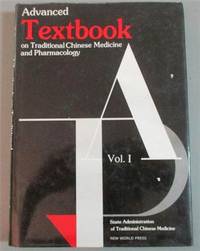
1995I7126Beijing: White Lotus Press 1995. Paperback. Good/no dj. 1.00. Advanced Textbook on Traditional Chinese Medicine and Pharmacology Vol. 1 White Lotus Press paperback
1976753223PN. New. 1976. Soft Cover. Date is original print. This is a reprint edition. . PN paperback
2012DADAX1466617551Medical Information Science Reference 2012-06-30. 1. hardcover. New. 8.60x1.00x11.00. Buy with confidence. Excellent Customer Service & Return policy. Medical Information Science Reference hardcover