4 232 résultats
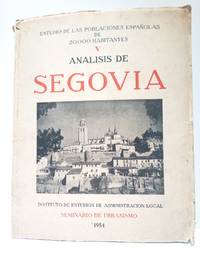
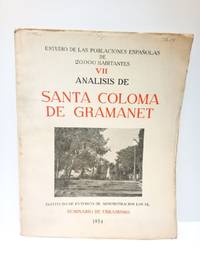
19544391Madrid: Seminario de Urbanismo 1954.- 49 p.: Láminas mapas estados y gráficos; Folio 305 x 248 cm; Cartulina Ed.- Estudio de las Poblaciones Españolas de 20.000 Habitantes. 7.- RARO. Las cubiertas ligeramente ajadas. Interior perfecto. CATALUÑA Libro en español Seminario de Urbanismo paperback
195424201Madrid: Seminario de Urbanismo 1954.- 73 p.: gráficos y estados 21 hojas de planos en papel couchet 7 de ellas plegadas; Folio 30 x 245 cm; Cartulina Ed.- Estudios de las Poblaciones Españolas de 20.000 Habitantes. 5. Las cubiertas algo ajadas. Interior muy bien. CASTILLA-LEÓN Libro en español Seminario de Urbanismo paperback
1333939590.Gpaperback. Good. Access codes and supplements are not guaranteed with used items. May be an ex-library book. paperback
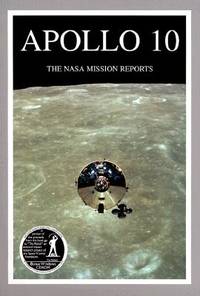
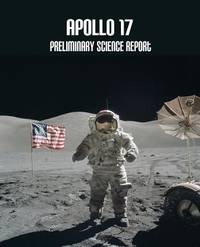
1999Q-1896522521Apogee Books 1999-05-01. Paperback. New. In shrink wrap. Looks like an interesting title! Apogee Books paperback
23376908like new. unknown
2016__1537117440CreateSpace Independent Publishing Platform 2016. Paperback. New. 354 pages. 11.00x8.50x0.84 inches. CreateSpace Independent Publishing Platform paperback
150602243X.Gpaperback. Good. Access codes and supplements are not guaranteed with used items. May be an ex-library book. paperback
1505812267.Gpaperback. Good. Access codes and supplements are not guaranteed with used items. May be an ex-library book. paperback
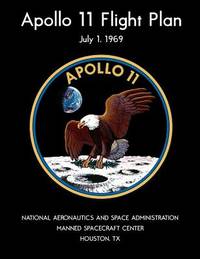
196953381Washington DC: National Aeronautics and Space Administration 1969. Presumed First Edition First printing. Wraps. fair. Quarto 250 1 pages plus covers wraps. Illustrations. Diagrams. Staple bound in top corner Tears around staple in front cover which is separated but present. Discoloration to covers. Apollo 11 was the spaceflight that landed the first two people on the Moon. Mission commander Neil Armstrong and pilot Buzz Aldrin both American landed the lunar module Eagle on July 20 1969 at 20:17 UTC. Armstrong became the first person to step onto the lunar surface six hours after landing on July 21 at 02:56:15 UTC; Aldrin joined him about 20 minutes later. They spent about two and a quarter hours together outside the spacecraft and collected 47.5 pounds 21.5 kg of lunar material to bring back to Earth. Michael Collins piloted the command module Columbia alone in lunar orbit while they were on the Moon's surface. Armstrong and Aldrin spent 21.5 hours on the lunar surface before rejoining Columbia in lunar orbit. For Release Sunday July 6 1969. Press release No. 69-83K. A press kit often referred to as a media kit in business environments is a pre-packaged set of promotional materials that provide information about a person company organization or cause and which is distributed to members of the media for promotional use. Press kits or media kits as they are sometimes known are often distributed to announce a release or for a news conference. Traditionally the term "press kit" referred to a set of documents photographs and other relevant materials packaged together and designed to be sent to a newspaper or magazine as part of an organizations Public relations or promotional program. Recently as print media circulation and readership levels have been declining marketing and PR people have begun using the broader term "media kit" so that it now refers to any promotional material distributed to any media outlet. National Aeronautics and Space Administration paperback
196981679Washington: NASA 1969. 16mm. Film Reel. Very Good. Film reel containing 14 1/2 minute promotional film about the upcoming Apollo 11 Flight which would attempt to put Americans on the Moon. Still in original canister and strapped mailing container. Photocopied "Sound-on-Film" script for the film laid in 13p. plus title-leaf; stapled in upper left corner. While we guarantee it to be playable we haven't attempted to view this film other than to unspool the first bit and look at the first few frames. Appears to be 16mm. Identified on script as Aeronautics and Space Report Program #54 June 1969. According to the script the three astronauts are shown in training and each speaks about the upcoming mission as does Dr. Wernher von Braun. According to the script animation was used for portions of the film landing techniques etc. OCLC lists this promotional film but appears to provide no information as to where it is held. NASA unknown
197180614Washington DC: National Aeronautics and Space Administration Apollo Program Office 1971. Presumed First Edition First printing. Single sheet printed on both sides. Good. Format is approximately 6.5 inches by 5.5 inches folded in half and printed on both sides. Item has some wear and soiling. Front side has a detailed listing of events such as liftoff Translunar Injection Midcourse Correction Lunar Orbit Insertion etc. The other side continues with a listing of events but has two graphics detailing the events of Apollo 14 EVA-1 and Apollo 14 EVA-2. The Apollo program also known as Project Apollo was the third U. S. human spaceflight program carried out by the National Aeronautics and Space Administration NASA which succeeded in landing the first humans on the Moon from 1969 to 1972. It was first conceived during Dwight D. Eisenhower's administration as a three-person spacecraft to follow the one-person Project Mercury which put the first Americans in space. Apollo was later dedicated to President Kennedy's national goal for the 1960s of "landing a man on the Moon and returning him safely to the Earth" in an address to Congress on May 25 1961. It was the third US human spaceflight program to fly preceded by the two-person Project Gemini conceived in 1961 to extend spaceflight capability in support of Apollo. Kennedy's goal was accomplished on the Apollo 11 mission when astronauts Neil Armstrong and Buzz Aldrin landed their Apollo Lunar Module LM on July 20 1969 and walked on the lunar surface and landed safely on Earth on July 24. Five subsequent Apollo missions also landed astronauts on the Moon the last Apollo 17 in December 1972. In these six spaceflights twelve people walked on the Moon. Rare surviving Apollo 14 ephemera. Apollo 14 was the eighth crewed mission in the United States Apollo program the third to land on the Moon and the first to land in the lunar highlands. It was the last of the "H missions" targeted landings with two-day stays on the Moon with two lunar EVAs or moonwalks.<br /> The mission was originally scheduled for 1970 but was postponed because of the investigation following the abort of Apollo 13 and the need for modifications to the spacecraft as a result. Commander Alan Shepard Command Module Pilot Stuart Roosa and Lunar Module Pilot Edgar Mitchell launched on their nine-day mission on Sunday January 31 1971 at 4:03:02 p.m. EST. Liftoff was delayed forty minutes and two seconds due to launch site weather restrictions the first such delay for an Apollo mission. En route to the lunar landing the crew overcame a series of malfunctions that might have resulted in a second consecutive aborted mission and possibly the premature end of the Apollo program. Shepard and Mitchell made their lunar landing on February 5 in the Fra Mauro highlands - originally the target of Apollo 13. During the two walks on the surface 94.35 pounds 42.80 kg of Moon rocks were collected and several scientific experiments were deployed. To the dismay of some geologists Shepard and Mitchell did not reach the rim of Cone crater as had been planned though they came close. In Apollo 14's most famous incident Shepard hit two golf balls he had brought with him with a makeshift club. While Shepard and Mitchell were on the surface Roosa remained in lunar orbit aboard the Command and Service Module performing scientific experiments and photographing the Moon including the landing site of the future Apollo 16 mission. He took several hundred seeds on the mission many of which were germinated on return resulting in the so-called Moon trees that were widely distributed in the following years. After liftoff from the surface and a successful docking the spacecraft was flown back to Earth where the three astronauts splashed down safely in the Pacific Ocean on February 9. National Aeronautics and Space Administration, Apollo Program Office unknown
1502726483.Gpaperback. Good. Access codes and supplements are not guaranteed with used items. May be an ex-library book. paperback
22141513like new. unknown
1502726599.Gpaperback. Good. Access codes and supplements are not guaranteed with used items. May be an ex-library book. paperback
B9781502726599Paperback / softback. New. paperback
BOOKS313766Houston TX: NASA. VG/NO DUSTJACKET. 1972. Flexibound. Apollo 16 was the tenth crewed mission in the United States Apollo space program the fifth and second-to-last to land on the Moon and the second to land in the lunar highlands.2 The second of Apollo's "J missions" it was crewed by Commander John Young Lunar Module Pilot Charles Duke and Command Module Pilot Ken Mattingly. Launched from the Kennedy Space Center in Florida at 12:54 PM EST on April 16 1972 the mission lasted 11 days 1 hour and 51 minutes and concluded at 2:45 p.m. EST on April 27. . Sm 4to. Bound with clasps. Massive 5" thick printed on both sides. . NASA unknown
22141517like new. unknown
150272667X.Gpaperback. Good. Access codes and supplements are not guaranteed with used items. May be an ex-library book. paperback
B9781502726674Paperback / softback. New. paperback
22124705like new. unknown
1502728877.Gpaperback. Good. Access codes and supplements are not guaranteed with used items. May be an ex-library book. paperback
I7-SBAJ-B0EGPaperback. Good. Two volume set large and heavy paperbacks. Externally worn internally clean light yellowing some minor creases bindings firm. paperback
194286337Washington DC: Office of Price Administration 1942. Presumed First Edition First printing no Rev. notification. Single sheet printed on both sides. Good. Format is approximately 16 inches by 10.5 inches folded in half creating a four page document. This form has been folded in half and also be creased/folded perhaps to fit into a pocket. The front page as sections for the Name of Registered Owner and applicant information from the Board and details of the application and of the vehicle. The second page asked for additional details about the applicant and associated vehicles. The third page has certification and agreement of applicant and certification by inspector. The back/last page documents the action by the Rationing Board. Tires were the first item to be rationed by the OPA which ordered the temporary end of sales on 11 December 1941 while it created 7500 unpaid volunteer three-person tire ration boards around the country. By 5 January 1942 the boards were ready. Each received a monthly allotment of tires based on the number of local vehicle registrations and allocated them to applicants based on OPA rules. There was a shortage of natural rubber for tires since the Japanese quickly conquered the rubber-producing regions of Southeast Asia. Although synthetic rubber had been invented before the war it had been unable to compete with natural rubber commercially so the US did not have enough manufacturing capacity at the start of the war to make synthetic rubber. Throughout the war rationing of gasoline was motivated by a desire to conserve rubber as much as by a desire to conserve gasoline. To get a classification and rationing stamps one had to appear before a local War Price and Rationing Board which reported to the OPA. The Office of Price Administration OPA was established within the Office for Emergency Management of the United States government by Executive Order 8875 on August 28 1941. The functions of the OPA were originally to control money price controls and rents after the outbreak of World War II. President Franklin D. Roosevelt inaugurated the Council of National Defense Advisory Commission on May 29 1940 to include Price Stabilization and Consumer Protection Divisions. Both divisions merged to become the Office of Price Administration and Civilian Supply OPACS within the Office for Emergency Management by Executive Order 8734 on April 11 1941. Civil supply functions were transferred to the Office of Production Management. It became an independent agency under the Emergency Price Control Act January 30 1942. The OPA had the power to place ceilings on all prices except agricultural commodities and to ration scarce supplies of other items including tires automobiles shoes nylon sugar gasoline fuel oil coffee meats and processed foods. At the peak almost 90% of retail food prices were frozen. It could also authorize subsidies for production of some of those commodities. The War Production Board WPB ordered the temporary end of all civilian automobile sales on 1 January 1942 leaving dealers with one half million unsold cars. Ration boards grew in size as they began evaluating automobile sales in February only certain professions such as doctors and clergymen qualified to purchase the remaining inventory of new automobiles typewriters in March and bicycles in May. Automobile factories stopped manufacturing civilian models by early February 1942 and converted to producing tanks aircraft weapons and other military products with the United States government as the only customer. Office of Price Administration unknown
194389881Washington DC: U.S. Government Printing Office 1943. Presumed First Edition Presumed original issuance to this recipient. Single sheet printed on both sides. Good. The format is approximately 5 inches by 4 inches. This application was sent to OPA Mailing Center in Chicago IL and has a cancelled 3 cent stamp and a cancelation date of in June 1943. This apparently was returned to the applicant who was Arthur S. Galvin of Assumption IL. We believe that this belonged to Arthur Steven Galvin who was born 8 June 1915 - Assumption Christian County Illinois USA and who died 30 August 1989 - Assumption Christian County Illinois USA This RARE surviving ephemera would be appropriate for a museum exhibit or as an important artifact in a prized collection. Rationing is the controlled distribution of scarce resources goods or services or an artificial restriction of demand. Rationing controls the size of the ration which is one person's allotted portion of the resources being distributed on a particular day or at a particular time. Rationing in the United States was introduced in stages during World War II with the last of the restrictions ending in June 1947. The Office of Price Administration OPA was established within the Office for Emergency Management of the United States government by Executive Order 8875 on August 28 1941. The OPA had the power to place ceilings on all prices except agricultural commodities and to ration supplies of other items including tires automobiles shoes nylon sugar gasoline fuel oil coffee meats and processed foods. In the summer of 1941 rationing in the United Kingdom increased because of military needs and German attacks on shipping in the Battle of the Atlantic. The British government appealed to Americans to conserve food to help the UK. The Office of Price Administration OPA warned Americans of potential gasoline steel aluminum and electricity shortages. It believed that with factories converting to military production and consuming many critical supplies rationing would become necessary if the country entered the war. The OPA established a rationing system after the attack on Pearl Harbor on 7 December. The work of issuing ration books and exchanging used stamps for certificates was handled by some 5500 local ration boards of mostly volunteer workers selected by local officials. Many levels of rationing went into effect. Some items such as sugar were distributed evenly based on the number of people in a household. Other items like gasoline or fuel oil were rationed only to those who could justify a need. Restaurant owners and other merchants were accorded more availability but had to collect ration stamps to restock their supplies. In exchange for used ration stamps ration boards delivered certificates to restaurants and merchants to authorize procurement of more products. The work of issuing ration books and exchanging used stamps for certificates was handled by some 5500 local ration boards of mostly volunteer workers selected by local officials. Many levels of rationing went into effect. Some items such as sugar were distributed evenly based on the number of people in a household. Other items like gasoline or fuel oil were rationed only to those who could justify a need. Restaurant owners and other merchants were accorded more availability but had to collect ration stamps to restock their supplies. In exchange for used ration stamps ration boards delivered certificates to restaurants and merchants to authorize procurement of more products. Each ration stamp had a generic drawing of an airplane gun tank aircraft carrier ear of wheat fruit etc. and a serial number. Some stamps also had alphabetic lettering. The kind and amount of rationed commodities were not specified on most of the stamps and were not defined until later when local newspapers published for example that beginning on a specified date one airplane stamp was required in addition to cash to buy one pair of shoes and one stamp number 30 from ration book four was required to buy five pounds of sugar. The commodity amounts changed from time to time depending on availability. Red stamps were used to ration meat and butter and blue stamps were used to ration processed foods. To enable making change for ration stamps the government issued "red point" tokens to be given in change for red stamps and "blue point" tokens in change for blue stamps. The red and blue tokens were about the size of dimes 0.63 inches and were made of thin compressed wood fiber material because metals were in short supply. There was a black market in stamps. To prevent this the OPA ordered vendors not to accept stamps that they themselves did not tear out of books. Buyers however circumvented this by saying sometimes accurately as the books were not well-made that the stamps had "fallen out". In actuality they may have acquired stamps from other family members or friends or the black market. U.S. Government Printing Office unknown
1998030918Mahwah New Jersey & London: Lawrence Erlbaum Associates Publishers 1998. NOT a library discard. The cover is in Very Good condition. HARDCOVER. Cover lightly rubbed. Square and tight. Sharp corners. FINE inside. NO owner's name or bookplate. NOT a library discard. NOT a remainder. Pages are fresh crisp clean and unmarked -- apparently seldom if ever read. NO underlining. NO highlighting. NO margin notes. 1998. First printing of the Third Edition Revised and Updated. Bound in the original green and purple laminated boards. From the publisher: "Child study is a very complex field. Human beings and children specifically are very complex beings. Consequently simple answers and solutions to problems are very often just that: too simple. This text presents principles and methods for studying children in the varied contexts in which they live and function. These theories and methods can be used as a kind of 'tool kit' for application in a variety of situations by the people who work with children such as researchers parents educators pediatricians nurses social workers and child psychologists to name but a few. In short the book is written for people interested in how to examine and describe children as well as those interested in creating educational environments for children.". Third Edition Revised and Updated. Hardcover. Very Good - Fine condition/No dust jacket as issued. Illus. by NOT a library discard. 8vo. ix 243pp. Great Packaging Fast Shipping. Lawrence Erlbaum Associates, Publishers Hardcover