Administration, Work ProgressBiblio.com
4 232 résultats
28819167like new. unknown
16526487like new. unknown
089308879X.Gpaperback. Good. Access codes and supplements are not guaranteed with used items. May be an ex-library book. paperback
1937NC0389U. S. Government Printing Office 1937. hardcover. Very Good/Missing. 9x5x2. From the library of ABAA book seller Tom Nicely. Washington D.C.; 1921. Black cloth covered boards with gold spine titles; mild wear to edges and covers; 8vo 7 3/4" to 9 3/4" tall; no jacket. Illustrated endpapers; interior is clean and unmarked; illustrations in black and white; large map in pocket attached to rear pastedown; 1140 pages. Additional shipping charges may need to be requested due to size or weight of book. U. S. Government Printing Office hardcover
1937209967United States Government Printing Office 1937. First Thus. Hardcover. Very Good/No Jacket. First Edition Thus First Printing. Published by United States Government Printing Office 1937. Octavo. Hardcover. Fold-out maps in back pocket. Book is very good with bumps to corners. No dust jacket. A nice copy of this vintage reference guide to Washington D.C. 100% positive feedback. 30 day money back guarantee. NEXT DAY SHIPPING! Excellent customer service. All books packed carefully and ship with free delivery confirmation/tracking. All books come with free bookmarks. Ships from Sag Harbor New York. United States Government Printing Office hardcover
1937000010903Washington D.C.: United States Government Printing Office 1937. First edition. Hardcover. Near Fine. Large 8vo. 4 vxxvi 2 3-1140 6 pp. Black cloth with gold lettering on the spine. Decorated endpapers and pastedowns. Price of $3.00 on the copyright page. No dust jacket. Illustrated with several full-page black and white photographs with in-text photographs with full-page maps and plans a fold-out map and with two folding maps tucked in the rear pocket on the rear pastedown. Part of the American Guide series. A few scuffs to the front board. United States Government Printing Office hardcover
193730197Washington D.C.: Government Printing Office 1937. Hardcover. First Edition First Printing. 6 x 9.25in. xxvi. 1140pp. 2 folding color maps in pocket at rear. Publisher's cloth boards. VERY GOOD. Shows shelf rubbing of the boards and extremities some hints of fraying at the extremities spine lightly faded fore-edge with some discoloration maps lightly handled and very lightly creased otherwise the binding is strong the text is clean and unmarked and the boards remain distinct. As pictured. Government Printing Office hardcover
19370087055Washington DC: Government Printing Office 1937. First edition. Hardcover. Very Good/No Jacket. 1937 First Edition of this entry from the WPA's American Guide series. 1140 pp. Hardcover thick 8vo. original black cloth. Illustrated throughout with b&w photos and maps. This copy complete with both loose folding maps housed in the rear pocket it actually includes 3 maps as one is printed on both sides. Very Good no dust jacket. Light rubbing and scratching to the covers. Clean contents. Despite the heft of this book the binding is still sound and secure. Government Printing Office hardcover
MA05G-00287Government Printing Office. Collectible - Acceptable. Washington D. C.: Government Printing Office 1937. Sm 4to.xxvi1140pp. Photos ports. illus. maps. Map in back pocket. Book Good. No dust jacket. Back hinge cracked. guidebook history intellectual life government Inquire if you need further information. NOT AVAILABLE FOR SHIPMENT OUTSIDE OF THE UNITED STATES. Government Printing Office unknown
19378814Washington D. C.: United States Government Printing Office 1937. 1142 pp. Original black cloth covers w/ gilt title on spine. Binding lightly soiled and rubbed. Light scattered foxing. Light insect damage along foredge of rear blank endpaper. Includes 3 large maps on 2 folding sheets in rear pocket. "Brief Guide to the Smithsonian Institution" 80 pp. booklet laid-in. Illust. w/ b/w photos and maps. First Edition. Hard Cover. Good/No Dust Jacket. 8vo - over 7¾" - 9¾" tall. United States Government Printing Office Hardcover
1989793055PN. New. 1989. Soft Cover. Date is original print. This is a reprint edition. . PN paperback
1991245326PN. New. 1991. Soft Cover. Date is original print. This is a reprint edition . PN paperback
1596411600.Gpaperback. Good. Access codes and supplements are not guaranteed with used items. May be an ex-library book. paperback
19372306200115Government Printing Office 1937. hardcover. Very Good. 0x0x0. Bound in publisher's cloth. Hardcover. No dust jacket. Good binding and cover. Spine faded. Clean unmarked pages. Includes map in rear pocket. xxvi. 1140 pages. <br> The American Guide Series was a group of books and pamphlets published under the auspices of the Federal Writers' Project FWP a Depression-era works program in the United States. The American Guide Series books were compiled by the FWP but printed by individual states and contained detailed histories of each state with descriptions of every city and town. The format was uniform comprising essays on the state's history and culture descriptions of its major cities automobile tours of important attractions and a portfolio of photographs. Government Printing Office hardcover
1942MAIN029519INY/DC: Hastings House/Geo. Wash. U. VG/Good see notes. 1942. reprint. hardcover. 12mo . 528pp . Several 1/2" tears to edgeworn DJ. Has the map in rear pocket. Originaly done by the USGPO in 1937. . Hastings House/Geo. Wash. U hardcover
1909319562Akademische Verlagsgesellschaft Leipzig 1909. Hardcover mit Leinenrücken und -ecken Zustand: Keine Beschädigungen keine Eintragungen. Rücken Ecken Kanten gut. Aus einer Klosterbibliothek mit Kennungen Stempel Rückenschild. Akademische Verlagsgesellschaft, Leipzig, hardcover
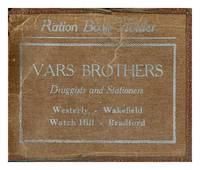
194289908Washington DC: Office of Price Administration U.S. Government Printing Office 1942. Presumed First Edition First issuance to this individual. Front and back covers printed on one side staple bound. Fair. The format is approximately 5.75 inches by 4.25 inches Front and back stapled with sheets of removable stamps originally within. MANY War Ration stamps remain Red E F R S T Blue N P Q R S T E F M L K J H G Z Y X W V U Numbers include 1 2 5 and 8. One Blue 5 is detached by present! Office of Price Administration stamp present on front. . Issued by Local Board 6286-1 of Shelby Illinois. This was issued by F. E. Galbreath. This was issued undated. Signed by the issuing official and William A. Ditzler. War ration books varied in design and content throughout the war years. Some were simple booklets with basic information while others included more elaborate instructions and patriotic messages. The stamps inside were often brightly colored and featured images of everyday items like shoes and cooking oil serving as a constant reminder of the sacrifices being made for the war effort. War Ration Book Two - January 1943 was the property of the United States Government. It is unlawful to sell or give it to any other person or to use it or permit anyone else to use it except to obtain rationed goods for the person to whom it was issued. Persons who violate Rationing Regulations are subject to $10000 fine or imprisonment or both. By 1944 whisky had disappeared from liquor store shelves as distilleries converted to the production of industrial alcohol. New car production was banned beginning January 1 1942 as former auto plants switched to the production of military vehicles. The 1943 war ration book is a unique and valuable collectible item that offers a glimpse into the United States’ war effort during World War II. The 1943 war ration book was issued to the American public in 1943 as part of the United States’ war effort. It was used to allocate food fuel and other essential resources to ensure fair distribution and minimize waste. The book contained a series of coupons which could be redeemed for specific goods and services such as gasoline tires sugar and coffee. Civilians first received ration books—War Ration Book Number One or the "Sugar Book"—on 4 May 1942 through more than 100000 schoolteachers PTA groups and other volunteers. Sugar was the first consumer commodity rationed with all sales ended on 27 April 1942 and resumed on 5 May with a ration of 1 2 pound 8 oz per person per week half of normal consumption. Bakeries ice cream makers and other commercial users received rations of about 70% of normal usage. Coffee was rationed nationally on 29 November 1942 to 1 pound every five weeks about half of normal consumption in part because of German attacks on shipping from Brazil. As of 1 March 1942 dog food could no longer be sold in tin cans and manufacturers switched to dehydrated versions. As of 1 April 1942 anyone wishing to purchase a new toothpaste tube then made from metal had to turn in an empty one. By June 1942 companies also stopped manufacturing metal office furniture radios television sets phonographs refrigerators vacuum cleaners washing machines and sewing machines for civilians. By the end of 1942 ration coupons were used for nine other items: typewriters gasoline bicycles shoes rubber footwear silk nylon fuel oil and stoves. Meat lard shortening and food oils cheese butter margarine processed foods canned bottled and frozen dried fruits canned milk firewood and coal jams jellies and fruit butter were rationed by November 1943. Many retailers welcomed rationing because they were already experiencing shortages of many items due to rumors and panics such as flashlights and batteries after Pearl Harbor. Ration Book Number Five is a very rare ration book only issued to very few people. By the end of 1942 ration coupons were used for nine other items: typewriters gasoline bicycles shoes rubber footwear silk nylon fuel oil and stoves. Meat lard shortening and food oils cheese butter margarine processed foods canned bottled and frozen dried fruits canned milk firewood and coal jams jellies and fruit butter were rationed by November 1943. Many retailers welcomed rationing because they were already experiencing shortages of many items due to rumors and panics such as flashlights and batteries after Pearl Harbor. Ration Book Number Five is a very rare ration book only issued to very few people. Office of Price Administration, U.S. Government Printing Office unknown
194289889Washington DC: Office of Price Administration U.S. Government Printing Office 1942. Presumed First Edition First issuance to this individual. Single sheet printed on one side. Fair. The format is approximately 5.25 inches by 6.5 inches folded--with War Ration stamps 19 20 and 22 still attached. Issued by Local Board 82-82 of Wayne County Michigan. This includes the Certificate of Registrar made out to Alena Alta Smith of the city of Detroit. She is reported to be 5 foot 6 inches 190 pounds with black eyes brown hair and 36 years old. She has signed the Certificate of Book Holder that is part of this sheet. This was issued on May 4 1942 by Oscar G. Christensen of Local Board No. 82-82 This was issued on the FIRST day of distribution! Detroit and the industrial region surrounding it was plunged into semi-darkness as all except street lights and in war factories went out for fifteen minutes during a blackout drill on May 4 1942. Civilians first received ration books—War Ration Book Number One or the "Sugar Book"—on 4 May 1942 through more than 100000 schoolteachers PTA groups and other volunteers. Sugar was the first consumer commodity rationed with all sales ended on 27 April 1942 and resumed on 5 May with a ration of 1 2 pound 8 oz per person per week half of normal consumption. Bakeries ice cream makers and other commercial users received rations of about 70% of normal usage. Coffee was rationed nationally on 29 November 1942 to 1 pound every five weeks about half of normal consumption in part because of German attacks on shipping from Brazil. As of 1 March 1942 dog food could no longer be sold in tin cans and manufacturers switched to dehydrated versions. As of 1 April 1942 anyone wishing to purchase a new toothpaste tube then made from metal had to turn in an empty one. By June 1942 companies also stopped manufacturing metal office furniture radios television sets phonographs refrigerators vacuum cleaners washing machines and sewing machines for civilians. By the end of 1942 ration coupons were used for nine other items: typewriters gasoline bicycles shoes rubber footwear silk nylon fuel oil and stoves. Meat lard shortening and food oils cheese butter margarine processed foods canned bottled and frozen dried fruits canned milk firewood and coal jams jellies and fruit butter were rationed by November 1943. Many retailers welcomed rationing because they were already experiencing shortages of many items due to rumors and panics such as flashlights and batteries after Pearl Harbor. Ration Book Number Five is a very rare ration book only issued to very few people. By the end of 1942 ration coupons were used for nine other items: typewriters gasoline bicycles shoes rubber footwear silk nylon fuel oil and stoves. Meat lard shortening and food oils cheese butter margarine processed foods canned bottled and frozen dried fruits canned milk firewood and coal jams jellies and fruit butter were rationed by November 1943. Many retailers welcomed rationing because they were already experiencing shortages of many items due to rumors and panics such as flashlights and batteries after Pearl Harbor. Ration Book Number Five is a very rare ration book only issued to very few people. Office of Price Administration, U.S. Government Printing Office unknown
194289902Washington DC: Office of Price Administation 1942. Presumed First Edition First printing thus. Single sheet printed on both sides. Good. The format is approximately 5 inches by 1.375 inches. Rare surviving item of War Rationing ephemera. This was originally attached to an application to obtain War Ration Book No. 3. The Office of Price Administration OPA was established within the Office for Emergency Management of the United States government by Executive Order 8875 on August 28 1941. The functions of the OPA were originally to control money price controls and rents after the outbreak of World War II. President Franklin D. Roosevelt inaugurated the Council of National Defense Advisory Commission on May 29 19404 to include Price Stabilization and Consumer Protection Divisions. Both divisions merged to become the Office of Price Administration and Civilian Supply OPACS within the Office for Emergency Management by Executive Order 8734 on April 11 1941. Civil supply functions were transferred to the Office of Production Management. It became an independent agency under the Emergency Price Control Act January 30 1942. The OPA had the power to place ceilings on all prices except agricultural commodities and to ration scarce supplies of other items including tires automobiles shoes nylon sugar gasoline fuel oil coffee meats and processed foods. At the peak almost 90% of retail food prices were frozen. It could also authorize subsidies for production of some of those commodities. Rationing is the controlled distribution of scarce resources goods or services or an artificial restriction of demand. Rationing controls the size of the ration which is one person's allotted portion of the resources being distributed on a particular day or at a particular time.<br /> Rationing in the United States was introduced in stages during World War II with the last of the restrictions ending in June 1947. In the summer of 1941 rationing in the United Kingdom increased because of military needs and German attacks on shipping in the Battle of the Atlantic. The British government appealed to Americans to conserve food to help the UK. The Office of Price Administration OPA warned Americans of potential gasoline steel aluminum and electricity shortages. It believed that with factories converting to military production and consuming many critical supplies rationing would become necessary if the country entered the war. The OPA established a rationing system after the attack on Pearl Harbor on 7 December. The work of issuing ration books and exchanging used stamps for certificates was handled by some 5500 local ration boards of mostly volunteer workers selected by local officials. Many levels of rationing went into effect. Some items such as sugar were distributed evenly based on the number of people in a household. Other items like gasoline or fuel oil were rationed only to those who could justify a need. Restaurant owners and other merchants were accorded more availability but had to collect ration stamps to restock their supplies. In exchange for used ration stamps ration boards delivered certificates to restaurants and merchants to authorize procurement of more products. Each ration stamp had a generic drawing of an airplane gun tank aircraft carrier ear of wheat fruit etc. and a serial number. Some stamps also had alphabetic lettering. The kind and amount of rationed commodities were not specified on most of the stamps and were not defined until later when local newspapers published for example that beginning on a specified date one airplane stamp was required in addition to cash to buy one pair of shoes and one stamp number 30 from ration book four was required to buy five pounds of sugar. The commodity amounts changed from time to time depending on availability. Red stamps were used to ration meat and butter and blue stamps were used to ration processed foods. <br /> To enable making change for ration stamps the government issued "red point" tokens to be given in change for red stamps and "blue point" tokens in change for blue stamps. The red and blue tokens were about the size of dimes 0.63 in and were made of thin compressed wood fiber material because metals were in short supply. There was a black market in stamps. To prevent this the OPA ordered vendors not to accept stamps that they themselves did not tear out of books. Buyers however circumvented this by saying sometimes accurately as the books were not well-made that the stamps had "fallen out". In actuality they may have acquired stamps from other family members or friends or the black market. Most rationing restrictions ended in August 1945 except for sugar rationing which lasted until 1947 in some parts of the country. Office of Price Administation unknown
194389911Washington DC: Office of Price Administration U.S. Government Printing Office 1943. Presumed First Edition First issuance to this individual. Front and back covers printed on one side with stamp sheets inside. Fair. The format is approximately 11.5 inches by 4.25 inches This has sheets of removable stamps originally within. MANY War Ration stamps remain some with numbers and letter some with numbers and illustrations. Office of Price Administration stamp present on front with number 144930EL different from number on the booklet! This was issued undated. Signed by Arcelia C. Ditzler. War ration books varied in design and content throughout the war years. Some were simple booklets with basic information while others included more elaborate instructions and patriotic messages. The stamps inside were often brightly colored and featured images of everyday items like shoes and cooking oil serving as a constant reminder of the sacrifices being made for the war effort. War Ration Book Two - January 1943 was the property of the United States Government. It is unlawful to sell or give it to any other person or to use it or permit anyone else to use it except to obtain rationed goods for the person to whom it was issued. Persons who violate Rationing Regulations are subject to $10000 fine or imprisonment or both. By 1944 whisky had disappeared from liquor store shelves as distilleries converted to the production of industrial alcohol. New car production was banned beginning January 1 1942 as former auto plants switched to the production of military vehicles. This is believed to belong to Arcelia Ceora “Celia†Chapman Ditzler Born 8 Sep 1854 in Ohio who died Aug 1952 Shelby County Illinois. This War Ration Books listed Shelbyville Illinois as Mrs. Ditzler's city and state. The 1943 war ration book is a unique and valuable collectible item that offers a glimpse into the United States’ war effort during World War II. The 1943 war ration book was issued to the American public in 1943 as part of the United States’ war effort. It was used to allocate food fuel and other essential resources to ensure fair distribution and minimize waste. The book contained a series of coupons which could be redeemed for specific goods and services such as gasoline tires sugar and coffee. Civilians first received ration books—War Ration Book Number One or the "Sugar Book"—on 4 May 1942 through more than 100000 schoolteachers PTA groups and other volunteers. Sugar was the first consumer commodity rationed with all sales ended on 27 April 1942 and resumed on 5 May with a ration of 1 2 pound 8 oz per person per week half of normal consumption. Bakeries ice cream makers and other commercial users received rations of about 70% of normal usage. Coffee was rationed nationally on 29 November 1942 to 1 pound every five weeks about half of normal consumption in part because of German attacks on shipping from Brazil. As of 1 March 1942 dog food could no longer be sold in tin cans and manufacturers switched to dehydrated versions. As of 1 April 1942 anyone wishing to purchase a new toothpaste tube then made from metal had to turn in an empty one. By June 1942 companies also stopped manufacturing metal office furniture radios television sets phonographs refrigerators vacuum cleaners washing machines and sewing machines for civilians. By the end of 1942 ration coupons were used for nine other items: typewriters gasoline bicycles shoes rubber footwear silk nylon fuel oil and stoves. Meat lard shortening and food oils cheese butter margarine processed foods canned bottled and frozen dried fruits canned milk firewood and coal jams jellies and fruit butter were rationed by November 1943. Many retailers welcomed rationing because they were already experiencing shortages of many items due to rumors and panics such as flashlights and batteries after Pearl Harbor. Ration Book Number Five is a very rare ration book only issued to very few people. By the end of 1942 ration coupons were used for nine other items: typewriters gasoline bicycles shoes rubber footwear silk nylon fuel oil and stoves. Meat lard shortening and food oils cheese butter margarine processed foods canned bottled and frozen dried fruits canned milk firewood and coal jams jellies and fruit butter were rationed by November 1943. Many retailers welcomed rationing because they were already experiencing shortages of many items due to rumors and panics such as flashlights and batteries after Pearl Harbor. Ration Book Number Five is a very rare ration book only issued to very few people. Office of Price Administration, U.S. Government Printing Office unknown
194389909Washington DC: Office of Price Administration U.S. Government Printing Office 1943. Presumed First Edition First issuance to this individual. Single sheet printed on one side. Fair. The format is approximately 11.25 inches by 4.25 inches folded in half with removable stamps originally within. Many War Ration stamps remain. First sheet has ration stamps 1-48 intact with an artillery piece illustration . Sheet 2 is 1-48 with a tank illustration. Sheet 3 is 1-48 with a ship illustration. Sheet 4 has 4-48 illustrated with an airplane illustrations. Four stamps laid in G1 H 1 H2 and H3 with a torch illustration laid in may not have been part of Book Three. This was issued undated. Signed Alena A. Smith. Ms. Smith was 38 years of age a female weighing 195 pounds and standing 5 foot six inches. Her occupation was an Inspector. War ration books varied in design and content throughout the war years. Some were simple booklets with basic information while others included more elaborate instructions and patriotic messages. The stamps inside were often brightly colored and featured images of everyday items like shoes and cooking oil serving as a constant reminder of the sacrifices being made for the war effort. War Ration Book Two - January 1943 was the property of the United States Government. It is unlawful to sell or give it to any other person or to use it or permit anyone else to use it except to obtain rationed goods for the person to whom it was issued. Persons who violate Rationing Regulations are subject to $10000 fine imprisonment or both. By 1944 whisky had disappeared from stores as distilleries converted to the production of industrial alcohol. New car production was banned as of January 1 1942 as former auto plants switched to the production of military vehicles. Civilians first received ration books—War Ration Book Number One or the "Sugar Book"—on 4 May 1942 through more than 100000 schoolteachers PTA groups and other volunteers. Sugar was the first consumer commodity rationed with all sales ended on 27 April 1942 and resumed on 5 May with a ration of 1 2 pound 8 oz per person per week half of normal consumption. Bakeries ice cream makers and other commercial users received rations of about 70% of normal usage. Coffee was rationed nationally on 29 November 1942 to 1 pound every five weeks about half of normal consumption in part because of German attacks on shipping from Brazil. As of 1 March 1942 dog food could no longer be sold in tin cans and manufacturers switched to dehydrated versions. As of 1 April 1942 anyone wishing to purchase a new toothpaste tube then made from metal had to turn in an empty one. By June 1942 companies also stopped manufacturing metal office furniture radios television sets phonographs refrigerators vacuum cleaners washing machines and sewing machines for civilians. By the end of 1942 ration coupons were used for nine other items: typewriters gasoline bicycles shoes rubber footwear silk nylon fuel oil and stoves. Meat lard shortening and food oils cheese butter margarine processed foods canned bottled and frozen dried fruits canned milk firewood and coal jams jellies and fruit butter were rationed by November 1943. Many retailers welcomed rationing because they were already experiencing shortages of many items due to rumors and panics such as flashlights and batteries after Pearl Harbor. Ration Book Number Five is a very rare ration book only issued to very few people. By the end of 1942 ration coupons were used for nine other items: typewriters gasoline bicycles shoes rubber footwear silk nylon fuel oil and stoves. Meat lard shortening and food oils cheese butter margarine processed foods canned bottled and frozen dried fruits canned milk firewood and coal jams jellies and fruit butter were rationed by November 1943. Many retailers welcomed rationing because they were already experiencing shortages of many items due to rumors and panics such as flashlights and batteries after Pearl Harbor. Ration Book Number Five is a very rare ration book only issued to very few people. Office of Price Administration, U.S. Government Printing Office unknown
194389910Washington DC: Office of Price Administration U.S. Government Printing Office 1943. Presumed First Edition First issuance to this individual. Single sheet printed on one side with stamps inside. Fair. The format is approximately 11.25 inches by 4.25 inches folded in half with removable stamps originally within. Many War Ration stamps remain. First sheet has ration stamps 1-48 intact with an artillery piece illustration . Sheet 2 is 1-48 with a tank illustration. Sheet 3 is 1-48 with a ship illustration. Sheet 4 has 2-48 illustrated with an airplane. This was issued undated. Signed Elmer Schurtze. Not otherwise filled out. Ink notation at bottom front as Book 4. War ration books varied in design and content throughout the war years. Some were simple booklets with basic information while others included more elaborate instructions and patriotic messages. The stamps inside were often brightly colored and featured images of everyday items like shoes and cooking oil serving as a constant reminder of the sacrifices being made for the war effort. War Ration Book Two - January 1943 was the property of the United States Government. It is unlawful to sell or give it to any other person or to use it or permit anyone else to use it except to obtain rationed goods for the person to whom it was issued. Persons who violate Rationing Regulations are subject to $10000 fine imprisonment or both. By 1944 whisky had disappeared from stores as distilleries converted to the production of industrial alcohol. New car production was banned as of January 1 1942 as former auto plants switched to the production of military vehicles. The official War Ration book four was released in late 1943. Form No. R-145 Civilians first received ration books—War Ration Book Number One or the "Sugar Book"—on 4 May 1942 through more than 100000 schoolteachers PTA groups and other volunteers. Sugar was the first consumer commodity rationed with all sales ended on 27 April 1942 and resumed on 5 May with a ration of 1 2 pound 8 oz per person per week half of normal consumption. Bakeries ice cream makers and other commercial users received rations of about 70% of normal usage. Coffee was rationed nationally on 29 November 1942 to 1 pound every five weeks about half of normal consumption in part because of German attacks on shipping from Brazil. As of 1 March 1942 dog food could no longer be sold in tin cans and manufacturers switched to dehydrated versions. As of 1 April 1942 anyone wishing to purchase a new toothpaste tube then made from metal had to turn in an empty one. By June 1942 companies also stopped manufacturing metal office furniture radios television sets phonographs refrigerators vacuum cleaners washing machines and sewing machines for civilians. By the end of 1942 ration coupons were used for nine other items: typewriters gasoline bicycles shoes rubber footwear silk nylon fuel oil and stoves. Meat lard shortening and food oils cheese butter margarine processed foods canned bottled and frozen dried fruits canned milk firewood and coal jams jellies and fruit butter were rationed by November 1943. Many retailers welcomed rationing because they were already experiencing shortages of many items due to rumors and panics such as flashlights and batteries after Pearl Harbor. Ration Book Number Five is a very rare ration book only issued to very few people. By the end of 1942 ration coupons were used for nine other items: typewriters gasoline bicycles shoes rubber footwear silk nylon fuel oil and stoves. Meat lard shortening and food oils cheese butter margarine processed foods canned bottled and frozen dried fruits canned milk firewood and coal jams jellies and fruit butter were rationed by November 1943. Many retailers welcomed rationing because they were already experiencing shortages of many items due to rumors and panics such as flashlights and batteries after Pearl Harbor. Ration Book Number Five is a very rare ration book only issued to very few people. Office of Price Administration, U.S. Government Printing Office unknown
1943329464U.S. Government Printing Office 1943. First Edition. Softcover. Worn copy bound in the original stiff card wrappers. Wear and tear as with age. Text remains well preserved overall; bright and clean. Physical description; 10 books. Books are addressed to various members of the Nichols family. Subjects; World War II. War Ration Books. United States of America Office of Price Administration. U.S. Government Printing Office paperback
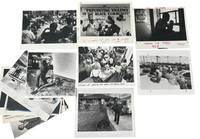
1970231521970. War on Drugs Press photographs of drug enforcement addiction treatment and anti-violence intervention in Houston New Orleans and El Paso 1970-1992 documenting how the War on Drugs functioned across policing rehabilitation public messaging and newspaper circulation. Several prints retain typed caption slips assignment sheets and Houston Chronicle stamps locating the group within newsroom and wire-service use rather than private snapshot production. The strongest images show not only arrests and seized evidence but the wider apparatus surrounding narcotics policy: the U.S. Drug Enforcement Administration's El Paso Intelligence Center U.S. Customs canine inspection work in Houston a New Orleans anti-drug and anti-violence rally at the Desire Housing Project and rehabilitation scenes tied to Bridge House and Charity Hospital detox with Black urban communities especially central to the visual language of late 1980s coverage.<br /> <br /> Photo archive of 12 silver gelatin press photographs all 8 x 10 inches Houston El Paso and New Orleans 1970-1992. The group includes a February 16 1970 press image identified as "Dope Raid" showing officials examining a crate of seized drug paraphernalia; a 1971 "Drug raid" photograph; and a 1979 image of the control center of the U.S. Drug Enforcement Administration's El Paso Intelligence Center with consoles screens desks and seated staff in a surveillance-heavy operations room. A likely 1975 evidence display isolates a syringe spoon folded packet and narcotics sample against a dark ground with an attached caption describing a "$5 package of cocaine" and a glassine of heroin; another early 1970s image bears a clipping caption about Drug Enforcement Administration agents seizing a tug and a large marijuana cache. Late period photographs shift toward street-level enforcement and public intervention: a 1990 Houston image captioned "Drug Traffic Houston" shows U.S. Customs using a dog named Magnum to search vehicles; a 1992 Houston Chronicle photo records Sgt. G.U. Rodriguez inspecting a Corvette after a chase connected to a drug dispute involving fake drugs and real guns; one image marked "Operation Crackdown" shows a Texas officer handcuffing a young Black man on the lawn outside an apartment building; another captioned "Crowd at service ctr. made into booking desk" shows a packed intake scene around tables and paperwork. The New Orleans photographs are especially strong: one print shows Dr. Keith C. Ferdinand speaking beneath a banner reading "Preventing Violence in the Black Community" at an anti-drug and violence rally at the Desire Housing Project in 1988; another shows a group discussion at Bridge House captioned on verso as "John speaking about crack addiction;" a third presents Ron identified on verso as "a crack addict seeking rehabilitation" seated in silhouette by a wired window at Charity Hospital detox with a wall poster reading "Charity is a Winner!"<br /> <br /> The group traces American drug policy imagery from early raid and evidence photographs in 1970s press usage through the institutional expansion of intelligence coordination neighborhood sweeps addiction treatment and anti-violence campaigns during the crack era. These photographs depict both the scale and the impact of the War on Drugs: federal intelligence and customs work local police enforcement medical detox residential recovery and public-facing community rhetoric all appear here in concrete captioned form. Editorial markings stamps clipping residue light creasing and surface wear from newsroom handling; overall good condition. The concentration of captioned Texas and Louisiana press images reveal how narcotics policy was staged enforced and narrated in the urban Gulf South as well as depicting the community response and its notable effect on African American communities. unknown
0364108444.Gpaperback. Good. Access codes and supplements are not guaranteed with used items. May be an ex-library book. paperback