8 résultats
1419ZB588035Washington 1914-1916. Numbers 1 through 6 and 8 through 22 only; all small slim quarto some less than 10 pages; library markings paper sides detached on first number others faded at spines still a good group. - If you are reading this this item is actually physically in our stock and ready for shipment once ordered. We are not bookjackers. Buyer is responsible for any additional duties taxes or fees required by recipient's country. Photos available upon request. Washington unknown
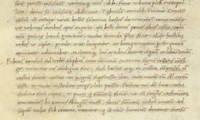
14502454001/01/1450. <blockquote><p>A very uncommon leaf from Livy very few manuscript examples having survived</p></blockquote><p>Rome having survived the invasions of the Celtic Gauls in the early 4th century BC set its sights on further expansion in the middle part of the century. They re-conquered those Latin and Etruscan towns that had left the fold during the Gallic occupation and in absorbing others reconsolidated their position as the dominant force in Latium and Central Italy. With their home turf secured or so it seemed the Romans looked south towards Campania.</p><p>At this time the Samnites had moved into the fertile lands of Campania from the south-central Appenines. They already controlled the towns of Capua and Cumae to the south of Rome and held sway to the east as well. Rome to protect its flanks while still in the midst of re-taking Latium and Etruria wisely entered into an alliance with the Samnites in 354 BC. Conflict with Samnium over Campanian dominance was inevitable however and would soon turn into a series of wars lasting from 343 - 290 BC.</p><p>The years surrounding the Samnite Wars were not only one of military prowess for Rome but of great public works as well. In 329 BC the Circus Maximus got one of many face-lifts throughout its history gaining permanent horse-stalls and starting gates. The first Roman road the Via Appia was constructed from Rome to Capua in 312 BC and the first aqueduct the Aqua Appia was also established at the same time. These magnificent structures not only were of great benefit to Rome and her people but proved the flourishing disposition of the state even during time of war and expansion. At the end of the Samnite Wars Rome held perhaps as many as 150000 people making it one of the largest cities in the Mediterranean region. As many as 1000000 people claimed citizenship to Rome and vastly larger numbers were obligated through Latin rights and allied status.</p><p>With the defeat of Samnium the last major Italian threat Rome was the master of nearly the entire Italian peninsula save for the Gauls occupying the Po valley in the north and the Greek holdout cities like Tarentum in the far south. This growing power soon gained the attention of regional powers in Greece and later the masters of the Mediterranean the Carthaginians.</p><p>Livy or Titus Livius 59 BC - 17AD wrote his history of Rome starting with the foundation myth of Aeneas 510 BC up to the successful German campaigns and death of Emperor Drusus 9 BC. This history comprised 142 books. Of those books 35 survive to present day with the bulk being the first 10 years Books 1-10 fragments of 11 Books 21-45 fragments of 91 and scattered quotations preserved in secondary works.</p><p>Though the accounts differ the destruction of Livy’s work has been attributed to the hand of Pope Gregory the Great 590–604 who was trying to eliminate pagan works from Christian hands. This biblioclasm whether it was through the Pope’s doing or through the natural loss of material to time has severed us from an important access point to Roman history as some of the material used by Livy has not been found in his source texts.</p><p>With the bulk of the texts destroyed Livy’s History of Rome passed into the Middle Ages primarily through summary and with the extreme length of the work the original Classical and Early Medieval manuscripts were not recopied and fell into decay and loss. Thus by the so-called 12th Century Renaissance Livy’s historical writing was quite rare. It was not until the 1300s that Livy regained popularity. Dante was one of those who respected Livy and in his Inferno the poet references Livy ""come Livïo scrive che non erra"" as Livy wrote who does not err.</p><p>The hunt was on for Livy’s lost manuscripts even just a fragmental scrap was a treasure worth finding in the 1300s. Even Pope Nicholas V turned his efforts towards finding these rare manuscripts some of which had been destroyed by his papal predecessor. The Italian Humanist period into the Renaissance increasingly sought any extant versions of this history; as the esteem for and ardent imitation of Greco-Roman culture increased so did the need for access points to this history. Entire country homes in Italy were sold to buy a single manuscript of Livy’s works copied by one of the men primarily responsible for the new handwriting style now known as the Humanist hand. Scholarship and commentary ranging from England by Dominican Friar Nicholas Trevet to Italy by Laurentius Valla paved the way for further analysis of the Roman historian.</p><p>This Italian manuscript leaf likely from the mid-1400s to the very early 1500s comprises part of Book 9 from BC 308. With only minor deviations from the Loeb Classical Library text which is the scholarly standard. These deviations indicate that this manuscript descends from a different stemma than the most common or most “correct†one which was for the Loeb edition further painting the picture of the Humanist effort to grasp this fading history from the jowls of history and the pains to retaining the original text despite the lack of exemplars.</p><p>In addition to representing an important moment in the recuperation of history the script throws us into modernity. Towards the end of the 14th century several Italian humanists including Niccolò Niccoli and Poggion Bracciolini began set about to reform the increasingly dense Gothic handwriting which had dominated book making since the mid-13th century. The Gothic script whose legacy in printing extends to 20th century German fraktur found in pre-war books was full of letters fused together ornate thorns and hairlines and single strokes called minims which became impossible to read. These 14th century Italians set about to recreate a script that utilized space between each letterform and simpler strokes— a new take on the handwriting endorsed by Charlesmagne himself for the education of his Holy Roman Empire. This script known as Humanist caught on and proliferated. By the time texts were bring printed at the end of the 15th century the printers looked to this script to make a font and further our modern Times New Roman font is based on the Humanist script which is in part why this text of Livy is so legible to us as a modern audience.</p><p>Pierre Maréchaux “The Transmission of Livy from the End of the Roman Empire to the Beginning of the Seventeenth Century: Distortion or Discovery a Story of Corruption†A Companion to Livy ed. Bernard Mineo John Wiley & Sons: 2014 pp. 437-452.</p><p><strong>More details</strong></p><p>LEAF FROM LIVY’S AB URBE CONDITAS in Latin text manuscript on parchment Northeastern Italy perhaps Padua 1456 Single column of 34 lines written in brownish ink in Humanist hand with some slant and ligatures. Letters beginning sections set in margins with two hatch marks in pen next to all but one of the initials. Single correction indicated by strike through with amended word written above line 15 recto; Ruled horizontally in red ink. Distinct hair and flesh sides. Modern pencil number 185 at the bottom left hand of the column on verso. Provenance: Sothebys March 1825 Payne and Foss 1825 Sothebys 1902 & 1923 Parke-Bernet 1941 Otto Ege. Gwara Handlist 52.</p><p><strong>Text & Translation:</strong></p><p>…ruperat Fabius consul nec dubia nec difficili victoria dimicat. Ipsum oppidum—nam ad moenia victor accessit—cepisset ni legati dedentes urbem exissent. Praesidio Perusiae imposito legationibus Etruriae amicitiam petentibus prae se Romam ad senatum missis consul praestantiore etiam quam dictator victoria triumphans urbem est invectus; quin etiam devictorum Samnitium decus magna ex parte ad legatos P. Decium et M. Valerium est versum; quos populus proximis comitiis ingenti consensu consulem alterum alterum praetorem declaravit.</p><p>XLI. Fabio ob egregie perdomitam Etruriam continuatur consulatus; Decius collega datur. Valerius praetor quartum creatus. Consules partiti provincias: Etruria Decio Samnium Fabio evenit. Is profectus1 ad Nuceriam Alfaternam cum pacem petentes quod uti ea cum daretur noluissent aspernatus essetoppugnando ad deditionem subegit. Cum Samnitibus acie dimicatum. Haud magno certamine hostes victi; neque eius pugnae memoria tradita foret ni Marsi eo primum proelio cum Romanis bellassent. Secuti Marsorum defectionem Paeligni eandem fortunam habuerunt.</p><p>Decio quoque alteri consuli secunda belli fortuna erat. Tarquiniensem metu subegerat frumentum exercitui praebere atque indutias in quadraginta annos petere. Volsiniensium castella aliquot vi cepit; quaedam ex his diruit ne receptaculo hostibus essent; circumferendoque passim bello tantum terrorem sui fecit ut nomen omne Etruscum foedus ab consule peteret. Ac de eo quidem nihil impetratum; indutiae annuae datae. Stipendium exercitu Romano ab hoste in eum annum pensum et binae tunicae in militem exactae; ea merces indutiarum fuit.</p><p>Tranquillas res iam in Etruscis turbavit repentina defectio Umbrorum gentis integrae a cladibus belli nisi quod transitum exercitus ager senserat. concitata omni iuventute sua et magna parte Etruscorum ad rebellionem compulsa tantum exercitum fecerant ut relicto post se in Etruria Decio ad oppugnandam inde Romam ituros magnifice de se ac contemptim de Romanis loquentes iactarent. Quod inceptum eorum ubi ad Decium consulem perlatum est ad urbem ex Etruria magnis itineribus pergit et in agro Pupiniensi ad famam intentus hostium consedit. Nec Romae spernebatur Umbrorum bellum et ipsae minae metum fecerant expertis Gallica clade quam intutam urbem incolerent Itaque legati ad Fabium consulem missi sunt ut si quid laxamenti a bello Samnitium esset in Umbriam propere exercitum duceret. Dicto paruit consul magnisque itineribus ad Mevaniam ubi tum copiae Umbrorum erant perrexit.</p><p>Repens adventus consulis quem procul Umbria in Samnio bello alio occupatum crediderant ita exter-ruit Umbros ut alii recedendum ad urbes munitas…</p><p>In the same year the consul Fabius fought a battle with the remnants of the Etruscan forces near Perusia—which together with other cities had broken the truce—and gained an easy and decisive victory. He would have taken the town itself—for after the battle he marched up to the walls—had not ambassadors come out and surrendered the place. Having placed a garrison in Perusia and having sent on before him to the senate in Rome the Etruscan deputations which had come to him seeking friendship the consul was borne in triumph into the City after gaining a success more brilliant even than the dictator’s; indeed the glory of conquering the Samnites was largely diverted upon the lieutenants Publius Decius and Marcus Valerius of whom at the next election the people with great enthusiasm made the one consul and the other praetor.</p><p>In recognition of his remarkable conquest of Etruria Fabius was continued in the consulship and was given Decius for his colleague. Valerius was for the fourth time chosen praetor. The consuls cast lots for the commands Etruria falling to Decius and Samnium to Fabius. The latter marched against Nuceria Alfaterna and rejecting that city’s overtures of peace because its people had declined it when it was offered them laid siege to the place and forced it to surrender. A battle was fought with the Samnites in which the enemy were defeated without much difficulty nor would the engagement have been remembered but for the fact that it was the first time that the Marsi had made war against the Romans. The Paeligni imitated the defection of the Marsi and met with the same fate.</p><p>Decius the other consul was also successful in war. When he had frightened the Tarquinienses into furnishing corn for the army and seeking a truce for forty years he captured by storm a number of strongholds belonging to the people of Volsinii. Some of these he dismantled lest they should serve as a refuge for the enemy and by devastating far and wide he made himself so feared that all who bore the Etruscan name begged the consul to grant them a treaty. This privilege they were denied but a truce for a year was granted them. They were required to furnish the Roman army with a year’s pay and two tunics for each soldier; such was the price they paid for a truce.</p><p>The tranquility which now obtained in Etruria was disturbed by a sudden revolt of the Umbrians a people which had escaped all the distress of war except that an army had passed through their territory. Calling up all their fighting men and inducing great part of the Etruscans to rebel they mustered so large an army that they boasted with much glorifying of themselves and fleering at the Romans that they would leave Decius behind them in Etruria and march off to the assault of Rome. When this purpose of theirs was reported to the consul Decius he hastened by forced marches from Etruria towards the City and encamped in the fields belonging to Pupinia eagerly waiting for word of their approach. At Rome no one made light of an Umbrian invasion. Their very threats had excited fear in those who had learnt from the Gallic disaster how unsafe was the City they inhabited. Accordingly envoys were dispatched to carry word to Fabius the consul that if there were any slackening in the Samnite war he should with all speed lead his army into Umbria. The consul obeyed the order and advanced by long marches to Mevania where the forces of the Umbrians at that time lay.</p><p>The sudden arrival of the consul whom they had believed to have his hands full with another war in Samniurn a long way from Umbria so dismayed the Umbrians that some were for falling back on their fortified cities and others for giving up the war…</p><p><img class=""alignnone wp-image-24457 size-post-window"" src=""https://cdn.raabcollection.com/wp-content/uploads/20231204150746/Folder-site-8-1600x1327.jpg"" alt="""" width=""1600"" height=""1327"" /></p> unknown
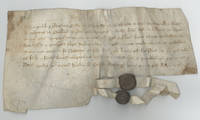
14222599612/04/1422. <div class=""gs""><div class=""""><div id="":2pv"" class=""ii gt""><div id="":2pu"" class=""a3s aiL ""><blockquote><div dir=""ltr"">Part of an important professors collection the majority of which was assembled and last offered for sale 25 years ago</div></blockquote><div class=""adL""></div></div></div></div></div><p>Myles Standish was an English military officer hired to accompany the Pilgrims in 1620 on the ship Mayflower as their military adviser. He played a leading role in the administration and defense of Plymouth Colony. He was one of the first settlers and founders of the town of Duxbury Massachusetts. He died on October 3 1656 in the New World in Duxbury-- a town the Pilgrims had named after his likely ancestral home in Lancashire England and an estate that occupied by these very men. what does this mean On February 17 1621 the Plymouth Colony militia elected him as its first commander and continued to re-elect him to that position for the remainder of his life. Standish served at various times as an agent of Plymouth Colony on a return trip to England as assistant governor of the colony and as its treasurer.</p><p>Taking the Standish Family back to their home in the Greater Manchester towns of Standish Chorley and Duxbury we see this important family’s expansion in terms of land and power. Since the 1200s the Standish Family had been the Lords of the Standish Manor.</p><p>Ralph de Standish was the Lord of the Manor from 1396-1415; in 1406 he acquired the estates of his uncle Sir Ralph de Standish of Scholes. As the Lord of the Manor he supplemented the family’s landholdings through purchases in nearby Wigan Shevington and Winstanley. In 1415 John de Standysshe likely Ralph’s brother was recorded at the Battle of Agincourt. Other Standishes at this important turning point in the Hundred Years War included Thomas Sir Rowland Sir Hugh and Christopher the latter two of which were of the Duxbury Branch of the Standishes. Christopher would become Lord of the Manor of Duxbury from 1421 to 1437 and die shortly thereafter.</p><p>Ralph’s death passed the Lordship of the Manor to his eldest son Lawerence; however he had two other sons Robert and Gilbert. Records about Gilbert only give few details. He was “living in 1423/4†and “in 1400 he was mentioned in a deed and entered into covenants with John Smith chaplain and Henry Matthew chaplain 1411/2 authorized by his mother and father.â€</p><p>Though the records remain inconclusive The Families of Standish states that “Sir Ralph de Standish of Scholes is considered to be the ancestor of the Standishes of Ormskirk and through them the ancestor of Captain Myles Standish of Plymouth and Duxbury Massachusetts who came in the ‘Mayflower’ 1620†p. 51.</p><p>Lancashire England 1422 <strong>Small indenture in Latin</strong> with two seals attached 103mm by 180mm approximately 12 April 1422 10th year of the reign of Henry V affirming a debt of 40 pounds by Gilbert de Standyssh Esq. of Blakerode i.e. Blackrod Lancs. Roger de Molyneux Esq. of Pemberton Lancs. and William son of Roger de Assheton Esq. of Abram Lancs. to Christopher de Standyssh. With original seals attached.</p><p>Through a small document the consolidation of Standish wealth is demonstrated. Further the exchange of £40 equivalent to approximately £34572 or $41700 in modern currency between Gilbert Standish Roger de Molyneux and William de Assheton son of Roger to Christopher Standish demonstrates the intimate ties between important families. Roger Ashton’s father was a soldier under King Henry IV and Henry V; his father before him was Sir John de Ashton who served with John of Gaunt in 1369 and whose part in the siege of Noyon in 1370 is mentioned by name by Froissart’s Chronicles in French.</p><p>Roger’s brother and William’s uncle was the famed alchemist given permission by Henry IV for his experiments.</p><p>See also:</p><p>Weis Frederick Lewis. The Families of Standish of Standish Lancashire England and Standish of Duxbury Arley Ormskirk Gathurst Croston Park Brook and Wantage… 1959.</p><p><img class=""alignnone wp-image-25018 size-post-window"" src=""https://cdn.raabcollection.com/wp-content/uploads/20231204144051/Folder-site-11-1600x1327.jpg"" alt="""" width=""1600"" height=""1327"" /></p> unknown
1481ABC_50450Cologne: colophon: Johann Koelhoff the Elder 1481. 18th-century gold-tooled beige calf with red and green labels lettered in gold on the spine gold-tooled board edges red edges marbled endpapers. Folio. With an anonymous engraved portrait in a sprinkled frame on the verso of the second flyleaf the whole rubricated in red. First incunable edition of the Methodus utriusque iuris emerged from one of the most enterprising presses of the late 15th century that of Johann Koelhoff the Elder active ca. 1471-1487 died 1493.Koelhoff was not originally a printer. Born in Lübeck he began his career as a merchant trading in cattle grain wool and paper a commercial background that would later shape his success in the book trade. By 1471 he had established a printing house in Cologne likely after learning the craft in Venice possibly in the workshop of Wendelin von Speyer active in Venice 1468 to 1477. The clear rotunda type he favoured along with other technical features suggests a Venetian influence carried north to the Rhineland. His press produced over 125 known editions primarily Latin theological and philosophical works though from 1475 onwards he also printed legal texts intended for university use.This Methodus utriusque iuris belongs precisely to that academic world. It served as a methodological guide and lexical aid for the study of the two laws: civil law Roman law rooted in the Corpus Juris Civilis of Justinianus I and canon law. Cologne home to the influential University of Cologne was a centre for the study of the ius commune and works such as this were essential tools for students and jurists alike.With an ownership label mounted on the front pastedown reading Ex libris Van Vaernewyck of Albert-Philippe-Charles Vicomte de Vaernewyck 1762-1841 his library was sold at auction in Mechelen in July 1847. Contemporary manuscript annotations to the recto and verso of the final leaf including references such as Digesti Veteris. Otherwise in very good condition.l BMC I 224; Catalogue d'une riche et nombreuse collection des livres et gravures formant la bibliothèque rénommé de seu Messire Albert-Philippe-Charles Vicomte de Vaernewyck 1847 no. 5256; Copinger part I no. 1895; GW M23075; ISTC im00526500; Polain 2683; Proctor 1048A; Rhodes Oxford 1197; USTC 741179; Voulliéme 787; not in Goff. (colophon:) Johann Koelhoff the Elder, unknown
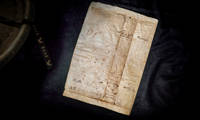
1450261961450. <blockquote><p>Uberti's father had been referenced by Dante</p></blockquote><p>The City State of Florence:</p><p>In the 1300s the Italian city-states were embroiled in complex political machinations between each other—chiefly Milan Florence Pisa Siena Genoa Ferrara Mantua Verona and Venice— and the overarching powers of the Papacy and the Holy Roman Empire. Even within factions that seemed to support the same objectives: the Guelphs who battled the Ghibellines split in to the White Guelphs and Black Guelphs and ultimately the Black Guelphs exiled Dante Alighieri 1265-1321 from his beloved city state of Florence in 1302. During this exile Dante wrote the Commedia his love-song to Beatrice to his pagan and Christian poet-idols to a reimagined theology incorporating courtly love and Greek philosophy and to the city and people of Florence. He wrote his three canticles in a style called terza rima rhyming stanzas of three lines which was frequently imitated by later poets.</p><p>The Power and Poetry of Florence:<br />Despite the political turmoil Florence rose in power not only in Italy but throughout Europe in part because of the strength of its gold based economy. Florence stepped out of the Middle Ages into the Renaissance with a flourish of distinct and memorable art and poetry but the mid-1300s offered another tragedy for the dazzling city state. In 1348 the Black Plague ravaged the Italian peninsula. Poets turned their pens towards chronicling this devastation with perhaps the most-well known being the Decameron of Florentine poet Giovanni Boccaccio 1313-1375. The Decameron likely begun shortly after 1348 and completed in 1353 follows ten young people as they leave Florence to flee the plague. On the way they entertain themselves through a series of stories to take their minds off of the horrors around them.</p><p>Fazio degli Uberti and Dante:<br />Fazio degli Uberti 1305/9- ca.1367 is not as well-known as Dante or Boccaccio who are two of the “Tre Corone†of Italy with Petrarch as the third crown. Fazio was born in 1305 or 1309 to a family of some importance who identified politically as Ghibellines who supported the Holy Roman Emperor rather than the Pope. The family’s Ghibelline alignment accorded Fazio’s ancestor Farinata degli Uberti a place in Dante’s Inferno. In Canto 6 Farinata is listed among the Florentines who have done more bad than good for the city. Though in Canto 6 Dante asks where the great Florentines are who had “minds bent towards good†including Farinata he is told that in fact these Florentines are those with the blackest souls and the fact that Dante thinks of them with esteem shows how warped Florence has become. Later in Canto 10 Dante will meet with Farinata himself among the heretics and in Canto 28 he will understand how Florence suffers because of men such as Farinata in part because of the schism between the Guelfs and Ghibellines.</p><p>Despite this condemnation of his family in 1345 Fazio wrote his most noted poem the Dittamondo an emulation of Dante’s Commedia. The title Dittamondo is an vernacularization of the Latin dicta mundi indicating that it is an encyclopaedic text of what is known and said of the world. Like Dante’s journey under the guidance of Virgil Statius and finally Beatrice Fazio’s narrator meets with the allegorical figure of Virtue he and the Roman geographer Solinus travelled the whole world Italy Greece Germany France Spain northern Europe Africa and parts of Asia with Solinus giving the narrator descriptions of the cities visited. In addition numerous other snippets of information are added from the works of Pliny the Elder Isidore of Seville and Pomponius Mela. Even the style of poetry Fazio employed for his didactic poem was modelled after Dante’s own terza rima. However unlike Dante’s poem Fazio’s is far more encyclopaedic rather than a tour de force of allegorical and contemporary political satire clothed in Dante’s masterful command of language. Like Dante Fazio was exiled from Florence and like Dante Fazio wrote of his exile from the city. The Dittamondo remained incomplete upon Fazio’s death around 1367.</p><p>History of the Manuscript Tradition of Dittamondo:<br />While no comprehensive survey of manuscripts exists it is clear that the text is rare in manuscript with the Arlima database listing only BnF. italien 81 and Venice Biblioteca Nazionale Marciana Cl. IX c. XI. To these should be added Turin Biblioteca Nazionale Universitaria cod N 1 5; Milan Biblioteca Nazionale AC.X.30; and other single volumes in the Biblioteca Riccardiana in Florence the Biblioteca Angelica in Rome and the university library of Bologna as well as a fourteenth-century fragment in the Biblioteca Archiginnasio in the same city.</p><p>The Schoenberg database lists no copy offered for sale since that from the Joseph Martini library by Hoepli on 27 August 1934 lot 177 there with that previously appearing as Sotheby's 10 June 1918 lot 504.</p><p>The document:</p><p><strong>Bifolium from a large humanist manuscript</strong> of Fazio degli Uberti Dittamondo in Italian on parchment Italy mid-fifteenth century within a century of Fazio’s death. Each leaf approximately 330 by 240mm. Two conjoined leaves each with single column of 33 lines of an accomplished humanist hand with parts of chapters X-XI and XIII-XIV of Book 6 one large simple initial in pale blue the text set within an extensive gloss in Italian in smaller script recovered from the binding of a seventeenth-century book and hence with scuffs spots small holes one corner torn away with loss to gloss there scrawls and areas of text on outerside abraded and illegible.</p><p>This bifolium would be one of the center leaves in the gathering or quire sandwiched between other successive leaves folded and sewn in the gutter the crease in the center of the bifolium separating the earlier part of the text from the later to create the legible linear text.</p><p>The content deals with Old Testament and Hebrew Bible figures.</p><p>Chapter X gives a précis of Old Testament stories in terza rima mentioning Jacob Laban Rachel and Lia Reuben Gad Asher and Potiphar.</p><p>Chapter XI continues with the genealogy of the tribe of Levi which includes and touches on Aaron and Moses who is the main focus of this section.</p><p>The text on the bifolium jumps forward to Chapter XIII where holy lives are described including that of Mary of Egypt. From the Book of Kings in the Hebrew Bible Fazio weaves in mention of Elisha’s punishment of Ghazi who stole robes and treasure from his Naaman the Syrian. Elisha transferred Naaman’s leprosy to Ghazi. Fazio demonstrating his wide knowledge of this material says that “io non ti canto apertamente qui come Eliseo reuscitò un morto col Santo prego…†I won’t tell you openly how Elisha resurrected a dead man with holy prater and follows with another secret: “io non ti canto poi che li fu scorto fuel pargoletto…†I won’t tell you that a little baby was seen there that gave light and brightness….</p><p>Beginning with Ahaziah the sixth King of Judah Chapter XIV follows this line through Ezechias and castigates Sennacherib the king of the Neo-Assyrian Empire who did not accept God. Fazio finds and points to “Olda d’Ain†a female prophet heard by the world.</p><p>The text of the Dittamondo is surrounded by annotations in a contemporary hand employing more frequent abbreviations. These notes provide further details about the events described in the poem with a patte-de-mouche flourish at the end of each section.</p><p><img class=""alignnone wp-image-25018 size-post-window"" src=""https://cdn.raabcollection.com/wp-content/uploads/20231204144051/Folder-site-11-1600x1327.jpg"" alt="""" width=""1600"" height=""1327"" /></p> hardcover
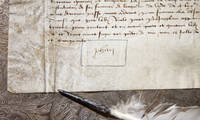
14502275018/10/1450. <blockquote><p>We can recall nothing similar having reached the market</p><p> </p><p>From the collection of Dr. Otto O. Fisher who bought primarily in the 1930s and 1940s so this not been offered for sale in nearly a century</p></blockquote><p>The Hundred Years’ War was one of the most notable conflicts of the Middle Ages. For 116 years interrupted by several truces five generations of kings from two rival dynasties - the English House of Plantagenet and the French House of Valois - fought for the throne of the largest kingdom in Western Europe - France. The war’s effect on European history was lasting. Both sides produced innovations in military technology and tactics such as professional standing armies and artillery that permanently changed warfare in Europe; chivalry which had reached its height during the conflict subsequently declined. Stronger national identities took root in both countries which became more centralized and gradually rose as global powers that expanded into the New World.</p><p>In the 1430s-50s the English clung to their dwindling possessions while French King Charles VII of the Valois dynasty slowly chipped away at them one piece at a time. By 1440 the French had driven the English completely from the valley of the Loire and the English retained only Normandy in the north and Gascony in the south. The Truce of Tours in 1444 gave the French a much-needed respite during which time Charles completed some necessary military reforms and prepared for the final grinding campaigns in a conflict that had begun more than a century earlier—well before anyone’s living memory.</p><p>Soon the war started up again. Under the weak kingship of Henry VI England seemed powerless to stop the French offensive of 1449 to recapture Normandy. The last major battle occurred in April 1450. With no other significant English forces in Normandy the whole region quickly fell to the victorious French. Caen was captured in June and Cherbourg the last English-held fortress in Normandy fell in August.</p><p>Among the commanders on the French side were the Count of Armagnac and his son the Viscount both named John.</p><p><strong>Autograph document signed</strong><em> ""Jehan John D'Armagnac""</em> October 18 1450 receiving 2000 livres a significant sum originally bestowed by the French King to Estienne Petit the treasurer to King Charles VII in the region the <em>""last march""</em> as the document notes for the purpose of attacking the English in April 1450 and after. <em>""I Jehan d'Armagnac Vicomte de Lomagne swear that I have received from Mr. Etienne Petit treasurer and collector of Languedoc the sum of 2000 livres that Mons. the King by distribution of his finances for Languedoc of 170000 livres awarded to the said Seigneur a Montpelier in the month of March last gave to furnish for us our expenses and to compensate for our efforts done in the surveying and conquest of Normandy.""</em></p><p>Jehan V was the last in the line of powerful Armagnac rulers. He fell out of favor with Charles who dispatched ""John the Bourbon"" to capture him but John fled to Spain. He was granted a return by Louis XI but soon revolted against him as well. Armagnac was part of the league that called itself ""Bien public"" or ""public good"" and threatened Paris at the head of 6000 mounted men. In 1469 Louis responded under the pretense that John was treating with ambassadors from England and sent an army under Antoine de Chabannes to rout him. John fled to Spain only to reappear in 1471 in the train of the king's rebellious brother the duc de Guyenne. John was stabbed to death in the 1470s without eligible male heir.</p> unknown
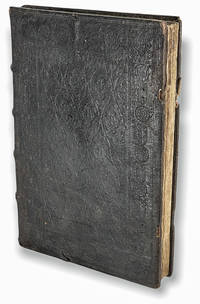
149153<p><b>Two fundamental works of Canon Law </b><b>in one single volume in a fine contemporary binding.</b></p><p><b>Fully rubricated im red and blue both volumes not in BMC - Only 4 copies in USA libraries.</b></p><p>Pope Bonfacius VIII Benedetto Gaetano. <i>Liber sextus Decretalium</i>With: Johannes Andreae. <i>Super arboribus consanguinitatis et affinitatis.</i> Strasbourg: Johann Reinhard Grüninger 14 February 1491. </p><p>Bound with: </p><p>Pope Clemens V Raimundus Bertrandi del Goth. <b><i>Constitutiones.</i></b> Strasbourg: Johann Reinhard Grüninger 19 March 1491. </p><p>Two works in one volume royal folio 408 x 279mm Contemporary blindstamped leather over wooden boards vol. I ff. 98 vol. II ff. 53 of 54 lacking final blank. Signature: Vol. I aâ¸bcâ¶dâ¸eâ¶fâ¸ghâ¶iâ¸klâ¶m–o⸠Vol. II: Aâ¸B–Eâ¶FGâ¸Hâ¶</p><p>Nice incunable edition by the renowned Strasburg Printer Johann Reinhard Grüninger printed in red and black rubricated in red and blue</p><p>The <i>Liber Sextus Decretalium</i> part of the <i>Corpus Juris Canonici</i> is a collection of regulations of canon law promulgated with the bull <i>Sacrosanctae</i> on 3 March 1298 by Pope Boniface VIII to integrate the <i>Liber Extra</i> the <i>Decretalium</i> by Pope Gregorius IX with the new canonical norms issued by 1234.</p><p>It was initially intended as an appendix to the same <i>Liber Extra</i> by Gregorio IX but it is better considered a real collection by itself divided into five books based on the example already provided by the <i>Quinque compilationes antiquae </i>the anthologies grouping the decretals issued in the period following the issuing of the <i>Decretum Gratiani</i> composed in order by Bernardo Balbi Giovanni di Wales Innocent IV Giovanni Teutonico and Tancredi from Bologna.</p><p> At the end of the work it appears for the first time in a canonical compilation the <i>De Regulis Iuris</i> in imitation of the Digest written by the jurist Dino del Mugello.</p><p>The work is then followed by the fundamental treatise on family by Giovanni De Andrea the <b><i>Super arboribus consanguinitatis et affinitatis.</i></b></p><p>The<i> Constitutiones </i>by Pope Clemens V or <i>Constitutiones Clementinæ</i> not officially known as <i>Liber Septimus</i> but so designated by historians and canonists of the Middle Ages were officially promulgated by Clement V in a consistory held at Monteaux near Carpentras southern France on 21 March 1314 and sent to the University of Orléans and the Sorbonne in Paris.</p><p>The death of Clement V occurring on 20 April of the same year gave rise to certain doubts as to the legal force of the compilation. Consequently John XXII by his Bull <i>Quoniam nulla</i> of 25 October 1317 promulgated it again as obligatory without making any changes in it. Johannes Andreæ compiled its commentary or <i>Glossa Ordinaria</i>. It was not an exclusive collection and did not abrogate the previously existing laws not incorporated in it</p><p>Johannes Grüninger 1455–1533 was a German printer mainly based in Strasburg whose career spanned from 1482–1533 and produced up to 500 publications. Grüninger was one of the single most prolific printers of Strasbourg printing up to 80 books a year. While a great deal of his publications was Catholic he managed to print a great variety of works ranging from humanist to scientific texts. His work was equally representative of both Latin and the vernacular; about 39% of his works were printed in Latin and the remaining 61% in German</p><p>Conditions: Small tear to a1 of first work professionally restored on verso without loss some small wormholes and faint marginal staining original clasps missing binding lightly rubbed a few splits in leather but in general a fine copy internally very clean and perfectly preserved of an interesting and rare edition of a precious collection of two among the most important and well-known legal work of that time.</p><p>Provenance: Heinrich Sedelhammer from Manching Bavaria a student at Ingolstadt University; inscription dated 1553 – Johannes Pfrontner from Füssen a student at Ingolstadt University; partially erased inscription – Georg Hennschberger inscription dated 1623 – Cuno Hernndl inscription dated 1630 – Dingolfing Franciscan Monastery inscription. </p><p>Bibliography: This copy of the <i>Liber sextus Decretalium </i>is the variant with the red printing on leaves 45 and 46; HC 3617 5444; GW 4887 7107; neither work is in BMC; BSB-Ink B-727 C-458; ISTC ib01005000 ic00735000; Goff B-1005 C-735.</p> Johann Reinhard Grüninger hardcover
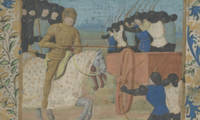
1450258541450. <blockquote><p>The sole known surviving piece of a once vast and grand 15th century ""Faits des Romans"" doubtless for a noble patron of enormous wealth.</p><p> </p><p>The artist is a follower of the Coëtivy Master</p></blockquote><p><strong>The twin nostalgias of Europe— one for the powerful all-encompassing Roman Empire the other for connecting with the mysterious pre-Roman peoples— combine in this 15th century French illumination of Caesar’s final and questionably successful encounter with the Britons led by Cassivellaunus. While Caesar won this battle his dream of a conquered and Roman Britain would not be realized within his lifetime. His legacy however was studied admired and immortalized far after his fatal betrayal by Brutus. This illustration captures this historic moment of Caesar’s triumph the beginning of the end for the Britons and the cultural legacy as viewed during the waning of the Middle Ages.</strong></p><p><a href=""https://cdn.raabcollection.com/wp-content/uploads/20231204135204/A-2.jpg""><img class=""alignnone size-post-window wp-image-25868"" src=""https://cdn.raabcollection.com/wp-content/uploads/20231204135204/A-2-1600x632.jpg"" alt="""" width=""1600"" height=""632"" /></a></p><p>In the nineteenth century European medievalists began shoring up their nations’ relationships with medieval literature to try to create firm claims of their peoples’ innate heroic attributes their noble histories their glorious pasts. This led for example to the French identifying themselves with the Chanson de Roland and the English lionizing King Arthur. But the desire to have these medieval roots overshadowed the more complicated histories: the Chanson de Roland though composed in French is about an emperor best known by his French name Charlemagne but who was born in Aachen Germany and is buried there. The first legends of King Arthur from the 9th century reflecting a much earlier time came from Wales a nation suppressed by the English and the major inventions in the narrative like the love story of Guinevere and Lancelot and the Round Table were invented in France. Though English storytellers engaged with Arthur and his knights it wasn’t until Thomas Malory in the 15th century that Arthur became English.</p><p>During the Middle Ages Rome was the empire to draw connections to for auctoritas. This is why the empire established by Charlemagne became known as the Holy Roman Empire. Though the term was not in use until the 13th century the Emperors were instilled with translation imperii-- a transfer of rule directly inherited from the historic emperors of Rome.</p><p>One aspect of Rome that was particularly admired in the Middle Ages was the conquering and bringing into Civilization of the barbarians north of the Alps and west of the Rhine that includes Caesar's foray into England and his confrontation with Cassivellanus. Cassivellaunus was likely the chief of the Catuvellauni of Hertfordshire whose tribal name translates to ‘war-chiefs’. In British accounts he appears in Welsh literature ranging from Geoffrey of Monmouth’s chronicle about the history of the Kings of Britain in both Latin Historia regum Britanniae and Welsh Brut y Brenhinedd to the more folkloric-based Trioedd Ynys Prydein The Triads the second branch of the Mabinogi and Cyfranc Lludd a Llefelys The Adventure of Lludd and Llefelys. The British chieftain even appears briefly in the Greek Stratagemata by Polyaenus. The Latin literature of course written by the winners includes Julius Caesar’s own Commentary de Bello Gallico Commentary on the Gallic War.</p><p>During the account of his second campaign in Britain from Gaul in 54 BCE after a failed first a year earlier Caesar writes that Cassivellaunus was a rabble-rouser conquering the Trinovantes the most powerful British tribe perhaps how the tribe received their appellation of ‘war-chiefs’. Though his location was betrayed by the Cenimagni Segontiaci Ancalites Bibroci and Cassi who had surrendered to Caesar Cassivellaunus gathered the forces of the Kentish kings Cinetorix Varvilius Taximagulus and Segovax. The tribes retreated to higher ground when they saw the sheer masses of Romans that Caesar had brought to avert the same failure of preparedness he suffered the year before. The legions established their military camp on the beaches and sought out the Britons. As they searched their party was harassed by Britons on chariots; it was chariots which had given the edge to the British during Caesar’s first invasion. About 12 miles away he encountered Cassivellaunus’ forces at a hillfort at the River Stour. A storm destroyed Caesar’s fleet of ships and the repair gave the Britons time to regroup and rally behind Cassivellaunus.</p><p>Previously the Britons operated as independent tribes; under Cassivellaunus these tribes became an army growing with more tribes coming to support Cassivellaunus. Their knowledge of the land and their use of chariots created a powerful enemy against Caesar’s army which was not used to fighting such a chaotic force. Had the Britons continued this strategy history might have played out differently; however they appeared to try to meet the Romans head-on in large-scale battle a tactic at which the Romans were well-practiced and deadly.</p><p>Cassivellaunus’s attempt to attack a foraging party as had been done to the Briton’s success in 55 BCE was the beginning of the end for the Britons now. Though he had unified some of the tribes the Trinovantes remained staunchly against Cassivellaunus since he murdered their king. The murdered king’s son bargained with Caesar— his tribe would support Rome and Rome would defend the tribe from any retribution. This gave the Romans a newfound understanding of the land and the warfare tactics of the Britons. Once again the tribes were divided which inclined them to making alliances with Rome. The final two-fronted battle between the Romans and Britons saw British defeat. It is this routing of the British charioteers that the French illuminator included in this illustration of the Faits de Romains some 1500 years later.</p><p>The Britons essentially defeated Caesar sent Commius the King of the conquered Atrebates to negotiate peace. Cassivellaunus agreed to paying tribute. In writing up the terms Caesar used specific legal terms which would eventually make Britain a province of Rome. But this would not come to pass before Caesar’s untimely death on the Roman Senate floor nearly a decade later. It would be another century before Britain came truly under Roman rule.</p><p>In 13th century medieval writers began to compile works by Caesar Lucan Suetonius and Sallust retelling Caesar’s life in the format of a chanson des geste a song of deeds— the same genre as the Chanson de Roland. The text which is listed under many names but most commonly Faits des Romans grew very popular from 14th century onwards with over 50 manuscripts now recorded – these usually grand commissions for noble reading with many miniatures set into the text columns opening significant chapters of which this extract serves as an example.</p><p>This miniature depicts the great scene introduced above: Caesar's confrontation with the Cassivellanus during the former's great invasion of Britain.</p><p><strong>Caesar routing the chariot-mounted forces of the British cheiftain Cassivellanus miniature on a cutting from an illuminated manuscript of the Faits des Romains</strong></p><p>France most probably Paris mid-15th century. The illuminator represented the two armies in armor contemporary with his own time— the armor of chivalric knights— rather than the Roman legion outfits of Caesar’s time and blue-painted leather-clad attire of the Britons. Differentiation between the Britons and the Romans is made by the Britons wearing blue and white tunics over their armor and using bows while the Romans have pikes and silver armor without tunics with the exception of a figure who may be Commius a Celt-turned-Roman-ally.</p><p>An historic cutting of an illumination on verso and 16 lines of one of two original columns of text on recto. 128x98mm in total. Text column of 102mm on verso. Written in Middle French in a Gothic bâtarde script with minimal abbreviations for legibility. Some oxidation from the silver-gilt on the illustration have bled through to the text side but still legible. Illumination is flanked on both sides by blue and gold acanthus leaves and green-leaved penwork-foliage. Illuminator applied silver to highlight the armour of the armies and gold touches to illuminate Caesar himself.</p><p>The artist is a follower of the Coëtivy Master worked in Paris c. 1450-85 and shares that artist’s simple but delicate facial modelling as well as his love of finely depicted drapery.</p><p>What remains of the text here allows us to see that this miniature came from a very grand manuscript almost certainly produced at vast expense for an important noble patron. Its text was clearly in two columns like many grand copies of the text with column-wide miniatures set at the head of crucial chapters. Examination of other copies of the text shows that about 3700 characters of text are missing between the foot of the miniature on the recto and the first partial line of text on the verso here. With an approximate average line length of 41 characters here this allows us to predict that the miniature here most probably sat in the inner column of the recto and thus some 90 lines of text are missing between its foot and the first line of text on the other side. Allowing for two columns this indicates that each column had 45 lines plus the 12 lines on the verso of this fragment allowing us to predict that the text on each page of the parent manuscript was approximately 57 lines in height. This is more than the 50 lines in some of the grandest surviving manuscripts such as BnF Fr. 64 made in the fifteenth century for an unknown noble patron. In addition as the cutting here gives us measurements for the column width 95mm. and the line height 5mm. we can further calculate that the parent codex of this cutting had a text block of approximately 285 by 220mm. the last 9595mm. plus 30mm. for an approximate gutter measurement. BnF Fr. 64 has a text block that measures 278 by 200mm. and a complete size including borders of 430 by 315mm - comparable to the copy from the library of the Comte d'Angouleme Fr. 250: 420 by 317mm. but far smaller than that made for a member of the De Fou family and later taken into the fine library of Cardinal Richelieu Fr. 23084: 345 by 245mm. and with only one miniature. The parent codex of the present miniature must have been on the same scale as Fr. 64 and 250 if not slightly larger. It was a vast codex produced on a scale to impress through its sheer opulence doubtless for a noble patron of enormous wealth.</p><p><img class=""alignnone wp-image-25018 size-post-window"" src=""https://cdn.raabcollection.com/wp-content/uploads/20231204144051/Folder-site-11-1600x1327.jpg"" alt="""" width=""1600"" height=""1327"" /></p> hardcover