(US DIPLOMACY, INDIA) Kamath, MV U S M VBiblio.com
54 résultats
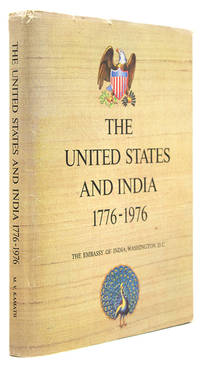
1976306083Washington D.C.: Embassy of India 1976. First edition. 222 pp. 4to. Original blue silk-covered boards dust jacket. Front hinge over-opened some minor edgewear to jacket. First edition. 222 pp. 4to. INSCRIBED by the author to then Secretary of State Cyrus Vance 1917-2002. Vance occupied the post 1977-1980 succeeding Henry Kissinger. He accompanied President Carter on his historic visit to India in January 1978 a few months before this inscription which culminated in the Delhi Declaration in which the two nations made a strong commitment to global diplomacy and human rights. The visit was crucial in restoring good relations with India following Nixon's tilt toward Pakistan in 1971. Kamath was Washington correspondent for the Times of India from 1969 to 1978. Embassy of India unknown
1727000369Mantua: Alberto Turnermani 1727. First Edition. . Hardcover. See Description. 4to. pp. xxii 2 260 i.e. 272 2 261-338. Pagination is erratic repeating 161-172 in numbering. With 6 plates including a frontispiece depicting the dedicatee Victor Amedeus II Duke of Savoy; a fold-out illustrating the Roman triumphal arch at Susa outside of Turin with a restored inscription; 3 fold-outs reproducing Roman papyri manuscripts; 1 plate depicting Roman coins. An illustration on p. 236 accompanies the text showing a winged Roman or Etruscan spirit. The title page is printed in red and black and includes an engraved vignette. Text is in Italian with Latin sections. Bound in full contemporary mottled calf showing rubbing staining and general wear. Hinges and head caps are carefully restored; board corners are repaired. Several gilt panel lines on the spine are renewed with new gold somewhat brighter than the old. Interior pages are generally crisp and fresh. Occasional scholarly Latin marginalia are written as glosses in a very neat miniscule old hand 19th cent. or earlier sometimes easy at first glance to confuse with the regular printed glosses. A small marginal tear on p. 93 is neatly sealed. A minor tear near the hinge of the triumphal arch plate is also sealed. Scipione Maffeis "Istoria diplomatica" is a landmark book in the history of paleography. This work firmly established the unity of the Latin script and disproved Jean Mabillions earlier theory that Latin upper case lower case and cursive characters derived from five different early alphabets. Maffeis book also analyzes the Ravenna papyri a collection of late Roman administrative documents from the chancery of the Archdiocese of Ravenna dating from the 5th-7th centuries c.e. many of which are here transcribed and published for the first time. Other documents are also mentioned including the famous bronze tablet "Senatus Consultum" prohibiting the celebration of the Bacchanalia. Another section discusses the origin of the Etruscan and Italic alphabet. Razzolini Biblio. dei testi di lingua a stampa p. 212; Brunet III 1291; Graesse IV p. 334 <br/> <br/> Alberto Turnermani hardcover
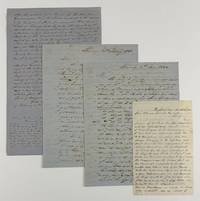
18645296Richmond Va: February 2 1864. Very good. Autograph document signed 1p. folio on blue paper. Old folds minor wear. with: Two autograph letters signed by De Voss Richmond Va. totaling 6pp. and with: Autograph letter signed by William Bradley Assessor Richmond Va. 2pp. Mailing folds minor wear. A collection of manuscript documents and letters pertaining to an interesting diplomatic moment between the Austrian government and the Confederacy in Richmond during the Civil War. Austrian consul Edward William De Voss was based in Richmond during the Civil War. While in Virginia he purchased 612 hogshead of tobacco right at the outbreak of the war in 1861 but was then forbidden to remove it to Austria due to the Union naval blockade. Appeals for relief to Secretary of State William Seward were denied. For a long while the Austrian government in an effort to preserve good relations with the United States accepted Seward's decision without complaint. As a result the Austrian-owned tobacco valued at $252331 sat in storage in Richmond and other locations in Virginia until at least 1864.<br /> <br /> The present manuscript petition dated February 2 1864 is a protest from the Austrian government triggered after the Confederate government apparently forced the Austrian government to pay 8% in taxes on De Voss's tobacco. Here De Voss as an agent for the Austrian government states that they are paying the tax bill "Solemnly protesting against the payment of said tax" and reserve the right to request "repayment or restitution from the said Government of the Confederate States of America of the said tax so paid by us." The sum was not small. At a total value of $252331 the 8% tax totaled $20186.48. The bottom twelve lines of manuscript following De Voss's petition is a statement by a Virginia notary and the bottom of the document is signed by him.<br /> <br /> In addition to the manuscript petition the present group includes two related letters by De Voss and another letter by a tax assessor in Richmond all pertaining to a specific portion of De Voss's tobacco horde. In his first letter dated February 20 1864 De Voss writes to Confederate Treasury Collector William Green about the appraised value of fifty-six hogshead of the aforementioned tobacco "stored near a Rice depot in Prince Edward County." Apparently the Confederate tax assessor had changed the value of this tobacco from just under $10000 to a whopping $24500. De Voss discusses the background of the tobacco's purchase "inspected here in Richmond and purchased by us in the year 1861 during the months of May and August for the account of friends in Europe" the movement of the tobacco to Petersburg for storage and other difficulties and issues relating to the tobacco since then. De Voss informs Green that he also has additional tobacco stored in Richmond Petersburg Dinwiddie County Buckingham County and Nelson County" and expresses surprise at the re-valuation of the tobacco stored in Price Edward County writing that "any dealer or Tobacco shipper will readily testify" in their favor.<br /> <br /> De Voss's second letter was also written to William Green a few weeks later. Here De Voss provides further details about the tobacco stored in Price Edward County stating that it is located "in barns on a plantation near Rice depot under the care of Mr. W.E. Bradshaw." He then provides a detailed breakdown on how much tobacco was stored in each of four warehouses and the value of each portion of each type of "leaf." De Voss then discusses the prospect of moving this tobacco to Richmond commenting that "Tobacco does not improve by keeping and particularly the lower grades which are never judged with the same care as the better descriptions." The letter is followed by a manuscript forwarding note by Green to Confederate tax assessor William Bradley regarding the Austrian tobacco. Green writes that "The Tobacco having been in Price Edward County before the tax act was passed if such was the fact I concur that in applying the Richmond standard of prices allowance should be made for the expense of bringing it again to Richmond."<br /> <br /> The final letter in the present group is Bradley's reply to Green regarding De Voss's tobacco in the "log barns" in Prince Edward County. Bradley confirms some of the information in De Voss's communication regarding the type and quantity of the tobacco and then provides his own "fair evaluation" of the tobacco.<br /> <br /> A fascinating group of manuscripts illustrating the complexity of diplomatic and economic relations during the Civil War with notable information on the value of southern tobacco during the latter period of the conflict. February 2 unknown
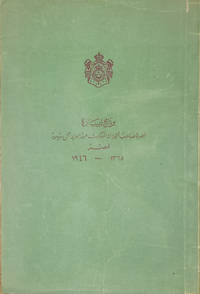
1946000234<ol><li>General Historical Context<br />King ʿAbd al-ʿAzīz Āl Saʿūd's visit to Egypt in 1946 took place at a critical moment in Middle Eastern history immediately following the end of the Second World War amid the reconfiguration of the international order and the beginning of the decline of British colonial influence in the region. At that time Egypt was a pivotal actor in Arab politics while the Kingdom of Saudi Arabia had firmly established itself as a central state with growing religious and political influence.</li><li>Political and Diplomatic Dimensions of the Visit<br />The document reveals the highly official and symbolic nature of the visit reflecting:<br />Mutual recognition of the leading status of both states in the Arab world.<br />A clear desire to coordinate political positions at a stage preceding the escalation of major Arab issues foremost among them the Palestinian question which was approaching a decisive turning point.<br />Support for the course of joint Arab action which had been crowned by the establishment of the League of Arab States in 1945 followed by efforts to consolidate Arab solidarity.<br />The programme further demonstrates meticulous protocol intended to project Arab unity in the face of international powers.</li><li>The Symbolic Significance of King ʿAbd al-ʿAzīz<br />The visit represents the peak of King ʿAbd al-ʿAzīz's external diplomatic presence. The programme illustrates the high level of esteem accorded to him as:<br />The founder of a modern state in the Arabian Peninsula.<br />A political and religious authority of particular weight in the Islamic world.<br />The document highlights how royal symbolism and formal protocol were employed to reinforce the legitimacy of the Saudi state within both the Arab and international spheres.<br />4. Importance of the Document as a Primary Source<br />The core value of the publication lies in its nature as:<br />An official primary source reflecting the governmental perspective rather than later historical narratives.<br />An organizational document revealing the nature of official relations mechanisms of coordination and priorities of engagement.<br />A precise record of Arab political protocol in the mid-twentieth century.<br />Unlike personal memoirs or retrospective studies this programme provides raw material for researchers without subsequent interpretive overlay.<br />5. Protocol and Cultural Dimensions<br />The book illustrates the level of royal diplomatic traditions of the period including:<br />Reception ceremonies and official honors.<br />The arrangement of meetings reflecting hierarchies of authority and political symbolism.<br />The blending of Arab and Islamic elements within official state ceremonies.<br />This offers scholars valuable insight into the culture of the modern Arab state in its formative stages.<br />6. Archival and Documentary Value<br />As a document of limited circulation produced for official or commemorative purposes the book possesses:<br />High archival value.<br />Particular importance for national libraries and historical research centers.<br />Strong potential for use in comparative studies of royal and diplomatic visits in the Arab world.</li></ol><p><br />The book "Programme of the Visit of His Majesty King ʿAbd al-ʿAzīz Āl Saʿūd to Egypt 1365 AH / 1946 CE" is a document of exceptional historical importance. Its value lies not only in its organizational content but in its profound political and symbolic implications. It stands as a reliable witness to a pivotal phase in the formation of the modern Arab order and to the central role played by both Egypt and the Kingdom of Saudi Arabia in shaping its early dynamics.</p> The Egyptian Royal Court paperback