LAPLACE, (Cyrille).Livre Rare Book
3 535 résultats
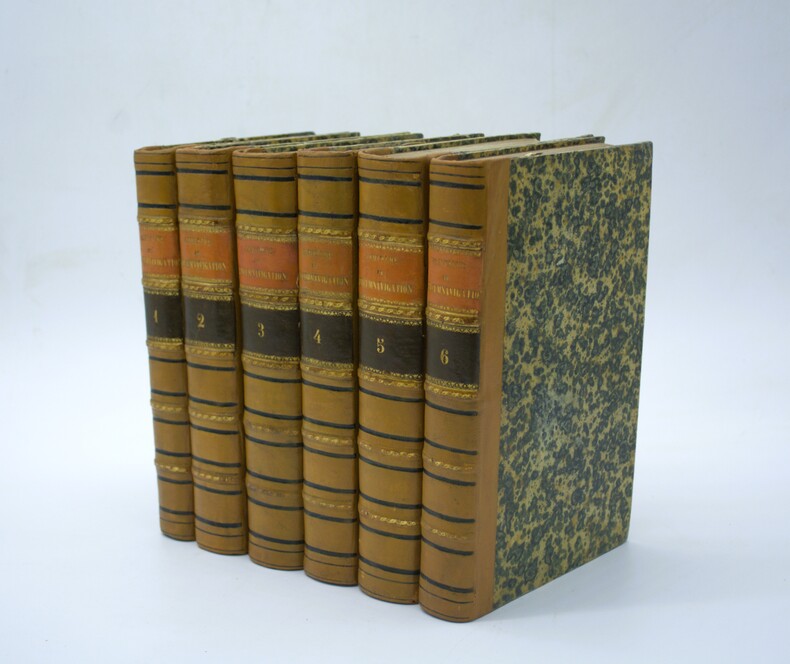
1841PHO-2262Paris, Arthus Bertrand, 1841-1842-1844-1848-1853-1854. 6 vol. in-8° de XXIX, 1 bl., 343 pp., [2] ff., Front., 6 pl. h.-t. et 1 carte dé pl. ; 467 pp., [2] ff. Font., 4 pl. h.-t. et 1 carte ; 548 pp., [1] f. Front. et 5 pl. h.-t. ; 464 pp., [2] ff. 4 pl. h.-t. ; III, 1 bl., 542, [2] pp. 4 pl. h.-t. ; 400 pp. Font. et 5 pl. h.-t. demi-basane fauve, dos à 5 faux-nerfs, p ; de t. en maroquin orange, p. de tomaison en maroquin brun, tranches mouchetées (Reliure du temps). Édition originale, bien complète du sixième volume consacré à la Californie qui manque souvent. 31 pl. gravées sur acier (complet) et 2 cartes dépliante, au Tome IV, la pl. du « Fort de Cornouailles » est reliée en frontispice du tome VI. Des rousseurs et quelques planches brunies.
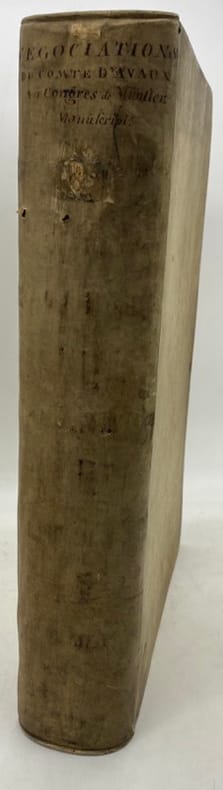
168099S.l.n.d. fort vol. in-folio, [612] pp. n. ch., couvertes d'une écriture fine et très lisible (environ 40 lignes par page), [7] ff. vierges, vélin rigide, tranches mouchetées de rouge, titre manuscrit au dos (reliure de l'époque). Vélin un peu taché, mais bon exemplaire.
168744588S.l.n.d., , (1687 circa). In-4 manuscrit (19 x 25 cm) de (3)-456 ff. à dix-sept lignes par page (environ), quelques passages à l'encre du temps ajoutés en marges ou interlignés, maroquin rouge, dos à cinq nerfs orné du fer au lion d'argent répété quatre fois, double encadrement doré à la Du Seuil sur les plats avec fleurons dorés dans les angles, armes dorées au centre coupes et bordures intérieures décorées, tranches dorées sur marbrure (reliure de l'époque).
In-4°, 88 carte di cui prima e ultima bianche (ultima mancante), legatura in mezza pelle con angoli, leggermente rovinata, copia a pieni margini (150X205); Colophon: Finiut epistole Enee Siluii piccolominei qui & Pius secundus fuit in Cardinalatu edite. BMC IV, 92; Goff p.713 Questo documento fornisce una testimonianza fondamentale su questo straordinario personaggio che fu contemporaneamente uomo di Chiesa – e di “apparato ecclesiastico” -, ma anche grande giurista, uomo di cultura, umanista e raffinato diplomatico. Unico vescovo di Trieste (tra il 1447 e il 1450) ad assurgere – nel 1458 - al soglio pontificio. Enea Silvio Piccolomini fu un grande ecumenista ante-litteram. Di lui infatti – sia prima che dopo l’elezione a Papa – è nota l’attenzione verso le altre comunità religiose, verso gli ortodossi di Grecia e dei Balcani di cui auspicò – e cercò di trattare – condizioni migliori da parte del dominatore turco; e verso gli stessi Ottomani per cui è noto persino un tentativo di “convertire” lo stesso Sultano; e poi verso gli ebrei di cui pose le condizioni per una maggiore libertà. In-4 °, 88 leaves, first and last blank (last missing), slightly damaged half leather binding with corners, copy with full margins (150X205); Colophon: Finiut epistole Enee Siluii piccolominei qui & Pius secundus fuit in Cardinalatu edite. BMC IV, 92; Goff p.713 This document provides a fundamental testimony on this extraordinary person who was at the same time a man of the Church - and of the "ecclesiastical apparatus" -, but also a great jurist, a man of culture, a humanist and a refined diplomat. The only bishop of Trieste (between 1447 and 1450) to have risen to the papal throne in 1458. Enea Silvio Piccolomini was a great ante-litteram ecumenist. In fact - both before and after his election as Pope - his attention is known to other religious communities, to the Orthodox of Greece and the Balkans, of whom he hoped - and tried to negotiate - better conditions on the part of the Turkish ruler; and towards the Ottomans themselves, for whom an attempt to "convert" the Sultan himself is known; and then towards the Jews of which he laid the conditions for greater freedom.
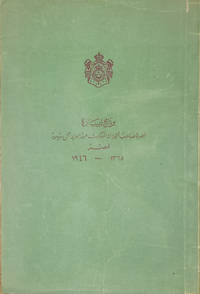
1946000234<ol><li>General Historical Context<br />King ʿAbd al-ʿAzīz Āl Saʿūd's visit to Egypt in 1946 took place at a critical moment in Middle Eastern history immediately following the end of the Second World War amid the reconfiguration of the international order and the beginning of the decline of British colonial influence in the region. At that time Egypt was a pivotal actor in Arab politics while the Kingdom of Saudi Arabia had firmly established itself as a central state with growing religious and political influence.</li><li>Political and Diplomatic Dimensions of the Visit<br />The document reveals the highly official and symbolic nature of the visit reflecting:<br />Mutual recognition of the leading status of both states in the Arab world.<br />A clear desire to coordinate political positions at a stage preceding the escalation of major Arab issues foremost among them the Palestinian question which was approaching a decisive turning point.<br />Support for the course of joint Arab action which had been crowned by the establishment of the League of Arab States in 1945 followed by efforts to consolidate Arab solidarity.<br />The programme further demonstrates meticulous protocol intended to project Arab unity in the face of international powers.</li><li>The Symbolic Significance of King ʿAbd al-ʿAzīz<br />The visit represents the peak of King ʿAbd al-ʿAzīz's external diplomatic presence. The programme illustrates the high level of esteem accorded to him as:<br />The founder of a modern state in the Arabian Peninsula.<br />A political and religious authority of particular weight in the Islamic world.<br />The document highlights how royal symbolism and formal protocol were employed to reinforce the legitimacy of the Saudi state within both the Arab and international spheres.<br />4. Importance of the Document as a Primary Source<br />The core value of the publication lies in its nature as:<br />An official primary source reflecting the governmental perspective rather than later historical narratives.<br />An organizational document revealing the nature of official relations mechanisms of coordination and priorities of engagement.<br />A precise record of Arab political protocol in the mid-twentieth century.<br />Unlike personal memoirs or retrospective studies this programme provides raw material for researchers without subsequent interpretive overlay.<br />5. Protocol and Cultural Dimensions<br />The book illustrates the level of royal diplomatic traditions of the period including:<br />Reception ceremonies and official honors.<br />The arrangement of meetings reflecting hierarchies of authority and political symbolism.<br />The blending of Arab and Islamic elements within official state ceremonies.<br />This offers scholars valuable insight into the culture of the modern Arab state in its formative stages.<br />6. Archival and Documentary Value<br />As a document of limited circulation produced for official or commemorative purposes the book possesses:<br />High archival value.<br />Particular importance for national libraries and historical research centers.<br />Strong potential for use in comparative studies of royal and diplomatic visits in the Arab world.</li></ol><p><br />The book "Programme of the Visit of His Majesty King ʿAbd al-ʿAzīz Āl Saʿūd to Egypt 1365 AH / 1946 CE" is a document of exceptional historical importance. Its value lies not only in its organizational content but in its profound political and symbolic implications. It stands as a reliable witness to a pivotal phase in the formation of the modern Arab order and to the central role played by both Egypt and the Kingdom of Saudi Arabia in shaping its early dynamics.</p> The Egyptian Royal Court paperback
Very Good Greek, Modern (post 1453) Original decorative cloth bdg. with Dante's portrait gilt on front board and spine. Black cloth with red decorative borders. Gilt on spine with Greek letters 'Dantou o Paradeisos [.] Metaphrasis Konstantinou Mousourou', and gilt publisher's name in English on lower. A small etiquette on lower spine. Some little wormholes on cloth and several pages. Pages are partly opened, uncut and untrimmed. Slightly faded on cloth's board. A stamp on first page. Otherwise a very good copy. Roy. 8vo. (23 x 16 cm). In Greek (Modern). [xiv], 334 p. 14 p. 'prologos' by Musurus. Konstantinos Mousouros, also known as Kostaki Musurus Pasha, was an Ottoman Greek diplomatic official of the Ottoman Empire who served as ambassador to Greece, Austria, Great Britain, Belgium, and the Netherlands. He was born in 1807 in Constantinople (Istanbul) to a distinguished Phanariote family. His brother, Pavlos Mousouros, also became a diplomat. Mousouros became the first ambassador of the Ottoman Empire to the newly independent Kingdom of Greece in 1840, a position he kept until 1848. In 1847-48 he was a central figure in the events known as Mousourika (??????????), which led to his temporary recall and the breakdown of relations between the two states. On his return to Athens he survived an assassination attempt, leading to his transfer to Vienna. In 1850 he took up the post of Ottoman ambassador to the Great Britain and Ireland, which he kept for 35 consecutive years, until his retirement in 1885. During the same period, he also served as ambassador to the Netherlands (1861-77) and Belgium (1861-75). In 1876-78, he was ex officio a member of the short-lived Senate of the Ottoman Empire. Well educated, in 1883 Mousouros translated Dante's Divine Comedy into ancient Greek. He was married and had a son, Stephanos Mousouros, who later became Prince of Samos. (Wikipedia). He is known as the first translator of Dante's Divine Comedy into modern Greek. Musurus Pasha had an intellectual identity. One of the most important occupations of Musurus Pasha in the last years was the translation of Dante's Divine Comedy from Italian to Greek. Being able to translate a work of Italian classics and masterpieces of western literature should be an indication of Musurus Pasha's performance and intellectual dimension. Due to negative statements about Muhammad and Ali in Dante's work, the book was not allowed to be published within the Ottoman Imperial borders. Despite this, Musurus Pasha asked him to be permitted to publish his translation, but it was not accepted. (Source: Bir Tanzimat diplomati Kostaki Musurus Pasa, (1807-1891)., NURDAN SAFAK). Dante's Divine Comedy, originally called Comedia, and later christened Divina by Giovanni Boccaccio, is widely considered the most important poem of the Middle Ages and the greatest literary work in the Italian language. This is only 'Paradiso' book from the set. It's signed and inscribed by Musurus Pasha with a dedication in French to Monseigneur Auguste Bonetti as "A la grandeur Monseigneur Bonetti, Hommage de veneration, Musurus". Bonetti was, in 1887, after the appointment of Monsignor Rotelli to the Vatican Ambassador to Paris, the new Constantinople patriarch appointed by Rome for him. First Greek Edition. Extremely rare.
Very Good French Original ALS / ADS signed by Koca Moustapha Rechid Pasha the Great with his an engraved portrait in the same fine frame. 1 p. on bifolium. In French. 12 lines. It's written from Paris, when he was appointed as an Ottoman ambassador to France five years later from the Ottoman Reform in 1839. Koca Mustafa Pasha was an Ottoman statesman and diplomat, known best as the chief architect behind the Ottoman government reforms known as Tanzimat. Born in Constantinople (now Istanbul) in 1800, Mustafa Resid entered public service at an early age and rose rapidly, becoming ambassador to France (1834) and to the United Kingdom (1836), minister for foreign affairs (1837), and once again ambassador to the United Kingdom (1838) and to France (1841). In the settlement of the Oriental Crisis of 1840, and during the Crimean War and the ensuing peace negotiations, he rendered important diplomatic services to the Ottoman state. He returned a third time as ambassador to France in 1843. Between 1845 and 1857, he held the office of Grand Vizier six times. One of the greatest and most versatile statesmen of his time, thoroughly acquainted with European politics and well-versed in national and international affairs, he was a convinced partisan for reform and the principal author of the legislative remodeling of the Ottoman administration known as Tanzimat. His efforts to promote reforms within the government led to the advancement of the careers of many other reformers, such as Fuad Pasha and Mehmed Emin Âli Pasha. After the conclusion of the Oriental Crisis of 1840 due to Muhammad Ali in Egypt, Muhammad Ali Pasha bribed the Ottoman Porte to remove Mustafa Rechid Pasha from his post as Foreign Minister. He returned to his post as Ambassador to Paris soon after where he mainly focused his efforts on solving the Lebanon Question, which resulted from a dispute between a Christian group called the Maronites based out of Lebanon and an extremist Shia group called the Druzes who came from Syria and Lebanon.
In-4°; cc. (40); frontespizio xilografico in cornice architettonica alle armi di papa Paolo III Farnese (1534-1549); capilettera incisi su legno. Legatura in cartonato semplice tagli in azzurro. Dedica a Paolo III firmata a Roma da Benedictus de Valentibus che è il curatore dell’opera, in cui si parla dell’Opusculum “de securitate” scritto da Magalotti e dedicato allo stesso de Valentibus. Benedetto Valenti, amico dell’autore, era Procuratore fiscale, anche noto per la sua collezione di statue antiche. Segue ancora una lettera al pontefice dei Quaranta riformatori di Bologna, e una di Magalotti al curatore. Edizione originale e postuma di un interessante trattato sulla sicurezza e sui salvacondotti opera di Magalotti, giureconsulto e letterato, morto nel 1537. L'opera, preceduta da una lettera dedicatoria di Valenti a Paolo III, dalla lettera al papa dei Quaranta riformatori di Bologna del 7 dic. 1537 e da una lettera dedicatoria del M. al Valenti, si divide in quattro parti e ventiquattro “declarationes”: nella prima si definiscono le tipologie di persone e di sicurezze e salvacondotti che possono essere dati; nella seconda dei vari casi in cui deve essere osservata la protezione data; nella terza del significato e del valore del salvacondotto; nella quarta della revoca di un salvacondotto, della sua perdita di validità e delle pene a cui sono assoggettati coloro che lo infrangono. Seguono, in altra veste tipografica, alcuni componimenti poetici indirizzati a Magalotti, scritti tra gli altri da Francisco de Monte Franco, Lattanzio Giovio, Mario Favonio, alcuni brani dall’epitaffio di Magalotti, un singolare dialogo tra Tumulus e Aurifices, e, prima dell’Errata, i versi di Bartutius Gualdensis al lettore. Gregorio Magalotti, già legato a Clemente VII, fu dal ’32 vescovo di Lipari e poi di Chiusi, governatore di Roma e con Paolo III ottenne la carica di legato a Bologna, città dove morì. Nel periodo in cui fu governatore di Roma, Magalotti scrisse una breve opera giuridica sul salvacondotto: Securitatis ac salvi conductus tractatus perutilis et quotidianus, dedicata all'amico Benedetto Valenti (nato a Trevi nell'Umbria nel 1486), giurista, governatore in Umbria e nelle Marche, procuratore fiscale della Camera apostolica dal 1528 alla sua morte, nel 1541. Fu proprio Valenti a provvedere, nel 1538, alla stampa postuma del trattato presso Antonio Blado a Roma. DBI ad vocem: “Come governatore ebbe a trattare, tra gli altri, con Benvenuto Cellini, che, tra la fine del 1533 e l'inizio del 1534, non avendo ancora portato a termine un calice d'oro commissionatogli da Clemente VII e rifiutandosi di consegnare l'opera incompiuta, fu condotto davanti al M. e al procuratore fiscale Benedetto Valenti per essere diffidato e minacciato di gravi sanzioni. L'artista, dopo aver sostenuto le sue ragioni - sottolineando di avere più volte reclamato l'oro necessario alla lavorazione senza mai riceverlo - decise di tenere per sé l'opera non finita e restituì l'anticipo di 500 scudi già percepito. Nell'autobiografia non mancò di rimarcare nell'atteggiamento del governatore "certi sua birreschi atti e parole" e il suo "birresco sguardo". Woodcut title page in an architectural frame at arms of pope Paulus III Farnese. Woodcut initials. A dedication to Paulus III signed in Rome by Benedictus de Valentibus, the editor of the book. Valenti, an author’s friend, was a finance lawyer, even known as a classic art collector. A letter to the pope from the fourty Bologna reformers is following, and one from Magalotti to the editor. Original and post-mortem edition of an important work about safety and safeguards, written by Magalotti, a litterate and law scholar, dead in 1537. The work, divided in four parts, is followed, in a different typefacing, by some poetic compositions addressed to Magalotti, written by many litterate contemporary men. Gregorio Magalotti, already linked to Clemente VII, was Lipari’s and the Chiusi’s bishop, then governor in Rome and with Paolo III he was sent to Bologna, where he died. He wrote a small work on safeguards when in Rome, dedicated to his friend Benedetto Valenti, who provided to print this work after Magalotti’s death. Magalotti’s also mentioned in Benvenuto Cellini’s biography, as a “birresco” i.e. ‘bully’ man: as Rome governor he had to prosecute Cellini since the artist had failed to consign a work to the Holy See.
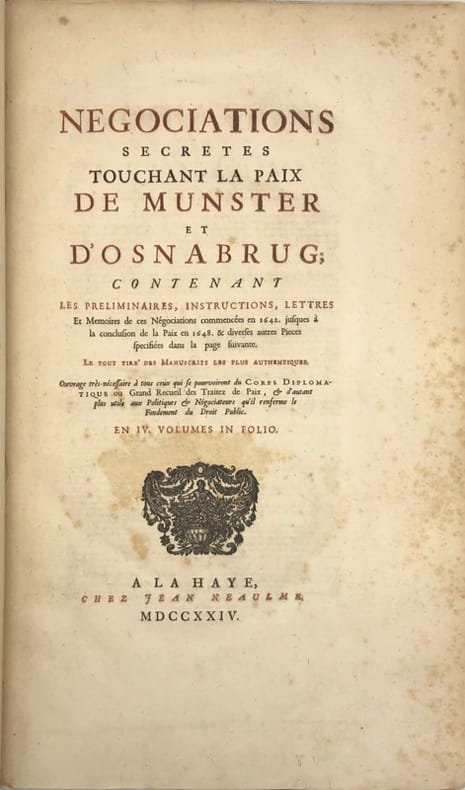
167442La Haye, Jean Neaulme, 1725-1726 4 vol. in-folio, texte sur deux colonnes, toile marine, dos lisses (reliure du XXe). Des mouillures angulaires à la fin du volume I, mais bon exemplaire.
169011932A Cologne, chez Pierre Marteau, 1690. 3 parties en 2 vol. in-4 de (4)-457 pp. ; 219-(49) pp. ; (2)-267-(1) pp., maroquin rouge, dos finement orné à nerfs, tranches dorées sur marbrure (reliure de l'époque).
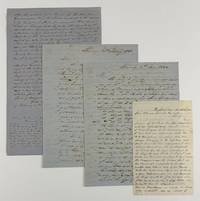
18645296Richmond Va: February 2 1864. Very good. Autograph document signed 1p. folio on blue paper. Old folds minor wear. with: Two autograph letters signed by De Voss Richmond Va. totaling 6pp. and with: Autograph letter signed by William Bradley Assessor Richmond Va. 2pp. Mailing folds minor wear. A collection of manuscript documents and letters pertaining to an interesting diplomatic moment between the Austrian government and the Confederacy in Richmond during the Civil War. Austrian consul Edward William De Voss was based in Richmond during the Civil War. While in Virginia he purchased 612 hogshead of tobacco right at the outbreak of the war in 1861 but was then forbidden to remove it to Austria due to the Union naval blockade. Appeals for relief to Secretary of State William Seward were denied. For a long while the Austrian government in an effort to preserve good relations with the United States accepted Seward's decision without complaint. As a result the Austrian-owned tobacco valued at $252331 sat in storage in Richmond and other locations in Virginia until at least 1864.<br /> <br /> The present manuscript petition dated February 2 1864 is a protest from the Austrian government triggered after the Confederate government apparently forced the Austrian government to pay 8% in taxes on De Voss's tobacco. Here De Voss as an agent for the Austrian government states that they are paying the tax bill "Solemnly protesting against the payment of said tax" and reserve the right to request "repayment or restitution from the said Government of the Confederate States of America of the said tax so paid by us." The sum was not small. At a total value of $252331 the 8% tax totaled $20186.48. The bottom twelve lines of manuscript following De Voss's petition is a statement by a Virginia notary and the bottom of the document is signed by him.<br /> <br /> In addition to the manuscript petition the present group includes two related letters by De Voss and another letter by a tax assessor in Richmond all pertaining to a specific portion of De Voss's tobacco horde. In his first letter dated February 20 1864 De Voss writes to Confederate Treasury Collector William Green about the appraised value of fifty-six hogshead of the aforementioned tobacco "stored near a Rice depot in Prince Edward County." Apparently the Confederate tax assessor had changed the value of this tobacco from just under $10000 to a whopping $24500. De Voss discusses the background of the tobacco's purchase "inspected here in Richmond and purchased by us in the year 1861 during the months of May and August for the account of friends in Europe" the movement of the tobacco to Petersburg for storage and other difficulties and issues relating to the tobacco since then. De Voss informs Green that he also has additional tobacco stored in Richmond Petersburg Dinwiddie County Buckingham County and Nelson County" and expresses surprise at the re-valuation of the tobacco stored in Price Edward County writing that "any dealer or Tobacco shipper will readily testify" in their favor.<br /> <br /> De Voss's second letter was also written to William Green a few weeks later. Here De Voss provides further details about the tobacco stored in Price Edward County stating that it is located "in barns on a plantation near Rice depot under the care of Mr. W.E. Bradshaw." He then provides a detailed breakdown on how much tobacco was stored in each of four warehouses and the value of each portion of each type of "leaf." De Voss then discusses the prospect of moving this tobacco to Richmond commenting that "Tobacco does not improve by keeping and particularly the lower grades which are never judged with the same care as the better descriptions." The letter is followed by a manuscript forwarding note by Green to Confederate tax assessor William Bradley regarding the Austrian tobacco. Green writes that "The Tobacco having been in Price Edward County before the tax act was passed if such was the fact I concur that in applying the Richmond standard of prices allowance should be made for the expense of bringing it again to Richmond."<br /> <br /> The final letter in the present group is Bradley's reply to Green regarding De Voss's tobacco in the "log barns" in Prince Edward County. Bradley confirms some of the information in De Voss's communication regarding the type and quantity of the tobacco and then provides his own "fair evaluation" of the tobacco.<br /> <br /> A fascinating group of manuscripts illustrating the complexity of diplomatic and economic relations during the Civil War with notable information on the value of southern tobacco during the latter period of the conflict. February 2 unknown
510490 Une lettre manuscrite de 12 lignes signée par Emile Zola, datée Paris 11 mars 1898, adressée à '' Mon cher confrère '. Feuillet double de format: 205mm x 130mm, papier vergé, petite trace de pli central horizontal. Lettre de remerciements à un confrère, écrite 2 mois après le '' J'accuse '', publié dans le quotidien L'Aurore, du 13 janvier 1898, et qui s'inscrit avant la réponse favorable du 2 avril à une demande de pourvoi en cassation de sa condamnation à un an de prison, et son départ pour l'exil vers l'Angleterre avant la fin du procès. Précieux document, on y relève ces très belles lignes: '' Mais il ne faut pas désespérer de la France, qui se retrouvera et qui donnera au monde la justice comme elle lui a donné la liberté ''
Very Good French Original manuscript autograph document signed by Jean-Baptiste Annibal Aubert du Bayet. 31,5x20,5 cm. In French. 1 p. With a blind-stamped seal. A legible and fine handwritten letter. Text: Le General Aubert du Bayet, Ambassadeur de la Republique Francaise pres de la porte Othomane, le depart de la compagnie d'Artillerie, legere employee a l'instruction des turcs et celui des officiers francaises precedemment employere ou destinee au service du grand seigneur; Arrete que le citoyen Collin ancien major d'infanterie venu a Constantinople d'apres l'autorisation du gouvernement retournera incessamment en France et qu'il profitera a cet effet du batiment qui va conduire la compagnie d'Artillerie legere a Ancone. English: General Aubert du Bayet, Ambassador of the French Republic near the Othomane gate, the departure of the company of Artillery, light employee in the instruction of the Turks and that of the French officers previously employed or destined to the service of the great lord; Decrees that the citizen Collin, former major of the infantry who came to Constantinople after authorization from the government, will return to France shortly and that he will benefit for this purpose from the building which will lead the company of light artillery to Ancona [sic. Angora - Ankara]. Jean-Baptiste Annibal Aubert du Bayet (19 August 1759, Louisiana - 17 December 1797, Istanbul) was a French General and politician during the period of the French Revolution. Aubert du Bayet was born in Baton-Rouge in the French American colony of Louisiana in 1759. Aubert du Bayet participated in the campaigns in America during the American Revolutionary War. Aubert du Bayet arrived in France at the beginning of the Revolution, but was initially hostile to revolutionary ideas. While in Metz, as a young Captain, he published an anti-Jewish pamphlet entitled Le cri du citoyen contre les Juifs. However, he soon saw that it could serve his ambitions. He became a member of the legislature in 1791. Aubert du Bayet was President of the French National Assembly (the "Legislative Assembly") from 8 July 1792 to 22 July 1792. In 1793, he served as General of Brigade in the heroic defense of Mayence in 1793, when he finally had to surrender to the Prussian Army. He then seconded Hoche in Vendée in the fight against the Chouans in the War in the Vendée. He then became Minister of Defense of France ("Minister of War") from 3 November 1795 to 8 February 1796. In 1796, General Aubert du Bayet was appointed as ambassador ("Minister of the Republic") to the Ottoman Empire. He was sent to the Ottoman court with artillery equipment, and French artillerymen and engineers to help with the development of the Ottoman arsenals and foundries. Infantry and cavalry officers were also to train the Spahis and Janissaries, but they were frustrated by the opposition of the Janissaries. Ironically, some of these troops, trained to Western methods, were successfully employed against the French troops of Napoleon a few years later under Sir Sydney Smith at the Siege of Saint-Jean d'Acre in 1799. Their behaviour delighted Selim III, and upon their return, they were named Nizam-gedittes or "New Regulars", but they were eventually slaughtered and dispersed by the Janissaries and conservative clerics and politicians, leading to the deposition of Selim III. Aubert du Bayet died of fever in 1797, in Constantinople. Co-signed by six politic figures in its period, however, they cannot be determined. Very rare.
1887S102945Anvers, Veuve De Backer (II-III: Jos Maes, IV-V-VI: J.E. Buschmann) 1887-1909 Série complète en 6 tomes: xviii,444 + iii,480 + 488 + 461 + 466 + xvi,382 pp., avec 36 planches hors-texte dont 7 fac-similes de lettres, dans la série "Codex Diplomaticus Rubenianus : documents relatifs à la vie et aux oeuvres de Rubens" tomes 1 à 6, 32cm., brochures originales (quelques-unes avec traces d'usage), pages toujours non coupées (sauf t.6), texte et intérieur frais et en très bon état, [Première édition aussi complète des lettres de Rubens, publiées dans leur langue d'origine (italien, latin, espagnol, anglais) avec leur traduction en français et des commentaires ainsi que des lettres qui lui furent adressées ou le concernent. La correspondance couvre les années 1600 à 1649 et porte sur ses différentes activités, y compris sur le plan diplomatique, ainsi que sur ses relations avec les cours européennes], bon état, poids: 13kg., S102945
Série complète en 6 tomes: xviii,444 + iii,480 + 488 + 461 + 466 + xvi,382 pp., avec 36 planches hors-texte dont 7 fac-similes de lettres, dans la série "Codex Diplomaticus Rubenianus : documents relatifs à la vie et aux oeuvres de Rubens" tomes 1 à 6, 32cm., brochures originales (quelques-unes avec traces d'usage), pages toujours non coupées (sauf t.6), texte et intérieur frais et en très bon état, [Première édition aussi complète des lettres de Rubens, publiées dans leur langue d'origine (italien, latin, espagnol, anglais) avec leur traduction en français et des commentaires ainsi que des lettres qui lui furent adressées ou le concernent. La correspondance couvre les années 1600 à 1649 et porte sur ses différentes activités, y compris sur le plan diplomatique, ainsi que sur ses relations avec les cours européennes], bon état, poids: 13kg., S102945
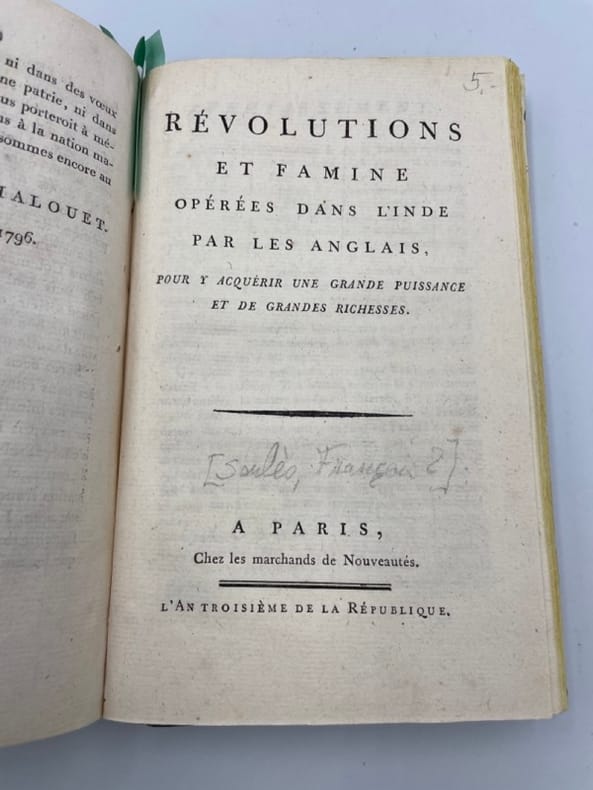
235836Londres, J. Debrett, et se trouve à Paris, Laran, et chez les marchands de nouveautés, s.d. (1797) in-8, [3] ff. n. ch., 100 pp., cartonnage d'attente de papier bouteille, pièce de titre cerise, tranches citron (reliure de l'époque). Rousseurs
Very Good Turkish, Ottoman (1500-1928) Modern full morocco in Ottoman traditional style. Roy. 8vo. (25 x 17 cm). In Ottoman script (Old Turkish with Arabic letters). 119 p., 15 unnumbered b/w plates, and 1 color double-paged map of Northwest Africa and the Sahara Desert. First and only edition of this exceedingly rare book of Sahara and other territories of North Africa, written by Sadik El-Müeyyed, including his surviving report and travel account written to be presented to the Ottoman Sultan Abdulhamid II. It's a reference text that specifies the military and the political measures of the Sahara exploration, gives extensive information about the Benghazi region of Tripoli and about Muhammad al-Senusi, the leader of the Senûsî (Senussi) movement there, and his followers. With the impressive and enthusiastic expression of Sadik el-Müeyyed's descriptions, this work reveals not only the affairs of the Ottoman government but also the mysteries of the journeys that have taken months in the Sahara desert, uncovers the living standards of the desert peoples, and sheds light on an unknown aspect of the North African history. Özege 132.; Not in Kursun.
Very Good Greek, Modern (post 1453) Original decorative cloth bdg. with Dante's portrait gilt on front board and spine. Black cloth with red decorative borders. With a new cloth spine. Some little wormholes on cloth and several pages. Pages are partly opened, uncut and untrimmed. Slightly faded on cloth's board. A stamp on first page. Otherwise a very good copy. Roy. 8vo. (23 x 16 cm). In Greek (Modern). [18], 324 p., 'prologos' by Musurus. Konstantinos Mousouros, also known as Kostaki Musurus Pasha, was an Ottoman Greek diplomatic official of the Ottoman Empire who served as ambassador to Greece, Austria, Great Britain, Belgium, and the Netherlands. He was born in 1807 in Constantinople (Istanbul) to a distinguished Phanariote family. His brother, Pavlos Mousouros, also became a diplomat. Mousouros became the first ambassador of the Ottoman Empire to the newly independent Kingdom of Greece in 1840, a position he kept until 1848. In 1847-48 he was a central figure in the events known as Mousourika (??????????), which led to his temporary recall and the breakdown of relations between the two states. On his return to Athens he survived an assassination attempt, leading to his transfer to Vienna. In 1850 he took up the post of Ottoman ambassador to the Great Britain and Ireland, which he kept for 35 consecutive years, until his retirement in 1885. During the same period, he also served as ambassador to the Netherlands (1861-77) and Belgium (1861-75). In 1876-78, he was ex officio a member of the short-lived Senate of the Ottoman Empire. Well educated, in 1883 Mousouros translated Dante's Divine Comedy into ancient Greek. He was married and had a son, Stephanos Mousouros, who later became Prince of Samos. (Wikipedia). He is known as the first translator of Dante's Divine Comedy into modern Greek. Musurus Pasha had an intellectual identity. One of the most important occupations of Musurus Pasha in the last years was the translation of Dante's Divine Comedy from Italian to Greek. Being able to translate a work of Italian classics and masterpieces of western literature should be an indication of Musurus Pasha's performance and intellectual dimension. Due to negative statements about Muhammad and Ali in Dante's work, the book was not allowed to be published within the Ottoman Imperial borders. Despite this, Musurus Pasha asked him to be permitted to publish his translation, but it was not accepted. (Source: Bir Tanzimat diplomati Kostaki Musurus Pasa, (1807-1891)., NURDAN SAFAK). Dante's Divine Comedy, originally called Comedia, and later christened Divina by Giovanni Boccaccio, is widely considered the most important poem of the Middle Ages and the greatest literary work in the Italian language. This is only 'Purgatorio' book from the set. It's signed and inscribed by Musurus Pasha with a dedication in French to Monseigneur Auguste Bonetti as "A la grandeur Monseigneur Bonetti, Hommage de veneration, Musurus". Bonetti was, in 1887, after the appointment of Monsignor Rotelli to the Vatican Ambassador to Paris, the new Constantinople patriarch appointed by Rome for him. First Greek Edition. Extremely rare.
17951210385Paris, Desbrière, 1794 - 1795. Mit gest. Porträt-Tafel. Ldrbde d. Zeit m. Rückenvergoldung u. je 2 Rückenschildern (beschabt, teils bestoßen, innen stellenweise etwas braunfleckig).
228850Saint-Gervais [près Genève], Samuel Waudreman, 1633 in-4, 4 pp., 24 pp. [table], 484 pp., veau blond, dos à nerfs cloisonné et fleuronné, pièce de titre fauve, tranches rouges (reliure du XVIIIe). Petits trous de vers infra-marginaux au milieu du texte, sans perte.
2366641790 in-8, veau fauve, dos lisse orné, tranches rouges (reliure de l'époque).
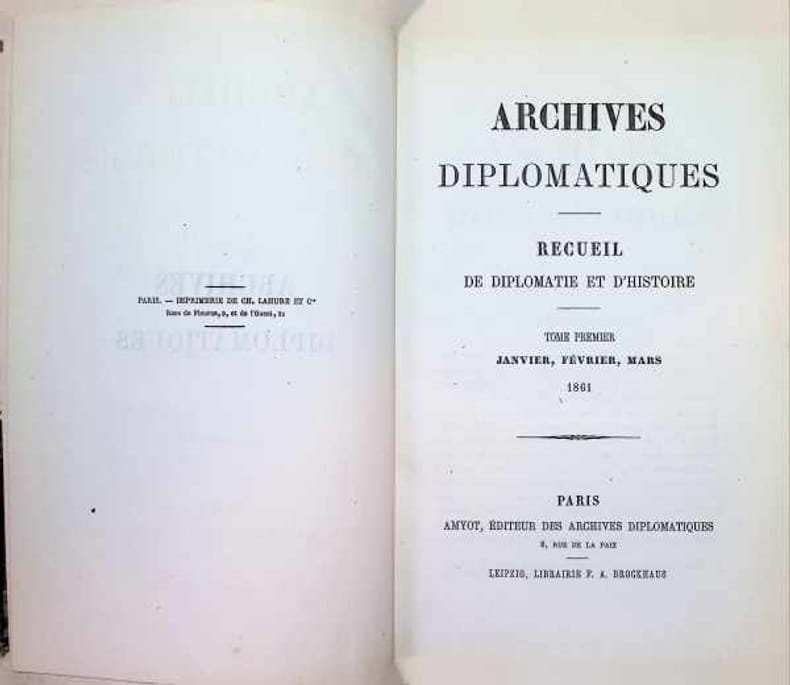
1861027171Paris 1861 Amyot Half-Leather (Hardcover) 1st Edition
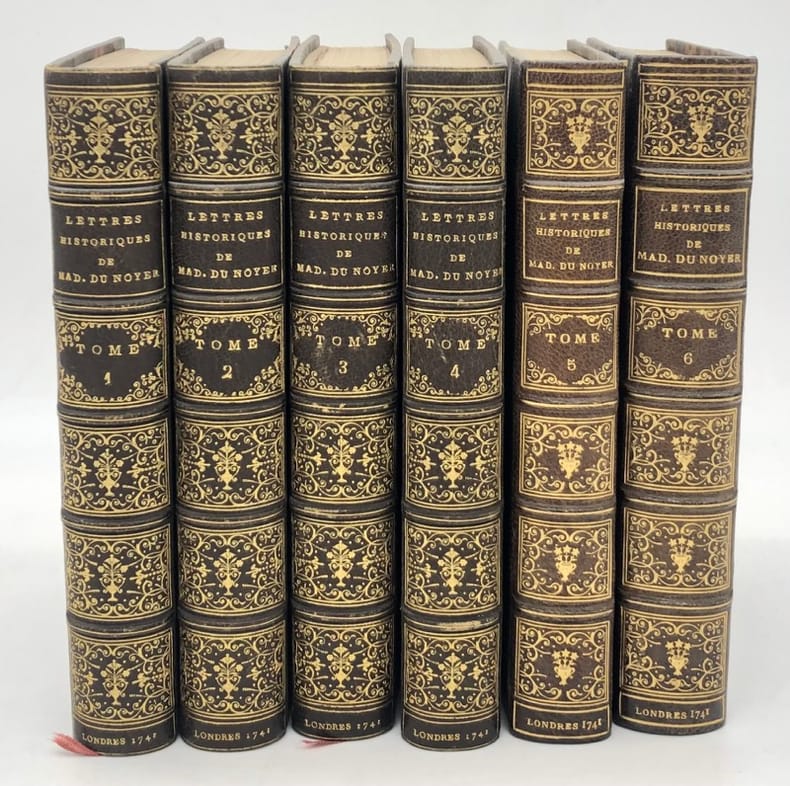
226929Londres [Trévoux], Jean Nourse, 1741 6 vol. in-12, demi-maroquin vert, dos à nerfs ornés de filets et caissons dorés, double filet doré sur les plats, coins en vélin vert, tranches dorées (reliure du XIXe siècle).
1882B84219Bruxelles, Hayez 1882-1900 Série complète de 11 tomes, ensemble +/- 7500pp., dans la série "Collection de Chroniques Belges inédites, publiée par ordre du gouvernement", 30cm., imprimé sur papier de luxe, reliures cart.d'éditeur (qqs.dos restaurés, 2 etiquettes aux dos), texte et intérieur en très bon état, [Contenu: tome I: Depuis l'abdication de Charles V jusqu'au départ de Philippe II pour l'Espagne (1555-1559), II-IV: Régence de la Duchesse de Parme (1559-1562, 1562-1564, 1564-1567), V-VI: Gouvernement du duc d'Albe (1567-1570, 1570-1573), VII-VIII: Gouvernement de Requesens (1573-1575, Le conseil d'état 1575-1576), IX-X: Gouvernement de don Juan (1576-1577, 1577-1578), XI: Gouvernement du duc de Parme, première partie (1578-1579)], poids total: 27kg., B84219
Série complète de 11 tomes, ensemble +/- 7500pp., dans la série "Collection de Chroniques Belges inédites, publiée par ordre du gouvernement", 30cm., imprimé sur papier de luxe, reliures cart.d'éditeur (qqs.dos restaurés, 2 etiquettes aux dos), texte et intérieur en très bon état, [Contenu: tome I: Depuis l'abdication de Charles V jusqu'au départ de Philippe II pour l'Espagne (1555-1559), II-IV: Régence de la Duchesse de Parme (1559-1562, 1562-1564, 1564-1567), V-VI: Gouvernement du duc d'Albe (1567-1570, 1570-1573), VII-VIII: Gouvernement de Requesens (1573-1575, Le conseil d'état 1575-1576), IX-X: Gouvernement de don Juan (1576-1577, 1577-1578), XI: Gouvernement du duc de Parme, première partie (1578-1579)], poids total: 27kg., B84219