Fletcher School of Law and DiplomacyBiblio.com

54 résultats
1564250318.Gpaperback. Good. Access codes and supplements are not guaranteed with used items. May be an ex-library book. paperback
19582090502113718047Not Available 1958. Soft Cover. Fine. The book is in fine condition. Not Available paperback
19602110502150412492Foreign Language Publishing Company Beijing People's Republic of China 1960. Soft Cover. Fine. Volume: 1 Foreign Language Publishing Company (Beijing, People's Republic of China) paperback
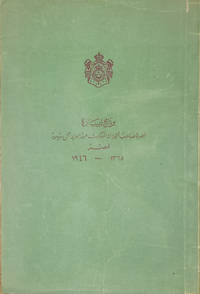
1946000234<ol><li>General Historical Context<br />King ʿAbd al-ʿAzīz Āl Saʿūd's visit to Egypt in 1946 took place at a critical moment in Middle Eastern history immediately following the end of the Second World War amid the reconfiguration of the international order and the beginning of the decline of British colonial influence in the region. At that time Egypt was a pivotal actor in Arab politics while the Kingdom of Saudi Arabia had firmly established itself as a central state with growing religious and political influence.</li><li>Political and Diplomatic Dimensions of the Visit<br />The document reveals the highly official and symbolic nature of the visit reflecting:<br />Mutual recognition of the leading status of both states in the Arab world.<br />A clear desire to coordinate political positions at a stage preceding the escalation of major Arab issues foremost among them the Palestinian question which was approaching a decisive turning point.<br />Support for the course of joint Arab action which had been crowned by the establishment of the League of Arab States in 1945 followed by efforts to consolidate Arab solidarity.<br />The programme further demonstrates meticulous protocol intended to project Arab unity in the face of international powers.</li><li>The Symbolic Significance of King ʿAbd al-ʿAzīz<br />The visit represents the peak of King ʿAbd al-ʿAzīz's external diplomatic presence. The programme illustrates the high level of esteem accorded to him as:<br />The founder of a modern state in the Arabian Peninsula.<br />A political and religious authority of particular weight in the Islamic world.<br />The document highlights how royal symbolism and formal protocol were employed to reinforce the legitimacy of the Saudi state within both the Arab and international spheres.<br />4. Importance of the Document as a Primary Source<br />The core value of the publication lies in its nature as:<br />An official primary source reflecting the governmental perspective rather than later historical narratives.<br />An organizational document revealing the nature of official relations mechanisms of coordination and priorities of engagement.<br />A precise record of Arab political protocol in the mid-twentieth century.<br />Unlike personal memoirs or retrospective studies this programme provides raw material for researchers without subsequent interpretive overlay.<br />5. Protocol and Cultural Dimensions<br />The book illustrates the level of royal diplomatic traditions of the period including:<br />Reception ceremonies and official honors.<br />The arrangement of meetings reflecting hierarchies of authority and political symbolism.<br />The blending of Arab and Islamic elements within official state ceremonies.<br />This offers scholars valuable insight into the culture of the modern Arab state in its formative stages.<br />6. Archival and Documentary Value<br />As a document of limited circulation produced for official or commemorative purposes the book possesses:<br />High archival value.<br />Particular importance for national libraries and historical research centers.<br />Strong potential for use in comparative studies of royal and diplomatic visits in the Arab world.</li></ol><p><br />The book "Programme of the Visit of His Majesty King ʿAbd al-ʿAzīz Āl Saʿūd to Egypt 1365 AH / 1946 CE" is a document of exceptional historical importance. Its value lies not only in its organizational content but in its profound political and symbolic implications. It stands as a reliable witness to a pivotal phase in the formation of the modern Arab order and to the central role played by both Egypt and the Kingdom of Saudi Arabia in shaping its early dynamics.</p> The Egyptian Royal Court paperback