[FABRICS - NATIONAL SOCIALISM - KRONE].Biblio.com
103 résultats
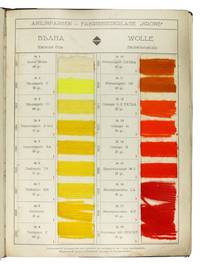
1938ABC_46007Sofia & Cherven Bryag 1938. Alexander & Stoyan P. Darakchiev Original publishers gold-stamped black cloth with the Krone logo on the front board and title and publisher on the front board and spine. With 256 well-preserved wool yarn and fabric samples showing a wide range of colours of aniline dyes solidly mounted on thick cardboard. 26 pp. A well-preserved 1938 collection of fabric swatches and yarn samples dyed in various colours and several varieties: wool shajak a fine Bulgarian wool fabric blended wool sulan a heavier Bulgarian fabric and kunstseide probably rayon published by the Bulgarian subsidiary of the German manufacturer of Krone aniline dyes. A Bulgarian 1 lev postage stamp violet stuck on the title-page in a space apparently provided for that purpose perhaps as a tax stamp is dated 1938. Although the title is in Bulgarian the title-page is headed Anilinfarben Fabrikniederlage with the large Krone logo.Bulgaria and other allies of Nazi Germany played a major role in supporting the German economic expansion during the 1930s and 1940s. The catchword Großraumplanung stood for the German industries aim to expand throughout the Balkans and Turkey as far as Iran. A major sector of National Socialist business interests the chemical industry in particular grew rapidly. Its leading players such as I.G. Farben promoted their aniline dyes by establishing local subsidiaries in the East who would then distribute bilingual swatch-books such as the present specimen.The tipped-in sample pages are captioned in German and Bulgarian throughout. Prefixed is a manual in both languages on how to dye the fabrics several of which such as sulan and shajak are traditional Bulgarian cloths.Covers very slightly worn at extremities; light dust stains on the cards. Some strands of dyed wool slightly loose but generally in good condition.l Cf. Arbeitskreis I.G. Farben der Bundesfachtagung der Chemiefachschaften Hg. von Anilin bis Zwangsarbeit. Der Weg eines Monopols durch die Geschichte. Zur Entstehung und Entwicklung der deutschen chemischen Industrie Aachen 1994 p. 59. ABE CAT Art History hardcover
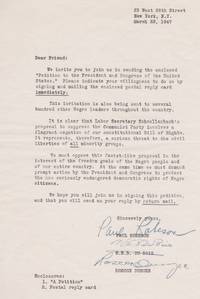
19471474<p>Robeson Paul W.E.B. Du Bois and Roscoe Dungee.</p><p>To the President and Congress of the United States of America Petition and Typed Letter Bearing Signatures of Robeson Du Bois and Dungee. New York: Communist Party USA 1947.</p><p><br />Single-page typed letter and two-page petition printed on rectos only. Each page 8 1/2 x 11 inches 215 x 280 mm.</p><p>A rare typed letter bearing signatures of Paul Robeson W.E.B. Du Bois and Roscoe Dungee asking recipients to sign a petition against banning the Communist Party USA. <strong>We believe the signatures were printed as does an autograph expert we consulted.</strong></p><p>In any case the three African-American leaders sprang into action after President Truman's Labor Secretary Lewis B. Schwellenbach told Congress that the Communist Party should be outlawed. Schwellenbach was concerned about Communist control and infiltration of labor unions and thought no Communist should be allowed to lead a union.</p><p>The letter is dated March 22 1947 and carries the address of 23 West 26th Street New York the Communist Party's headquarters at the time. The letter is aimed at African-American recipients: "This invitation to sign the petition is also being sent to several hundred other Negro leaders throughout the country."</p><p>According to the letter "It is clear that Labor Secretary Schwellenbach's proposal to suppress the Communist Party involves a flagrant negation of our constitutional Bill of Rights. It represents therefore a serious threat to the civil liberties of all minority groups." The authors urge recipients to mail back a postal reply card confirming they would sign the petition. The card is not present probably because it was mailed back to the Communist Party.</p><p>The petition which is also rare is addressed to the President and Congress urging them to reject Schwellenbach's "fascist-like proposal" to ban the Communist Party. The Party was not banned but the government regularly harassed and imprisoned its leaders in the 1940s and '50s.</p><p>Even though we believe the signatures on the letter were printed these materials are nonetheless rare. We have not found any institutional holdings of the letter or petition. None in commerce.</p><p>CONDITION: Pages lightly creased for mailing staple on petition badly rusted. A Very Good set. <strong>RARE</strong>.</p> [Communist Party USA]
19482521New York: The Viking Press 1948. First Edition First Printing. <br /><br />Small Quarto 9 3/4 x 6 3/4 inches; 247 x 167 mm 220 pages in green and tan cloth in an unclipped illustrated dust jacket hard cover accompanied by four photographic prints. <br /><br />An account of a trip to the Soviet Union in 1947 by author John Steinbeck and photographer Robert Capa who visited while the country was attempting to recover from the devastation of World War II. They traveled to Moscow Stalingrad and other cities as well as to Ukraine and Georgia meeting numerous ordinary people while accompanied by a minder from the government. <br /><br />The New York Herald Tribune financed the trip and along with some other newspapers published articles by Steinbeck and photos by Capa. Indeed included here are three photographs that were used by one of the newspapers as indicated by layout instructions on the versos of the photos. There's also a later publicity photo of Steinbeck. One of the photos from the trip showing a Georgian restaurant in Moscow appears on page 47 of the book. Two of the trip photos are stamped on the versos with the notice that their reproduction could be used only with the "1948 Steinbeck-Capa articles on Russia" along with "Copyright 1948 by John Steinbeck." <br /><br />Our copy is a first printing of the first edition with "Printed by the Viking Press in April 1948" on the copyright page. The dust jacket carries a price of $3.75. <br /><br />A fascinating look at ordinary people in the Soviet Union as the country tried to rebuild following World War II accompanied by three photographs of scenes from the country and a publicity photo of Steinbeck. <br /><br />CONDITION: Book slightly cocked rear hinge loose corners rubbed spine ends bumped end papers slightly toned a couple of pages with vertical creases possibly a production error. Nearly Very Good in a Good dust jacket that has some loss to both spine ends as well as a few tears nicks toning foxing and stains. The four photographs have some nicks creases and soiling to the edges. The versos contain notes stamped instructions and captions pasted on the photo of Steinbeck has an article pasted to the verso. Some discoloration to two photos resulting from pasting of newspaper captions to the versos. The Viking Press hardcover
19990008049Boulder CO: Westview Press 1999. First English language edition. Hardcover. As New/issued without. 8vos; xxxiv 562; ix 389 pages maroon cloth in original shrinkwrap. Not x-library. Scarce. O.P. <br/><br/>This English translation contains an autobiography by Mironov which was not in the Russian edition. It details his anti-Marxism philosophy while a student in Leningrad. "The author has assimilated a large body of foreign scholarship primarily "new social history" produced by Anglo-American authors along with a sprinkling of more broadly European economic and demographic history from the 1970s and 1980s which is effectively incorporated into his own very deep empirical knowledge. . The reader does not find in this extensively researched account the standard Soviet answers to specific historical questions. Mironov has abandoned most Soviet cliches though he still assumes that laws of Russian history can be identified based on social science theory and quantitative analysis Elise Kimerling Wirtschafter." "This is a massterful work that provides other scholars with a wealth of useful information while confrontimg them with an argument that compels a response - William G. Wagner." Maps. Westview Press hardcover
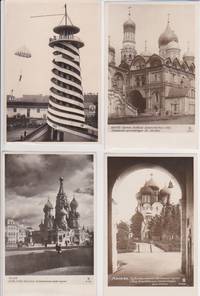
19302279Moscow: Various Publishers 1930s. <br /><br />Thirty black-and-white postcards each measuring 5 3/4 x 3 7/8 inches 147 x 98 mm all unused and unmounted. <br /><br />A collection of postcards depicting scenes in Moscow during the tumultuous 1930s when Stalin was expanding his power and killing off his opponents. The scenes include workers' houses hotels department stores and cathedrals that the Bolsheviks closed and turned into museums. Other scenes show Arbat Square Pushkin's monument the race course Dynamo stadium the Izvestia building Moscow University and more. <br /><br />Seventeen of the cards have brief captions in English and sometimes in French and German in addition to Russian. <br /><br />A wonderful series of vibrant images of Moscow in one of the most significant decades in Soviet history. <br /><br />CONDITION: One card lightly trimmed at the edges a few minor stains to the versos of some cards. Overall Very Good or better. Various Publishers
177747694Lausanne: Société Typographique 1777. Second Edition. Two volumes in one; small 12mo 16cm.; slightly later paper-covered boards manuscript private library spine labels all edges speckled red; 2viii248; 2iv250pp. Spine a bit sunned corners bumped light spotting to boards tiny rubberstamps of a Donaueschingen library to both title page versos else a Near Fine internally fresh copy half titles present. First published one year prior in 1776.<br /> <br /> Both a critique and history of European inequality by the French philosopher deeply influenced by the works of John Locke. Described as an "avant-garde thinker of utopian socialism" Sophus Reinert and Steven Kaplan eds. "The Economic Turn" 2019 p. 339 the Abbé de Mably 1709-1785 roundly rejected any institution that could reduce the well-being of one in favor of another among these the concept of private property. Indeed in Chapter IV in the first volume states that it be necessary for legislation to "turn all its forces against avarice and ambition" p. 96 our translation. A life-long friend of Jean-Jacques Rousseau the underlining theme of the work consistently circles back to the concept of "Nature" in this case self-preservation at present undermined by the state of society. Société Typographique unknown
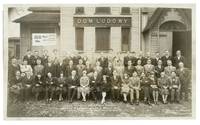
192834089Detroit: Hoffman Photo Studios 1928. Original vintage print sight area ca 27cm x 45cm ca 11-1/2" x 17". Captioned in image. Professionally matted and framed with UV-protective plexiglas glazing. Sight condition fine; not examined out of frame. The portrait studio of Tomasz Hoffman 1892-1978 specialized in serving Detroit's Polish community producing work from the early 1920s through the 1940s. This attractive group portrait of Detroit's Polish Socialist Club is taken in front of the group's headquarters the Dom Ludowy on Detroit's East Side. Hoffman Photo Studios unknown
185082110Paris: Au Bureau du Nouveau Monde 1850. First impression of the 1850 edition. 12mo 18cm. Original printed wrappers bound into a 20th-century binding of 3/4 blue morocco over marbled boards; 240pp. Rear wrapper advertisements for other publications by Nouveau Monde including works by Blanc Ledru-Rollin and Mazzini. Faint dampstain to upper portion of text affecting the final 40 or so leaves; old waste-paper reinforcements to interior wraps; binding a touch rubbed at corners; still a crisp Very Good copy. <br /> <br /> An important edition of Blanc's most celebrated work among the most influential early theoretical works of Socialism described by one historian as ".a sensation - and ground-breaking. It had little in common with prior utopian socialist ideas . Louis Blanc was more clearly observant of the large-scale and deep social and economic changes wrought by the industrial revolution and ferocious in his conclusions.Blanc almost single-handedly converted the republican leaders and the rebellious Parisian masses to the socialist cause" see Gonçalo Fonseca; "Louis Blanc" at History of Economic Thought; on-line resource.<br /> <br /> The essay originally appeared in Blanc's own Revue du Progres in 1840 and was expanded and reprinted regularly over the following decade; the current edition the ninth was the first to appear after the Revolutions of 1848. This version contains further revisions and additions including most importantly the oft-borrowed phrase "Produra selon ses facultés et consommera selon ses besoins" generally translated into English as "From each according to their abilities; to each according to their needs" - an expression popularized by Marx but widely attributed to Blanc in the current edition of this work see "Notes From the Editors" Monthly Review v.66 no.3 July-Aug 2014. KRESS C.7283 the 5th edition; GOLDSMITH 34460 and 36031. Au Bureau du Nouveau Monde unknown
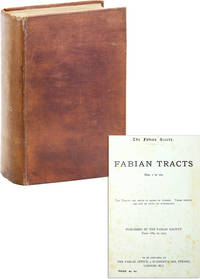
188447715London: The Fabian Society 1884-1905. Thick octavo. Publisher's brown buckram gilt; variously paginated with individual titles ranging from 2pp to 50pp. Tight and straight with scattered foxing to contents; Very Good. <br /> <br /> The Society issued bound collections of its tracts more or less annually compiling whichever titles were still in-print or on-hand as remainders. Contents of the annual volumes varied as remainders were depleted or titles went out of print or were withdrawn from circulation. As might be expected the earliest tracts were the first to go creating inevitable lacunae especially for the pre-1890 titles. <br /> <br /> This is the compilation for 1905 including nos. 1 to 120 but with the following thirty-three tracts not included: 2-4; 6 8-13; 15-18; 21; 25-26; 30; 33-36; 38-39; 43; 46; 52-53; 55; 60; 65-66; 77; 80; 87 present as a title page in Welsh only; 106. Of the tracts present the majority are the first printings though a few of the more popular early tracts are present in later printings or editions though none obviously later than 1905. The Fabian Society unknown
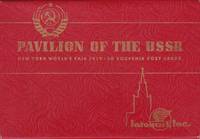
19392412n.p.: Intourist Inc. 1939. <br /><br />Red folder measuring 4 x 5 3/4 inches 150 x 113 mm containing 10 post cards. <br /><br />Souvenir folder issued to commemorate the 1939 World's Fair in New York. The folder consists of 10 post cards in black-and-white with descriptions in English French and Russian on the verso of each card. Perhaps not surprisingly two of the cards depict Lenin and Stalin while others show a model of the Soviet Union's pavilion a sailboat Red Square a Caucasian dance festival Theatre Square the fountains at Peterhof holiday makers on the Black Sea and a map showing Intourist offices around the Soviet Union. <br /><br />We find no institutional holdings in OCLC. No others in commerce July 2021. A complete set of this rare portfolio. <br /><br />CONDITION: Fading to lettering of folder along with some creases and edge wear. Toning to the verso of the cards. Overall Very Good or better. Intourist, Inc.
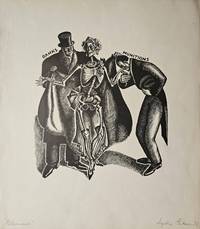
1936List3310United States 1936. Lithographic illustration measuring 12 x 13 ¾ inches. Unnumbered titled and signed recto in pencil matching handwriting of other known examples. Near Fine. A lithograph by American socialist artist Lydia Gibson 1891–1964. Gibson contributed artworks to radical publications including The Masses The Liberator New Masses and others. This illustration titled Glamour depicts two well-dressed gentlemen labeled “Banks†and “Munitions†courting a bejewelled lady skeleton whose tiara reads “Warâ€. More than a straightforward pacifist sentiment Gibson makes the now-familiar critique that industries that stand to profit off of war will ‘court’ it. A striking piece of twentieth-century socialist art. unknown
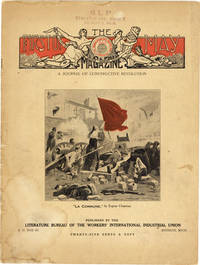
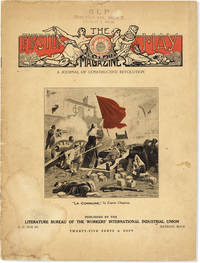
191943046Detroit / Troy: Literature Bureau of the Workers' International Industrial Union 1919 - 1923. First Edition. Quarto 30cm. Staple-bound pictorial card wrappers; 40pp; illus. Issue for 1919 in clean unmarked condition Very Good or better. Issue for 1923 worn with wrappers darkened and stained contents slightly age-toned with corner-creases and occasional thumb-soil; complete and just Good. Annual souvenir of the Workers' International Industrial Union. The WIIU the labor union arm of the Socialist Labor Party was effectively formed in 1908 following the split of the SLP faction from the Industrial Workers of the World; the group identified itself as the 'Detroit IWW' until 1915 at which point the name was changed to Workers International Industrial Union a typically De Leonist mouthful!. The WIIU never throve; its membership probably never numbered above about 2500 workers a number that dropped quickly following the death of Daniel De Leon in 1915. By the 1920s the WIIU was an afterthought and the group was finally disbanded in 1925.<br /> <br /> Contents include articles by Michael Altschuler Herman Richter W.J. Dodge Henry Kuhn and others; literary contributions by Samuel French Fred H. Hartmann Richard Le Galienne William Morris and Walt Whitman; portraits and reproductions of artworks by Eugene Higgins Jan Styka and Eugene Chaperon. An attractive and rather uncommon American labor souvenir book; OCLC notes 6 physical locations for any issue 2018; the 1923 issue printed on clearly inferior paper probably a reflection of the Union's impending demise appears to be in the catalogue of only a single OCLC member institution NYPL. Literature Bureau of the Workers' International Industrial Union unknown
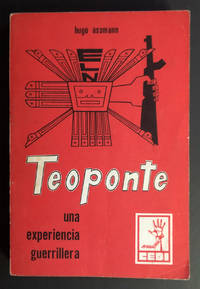
19713912<p>Oruro Bolivia: CEDI 1971. 1st edition. Soft cover. Very Good/No Jacket as issued. VG. 8vo 282pp printed wrappers. Rare original edition of this revolutionary memoir published in Bolivia. In Spanish. Unmarked copy a bit of reading wear.</p> Oruro, Bolivia: CEDI paperback
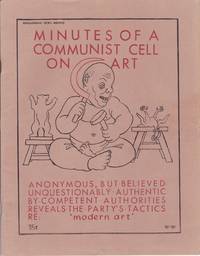
19602275Fullerton California: Education Information Inc. 1960. First Edition. <br /><br />Small Quarto 10 5/8 x 8 1/4 inches; 271 x 212 mm 21 pages in stapled illustrated wrappers <br /><br />A "second report on modern art" issued by Education Information Inc. an Orange County California anti-communist outfit. The main highlight: the purported minutes of a Communist cell comprising artists and writers: "PROGRAM: Remove all inspiring and beautiful art from all exhibits and substitute degenerate art in its place.Keep rational art out of all public exhibits -- allow only empty or distorted art to be shown in museums dealers' exhibits.Tie junk together and set it up as sculpture." <br /><br />There's plenty more in this vein. The woman who took these notes -- "a friend of truth and decency" -- supposedly mailed them to the right-wing sculptor Wheeler Williams who was active in anticommunist politics. Williams provides a Foreword to the notes saying he believes they're authentic. He says he shared the notes with colleagues and some former FBI undercover agents all of whom apparently believe the notes are genuine. <br /><br />Also in this pamphlet are articles on "subversion in art" lengthy excerpts from Williams's testimony to Congress on the Soviet uses of art and a piece by E. Merrill Root on conservative philosophy. <br /><br />This pamphlet is scarce. OCLC records around a dozen institutional holdings. <b>SCARCE</b>. <br /><br />CONDITION: Vertical fold throughout original mailing label and partially removed tape to lower wrapper extremities worn from handling staples a bit rusted. Otherwise Very Good. Education Information, Inc.
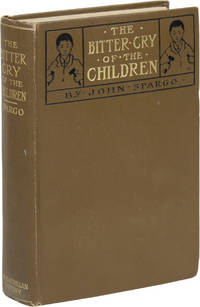
190615675New York: Macmillan 1906. First Edition. Octavo 20cm. Brown gilt-pictorial cloth boards; 337pp; 32 inserted leaves of plates halftones. Light edgewear to boards still a bright clean and unmarked copy Near Fine. A socialist's exposé of child labor in America well-illustrated with photographic plates credited to Marjory Hall G.W. Goler Peter Roberts and the Pennsylvania Child Labor Committee the last photographic plates though uncredited almost certainly by Lewis Hine. Spargo 1876-1966 edited the socialist monthly The Comrade and published a number of socialist tracts before moving to the right during the First World War. In his later years Spargo was an outspoken advocate of free-market capitalism. The current work went through numerous reprintings; the first edition is somewhat uncommon in the trade and is notable for the quality of its photographic illustrations. Macmillan unknown
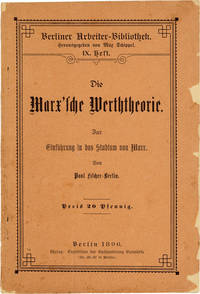
189647650Berlin: Expedition der Buchhandlung Vorwärts 1896. First Edition. Octavo 19.5cm.; publisher's orange wrappers printed within typographically decorative border; 52pp.; text printed entirely in blackletter. Some shallow chipping to upper cover fore-edge not approaching text some light soil textblock uniformly toned else a Very Good copy internally clean and sound. At head of title: "Berliner Arbeiter-Bibliothek" IX. Heft. One of a series of educational Marxist pamphlets issued under the banner the "Berliner Arbeiter-Bibliothek" this introducing its readers to the theory of surplus value without having to wade through Marx's original text. Other titles in the series covered the benefits of unionism and labor protection legislation; provided a concise history of the Paris Commune; and included an edition of Bellamy's "Looking Backward. Expedition der Buchhandlung Vorwärts unknown
191735140Boston: Hayrenik'" Tparan 1917. First Edition. Octavo 18.5cm.; publisher's brown pictorial cloth stamped in black; 492pp.; photographic frontispiece 29 plates chiefly portraits. Very slightly ex-University of Michigan Library with their rubberstamp to textblock fore-edge light shelf wear brief dampstain to rear cover else Very Good and sound though the interior does have a bit of a smoky odor. History of the Armenian Revolutionary Federation "Dashnaktsutyun" the nationalist and socialist political party founded in 1890 by Christapor Mikaelian Stepan Zorian and Simon Zavarian. This account is published by the Federation's Boston-based newspaper "Hayrenik" Fatherland three years into the Armenian Genocide a period of almost ten years during which the Ottoman Empire systematically killed 1.5 million Armenians including many members of the Federation. Hayrenik'" Tparan unknown
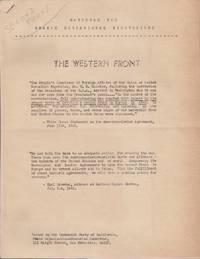
19421279San Francisco: Communist Party of California 1942. No Edition Stated. <br /><br />Seven-page mimeographed document 8 1/2 x 11 inches 217 x 280 mm stapled in top left-hand corner.<p>A "Dear Comrades" letter addressed to all branches of the Communist Party in California Arizona and Nevada urging them to meet and discuss an editorial in the August 1942 issue of the Communist "No Delay in Opening the Western Front." The letter provides reading suggestions from Communist Party publications and suggests that party members bring articles from the non-Communist press that favor a second front against Germany. It further warns that "appeasers" are trying to prevent the opening of a second front and provides counter-arguments to those opposing the second front.<br /></p><p>No institutional copies found in OCLC. None in commerce. <b>RARE.</b><br /></p><p>An interesting look at how the Communist Party sought to mobilize popular support for a second front in Europe.<br /></p><p>CONDITION: Moderate toning to cover page less toning to subsequent pages pencil notation at upper left corner of cover page. Horizontal fold probably for mailing. Light dampstaining. A Very Good copy.<br /></p> Communist Party of California paperback
19572127<p>Paris: Editions Présence africaine 1957. <br /><br />A letter from the Martinique poet and politician Aimé Césaire to Maurice Thorez secretary general of the French Communist Party. Césaire announces his resignation from the party citing Stalin's crimes and the party's treatment of nonwhite people.</p><p>Césaire's letter is dated October 24 1956 one day after the start of the Hungarian Uprising against the Soviet Union and eight months following Nikita Khrushchev's "secret speech" documenting Stalin's crimes. <br /><br />"I think I have said enough to make it plain that it's neither Marxism nor Communism I repudiate; that the use certain people have made of Marxism and Communism is what I condemn" Césaire writes. "That what I want is that Marxism and Communism be harnessed into the service of colored peoples and not colored peoples into the service of Marxism and Communism." pages 11-12. Pamphlet entirely in English.<br /><br />While this pamphlet is widely held by institutions it's uncommon in commerce. SCARCE.</p><p>PHYSICAL DETAILS: 12mo 7 1/16 x 4 1/2 inches; 180 x 113 mm 15 1 pages in stapled green-gray wrappers with errata slip pasted to recto of lower wrapper soft cover.<br /><br />CONDITION: Light soiling to wrappers some light creasing to pages but clean and unmarked. A Very Good or better copy of a scarce publication.</p> Editions Présence africaine paperback
1849588Paris: Victor Lecou 1849. Later printing. <br /><br />12mo 7 1/8 x 4 1/2 inches; 182 x 115 mm 4 iv 500 pages in original morocco spine titles in gilt over marbled boards. <br /><br />A vigorous defense of private property and opposition to "communism" appearing in the immediate aftermath of the 1848 revolutions in Europe. The first edition appeared in 1848; our copy was published the following year. <br /><br />This is the first history of socialism or communism in any language according to George Watson's "The Lost Literature of Socialism." Alfred Sudre 1820-1902 maintained that private property -- far from oppressing the poor -- was the best defense the poor had against oppression. Text in French. <br /><br />CONDITION: Some rubbing to boards and foxing to page edges. Very Good or better. <br /><br /> Victor Lecou hardcover
97688Roma Istituto Grafico Il Vascello. In 8° bross. pp. 32 circa a fascicolo. Con scritti di Saragat Nenni Treves Cantimori Luzzatto Manacorda Perticone Basso . Disponiamo dei seguenti numeri: 1945 Anno primo nn° 1 - 2 - 5/6 - 7 piccole toccature - 1946 completo brunita in testa alla prima pagina del n° 6 - 1947 nn° 1/2 - 3/4. TUTTI Roma, Istituto Grafico Il Vascello unknown
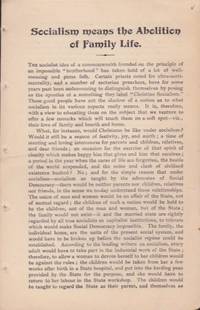
19011202<p>London: Liberty and Property Defence League ca. 1901-05. First Edition. <br /><br />A wonderfully lurid warning against socialism by an organization devoted to laissez-faire economics.</p><p>The anonymous author suggests that socialism would lead to the breakup of families: "There would be no such place as home under socialism. Everyone would live in the State barracks. There would be no breakfasts dinners or teas with one's family at one's own table as in the first place meals in private would not be permitted as it would be against the socialist idea of equality.In other words everybody when hungry would be reduced to the necessity of repairing to the common swine-trough and eating the hogwash the State had placed therein. No roast beef turkey and plum pudding no smiling faces of children and friends around the table on Christmas Day. Indeed there would not be any Christmas Day under socialism."</p><p>This pamphlet carries no publication date but it appears to have been issued sometime between 1901 and 1905. It refers to "the late Mr. Oscar Wilde" who died in late 1900. In 1906 the Liberty and Property Defence League issued a book Socialism: Its Fallacies and Dangers which included the text of this pamphlet.</p><p>OCLC lists 8 institutional holdings under two different accession numbers: Syracuse Stanford Amherst Harvard Texas Wisconsin Historical Society Michigan and the London School of Economics. No other copies in commerce.</p><p>PHYSICAL DETAILS: Single sheet measuring 8 x 5 1/4 inches 205 x 132 mm when folded creating a 4-page unbound pamphlet.</p><p>CONDITION: Paper lightly toned old stab holes along the gutter tiny check mark to front wrapper a couple small closed tears small ink stamp at the end of the text general handling wear. A Very Good copy of an uncommon publication.</p> Liberty and Property Defence League paperback
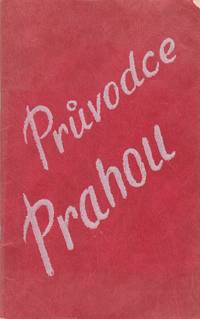
19562736<p>Chicago: Ceskoslovenská národní rada v Americe Czechoslovak National Council of America 1956.</p><p>A scarce satirical guidebook to Prague written by a Czech-American author who lived in Czechoslovakia highlighting the poor conditions under Communist rule. <br /><br />Want to know why the hotels are so expensive Translating from the Czech: You didn't realize what was included in the room price: free-of-charge eavesdropping on your phone maybe even a secret camera opening your mail without damaging the envelope and recording it in the police register photographing your more important correspondence. Want to look around Over here is the prison over there is secret police headquarters this is where Jan Masaryk was pushed out of a window to his death. <br /><br />Theres plenty more in this vein text entirely in Czech. The author Vlasta Vrázová 1900-1989 directed American relief work in Czechoslovakia in the years following World War II. In 1949 the Communist government held her for a week on espionage charges. She returned to the U.S. and became president of the staunchly anti-Communist Czechoslovak National Council of America the publisher of this volume. <br /><br />OCLC shows 16 institutional holdings. None in commerce. <strong>SCARCE</strong>. <br /><br />PHYSICAL DETAILS: Quarto 8 ¾ x 5 ½ inches; 222 x 140 mm 32 pages in stapled red wrappers soft cover. <br /><br />CONDITION: Small tear to top corner of upper wrapper staples rusted some pencil erasures creasing and general handling wear. About Very Good. <br /><br /><br /><br /></p> Ceskoslovenská národní rada v Americe [Czechoslovak National Council of America] paperback
357231890-1905. 2 works bound in one 8vo 175 x 120 mm recent cloth. 1. Socialism v. individualism : public debate in the Mechanics' Hall Nottingham. 1890 between Mrs Annie Besant of the Fabian society and Mr. Frederick Millar of the Liberty and Property Defence League etc. Nottingham: Published by C. J. Welton 1890. First edition 32pp. 2. Newark Division Liberal Association. Speech of Mr. Allen Upward Prospective Liberal Candidate in Newark Corn Exchange on Thursday Mar. 16th 1905. Re-printed from "The Newark Herald." Newark: J. Stennett 1905. First edition 20pp. Not listed on Copac. 1890-1905 hardcover
191943080Detroit: Literature Bureau of the Workers' International Industrial Union 1919. First Edition. Quarto 30cm. Staple-bound pictorial card wrappers; 40pp; illus. Issue for 1919 ; slightly worn with wrappers darkened and stained contents slightly age-toned with corner-creases and occasional thumb-soil; Just Good. Hand-stamp of the SLP / Detroit to front cover. Annual souvenir of the Workers' International Industrial Union. The WIIU the labor union arm of the Socialist Labor Party was effectively formed in 1908 following the split of the SLP faction from the Industrial Workers of the World; the group identified itself as the 'Detroit IWW' until 1915 at which point the name was changed to Workers International Industrial Union a typically De Leonist mouthful!. The WIIU never throve; its membership probably never numbered above about 2500 workers a number that dropped quickly following the death of Daniel De Leon in 1915. By the 1920s the WIIU was an afterthought and the group was finally disbanded in 1925.<br /> <br /> Contents include articles by Michael Altschuler Herman Richter W.J. Dodge and others; literary contributions by Fred H. Hartmann Richard Le Galienne William Morris and Walt Whitman; portraits and reproductions of artworks by Eugene Higgins Jan Styka and Eugene Chaperon. An attractive and rather uncommon American labor souvenir book; OCLC notes 6 physical locations for any issue 2018. Literature Bureau of the Workers' International Industrial Union unknown