4 525 résultats
1901cROU-3451901 Paris, 1901- 1902 ; Revue hebdomadaire socialiste, dirigée par Charles Guieysse. Environ 40 pages par livraison ; quelques illustrations. Ensemble 4 volumes in-8°, demi-toile rouge à la bradel, titres et dates dorées sur étiquettes fauve ou brune. Nous possédons les numéros de juillet 1901(n°27) à décembre 1903 (n°156), soit 4 semestres (sur 5), il manque le 1er semestre 1903.
1898125321898 (A la fin) : Paris, chez Georges Bellais, 1898; grand in-8 broché, non paginé sous, couverture beige, titre en rouge au 1er plat, daté 1896 en noir au dos ; la date 1896 figure en signature de chaque cahier. L'achevé d'imprimer porte " Achevé d'imprimer en juin 1898 chez G. Richard et Husson, 9 rue du Pont à Suresnes, par … ", s'ensuit la liste des typographes. Edition originale du 2e livre de Charles Péguy.
19187Paris, imprimerie Noblet, 1902, 1 pliée. affiche de 58 x 42 cm, texte en noir sur fond rouge, petite déchirure sans manque et 1 trou de 2 sur 3 cm avec perte de 2 lettres sur 1 mot ;
3520aafFribourg, Fragnière, 1947-48, in 8°, 139 p. + 179 p. + 6 p. de pub., broché.
15155(Paris, Imprimerie Everat, 1830). 2 works in 1 volume. 432 pp.; 8 pp. 8vo. Modern half morocco, marbled boards, spine gilt in compartments with gilt lettering. First work: Walch-Gerits, Supplement, 143; Kress C.2783; Goldsmiths 27194; Einaudi 1595. Third, revised and augmented edition. The preface, covering the pages 5-57 has been written by Enfantin and is followed by Gustave d'Eichtal's A un catholique sur la vie et le caractère de Saint-Simon, covering the pages 59-73. Second work: Walch-Gerits, Supplement, 22; Kress C.2441; Goldsmiths 26585; Einaudi 368.
11452Paris, Gallimard, nrf, 1963, 1 Cartonnage d'aprés la maquette d'Albert Hollenstein avec son rhodoïd de protection, gardes teintées, sous étui légèrement frotté sur les angles, 2 petites coupures de 5 cm. Fort in-8 de 838-(3) pages sur vélin Plumes avec 32 illustrations en couleurs à pleine page sur vélin offset par Jean-Denis Malclès, Marc Saint-Saëns, Lucien Fontanarosa, Jean-Pierre Péraro, exemplaire numéroté.
14817Paris, au Bureau du Globe et de l'Organisateur, 1831. 28 pp. 8vo. Sewn in original printed blue covers, small loss to lower outer margin Fournel 82,4; Walch-Gerits, Supplement, 93; Goldsmiths 27033; not in Kress; not in Einaudi. First edition. Collection of 3 articles on the press, considered as the "fourth power" but also seen as an incentive to progress. They were published earlier in the Saint-Simonian journal Le Globe.
15307Paris, Bureau de la Phalange, 1842. 218, 45 (publisher's catalogue) pp. Small 8vo. Contemporary cloth, label with gilt lettering, original covers preserved. Del Bo, Fourier, p. 12; Einaudi 1240; Goldsmiths 33064; not in Kress. Second and much enlarged edition, first published in 1841, with 119 pages only. Victor Considérant was a French political and economic theorist whose principal work was to clarify, popularize and apply specifically to the problems of his day the doctrine of Charles Fourier, whose best advocate he remains.Celebrated manifest of the "Ecole Sociétaire", a synthesis between doctrine and politics and intended to insert into fourierism a "politique positive." The work was of great importance and influenced the direction of the fourierists from then on.
20356Privas, Institut d'Histoire Sociale, CGT de l'Ardèche, 2006. Broché, couverture illustrée. in-4 de 199 pages, photos, fac-similés, bel envoi autographe, signé de Serge Der Loughian, secrétaire CGT Ardèche.
1982LFA-126744145Un ouvrage de 542 pages, format 200 x 270 mm, illustré, relié plein reluskin, publié en 1982, Editions Martinsart, bon état
15332Paris, Librairie saint-simonienne, 1832. With portrait as frontispiece (loose). (4), 207, (4) pp. 8vo. Contemporary half hard-grained morocco, marbled boards, spine with raised bands and gilt lettering, top of spine and upper joint a bit rubbed. Walch 316; Walch-Gerits, Supplement, 175; Kress C.3132; Goldsmiths 27774; Einaudi 1749. First edition. The text of Les trois familles was written by E. Barrault. This work provoked prosecution on the grounds of 'immorality' of the saint-simonian family and of Enfantin, Chevalier and Barrault personally. Oval stamp on title-page: Bibliotheque Saint-Simonienne and in the center of the oval "Pereire", on front paste-down a label: "P 85".
16934Par-tout (Holland), Chez le vrai sage, 1760. 2 works bound in 1 volume. 130 pp.; 211, (5) pp. 12mo. Contemporary marbled calf, spine gilt with raised bands, label with gilt lettering, front cover with repair. First work: Not in Camus; Weller, ii, 129; Conlon 51:635 (listing an edition printed in 'Francfort et Leipsic' in 62 pages only); Holzmann & Bohatta, 11995; INED 1907 & 1872 (for Formey's work). One of at least two editions printed in the year of its first publication.Rare and important treatise on legal reform in which Frederic collaborated with Cujacius. The work is both historical and political and discusses the origins of law in Greece, Rome, France, England and Germany, their structure and classification and how national culture influences the development and adaptation of laws. Formey's treatise covers the pp. 86-130. It argues in favour of interest as long as the interest is "honnête". - Small stamp in blank portion of half-title.Second work: Kress 5457; INED 3318; Goldsmiths 9074; Einaudi 4031 (all listing the first edition); Le Bucher bibliographique, 780; Weller, ii, p. 140. According to Lichtenberger in his Le Socialisme au XVIIIe siècle, this is, if not the most important socialist work of the 18th century, at least one of the most important works, and it is the theoretical foundation of his famous Naufrage des isles flottantes; ou Basiliade .......'Morelly argued that the code of nature was completely communistic. Starting out from the proposition that moral evil, the essence of which was avarice, could be explained by social conditions Morelly portrayed and advocated an ideal communistic society in which it would be 'impossible to be depraved.' (.....) In many respects Morelly's system anticipates the rationalistic utopianism of Fourier' (Kingsley Martin in ESS, vol. xi, pp. 10 ff).Morelly was 'tremendously influential in inspiring utopian socialism, for his theories are reflected in almost every one of the schemes of the Utopian socialists. In fact we must regard him, if not the founder, at least as the most conspicious forerunner of the Utopian Socialists. (.....) Of the writers of his time he was the one who saw most clearly the need of a new system to replace the old; he alone was truly constructive, for he actually outlined a new social structure which he thought would meet the needs should ancient society be overthrown. While others deserve merit as critics and analysts and destroyers, he alone deserves the name of utopianist at this early period' (Hertzler, J.O. The history of Utopian Thought, p. 186 ff). The work was severely prosecuted in France. This edition was apparently printed in Holland and destined for the French market. - A very nice volume with two important texts.
23026Norrkoeping, Eric Biornström, (below, on printed cover: En Commission - Londres, Trübner & Co), 1863. (2), iv, (2, blank), 96 pp. 8vo. Modern boards, original covers preserved. Anderson 302; Kilgour 436; Zaleski 197. First separate edition: Herzen's letters to Turgenev, which first appeared in My Past and Thoughts, published here with a new introduction. 'Herzen's renewed interest in Russia's past and future was closely linked to his bitter disappointment in the "old world". He was a discerning critic of bourgeois society, even if his strictures were not always fair. The modern reader is struck especially by certain far-sighted observations, that seem to anticipate criticism of a complex phenomenon we have come to refer to as "mass culture". Herzen's most interesting comments in this respect are to be found in a series of articles entitled Ends and Beginnings, in which he conducted a polemic with Ivan Turgenev, who had become the moral authority for liberal Westernizers in Russia' (Andrzej Walicki, A History of Russian Thought, Oxford, Clarendon Press, 1980, p. 170). Alexander Herzen (1812-70) was a prominent nineteenth-century Russian social thinker and is known as the 'father of Russian socialism.' Early in his intellectual development, Herzen was influenced by German idealist thinkers such as Schiller and Schelling. He believed in the autonomy and dignity of the individual and opposed forces, such as family and state, that oppressed the individual. Later, under the influence of French socialist thinkers such as Charles Fourier, Herzen's thought became more radical. Herzen projected his earlier concern for the oppressed individual onto society at large and he became a supporter of socialism. The socialism he envisioned was a loose federation of self-governing communes. Only in such a system could the ideal society be achieved- according to Herzen that society would be a free association of individuals which provided for the full flowering of each personality. Herzen initially placed his hopes for this future order in the European socialist movement. After the failure of the 1848 revolutions to achieve socialist principles, however, Herzen became disillusioned about European prospects and turned his attention to Russia. Herzen argued that socialist transformation would actually come first to Russia because communal institutions such as the peasant commune survived and bourgeois attitudes hadn't yet emerged. This sense of the advantages of Russian 'backwardness' was influential among the Populists in the 1870s. Herzen has been called a 'gentry revolutionary.' The illegitimate son of a wealthy landowner, Herzen viewed the gentry as a progressive class. The revolution he envisioned was for the people but not necessarily by them. Also, his socialism was a national destiny rather than a class one, and because he promoted the value of individualism in collectivist form--in other words, the full flowering of the individual could best be realized in a socialist order. Among Herzen's works are From the Other Shore (1848-50) and The Russian People and Socialism and his autobiography, My Past and Thoughts.He founded a periodical, the famous Kolokol, in whose pages the free word first appeared in the Russian language, unhampered by censor or police, exposing the government's secrets, criticizing bureaucratic abuses, approving the good intentions of the czar, the 'liberator', and trying to dictate to him a reform program.
39832Paris : L'Humanité, sans date (ca1919-1920) - un volume 13x19cm broché de 454 pages illustrées d'un portrait photographique et de documents en hors texte - papier uniformément jauni sinon bon état -
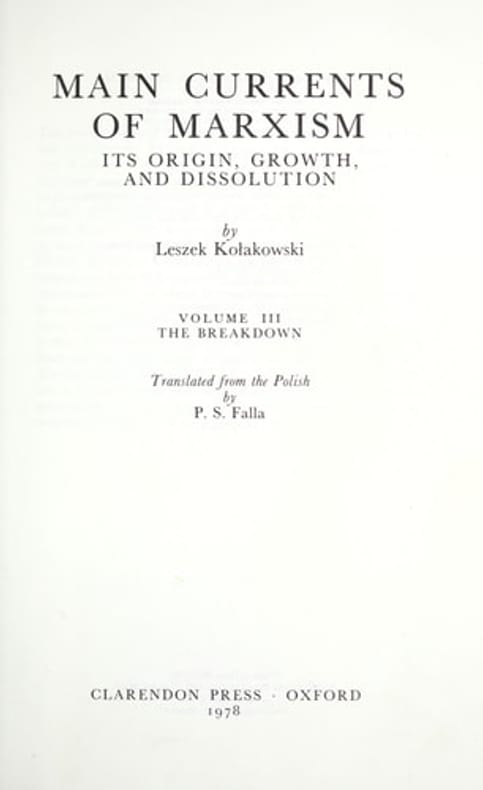
241503Oxford University Press, 1995 24 x 16 cm., 560 pp, Couverture rigide
20250Paris, Editions de Minuit, imprimé par Aulard, imprimeur clandestin des "Editions de Minuit", publié aux dépens de quelques lettrés patriotes, première édition publique, 1945. Broché, couverture rempliée. in-12 de 60 pages non coupées, exemplaire numéroté sur vélin.
13103A Paris, Chez les Marchands de Nouveautés, 1791 (Paris, EDHIS, 1976) (2), 46 pp. 8vo. Boards. Reprint of this very rare work, published in a limited and numbered edition of 150 copies and 30 not destined for the trade and since long out-of-print. General strikes will force the rich to a new and now equal distribution of wealth. This only will be the real revolution. Social manifest of striking topicality.
15923Paris, A. Henry , Décembre 1831. 30 pp. 8vo. Modern boards. Not in Charléty, Bibliographie de Lyon. At head of title: (No 238). Casimir-Pierre Périer (1777-1832), banker, political leader, and minister. With his brother Scipion, he organized and directed the banking house of Périer and Frères in Paris, and they moved into insurance, textiles, sugar refining, flour miling, iron, and coal. Both served as regents of the Bank of France. In 1817 Casimir won election as a deputy of Paris, and he sat in the Chamber of Deputies from that day untill his death in 1832. Originally a member of the government majority, he was, after 1820, increasingly alienated by the politics of the ultraroyalists and shifted into the opposition. In March 1831 he accepted the king's call to head a new conservative ministry. For the next thirteen months as president of the Council and minister of the interior, he imposed his authoritarian and conservative rule on France and on his associates. He excluded the king from meetings of the ministry, denied his ministers all independence of action, restricted the political activities of civil servants, and ruthlessly suppressed popular disorder. The present work deals with the attitude of the government regarding the insurrection of the Lyon workers in November 1831. The uprising of 1831 and 1834 marked the final efforts of France's most militant preindustrial work force to secure decent incomes and a voice in the management of an industry in which their influence had steadily declined (Historical Dictionary of France from the 1815 Restauration to the Second Empire, vol. I, pp. 653 ff. and vol. II, pp. 791-792).
8232Paris, Editions Sociales, 1946. In-8 broché, 127 pp.
24151(At end:) Paris, Imprimerie de Gaultier-Laguionie, (1830). 16 pp. 8vo. Sewn, disbound. Not in Walch; not in Walch-Gerits. At head of title: 'Aide-toi, le ciel t'aidera.' The society 'Aide-toi, le Ciel t'aidera' was formed to aid opposition candidates for election to the Chamber of Deputies in the period 1827-1834. It was directed by a central committee in Paris and operated through a network of local committees and agents throughout the country. After the Revolution of 1830, the original directors of the society (among whom Barrot, Guizot and de Rémusat) withdrew, and leadership passed to young republicans, including Godefroy Cavaignac, Etienne Garnier-Pagès, and Louis Blanc. Under their direction the society published pamphlets, distributed letters of political intelligence and advice to members.
18078En France, 1788. 220, (2) pp. 8vo. Modern half red morocco, marbled boards, gilt lettering. INED 4025; Mornet 1363; Le Bucher Bibliographique, 607; Peignot, i, 298; Darnton, The Corpus of Clandestine Literature in France, 1769-1789, 81. One of the two issues of the improved 1788 edition, enlarged with the 'Fragmens politiques', including a.o. 'Réflexions sur les droits des Etats Généraux, relativement à la concession des subsides'; 'De l'autorité des magistrats', etc. The book was first published in 1775 and almost immediately forbidden and suppressed. The work is cited as one of the most radical and serious attempts to maximalize the theory of Rousseau's Contrat Social and stating that nothing supercedes the social contract and the "general will." "Written in response to Chancellor Maupeou's attack on the parlements in 1771, the Catéchisme contained a radical statement of the doctrine of national sovereignty, not simply in the abstract terms of Rousseau's Contrat Social or the more congested historical formulations of the parlementary Maximes du droit public français, upon both of which it drew, but in the more immediate question-and-answer form of a political catechism offering a direct response to a precisely defined act of royal despotism, and culminating in a clear choice between revolution and the destruction of the political order. "Once one has read it, one is not surprised that the partisans of despotism have made such efforts to annihilate it," commented Pidansat de Mairobert in his Mémoires secrets. (...... As a result, copies of the 1775 edition are extremely rare.) Yet the interest of the work remains, not simply because it offered the most radical expression of the principle of national sovereignty, but also because it reappeared in 1787 and went through several editions in 1788 buttressed with additional fragments called forth by the events of the Pre-Revolution" (see: Keith M. Baker, "A classical republican in eighteenth-century Bordeaux: Guillaume-Joseph Saige" in: Inventing the French Revolution, Cambridge, 1990, pp. 128-151). - Slightly stained at blank upper margin throughout.
14188Paris, Librairie Saint-Simonienne, 1832. 2 works bound in 1 volume. 7, (1), 346, (2) pp.; (8), 207, (5) pp. 8vo. Modern half morocco, spine gilt in compartments, gilt lettering, marbled boards. First work: Fournel, p. 94; Walch-Gerits, Supplement, 402; Kress C.3321; Goldsmiths 27808; Einaudi 4951. The rare edition containing also the Lettres by Rodrigues and the latter's translation of Lessing. 'At the end of his life, he (Saint-Simon) recognized the importance of a 'New Christianity', intending to reform religion by introducing a new morality allowing the development of human passions and the persuit of well-being ..... the fastest possible improvement of the lot of the poorest class' (J. Droz, Europe between Revolutions, 1815-1848.)Second work: Walch-Gerits, Supplement, 175. The final section entitled Les trois familles is by E. Barrault.
7651Paris, Parti Socialiste - Section Française de l'Internationale Ouvrière, 1913. In-12 broché (couverture et dos brunis), 356 pp. Compte rendu sténographique.
7528Paris, Parti Socialiste - Section Française de l'Internationale Ouvrière, 1914. In-12 broché(couverture défraîchie, dos passé), 574 pp. Compte rendu sténographique.
7652Paris, Parti Socialiste - Section Française de l'Internationale Ouvrière, s.d. In-12 broché (dos bruni), 132 pp. Compte rendu analytique. Réunification de tous les socialistes.