SALAZAR GENERAL SANCHEZ - GORKIN JULIANMareMagnum
ROSENTHAL GérardLivre Rare Book
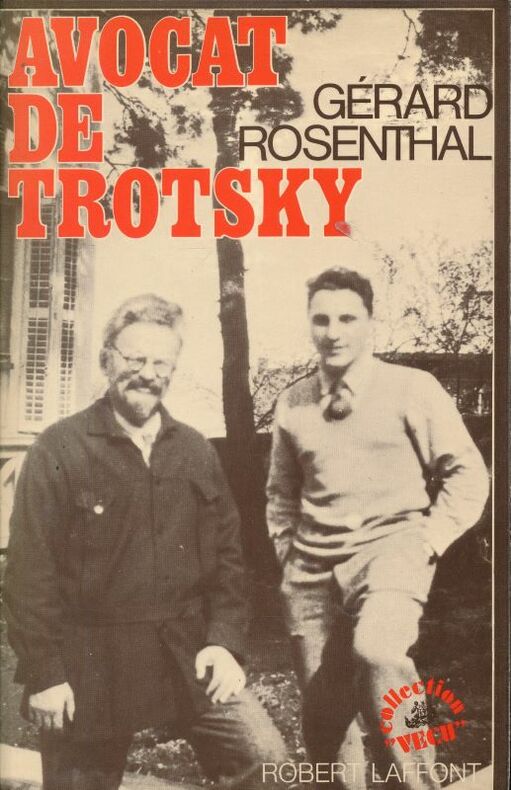
Avocat de Trotsky
1975156809Robert Laffont Robert Laffont, 1975. In-8 broché de 330 pages avec photos. Bon état
Librairie Gil - Artgil SARL · Rodez, France10,00 €
98 résultats
Paris, Editions Self 1948. In-8 carré broché, couverture illustrée. 258 pages non coupées. Petites taches en bord de pages.
Coll. "Presente politico". Titolo originale "Meurtres au Maquis". "Espulso nel 1930 per la sua battaglia contro Stalin e Togliatti, aderì all'opposizione trotskista. Esule in Francia, nel 1943 fu assassinato da partigiani stalinisti. La verità riportata alla luce è stata nascosta per 50 anni. Ottimo stato
1975156809Robert Laffont Robert Laffont, 1975. In-8 broché de 330 pages avec photos. Bon état
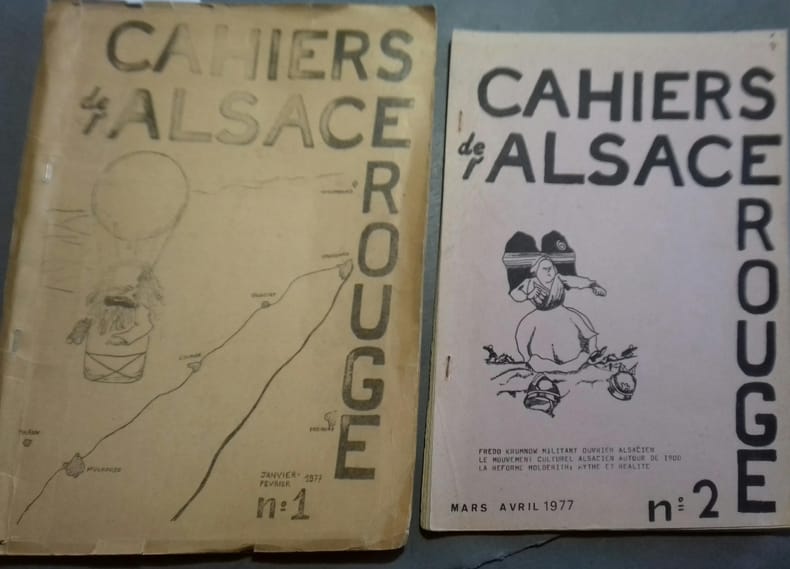
1977208707Couverture souple. 2 revues ronéotées au format A4. 48 + 48 pages.
19711223861971 N° 1 - fevrier 1971 - revue mensuelle - In-4 broché, couverture illustrée - 52 pages
199248205CERMTRI 1992. In-4 CERMTRI 1992. In-4 agrafé d 86 pages. Bon état
CERMTRI 1992. In-4 agrafé d 86 pages. Bon état
1972208599Couverture souple. Broché. 175 pages.
197272441Couverture souple. Broché. 175 pages.
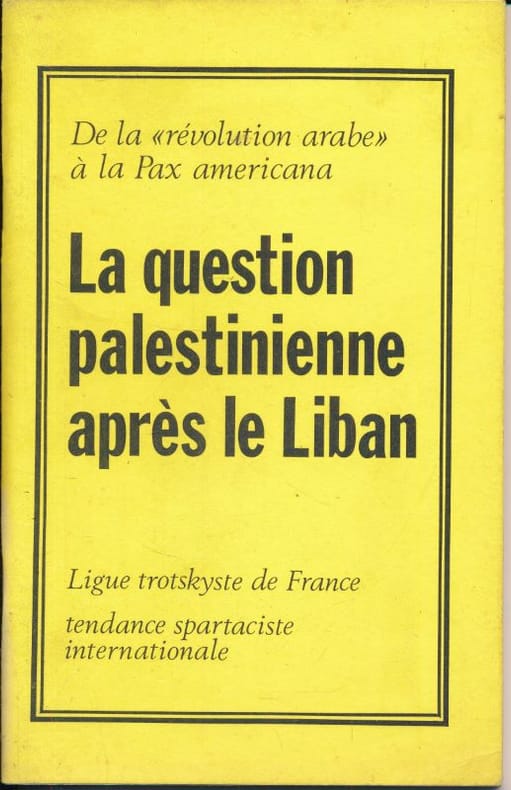
198230758Ligue Trotskyste de France Paris, Ligue Trotskyste de France 1982. In-8 broché de 84 pages. Bon état
1978126324Couverture souple. Broché. 412 pages.
Covers show edgewear & are tape-repaired at spine. Internally Very Good & Solid. (R-1-1); 8vo; Zheneva [i.e. Geneva], Gruppa "Khlieb i volia," 1904. Paper Wrappers, 12mo, 75 pages. 17 cm. In Russian. This is the first separate appearance of Kropotkin's important essay on the state, and also its first appearance in his native Russian (The essay first appeared as a series of articles entitled "L'Etat: son rôle historique" in Les Temps nouveaux, December 19, 1896- July 3, 1897.) It was later translated and published in English as "The State: Its Historic Role" (London: Freedom Press, 1911). Kropotkin, in exile in Western Europe, "became the best-known propagandist in the international anarchist movement" and "participated in several attempts to direct anarchist propaganda into Russia ..Kropotkin was and remains the most widely read anarchist writer, and his version of anarchist theory was the most influential contribution to the anarchist movement in Russia and elsewhere " (Nicolas Walter in Shukman, 1988, pp. 334-335) OCLC lists 3 copies worldwide (Hoover, U of Kansas, Columbia). This is Alexander Granovsky's copy with his signature & bookplate. Granovsky was a leader of the Ukranian exile community in the US and was the founder, in 1941, of the Ukrainian Scientific Institute, which had a short life but was one of the forerunners of other efforts that followed World War II. He was a also a leader of the Organization for the Rebirth of Ukraine and a world famous entomologist, activist and poet as well. From the English Translation: "First of all, let us be agreed as to what we wish to include in the term the State. There is, of course, the German school which enjoys confusing "State" with "Society". The best German thinkers, and many among the French, are guilty of this confusion because they cannot conceive of society without a concentration of the State; and because of this anarchists are usually accused of wanting to ``destroy society'' and of advocating a return to ``the permanent war of each against all.'' Yet, to argue thus is to overlook altogether the advances made in the domain of history during the last thirty-odd years; it is to overlook the fact that humans lived in Societies for thousands of years before the State had been heard of; it is to forget that so far as Europe is concerned the State is of recent origin---it barely goes back to the sixteenth century; finally, it is to ignore that the most glorious periods in history are those in which civil liberties and communal life had not yet been destroyed by the State, and in which large numbers of people lived in communes and free federations. The State is only one of the forms adopted by society in the course of history. Why then make no distinction between what is permanent and what is accidental? Then again the "State" has also been confused with "Government". Since there can be no State without government, it has been sometimes said that what one must aim at is the absence of government and not the abolition of the State. However, it seems to me that in State and government we have two concepts of a different order. The State idea means something quite different from the idea of government. It not only includes the existence of a power situated above society, but also of a "territorial concentration" as well as the "concentration of many functions of the life of societies in the hands of a few". It carries with it some new relationships between members of society which did not exist before the establishment of the State. A whole mechanism of legislation and of policing has to be developed in order to subject some classes to the domination of others. This distinction, which at first sight might not be obvious, emerges especially when one studies the origins of the State. Indeed, there is only one way of really understanding the State, and that is to study its historic development, and this is what we will try to do." OCLC lists 3 copies worldwide (Hoover, Kansas, & Columbia). (RUS-10-1)
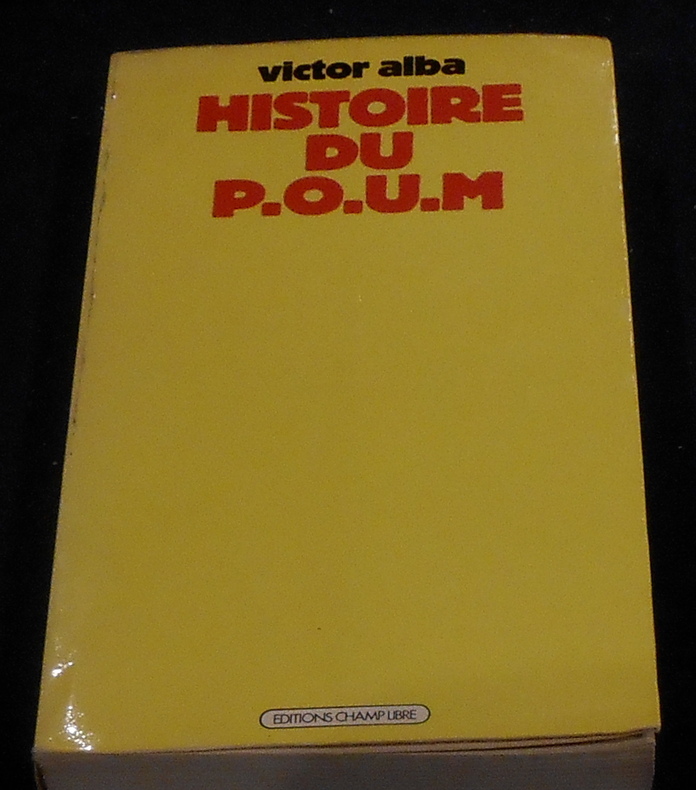
197523248Paris, Éditions Champ Libre, 1975. Broché, 14 cm x 27 cm, 387 pages. Texte de Victor Alba, traduction de Noémie Pagès, chronologie, bibliographie. Très bon état
GUANDA 1974 269 PP. FONDO DI MAGAZZINO: SCRITTA "SCONTO 50%" AL RISVOLTO DI QUARTA, SEGNI DEL TEMPO ALLA COPERTINA, VOLUME INTONSO, MAI SFOGLIATO, PERFETTO.
9156Paris, Gallimard 1960, 227x142mm, 223pages, illustré, broché. Pages non coupées. Bon état.
Traduction, par Claude BUHRER-LEVENSON, de 4 textes extraits de "Comment s'arma la révolution" ("Kak vooroujalas' revolioutsiia") publié en 1925 par Léon TROTSKY (1879-1940); introduction du sociologue Pierre NAVILLE (1904-1993): où l'auteur se proposait de "préciser les conditions d'un art de la guerre, telles que l'expérience et la réflexion les lui avaient apprises, à son poste de Président du Comité Militaire Suprême de la jeune République des Soviets, pendant toute la durée de la guerre civile"; notes. Français
10885Paris (66, Faubourg Saint-Martin). Gérant : R. Molinier. Journal de grand format.
10886Paris (66, Faubourg Saint-Martin). Gérant : R. Molinier. Journal de grand format.
10887Paris (66, Faubourg Saint-Martin). Gérant : R. Molinier. Journal de grand format.
10888Paris (66, Faubourg Saint-Martin). Gérant : R. Molinier. Journal de grand format.
1967UUI-6394Brochure de format in-8, Voix ouvrière, 1967, 36 pp. Un peu frottée et piquée, pliure verticale sur la couverture, usure d'usage, exemplaire de lecture. Rare. Poids 60 g. Frais d'envoi 1,60 euro sur la France, 2 euros UE et Suisse, 2,50 euros pour le reste du monde (tarifs de base hors envois suivis).
1973ln95François Maspero Poche Rouge Dos carré collé 1973 In-12 (11,1 x 18 cm), dos carré collé, 180 pages ; dos et bords des plats insolés, mors et bords des plats frottés, quelques légers frottements sur les plats, par ailleurs assez bon état général. Livraison a domicile (La Poste) ou en Mondial Relay sur simple demande.
1973qq2070François Maspero Poche Rouge Dos carré collé 1973 In-12 (11 x 18 cm), dos carré collé, 180 pages ; dos insolé, mors blanchis, quelques frottements aux plats, par ailleurs assez bon état général. Livraison a domicile (La Poste) ou en Mondial Relay sur simple demande.
1981184812Le Bolchévik Paris, Le Bolchévik, 1981. In-4 broché (agrafé) de 55 pages. Documents des oppositionnels trotskystes dans le GIM, l'IMG et la LCR. Bon état