1 298 résultats
16934Par-tout (Holland), Chez le vrai sage, 1760. 2 works bound in 1 volume. 130 pp.; 211, (5) pp. 12mo. Contemporary marbled calf, spine gilt with raised bands, label with gilt lettering, front cover with repair. First work: Not in Camus; Weller, ii, 129; Conlon 51:635 (listing an edition printed in 'Francfort et Leipsic' in 62 pages only); Holzmann & Bohatta, 11995; INED 1907 & 1872 (for Formey's work). One of at least two editions printed in the year of its first publication.Rare and important treatise on legal reform in which Frederic collaborated with Cujacius. The work is both historical and political and discusses the origins of law in Greece, Rome, France, England and Germany, their structure and classification and how national culture influences the development and adaptation of laws. Formey's treatise covers the pp. 86-130. It argues in favour of interest as long as the interest is "honnête". - Small stamp in blank portion of half-title.Second work: Kress 5457; INED 3318; Goldsmiths 9074; Einaudi 4031 (all listing the first edition); Le Bucher bibliographique, 780; Weller, ii, p. 140. According to Lichtenberger in his Le Socialisme au XVIIIe siècle, this is, if not the most important socialist work of the 18th century, at least one of the most important works, and it is the theoretical foundation of his famous Naufrage des isles flottantes; ou Basiliade .......'Morelly argued that the code of nature was completely communistic. Starting out from the proposition that moral evil, the essence of which was avarice, could be explained by social conditions Morelly portrayed and advocated an ideal communistic society in which it would be 'impossible to be depraved.' (.....) In many respects Morelly's system anticipates the rationalistic utopianism of Fourier' (Kingsley Martin in ESS, vol. xi, pp. 10 ff).Morelly was 'tremendously influential in inspiring utopian socialism, for his theories are reflected in almost every one of the schemes of the Utopian socialists. In fact we must regard him, if not the founder, at least as the most conspicious forerunner of the Utopian Socialists. (.....) Of the writers of his time he was the one who saw most clearly the need of a new system to replace the old; he alone was truly constructive, for he actually outlined a new social structure which he thought would meet the needs should ancient society be overthrown. While others deserve merit as critics and analysts and destroyers, he alone deserves the name of utopianist at this early period' (Hertzler, J.O. The history of Utopian Thought, p. 186 ff). The work was severely prosecuted in France. This edition was apparently printed in Holland and destined for the French market. - A very nice volume with two important texts.
23026Norrkoeping, Eric Biornström, (below, on printed cover: En Commission - Londres, Trübner & Co), 1863. (2), iv, (2, blank), 96 pp. 8vo. Modern boards, original covers preserved. Anderson 302; Kilgour 436; Zaleski 197. First separate edition: Herzen's letters to Turgenev, which first appeared in My Past and Thoughts, published here with a new introduction. 'Herzen's renewed interest in Russia's past and future was closely linked to his bitter disappointment in the "old world". He was a discerning critic of bourgeois society, even if his strictures were not always fair. The modern reader is struck especially by certain far-sighted observations, that seem to anticipate criticism of a complex phenomenon we have come to refer to as "mass culture". Herzen's most interesting comments in this respect are to be found in a series of articles entitled Ends and Beginnings, in which he conducted a polemic with Ivan Turgenev, who had become the moral authority for liberal Westernizers in Russia' (Andrzej Walicki, A History of Russian Thought, Oxford, Clarendon Press, 1980, p. 170). Alexander Herzen (1812-70) was a prominent nineteenth-century Russian social thinker and is known as the 'father of Russian socialism.' Early in his intellectual development, Herzen was influenced by German idealist thinkers such as Schiller and Schelling. He believed in the autonomy and dignity of the individual and opposed forces, such as family and state, that oppressed the individual. Later, under the influence of French socialist thinkers such as Charles Fourier, Herzen's thought became more radical. Herzen projected his earlier concern for the oppressed individual onto society at large and he became a supporter of socialism. The socialism he envisioned was a loose federation of self-governing communes. Only in such a system could the ideal society be achieved- according to Herzen that society would be a free association of individuals which provided for the full flowering of each personality. Herzen initially placed his hopes for this future order in the European socialist movement. After the failure of the 1848 revolutions to achieve socialist principles, however, Herzen became disillusioned about European prospects and turned his attention to Russia. Herzen argued that socialist transformation would actually come first to Russia because communal institutions such as the peasant commune survived and bourgeois attitudes hadn't yet emerged. This sense of the advantages of Russian 'backwardness' was influential among the Populists in the 1870s. Herzen has been called a 'gentry revolutionary.' The illegitimate son of a wealthy landowner, Herzen viewed the gentry as a progressive class. The revolution he envisioned was for the people but not necessarily by them. Also, his socialism was a national destiny rather than a class one, and because he promoted the value of individualism in collectivist form--in other words, the full flowering of the individual could best be realized in a socialist order. Among Herzen's works are From the Other Shore (1848-50) and The Russian People and Socialism and his autobiography, My Past and Thoughts.He founded a periodical, the famous Kolokol, in whose pages the free word first appeared in the Russian language, unhampered by censor or police, exposing the government's secrets, criticizing bureaucratic abuses, approving the good intentions of the czar, the 'liberator', and trying to dictate to him a reform program.
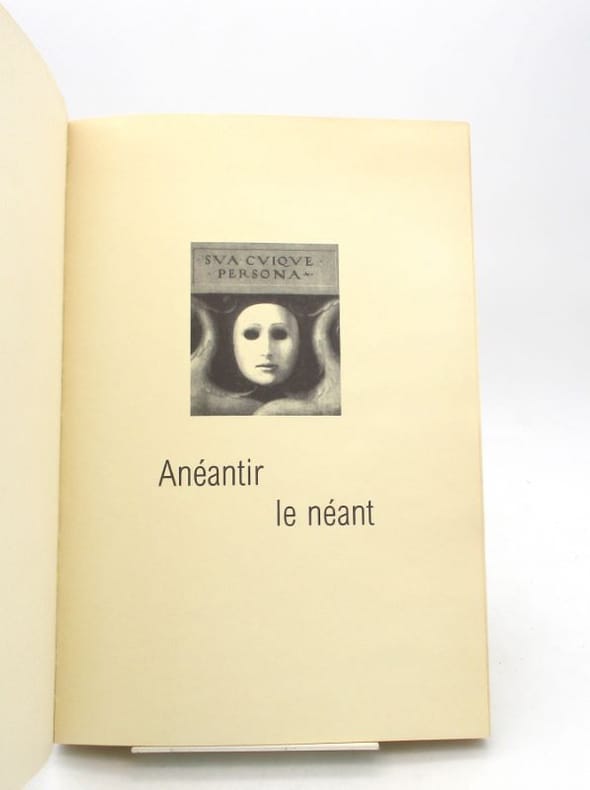
21520Paris, Tiqqun, 1999. In-folio, 160 pp., broché, couverture originale imprimée (quelques minuscules taches).
51891Paris Librairie G. Jacques, sans date (1903) in 12 (18x11,5) 1 volume reliure toilée noire ancienne, dos lisse titré en lettres dorées, avec en queue: Cercle de la Libératrice, XXVI et 265 pages [1]. Traduction et notice biographique de Mme Laran-Tamarkine. Nikolaï Gavrilovitch Tchernychevski, Saratov 1828-1889, philosophe, socialiste utopiste et révolutionnaire russe. Collection '' Etudes socialistes '', XI. Rare. Bon exemplaire ( Photographies sur demande / We can send pictures of this book on simple request )
4650PARIS, Ed. Rationalistes -Revue, In-4 carrée - Tête de Collection - N° 1, 1966 auN° 43, 09/1977 - 45, 01/1978 au N° 46,06/1978 - N°48, 10/1978 - N° 50, 04/1979 au N° 55, 06/1980 - N° 58, 04/1981 & 59, 09/1981 - N°61, 01/1982 au N° 66, 04/1983 t - N°68, 10/1983 au N° 70, 04/1984 -N° 73, 01/1985 au N° 79, 07/1986 - N° 81, 01/1987 au N°83, 07/1987 - N°85, 01/1988 au N° 88, 10/1988 - N° 90, 04/1989 au N° 95, 07/1990 - N° 98, 04/1991 au N° 106, 04/1993 - SOIT 92 N° - TRES PROPRESChaque numéro peut-être vendu individuelement au prix de 50 , N° 1 à 10, 30 , N° 11 à 48, 15 les numéros suivants.
2527Organe central de l’Union internationale des écrivains révolutionnaire, Edition d’Etat, Moscou, Leningrad, 1931.
15719Paris, Deville-Cavellin, Pagnerre, 1833. 2 volumes in 1. (4), 247, (1) pp.; 276 pp. 8vo. Contemporary half calf, marbled boards, spine gilt with black label with gilt lettering, marbled edges, front joint a bit rubbed. Prudhommeaux 4; Desanti, Les socialistes de l'Utopie, p. 283; DBMOF, vol. i, p. 333. Cabet, famous utopian socialist, wrote this book during the spring and summer of 1832. It is 'son premier ouvrage important .... qui lui valut, pour offenses diverses au roi et au gouvernement, cinq ans de prisons d'abord .....' (Maitron). 'Le livre montre qu'il faut regagner le terrain perdu par les réformes sociales depuis le Directoire, revenir à la Convention, reconquérir les libertés de presse, d'association, la gratuité de l'enseignement, le suffrage universel et suprimer le budget des cultes' (Desanti). - Small hole in p. 133-134 causing lost of few letters, a few light spots.
16346Genève, 1871. xvi, 311, (1) pp. 8vo. Modern half morocco, original covers preserved. Zaleski 79; not in Catalogue Russica. First French edition. Alexander Herzen (1812-70) was a prominent nineteenth-century Russian social thinker and is known as the 'father of Russian socialism.' Early in his intellectual development, Herzen was influenced by German idealist thinkers such as Schiller and Schelling. He believed in the autonomy and dignity of the individual and opposed forces, such as family and state, that oppressed the individual. Later, under the influence of French socialist thinkers such as Charles Fourier, Herzen's thought became more radical. Herzen projected his earlier concern for the oppressed individual onto society at large and he became a supporter of socialism. The socialism he envisioned was a loose federation of self-governing communes. Only in such a system could the ideal society be achieved- according to Herzen that society would be a free association of individuals which provided for the full flowering of each personality. Herzen initially placed his hopes for this future order in the European socialist movement. After the failure of the 1848 revolutions to achieve socialist principles, however, Herzen became disillusioned about European prospects and turned his attention to Russia. Herzen argued that socialist transformation would actually come first to Russia because communal institutions such as the peasant commune survived and bourgeois attitudes hadn't yet emerged. This sense of the advantages of Russian 'backwardness' was influential among the Populists in the 1870s. Herzen has been called a 'gentry revolutionary.' The illegitimate son of a wealthy landowner, Herzen viewed the gentry as a progressive class. The revolution he envisioned was for the people but not necessarily by them. Also, his socialism was a national destiny rather than a class one, and because he promoted the value of individualism in collectivist form--in other words, the full flowering of the individual could best be realized in a socialist order. Among Herzen's works are From the Other Shore (1848-50) and The Russian People and Socialism and his autobiography, My Past and Thoughts.He founded a periodical, the famous Kolokol, in whose pages the free word first appeared in the Russian language, unhampered by censor or police, exposing the government's secrets, criticizing bureaucratic abuses, approving the good intentions of the czar, the 'liberator', and trying to dictate to him a reform program.
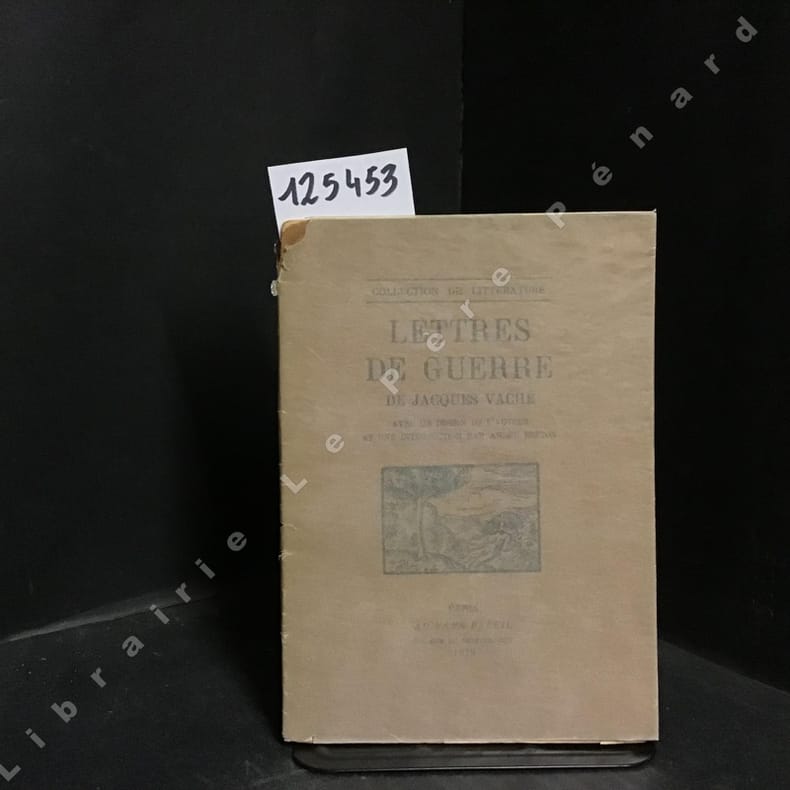
19191254531919 Paris, Au Sans Pareil - 1919 - Edition originale - In-12 broché - V-32 pages - Illustré d'un dessins hors texte de l'auteur - L'un des 960 exemplaires sur vélin bouffant, numéroté 234 (troisième papier après 10 Japon ancien et 30 Hollande van Gelder)
1895100074363Paris. 16 5 cm x 25 5 cm. 1895. Relié. 228 pages. Paris La Revue Socialiste 1895. Relié demi-basane couverture conservée 16 5 cm x 25 5 cm 228 pages. Texte de Benoit Malon. Déchirure sur la 4ème de couverture sinon bon état DDéchirure sur la 4ème de couverture sinon bon état
1970140500Paris, Moscou, éditions Sociales , éditions du Progrès 1970 47 tomes dont 2 d’index. Manque vol. 34. In-8 20,5 x 14 cm. Reliures éditeur simili-cuir brun, portrait de Lénine gaufré sur le premier plat, sous jaquettes papier vert avec raies horizontales noires et rhodoïd vol. 5,7, 9, 20, 25, 30, 33, 36 sans jaquettes, environ 500 pp. chaque volume, illustrations en noir. Bon état.
51909Paris Félix Alcan, Editeur 1904 in 8 (22x14) 1 volume reliure toilée noire ancienne, dos lisse titré en lettres dorées, avec en queue: Cercle de la Libératrice (à Montpellier), IV et 480 pages. Paul Louis, 1872-1948. Rare. Bon exemplaire ( Photographies sur demande / We can send pictures of this book on simple request )
1868409Librairie internationale, Paris - A.Lacroix , Verboeckhoven & Cie Editeurs. 1868. Nouvelle édition. In-12 ( 18 X 11,5 cm), 1/ 2 reliure de basane brune avec mention de titre , initiales et 7 doubles filets dorés.
51907Paris Félix Alcan, Editeur 1904 in 8 1 volume reliure toilée noire ancienne, dos lisse titré en lettres dorées, avec en queue: Cercle de la Libératrice (à Montpellier), XXXI et 415 pages. Eugène Fournière, 1857-1914. Rare. Bon exemplaire ( Photographies sur demande / We can send pictures of this book on simple request )
49028Paris V. Giard & E. Brière, Libraires-Editeurs 1899 in 12 (18x11,5) 1 volume reliure toilée noire ancienne, dos lisse titré en lettres dorées, avec en queue: Cercle de la Libératrice, VII et 488 pages. Jules Guesde pseudonyme de Jules Bazile, Paris 1845 - Saint-Mandé 1922, homme politique socialiste français. Première édition. Bel exemplaire ( Photographies sur demande / We can send pictures of this book on simple request )
51908Paris V. Giard & E. Brière, Libraires-Editeurs 1900 in 8 (22x14) 1 volume reliure toilée noire ancienne, dos lisse titré en lettres dorées, avec en queue: Cercle de la Libératrice (à Montpellier), XV et 463 pages. Collection '' Bibliothèque socialiste internationale '' II. Ouvrage traduit de l'allemand par Edgar Milhaud et Camille Polack. Rare. Bon exemplaire ( Photographies sur demande / We can send pictures of this book on simple request )
49040Paris V. Giard & E. Brière, Libraires-Editeurs 1909 in 12 (18x11,5) 1 volume reliure toilée noire ancienne, dos lisse titré en lettres dorées, avec en queue: Cercle de la Libératrice, 384 pages. Paul Lafargue, Santiago de Cuba 1842 - Draveil 1911, journaliste, économiste, écrivain et homme politique socialiste français. Collection '' Bibliothèque socialiste internationale ''. Bon exemplaire ( Photographies sur demande / We can send pictures of this book on simple request )
1969181938Document tapuscrit Document tapuscrit In-4 en feuillets agrafés non daté (1969 ?), 23 pages. Texte en français. En juin 1969, Carlos Marighela publie ce texte en soutien et conseils à la lutte contre la dictature militaire au Brésil. Publication interdite en France, elle fut néanmoins réédité plusieurs fois. Membre du Parti Communiste, il en sera expulsé pour s'être rendu à La Havane. Il est assassiné en novembre 1969. Notre document est une traduction en français de ce texte à l'époque mais postérieure a novembre 1969. En fin et tapuscrit : Carlos Marighela - Action Libération Nationale - Juin 1969. Petites traces de rouille à l'emplacement des trois agrafes. Bon état.
49041Paris Editions de la Revue Blanche 1900 in 12 (18x11,5) 1 volume reliure toilée noire ancienne, dos lisse titré en lettres dorées, avec en queue: Cercle de la Libératrice, 517 pages. Gaston Moch, Saint-Cyr-l'Ecole 1859 - Paris 1935, pacifiste et espérantiste français. Edition originale. Rare. Bon exemplaire ( Photographies sur demande / We can send pictures of this book on simple request )
1998100137322Palgrave Macmillan 1998 237 pages 13 8x1 4x21 6cm. 1998. Relié. 237 pages.
102.210Paris, Les Editions Rieder, 1933-1934. 13 x 21, 4 volumes, 321 + 349 + 481 + 573 pages, broché, bon état (tome 4 partiellement non coupé).
19956001995 - broché - People's Fine Arts Publishing House - Imprimé par Beijing Meitong Printing Factory - Troisième impression : 1995 - Wu YICAI (Rédacteur en chef) - In-8 (18,5 x 13 cm) broché, couverture à rabats - Très nombreuses illustrations en noir et blanc - ISBN : 9787102000992 - ENGLISH : People’s Fine Arts Publishing House – Printed by Beijing Meitong Printing Factory – Third printing: 1995 – Wu Yicai (Editor-in-chief) – Octavo (18.5 × 13 cm), paperback with flaps – Very numerous black-and-white illustrations - 中文:人民美术出版社出版 - 西洋素描百图 - 蒋淑均编著 - 北京美通印刷厂印刷 - 1986年6月第一版,1995年第三次印刷 - 责任编辑:吴依才 - 18开(18.5 × 13厘米)平装,带折页封面 - 大量黑白插图
1971119490Paris, éditions sociales 1971 3 volumes. In-8 23 x 14 cm. Reliures toile beige, dos et premiers plats de couverture conservés, 501-382-575 pp., index des noms cités, table des matières à la fin de chaque volume. Exemplaires en très bon état.
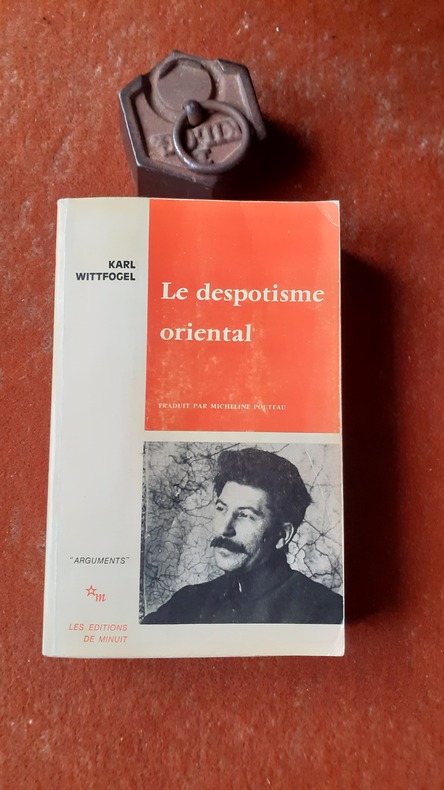
QWA-21298Minuit, 1977, in-8 br. (13,5 x 21), XXXVI-655 p., coll. "Arguments", traduit de l'anglais sur l'édition de 1959 par Micheline Pouteau, nouvelle préface par l'auteur, 8 cartes, bon état.
25499 premiers numéros, in-4 agrafés (sauf n°1 : in-8), 50 pp. env./n°, édités par Robert Camoin à Marseille. Comprend : n°1) Octobre 1968 : Notre tâche [Revue des Cahiers] – Le matérialisme historique, d'Anton Pannekoek – Anton Pannekoek, de Paul Mattick – n°2) Janvier 1969 : La conception du socialisme chez Otto Rülhe, de Sebastian Frank – Les conseils ouvriers, de Henri Chazé – Otto Rühle et le mouvement ouvrier allemand. Stalinisme et fascisme. Critique socialiste du bolchevisme, de Paul Mattick – n°3) Avril 1969 : De l’impuissance des groupes revolutionnaires, de Sam Moss – Sciences de la nature et société, Spartakus – Sur les conseils, de Roland Simon – n°4) Juillet 1969 : Thèse sur la Révolution chinoise, de Cajo Brendel – n°5) Mars 1970 : Éditorial + Bolchevisme et communisme de conseils – L’arrière-fond de la déstalinisation, de Théo Maasen – n°6) Juin 1970 : La situation internationale – L’auto mouvement des travailleurs – Actualité et perspectives du capitalisme – Nature et place des théories marxistes – n°7) Décembre 1970 : La duperie antifasciste – Leçons de la révolution espagnoles – L’interprétation du marxisme chez Lénine, de Cajo Brendel – Parlements et partis, de Otto Rülhe – n°8) Mai 1971 : Un début de regroupement révolutionnaire, des Cahiers de Communisme de Conseils, Organisation conseilliste de Clermont, Révolution Internationale – De Kronstadt à Gdansk et Szczecin, de Henri Chazé – Une correspondance entre A. Pannekoek et P. Chaulieu, avec une introduction de Cajo Brendel – n°9) Septembre 1971 : Pour défendre son hégémonie, l’impérialisme américain attaque, de Henri Chazé – De l’inévitabilité de l’organisation révolutionnaire, de Nicole Margot & Robert Camoin – De la nécessité de la théorie pour une théorie politique réelle, de Guy Sabatier – La grande conspiration contre le socialisme russe et allemand, de Sylvia Pankhurst – Post note sur Sylvia Pankhurst, de Nicole Margot.