United States Congress Senate Special CoBiblio.com
Innovation in the Aging Network: The Future of Social Services for Older Americans
B9781240521623Paperback / softback. New. paperback
The Saint Bookstore · Royaume-Uni41,14 £GB≈ 46,97 €
3 073 résultats
197562004Washington DC: U.S. Government Printing Office 1975. Wraps. Good. No dust jacket as issued. Cover has some wear and soiling. iii 138 p.; 24 cm. Serial No. 94-35. The special subcommitee chaired by Senator Tunney was concerned about the United States becoming increasingly vulnerable to another oil embargo. In an attempt to lessen United States dependence on foreign fuels and protect the nation's stock of energy resources the Senate Commerce Committee was giving top legislative priority to energy conservation. programs. U.S. Government Printing Office paperback
B9781240521623Paperback / softback. New. paperback
0428095445.Gpaperback. Good. Access codes and supplements are not guaranteed with used items. May be an ex-library book. paperback
0428566049.Ghardcover. Good. Access codes and supplements are not guaranteed with used items. May be an ex-library book. hardcover
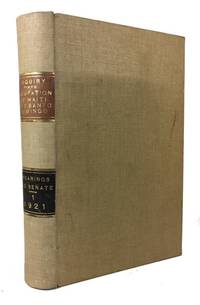
192274865Washington: GPO 1922. Hardcover. Very Good. This volume only of 2. 812p. Contemporary tan buckram. No Jacket. Not a proud chapter in American history. GPO hardcover
B9781019949047Hardback. New. hardcover
1951ZB1145106Washington: GPO 1951. four volumes first edition ca. 1200 pp. paperbacks minor external wear & fraying some ownership marks text clean & bindings tight. - If you are reading this this item is actually physically in our stock and ready for shipment once ordered. We are not bookjackers. Buyer is responsible for any additional duties taxes or fees required by recipient's country. Photos available upon request. Washington: GPO paperback
0267508727.Ghardcover. Good. Access codes and supplements are not guaranteed with used items. May be an ex-library book. hardcover
0656450134.Ghardcover. Good. Access codes and supplements are not guaranteed with used items. May be an ex-library book. hardcover
1331488753.Gpaperback. Good. Access codes and supplements are not guaranteed with used items. May be an ex-library book. paperback
197689043Washington D. C.: GPO 1976. Paperback. ix 1000p. plain printed green Senate wraps spine panel is sunned there is edgewear and a neat repair to upper joint-line ownership in ink to cover and a 1x3 inch chip to titlepage no text affected. Reading copy. Senate resolution 21 ninety-fourth congress first session. The first third of the text is a transcript of hearings the remainder consists in documents in facsimile most of these legible. Cointelpro actions against King the student left and W.I.T.C.H. the Women's International Terrorist Conspiracy from Hell based in Chicago see p.583. GPO paperback
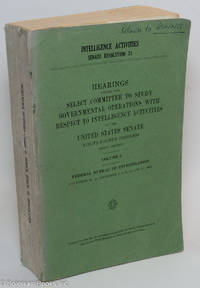
197667809Washington DC: U.S. Government Printing Office 1976. Presumed first edition/first printing. Wraps. Good. Ink notations inside front cover. Ink underlining and marks in first part of Hearing record. Slightly cocked. Cover soiled and scuffed. VOLUME 6 ONLY. ix 1 1000 6 pages. 24 cm. Title continues: "Investivations November 18 19 December 2 3 9 10 and 11 1975." From a United States Senate website: "In 1973 CIA Director James Schlesinger told Senate Armed Services Chairman John Stennis that he wished to brief him on a major upcoming operation. No no my boy responded Senator Stennis. Don t tell me. Just go ahead and do it but I don t want to know. Similarly when Senate Foreign Relations Committee Chairman J.W. Fulbright was told of the CIA subversion of the Allende government in Chile he responded I don t approve of intervention in other people s elections but it has been a long-continued practice. Late in 1974 investigative reporter Seymour Hersh revealed that the CIA was not only destabilizing foreign governments but was also conducting illegal intelligence operations against thousands of American citizens. On January 27 1975 an aroused Senate voted overwhelmingly to establish a special 11-member investigating body along the lines of the recently concluded Watergate Committee. Under the chairmanship of Idaho Senator Frank Church with Texas Senator John Tower as vice-chairman the select committee was given nine months and 150 staffers to complete its work. The so-called Church Committee ran into immediate resistance from the Ford administration concerned about exposing American intelligence operations and suspicious of Church s budding presidential ambitions. The committee interviewed 800 individuals and conducted 250 executive and 21 public hearings. At the first televised hearing staged in the Senate Caucus Room Chairman Church dramatically displayed a CIA poison dart gun to highlight the committee s discovery that the CIA directly violated a presidential order by maintaining stocks of shellfish toxin sufficient to kill thousands. Lacking focus and necessarily conducting much of its work behind closed doors the panel soon lost any hope of becoming a second Watergate Committee. Critics from Bing Crosby to Paul Harvey accused it of treasonous activity. The December 1975 assassination of a CIA station chief in Greece intensified the public backlash against its mission. The panel issued its two-foot-thick final report in May 1976 without the support of influential Republican members John Tower and Barry Goldwater. Despite its shortcomings the inquiry demonstrated the need for perpetual surveillance of the intelligence community and resulted in the creation of the permanent Select Committee on Intelligence. Historian Henry Steele Commager assessed the Committee s legacy. Referring to executive branch officials who seemed to consider themselves above the law he said It is this indifference to constitutional restraints that is perhaps the most threatening of all the evidence that emerges from the findings of the Church Committee. " From Wikipedia: "The Church Committee was the United States Senate Select Committee to Study Governmental Operations with Respect to Intelligence Activities a U.S. Senate committee chaired by Senator Frank Church D-ID in 1975. A precursor to the U.S. Senate Select Committee on Intelligence the committee investigated intelligence gathering for illegality by the Central Intelligence Agency CIA National Security Agency NSA and Federal Bureau of Investigation FBI after certain activities had been revealed by the Watergate affair. By the early years of the 1970s the unpopularity of the Vietnam War and the unfolding Watergate scandal brought the era of minimal oversight to an abrupt halt. The United States Congress was determined to rein in the Nixon administration and to ascertain the extent to which the nation's intelligence agencies had been involved in questionable if not outright illegal activities. A series of troubling revelations started to appear in the press concerning intelligence activities. First came the revelations of Christopher Pyle in January 1970 of the U.S. Army's spying on the civilian population and Sam Ervin's Senate. U.S. Government Printing Office paperback
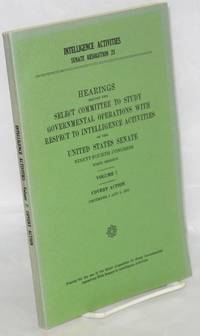
197667803Washington DC: U.S. Government Printing Office 1976. Presumed first edition/first printing. Wraps. Good. Letter J written in ink on front cover. Cover soiled and scuffed. VOLUME 1 ONLY. iv 245 pages. 24 cm. Title continues: "Storage of Toxic Agents September 16 17 and 18 1975." From a United States Senate website: "In 1973 CIA Director James Schlesinger told Senate Armed Services Chairman John Stennis that he wished to brief him on a major upcoming operation. No no my boy responded Senator Stennis. Don t tell me. Just go ahead and do it but I don t want to know. Similarly when Senate Foreign Relations Committee Chairman J.W. Fulbright was told of the CIA subversion of the Allende government in Chile he responded I don t approve of intervention in other people s elections but it has been a long-continued practice. Late in 1974 investigative reporter Seymour Hersh revealed that the CIA was not only destabilizing foreign governments but was also conducting illegal intelligence operations against thousands of American citizens. On January 27 1975 an aroused Senate voted overwhelmingly to establish a special 11-member investigating body along the lines of the recently concluded Watergate Committee. Under the chairmanship of Idaho Senator Frank Church with Texas Senator John Tower as vice-chairman the select committee was given nine months and 150 staffers to complete its work. The so-called Church Committee ran into immediate resistance from the Ford administration concerned about exposing American intelligence operations and suspicious of Church s budding presidential ambitions. The committee interviewed 800 individuals and conducted 250 executive and 21 public hearings. At the first televised hearing staged in the Senate Caucus Room Chairman Church dramatically displayed a CIA poison dart gun to highlight the committee s discovery that the CIA directly violated a presidential order by maintaining stocks of shellfish toxin sufficient to kill thousands. Lacking focus and necessarily conducting much of its work behind closed doors the panel soon lost any hope of becoming a second Watergate Committee. Critics from Bing Crosby to Paul Harvey accused it of treasonous activity. The December 1975 assassination of a CIA station chief in Greece intensified the public backlash against its mission. The panel issued its two-foot-thick final report in May 1976 without the support of influential Republican members John Tower and Barry Goldwater. Despite its shortcomings the inquiry demonstrated the need for perpetual surveillance of the intelligence community and resulted in the creation of the permanent Select Committee on Intelligence. Historian Henry Steele Commager assessed the Committee s legacy. Referring to executive branch officials who seemed to consider themselves above the law he said It is this indifference to constitutional restraints that is perhaps the most threatening of all the evidence that emerges from the findings of the Church Committee. " From Wikipedia: "The Church Committee was the United States Senate Select Committee to Study Governmental Operations with Respect to Intelligence Activities a U.S. Senate committee chaired by Senator Frank Church D-ID in 1975. A precursor to the U.S. Senate Select Committee on Intelligence the committee investigated intelligence gathering for illegality by the Central Intelligence Agency CIA National Security Agency NSA and Federal Bureau of Investigation FBI after certain activities had been revealed by the Watergate affair. By the early years of the 1970s the unpopularity of the Vietnam War and the unfolding Watergate scandal brought the era of minimal oversight to an abrupt halt. The United States Congress was determined to rein in the Nixon administration and to ascertain the extent to which the nation's intelligence agencies had been involved in questionable if not outright illegal activities. A series of troubling revelations started to appear in the press concerning intelligence activities. First came the revelations of Christopher Pyle in January 1970 of the U.S. Army's spying on the civilian population and Sam Ervin's Senate. U.S. Government Printing Office paperback
1975177271Washington D. C.: GPO 1975. Paperback. iv 245p. illustrated with documents in facsimile first issue green Senate wraps 9x5.75 inches spine panel is faintly sunned. A nice fresh copy. Concerns the Chile manipulation. Gary Hart was one of the senators and is outspoken; witnesses include ambassador Edward Korry Clark Clifford Cyrus Vance David Atlee Phillips Morton Halperin. GPO paperback
0656379944.Ghardcover. Good. Access codes and supplements are not guaranteed with used items. May be an ex-library book. hardcover
195390542Washington DC: United States Government Printing Office 1953. Presumed First Edition First printing. Wraps. Fair. PART 12 ONLY. iii 1 725-840 pages. Illustrations. Tabular Data. Cover is worn torn chipped and soiled. In this part 12 testimony was heard from Alice Prentice Barrows Saul Carson Irving Fajans Carl Aldo Marzani Margaret B. Porter Helen R. Tenney Craig S. Vincent and Milton Wolff. One of the purposes of these hearings was "to determine the extent of Communist infiltration of Government." The United States Senate's Special Subcommittee to Investigate the Administration of the Internal Security Act and Other Internal Security Laws 1951–77 known more commonly as the Senate Internal Security Subcommittee SISS and sometimes the McCarran Committee was authorized by S. 366 approved December 21 1950 to study and investigate 1 the administration operation and enforcement of the Internal Security Act of 1950 Pub. L. 81–831 also known as the McCarran Act and other laws relating to espionage sabotage and the protection of the internal security of the United States and 2 the extent nature and effects of subversive activities in the United States "including but not limited to espionage sabotage and infiltration of persons who are or may be under the domination of the foreign government or organization controlling the world Communist movement or any movement seeking to overthrow the Government of the United States by force and violence". The resolution also authorized the subcommittee to subpoena witnesses and require the production of documents. Because of the nature of its investigations the subcommittee is considered by some to be the Senate equivalent to the older House Un-American Activities Committee HUAC. The chairman of the subcommittee for the 82nd United States Congress was Patrick McCarran of Nevada. William Jenner of Indiana took over during the 83rd United States Congress after the Republicans gained control of the Senate in the 1952 election. When the Democrats regained control in the 84th Congress 1955–1957 James O. Eastland of Mississippi became chairman a position he had until the subcommittee was abolished during 1977. The subjects of its investigations during the 1950s include the formulation of U.S. foreign policy in Asia; the scope of Soviet activity in the United States; subversion in the Federal Government particularly in the Department of State and Department of Defense; immigration; the United Nations; youth organizations; the television radio and entertainment industry; the telegraph industry; the defense industry; labor unions; and educational organizations. The subcommittee published over 400 volumes of hearings and numerous reports documents and committee prints. During March 1951 FBI officials began a formal liaison program with the SISS in contract to the informal HUAC-FBI relationship whereby SISS agreed to focus its hearings on "matters of current internal security significance.and also to help the Bureau in every possible manner". This program reflected the FBI director's unqualified confidence in McCarran's ability to serve the cause of anticommunism and to protect the confidentiality of FBI sources. United States Government Printing Office paperback
033175701X.Ghardcover. Good. Access codes and supplements are not guaranteed with used items. May be an ex-library book. hardcover
0428917119.Ghardcover. Good. Access codes and supplements are not guaranteed with used items. May be an ex-library book. hardcover
026714556X.Ghardcover. Good. Access codes and supplements are not guaranteed with used items. May be an ex-library book. hardcover
1331488729.Gpaperback. Good. Access codes and supplements are not guaranteed with used items. May be an ex-library book. paperback
0656523077.Ghardcover. Good. Access codes and supplements are not guaranteed with used items. May be an ex-library book. hardcover
1333193009.Gpaperback. Good. Access codes and supplements are not guaranteed with used items. May be an ex-library book. paperback