(1857), Mexico ConstitutionBiblio.com
264 résultats
1271198053.Gpaperback. Good. Access codes and supplements are not guaranteed with used items. May be an ex-library book. paperback
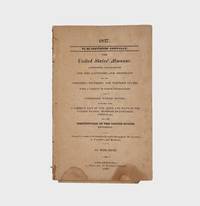
1827374087Philadelphia: R. Desilver 1827. Typeset frontispiece within typographic border approx. 15x18-1/2 inches detached from the accompanying almanac. 67 1pp. 8vo. Disbound. Old folds tear to gutter. Typeset frontispiece within typographic border approx. 15x18-1/2 inches detached from the accompanying almanac. 67 1pp. 8vo. Shaw & Shoemaker 27484; Drake 11567 R. Desilver unknown
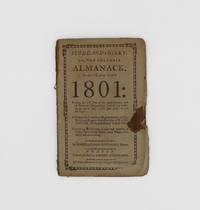
1800374113Hudson: Printed and sold by Ashbel Stoddard 1800. 36pp. Some interleaving with contemporary manuscript annotations recording weather deaths etc. 12mo. Stitched final leaf trimmed close with minor loss to final line on H2r staining and chipping at fore-edge other minor chips and tears. 36pp. Some interleaving with contemporary manuscript annotations recording weather deaths etc. 12mo. With a printing of the U.S. Constitution and the Bill of Rights on the final 12 pages. This almanac calculated by Beers Hutchins died in 1782. Evans 37670; ESTC W33544; Drake 6126 Printed and sold by Ashbel Stoddard unknown
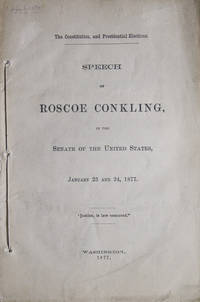
18774062Washington 1877. 48 pp. 1 vols. 8vo. Original stitched wrappers. Minor soiling. Very Good. 48 pp. 1 vols. 8vo. Conkling was the senator from New York and in 1877 was the "favorite son" of New York for the Republican nomination in rivalry with James G. Blaine. As it turned out the nomination and the Presidency went to Rutherford B. Hayes. Conkling was bitterly opposed to Hayes and in this document questions the manner of vote counting by the House and Senate in regard to the election of the President. <br/><br/> unknown
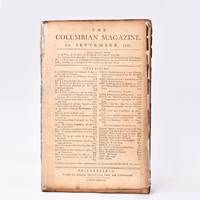
1787365066Philadelphia: Seddon Spotswood Cist and Trenchard 1787. 3 618-674. Without 2 plates. 8vo. Disbound fire damage at edges leaves detached. 3 618-674. Without 2 plates. 8vo. Along with a printing in the American Magazine among the earliest printings of the Constitution in a periodical. "One of the best of the eighteenth century magazines was the Columbian of Philadelphia. Considered from beginning to end the Columbian Magazine with its sequel the Universal Asylum affords an extremely valuable treasury of materials which reflect its own times and the war years immediately preceding. it was the handsomest American magazine of its century" Mott. Seddon, Spotswood, Cist and Trenchard unknown
19382110502150413299Overseas Japanese company 1938. Soft Cover. Fine. Volume: 1 Overseas Japanese company paperback
1332338054.Gpaperback. Good. Access codes and supplements are not guaranteed with used items. May be an ex-library book. paperback
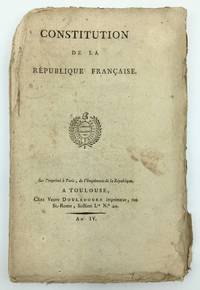
17951507Toulouse: Douladoure. An. IV. 1795. Octavo. Stitched without wrappers likely as issued. Page edges untrimmed. Woodcut device emblematic of the French Republic to the title page. 62pp. A good copy with nibbling/loss to the top left-hand corner not affecting the text and a few minor marks to the title page and rear blank verso. The contents remain clean and in very good order. A scarce provincial printing of the Constitution of the Year III Constitution de l'an III the constitution of the French First Republic which established the Directory regime following the fall of Robespierre.</p><p>Adopted by the convention on 5 Fructidor Year III 22nd August 1795 and approved by plebiscite on 6th September its preamble formed the Declaration of the Rights and Duties of Man and of the Citizen of 1789. Largely the work of political theorist Pierre Daunou it established a bicameral legislature made all taxpaying French males over 25 eligible to vote in primary elections enfranchising around one million more citizens than the 1791 Constitution and contained an explicit ban on slavery.</p><p>It remained in effect until the coup of 18 Brumaire 9th November 1799 which effectively ended the Revolutionary period and began the rise to power of Napoleon Bonaparte. </p><p>A pleasing unsophisticated copy remaining in the same form as it would have been when it reached the hands of ordinary Frenchmen in year that it was issued. Toulouse: Douladoure. unknown
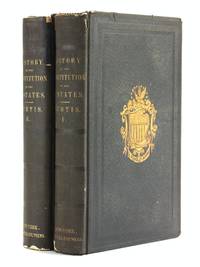
1858505860Harper and Brothers 1858. Hardcover. VERY GOOD. Vol. 1 1860 xxxvi 518; Vol. 2 1858 xvi 653 pp. 8vo original black cloth with gilt spine lettering and ornament to front covers a variation on the Great Seal of the United States. Tips show a bit of rubbing with some trivial loss typical light offsetting both volumes very clean and sharp internally with sound square bindings. From the personal library of lawyer F. K. Arnold with his Portland Oregon bookplate to FPEP and pencil signature d. 1876 to FFEP of volume 1. Harper and Brothers hardcover
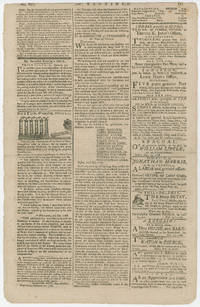
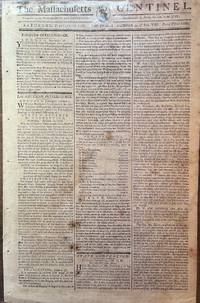
178824836Boston MA 1788. No binding. Condition: Fine. Massachusetts Centinel illustrator. Newspaper. Massachusetts Centinel February 13 1788 Volume VIII pp. 171-174. Boston: Benjamin Russell. 4 pp. 9 5/8 x 14 7/8 in. This newspaper is replete with Constitution-related content including minutes from the debates of Massachusetts' State Ratifying Convention - everything from discourse on standing armies to Fisher Ames' hearkening back to 1775 with "WE MUST UNITE OR DIE"; a poem to Washington on his birthday; a fictional dialogue The Federal Anti-Federalist Returned to His Neighbours; a rare example of one of Benjamin Russell's famed 'Pillars' illustration series; and a great deal of reporting on the popular reception of the news of ratification expressed in particular by an enormous parade and surrounding celebrations. The Massachusetts Centinel employed the Federal Pillars political imagery to announce the ratification of the Constitution by successive states. In this issue the Centinel announces the pending ratification by New Hampshire. "This day the Convention of the State of New Hampshire meet at Exeter for the purpose of erecting another PILLAR to support the great Federal Superstructure; by ratifying the proposed Constitution." On February 6 1788 Massachusetts ratified the United States Constitution by a vote of 187 to 168 the sixth and largest state to do so. Two days later the people of Boston engaged in a grand procession led by the "Mechanicks" and Tradesmen of Boston "to express their approbation of the conduct of the Gentlemen who represented this town in the late Convention" p3/c2. A sampling of the groups of marchers most of whom carried implements and tools of their professions festooned for the occasion as detailed here p4c1-2: 73 Blacksmiths; 43 Shipwrights; 75 Rope-makers with part of a rope-walk on a sled and martial music; 30 Mast-makers; 36 Sail-makers; 34 Ship-joiners; 30 Block-makers pulley makers; 6 Mathematical Instrument Makers makers of navigation equipment etc.; 53 Coopers; 20 Boat-builders; 6 Pewterers; 40 Bakers 50 Shoe-makers; 56 Taylors; 26 Hatters; 20 Ship-builders; 136 Carpenters; 70 Masons; 30 Wheelwrights; 15 Printers; as well as a dozen other tradegroups such Bookbinders; Goldsmiths and Jewelers Saddlers Tobacconists Tanners Curriers Leather-dressers Cabinetmakers Carvers Painters Tinsmiths Coppersmiths and 250 of the "principal merchants in the town." Toward the middle of this assemblage thirteen horses pulled the ship "FEDERAL CONSTITUTION" manned by a crew of thirteen. A subtext of much of this was an emphasis on domestic manufactures as well as a celebration of Boston's power and potential in maritime trade.At this event "WE THE PEOPLE" of Boston "in GRAND PROCESSION MOVING" passed an ordinance to rename Long Lane as Federal Street in commemoration of the site where the convention had sat. The ordinance concluded "GIVEN under our auspices.the FIRST YEAR of OUR real political federal existence.GOD SPEED THE CONSTITUTION!" p1/c1. That night a long boat called "the Old Confederation" which had been exhibited during the parade was drawn to the Common and condemned "as unfit for any further service." The boat was immediately burned "in presence of an applauding concourse of citizens" p3/c2. On February 12 the twelve delegates who represented Boston in the ratifying convention including John Hancock and Samuel Adams responded to the procession in a letter to "the Committee of Tradesmen of the Town of Boston." Excerpt: "We endeavoured that our conduct in the late Convention should be governed by the magnitude of our subject:-And after the most mature deliberation we severally decided according to the best light of our understandings and the dictates of our consciences." "We are happy to find that our decisions have so fully corresponded with the sentiments and wishes of our constituents."
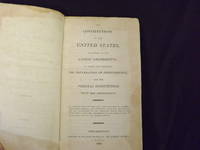
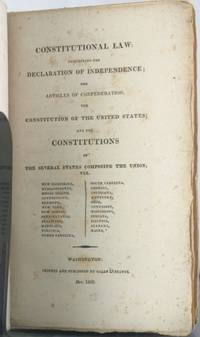
1802106375<p>8vo period calf rebacked with leather 2 266 pp. Joints cracked rebacking crude some wear to covers paper slightly fragile front endpaper detached other front endpaper with piece missing ink name on front pastedown some darkening to contents; otherwise about very good. This is a rich volume of early American government. In addition to the United Sates Constitution and Declaration of Independence this volume also contains the constitutions of the original states and the ordinances for the government of the North West Territory. Printed under the title is the notation that "This edition contains the constitutions of Vermont Delaware Georgia and Kentucky with the regulations for the government of the territory north west of the river Ohio." This material was not in any other edition. </p> William Duane,
180736654Brookfield: Printed by E. Merriam & Co. For Isaiah Thomas 1807. Later printing. Hardcover. Fair. 12mo. 108 pages. Remnants of paper over boards. Covers chipped. Thin leather spine. No title labels. Front end sheet torn in half. Rear end sheet missing. Light toning to the contents. Contents contain Massachusetts Constitution United States Constitution and Washington's farewell address. Fair. <br /> <br /> Sabin 45692; Shaw and Shoemaker 13016. Printed by E. Merriam & Co. For Isaiah Thomas hardcover
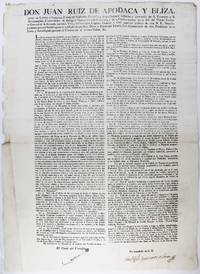
18203330Mexico City: July 11 1820. About very good. Large double-sheet broadside approximately 23.5 x 17 inches. Two sheets joined at central horizontal fold. Five chips at left edge not affecting text and some additional minor edge wear; otherwise light toning and dust soiling. Two contemporary manuscript signatures at foot; contemporary duty stamps on blank verso. Fascinating and otherwise unrecorded broadside that dictates the organization and process for the 1820 election of Mexican deputies to the Spanish Cortes during the second and last period of constitutional monarchy in Mexico. Colonial Mexico first achieved some representation in the Spanish government under the liberal Constitution of 1812 which lasted for two years before being revoked by Ferdinand VII upon his return to power in 1814. The reinstatement of the liberal constitution and the Cortes of Cadiz in 1820 however was not enough to prevent Mexico from obtaining full independence one year later. This broadside promulgated in Mexico on July 11 1820 by the colonial Viceroy Juan Ruiz de Apodaca y Eliza announces the renewed representation via regional elections to select Provincial Deputies for the Cortes and contains eight articles delineating the process by which these elections are to be held. In brief these articles order representation be apportioned according to the population as approximated from the 1792 census; divides Mexico into provinces for the purposes of the election; and places parameters on representation for each province. In all a very interesting window onto the formation of the brief final period of Spanish colonial rule in Mexico. July 11 unknown
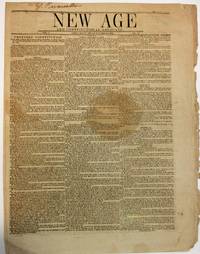
184137248Providence 1841. Elephant folio sheet folded to 16-1/4" x 21." 4 pp. A persistent but light circular spot in the center of each page. Untrimmed a bit of crimping. Good.<br /> <br /> The "Proposed Constitution" adopted at "the Convention of the People" on 18 November 1841 is printed. It would grant the suffrage to "Every white male" adult. Articles favoring is adoption are printed along with Rhode Island's 1790 Declaration of Rights.<br /> The New Age a rare newspaper was an organ of the Rhode Island Suffrage Association allied with Thomas Dorr urging universal white male suffrage. unknown
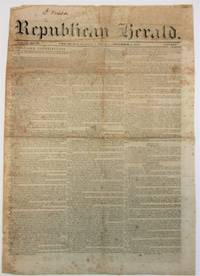
184137252Providence 1841. Elephant folio sheet folded to 15-1/4" x 21-1/2." 4 pp. Old folds light foxing. Good.<br /> <br /> The "Proposed Constitution" adopted at "the Convention of the People" on 18 November 1841 is printed. It would grant the suffrage to "Every white male" adult. Articles favoring its adoption are printed along with Rhode Island's 1790 Declaration of Rights. Articles on national and local political affairs plus numerous advertisements are also printed. <br /> In 1843 Thomas Dorr was arrested at the offices of the Republican Herald for high treason. unknown
182212181Lisboa: Impresa Nacional 1822. Lisboa Imprensa Nacional 1822. En 8º mayor. 100 pp. Encuadernación en cartoné tejuelo de piel en el plano superior con letrerÃa dorada. Primera edición de la primera Constitución Portuguesa votada en Cortes extraordinarias y constituyentes el 23 de Septiembre de 1822 y aceptada por el rey D. João VI en octubre del mismo año. Considerada como un triunfo de los liberales contenÃa 240 artÃculos en su mayorÃa inspirados cuando no directamente copiados de la constitución española de 1812: cesión de soberanÃa al pueblo e independencia de los poderes legislativo ejecutivo y judicial. Esta es la Constitución que los Andradas y otros diputados brasileños se negaron a firmar. Bien acogida en un principio por los brasileños supuso al final el detonante de la independencia de Brasil. Varios dÃas antes de la publicación del "Suplemento" en Lisboa las Cortes declararon el gobierno brasileño subordinado a la constitución lo que fue rechazado por los representantes brasileños quienes comandados por Andradas declararon la independencia de Brasil en 1822. Inscripción en tinta en la portada ligeras manchas ocasionales papel ligeramente tostado. Impresa Nacional unknown
188435270Chicago: Jansen McClug & Co 1884. First Edition. Wraps. Very good. Stitched wraps. Two copies. 8 pages. Original covers present and in very good condition. The Thirteenth Amenment passed the Congress in April 1864 officially ending Slavery. Jansen, McClug & Co unknown
178836781Boston: Benjamin Russell 1788. First Edition. Newspaper. Good. Newspaper. Single issue removed from larger gathering. Paper measures proximately 15" x 9.5". 4 pages. Stitched holes on the left margin. Scattered brown spots. Light toning to the paper.<br /> <br /> Contents include the latest "American Intelligence". Including the front page news article titled: "Augusta Georgia January 5. We have the pleasure to announce to the publick that on Wednesday last the Convention of this State unanimously ratified the Federal Constitution in the words following viz. <br /> <br /> State of Georgia. In Convention Wednesday January 2 1788. We the Delegates of the people of the State of Georgia in Convention met having taken into serious consideration the Federal Constitution agreed upon and proposed by the Deputies of the United States in General Convention held in the city of Philadelphia on the 17th day of September in the year of our Lord one thousand seven hundred and eighty seven Have assented to ratified and adopted and by these presents do in virtue of the powers and authority to us given by the people of the said State for the purpose for and in behalf of ourselves and our constituents fully and entirely assent to ratify and adopt the said Constitution which is hereunto annexed under the great seal of said State. Done in Convention at Augusta in the said State on the second day of January in the year of our Lord one thousand and seventy eight and of the Independence of the United States the twelfth." <br /> <br /> Other items from the paper includes news from Charleston S. C.; Wilmington Delaware; Philadelphia; New York; Massachusetts; and Europe. Much of the Massachusetts news concerns the newly adopted Constitution. [Benjamin Russell] unknown
179276952Paris 1792. First French edition of the 1787 Federal Constitution in addition to the thirteen state constitutions the Declaration d'Independance Articles de Confederation; and several treaties. . old marbled wrappers with ms. paper labels on spines preserved in a utilitarian portfolio. . This was Kenneth Nebenzahl's copy with his book label inside the portfolio. An uncut copy in very attractive original condition. 8vo. Howes C-716. Translated and published at the suggestion of Benjamin Franklin who likely contributed footnotes. He wrote in late 1783: "The extravagant Misrepresentations of our Political State in foreign Countries made it appear necessary to give them better information which I though could not be more efectually and authentically done than by publishing a Translation into French." unknown
1820SP561Gales and Seaton 1820. Second Edition. Hardcover. Good. Washington 1820. 12mo iv 409 pp. Contemporary paper covered boards. Expanded to include 23 states including Alabama and North Carolina. The first edition published a year earlier included just 21 states. A good copy with fraying and chipping to paper at spine foxing to contents and contemporary ownership marks to endpapers. Contents complete. Please contact us for additional pictures or information. Seven copies in OCLC. Cohen Bibliography of Early American Law 3014. Gales and Seaton hardcover
180435986Philadelphia: Printed by William Duane 1804. First Edition. Wraps. Good. Wraps. 158 pages. Disbound stitched wraps. Title page 1. Blank rear wrap. Remnants of a leather spine. Light toning and scattered brown spots to the contents. Some lower corner page corner creases. Good condition. <br /> <br /> Contents concern a resolution amending the United States Constitution regarding electors from the States. The language is is printed on pages 34 and 5. The debate on the amendment is recorded in this report. On pages 157 and 158 are the "yeas" and "nays" from the individual Senators and Representatives. The proposed amendment become the Twelfth Amendment to the United States Constitution. The 12th amendment changed how the President and Vice President were elected in the United States. This amendment was in place when Thomas Jefferson was elected President and George Clinton was elected as Vice President. <br /> <br /> Printed on page 1 "Resolved by the Senate and House of Representatives on the United States of America in Congress assembled Two thirds of the Houses concurring That the following amendment to the constitution of the United States which when ratified by three fourths of the said legislatures shall be valid to all intents and purposes as part of said constitution to Wit: That the third paragraph of the first person section of the second article of the constitution of the United States in the words following to wit: "The electors shall meet in their respective states and vote by ballot for two persons of whom one at least shall be an inhabitant of the same state with themselves: And they shall make a list of all the persons voted for and of the number of votes for each which list they shall sign and certify and transmit sealed to the seat of Government of the United States directed to the President of the Senate."<br /> <br /> Sabin 20992. Printed by William Duane unknown
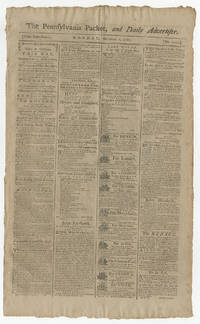
178724135<p><b>U.S. CONSTITUTION.</b>Newspaper. <i>The Pennsylvania Packet and Daily Advertiser</i>. October 1 1787 No. 2700 Philadelphia: John Dunlap and David C. Claypoole including the September 28 resolution of the Confederation Congress to send to the states for ratification the recently completed U. S. Constitution. 4 pp. 12 x 18¾ in. </p><br />"<i>The United States in Congress Assembled. Friday September 28 1787.</i><p><i>CONGRESS having received the Report of the CONVENTION lately assembled in Philadelphia</i></p><p><i>Resolved unanimously THAT the said report with the resolutions and letter accompanying the same be transmitted to the several legislatures in order to be submitted to a convention of delegates chose in each state by the people thereof in conformity to the resolves of the convention made and provided in that case. CHARLES THOMSON Secretary.</i>" p2/c3</p><p>The convention called to revise the Articles of Confederation met in the Pennsylvania's State House in Philadelphia starting on May 25 1787. After many delegates agreed that the Articles could not be sufficiently improved they started to draft an entirely new structure. Maintaining their pledge of secrecy after months of private deliberations over trade defense taxation representation separation of powers the election of a president the slave trade international relations and many other issues the proposed United States Constitution was signed by thirty-nine of the fifty-five delegates on September 17.</p><p>Two days later the Constitution was first published by the <i>Pennsylvania Packet</i>and four other Philadelphia newspapers. The cover letter sent by George Washington president of what came to be called the Constitutional Convention submitting the plan to Arthur St. Clair the President of the Congress of the Confederation in New York was also printed then.</p><p>Congress received and read the proposed Constitution on September 20th. As a sampling of their deliberations William Grayson of Virginia thought it was too weak while Richard Henry Lee of Virginia and Nathan Dane of Massachusetts thought it was too strong.</p><p>On September 27 Virginia's Richard Henry Lee proposed that the Constitution be sent to the executives of each of the states. A Delaware representative quickly added "in order to be by them submitted to conventions of delegates to be chosen agreeably to the said resolutions of the convention." Ten of the twelve states then represented in Congress voted in favor. Before Congress adjourned for the day the majority of Virginia's representatives and a minority of New York's representatives also indicated their support. On September 28 Federalists holding out for a unanimous vote found a way to compromise with anti-Federalists: Congress unanimously resolved to send the Constitution to the states but without any recommendation or approval.</p><p>Arider from New York City arrived in Philadelphia with the resolution that same day.</p><p>George Clymer presented his own resolution to the Pennsylvania Assembly noting that "<i>the late Federal Convention has digested a plan of government for the United States and recommended that it should be referred to the consideration of State Conventions…</i>" After a "<i>very long and animated debate</i>" Clymer's resolution passed by a vote of 43 to 19 and adjourned until 4:00 p.m. But only 44 members returned falling two shy of the necessary quorum. The Assembly's sergeant-at-arms was sent to show the resolution to absent members. Two who still refused to attend were seized by the public dragged through the streets and thrust into the assembly room. The involuntarily completed quorum voted that "<i>it is the sense of great numbers of the grand people of this state already signified in petitions & declarations to this house that the earliest steps should be taken to assemble a convention within the state for the purpose of deliberating and determining on the said constitution.</i>" They called for the election of deputies who would assemble for that purpose "<i>on the third Tuesday of November at the State-house in the city of Philadelphia…</i>" p2/c3-4</p><p>Other articles of interest in this issue include news from Europe and a brief piece against Indians "<i>from the western country</i> who <i>still continue their depredations on the whites…</i>" p2/c3</p><p><b><i>The Pennsylvania Packet or the General Advertiser</i></b>1771-1839 was founded by John Dunlap in late 1771 as a weekly newspaper in Philadelphia though it relocated to Lancaster during the British occupation of Philadelphia in 1777-1778. On May 30 1783 Benjamin Towne turned the <i>Pennsylvania Evening Post</i> into the first daily newspaper in the United States. However with Towne branded a traitor and forced to hawk his own papers on the street the newspaper collapsed the following year. John Dunlap and David Claypoole then made their <i>Pennsylvania Packet</i> the first successful daily on September 21 1784. It underwent numerous name changes in the 1790s until sold in 1800 and renamed <i>Poulson's American Daily Advertiser</i>.</p> John Dunlap and David C. Claypoole
003265London: Printed for Charles Harper William Crooke and Richard Tonson at the Flower-de-Luce in Fleetstreet at the Green Dragon without Temple Barr and at Grays-Inn Gate next Grays-Inn Lane 1688. Hardcover. Very Good. Folio. xvipp. 215ff. xxviiipp. Modern half calf over marbled boards. With the bookplate of William S. Johnson one of the signers of the American Constitution. ESTC R4204; Wing 2nd ed. K134. <br/> <br/> London: Printed for Charles Harper, William Crooke and Richard Tonson, at the Flower-de-Luce in Fleetstreet, at the Green Dragon hardcover
1332708102.Gpaperback. Good. Access codes and supplements are not guaranteed with used items. May be an ex-library book. paperback
17675532Dublin: G Faulkner 1767. 220 x 143 mm. Very Good. pp 22 2 In very good condition with old staining to head of pages in modern blue card wrappers with title label to upper cover. Very Good 1767 G Faulkner unknown