1 369 résultats
0260794058.Gpaperback. Good. Access codes and supplements are not guaranteed with used items. May be an ex-library book. paperback
19972090202120410871Kenseikinenkan 1997. Soft Cover. Fine. Number of books: 1 Kenseikinenkan paperback
12258, Columbia, s. éd. 1958, br., bon état, 29p.
8vo., First Edition; attractively bound in modern half calf, marbled sides, gilt back, uncut, laid endpapers, a bright, crisp, clean copy. An important and definitive history. SCARCE. Anderson p.190 (recording the third edition of 1869)
1783480681Turin, J. M. Briolus, 1783. 4to. 4 Bl., 378 S. Defekte Interimskartonage d. Zeit.
1949ZB1089960NY 1949-1951. 2 volumes 672 679 pp. each ex library in card covers; good. - If you are reading this this item is actually physically in our stock and ready for shipment once ordered. We are not bookjackers. Buyer is responsible for any additional duties taxes or fees required by recipient's country. Photos available upon request. NY unknown
160p. 8vo. Original full cloth binding, spine darkened. Original dust jacket, soiled. Hardbound. AMERICANA BOX 8
1746627967Leipzig, Gleditsch, 1746. 8 Bl., 256 S. Mit gestochener Titelvignette. Pappband d. Zeit (fleckig u. etwas bestoßen, Gelenke angebrochen). [2 Warenabbildungen]
1782111429Göttingen, Vandenhoeck Witwe, 1782. 7 Bl., 370 S. Leder d. Zeit (beschabt u. bestoßen, Gelenke gebrochen). [2 Warenabbildungen]
1331006643.Gpaperback. Good. Access codes and supplements are not guaranteed with used items. May be an ex-library book. paperback
0656135484.Ghardcover. Good. Access codes and supplements are not guaranteed with used items. May be an ex-library book. hardcover
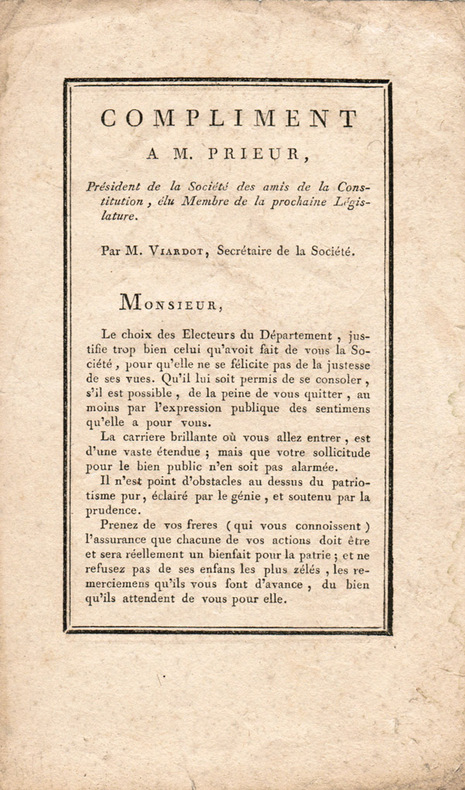
179121491791 Tract de 1 p. in-8 (20,5 x 12 cm), slnd [Dijon, 1791].
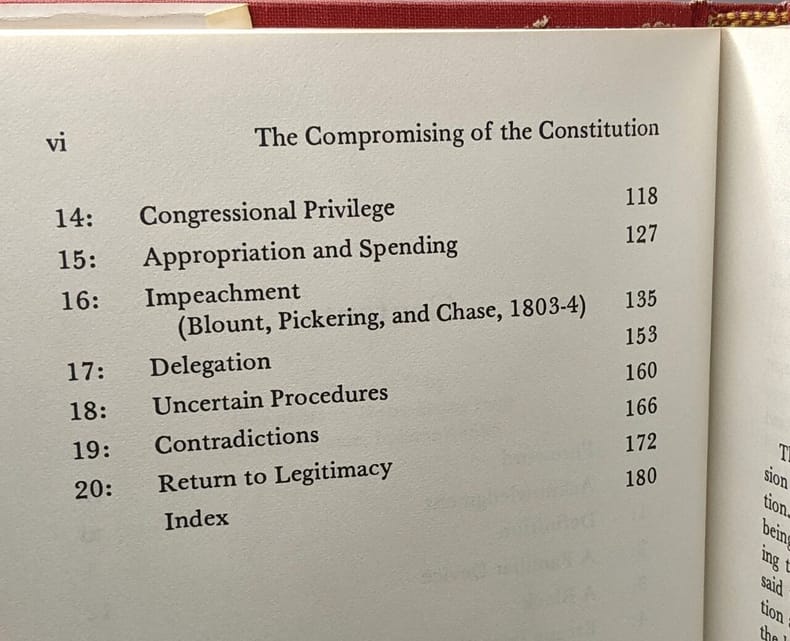
1976100128326University of Notre Dame Press 1976 188 pages 14 224x1 778x20 574cm. 1976. Cartonné jaquette. 188 pages.
0260646024.Ghardcover. Good. Access codes and supplements are not guaranteed with used items. May be an ex-library book. hardcover
0265013887.Gpaperback. Good. Access codes and supplements are not guaranteed with used items. May be an ex-library book. paperback
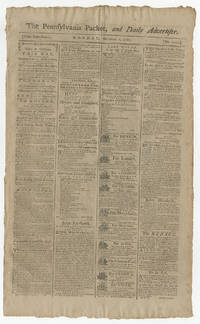
178724135<p><b>U.S. CONSTITUTION.</b>Newspaper. <i>The Pennsylvania Packet and Daily Advertiser</i>. October 1 1787 No. 2700 Philadelphia: John Dunlap and David C. Claypoole including the September 28 resolution of the Confederation Congress to send to the states for ratification the recently completed U. S. Constitution. 4 pp. 12 x 18¾ in. </p><br />"<i>The United States in Congress Assembled. Friday September 28 1787.</i><p><i>CONGRESS having received the Report of the CONVENTION lately assembled in Philadelphia</i></p><p><i>Resolved unanimously THAT the said report with the resolutions and letter accompanying the same be transmitted to the several legislatures in order to be submitted to a convention of delegates chose in each state by the people thereof in conformity to the resolves of the convention made and provided in that case. CHARLES THOMSON Secretary.</i>" p2/c3</p><p>The convention called to revise the Articles of Confederation met in the Pennsylvania's State House in Philadelphia starting on May 25 1787. After many delegates agreed that the Articles could not be sufficiently improved they started to draft an entirely new structure. Maintaining their pledge of secrecy after months of private deliberations over trade defense taxation representation separation of powers the election of a president the slave trade international relations and many other issues the proposed United States Constitution was signed by thirty-nine of the fifty-five delegates on September 17.</p><p>Two days later the Constitution was first published by the <i>Pennsylvania Packet</i>and four other Philadelphia newspapers. The cover letter sent by George Washington president of what came to be called the Constitutional Convention submitting the plan to Arthur St. Clair the President of the Congress of the Confederation in New York was also printed then.</p><p>Congress received and read the proposed Constitution on September 20th. As a sampling of their deliberations William Grayson of Virginia thought it was too weak while Richard Henry Lee of Virginia and Nathan Dane of Massachusetts thought it was too strong.</p><p>On September 27 Virginia's Richard Henry Lee proposed that the Constitution be sent to the executives of each of the states. A Delaware representative quickly added "in order to be by them submitted to conventions of delegates to be chosen agreeably to the said resolutions of the convention." Ten of the twelve states then represented in Congress voted in favor. Before Congress adjourned for the day the majority of Virginia's representatives and a minority of New York's representatives also indicated their support. On September 28 Federalists holding out for a unanimous vote found a way to compromise with anti-Federalists: Congress unanimously resolved to send the Constitution to the states but without any recommendation or approval.</p><p>Arider from New York City arrived in Philadelphia with the resolution that same day.</p><p>George Clymer presented his own resolution to the Pennsylvania Assembly noting that "<i>the late Federal Convention has digested a plan of government for the United States and recommended that it should be referred to the consideration of State Conventions…</i>" After a "<i>very long and animated debate</i>" Clymer's resolution passed by a vote of 43 to 19 and adjourned until 4:00 p.m. But only 44 members returned falling two shy of the necessary quorum. The Assembly's sergeant-at-arms was sent to show the resolution to absent members. Two who still refused to attend were seized by the public dragged through the streets and thrust into the assembly room. The involuntarily completed quorum voted that "<i>it is the sense of great numbers of the grand people of this state already signified in petitions & declarations to this house that the earliest steps should be taken to assemble a convention within the state for the purpose of deliberating and determining on the said constitution.</i>" They called for the election of deputies who would assemble for that purpose "<i>on the third Tuesday of November at the State-house in the city of Philadelphia…</i>" p2/c3-4</p><p>Other articles of interest in this issue include news from Europe and a brief piece against Indians "<i>from the western country</i> who <i>still continue their depredations on the whites…</i>" p2/c3</p><p><b><i>The Pennsylvania Packet or the General Advertiser</i></b>1771-1839 was founded by John Dunlap in late 1771 as a weekly newspaper in Philadelphia though it relocated to Lancaster during the British occupation of Philadelphia in 1777-1778. On May 30 1783 Benjamin Towne turned the <i>Pennsylvania Evening Post</i> into the first daily newspaper in the United States. However with Towne branded a traitor and forced to hawk his own papers on the street the newspaper collapsed the following year. John Dunlap and David Claypoole then made their <i>Pennsylvania Packet</i> the first successful daily on September 21 1784. It underwent numerous name changes in the 1790s until sold in 1800 and renamed <i>Poulson's American Daily Advertiser</i>.</p> John Dunlap and David C. Claypoole
178724135<p><b>U.S. CONSTITUTION.</b>Newspaper. <i>The Pennsylvania Packet and Daily Advertiser</i>. October 1 1787 No. 2700 Philadelphia: John Dunlap and David C. Claypoole including the September 28 resolution of the Confederation Congress to send to the states for ratification the recently completed U. S. Constitution. 4 pp. 12 x 18¾ in. </p><br />"<i>The United States in Congress Assembled. Friday September 28 1787.</i><p><i>CONGRESS having received the Report of the CONVENTION lately assembled in Philadelphia</i></p><p><i>Resolved unanimously THAT the said report with the resolutions and letter accompanying the same be transmitted to the several legislatures in order to be submitted to a convention of delegates chose in each state by the people thereof in conformity to the resolves of the convention made and provided in that case. CHARLES THOMSON Secretary.</i>" p2/c3</p><p>The convention called to revise the Articles of Confederation met in the Pennsylvania's State House in Philadelphia starting on May 25 1787. After many delegates agreed that the Articles could not be sufficiently improved they started to draft an entirely new structure. Maintaining their pledge of secrecy after months of private deliberations over trade defense taxation representation separation of powers the election of a president the slave trade international relations and many other issues the proposed United States Constitution was signed by thirty-nine of the fifty-five delegates on September 17.</p><p>Two days later the Constitution was first published by the <i>Pennsylvania Packet</i>and four other Philadelphia newspapers. The cover letter sent by George Washington president of what came to be called the Constitutional Convention submitting the plan to Arthur St. Clair the President of the Congress of the Confederation in New York was also printed then.</p><p>Congress received and read the proposed Constitution on September 20th. As a sampling of their deliberations William Grayson of Virginia thought it was too weak while Richard Henry Lee of Virginia and Nathan Dane of Massachusetts thought it was too strong.</p><p>On September 27 Virginia's Richard Henry Lee proposed that the Constitution be sent to the executives of each of the states. A Delaware representative quickly added "in order to be by them submitted to conventions of delegates to be chosen agreeably to the said resolutions of the convention." Ten of the twelve states then represented in Congress voted in favor. Before Congress adjourned for the day the majority of Virginia's representatives and a minority of New York's representatives also indicated their support. On September 28 Federalists holding out for a unanimous vote found a way to compromise with anti-Federalists: Congress unanimously resolved to send the Constitution to the states but without any recommendation or approval.</p><p>Arider from New York City arrived in Philadelphia with the resolution that same day.</p><p>George Clymer presented his own resolution to the Pennsylvania Assembly noting that "<i>the late Federal Convention has digested a plan of government for the United States and recommended that it should be referred to the consideration of State Conventions…</i>" After a "<i>very long and animated debate</i>" Clymer's resolution passed by a vote of 43 to 19 and adjourned until 4:00 p.m. But only 44 members returned falling two shy of the necessary quorum. The Assembly's sergeant-at-arms was sent to show the resolution to absent members. Two who still refused to attend were seized by the public dragged through the streets and thrust into the assembly room. The involuntarily completed quorum voted that "<i>it is the sense of great numbers of the grand people of this state already signified in petitions & declarations to this house that the earliest steps should be taken to assemble a convention within the state for the purpose of deliberating and determining on the said constitution.</i>" They called for the election of deputies who would assemble for that purpose "<i>on the third Tuesday of November at the State-house in the city of Philadelphia…</i>" p2/c3-4</p><p>Other articles of interest in this issue include news from Europe and a brief piece against Indians "<i>from the western country</i> who <i>still continue their depredations on the whites…</i>" p2/c3</p><p><b><i>The Pennsylvania Packet or the General Advertiser</i></b>1771-1839 was founded by John Dunlap in late 1771 as a weekly newspaper in Philadelphia though it relocated to Lancaster during the British occupation of Philadelphia in 1777-1778. On May 30 1783 Benjamin Towne turned the <i>Pennsylvania Evening Post</i> into the first daily newspaper in the United States. However with Towne branded a traitor and forced to hawk his own papers on the street the newspaper collapsed the following year. John Dunlap and David Claypoole then made their <i>Pennsylvania Packet</i> the first successful daily on September 21 1784. It underwent numerous name changes in the 1790s until sold in 1800 and renamed <i>Poulson's American Daily Advertiser</i>.</p> John Dunlap and David C. Claypoole books
c4977Paris, Imprimerie de l' Assemblée Nationale, sans date (1963) ; livret in-12° broché, couverture gris pale imprimée en noir avec timbre-poste 0, 20+0, 10 F, oblitéré à la date du 20 décembre 1963; 34pp. ( dont les derniers feuillets roses.Livret fixant règlement et édité à l' occasion du Congrès du Parlement tenu à Versailles le décembre 1963, avec, oblitarétion philatélique " premier jour ".Très bon état.
010236Londres, Paris Barrois - Desenne 0 fort in-8 Reliure d'époque
4364In 8 demi-chagrin rouge à nerfs,titre doré,filets à froid. Faux-titre,titre,XXII ,218 pages,suivis de Essai sur le principe générateur des Constitutions politiques.Faux-titre,titre,XVI,91 pages.Lyon J.B Pelagaud & Cie 1846. Quelques rousseurs en marge supérieure aux dernières pages
187541190Puebla Imprenta del Hospicio 1875. Paperback. Good. 176p. wrps lacks wrps. Puebla, Imprenta del Hospicio paperback
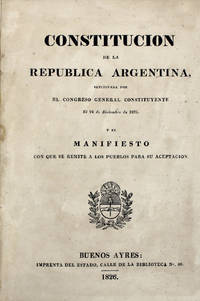
18266783Buenos Aires: Imprenta del Estado 1826. First Edition — Primera edición. Softcover — Tapa blanda. 190x135mm. 7½x5¼". Buenos Aires Imprenta del Estado 24 de Diciembre de 1826. En 4º 190 x 135mm. 2 55 pp. Guardas de papel. Primera edición. Comienza con un Manifiesto del Congreso General Constituyente a los pueblos de la República Argentina. La Constitución de la República Argentina de 1826 estableció una forma de gobierno "representativa republicana consolidada en unidad de régimen adoptando oficialmente la religión Católica Apostólica Romana". Para la sanción de aquella constitución fueron consultadas las Provincias acerca de la forma de Estado: Salta y La Rioja se pronunciaron por el régimen unitario al igual que Tucumán pero curiosamente aclaró que querÃa conservar sus instituciones. Mendoza San Juan Santiago del Estero Tarija Entre RÃos Santa Fe y Córdoba se manifestaron por el sistema federal. San Luis Catamarca Corrientes y la Banda Oriental por lo que resolviese el Congreso en tanto que Buenos Aires y Misiones no opinaron. Primeras hojas ligeramente amarronadas. Imprenta del Estado paperback
197611992Madrid: Aguilar Ed. 1976.- 374 p.: 28 ilus.; 16avo.; Plena Piel Ed.- Crisolín. 039. GUERRA DE LA INDEPENDENCIA-FERNANDO VII Libro en español Aguilar Ed. hardcover
1019516534.Ghardcover. Good. Access codes and supplements are not guaranteed with used items. May be an ex-library book. hardcover
46693428like new. unknown