32 résultats
200676448Washington DC: U. S. Government Printing Office 2006. Presumed First Edition First printing. Wraps. Good. iii 1 302. 6 pages. Illustrations. Occasional footnotes. Some bottom corners curved at front and back. The chairman stated: Today we will examine the impact that Federal examiners and observers have had on increasing minority participation in the political process and the continued need for these provisions in the future. The Voting Rights Act of 1965 is a landmark piece of federal legislation in the United States that prohibits racial discrimination in voting.78 It was signed into law by President Lyndon B. Johnson during the height of the Civil Rights Movement on August 6 1965 and Congress later amended the Act five times to expand its protections.7 Designed to enforce the voting rights guaranteed by the Fourteenth and Fifteenth Amendments to the United States Constitution the Act secured the right to vote for racial minorities throughout the country especially in the South. According to the U.S. Department of Justice the Act is considered to be the most effective piece of federal civil rights legislation ever enacted in the country. U. S. Government Printing Office paperback
200676534Washington DC: U. S. Government Printing Office 2006. Presumed First Edition First printing. Wraps. Good. Serial No. 109-79. Volume I ONLY. Volume I v 1 1684 6 pages. During this hearing Representative John Lewis of Georgia stated "The Voting Rights Act helped expand our democracy and open up our democracy to elect hundreds of thousands and millions of our citizens who had been kept out let them in. The Voting Rights Act was needed then and it is needed now. The purpose of section 5 is very unique and very important. It prevents discriminatory plans from being enacted in the first place. It put the burden on the judiciary to show that the plan does not discriminate against minority voters. Congress Lewis continued "Prior to section 5 the burden was on the minority voters to challenge the voting practice; and every section was good at coming up with different procedures that had the same result discrimination. Anita Earls' testimony talks in some detail about the recent example how this is still happening. The difference is that we have section 5 to prevent these practices from harming minority voters. Many people like the court said that we have come a long ways; and again today I would say that we've come a distance. We've come a long way and that is true. We're not the same Nation that we were 40 years ago but it's clear today that we have not come far enough. Section 5 is still needed. Today section 5 prevents discrimination and redistricting and changes that move voting locations out of minority neighborhoods into less accessible areas. These are issues that are different from the fight to register to vote but they are no less fundamental." U. S. Government Printing Office paperback
200676537Washington DC: U. S. Government Printing Office 2006. Presumed First Edition First printing. Wraps. Good. Serial No. 109-103. 4 volume set. Volume I v 1 1453 5 pages. Volume II v 1. 1455-2388 2. Volume III v 1 2389-4296. Volume IV v 1 4297-5711 3 pages. Footnotes. Illustrations. The Subcommittee will be holding its tenth hearing examining the Voting Rights Act of 1965 and the temporary provisions that are to expire. They're set to expire in 2007 unless we reauthorize by Congress which I think most of us anticipate will occur. The Subcommittee examined each of the expiring provisions in great detail. This afternoon we examine the evidence of continued discrimination against racial and language minority citizens since 1982 that have been compiled by a number of non-governmental organizations who will be testifying. I'd thank these organizations for the time and effort that they have put into completing these reports and in making sure that this Committee and Congress has before it a complete and accurate record of discrimination over the last 25 years. In continuing to reauthorize the temporary provisions Congress on four separate occasions examined the extent to which discrimination continued to exist by analyzing information such as enforcement statistics minority voter registration rates minority voter turnout and litigation pursued to protect minority voting rights. Federal agencies such as the United States Commission on Civil Rights were instrumental in investigating analyzing and reporting back to Congress on the state of minority voting during each consideration. Each time Congress concluded based upon the evidence presented that the exceptional conditions which existed in 1966 continued to exist in 1970 1975 1982 and in 1992 when it was last reauthorized. This afternoon the Committee continues to examine whether the exceptional conditions warranting the extension of the temporary provisions continue to exist in 2006. U. S. Government Printing Office paperback
200676533Washington DC: U. S. Government Printing Office 2006. Presumed First Edition First printing. Wraps. Good. Serial No. 109-79. Two volumes. Volume I v 1 1684 6 pages Volume II v 1 1685-3375 pages. During this hearing Representative John Lewis of Georgia stated "The Voting Rights Act helped expand our democracy and open up our democracy to elect hundreds of thousands and millions of our citizens who had been kept out let them in. The Voting Rights Act was needed then and it is needed now. The purpose of section 5 is very unique and very important. It prevents discriminatory plans from being enacted in the first place. It put the burden on the judiciary to show that the plan does not discriminate against minority voters. Congress Lewis continued "Prior to section 5 the burden was on the minority voters to challenge the voting practice; and every section was good at coming up with different procedures that had the same result discrimination. Anita Earls' testimony talks in some detail about the recent example how this is still happening. The difference is that we have section 5 to prevent these practices from harming minority voters. Many people like the court said that we have come a long ways; and again today I would say that we've come a distance. We've come a long way and that is true. We're not the same Nation that we were 40 years ago but it's clear today that we have not come far enough. Section 5 is still needed. Today section 5 prevents discrimination and redistricting and changes that move voting locations out of minority neighborhoods into less accessible areas. These are issues that are different from the fight to register to vote but they are no less fundamental." U. S. Government Printing Office paperback
200676535Washington DC: U. S. Government Printing Office 2006. Presumed First Edition First printing. Wraps. Good. Serial No. 109-83. Part I ONLY. Volume I iv 1446 22 pages. This Committee will focus on section 203 the provision authorizing bilingual language assistance to American citizens who are members of covered language minority groups and who have limited English proficiency. Section 203 has not been revisited by Congress since 1992 and like the sections that we have discussed in previous hearings is set to expire in 2007 unless reauthorized. The Voting Rights Act was enacted in 1965 in response to a history of racial discrimination against some of our Nation's citizens. In 1975 Congress expanded the Voting Rights Act to include section 203 and its companion section 4f. Section 203 requires certain jurisdictions to provide bilingual election assistance-including notices instructions information and ballots-to citizens who are members of a designated language minority group and who have limited English proficiency. As cited in the 1975 House Report section 203 was added in response to ''an extensive evidentiary record demonstrating the prevalence of voting discrimination and high illiteracy rates among language minorities.'' This record revealed that similar discrimination patterns and practices that had been used to prevent African-Americans from voting were being administered against Asian-Americans American Indians Native Alaskans and citizens of Hispanic origin. These citizens are more than likely to live in environments in which the dominant language is other than English. Section 203 breaks down these barriers by providing citizens in a language minority group with the assistance necessary to participate in the political process. Section 203 has enabled an increased number of minority citizens to register and cast ballots as revealed in the last Census and latest election records. U. S. Government Printing Office paperback
200676538Washington DC: U. S. Government Printing Office 2006. Presumed First Edition First printing. Wraps. Good. Serial No. 109-103. Volume IV ONLY. Volume IV v 1 4297-5711 3 pages. Footnotes. Illustrations. This volume contains the Appendix to Hearings: Table of Contents and Appendix Materials Continued from the National Commission on the Voting Rights Act. The Subcommittee will be holding its tenth hearing examining the Voting Rights Act of 1965 and the temporary provisions that are to expire. They're set to expire in 2007 unless we reauthorize by Congress which I think most of us anticipate will occur. The Subcommittee examined each of the expiring provisions in great detail. This afternoon we examine the evidence of continued discrimination against racial and language minority citizens since 1982 that have been compiled by a number of non-governmental organizations who will be testifying. I'd thank these organizations for completing these reports and in making sure that this Committee has before it a complete and accurate record of discrimination over the last 25 years. In continuing to reauthorize the temporary provisions Congress on four separate occasions examined the extent to which discrimination continued to exist by analyzing information such as enforcement statistics minority voter registration rates minority voter turnout and litigation pursued to protect minority voting rights. Federal agencies such as the United States Commission on Civil Rights were instrumental in investigating analyzing and reporting back to Congress on the state of minority voting during each consideration. Each time Congress concluded based upon the evidence presented that the exceptional conditions which existed in 1966 continued to exist in 1970 1975 1982 and in 1992 when it was last reauthorized. This afternoon the Committee continues to examine whether the exceptional conditions warranting the extension of the temporary provisions continue to exist in 2006. U. S. Government Printing Office paperback
200676619Washington DC: U. S. Government Printing Office 2006. Presumed First Edition First printing. Wraps. Good. Serial No. 109-103. 3 of 4 volume set. Volume I v 1 1453 5 pages. Volume II v 1. 1455-2388 2. Volume III v 1 2389-4296. Volume IV NOT PRESENT. Footnotes. Illustrations. The Subcommittee will be holding its tenth hearing examining the Voting Rights Act of 1965 and the temporary provisions that are to expire. They're set to expire in 2007 unless we reauthorize by Congress which I think most of us anticipate will occur. The Subcommittee examined each of the expiring provisions in great detail. This afternoon we examine the evidence of continued discrimination against racial and language minority citizens since 1982 that have been compiled by a number of non-governmental organizations who will be testifying. I'd thank these organizations for the time and effort that they have put into completing these reports and in making sure that this Committee and Congress has before it a complete and accurate record of discrimination over the last 25 years. In continuing to reauthorize the temporary provisions Congress on four separate occasions examined the extent to which discrimination continued to exist by analyzing information such as enforcement statistics minority voter registration rates minority voter turnout and litigation pursued to protect minority voting rights. Federal agencies such as the United States Commission on Civil Rights were instrumental in investigating analyzing and reporting back to Congress on the state of minority voting during each consideration. Each time Congress concluded based upon the evidence presented that the exceptional conditions which existed in 1966 continued to exist in 1970 1975 1982 and in 1992 when it was last reauthorized. This afternoon the Committee continues to examine whether the exceptional conditions warranting the extension of the temporary provisions continue to exist in 2006. U. S. Government Printing Office paperback
200332422Paris Grande Loge Nationale de France 2003 in-8°
200445772La Documentation Française 2004 La Documentation Française 2004. In-8 broché de 232 pages. Très bon état
200676532Washington DC: U. S. Government Printing Office 2006. Presumed First Edition First printing. Wraps. Good. iv 1580 pages. Illustrations. Occasional footnotes. Serial No. 109-70. Format is approximately 5.75 inches by 9.25 inches. Cover has some wear and soiling. This is the first of a series of hearings that the Subcommittee planned to hold examining the Voting Rights Act also known as the VRA. It had been 25 years since Congress last extended the number of the temporary provisions of the VRA. Six provisions were scheduled to expire in 2007 including sections 4 5 6 7 8 and 203. These hearings will examine the impact of the Voting Rights Act over the last several decades and its continued role in protecting minority voting rights. The ability of our citizens to cast a ballot for their preferred candidate ensures that every voice is heard most importantly the right to vote safeguards our freedoms and all other rights enshrined in the Constitution. The sacredness of the right to vote is reflected in the protection afforded by the 15th amendment which States ''the right of citizens of the United States to vote shall not be denied or or abridged by the United States or by any State on account of race color or previous condition of servitude.'' For too many of our fellow citizens in our history this has not always been the case. Our country has had a troubled history of invidious and disparate treatment in the most fundamental process of a democracy namely voting. The VRA pushed back against this history and challenged racial discrimination from a number of different angles. U. S. Government Printing Office paperback
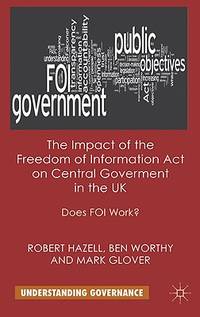
2010x-0230250343Palgrave Macmillan 2010. Hardcover. New. 330 pages. 8.75x5.75x1.00 inches. Palgrave Macmillan hardcover
20072081002108802235Shinchosha 2007. Soft Cover. Fine. Number of books: 1 Shinchosha paperback
200663994Washington DC: U.S. Government Printing Office 2006. Presumed first edition/first printing. Wraps. Good. No dust jacket as issued. Volume II ONLY. iii 1155-2307 p. Serial No. 109-84 Volume II. This volume includes affidavits from women who have had abortions inserted by Congressman Franks. These were compiled by The Justice Foundation. Also included is "Confession of an Ex-Abortionish by Dr. Bernard Nathanson; a statement by Nancy Keenan President of NARAL; and A statement submitted by Vicki Saporta of the National Abortion Federation. U.S. Government Printing Office paperback
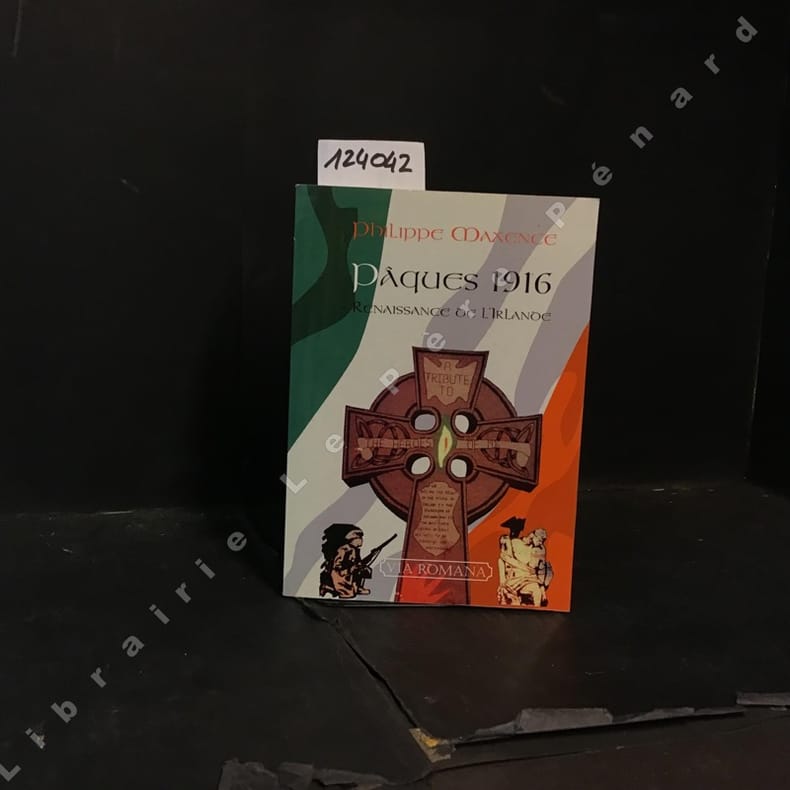
20071240422007 Via Romana, Versailles - 2007 - Fort In-8, broché, couverture illustrée - 399 pages - Reproductions photographiques in-texte en N&B
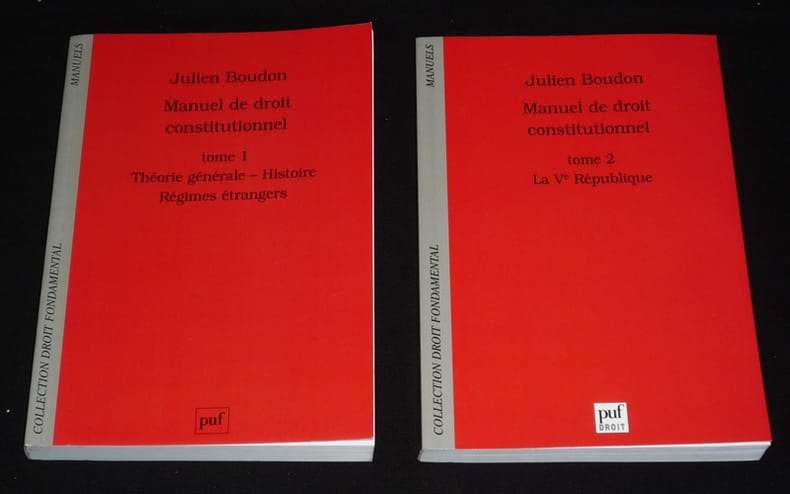
2015fr1246Presses Universitaires de France Collection droit fondamental Dos carré collé 2015 Deux volumes in-8 (15,2 x 21,7 cm), dos carré collé, 310 et 295 pages ; quelques frottements aux plats, très bon état général. Livraison a domicile (La Poste) ou en Mondial Relay sur simple demande.
2006KOS049100075East Press 2006 Soft Cover Fine
2008100124078Editions du Panama 2008 316 pages 14x21x3cm. 2008. Broché. 316 pages.
2004CCC-1033189. Budapest- Paris- Szeged 2004, universite Paris X, iSBN: 9789632120294, livre en francais, couverture et coins legerements frottes, interieur tres bon, 286 pages, photos possible
2002O8692Éditions Saint-Simon, 2002, 210 p.
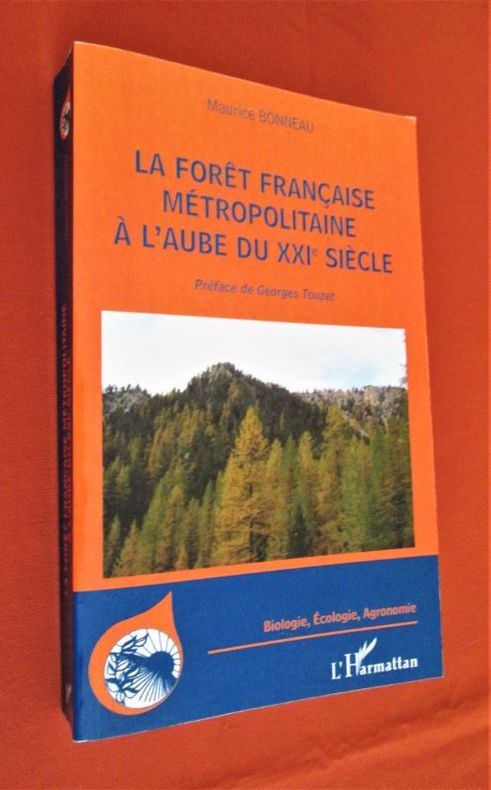
200629108Editions L'Harmattan, 2006. In-8 broché (21,5 x 13,5 cm), 336 pages.- 430g.L. - Très bon état
2008HISTFR410815Paris, La documentation française, 2008, 16 x 24, 239 pages sous couverture illustrée.
200768102México, D.F.: Porrúa 2007. LXXIII, (1), 581, (1); XXIV, 588-1156; XXIV, 2153, (3) Seiten. Gr. 8° (23 x 16 cm). Illustrierte Orig.-Broschuren. [Softcover / Paperback].
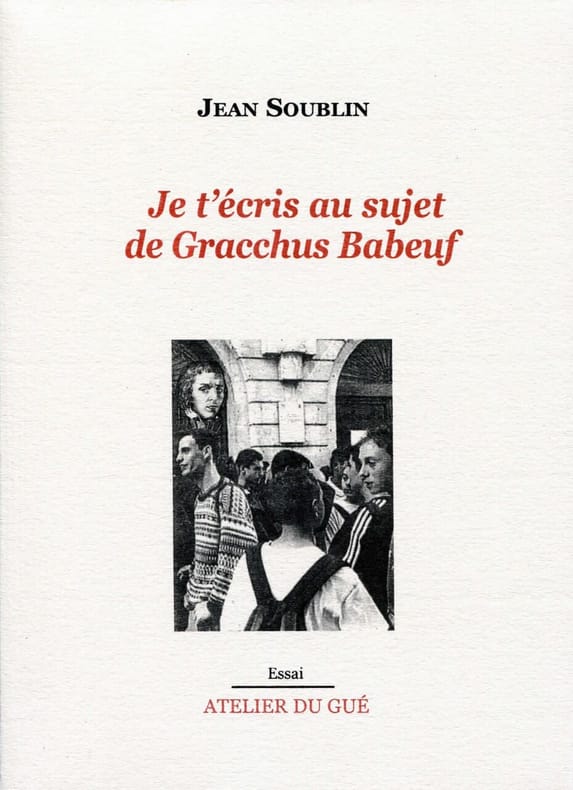
200211010Atelier du Gué (Editions) 2002 160 pages 13 2x1 8x18 2cm. 2002. broché. 160 pages. Ce livre de Jean Soublin présente la vie et les idées du révolutionnaire Gracchus Babeuf sous la forme originale de cinq lettres adressées à un jeune lecteur contemporain. Il explore le parcours de Babeuf qui a abandonné une situation bourgeoise pour défendre ses convictions jusqu'à la mort en abordant son militantisme les dilemmes entre égalité et bonheur et son combat pour l'application de la Constitution de 1793
20042090202118104831Iwanami Shoten Iwanami Shinsho 2004. Soft Cover. Fine. The book is in fine condition. Iwanami Shoten Iwanami Shinsho paperback
20052080302106805106Iwanamishoten 2005. Soft Cover. Fine. The book is in fine condition. Iwanamishoten paperback