Revue d'histoire moderne et contemporaineLivre Rare Book
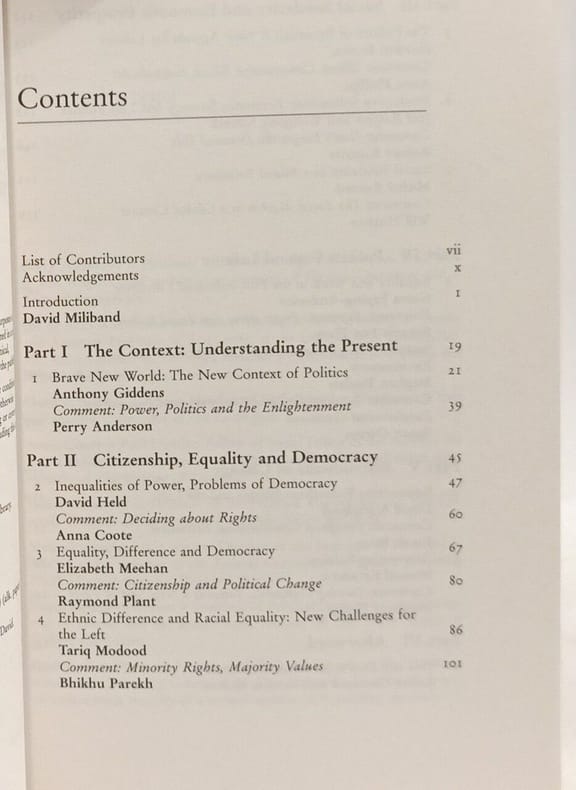
Miliband DavidLivre Rare Book
Reinventing the Left
1994100138624Polity 1994 264 pages 15x22 8x1cm. 1994. Broché. 264 pages.
Un Autre Monde · Val Couoesnon, France24,00 €
1 096 résultats
1984387831984 2 vol in-8 brochés - tome XXXI-4 - octobre-décembre 1984
1980772701980 Editions Gallimard 1980 - In-8 broché - 276 pages
pp. xi, 288. 8vo. Original full red cloth binding. Small discoloration bottom corner front cover. First published 1944. Coldwar/Economics 8
pp. vii, 240. 8vo. Original full cloth binding. Original dust jacket. First Edition. Brookings lectures by Stephen K. Bailey, Herbert Simon, Robert Dahl, Richard Snyder, Alfred de Grazia, Malcolm Moos, Paul David, and David Truman. Coldwar/Economics 4
288p. 8vo. Original full orange cloth binding, slightly worn. First edition. Coldwar/Economics 7
309p. Text brown but not brittle. 8vo. Original full cloth binding. Original dust jacket, chipped and worn. Coldwar/Economics 1
279p. 8vo. Original full cloth binding, dampstained. Original dust jacket, dampstained. Coldwar/Economics 6
336p. Charts and diagrams. 4to. Original blue gold decorated wraps. Coldwar/Economics 1
196139055New York: Inter-Amer Assoc/Democracy 1961. First Edition. First Printing. fair. 301 wraps illus. covers worn soiled and faded staple in front cover. Inter-Amer Assoc/Democracy paperback
pp. ix, 372, xxxi. Paper beginning to brown but not brittle. Vintage paperback. Coldwar/Economics 9
Very minor shelfwear to DJ. ; 208 pages; In 404 BCE the Peloponnesian War finally came to an end, when the Athenians, starved into submission, were forced to accept Sparta's terms of surrender. Shortly afterwards a group of thirty conspirators, with Spartan backing ("the Thirty") , overthrew the democracy and established a narrow oligarchy. Although the oligarchs were in power for only thirteen months, they killed more than 5 percent of the citizenry and terrorized the rest by confiscating the property of some and banishing many others. Despite this brutality, members of the democratic resistance movement that regained control of Athens came to terms with the oligarchs and agreed to an amnesty that protected collaborators from prosecution for all but the most severe crimes. The war and subsequent reconciliation of Athenian society has been a rich field for historians of ancient Greece. From a rhetorical and ideological standpoint, this period is unique because of the extraordinary lengths to which the Athenians went to maintain peace. In Remembering Defeat, Andrew Wolpert claims that the peace was "negotiated and constructed in civic discourse" and not imposed upon the populace. Rather than explaining why the reconciliation was successful, as a way of shedding light on changes in Athenian ideology Wolpert uses public speeches of the early fourth century to consider how the Athenians confronted the troubling memories of defeat and civil war, and how they explained to themselves an agreement that allowed the conspirators and their collaborators to go unpunished. Encompassing rhetorical analysis, trauma studies, and recent scholarship on identity, memory, and law, Wolpert's study sheds new light on a pivotal period in Athens' history.
Former owner's name and author's signature on ffep else fine. DJ has very minor shelfwear. ; 208 pages; In 404 BCE the Peloponnesian War finally came to an end, when the Athenians, starved into submission, were forced to accept Sparta's terms of surrender. Shortly afterwards a group of thirty conspirators, with Spartan backing ("the Thirty") , overthrew the democracy and established a narrow oligarchy. Although the oligarchs were in power for only thirteen months, they killed more than 5 percent of the citizenry and terrorized the rest by confiscating the property of some and banishing many others. Despite this brutality, members of the democratic resistance movement that regained control of Athens came to terms with the oligarchs and agreed to an amnesty that protected collaborators from prosecution for all but the most severe crimes. The war and subsequent reconciliation of Athenian society has been a rich field for historians of ancient Greece. From a rhetorical and ideological standpoint, this period is unique because of the extraordinary lengths to which the Athenians went to maintain peace. In Remembering Defeat, Andrew Wolpert claims that the peace was "negotiated and constructed in civic discourse" and not imposed upon the populace. Rather than explaining why the reconciliation was successful, as a way of shedding light on changes in Athenian ideology Wolpert uses public speeches of the early fourth century to consider how the Athenians confronted the troubling memories of defeat and civil war, and how they explained to themselves an agreement that allowed the conspirators and their collaborators to go unpunished. Encompassing rhetorical analysis, trauma studies, and recent scholarship on identity, memory, and law, Wolpert's study sheds new light on a pivotal period in Athens' history. ; Signed by Author
1994100138624Polity 1994 264 pages 15x22 8x1cm. 1994. Broché. 264 pages.
160 pages including bibliography. Wall to wall black and white photos. Was the burning of the Reichstag a Communist plot, as Hitler claimed? Or was it engineered by his minions as a convenient means of bringing parliamentary rule in Germany to an end. Above-average wear. Book
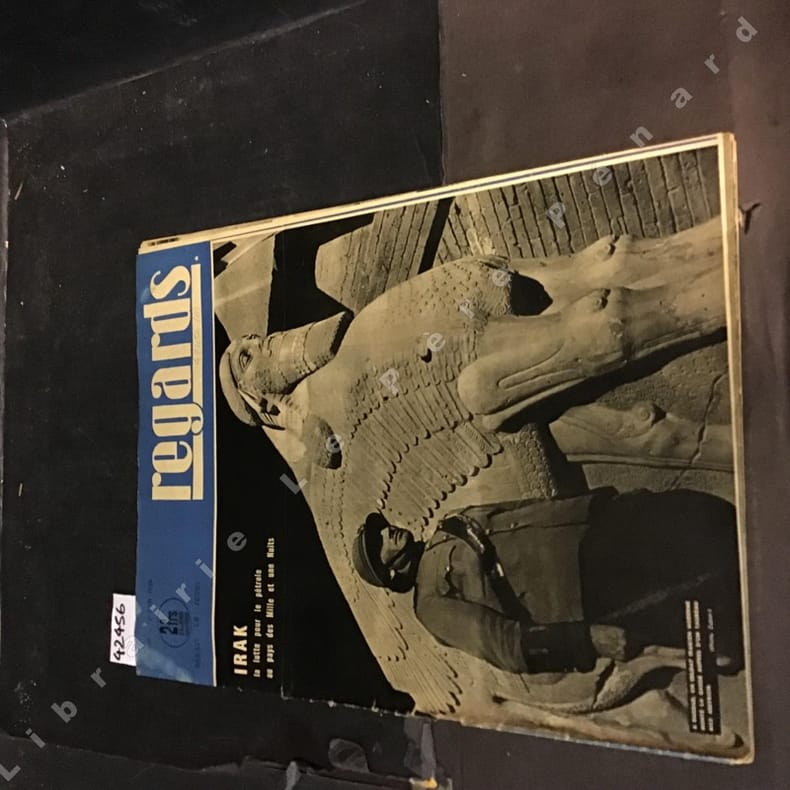
42456N° 281 - 5 janvier 1951 - 19e année - nouvelle série - revue illustrée - broché
2018500131756HENRY DOUGIER 2018 117 pages 14 4x21 8x1 2cm. 2018. Broché. 117 pages.
61003Numéro spécial - Supplément au n° 186 - mars-avril 1949 - nouvelle série - revue illustrée - broché - 32 pages
308p. 8vo. Original full blue cloth binding, spotted and worn. Second printing. "Nazi brutality failed to crush the spirit of the two "Aryan" German authors of this book." Coldwar/Economics 3
72619aafBern, E. Räber, 1831, in-8vo, 18 S., Broschüre.
pp. xiv, 482. Inked ownership of Samuel E. Allen. 8vo. Original full cloth binding. Original dust jacket. Coldwar/Economics 6
pp. 276. XLib. Tall 8vo. Original full cloth binding. Original dust jacket, worn. Coldwar/Economics 7
No marks or inscriptions. A very clean very tight copy with bright unmarked red cloth boards and no bumping to corners. Dust jacket not price clipped or marked or torn or creased. 252pp. An in-depth discussion about concrete alternatives to neo-liberalism, with examples of how such movements were starting.
pp. xi, 339. Tall 8vo. Original full blue cloth binding. Original glassine wraps. Coldwar/Economics 2
97p. Illustrated. Paper beginning to brown but not brittle. 8vo. Original full printed wraps. Dampstain. Contents include: An Interview with Senator Frank Church; Hang Down Your Head Tom Dooley, by Robert Scheer; The "Vietnam Lobby" by Robert Scheer and Warren Hinkle; Two Views From Southeast Asia, by Robert Scheer and Marcus Raskin; "This Isn't Munich, It's Spain" by Bernard B. Fall; The Winner's War by Robert Scheer; "The Whole Thing Was A Lie!" by Donald Duncan; Etc, Coldwar/Economics 10