VIDAL-BENEYTO (José), CASSEN (Bernard)Livre Rare Book
VesciaLivre Rare Book
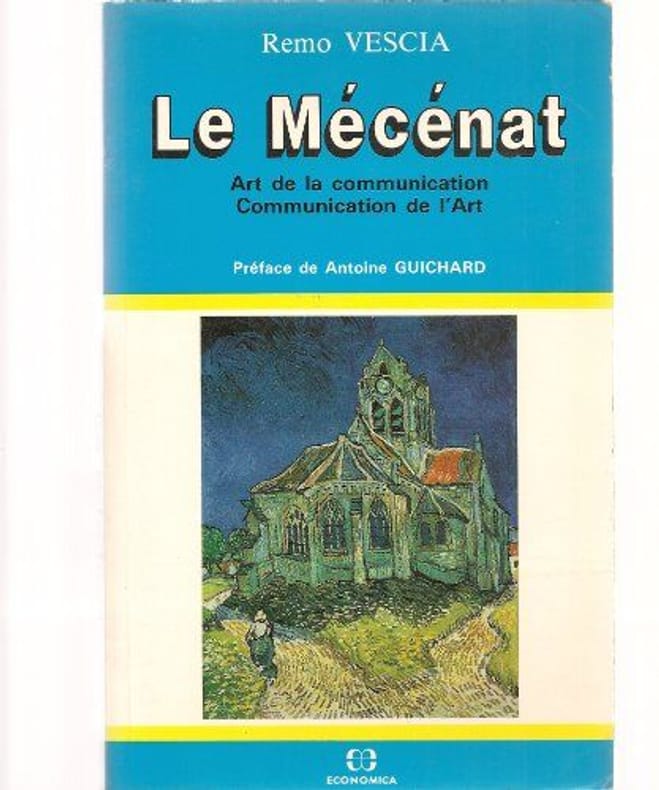
Le mecenat / art de la communication communication de l'art
19856729Economica 1985 270 pages in8. 1985. Broché. 270 pages.
Maison Vallon Librairie · Le Thor, France7,00 €
654 résultats
198899798-C4013Strasbourg, Conseil de l'Europe / AMELA, 1988, broché, 20.6 x 14.6 x 1 cm, très bon état.
19856729Economica 1985 270 pages in8. 1985. Broché. 270 pages.
1951100139262Amiot dumont 1951 in8. 1951. broché.
1984S29585New York, American Showcase 1984 384pp.richly ill.in colour, cloth, dustwrapper, VG
1990RES12L60Paris Armand Colin 1990 In8 352 pages - broché - très bon état
1990RES12L60Paris Armand Colin 1990 In8 352 pages - broché - très bon état
1980203358Couverture souple. Broché. 241 pages.
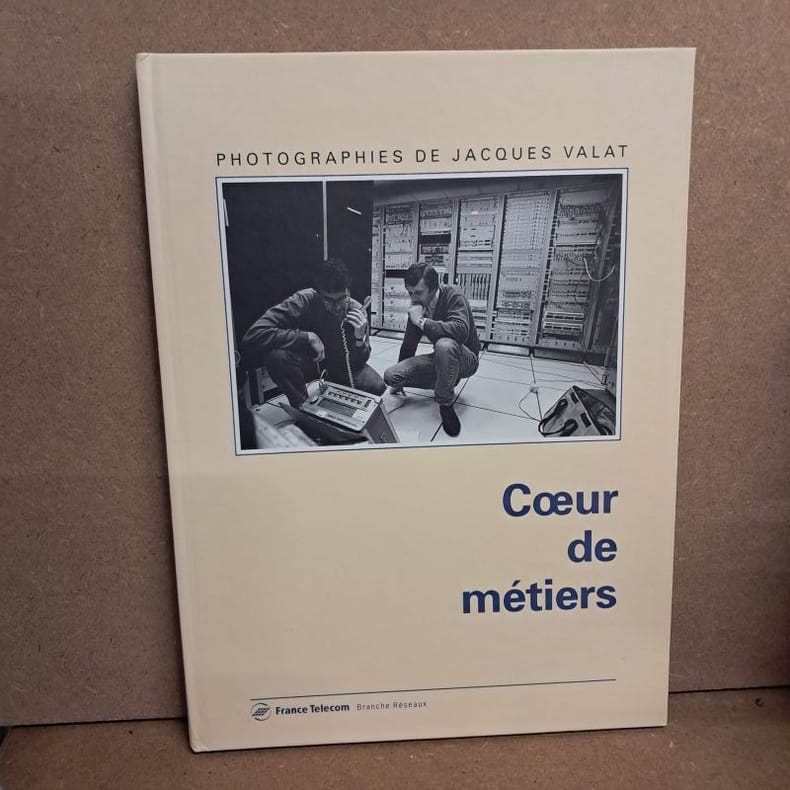
19975241997 - cartonné - Edition de France Telecom, Branche Réseaux - 1997 - In-folio (31,5 x 23 cm) cartonné - 75 pages - Nombreuses photographies de Jacques VALAT en noir et blanc - A PROPOS : Ouvrage photographique qui met en lumière les femmes et les hommes au cœur des activités de France Télécom à la fin des années 1990. À travers des images en noir et blanc, il documente avec une sensibilité quasi documentaire les gestes, les environnements et la dimension humaine des métiers techniques. À mi-chemin entre communication institutionnelle et regard social, le livre constitue aujourd’hui un témoignage visuel d’une entreprise en pleine transformation.
19852110502150413795magazine house 1985. Soft Cover. Fine. Volume: 1 magazine house paperback
19732091202133203414Daigaku tsushin 1973. Soft Cover. Fine. Volume: 1 Daigaku tsushin paperback
193290559Fort Sill OK: United States Army. Field Artillery School. Department of Tactics & Communication 1932. Presumed First Edition First printing thus. Single sheet printed on one side. Fair. The format is approximately 18 inches by 17 inches. RARE SURVIVING COPY. FRAGILE. Flimsy overlay paper. Tear in the lower right panel. Numerous pencil notations adjusting number printed on the overlay sheet. Several perforations noted. Short text notation at lower right corner. The United States Army Field Artillery School USAFAS trains Field Artillery Soldiers and Marines in tactics techniques and procedures for the employment of fire support systems in support of the maneuver commander. The school further develops leaders who are tactically and technically proficient develops and refines warfighting doctrine and designs units capable of winning on future battlefields. The school is currently located at Fort Sill Oklahoma. The mission of the Field Artillery is to destroy neutralize or suppress the enemy by cannon rocket or missile fire and to help integrate all fire support assets into combined arms operations. The U.S. Army Field Artillery School trains educates and develops agile adaptive and decisive Soldiers and leaders; engages collaborates and partners with other branches sister-services and other fires warfighting function proponents; and serves as the lead agent for the development of Field Artillery doctrine concepts and dissemination of that knowledge to the Field Artillery force in support of commanders operating across the full spectrum of conflict and in the joint inter-organizational and multinational JIM environment. The U.S. Army Field Artillery enables maneuver commanders to dominate in Unified Land Operations through effective targeting integration and delivery of fires. The vanguard sometimes abbreviated to van and also called the advance guard is the leading part of an advancing military formation. It has a number of functions including seeking out the enemy and securing ground in advance of the main force. The vanguard derives from the traditional division of a medieval army into three battles or wards; the Van the Main or Middle and the Rear. The term originated from the medieval French avant-garde i.e. "the advance guard". The vanguard would lead the line of march and would deploy first on the field of battle either in front of the other wards or to the right if they deployed in line. The origin of USAFAS can be traced back to the 1907 reorganization of the Artillery Corps and to the character of Fort Sill at that time. The 1907 reorganization created Coast and Field Artillery Branches. In the process of this reorganization the Field Artillery was deprived of its former home at Fort Monroe Virginia. Fort Sill was considered the best location for a Field Artillery school since its 15000-acre reservation allowed ample room for target practice and its great variety of terrain offered an excellent area for different types of tactical training. In addition the post had already assumed the character of the home of artillery with a large number of artillery units assigned. The first artillery school the US Army School of Fire was organized in 1911 by Captain Dan Tyler Moore. With the exception of a brief period in 1916 when school troops were used as frontier security guards during the Mexican Revolution the School has operated and expanded continuously. Hundreds of thousands of artillerymen have been trained at Fort Sill since the inception of the School. After the United States entered World War I the school reopened in 1917 with Col. William J. Snow as commandant. The Field Artillery School as it was now known added more courses. After the war school commandants began a long-range program to improve field artillery mobility gunnery and equipment. Budget cuts during the 1920s hampered their efforts but innovative directors of the Gunnery Department with support from school commandants helped modernize the field artillery in the 1930s. Maj. Carlos Brewer director of the Gunnery Department in the late 1920s and early 1930s introduced new fire direction techniques so fire support would be more responsive. Maj. Orlando Ward the next department director developed the fire direction center to centralize command and control and to facilitate massing fire. Brewer Ward and Lt. Col. H.L.C. Jones encouraged replacing horses with motor vehicles for moving field artillery guns. During World War II to best use new long-range guns and better response times the Field Artillery School championed the use of air observation to control artillery fires. The War Department approved organic field artillery air observation in 1942. The artillery air observers adjusted massed fire and performed liaison reconnaissance and other missions during the war. Following the war the school adapted to the atomic age and the Cold War. The War Department consolidated all artillery training and developments under the U.S. Army Artillery Center at Fort Sill in 1946. At that time the center included the Artillery School the Antiaircraft and Guided Missile School at Fort Bliss Texas and the Coast Artillery School at Fort Scott Calif. United States Army. Field Artillery School. Department of Tactics & Communication unknown
19992082702114911068Kodansha 1999. Soft Cover. Fine. Number of pages: 302p Size: 18cm Kodansha paperback
19992081502111706467Kodansha 1999. Soft Cover. Fine. Number of pages: 302p Size: 18cm Kodansha paperback
1991100062813Maxima Laurent du Mesnil éditeur 1991 135 pages 16x24x1cm. 1991. Broché. 135 pages.
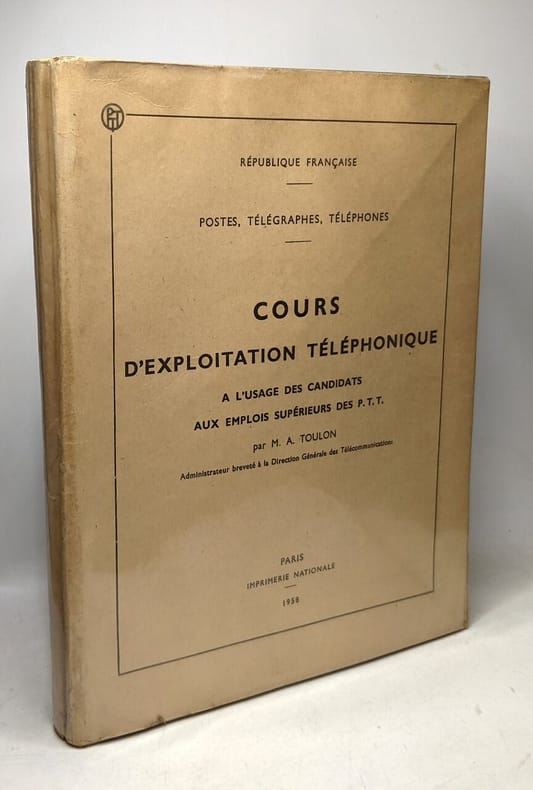
1958100130838Imprimerie nationale / Paris 1958 in4. 1958. Broché.
194796938Communication N°4 aux Obédiences Maçoniques Américaines et Européennes 1947 Communication N°4 aux Obédiences Maçoniques Américaines et Européennes, Novembre 1947, 64 p., broché, couverture insolée, bon état.
1990207991Couverture souple. Broché. 365 pages.
1990AUB-7757Paris, éd. R. Laffont 1990. Bon exemplaire broché, gd in-8, 318 pages avec bibliographie et table.
1984102896Toastmasters International Inc. Good. 1984. Stapled Soft Cover. N281 . Toastmasters International, Inc. paperback
1987ca831Editions Time-Life Le monde des ordinateurs Cartonné 1987 In-4, (28x23.5 cm), cartonné, couverture argentée illustrée en couleurs, 128 pages, nombreuses illustrations en couleurs, glossaire, bibliographie, index ; petits chocs sur les coins, bon état. Livraison a domicile (La Poste) ou en Mondial Relay sur simple demande.
1988100090249Vie Ouvrière 1988 in8. 1988. Broché.
1990LFA00fa3Un ouvrage de 222 pages, format 215 x 135 mm, broché, publié en 1990, Editions Robert Laffont
190710742Paris, Ch. Béranger, Encyclopédie des Travaux Publics, 1907 ; 2 tomes brochés : Texte, in-8 ; Atlas : in-folio ; (4), IV, 307 pp., 54 figures ; (4), 8 très grandes planches de 6 à 10 pages, couvertures jaunes imprimées.
19742090502113716796Not Available 1974. Soft Cover. Fine. The book is in fine condition. Not Available paperback
19762090502113717793Not Available 1976. Soft Cover. Fine. The book is in fine condition. Not Available paperback