33 résultats
1997135589Paris: Paris-Musees Gallimard/Electa 1997. Softcover. VG Ex-library with few markings and label bookplate at front inside cover pages are slightly tanned at top margin otherwise very nice. Black & white wraps 236 pp. many color & BW illus. Text is in French. Issued in conjunction with a 1997 exhibition in Paris. Illustrations are supplemented by explanatory text. "If you love love you'll love the surrealism" is the focus. Paris-Musees, Gallimard/Electa paperback books
2000271832Copenhagen: Living Architecture 2000. hardcover. fine/very good. Nagel Per. Hundreds of color photographs. 189pp. 4to black cloth d.w.; dust wrapper lightly rubbed and with small tear to upper rear margin Copenhagen: Living Architecture 2000. A fine copy in a very good dust wrapper.<br/><br/> Living Architecture unknown books
1980016189New York New York: Museum of Modern Art 1980. First Edition. Quarto. 464p. A special gift copy given to guests with the original slipcase and the pastedown label from Mr. and Mrs. Joseph H. Lauder Estee Lauder Company at the Gala Dinner for the Exhibit May 29 1980. Each guest was given a copy before the copies were available to the public. Laid in is a dinner menu with a pastedown cover of Picasso work. Museum of Modern Art unknown books
1233London. K.G. Saur. 1993. 4to. Edition 1993/94 I. Volume/Band 1. Museums Public Galleries Associations. In good condtion. unknown books
198091831980. Softbound. VG slight scuffing to cover. Color wraps. 192 pp. 11 color 228 bw plates. This lavishly illustrated book by Martha Pike and Janice Gray Armstrong also contains 7 contributed essays: Where All Our Steps are Tending; The Problem of Time in 19th Century America; Symbolic Death; The Worldly Side of Paradise; Posthumous Mourning Portraiture; Chrysallis of Gloom mourning costumes; and Truly We Live in a Dying World. Also contains a foreword prologue epilogue and further reading. Most of the 244 items in the detailed catalogue are illustrated. Many say this is the best examination of this subject to date. paperback books
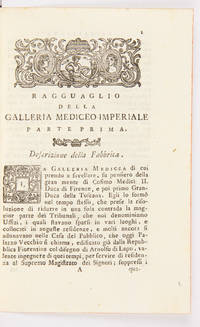
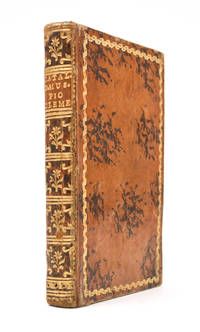
17594188<p>Florence: Nella stamperia Imperiale 1759</p><p>Octavo: 19 x 14.3 cm. p. xiii i 236 1 errata; Collation: a8 -a8 blank A-P8 -P8 blank Complete.<br /></p><p>FIRST EDITION.</p><p>A crisp bright copy in original three-quarter calf and speckled paper over boards spine with floral ornaments. The text is adorned with attractive woodcut initials and headpieces.</p><p>First edition of the first guide to one of the world's most important museums. This guide to the Medici collections of the Uffizi Gallery was written by the museum's first custodian who had been appointed after the gallery's conversion to a public institution under the terms established by the last of the Medici the Palatine Electrix Anna Maria Ludovica in 1737. The custodian Giuseppe Bianchi is a notorious figure. He was later found to have robbed the Uffizi of works of precious metal which he melted down and sold. He was condemned to exile for his perfidy. See Barrochi and Bertelà "Danni e furti di Giuseppe Bianchi in Galleria Labyrinthos 13/16 1988-89 321-336.</p><p>Bianchi's guide published in the same year that the British Museum opened to the public is an important record of the disposition and scope of the newly "public" collections in the period prior to their dramatic reorganization by Grand Duke Pietro Leopoldo of Lorraine 1780-82. In some instances the notices in the guide are the earliest extant record for some works in the collections. The portable and scholarly guide is similar in format and composition to Pasquale Massi's 1792 guide to the Vatican Museums which Bianchi's guide predates by a generation.</p><p>Bianchi prefaces his tour with a history of the construction of the Uffizi palace designed and begun by Vasari in 1560 and completed –following Vasari's design- by Alfonso Parigi and Bernardo Buontalenti in 1581. This is followed by a description of the various elements that make up the entire palace complex. </p><p>The formal guide to the galleries begins with a detailed description of the decorative program of the frescoed ceilings and the series of portraits that line the walls beneath them. This is followed by descriptions and commentaries on each of the 62 statues and 92 busts housed in the galleries in this period. Francesco I was the first Medici to add ancient marbles to the newly completed Uffizi and these ancient sculptures were juxtaposed with contemporary Renaissance masterpieces. Thus we find in Bianchi's guide the famous Medici Venus the Niobe group Bandonelli's Laocöon and Michelangelo's Bacchus. The sarcophagus of Hippolytus is absent since it was still in the Palazzo Medici Riccardi in 1759.</p><p>Next Bianchi takes us into the Camera dei Pittori. Yet here he is unable to give a comprehensive discussion. This is due in large part to the sheer size of the collection but also to the fact that the painting collection has changed so much over the years some of the paintings having been transferred to the Pitti Palace others that formerly hung in the Palace having come to the Gallery and others still having been given as gifts to great lords or used to decorate villas. Moreover the paintings are in many media: oil tempera fresco and encaustic. Bianchi decides to focus on the collection of artist self-portraits which are divided into the three principal schools arrived at by the consensus of the most famous scholars of the art of painting: Romana Lombarda and Oltramontana. Here we find the famous self-portrait of Raphael.</p><p>From here we pause briefly in the Camera delle Porcellane before entering the Camera degl' Idoli with its collection of 300 Greek Roman Etruscan and Egyptian bronzes which Bianchi considers in detail. Next we enter the Camera delle Arti where we find paintings by Raphael Andrea del Sarto Leonardo Botticelli Mantegna and Fra Angelico. In the Camera de' Fiamminghi are housed 140 paintings by northern European artists: Albrecht Dürer Lucas Cranach Van Dyck Brueghel and Callot among others. </p><p>The German Cabinet:</p><p>The center of the Camera delle Arti is occupied by a wondrous machine for which Bianchi provides a two-page description. It is a magnificent octagonal cabinet over nine feet tall incorporating a clock a pneumatic organ and moving figures in silver. The architectural details are all composed of granatiglia an ebony-like luxury hardwood and the surfaces of the cabinet are inlaid with precious stone including lapis jasper and verde antico. The cabinet is adorned with painted scenes of the Old and New Testaments which are rendered so minutely and with such fine skill that they are believed to be by the school of Brueghel. Within the cabinet is a machine that rotates showing four scenes: birds and arabesques executed in stone-inlay; a wax relief of the deposition "the work of the immortal Buonarroti"; an amber relief of Jesus and the Apostles; and an amber crucifixion scene. The final ornament of the machine is a mirror box that produces an infinite number of reflections. Bianchi tells us that the cabinet was made in Germany "around a century ago" and was purchased by Grand Duke Ferdinando II 1610-1670.</p><p>The sixth camera houses mathematical instruments and a pair of celestial and terrestrial globes. Among the marvels here are an enormous magnet and a huge burning mirror. It was with the addition of the mathematical and scientific collections that the Uffizi began to take on the aspect of a wunderkammer.</p><p>Next we enter the heart of the museum the Tribuna the octagonal room that houses the most important treasures of the Uffizi. Bianchi begins with individual descriptions of the 14 marble statues among them the Medici Venus the Wrestlers the Dancing Satyr the Arrotino and the infant Hercules. After a brief description of the room itself designed by Bernardo Buontalenti for Ferdinando III Bianchi lists the artists whose paintings adorn the room: Correggio Titian Veronese Parmigianino and above all Raphael. There is also a detailed description of the famous table of pietre dure. </p><p>Leaving the Tribuna we come to the Camera dell' Ermafrodita the focal point of which is the hermaphrodite in Parian marble acquired by Ferdinando II from the Ludovisi Collection. Our tour concludes with brief visits to the room of medals the arsenal and the room of the ciborium with the incomplete parts of that structure created by Buontalenti for the Medici mausoleum in San Lorenzo.</p><p>Cicognara 4202; Murray Museums: their history and their use I 241; Schlosser 516. Literature: Florida Forestieri in Galleria: visitatori direttori e custodi agli Uffizi dal 1769 al 1785</p> Nella stamperia Imperiale, books
17923602Rome:: Presso Lazzarini 1792. FIRST EDITION. Octavo:. 15.5 x 10.8 cm. 4 216 pp. Collation: 2 a-m8 n12 the first leaf 1 is a blank and is present Printed on blue paper. In contemporary mottled calf the spine and boards tooled in gold. A very fine copy of the very rare first catalogue of the Museo Pio-Clementino - founded by Pope Clement XIV in 1771 and greatly expanded his successor by Pius VI- written for the use of visitors by the keeper of the museum Pasquale Massi of Cesena. Rare. The Museo Pio-Clementino was the first major curatorial museum within what are known today collectively as the Vatican Museums. In 1771 Pope Clement XIV had Michelangelo Simonetti adapt the Belvedere Pavilion to accommodate the papal collection of ancient art. When Clement’s successor the avid art collector Pius VI was elevated to the pontificate in 1775 the pace of acquisition increased dramatically and very soon the collections outgrew the rooms arranged for them by Simonetti. In 1776 Pius VI called for a radical restructuring of the existing museum and the construction of new grand spaces to house the ever-expanding collection. Massi’s catalogue a room-by-room guide of the museum with descriptions of all of the artifacts and artworks housed therein is an invaluable record of how the greatly expanded museum of antiquities looked in the late 18th century with its newly constructed series of rooms and the recently installed masterpieces of ancient sculpture -the fruits of some of the most important excavations in Italy including the excavation of Hadrian’s villa at Tivoli. In addition to providing a record of the arrangement of the exhibits Massi’s catalogue in which he provides details of provenance acquisition and attribution of each artwork described serves as a history of the museum’s formation and preserves valuable information about the art trade and the function of archaeology in the late 18th century. Massi has used a system of numbers and letters to indicate which works were added to the museums by Julius II and his various successors above all Clement XIV and the then-current pope Pius VI. In his introduction Massi tells us that he has designed his guide for portability and easy reference by tourists by arranging the descriptions of the objects in each room in the form of a walking itinerary. Since it is necessary at two points to retrace one’s steps Massi’s guide leads us along one side of each room as we proceed through the galleries. When it is time to reverse our course he leads us along the opposite side of the rooms already traversed thus keeping us engaged and entertained as we retrace our steps through the vast complex. Our tour begins at the new entrance to the museum in the corridor of Cleopatra also known as the corridor of the inscriptions just within the new entrance to the museum. We then pass through two vestibules. The first one is square with frescoes by Giovanni da Udine in the vault. In it we encounter the tomb of the Scipios and the Belvedere Torso. The second vestibule is round and in its center is a large bowl made of pavonazzetto. From here we proceed through a corridor into the porticoed octagonal courtyard of the Belvedere the site of Julius II’s first installation of ancient sculpture transformed by Simonetti in the 1770’s. Massi then leads us through the hall of the animals the gallery of statues the gallery of busts and the “loggia scoperta†the room of masks. We make our way back through these galleries to arrive at the series of rooms created by Simonetti in the 1780’s. The first of these is the hall of the muses. We then enter the breathtaking Sala Rotonda with its immense newly installed ancient porphyry basin from the Domus Aurea through which we make our way to the Sala of the Greek Cross where we find the newly installed ancient porphyry sarcophagus of Constantine’s daughter Constantia. From here Massi takes us via Simonetti’s new staircase up past the unfinished hall of the biga to Bramante’s vast gallery of the candelabra which is itself divided into numerous rooms with vases statuary and jewelry. Exiting by the stairs we visit the library and trace our way back through the new wing and via the Belvedere courtyard where we marvel at the Laocoön and the Belvedere Apollo to the cortile the great open court of he complex where our tour ends. Cicognara 3408. I have located 6 copies in the U.S.: Getty UC Riverside USC Cleveland NW Chicago Presso Lazzarini, unknown books
17673939Paris:: M. Lambert for Briasson 1767. SOLE EDITION. Three tall octavo volumes:. 19.5 x 12.8 cm. Vol I: xxxvi 571 pages.; Vol II: vj 656 pages; Vol III: vi 290 286 1 pp. Collation: I. a-b8 c2 A-Z8 Aa-Mm8 Nn6 plus 22 plates; II. a3 A-Z8 Aa-Ss8; III. a3 A-S8 T4 a-s8 plus 8 plates Bound in contemporary mottled calf spines gilt with morocco labels light wear small imperfections. Internally all three volumes are in excellent condition. All 30 plates are crisp and in fine impressions. First and sole edition of this comprehensive catalogue of the collection of Pedro Francisco Dávila. The Dávila catalog as it has become known describes 8096 mineral specimens that encompass a large range of localities including a suite of specimens from Potosà in Spanish America as well as many items from Canada Mexico and Paraguay. In addition the catalog lists 5253 shells 600 preserved animals 101 plants 3915 fossils 154 bezoars and calculi and 402 books. Over 12000 prints and engravings 1741 original artworks 441 maps as well as various scientific instruments and precious stones are also described. "Pedro Francisco Dávila possessor of the largest collection of natural history specimens in Paris and wishing to establish an institution in Spain to preserve it approached King Carlos III of Spain. But political difficulties and an approaching war with England distracted the king who declined the purchase. Because of debts incurred building the collection creditors forced Dávila to put the accumulation up for auction in Paris. For this purpose a detailed collection catalog was required. Dávila had already written many descriptions but it was his introduction through Balthasar Sage to the young Romé de l'Isle that created this remarkable record of the collection. "Romé de l'Isle took the existing material added considerably to the mineralogical descriptions and put the catalog into publishable form. In this task he was assisted by Abbé Duguat who helped with the mineralogical descriptions and Abbé Gua de Malves 1712-1786 who described the shells. Through their efforts two volumes describing natural history specimens were produced one of which was entirely devoted to minerals. In addition a third volume written by Romé de l'Isle probably with assistance from Pierre Remy describes the fossils artwork and books. The published catalog provides a detailed insight into his collection his special tastes and preferences. The major value of the collection lay in its superb mineral specimens many of which were finely crystallized examples. Romé de l'Isle fully described the many fine mineralogical specimens which included examples of native silver from Norway cassiterite from the Dutch East Indies crocoite from Siberia pyrite from Columbia and calcite from Saxony etc. Dávila had been a collector for over 20 years when his accumulation was auctioned. In that time he or his agents had acquired specimens at other auctions including those that liquidated the collections of Albertus Seba in 1752 the Abbé Joly de Fleury in 1755 Claude Geoffroy in 1753 and others. Dávila's catalog received wide distribution in Paris London Amsterdam Rotterdam and Basle. This helped push the total realized by Dávila to over 800000 Spanish reales more than enough to pay of his creditors and to finance a second collection which he immediately began to build. Within two or three years he had again amassed a sizable collection specializing in minerals and selected with more knowledge and experience than his first collection had been. Once again he dreamed of establishing the cabinet in Madrid. In October 1771 this became reality when King Carlos III agreed to take over his collections with Dávila serving as director for life. This enormous collection eventually passed into the National Museum of Natural Sciences in Madrid where Dávila's specimens are still preserved today."The Mineralogical Record Conlon 67:1238; Nissen ZBI 1050; Sinkankas 1594; Wilson History of Mineral Collecting 1994: 136-40 166 & 209 provides a detailed history of the collections M. Lambert for Briasson, unknown books