33 résultats
1980016189New York New York: Museum of Modern Art 1980. First Edition. Quarto. 464p. A special gift copy given to guests with the original slipcase and the pastedown label from Mr. and Mrs. Joseph H. Lauder Estee Lauder Company at the Gala Dinner for the Exhibit May 29 1980. Each guest was given a copy before the copies were available to the public. Laid in is a dinner menu with a pastedown cover of Picasso work. Museum of Modern Art unknown books
199925348NP: CIP 1999. Hardcover. Very good. Very good hardback in a very good dustjacket. Text in Chinese <br/><br/> CIP hardcover books
1994882Brussels: Royal Museums of Fine Arts of Belgium 1994. First Edition. Exhibition guide presenting the best-known works from the 15th through 19th centuries in the Museum of Ancient Art in Brussels. 8vo. 24 pages in wrappers. Light edge wear. Otherwise Fine. <br/><br/> Royal Museums of Fine Arts of Belgium unknown books
28671ROYAL PAVILION ART GALLERY AND MUSEUMS. GOTHICK. Brighton: 1975. Square 8vo. Wrappers. 59 pages 24 pages of plates. First edition. Exhibition catalogue on Gothic architecture art furniture and decorative ar sponsored by the Brighton Festival Society 1975. Preface by Sir Nikolaus Pevsner. Very good. unknown books
1985299034Vienna: Historischen Museums der Stadt Wien 1985. paperback. very good. Text in German. Illustrated in color and black and white. 801 pages thick square 8vo stiff pictorial wrappers extremities a bit worn; short tear at lower front joint. Vienna: Historical Museum of the City of Vienna 1985. A very good copy with ownership signature of Mildred Schmertz editior in chief of the Architectual Review.<br/><br/> Historischen Museums der Stadt Wien unknown books
198091831980. Softbound. VG slight scuffing to cover. Color wraps. 192 pp. 11 color 228 bw plates. This lavishly illustrated book by Martha Pike and Janice Gray Armstrong also contains 7 contributed essays: Where All Our Steps are Tending; The Problem of Time in 19th Century America; Symbolic Death; The Worldly Side of Paradise; Posthumous Mourning Portraiture; Chrysallis of Gloom mourning costumes; and Truly We Live in a Dying World. Also contains a foreword prologue epilogue and further reading. Most of the 244 items in the detailed catalogue are illustrated. Many say this is the best examination of this subject to date. paperback books
200232554Richmond VA: University of Richmond Museums 2002. Softcover. VG. Pictorial wraps. 71 pp. Numerous color plates. Marsh Art Gallery University of Richmond Museums April 3 to June 29 2002 and Muscarelle Museum of Art College of William and Mary March 30 - May 12 2002. University of Richmond Museums unknown books
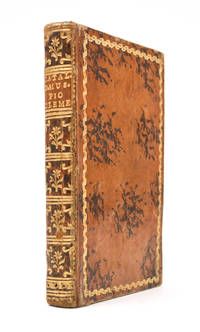
17923602Rome:: Presso Lazzarini 1792. FIRST EDITION. Octavo:. 15.5 x 10.8 cm. 4 216 pp. Collation: 2 a-m8 n12 the first leaf 1 is a blank and is present Printed on blue paper. In contemporary mottled calf the spine and boards tooled in gold. A very fine copy of the very rare first catalogue of the Museo Pio-Clementino - founded by Pope Clement XIV in 1771 and greatly expanded his successor by Pius VI- written for the use of visitors by the keeper of the museum Pasquale Massi of Cesena. Rare. The Museo Pio-Clementino was the first major curatorial museum within what are known today collectively as the Vatican Museums. In 1771 Pope Clement XIV had Michelangelo Simonetti adapt the Belvedere Pavilion to accommodate the papal collection of ancient art. When Clement’s successor the avid art collector Pius VI was elevated to the pontificate in 1775 the pace of acquisition increased dramatically and very soon the collections outgrew the rooms arranged for them by Simonetti. In 1776 Pius VI called for a radical restructuring of the existing museum and the construction of new grand spaces to house the ever-expanding collection. Massi’s catalogue a room-by-room guide of the museum with descriptions of all of the artifacts and artworks housed therein is an invaluable record of how the greatly expanded museum of antiquities looked in the late 18th century with its newly constructed series of rooms and the recently installed masterpieces of ancient sculpture -the fruits of some of the most important excavations in Italy including the excavation of Hadrian’s villa at Tivoli. In addition to providing a record of the arrangement of the exhibits Massi’s catalogue in which he provides details of provenance acquisition and attribution of each artwork described serves as a history of the museum’s formation and preserves valuable information about the art trade and the function of archaeology in the late 18th century. Massi has used a system of numbers and letters to indicate which works were added to the museums by Julius II and his various successors above all Clement XIV and the then-current pope Pius VI. In his introduction Massi tells us that he has designed his guide for portability and easy reference by tourists by arranging the descriptions of the objects in each room in the form of a walking itinerary. Since it is necessary at two points to retrace one’s steps Massi’s guide leads us along one side of each room as we proceed through the galleries. When it is time to reverse our course he leads us along the opposite side of the rooms already traversed thus keeping us engaged and entertained as we retrace our steps through the vast complex. Our tour begins at the new entrance to the museum in the corridor of Cleopatra also known as the corridor of the inscriptions just within the new entrance to the museum. We then pass through two vestibules. The first one is square with frescoes by Giovanni da Udine in the vault. In it we encounter the tomb of the Scipios and the Belvedere Torso. The second vestibule is round and in its center is a large bowl made of pavonazzetto. From here we proceed through a corridor into the porticoed octagonal courtyard of the Belvedere the site of Julius II’s first installation of ancient sculpture transformed by Simonetti in the 1770’s. Massi then leads us through the hall of the animals the gallery of statues the gallery of busts and the “loggia scoperta†the room of masks. We make our way back through these galleries to arrive at the series of rooms created by Simonetti in the 1780’s. The first of these is the hall of the muses. We then enter the breathtaking Sala Rotonda with its immense newly installed ancient porphyry basin from the Domus Aurea through which we make our way to the Sala of the Greek Cross where we find the newly installed ancient porphyry sarcophagus of Constantine’s daughter Constantia. From here Massi takes us via Simonetti’s new staircase up past the unfinished hall of the biga to Bramante’s vast gallery of the candelabra which is itself divided into numerous rooms with vases statuary and jewelry. Exiting by the stairs we visit the library and trace our way back through the new wing and via the Belvedere courtyard where we marvel at the Laocoön and the Belvedere Apollo to the cortile the great open court of he complex where our tour ends. Cicognara 3408. I have located 6 copies in the U.S.: Getty UC Riverside USC Cleveland NW Chicago Presso Lazzarini, unknown books