274 résultats
18846983NY: The Century Co. Very Good. 1884-88. Hardcover. 7 volumes. First appearances of the articles that eventually were issued as a 4 volume set edited by Johnson and Buel. Articles written by Ulysses S. Grant; ; Mark Twain; Gen. James Longstreet; George B. McClellan; D. H. HillGeorge W Cable; Lew Wallace; G. T. Beauregard; scores of others many whoe were Genrals in the Union or the CConfederate armies. Each volume is half-leather over pebbled cloth 4 raised bands gilt titles on spine. Frontispiece with each issue. Other contributors or articles include: "The Bostonians" by Henry James; Joel Chandler Harris; 3 excerpts from "The Adventures of Huckleberry Finn" by Mark Twain; "The Rise of Silas Lapham" by W. D. Howells; ; John Burroughs; "Hunting the Rocky Mountain Goat"; "Greeley at Cape Sabine" by Charles H. Harlow; a number of articles on different dog breeds; "Creole Slave Songs" by George W. Cable; Ballooning; "Riding to Hounds on Long Island" by Theodore Roosevelt; "Gloucester Fishers"; Homing Pigeons; "Camping Out in California"; "English as She is Taught" by Twain; "Abraham Lincoln: A History" by Nicolay and Hay; "Machine Politics in New York City" by Roosevelt; "The White Man of the New South"; "Animal Locomotion in the Muybridge Photographs"; "Among the Apaches" and "An Elk Hunt on the Plains" by Frederick Schwatka; "meisterschaft: In Three Acts" by Twain; "Ranch Life in the Far West" by Roosevelt with illustrations by Frederic Remington; George Kennan on Russia; much more. Light soiling on cloth; light rubbing and wear on spines. . The Century Co. hardcover
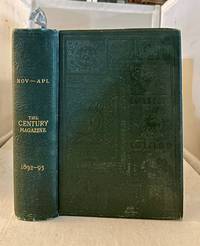
1893A50462New York NY: The Century Company. Very Good. 1893. 1st Edition; 1st Printing. Hardcover. B&W Illustrations; This is a bound copy of The Century Magazine from Nov. 1892 through 1893 which features the first appearance of Mark Twain's 1000000 pound Bank Note. The book is in Very Good to Near Very Good condition and was likely issued thus without a dust jacket. This copy is bound in Green cloth with gilt lettering to the spine and embossed decorations on all three parts of the covers. The text pages are generally clean and bright. There are spots of foxing / toning to the top edges of some of the book's pages. The Mark Twain story is found on pages 338 - 346. . The Century Company hardcover
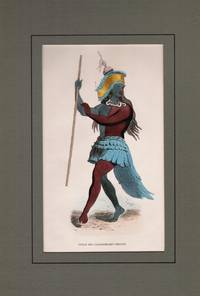
1845009543Germany: Unknown 1845. Very Good. Illustrator: L. Lisbet. =<br /> <p class="pf0">An early European ethnographic depiction of a Native Californian ceremonial dancer produced in Germany in the mid-1840s prior to California statehood and the Gold Rush. The figure is shown in ritual dress with feathered headdress skirted regalia and ceremonial staff rendered in vivid hand-applied color. Works of this type circulated in illustrated ethnographic and geographic publications intended to introduce European audiences to Indigenous cultures of the Americas.</p> <br /> <p class="pf0">Hand-colored wood engraving xylography. Image size approx. 9.5 × 6.25 inches 24.2 × 15.5 cm. German caption beneath image. Presented professionally matted and ready for framing.</p> <br /> <p class="pf0">The sheet presents with strong well-preserved hand coloring and expected light age toning to the paper. A subtle indentation is present above the figure's head extending through the upper portion of the spear; this is shallow angle-dependent and does not break the paper surface. Minor impression from handling consistent with age. Right vertical edge slightly irregular as issued or trimmed. Overall a clean visually striking example.</p> <br /> <p class="pf0">Iconography Note: Contains a 19th-century European representation of Indigenous ceremonial dress and practice. Presented as a historical artifact of its time and valued for its documentary and visual record not as an endorsement of period assumptions or interpretations.</p> . The engraving is attributed to L. Lisbet and corresponds to an example held in the New York Public Library Digital Collections confirming period production and subject consistency. Such images are valued for their documentary role in early visual interpretations of Native Californian life while also reflecting 19th-century European perspectives and conventions.<br /> <br /> <br /> <p>Subjects: Native Californians Indigenous Ceremonial Dress California History Ethnography European Views of the Americas Americana Western Americana Ethnographic Prints 19th-Century Illustration.</p> Unknown unknown
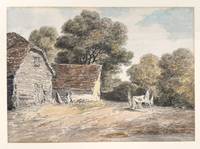
185022821850. Watercolor on cream laid paper laid down to archival board 5 5/8 x 7 7/8 inches 142 x 199 mm the full sheet. In excellent condition with a signature in graphite in the lower right image area that remains illegible. unknown
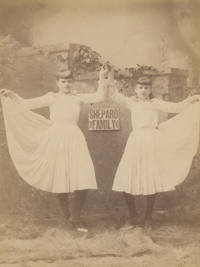
1890List1620Mostly New England: Various Photographers 1890. Cabinet cards measuring 6 ½ x 4 ¼ inches. Various settings showing the band members posed with their instruments including banjos violins trumpets drum and tubas. Varying wear but generally very good with some normal age-related fading. Very Good. Originally from Lawrenceville New York the Shepard Family Band toured throughout the Northeast in the 1880s and 1890s eventually settling in South Royalton Vermont. All members of the family were apparently musically inclined: “In addition to Minnie mother and matriarch Mary “Minnie†Shepard and her husband patriarch James Monroe Shepard all of the children were pressed into service. Daughter Laura Belle the ‘violiniste’ was getting better all the time under the instruction of a ‘competent master.’ Her fans “will be astonished at the improvement in style tone and expression.†It was said of little Lessie that ‘Among lady cornetists she has no equal.’ The darling little son of the family Master Burtie could not help but please for he was well-known to be ‘The youngest Tuba soloist in the world; only nine years of age; scarcely larger than the instrument he plays.’ He was also a ‘clever comedian singer and character artist.†The baby little Flossie “a sweet little miss of four summers’ was said to be a “wonderful mimic and impersonator…a veritable little fairy.’ Daughters Kittie and Georgia were also part of the troupe.†- Henry Sheldon Museum. A very nice collection. Various Photographers unknown
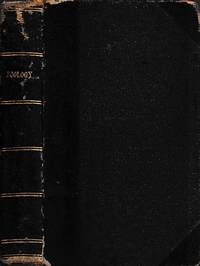
1818476052London : Baldwin Cradock and Joy 1818. New Edition Carefully Revised and Corrected. Hardcover. Good copy in contemporary half black leather over cloth boards now somewhat scuffed. Corners bumped with panel edges worn. Spine gilt-tooled and now somewhat rubbed particularly along the joints and endbands. Tight split to rear joint from the tail. Text block complete and legible if foxed throughout and showing some minor marginal tears. A strong well-preserved example overall. Physical description; xix 1 366 pages : illustrations ; 18 cm. Notes; Attributed to Thomas Boreman by the Bodleian Library. Printed by T.C. Hansard. Spine title: ""Zoology"". Subjects; Zoology – Juvenile literature. Animals. Natural history. Wood engravings. London : Baldwin, Cradock and Joy hardcover
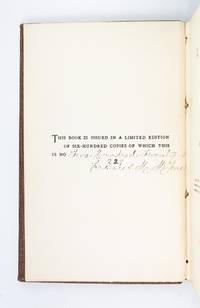
1895ST19567-179Buffalo: Charles Wells Moulton 1895. FIRST EDITION. No. 229 OF 600. 155 x 195 mm. 6 1/8 x 4 3/4". 79 1 pp. <br/> Publisher’s illustrated brown cloth binding edges beveled front board stamped in gilt flat spine top edge gilt. Photograph of the author mounted on page 6 facing the half title. SIGNED BY THE AUTHOR on the limitation page; title page printed in red and black. Cloth with just the slightest hint of wear and soiling; internally fresh and clean.<br/> <br/> This is an excellent copy of a very personal collection of poetry by a female writer of the late 19th century offered in a signed limited edition. Born in Northern Ireland Frances Margaret Milne 1846-1910 spent most of her life in San Luis Obispo California where she worked as a librarian and volunteered tirelessly for social causes. Much of her writing was political in nature: the 1893 publication "A Woman of the Century" a collection of biographies of "leading American women in all walks of life" said she had "made a profound study of economic and political questions and with pen and voice . . . and had aided in extending the discussion of the relations of progress and poverty and of individuals and society." She also published a number of fictional and poetic works; this was her second collection of poems. They primarily deal with themes of love and loss and while the poems have some of the formulaic gentility one would expect from a writer of this period and background the genuine emotions behind them are clear. By turns ebullient and poignant the text has works—such as the poem "To My Beloved at rest May 11th 1804"—that reflect the grief and joy of Milne's intense personal experiences. Copies of the book are not so readily available especially in the condition seen here. Charles Wells Moulton unknown
1821biblio15<p>5 104 pp. Tall 8vo printed wraps front wrap chipped soiled and detached lacking rear wrap ffep detached very sporadic light spotting or chipping else very good. Celebrates the landing of the colonists at Plymouth Rock on the 200th anniversary of the event. Webster exaults the pilgrims for their efforts and their sufferings in order to build a democratic nation. A highly patriotic and moving speech.</p> Wells and Lilly,
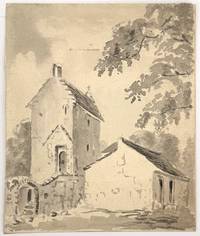
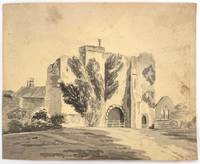
184025121840. Ink and wash on wove paper 6 x 5 inches 152 x 128 mm the full sheet. In very good condition with uniform toning and some paper tape tabs and pencil inscriptions on the verso. unknown
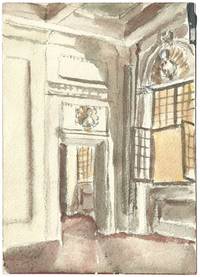
189022311890. Watercolor on heavy stock wove paper 6 1/8 x 4 3/ 8 inches 154 x 110 mm the full sheet. Scattered light areas of unobtrusive foxing otherwise in good condition. On the verso appears an illegible inscription written in pencil perhaps a signature. unknown
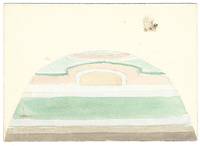
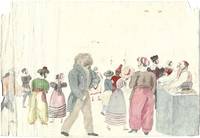
189022301890. Watercolor and graphite on heavy wove paper 4 3/8 x 6 1/8 inches 110 x 154 mm the full sheet. In good condition with an inky fingerprint in the upper right sheet area recto. On the verso is a painted sample color palette and the title of the work in pencil. unknown
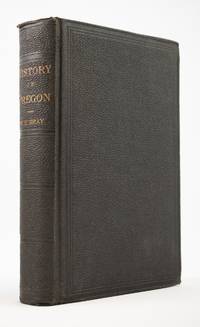
1870ST20532Portland Oregon: Harris & Holman 1870. FIRST EDITION in Book Form. 235 x 150 mm. 9 1/4 x 6". 624 pp. <br/> Publisher's black cloth flat spine with gilt lettering. With a frontispiece etching depicting Astoria in 1811. Errata slip tipped onto final page. A 1980 newspaper article from The Springfield News about William H. Gray's descendants. Graff 1630; Howes G-342; Sabin 28416. Head of spine with minute fraying slight soiling to back cover isolated minor foxing chosen paper stock not as bright as it could be but still a really excellent copy the text clean and fresh and the binding with few signs of use.<br/> <br/> Originally published as a series of articles in the "Astoria Marine Gazette" between 1865-66 the contents of this volume include chapters on religious proselytizing encounters often of a violent nature with indigenous peoples mountain men the formation of an early government and commercial interests in the area. Originally a carpenter from Utica William Henry Gray 1810-89 joined the party of fellow missionaries Marcus Whitman 1802-1847 and Henry Spalding 1803-1874 and their respective wives Narcissa 1808-1847 and Eliza 1807-1851 on a seven-month 3000-mile journey overland from their homes in upstate New York to Fort Vancouver. Narcissa and Eliza were the first white women to cross the Rocky Mountains. Gray gives a long absorbing account of that trip in the text here. He was later involved with efforts to create a provisional government among settlers of the area. As an historian Gray was widely censured even as he was acknowledged as an important source: Howes says the present work is "undependable and biased but as the product of a pioneer of 1838 it cannot be ignored." This book is easy enough to find but it is normally encountered in rough shape. Harris & Holman unknown
1862165540Munich.: Deschler's Book Brotherhood. 1862. Circus Suhr & Huttermann Poster: Circus Suhr & Hüttemann verbunden mit Theater. Heute Samstag den 2. August 1862: grosse ausserordentliche Vorstellung in der höheren Reitkunst noch nie gesehen Gymnastik und Vorführung der ausgezeichnetsten Schulpferde. Zum Zweitenmale. Black and white poster with engraving. One-sheet. Leaf size: 43.5 x 23.5cm. Top edge slightly browned and small piece 8 x 1cm missing from lower left hand corner An extraordinary presentation in the Higher art of horsemanship never before seen gymnastics and demonstrations of excellent equestrian arts. The extensive program included - two Chinese - August and Henry executing their brave and bold display. . Deschler's Book Brotherhood unknown
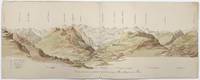
184023481840. Watercolor graphite and grayish ink on two sheets of cream laid paper with an 1836 M and smiling sun watermark 10 1/4 x 25 7/8 inches 260 x 658 mm the full sheet. Titled in ink in French on the recto. In very good condition with minor edge wear including creasing and nicks. A splendid panorama with each of the major peaks and point of interest labeled and identified in French. The iconic symbol of the Swiss resort the "Sun of St. Moritz" was adopted from early European heraldic marks and rebranded around 1930 by graphic designer Walter Herdeg. The image was patented in 1937 by spa director Walter Amstutz becoming the world's first visual trademark for a tourist destination. unknown
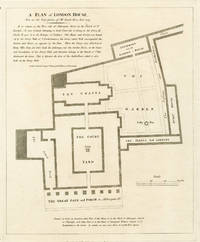
1814948London: Robert Wilkinson 1814. Copperplate engraving on watermarked Smith wove paper 12 1/4 x 9 3/4 inches 310 x 245 mm full margins. There is some minor marginal toning and handling wear that is consistent with age otherwise in very good condition. Robert Wilkinson unknown
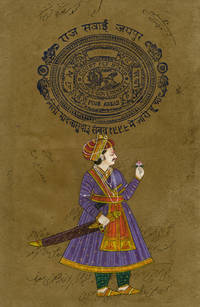
189013401890. Ink and gouache with gold heightening on fibrous brown laid paper with a Jaipur Court Fee tax stamp in purple ink on the recto 12 1/2 x 9 inches 318 x 230 mm. Toning handling creases and minor scattered surface soiling throughout. There are scattered coeval inscriptions in ink on the recto and verso. The first revenue stamps in India were issued in the mid-nineteenth century during the Raj and they are still being issued to this day. Apart from issues for the whole of India many princely states provinces and other states also had or still have their own revenue stamp issues. Before independence Indian revenue stamps were closely modeled on similar designs from Great Britain as is the case with this carriage motif stamp from Jaipur. <br /> <br /> The stamps were issued to denote various denominations including rupees and annas. An anna or Änna was a currency unit formerly used in British India equal to 1â„16 of a rupee. It was subdivided into four old Paisa or twelve pies thus there were 192 pies in a rupee. When the rupee was decimalized and subdivided into 100 new paise one anna was therefore equivalent to 6.25 paise. This particular stamp was used as evidence of court taxes remitted for property dealings. unknown
184025111840. Ink and wash on wove paper 5 1/8 x 6 1/2 inches 130 x 165 mm the full sheet. In very good condition with uniform toning some minor surface soiling and with the right sheet edge creased. unknown
1847DEMO014070INew York & Philadelphia: D. Appleton 1847. First edition. Hardcover. Very Good. 12mo 208 pages original brown cloth nicked at joints & tips of spine lacks 1 leaf of front adverts light tidal spots on top edge of the first 36 pages. <br/><br/>". recounts events on a trip from St.Louis to Nauvoo Chapter 4 Prairie du Chien the Falls of St. Anthony Lake Superior Sault St. Marie and Mackinac -Hubach p.92." "These letters . tell of a journey up the Mississippi from St. Louis with descriptions of scenery legends of the Illinois Indians and accounts of Nauvoo and the lead region. The description of Nauvoo shortly after the Mormon exodus is especially quite interesting --Buck 403." Includes quite an amusing story about the ferryman at Galena Illinois. Howes L90; Flake 4745. D. Appleton hardcover
186018931860. Watercolor and pencil on cream wove J Whatman 1827 paper with a partial watermark 7 x 10 1/8 inches 176 x 256 mm the full sheet. The left sheet edge has significant wear; the result of its removal from a page in an album to which the sheet was tipped in. There is also a horizontal tear in the center left sheet edge which extends approximately one inch into the image through the image of the figure with outstretched arms. Small corner losses at the the top right and left sheet as well as a small 1/4 inch at the lower left corner. Colors are extensive and saturated. unknown
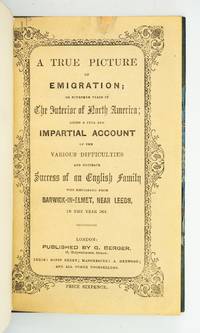
1848ST20861London: G. Berger 1848. FIRST EDITION. 180 x 110 mm. 7 x 4 1/4". 2-62 pp. 6 blank leaves. <br/> The original printed paper wrappers bound in early 20th century green crushed half calf over marbled paper boards monogrammed "F. O. L." in gilt on leather corner at lower right of upper board raised bands spine compartments gilt with floral sprig gilt lettering marbled endpapers. Engraved bookplate of Frank O. Lowden on front pastedown. Howes B-992; Sabin 97133. Spine evenly sunned to a medium brown small early repair to upper edge of paper wrapper but a fine copy the binding with virtually no wear and the contents extremely clean and fresh with only trivial defects.<br/> <br/> This is an excellent copy from the library of an important Illinois politician of the scarce memoir of a female Illinois homesteader. Our author Rebecca Burlend 1793-1872 and her husband John a farmer and schoolteacher made the choice in August of 1831 to leave their Yorkshire home and travel with five of their children to Illinois. They arrived in New Orleans two months later and began an arduous journey up the Mississippi to their land claim in Pike County across the river from Hannibal Missouri. The author's description of the trip and their subsequent difficult first few years in the United States provides an unvarnished picture of frontier life. Burlend candidly recounts hardships caused by such things as weather fire and squatters and critically discusses the people she met many of whom she disliked--writing that "ignorance was the predominant feature of Western character." While she apparently felt the adversity had been largely worthwhile she intended the present narrative as a realistic guide for other prospective British emigrants. The book concludes with the practical sentiment that "if the account I have given of our proceedings adverse and successful does not allure the reader's fancy with ideas of visionary prosperity as the invariable result of crossing the seas it may perchance tend to make him a little better satisfied with his present condition though it should only be a snug little cottage in the land where his childhood was reared." Her memoir was published anonymously in London in 1848 after she had composed it on a return visit to England with the help of her son. She was not formally identified as the author of the piece until 1936. The present copy is distinguished by its connection to another figure in Illinois history: Frank Orren Lowden the "F. O. L." on the front cover 1861-1943 represented Illinois' 13th district in the U.S. House of Representatives and later served as governor of Illinois from 1917-21. G. Berger unknown
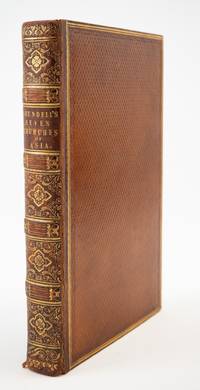
1828ST20535-01London: John Rodwell 1828. FIRST EDITON. 217 x 138 mm. 8 1/2 x 5 1/4". iv 339 1 pp. <br/> Contemporary diced russia raised bands spine attractively gilt in an arabesque style gilt-rolled turn-ins pink moiré endpapers all edges gilt. With a folding map of the travel routes and 23 pages reproducing inscriptions three of these folding. Front flyleaf inscribed in ink: "Juliana Calvert / from A. C. / 1838." Blackmer 48; Weber I 159. Joints and extremities a little rubbed tiny crack just beginning at top of front joint two tiny chips to foot of spine very minor offsetting and foxing to map a couple of patches of marginal foxing but INTERNALLY AN ESPECIALLY FINE COPY--unusually clean fresh and surprisingly bright--in a good-looking well-preserved binding.<br/> <br/> In especially desirable condition this is quite a scarce travel account by the English antiquary explorer and clergyman Francis Vyvyan Jago Arundell 1780-1846 who visited the so-called Seven Churches of Asia also called the Seven Churches of the Apocalypse and the Seven Churches of Revelation locations in present-day Turkey of central importance to St. John and the Book of Revelation. In that book John who was a threat to Roman officials as leader of the new Christian religion in Asia had been banished to Patmos where he was visited by an apocalyptic vision directing him to write to the churches at Ephesus Smyrna Pergamum Thyatira Sardis Philadelphia and Laodicea commending their successes pointing out their failures and prevailing upon them to repent. These seven Turkish churches reflect a surprisingly significant role in the region's early Christian history with some scholars maintaining that as many as 18 of the 27 New Testament books were written there--and Arundell's narrative would have helped to raise the popular understanding of this importance. Following his marriage to the daughter of the British consul-general at the Levant Company in Constantinople Arundell became chaplain to the company's trading center in Smyrna now Izmir in 1822. From there he embarked on a series of tours through Asia Minor including places that according to DNB "until then had for the most part not been described by any European traveller." The present work is the product of the author's first tour which included two separate excursions between March and September of 1826. Despite being a clergyman Arundell's interest in these sites was primarily archaeological and historical and this work includes his firsthand descriptions of the ruins he encountered facsimiles of Greek inscriptions found there and narratives of the arduous journeys between sites that were well off the beaten path. This work is surprisingly scarce in commerce suggesting that copies were often read with avidity. John Rodwell unknown
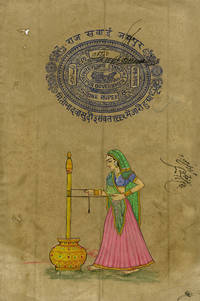
189013411890. Ink and gouache with gold heightening on fibrous brown laid paper with a Jaipur Court Fee tax stamp in purple ink on the recto 13 1/4 x 8 7/8 inches 336 x 226 mm. Toning handling creases and minor scattered surface soiling throughout. There are scattered coeval inscriptions in ink on the recto and verso. A traditional Indian butter churn is operated by rapidly pulling a rope which turns a paddled spindle. The paddles churn cows milk inside a large jar until milk solids form. Ghee is made from cow milk butter which is treated with low heat until the water evaporates leaving behind milk solids. The solids are skimmed off or strained if needed. Ghee is a staple food on the Indian subcontinent and as a cooking oil it is the most widely used food in India apart from wheat and rice. Because of its exalted status at Hindu weddings ghee is expensive and in high demand. Male wedding guests are expected to compete with each other to see who can eat the most of it; consuming two pounds or more at a sitting is considered a proof of virility. <br /> <br /> On the stamp:<br /> <br /> The first revenue stamps in India were issued in the mid-nineteenth century during the Raj and they are still being issued to this day. Apart from issues for the whole of India many princely states provinces and other states also had or still have their own revenue stamp issues. Before independence Indian revenue stamps were closely modeled on similar designs from Great Britain as is the case with this carriage motif stamp from Jaipur. The stamps were issued to denote various denominations including rupees and annas. An anna or Änna was a currency unit formerly used in British India equal to 1â„16 of a rupee. It was subdivided into four old Paisa or twelve pies thus there were 192 pies in a rupee. When the rupee was decimalized and subdivided into 100 new paise one anna was therefore equivalent to 6.25 paise. This particular stamp was used as evidence of court taxes remitted for property dealings. unknown
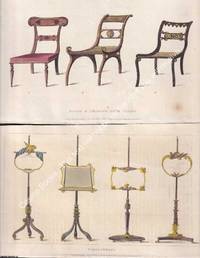
1810373757c.1810-1820. Unframed Print. Good Condition. Spanning at least 70 pages with a few duplicates and measuring approximately 13 20 cm. Condition varies but none are torn some are bright others a little browned a number have a small piece of paper attached from the rear at the edge. A useful and large collection of plates showcasing hand-coloured designs and furnishings published in the early 19th century. Each engraving offers a vivid glimpse into Regency England an era defined by elegance invention and visual harmony these images reflect a world where utility was shaped by style and everyday life was framed in refinement. Originally issued in Ackermanns Repository of Arts a renowned periodical devoted to design fashion and domestic culture the plates exemplify the taste and innovation of the period. Their hand-applied colouring enhances both their decorative charm and their documentary value capturing the rhythm and sophistication of a society in transition. Size: 13 x 20 cms. Category: Antiquarian & Rare; PRINTS : Historic Interest; This item may require more postage than the rates shown for delivery outside the UK. If extra postage is required we will contact you before processing your order and you will be given the details and option to decline the extra cost. unknown
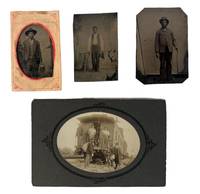
1870202721870. Early photographs of African Americans produced during the decades following emancipation provide important visual documentation of Black life during the Reconstruction and early Jim Crow eras. Portrait photographs and vernacular images from the late nineteenth century capture African Americans navigating newly won freedoms while confronting the economic and social constraints that defined the post slavery United States. Such photographs often record moments of labor travel and self presentation reflecting both the aspirations and realities of African American life during a period of profound social transformation. This small photographic archive dating from the 1870s through the 1890s preserves rare images of African American men during the generation immediately following the end of slavery.<br /> <br /> Archive of four original photographs including two tintypes and one albumen print measuring approximately 2.25 x 3.25 inches to 4.5 x 6.5 inches. The most visually complex image an albumen photograph dating from the late 1890s depicts a Black man and a young boy standing on railroad tracks behind a caboose where four white men are also present. The African American man wears a hat and carries a large sack across his back while the boy holds a basket filled with produce suggesting a scene connected to travel commerce or railroad labor in the expanding transportation networks of the late nineteenth century. The presence of the caboose and railroad workers situates the photograph within the rapidly developing rail infrastructure that reshaped the American economy during the post Civil War period. The remaining photographs consist of tintype portraits of African American men dressed in the formal attire of the late nineteenth century including bowler hats vests and tailored suits. One sitter is photographed wearing a three piece suit and holding a cane while another poses beside a table while holding his hat in hand.<br /> <br /> Portrait photography played an important role in African American communities during the decades after emancipation as newly freed individuals asserted dignity respectability and personal identity through formal portraiture. At the same time vernacular photographs such as the railroad scene record the economic realities and labor environments in which many African Americans worked during the late nineteenth century. Together these photographs document African American presence within both public labor landscapes and private studio portraiture during a formative period in the history of Black life in the United States. Four original photographs including tintypes and an albumen print measuring approximately 2.25 x 3.25 inches to 4.5 x 6.5 inches. One photograph with clipped corners; otherwise images clear and well preserved. Overall condition very good. unknown
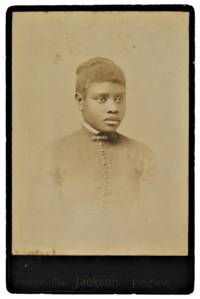
1880188841880. African American Photography Cabinet card photograph depicts an attractive young African American woman in formal dress. She wears a high collar with a golden brooch and has a serious expression. Circa 1880s. Photography studio is C. Jackson's located in Hannibal Missouri. 6.5" x 4." Card bears front gilt caption: "Hannibal Mo. Jackson. Pittsfield MS." On the back is the photography studio's address and logo printed in ornate gilt. Very good condition. unknown