135 résultats
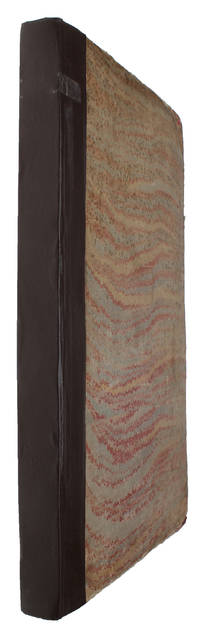
1793W1578Dublin Ireland: P. Wogan P. Byrne J. Moore and W. Jones 1793. Frontispiece vi 2 303 pages. The first printing of the Dublin edition preceded in the same year only by the 2-volume first London edition--both preceding the first U. S. edition published in 1794. The Dublin edition is significant not only for its apparent scarcity but also for the frontispiece an unusual mezzotint portrait of a younger Benjamin Franklin that appears in no other edition and has seldom if ever been reproduced. The clean and tight book has been sympathetically rebacked retaining the original red leather title patch. All edges of the textblock were stained a pale green perhaps when the rebacking was done--the staining intrudes 1/16" onto the top and bottom margins of the frontispiece.Very light and faint foxing throughout; occasional smudges in the margins. Two large but light waterstains to the frontispiece but only minor and relatively unobtrusive intrusion into the image. Missing the front free endpaper. The book's condition is much nicer than it sounds; certainly an acceptable copy for the serious collector. First Dublin Edition. Hardcover. Collectible-Very Good. Small 8vo - over 7¾" - 9¾" Tall. Leather. P. Wogan, P. Byrne, J. Moore, and W. Jones Hardcover
175550315Altenburg Richterischen Buchhandlung 1755. 4to. Contemp. boards. Handwritten titlelabel on spine. Engraved titlevignette. 205315 pp. and 22 folded engraved plates. A few scattered brownspots but in general clean. <br/><br/><em>Scarce first German edition of this hugely influential textbook in optics."Smith wrote on optics and harmonics. In 1738 he published A Compleat System of Optics in Four Books viz. A Popular at Mathematical a Mechanical and a Philosophical Treatise. Both comprehensive and reliable the work became probably the most influential optical textbook of the eighteenth century. It was also published in Dutch in 1753 in German in 1755 and in two different French translations in 1767 In 1778 an abridged version was published in English. In turn its popularity helped to establish the eighteenth-century conviction that light is particulate." DSB. </em> hardcover
1751D11029Prague: Typis Universitatis Carolo-Ferdinand. Societat. Jesu ad S. Clem. 1751. First Edition. Hardcover. Very Good. Very rare Czech Jesuit imprint of Gottschlichs Viator per Fidem incorporating his dissertational work on dogma and exercising faith and published by Pragues Clementinum Jesuit College in 1751. 8vo 165 x 100mm. 2 342 2 index. Title spreading over three pages with the dated Prague imprint below the line on first. Dedicated to Prokop Adalbert Count Czernin of Chudenices 1726-1777 head of one of the oldest and most influential Bohemian noble families. Woodcut initial and frieze at p. 1 vignette at p. 342 of angel holding bannered trumpet inscribed AD MAIOREM DEI GLORIAM. Contemporary calf spine with five raised bands; light edgewear faint foxing mostly in hinges and margins not severe and otherwise a clean copy. First edition of this extremely rare Czech Jesuit title Viator Per Fidem. which literally translates to Travelers Faith. One copy located in the National Library of the Czech Republic and digitally available through GoogleBooks. Another copy in the Deutsche Nationalbibliothek classified as a theology dissertation. By explanation of the unusually lengthy title the book was written by Carolus Gottschlich as a part of his University research; the dogmatic work examined faith issues and their resolutions. Gottschlich was a Jesuit and university professor of humanities philosophy and theology. Little is known about his connection to the Clementinum although it can be surmised that he spent some part of his teaching career here which gained him access to the Jesuit College press. Gottschlich and his research contributors are almost all but forgotten to history. <br/><br/>Prague University was put under Jesuit administration in 1620 and eventually merged with the Clementinum in 1653 to form the Karl-Ferdinand University. From at least the middle of the 17th century the Jesuits kept a stronghold on higher education and the publishing industry in Prague. University rectors at Karl-Ferdinand University ruthlessly controlled the written word and imposed strict censorship on books which lasted well into the reforms of Joseph II in the 1780s. Gottschlichs title is a rare survival given the fraught 18th-century publishing arena of Bohemian lands. The Viator per Fidem represents the lasting effects of Catholic patriotism and the significance of Jesuit influence on book publishing a significant part of Czech literary heritage. Typis Universitatis Carolo-Ferdinand. Societat. Jesu ad S. Clem. hardcover
1772056063Leiden: Lugduni Batavorum Leiden Apud Theodorum Haak 1772. Hardcover. Good. 8vo - over 7¾ - 9¾" tall. Contemporary boards with a brown cloth spine. Small 4to. 24 x 19 cm. In Latin. iv 30 2 p. Heavy water staining to the first three and last two leaves; margins trimmed. Overall a good copy. A scarce doctoral thesis written by the physician Ludovicus Levade at the Faculty of Medicine of Leiden University to obtain the degree of Doctor of Medicine focusing on the definition classification course and clinical symptoms of smallpox variola a disease that in the 18th century caused especially high mortality among infants and children in Europe. The thesis is one of the classic medical doctoral dissertations of the 18th century written during the rectorship of Hermann Scholten 1726-1783 in years considered to be close to the peak of Leiden University's scientific authority. As of January 2026 OCLC identifies a sole copy at the Université de Strasbourg Library with none held in the US 834762294. <br/> <br/> Lugduni Batavorum (Leiden), Apud Theodorum Haak hardcover
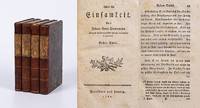
178529192AB1785. 4 Baende komplett. Frankfurt und Leipzig ohne Verlagsangabe 1785. Klein-Oktav. XL 328 8 nn. XL 442 12 nn. XVI 430 6 nn. XXXII 416 8 nn. Seiten. Hardcover / Originales Halbleder des 18.Jahrhunderts. Alle Baende in sehr guter Erhaltung bis auf einen kleinen Schaden am oberen Kapital des 3.Bandes. Durchgehend minimal stockfleckig. Restaurierte Wurmspur auf einigen Seiten des 3.Bandes. Wahrscheinlich ein zeitgenoessischer Raubdruck dieser bedeutenden Publikation ueber die Melancholie. Enthält unter anderem soziologisch - psychologische Kapitel wie: "Einfluss der Regierungsform auf den Trieb zur Einsamkeit" / Das groesste unter allen Glücksgütern ist Freyheit" / Johann Georg Zimmermann seit 1786 Ritter von Zimmermann 8. Dezember 1728 in Brugg; 7. Oktober 1795 in Hannover war ein Schweizer Arzt Gelehrter Philosoph und Schriftsteller der seit 1768 in Hannover wirkte. Zimmermann begegnete mehrmals Goethe. Sein Hauptwerk Über die Einsamkeit in dem das damals aktuelle Thema der Melancholie eine große Rolle spielt erschien 1784/85 und machte Zimmermann im damaligen gebildeten Europa weithin bekannt. Die russische Zarin Katharina II. erhob ihn 1786 in den Ritterstand. Sie lud ihn auch an ihren Hof in Sankt Petersburg ein eine Einladung der er aber nicht nachkam. In seinen letzten Lebensjahren entwickelte sich Zimmermann zum Gegner der Aufklärung. Wikipedia Johann Georg Ritter von Zimmermann / Johann Georg Zimmermann 8 December 1728 in Brugg Aargau 7 October 1795 in Hanover was a Swiss philosophical writer naturalist and physician. He studied at Göttingen where he took the degree of a doctor of medicine and established his reputation by the dissertation De irritabilitate 1751. After traveling in the Netherlands and France he practised as a physician in Brugg and wrote Über die Einsamkeit "Of solitude" 1756 178485 and Vom Nationalstolz "Of national pride" 1758. These books made a great impression in Germany and were translated into almost every European language. In Zimmermann's character there was a strange combination of sentimentalism melancholy and enthusiasm; and it was by the free and eccentric expression of these qualities that he excited the interest of his contemporaries. Another book by him written at Brugg Von der Erfahrung in der Arzneiwissenschaft "Of experience in pharmacology" 1764 also attracted much attention. In 1768 he settled at Hanover as private physician of George III with the title of a Hofrat. Catherine II invited him to the court of St Petersburg but this invitation he declined. He attended Frederick the Great during that monarch's last illness and afterwards issued various books about him of which the chief were Über Friederich den Grossen und meine Unterredung mit ihm kurz vor seinem Tode "On Frederick the Great and my conversation with him shortly before his death" 1788 and Fragmente über Friedrich den Grossen "Fragments on Frederick the Great" 1790. According to the Encyclopædia Britannica Eleventh Edition "these writings display extraordinary personal vanity and convey a wholly false impression of Frederick's character." Wikipedia hardcover
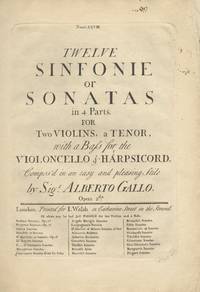
175440749London: Printed for I. Walsh in Catharine Street in the Strand 1754. Folio. Contemporary light blue wrappers. Engraved throughout. Uncut.<br /> <br /> Violino primo: 1f. recto title verso blank 12 pp.<br /> Violino secondo: 1f. recto title i blank 2-11 i blank pp. <br /> Alto viola: 1f. recto title i blank 2-9 i blank pp. <br /> Cembalo e violoncello: 1f. recto title verso blank i blank 2-10 pp.<br /> <br /> "Numb. XXVIII." printed at head of titles.<br /> <br /> With brief publisher's catalogue to foot of titles listing works "Just Publish'd for two Violins and a Bass" by Nussen Porpora Solniz Handel St. Martini Boyce St. Germain Humphries Geminiani Morigi Lampugnani Albinoni Alberti Ceruetto Torelli Purcell Mascitti Brioschi Fritz Bononcini Schickard Tibaldi Valentine Valentini Bomporti and Finger.<br /> <br /> Wrappers somewhat worn and creased with small stains spines and edges frayed and chipped with minor loss. Occasional minor soiling and small stains mainly to blank lower margins; some creasing to blank margins; lower wrapper of cembalo part detached. First Edition. Smith & Humphries 666 p. 149. BUC p. 359. RISM G260 no copies in the U.S. <br /> <br /> Little seems to be known about Alberto Gallo other than that he was a Venetian composer active in the mid-18th century. Printed for I. Walsh in Catharine Street in the Strand unknown
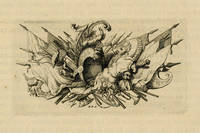
17101320Paris 1710. Etching on cream laid paper with a heraldic watermark with a fleur-de-lys 5 7/8 x 3 1/4 inches 147 x 81 mm wide margins. On the verso is what appears to be a printed passage discussing Jean Barbeyrac Baron perhaps from De Pufendorf's 4 volume commentary on natural law The Law Of Nature And People 1712. unknown
1781D8826Venice / Naples: Antonio Graziosi / Per Vincenzo Mazzola-Vocola 1788 / 1781. Hardcover. Very Good. Morandis rare treatise on operative midwifery with Rastrellis even rarer work on wisdom and morals. MORANDI Antonio fl. 18th century. Trattato Universale Teorico e Pratico dei Parti necessario alle mammane ai chirurghi ed ai medici. Venice: Antonio Graziosi 1788. 8vo 190 x 120mm. v-xxx 399 pages; lacks 2 blanks at beginning. Bound with: RASTRELLI Giovanni Ranieri. Documenti morali e civili da un padre diretti al suo figlio. Naples: Per Vincenzo Mazzola-Vocola 1781. xii 80 pages. Oval portrait of Rastrelli signed by Joseph Tronus. Woodcut chapter head- and tail-pieces throughout. Near contemporary Italian vellum edges speckled; contents clean only some slight foxing at front and back of volume. Few lines of contents written in Italian script on front free endpaper and signed G. Viparelli on title. <br/><br/>The rise of obstetrics in the early modern period had a mixed effect on midwifery. Some midwives clung to their traditional ways. Others embraced the new science and sought retraining. National policies also shaped the contours of midwifery practice. Overall the art of midwifery could no longer be considered a subdivision of medicine but must be regarded as a branch of surgery requiring a thorough knowledge of surgical principles. The title of this work does not indicate its comprehensiveness; it is more than an operative midwifery for it includes much that belongs to a general treatise on the subject. Rastrellis work and portrait cannot be found elsewhere suggesting it is commonly an addition to texts and the title translated is a moral and civil work directed by a father to his son. Rastrelli was a noted poet in the latter half of the 18th century. While both parts are exceedingly rare the first is only located at the Wellcome Library and the Biblioteca della Fondazione Biblioteca San Bernandino in Italy. Antonio Graziosi / Per Vincenzo Mazzola-Vocola hardcover
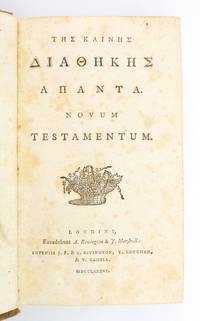
1786ST20133London: Excudebant A. Rivington & J. Marshall: Impensis J. F. & C. Rivington T. Longman & T. Cadell 1786. 175 x 105 mm. 7 x 4 1/4". 368 pp. 1 leaf ads. <br/> Contemporary brown "school cloth" rough linen raised bands. Front flyleaf with owner inscription of John Cutler dated Sept 21 1789 four lines of Latin doggerel threatening anyone who steals the book with hanging and two large copperplate trials of Cutler's signature. ESTC N63834. Not in Darlow & Moule. A little fraying at top and bottom of joints light foxing and toning throughout due to paper quality a couple of small ink stains but a surprisingly appealing copy the text extremely clean and the unsophisticated makeshift binding--remarkably--with no significant wear.<br/> <br/> This is an almost startling survival: an 18th century New Testament in Greek in its original utilitarian binding preserved in condition far better than what could be anticipated given the audience of generally uncareful pupils for which it was intended. Considering the usual depredations of school children the rough school cloth should have been worn to shreds long ago but against the odds it has fortuitously escaped hard use and now gives us a glimpse of an important element of the English schoolroom very close to its original condition. One particularly delightful aspect of our copy is the flamboyant declaration of ownership by a pupil called John Cutter who inked his name no fewer than four times in different styles and with calligraphic flourishes across the flyleaf. Cutter's neatly penned book curse threating any would-be thieves with hanging may have helped to preserve the book as it now exists. In fact there are few signs of use by any owner rightful or unlawful. The leaves are free from any markings and the insubstantial binding appears to have rarely left the shelf. Excudebant A. Rivington & J. Marshall: Impensis J. F. & C. Rivington, T. Longman, & T. Cadell unknown
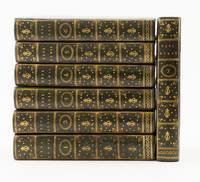
1775ST17825Paris: Joseph-Gérard Barbou rue Mathurins 1775. 163 x 96 mm. 6 3/8 x 3 3/4". Seven volumes. Edited by J. N. Lallemand; preface by Jean Baptiste Louis Crévier. <br/> EXTREMELY ATTRACTIVE CONTEMPORARY GREEN ARMORIAL MOROCCO perhaps by Derome covers with triple gilt rule border central gilt coat of arms of the Blanche family featuring a seated fox with one paw raised above it a row of three five-pointed stars smooth spine divided into compartments containing a gilt lyre surrounded by stars and dots floral sprigs at corners volume number within a laurel wreath gilt lettering marbled endpapers all edges gilt. With printer's two-swans device on title pages volume I with frontispiece portrait engraved by L. J. Cathelin after J. C. Philips. With pencilled note on front flyleaf attributing the binding to Derome. Brunet III 1108 "Edition estimée"; Dibdin II 171. For the binding: Olivier Pl. 2279. ◆Spines slightly and uniformly sunned very light shelf wear to bindings occasional faint foxing in volume IV but A SUPERB SET almost entirely absent of any signs of use.<br/> <br/> This is a fine-paper copy in a binding both charming and handsome of what Dibdin deems "a truly beautiful and accurate edition" of Livy's Roman history. Brunet called it an "esteemed edition" and notes that fine paper copies like the present set sold for twice what regular copies cost. First printed by Sweynheym and Pannartz in 1469 the "Histories" of Titius Livius Patavani 59 B.C. - 17 A.D. follow the rise of Rome from the founding of the city through its triumphs in the Punic Wars and up through the reign of the author's contemporary emperor Augustus. His account is notable for its emphasis on the glorious triumphs and accounts of heroism of the Romans stemming in his eyes from their virtue; his history is intended not just to inform but also to elevate the reader. The present edition according to Dibdin builds on the fine editions edited by Crevier and Drakenborch incorporating their useful notes and additions. It was beautifully printed by Joseph-Gérard Barbou 1723-90 scion of a family that had begun printing in Lyon in 1529 moving to Paris in 1540. Joseph apparently specialized in Latin classics producing editions of Cicero Lucretius Pliny Caesar and Martial among others. The fine binding here does not have Derome's ticket but is well executed enough to make the attribution written in at front plausible. There were no fewer than 18 members of the Derome family not to mention workshop associates who made their livings as binders in Paris from the middle of the 17th century until the first quarter of the 19th. Our binding is tasteful--perfect for a scholarly edition of a classic--and conceivably the work of one of the Deromes or of an extremely competent associate. Olivier attributes our armorial stamp to the 18th century Blanche family of Burgundy and he finds it on a copy of Barbou's 1771 Sallust in the library of Madame la Comtesse de Cossé. The "country house" condition of the present set suggests an aristocratic owner more concerned with owning fine books than with reading them. [Joseph-Gérard] Barbou, rue Mathurins unknown
175751848Amsterdam Petrus Schenk 1757-74. Large folio. 55 x 345 cm. A large uncut copy in contemp. marbled boards spine gone and later backed with buckram original corners in leather a bit bumped. Stamps on foot of first title-page. Halftitel title-pages in red/black with engraved vignettes. 22 engraved leafs with dedications 14;28 pp. and 25 24 large double-page or triple-page folded engraved plates 6 additional plates only sometimes present. With a total of 55 plates. On thick heavy paper wide-margined and internally fine and clean. <br/><br/><em>Second edition. "Tileman van der Horst and Jan Schenk produced the Theatrum Machinarium Univesale one of the most celebrated works on the construction of all those elements so necessary to keeping life dry in Amsterdam the place of the book’s publication. It was perhaps the most important work then produced on dikes sluices dams weirs canals and swing-bridges the very elements of existence in Holland. Jan Schenck was the engraver of this work which may also be the most accurate and the most sumptuously illustrated book of its type in Holland in the 18th century - the technical aspects of the rendering was just superb." - Brunet V1082 - Graesse VII 258. </em> hardcover
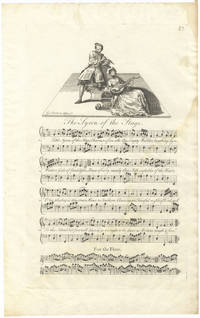
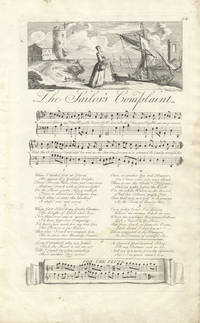
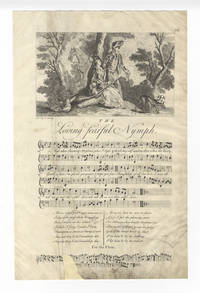
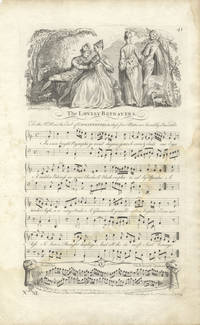
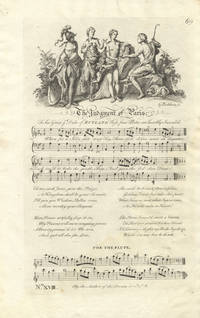
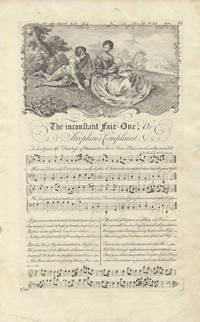
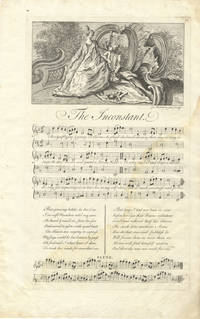
174036820London 1740. Unbound. Very Good. 1 leaf with a large elaborate vignette to head illustrating the song with music and text below set for voice and figured bass with a separate part for flute. Signed in the plate by the engraver Geo. Bickham. Ca. 326 x 200 mm. 12.75" x 7.85" plate mark.<br /> <br /> Slightly worn; minor browning to edges; minor soiling and dampstaining; slightly creased. From the second edition of Bickham's monumental work first published in 1737-1739. BUC p. 107. RISM BII p. 245. <br /> <br /> "Bickham 1706-1771 was principally famous in music circles for his two illustrated folio volumes The Musical Entertainer first issued in fortnightly parts each containing four plates from January 1737 to December 1739. The 200 plates are songs headed and surrounded with pictorial embellishments illustrative of the song . and engraved in the style of and even copied directly from Gravelot and Watteau. This work was the first of its kind to be published in England and quickly produced imitators such as Lampe's British Melody engraved by Benjamin Cole." Frank Kidson et al. in Grove Music Online. <br /> <br /> A charming engraving incorporating depictions of a flute and lute.<br /> <br /> The Musical Entertainer is considered one of the finest 18th century illustrated books. Complete copies of this monumental work are exceptionally rare. unknown
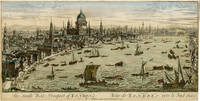
17601226London 1760. Copper plate engraving with hand coloring in watercolor on cream laid paper with a large circular watermark bearing a heart and arrow along with several Roman numerals and letters including II and S 8 1/4 x 16 3/ 8 x inches 208 x 423 mmimage area margins trimmed. Color slightly attenuated with some age tone mat tone and light scattered discoloration. Paper tape repair with in-painting at top right extreme corner paper tape support along the top sheet edge. Condition issues are consistent with age. This optic view of London and the Thames shows the north bank of the river from where Somerset House now stands in the east down to London Bridge and the Tower in the west. Also visible is the dome of St. Paul's Cathedral. Published in London circa 1760 this engraving is one of a series of images that were called optical views or perspectives. They originated in the early eighteenth century as part of the thriving topographical print market in cities such as Paris and London. As monied tourists traveled Europe these views became increasingly popular as souvenirs. After a trip abroad it was common practice among the wealthy denizens of London and Paris to produce "perspectives" after a dinner party. The views were enjoyed with the aid of a device known as a zograscope while the hosts regaled their company with travel tales. unknown
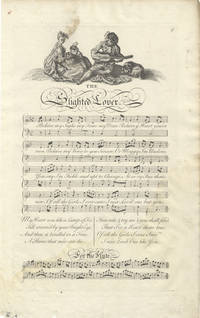
174036701London 1740. Unbound. Very Good. 1 leaf with a large elaborate vignette to head illustrating the song with music and text below set for voice and figured bass with a separate part for flute. Ca. 326 x 200 mm. 12.75" x 7.85" plate mark.<br /> <br /> Slightly worn; minor soiling and dampstaining; small stain to upper left just touching image; small tears to margins; small "x" to upper left corner. From the second edition of Bickham's monumental work first published in 1737-1739. BUC p. 107. RISM BII p. 245. <br /> <br /> "Bickham 1706-1771 was principally famous in music circles for his two illustrated folio volumes The Musical Entertainer first issued in fortnightly parts each containing four plates from January 1737 to December 1739. The 200 plates are songs headed and surrounded with pictorial embellishments illustrative of the song . and engraved in the style of and even copied directly from Gravelot and Watteau. This work was the first of its kind to be published in England and quickly produced imitators such as Lampe's British Melody engraved by Benjamin Cole." Frank Kidson et al. in Grove Music Online. <br /> <br /> A charming engraving.<br /> <br /> The Musical Entertainer is considered one of the finest 18th century illustrated books. Complete copies of this monumental work are exceptionally rare. unknown
174036747London 1740. Unbound. Very Good. 1 leaf with a large elaborate vignette to head illustrating the song with music and text below set for voice and figured bass with a separate part for flute. Signed in the plate by the engraver G. Bickham junr. Ca 326 x 200 mm. 12.75" x 7.85" plate mark.<br /> <br /> Slightly worn; minor soiling and dampstaining. From the second edition of Bickham's monumental work first published in 1737-1739. BUC p. 107. RISM BII p. 245. <br /> <br /> "Bickham 1706-1771 was principally famous in music circles for his two illustrated folio volumes The Musical Entertainer first issued in fortnightly parts each containing four plates from January 1737 to December 1739. The 200 plates are songs headed and surrounded with pictorial embellishments illustrative of the song . and engraved in the style of and even copied directly from Gravelot and Watteau. This work was the first of its kind to be published in England and quickly produced imitators such as Lampe's British Melody engraved by Benjamin Cole." Frank Kidson et al. in Grove Music Online. <br /> <br /> A charming engraving.<br /> <br /> The Musical Entertainer is considered one of the finest 18th century illustrated books. Complete copies of this monumental work are exceptionally rare. unknown
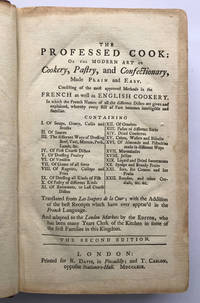
17693726<p>First published as Soupers de la cour in 1755 Menon's work first appeared in English in 1767 in a translation by Bernard Clermont under the title The Art of Modern Cookery Displayed Consisting of the most approved methods of cookery &c. London printed for the translator 1767. This is its first appearance under the new title which was to be retained for the third edition of 1776 in which the translator's name appears on the title-page. With a six-page 'Translator's Apology' in addition to the 'Author's Advertisement'. In his fascinating apology Clermont reveals many of the concerns of the eighteenth century chef while pointing to some of the key differences between English and French cuisine. He also writes about the challenges of translation: 'This Book was published in four small Volumes. I thought it too full of Words and of Repetitions and that the Sense of the Author could be explained without all the volubility of the French Language which I have as much as I was capable supplied with the Expressiveness of the English' p. vi.<br /><br />'Menon's book covers menus hors d'oeuvres entrées and some deserts. An entire chapter is devoted to sherbets or ices and ice cream. Like Marin that other great contemporary of Menon's both placed emphasis on their sauces. Menon's recipes were surprisingly varied coming not only from France but Italy Germany Ceylon and Flanders and used in everything from hors d'oeuvres to deserts' Harrison Une Affaire du Gout 1983.<em><br /></em><br /><em><br /></em><em>8vo 210 x 125 mm pp. xvi xxiv 286; 2 blank ii 289-588 some light browning in text in contemporary calf single filet gilt to covers plain spine with raised bands ruled in gilt spine worn with vertical cracking restoration to spine and corners rather a workaday bit of repair work tending to solidity rather than beauty with the early ownership inscription of M. Findlater on the front endpaper.</em><br /><br />See Harrison <em>Une Affaire du Gout A Selection of Cookbooks</em> 1475-1873 91.<br /><br />ESTC t90913 at BL and Harvard only.</p> R. Davis and T. Caslon
1741001388London: John Millan 1741. Two engraved broadsides - 'A List of His Majesties Royal Navy Shewing When They Were Built & Rebuilt their Several Dimensions and Tonnage with their highest & lowest Compliment of Men ye Number Nature Length & Weight of Guns on ye several Decks of Each Rate' and 'The Pay of the Officers & Men in ye Royal Navy together with the Number in each Rate and their Daily Allowance of Provisions and ye Number of Ships' single sided engraved broadsides. Both cropped to margins with loss to imprint of second mentioned creased from old folds browned with several small chips and tears. First mentioned with significant closed tear from left hand side but missing engraved text with old heavy reinforcing to reverse. The 'Pay' sheet gives detailed summaries including the rates paid to the ships' barber gunners taylor and chaplain. The 'List' sheet covers all rates of ships from First to the smallest yachts as well as hospital and dockyard ships. Both are uncommon the 'Pay' sheet ESTC N490067 shows at the NYPL only and the 'List' sheet ESTC T136812 at the BL and Society of the Cincinnati. First Edition. Unbound. Good. Illus. by Child G. Sculp. Folio. Broadside. John Millan Paperback
174036831London 1740. Unbound. Very Good. 1 leaf with a large elaborate vignette to head illustrating the song with music and text below set for voice and bass with a separate part for flute. Ca 326 x 200 mm. 12.75" x 7.85" plate mark.<br /> <br /> Slightly worn; minor browning to edges; some soiling and dampstaining; tears repaired. From the second edition of Bickham's monumental work first published in 1737-1739. BUC p. 107. RISM BII p. 245. <br /> <br /> "Bickham 1706-1771 was principally famous in music circles for his two illustrated folio volumes The Musical Entertainer first issued in fortnightly parts each containing four plates from January 1737 to December 1739. The 200 plates are songs headed and surrounded with pictorial embellishments illustrative of the song . and engraved in the style of and even copied directly from Gravelot and Watteau. This work was the first of its kind to be published in England and quickly produced imitators such as Lampe's British Melody engraved by Benjamin Cole." Frank Kidson et al. in Grove Music Online. <br /> <br /> A charming engraving.<br /> <br /> The Musical Entertainer is considered one of the finest 18th century illustrated books. Complete copies of this monumental work are exceptionally rare. unknown
174036723London 1740. Unbound. Very Good. 1 leaf with a large elaborate vignette to head illustrating the song with music and text below set for voice and figured bass with a separate part for flute. Scroll embellishment at the foot. Signed in the plate by the engraver G. Bickham jun. Ca. 326 x 200 mm. 12.75" x 7.85" plate mark.<br /> <br /> Slightly worn; minor browning to edges ; inner edge frayed; light dampstaining; slight chipping. From the second edition of Bickham's monumental work first published in 1737-1739. BUC p. 107. RISM BII p. 245. <br /> <br /> "Bickham 1706-1771 was principally famous in music circles for his two illustrated folio volumes The Musical Entertainer first issued in fortnightly parts each containing four plates from January 1737 to December 1739. The 200 plates are songs headed and surrounded with pictorial embellishments illustrative of the song . and engraved in the style of and even copied directly from Gravelot and Watteau. This work was the first of its kind to be published in England and quickly produced imitators such as Lampe's British Melody engraved by Benjamin Cole." Frank Kidson et al. in Grove Music Online. <br /> <br /> A charming engraving.<br /> <br /> The Musical Entertainer is considered one of the finest 18th century illustrated books. Complete copies of this monumental work are exceptionally rare. unknown
1797ST15599London: Printed for T. Longman B. Law F. & C. Rivington R. Baldwin G. & T. Wilkie and J. Walker 1797. 21st Edition. 150 x 93 mm. 5 7/8 x 3 5/8". viii 123 1 ads pp. <br/> Contemporary brown burlap flat spine. With allegorical vignette on title page and 25 half-page woodcuts illustrating items from the vocabulary lists. Pastedowns with traces of book label removal. ◆Spine slightly cocked short split to cloth on rear joint a little fraying at ends of spine but the insubstantial binding surprisingly solid. Two small stains to each pastedown where labels removed title page lightly browned leaves a shade less than bright due to paper quality other minor imperfections but an excellent copy internally clean and fresh with comfortable margins. All in all remarkably well preserved.<br/> <br/> First issued around 1711 this is the best-selling work of James Greenwood 1683-1737 an influential grammarian and a proponent of women's education. Arranged into 33 chapters the book divides vocabulary lists by topic beginning with "things" and proceeding through minerals plants animals humans and diseases to everyday items affairs of church and state the law the military and finally to the various parts of speech from verbs to conjunctions. Widely used the work was revised and reprinted until at least 1828. At about the time this work was originally issued Greenwood had founded a school in Essex where he accepted girls as well as boys as pupils; he was later recruited to serve as assistant headmaster at St. Paul's School in London. This volume is of particular interest because of its rarely seen utilitarian period binding. We would have expected it to have been worn to shreds long ago but against the odds it has withstood hard use by young pupils remarkably well and it gives us a glimpse of an important element of the English schoolroom at the turn of the 19th century. Printed for T. Longman, B. Law, F. & C. Rivington, R. Baldwin, G. & T. Wilkie, and J. Walker unknown
1771377877London: printed for John Wheble 1771. First Edition. Hardcover. Very good copy in full aniline calf with gilt-blocked label to the spine. Spine bands and panel edges dulled and rubbed as with age. Text remains in fine condition. Remains quite well-preserved overall. Physical description: 250 pages. Subjects: Junius active 18th century; Correspondence. Great Britain Politics and government 1760-1820. London: printed for John Wheble hardcover
1786377881London: Publisher Not Identified 1786. New Edition. Hardcover. Good copy in gilt-blocked full aniline calf. Spine bands and panel edges dull and rubbed as with age. Text remains in fine condition; clear without blemish. Physical description: 394 pages. Subjects: Great Britain Politics and government 1760-1820. Junius active 18th century; Correspondence. London: Publisher Not Identified hardcover
174036814London 1740. Unbound. Very Good. 1 leaf with a large elaborate vignette to head illustrating the song with music and text below set for voice and figured bass with a separate part for flute. Signed in the plate by the engraver G. Bickham. Ca 326 x 200 mm. 12.75" x 7.85" plate mark.<br /> <br /> Slightly worn; minor browning to edges; minor soiling and dampstaining. From the second edition of Bickham's monumental work first published in 1737-1739. BUC p. 107. RISM BII p. 245. <br /> <br /> "Bickham 1706-1771 was principally famous in music circles for his two illustrated folio volumes The Musical Entertainer first issued in fortnightly parts each containing four plates from January 1737 to December 1739. The 200 plates are songs headed and surrounded with pictorial embellishments illustrative of the song . and engraved in the style of and even copied directly from Gravelot and Watteau. This work was the first of its kind to be published in England and quickly produced imitators such as Lampe's British Melody engraved by Benjamin Cole." Frank Kidson et al. in Grove Music Online. <br /> <br /> A charming engraving.<br /> <br /> The Musical Entertainer is considered one of the finest 18th century illustrated books. Complete copies of this monumental work are exceptionally rare. unknown
174036711London 1740. Unbound. Very Good. 1 leaf with a large elaborate vignette to head illustrating the song with music and text below set for voice and figured bass with a separate part for flute. Ca. 326 x 200 mm. 12.75" x 7.85" plate mark.<br /> <br /> Slightly worn; minor browning to edges; inner edge frayed; minor dampstaining; slightly creased. From the second edition of Bickham's monumental work first published in 1737-1739. BUC p. 107. RISM BII p. 245. <br /> <br /> "Bickham 1706-1771 was principally famous in music circles for his two illustrated folio volumes The Musical Entertainer first issued in fortnightly parts each containing four plates from January 1737 to December 1739. The 200 plates are songs headed and surrounded with pictorial embellishments illustrative of the song . and engraved in the style of and even copied directly from Gravelot and Watteau. This work was the first of its kind to be published in England and quickly produced imitators such as Lampe's British Melody engraved by Benjamin Cole." Frank Kidson et al. in Grove Music Online. <br /> <br /> A charming engraving.<br /> <br /> The Musical Entertainer is considered one of the finest 18th century illustrated books. Complete copies of this monumental work are exceptionally rare. unknown
174036823London 1740. Unbound. Very Good. 1 leaf with a large elaborate vignette to head illustrating the song with music and text below set for voice and figured bass with a separate part for flute. Signed in th eplate by the engraver Geo. Bickham junr. Ca 326 x 200 mm. 12.75" x 7.85" plate mark.<br /> <br /> Slightly worn; minor browning to edges; minor soiling and dampstaining; slightly creased. From the second edition of Bickham's monumental work first published in 1737-1739. BUC p. 107. RISM BII p. 245. <br /> <br /> "Bickham 1706-1771 was principally famous in music circles for his two illustrated folio volumes The Musical Entertainer first issued in fortnightly parts each containing four plates from January 1737 to December 1739. The 200 plates are songs headed and surrounded with pictorial embellishments illustrative of the song . and engraved in the style of and even copied directly from Gravelot and Watteau. This work was the first of its kind to be published in England and quickly produced imitators such as Lampe's British Melody engraved by Benjamin Cole." Frank Kidson et al. in Grove Music Online. <br /> <br /> A charming engraving.<br /> <br /> The Musical Entertainer is considered one of the finest 18th century illustrated books. Complete copies of this monumental work are exceptionally rare. unknown