274 résultats
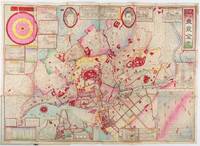
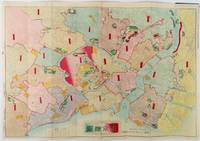
1890214188東京. Tokyo.: 大倉四郎兵衛. Ōkura Shirobei. Meiji 23 1890. Attractive scarce hand coloured map 50 x 70cm folded 16.5 x 9cm original upper cover with paper title label a little marked small mark in margin minor wear a very good and attractive copy. This 1890 map of Tokyo depicts an expanding metropolitan city during the mid-Meiji period. The Royal Palace is prominently marked in the centre in a shade of red. Major shrines and temples are highlighted in green while rivers along with some illustrations of sailing boats are represented in blue. Larger sailing ships possibly of foreign origin can be seen approaching Tokyo port. Ward names are indicated in red and red lines delineate the ward and county borders. The map provides detailed town names and streets. . 大倉四郎兵衛. [Ōkura Shirobei]. unknown
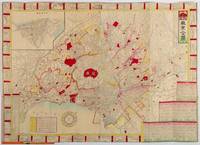
1892214181東京. Tokyo.: 山嵜暁三郎. Yamazaki Akizaburo. Meiji 25 1892. Colour woodblock map 50 x 71cm folds into card covers with plain cloth spine. 18 x 12cm. Occasional small holes at folds some colour offsetting in places a little marking and staining along upper margin upper left section of upper cover stained with a little subsequent staining to map. A bright and attractive map which looks better than this sounds. This 1892 map of Tokyo shows a growing metropolitan city which attracts many tourists from outside. Portraits of the Emperor and the Empress are featured prominently at the top. There are 11 inset illustrations of major buildings and sites surrounding the main map with a round chart which shows directions and distances to them. Another chart lists place names in wards and counties in Tokyo. The Royal Palace is featured in the center and the palace and major buildings are coloured in red. An inset map of Yokohama sits on the lower left. . 山嵜暁三郎. [Yamazaki Akizaburo]. hardcover
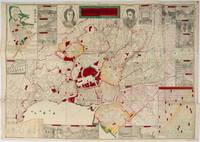
1893214413東京. Tokyo.: 奎暉閣. Keikikaku. Revised Edition. Meiji 26 1893. Folding engraved map of Tokyo in Japanese and English with woodblock colour 51.7 x 71.7cm folds into 18.5 x 10cm original covers title and publishing details upper cover. Neatly repaired on the reverse along some of the folds with a little minor loss occasional minor spotting otherwise very good. This is a map of Tokyo which was originally published in 1887 and revised in 1893. The map could be used for a tourist self-guide map as 39 illustrations of major sites and buildings are surrounding the map. Main landmarks including the Royal Palace are coloured in deep red. Some residents' names are recorded in some blocks. Three charts of text in Japanese on the bottom right give the names of the neighbourhoods to be found within each of Tokyo's wards. An inset at the top left shows a map of Yokohama. . 奎暉閣. [Keikikaku]. unknown
1892196563山中善三郎. Yamanaka Zenzaburo. Meiji 25 1892. Colour woodblock folding map of Tokyo with inset city plan of Yokohama a plan of the Diet a chart with many town names and a selection of images of sites. 51 x 71.5cm folds into 18.2 x 12cm paper covered covers paper title label on upper cover has some insect damage and fading wear at fold points with some tiny holes now neatly secured on the reverse with washi. The 1892 map of Tokyo provides an intricate view of the central and surrounding areas of the Tokyo metropolitan region. The map's focal point is the Royal Palace distinguished by its vivid red hue. Alongside this select military facilities also stand out in red. The map's legends unveil sections of Meiji Tokyo. Aristocrats' residences police stations and telegraph stations are marked reflecting the city's diverse functions. Shrines and temple are also indicated. Interestingly the map presents portraits of Emperor Meiji attired in Western clothing and Empress Meiji adorned in traditional kimono. These depictions flank the map's title. Accentuating the map's narrative are sixteen illustrations thoughtfully dispersed around the periphery showcasing Tokyo's key landmarks and significant structures. . 山中善三郎. [Yamanaka Zenzaburo]. hardcover
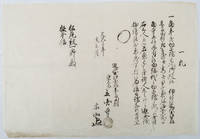
1863218660Japan. Bunkyu 3 1863. Manuscript in black ink 32 x 46cm small area of worming at lower right of the sheet light browning and wear at lower left margin overall very good. This document certifies that a family of three comprising parents and a young boy residing in Ōmi Domain present-day Shiga Prefecture are not Christians and are affiliated with a Jōdo sect Buddhist temple the temple name is unclear. The document is dated March 1863 and bears the signature of the head priest of the temple. <br> <br>Such certificates commonly known as terauke were issued between 1671 and 1873 as part of the Tokugawa authorities' system for suppressing Christianity. They also functioned as a means of population registration linking individuals and households to Buddhist institutions for administrative and taxation purposes. . unknown
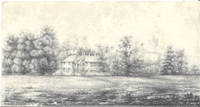
186013891860. Pencil on cream-colored oak tag 10 1/4 x 5 3/8 inches 260 x 136 mm. Scattered light gray discoloration throughout rubbing with some small areas of associated loss in the lower left image area at the sheet edge. Inscriptions in pencil on the verso including an illegible signature. This charming landscape features the structure now known as the Worplesdon Place Hotel near Guildford Surrey. The house is of notable historical significance and it is registered to have been built in about 1845 by Sir William Bovill. Initially called Worplesdone Lodge the grand manse served as a private residence for the next 100 years and was owned by several notable people. In the 1950s it became a hotel and still operates in this manner today. Here we see the house soon after its completion with St. Mary the Virgin Church seen on the hill in the distance. unknown
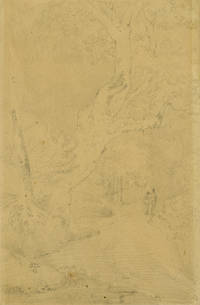
185014321850. Pencil on cream wove paper 10 1/2 x 7 inches 267 x 178 mm. A few scattered light spots of discoloration and general toning. On the verso there is a partial non-archival inventory sticker as well as some light notations in pencil including the name "Corley. unknown
1863DEMO014559INew York: P. J. Kenedy 1863. First English language edition. Hardcover. Very Good. frontispiece portrait. 8vo; 532 4 pages modern brown cloth inscription on flyleaf 1889 something was rubbed out from title-page below the publisher's imprint. <br/><br/>Translation of his "Cinquante nouvelles lettres". Howes D289; Smith 9569; Wagner-Camp- Becker 308:2; Sabin 82277. "Two of Father De Smet's journeys described here are especially worth noticing. The first is his visit to the Sioux in September and October of 1848; and the second is the description of the "Grand Desert" in 1851 -WCB." Howes reports that the portrait is "only found in some few copies of the 1863 edition." This copy has the steel-engraved portrait of DeSmet. P. J. Kenedy hardcover
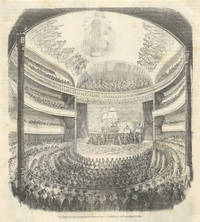
185137107Paris: L'Illustration 1851. Wood engraving depicting an interior view of the new theatre on rue Neuve-Saint-Nicolas in Paris by the French architect M. Barthélemy. Extracted from the French periodical L'Illustration. 244 x 223 mm.<br /> <br /> Slightly trimmed not affecting image. Of particular interest is the placement of the orchestra in a balcony above the stage. L'Illustration unknown
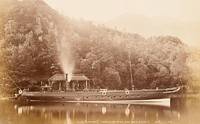
188229153AB1882. Scotland / England 1882-1885. Quarto. 53 photographs on original boards. Original Hardcover. Very good condition with only minor signs of external wear. Some minor signs of foxing only. Images include: - Buxton - The Lovers Leap / Buxton Public Pavilion Gardens / Buxton Ashwood Dale / - Hastings - Lovers Seat and Fairlight Glen in the year 1881 / The Dripping Well / - Hollington Church / Ecclesbourne Glen / Filey Brig in 1881 / - Sir Walter Scott's Monument in Edinburgh in 1881 / Edinburgh Castle from the Esplanade / Holyrood / - Ellens Isle in Loch Katrine / S.S.Rob Roy / Falls of Inversnaid from the Loch Lomond / Callander Bridge and Ben Ledi / - Falls of Bracklinn / Loch Lomond / The Trossachs / Loch Achray and Ben Venue / - Nelson's Mount on Carlton Hill / Peterborough Cathedral in 1882 / Peterborough Cathedral Interior / - Glossop Road in December 1882 with snow / The Priory Church - Bridlington 1883 / - Battle Abbey in 1883 / Guest Chamber / Court Gate / - Abbots Hall at Battle Abbey with Modern Library / Abbots Hall - The Cloisters / Battle Church / Old Hastings / Normanhurst / - Cambridge in 1883: Kings College and Chapel / Kings Chapel - Interior / Cambridge - Caius College / Cambridge - New Courts / - Trinity College Cambridge / Old Court / Clare College / Clare Bridge / Trinity Gate / John's New Buildings / Bridge of Sighs - Cambridge - Trinity Hall Chapel / - Stonehenge in 1884 / Christ Church Cathedral / in Oxford in 1884 / - Magdalen College Oxford Chapel and Window / Magdalen Tower / Court at Magdalen College / The Broad Walk / All Saints Chapel / - Window in the New College Chapel / The Major Oak at Sherwood Forest in 1885 // hardcover
184441372Milsom Street Bath and 26 Haymarket London: Edmund Francis English Jr. and Thomas McLean. Lithographed and printed at 79 St. Martin's Lane and by Moyes and Barclay Castle Street Leicester Square London 1844. Folio. 24 1/4 x 16 1/2 inches. First Edition. 8 1-10. 18 pp. 12 leaves of plates. Title with hand-colored vignette mounted on card lithographed dedication to Princess Emilia of Baden and the Marchionesses Douglas and Clydesdale List of Subjects and List of Vignettes on Letterpress List of Subscribers "To the Reader" by English Lithograph letter from Beckford to English that is not mentioned in Abbey 6 tinted lithograph "Illustrations of Lansdown Tower Bath" with text on each room of the tower and Beckford's obituary and woodcut epitaph errata note 13 tinted and hand-colored lithograph plates mounted on 12 card leaves with pencilled titles underneath plates. Dark red straight-grained half morocco over publisher's brown moiré cloth title stamped and lettered in gilt on front and on spine with bookplate on pastedown<br/> <br/> Grand first edition folio volume of a fantastical folly with 13 hand-colored lithographs of Beckford's unimpeachable decor.<br/> <br/> Shortly after the eccentric novelist collector bibliophile and plantation-owner William Beckford died in May of 1844 the book Views of Lansdown Tower was published revealing Beckford's extraordinary retreat its luxurious interiors and the exquisite art collection he had assembled inside this fantastical architectural folly just outside Bath in Somerset England. Views was initiated by Willes Maddox under the patronage of Beckford who is found in the book's subscribers list. Beckford had moved to Bath from his estate Fonthill Abbey in Wiltshire in 1822 and remained there until his death. In 1826 Beckford employed a young architect named Henry Goodridge 1797-1864 to build the tower and its adjoining library about a mile away from Beckford's residence in Crescent. Beckford's Tower known initially as Lansdown Tower was built in Italianate neo-classical style on Lansdown Hill. The Tower and its attached railings are now designated as a Grade I listed historic building by the UK. It is the only standing example of Beckford's architecture. Though he did not live there Beckford used the tower as a showcase for his collection of art and fine books and its crowning cupola as a belvedere for taking in picturesque vistas of the surrounding landscape. The book reproduces drawings by Maddox in lithographs by C. J. Richardson. Maddox later gained a reputation for painting the portraits of eminent Turks and took up an invitation from the Sultan to work in Istanbul. Four of the book's 13 plates illustrate some of Beckford's objets d'art including ceramics ivories and metalware alongside his immaculate parlor furniture. The colored plates in order: I. Ornamental Title with View of Tower. II. Exterior of LansdownTower. III. The Vestibule. IV. The Scarlet Drawing Room. V. The Staircase. VI. View of the Belvedere. VII. Objects of Vertu No.1 in Mr. Beckford's Collection. VIII. The Sanctuary. IX. The Crimson Drawing Room. X. Black Cabinet in Crimson Drawing Room. XI. Objects of Vertu No.2 in Mr. Beckford's Collection. XII. The Library. XIII. Objects of Vertu No.3 in Mr. Beckford's Collection. XIV. Ornamental Furniture in Mr. Beckford's Collection. And the Vignettes in Letterpress: XV. Embattled Gateway in Garden. XVI. Italian Cottage. XVII. The Grotto. XVIII. View in Garden where the Sarcophagus stood before removed. XIX. The Tomb of Mr. Beckford. XX. The Tomb of Mr. Beckford's favourite Dog.<br/> <br/> Abbey Scenery 420. Bobins II 682. SP Lohia 626. Edmund Francis English Jr. and Thomas McLean. Lithographed and printed at 79 St. Martin's Lane, and by Moyes and Barclay, Castle unknown
183426035Italy 1834. Pen-and-ink watercolour and gouache painted black border titled and dated in white gouache in the lower margin within the border. Lovely 19th-century watercolour of Palermo.<br/> <br/> Catering to the foreigners flocking to the region on the Grand Tour this lovely watercolour shows the town of Palermo with its beautiful hills and mountains in the background with a large fort in the harbour with a British and French ship beside it. The sky is awash in pinks and blues displaying the incredible light of the region. unknown
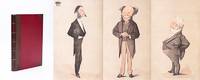
187229260AB1872. London Vanity Fair 1872. Folio. 208 208 pages. Complete set. Interleaved with 51 chromolithographic portraits. Beautifully restored original Hardcover half-leather with orginal spine gilt letttering and ornament. With new linen-covered boards using the original pastedowns and endpapers. A stunning Volume in excellent condition. All illustrations in wonderful colour. Portraits include: 1. Caricature of Marie Joseph Louis Adolphe Thiers President of France. Caption read "Faute-de-mieux Premier" / 2. Caricature of Richard Edmund St Lawrence Boyle 9th Earl of Cork and 9th Earl of Orrery 1829-1904. Caption read "Master of Her Majesty's Buckhounds" / 3. Caricature of Dr Frederick Quin 1799 - 1878. Caption read "Homoeopathic Society" / 4. Men of the Day No.38: Caricature of Mr. James Anthony Froude. Caption reads: "He created Henry VIII exploded Mary Stuart and demolished Elizabeth" / 5. Caricature of Wilkie Collins 1824-1889. Caption read "The Novelist who invented Sensation" / 6. Caricature of Spencer Horatio Walpole 1806-1898. Caption read "He defended Hyde Park" / 7. Caricature of John Ruskin. Caption read "The realisation of the Ideal" / 8. Caricature of George Grenfell Glyn M.P. 1824-1887. Caption read "The Whip" / 9. Alexander William Kinglake 18091891 - British politician military historian writer and traveler. Caricature / 10. Caricature of William Henry Smith 1825 1891. Caption read "Newspapers" / 11. Caricature of Sir Roundell Palmer. Caption reads: "He refused the Woolsack and voted against the Disestablishment of the Irish Church" / 12. Caricature of Mr.John Francis Maguire MP. Caption reads: "A Home Ruler" / 13. Caricature of Charles Kingsley 1819-1875. Caption read "The Apostle of the Flesh" / 14. Caricature of John Tyndall. Caption read "The Scientific Use of the Imagination" / 15. Caricature of Reverend John Cumming. Caption read "The End of the World" / 16. Caricature of The Rt Hon Gathorne Hardy MP DCL. Caption reads: "Conservative" / 17. Caricature of Mr William Hepworth Dixon. Caption reads: "He discovered New America and Free Russia" / 18. Caricature of King Amadeus of Spain. Caption reads "He would be a King" / 19. Caricature of Sir Wilfrid Lawson 2nd Baronet MP 1829-1906. Caption reads: "Permissive Prohibition" / 20. Caricature of The Hon Hamilton Fish. Caption reads: "Consequential damages" / 21. Caricature of The Hon. Charles Sumner 1811-1874. Caption reads: "The Massive Grievance" / 22. Caricature of Ulysses S. Grant. Caption read "Captain Tanner Farmer General Imperator" / 23. Caricature of Thomas Hughes M.P. 1822-1896. Caption read "Tom Brown" / 24. Caricature of Mr S Morley MP. Caption reads: "Dissent" / 25. Caricature of Sir Arthur Wellesley KG PC MP 2nd Duke of Wellington. Caption read "The son of Waterloo" / 26. Caricature of Frederic Leighton 1830-1896. Caption read "A sacrifice to the Graces" / 27. Caricature of Michael Costa 1808-1884. Caption read "Orchestration" / 28. Caricature of Mr George Leeman MP. Caption read "A Yorkshire Solicitor" / 29. Caricature of Horace Greeley. Caption reads: "Anything to beat Grant" / 30. Caricature of The Rt Hon Edward Pleydell-Bouverie MP. Caption reads: "He did not decline the Speakership." / etc. hardcover
182429246AB1824. Eichstädt / Leipzig bei J.M.Beyer / bei J.A.Barth 1824. Octav 115 cm x 195 cm. VI 1 94 Seiten mit einer hand-kolorierten Tafel. Softcover / Originale Interims-Broschur. Unbeschnitten. Sehr guter Zustand mit nur geringen rein aeusserlichen Gebrauchsspuren. Innen minimal stockfleckig. Erste Ausgabe des seltenen ophthalmologischen Werkes mit detaillierter Beschreibung von Brillen und anderen Sehhilfen auf den Seiten 50-84 Doppelte Lorgnetten Lupen Staarbrillen / Starbrillen Brillen mit gefärbten Gläsern Staubbrillen Roehrenbrillen Lesebrillen Lesegläser convexe Gläser Schneebrillen etc. Aus dem Inhalt: Augenübel Augengesundheitslehre Die Kurzsichtig oder Myopie Ueber die Weitsichtigkeit / Fernsichtigkeit Ueber die Brillengläser und Augengläser / Erklaerung der Kupfertafel. paperback
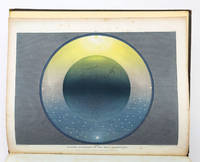
1846ST19286London: Printed by Catchpool & Trent for Simpkin Marshall & Co 1846. FIRST EDITION. 320 x 255 mm. 12 1/2 x 10". xiii 3 96 pp. <br/> Publisher's original blind-decorated dun-colored cloth gilt titling to upper cover smooth spine newer endpapers. WITH 11 COLOR ENGRAVINGS after Frost by W. P. Chubb & Son printed in oil colors by George Baxter all with original tissue guards. Front free endpaper with small ink signature of John Hill. See: Francis Reid "Isaac Frost's 'Two Systems of Astronomy' 1846: Plebeian Resistance and Scriptural Astronomy" in "The British Journal for the History of Science" Vol. 38 No. 2 Jun. 2005 pp. 161-177. Cloth rather spotted corners bumped but the binding solid with no wear to joints or hinges. A few spots of foxing to title page half of the tissue guards with overall very faint foxing/browning the illustrations with minor foxing at edges and in margins but the images themselves clean and bright and all in all a really excellent copy the text wide-margined and quite clean and fresh and the plates with rich coloring.<br/> <br/> Illustrated with beautiful color plates this anti-Newtonian work promotes a view of the universe based on the backward-looking beliefs professed by a Protestant sect known as the Muggletonians. Named after co-founder Lodowicke Muggleton the Muggletonians emerged in London in 1651 based on the claims of two tailors who professed to be the "Last Witnesses" described in the Book of Revelation. Rejecting the new directions in philosophical reason Muggletonians believed in a purely scriptural interpretation of the universe. According to E. P. Thompson's 1994 "Witness Against the Beast" the Muggletonians had curious notions quite contrary to other Protestant denominations: they believed that the soul is mortal that Jesus and God are one and the same that Heaven was left without divine supervision from Jesus' death until the day of judgment that Heaven resides six miles above the Earth that God stands between five and six feet tall and other unconventional things. Although the sect initially avoided both worship and evangelizing during the 19th century some followers became more outspoken about their beliefs and even published books appealing to the general public. Our author Isaac Frost 1793-1858 was a prominent Muggletonian and successful owner of a brass foundry who along with his brother Joseph invested large sums to promote their belief system--the present work being an especially notable example. Divided into two main sections the text first describes the Newtonian system of heliocentric astronomy and then turns to Frost's scriptural interpretation and geocentric views. As Reid tells us "According to Frost Scripture clearly states that the Sun the Moon and the Stars are embedded in a firmament made of congealed water and revolve around the Earth that Heaven has a physical reality above and beyond the stars and that the planets and the Moon do not reflect the Sun's rays but are themselves independent sources of light. Our book was apparently written as a reaction against the lecturers who expressed Newtonian astronomy--which was often for them and their audiences simply shorthand for heliocentrism." The 11 plates that illustrate these extraordinary ideas are the work of George Baxter a pioneering printer who revolutionized color printing techniques by combining metal engravings with woodblock printing using oil-based inks to produce high-quality affordable prints. The plates here are appropriately ethereal and otherworldly utilizing a beautiful palette with subtle gradations and esoteric figures to create memorable pseudo-scientific imagery. Although this work appears at auction with some regularity it is almost always incomplete no doubt because the attractiveness of its plates encourages harvesting. Useful price comparisons include a complete copy said to be in fine condition selling for £7500 in 2016 and six loose prints from the book fetching £6875 in 2015. [Printed by Catchpool & Trent for] Simpkin, Marshall, & Co unknown
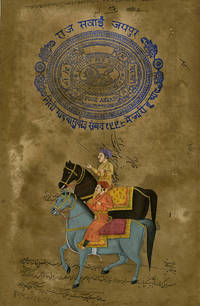
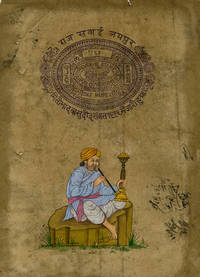
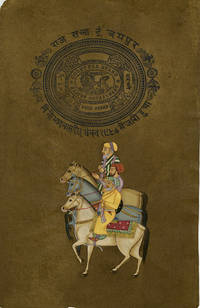
189013431890. Ink and gouache with gold heightening on fibrous brown laid paper with a Jaipur Court Fee tax stamp in blue ink on the recto as well as the Jaipur City Council blindstamp 13 1/4 x 8 1/2 inches 335 x 215 mm. Toning handling creases and minor scattered surface soiling throughout. There are scattered coeval inscriptions in ink on the recto and verso. The first revenue stamps in India were issued in the mid-nineteenth century during the Raj and they are still being issued to this day. Apart from issues for the whole of India many princely states provinces and other states also had or still have their own revenue stamp issues. Before independence Indian revenue stamps were closely modeled on similar designs from Great Britain as is the case with this carriage motif stamp from Jaipur. <br /> <br /> The stamps were issued to denote various denominations including rupees and annas. An anna or Änna was a currency unit formerly used in British India equal to 1â„16 of a rupee. It was subdivided into four old Paisa or twelve pies thus there were 192 pies in a rupee. When the rupee was decimalized and subdivided into 100 new paise one anna was therefore equivalent to 6.25 paise. This particular stamp was used as evidence of court taxes remitted for property dealings. unknown
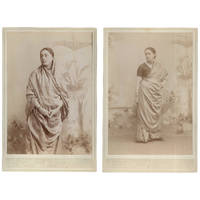
1892307182San Francisco: Abell & Priest 1892. Two fine images of pioneering physician Pauline Root dressed in a sari presumably one she wore in Madurai India while working as a doctor for the American Board of Commissioners for Foreign Missions ABCFM. <br /> <br /> Root 1859–1944 graduated from the Women's Medical College in Philadelphia and was the first female doctor to hold many posts throughout her working life. She spent seven or eight years in India establishing a Woman's Hospital in Madurai. She left India in 1891 and visited China and Japan before returning to the West Coast of the United States giving talks on her work to Christian groups along the way. She gave a lecture to the Occidental Board of Foreign Missions in San Francisco on February 3 1892 and these photographs are likely to have been taken at that time. <br /> <br /> After returning to the East Coast Root studied surgery at Cornell obtained licenses to practice in Massachusetts and New York and took a position as the resident physician at Smith College. In the 1920s she taught "social hygiene" sex-ed for the Bureau of Indian Affairs. <br /> <br /> Nineteenth century photographs of Dr. Root and other female physicians are uncommon. Drexel University has two poor condition cabinet cards of Root in Japan a few months before she arrived in San Francisco. Both images are fine with medium contrast sepia tones. The albumen silver prints measure 3-3/4 by 7-7/16 inches on 4-1/4 by 6-7/16 inch mounts. The photographer's imprint is "Abell & Priest Bancroft Building / 723 Market St. S.F. Cal." Both have blank backs with the notation "Dr. Pauline Root" and "India. Abell & Priest unknown
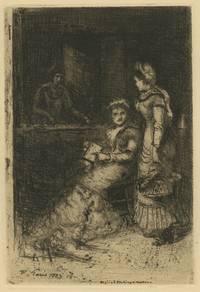
1883215London: English Printmakers 1883. Etching with aquatint and stipple on cream laid paper 7 x 4 3/4 inches 175 x 120 mm full margins. With a stamped signature including the date in the lower right image area and the English Pintmakers blind stamp lower left sheet margin. In very good condition with extremely small dog-ear shaped hard crease lower left sheet corner. A lovely 19th century Parisien interior scene. English Printmakers unknown
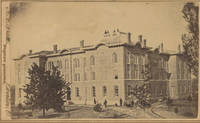
1868List1022Oberlin 1868. Albumen photographs 2 ½ x 3 ½ inches on larger mounts. Some fading to one of the photographs other image with excellent contrast near fine condition overall. Near Fine. An uncommon early pair of views of the Second Ladies’ Boarding House at Oberlin College in the 1860s taken at a time when Oberlin was one of few coeducational colleges having first admitted women in 1837. Oberlin’s Second Ladies Hall was built in 1861-1863 and featured Itlianate architecture and a rooftop balcony. The building was opened for student accommodations in 1865. The first floor held an assembly room a reading room a dining room parlors and stewards’ quarters. The second and third floors housed 100 women. The building was destroyed by a fire in 1889. unknown
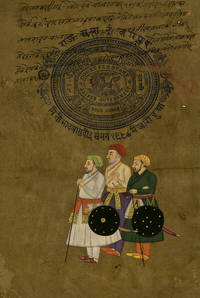
189013391890. Ink and gouache with yellow heightening on fibrous brown laid paper with a Jaipur Court Fee tax stamp in purple ink on the recto and the Jaipur State Council Stamp dated June 5 1894 and the 1889 Jaipur State Council stamp in black ink on the verso 12 1/2 x 9 inches 318 x 230 mm. Toning handling creases and minor scattered surface soiling throughout. There are scattered coeval Hindi inscriptions in ink on the recto. The first revenue stamps in India were issued in the mid-nineteenth century during the Raj and they are still being issued to this day. Apart from issues for the whole of India many princely states provinces and other states also had or still have their own revenue stamp issues. Before independence Indian revenue stamps were closely modeled on similar designs from Great Britain as is the case with this carriage motif stamp from Jaipur. <br /> <br /> The stamps were issued to denote various denominations including rupees and annas. An anna or Änna was a currency unit formerly used in British India equal to 1â„16 of a rupee. It was subdivided into four old Paisa or twelve pies thus there were 192 pies in a rupee. When the rupee was decimalized and subdivided into 100 new paise one anna was therefore equivalent to 6.25 paise. This particular stamp was used as evidence of court taxes remitted for property dealings. unknown
1870822261870. 19TH CENTURY. TUDOR WHARVES ICE: THE SHIPS ANAHUAC LUCY S. WILLS AND ANNA DECATUR. Photographer unknown. ca. 1870. Matted framed original photograph matted to 11 x 17 inches. Diagonal vista: The ships Anahuac Lucy S. Wills and Anna Decatur load ice at the Tudor Wharves Charlestown Massachusetts. The first two ships were East Boston-built and Boston-registered; the latter was built and registered in Portsmouth New Hampshire. Charlestown Bridge is in the foreground with one lone spectator observing the shipyard docks. Frederick Tudor known as "The Ice King" combined two trades without much apparent connection ice and sawdust and by using the sawdust for insulation was able to create a shipping industry in New England that reached the far East and South America. Some vertical bands of toning faintly apparent from original wood backing. 338-9 Bunting "Portrait of a Port: Boston 1852-1914. unknown
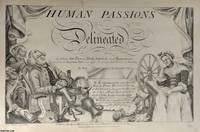
1860375751John Keywood Manchester Undated c.1860. Reprint of the 1773 edition. Full Cloth. Good Condition. A riot of grotesques drinkers schemers rustics hypocrites and wide-eyed innocents Bobbin's work captures the full unvarnished comedy of 18th century Lancashire life. Bobbin real name John Collier was a schoolmaster with a wicked eye for human folly and these plates are his private theatre: Hogarthian in spirit but rougher earthier and far more northern in their humour. What makes the book irresistible is its energy. Every face is pulled into some impossible contortion; every gesture is halfway between a joke and a confession. You can almost hear the muttered dialect the tavern clatter the sharp intake of breath before someone says something they shouldn't. Bobbin wasn't drawing polite society he was drawing people as they actually behaved and he does it with a kind of affectionate savagery. Victorian readers adored him. By the mid 19th century these plates were being reprinted for a new audience who saw in Bobbin a link to a vanishing world: the old Lancashire of alehouses gossip and broad humour before industrialisation scrubbed the edges off everything. That’s why so many later editions like this one mix the original 1770s plates with extra favourites such as Scotch Politics or They Who Have Ears to Hear. The Victorians weren’t curators; they were enthusiasts and they wanted more Bobbin for their money. Today the book stands as a wonderfully unruly document of popular art: part caricature part social history and part comic theatre. Later impressions from the original copperplates printed on mid 19th century paper likely c.1860 with plates bearing mixed imprints "Publish'd as the Act directs June 1773" and “Printed and Published by John Heywood Deansgate Manchester". Bound in the original cloth blind & gilt decorated as issued. The spine has been replaced a very long time ago and there is some wear with a little surface loss near the foot. There is also loss to the top left of the front board. Water staining to bottom left edge throughout but not impacting the images directly. Portrait frontis engraved title page 42 plates complete with tissue guards subscribers dedication list and plate explanation text pages. The plates are generally clean with minor age related marks but the tissue guards have done a nice job of keeping foxing away from the plates. A pleasing example in tall folio format of an increasingly uncommon book. Size: 27 x 42 cms. Category: Antiquarian & Rare; New Arrivals; This item may require more postage than the rates shown for delivery outside the UK. If extra postage is required we will contact you before processing your order and you will be given the details and option to decline the extra cost. John Keywood hardcover
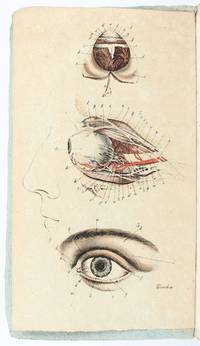
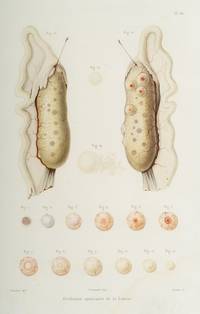
184729241AB1847. Two Volumes: Text plus Atlas / Texte et Atlas. Paris J.-B. Baillière 1847. 235 cm x 31 cm. Texte: XXXVI 479 pp. / Atlas: 30 pp. texte et 20 planches chromolithographiques With atlas volume bound in the original printed boards twenty chromolithographic plates one fold-out and tissue guards. Atlas: Reliure original / Original Hardcover / Text-Volume: Library-Binding. Binding stained and corners rubbed. Some foxing thoughout the text-volume. Slight water damage to some of the text pages. Félix-Archimède Pouchet August 26 1800 in Rouen France to December 6 1872 was a French naturalist and a leading proponent of spontaneous generation of life from non-living materials and as such an opponent of Louis Pasteur's germ theory. He was the father of Georges Pouchet 18331894 a professor of comparative anatomy. From 1828 he was director of the Rouen Museum of Natural History and the Rouen Jardin des Plantes. Later in 1838 he became professor at the School of Medicine at Rouen. His major scientific work Hétérogénie was published in 1859. He also wrote a layperson's encyclopedia The Universe published in 1870 which gives an overview of the sciences but in which Pouchet ridicules Louis Pasteur's theories calling them panspermism and atomic theory. In 1847 Felix-Archimede Pouchet effectively launched the study of the physiology of cytology. Wikipedia. hardcover
189013421890. Ink and gouache with gold heightening on fibrous brown laid paper with a Jaipur Court Fee tax stamp in black ink on the recto as well as the Jaipur City Council blindstamp 13 5/8 x 8 7/8 inches 345 x 226 mm. Toning handling creases and minor scattered surface soiling throughout. There are scattered coeval inscriptions in ink on the recto and verso. The first revenue stamps in India were issued in the mid-nineteenth century during the Raj and they are still being issued to this day. Apart from issues for the whole of India many princely states provinces and other states also had or still have their own revenue stamp issues. Before independence Indian revenue stamps were closely modeled on similar designs from Great Britain as is the case with this carriage motif stamp from Jaipur. <br /> <br /> The stamps were issued to denote various denominations including rupees and annas. An anna or Änna was a currency unit formerly used in British India equal to 1â„16 of a rupee. It was subdivided into four old Paisa or twelve pies thus there were 192 pies in a rupee. When the rupee was decimalized and subdivided into 100 new paise one anna was therefore equivalent to 6.25 paise. This particular stamp was used as evidence of court taxes remitted for property dealings. unknown
189013341890. Ink and gouache with gold heightening on brown laid paper with a Jaipur Court Fee tax stamp in black ink 12 5/8 x 8 9/16 inches 320 x 217 mm. Toning handling creases and minor scattered surface soiling throughout. Scattered coeval Hindi inscriptions in ink on the recto and verso. The first revenue stamps in India were issued in the mid-nineteenth century during the Raj and they are still being issued to this day. Apart from issues for the whole of India many princely states provinces and other states also had or still have their own revenue stamp issues. <br /> <br /> Before independence Indian revenue stamps were closely modeled on similar designs from Great Britain as is the case with this carriage motif stamp from Jaipur. The stamps were issued to denote various denominations including rupees and annas. An anna or Änna was a currency unit formerly used in British India equal to 1â„16 of a rupee. It was subdivided into four old Paisa or twelve pies thus there were 192 pies in a rupee. When the rupee was decimalized and subdivided into 100 new paise one anna was therefore equivalent to 6.25 paise. This particular stamp was used as evidence of court taxes remitted for property dealings. unknown