RORET (ENCYCLOPEDIE)Livre Rare Book
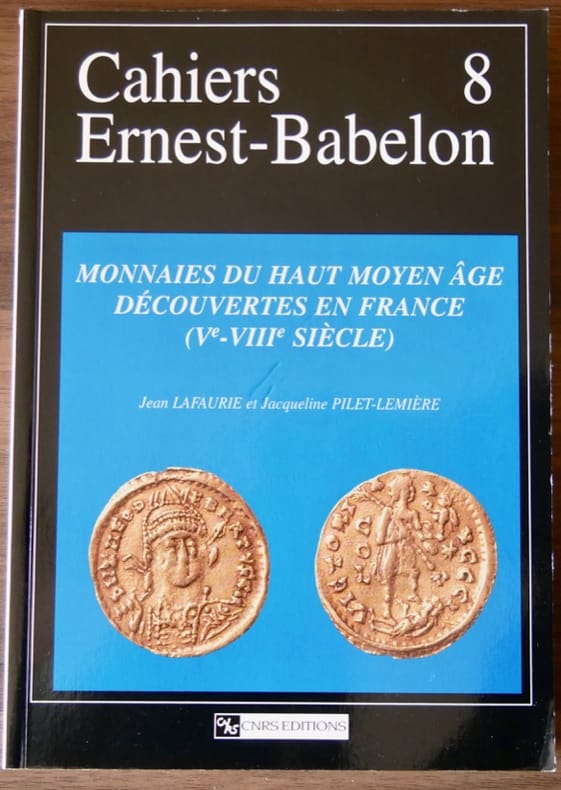
CAHIERS ERNEST-BABELON 8 - MONNAIES DU HAUT MOYEN AGE DECOUVERTES EN FRANCE (VE - VIIIE SIECLE)
562231P. Editions du CNRS, 2003. In-8 broché, 457pp
Librairie Le Trait d'Union · Troyes, France32,00 €
1 618 résultats
9812Paris Librairie Encyclopédique Roret, 1890. In-16 broché, 536 pages. Couverture d'époque (dos fendillé), peu de rousseurs.
9408Genève, Cherbuliez, 1842, 1 br., hommage autographe de l'auteur, 4ème de couverture manquante. in-8 de 29 pp. ;
1857200534Paris, Levy, 1857, in-12, xvii-3-323 pp., reliure de l'époque demi-veau glacé fauve, dos orné de faux-nerfs dorés et à froid, monogramme doré CG en pied. Ex libris Bibliothèque du Comte Greffulhe. (quelques rousseurs éparses sur les premiers et derniers feuillets, accroc à la coiffe supérieure).
10192rédigé sur un plan nouveau par M. le Chevalier de RONJOUX. Petit in 8 demi-cuir, titre, filets dors. Faux-titre, frontispice (tableau carte de l’Europe) titre illustré, gravé, titre, II, 694 pages, texte sur 2 colonnes, 6 cartes dont 5 dépliantes, 6 planches de monnaies, hors-texte en couleurs. Paris à la librairie classique élémentaire et catholique de BELIN-MANDAR et DEVAUX et à BRUXELLES, même maison 1829. Mouillure angle inférieur droit en début de volume, quelques pages légèrement poussiéreuses.
Very Good English Paperback. Pbo. Roy. 8vo. (24 x 17 cm). In German. Signed and inscribed by the author. 41-43 pp., 1 b/w plate. Das Siegel der Mysten des Dionysos Breiseus. Jahrbuch für numismatik und geldgeschichte. Band XXXIII 1983, Sonderdruck.
New English Paperback. Roy. 8vo. (24 x 17 cm). In English and Turkish. 260 p., color ills. Architectural survey at the necropolis of Larisa (Buruncuk).= Larisa (Buruncuk) nekropolünde mimari arastirmalar. In the second issue of ITU Foundation - Architectural History Research, the necropolis of ancient Larisa (Buruncuk), an important Aegean site, is displayed along with the architectural documentation of its grave units. This main topic is complemented by a text on the first map of Larisa from 1900 and a general description of the site. The necropolis of Larisa predominantly consists of small grave mounds with a ring- wall. The southernmost edge of the entire terrain is crowned by the Great Tumulus which is of colossal size. The formation of the necropolis must have occurred essentially between the 6 th and 4 th centuries BCE. However, discussions of dating, considerations on the social aspect of the graves, and the re-evaluation of 20 th century burial finds will be accomplished over time only after the termination of fieldwork. The texts, drawings and photographs in this issue serve the intention of registering the Larisa survey as an ITU Project, and presenting immediately the city's necropolis that is of great importance for the studies on the region.
New English Paperback. Pbo. Oblong 4to. Ills. 142 p. In English and Turkish. A study of Ibrahim Demirel's photographs.= Ibrahim Demirel fotograflari üzerine bir inceleme. Prep by: Jülide Demirel. Translation: Barbara Blackwell Gülen.
562231P. Editions du CNRS, 2003. In-8 broché, 457pp
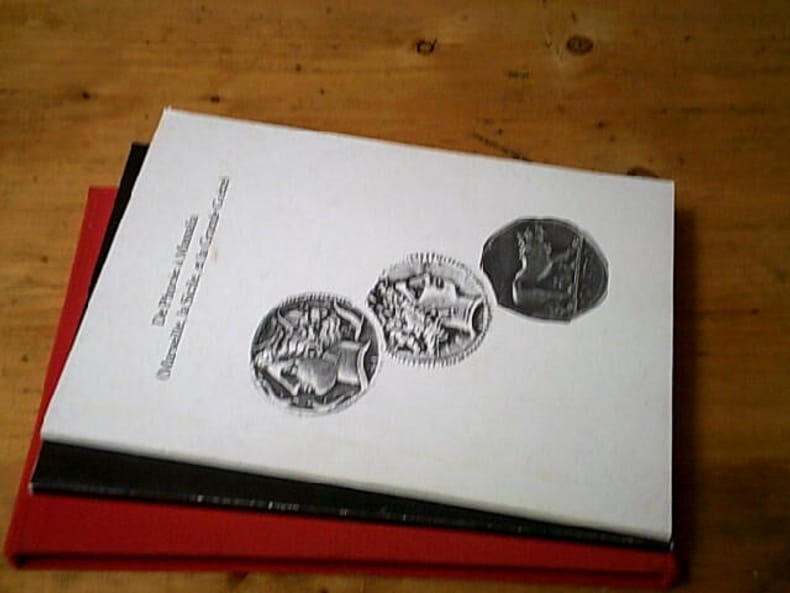
198121236Archives de la ville de Marseille 1981 67+80 pages collection Cabinet des médailles. Petit In-4. 1981. brochés sous étui. 67+80 pages. Nombreuses reproductions de monnaies / Complet en deux catalogues
New English Paperback. Demy 8vo. (21 x 15 cm). In English. 325 p., color ills. The Carians overseas: Egypt - Iran - Israel. THE CARIANS OVERSEAS is a documentary project, which follows the traces and documents the remains of the Carians, who, starting from the 10th BC, have worked in Egypt, Iran and Israel either as mercenaries or stonemasons. Being among the first settlers of the region of Southwest Anatolia, the Carians raised the world's first women admirals Artemisia I and Artemisia II, bequeathed us the Maussolleion, the monumental tomb of King Mausolus, which is one of the Seven Wonders of the Ancient World, offered the word "mausoleum" to world literature and preserved their culture and traditions for thousands of years. Based on the geographical features of their land, they lived either on the mainland, the islands or in locations overseas. They were known as good soldiers, fearless sailors and pirates with advanced warrior skills. Ancient Egyptian sources describe the Carians, who went to Egypt to work, as "men of bronze coming from the sea". According to Herodotus of Halicarnassus, the Carians had created the tradition of fixing a handle to a shield, fastening a crest and a tassel on the helmet and adorning and painting the shield. In ancient Persian sources, the Carians are referred to as people serving in the Persian army and navy, who were, besides their warrior character, skilled stonemasons, artisans, craftsmen and qualified in handling heavy goods. Being one of the most interesting civilizations of Anatolia, the Carians have proved their existence in the countries they have been, by inscribing their initials on stones in the Carian language and thus leaving important information regarding the places where they have lived, camped as well as their expedition routes. Following the traces of the Carians in Egypt, Iran and Israel and documenting their remains in museums and archaeological sites despite great difficulty, THE CARIANS OVERSEAS is an important source, for both the information it contributes to Carian archaeology and the research stories in its content.
New English Original bdg. 233 p. In Turkish. Color ills. Parion: The shining city of Ancient Troia. Parion. Antik Troas'in parlayan kenti.
Very Good Turkish Paperback. Roy. 8vo. (23 x 16 cm). In Turkish. 127, [1] p., ills., 12 b/w plates. Karaman ogullari Beyligi madeni paralari. [= Coinage of the Karamanids]. Signed and inscribed by Ölçer.
New English Paperback. Pbo. 4to. (28 x 20 cm). In English and Turkish. 184 p., color ills. Mysterious women of the bronze age.= Tunç çaginin gizemli kadinlari. [Exhibition catalogue]. Scientific consultant and text writer: Sengül Aydingül. Contents: Ian Hodder Thinking about figurines; Sengül G. Aydingün.; Pre settlement: The creative body; Sengül G. Aydingün.; Urbanization, the invention of bronze and the sacred bodies of the early bronze age; Sengül G. Aydingün.; Post bronze age; Catalogue; Tomur Atagök; Abbreviation; Bibliography. This catalogue has been prepared by Yapi Kredi Cultural Activities, Arts and Publishing, for Yapi Kredi Bankasi A,S., on the occasion of the exhibition.; Mysterious Women of the Bronze Era held between 13 October 2005 - 30 March 2006 at Yapi Kredi Vedat Nedim Tor Museum.
New English Paperback. Roy. 8vo. (24 x 17 cm). In English and Turkish. 530, [4] p., b/w ills. The catalogue consisting of 492 coins is the most comprehensive work regarding Eretnid, Kadi Burhanettin and Mutahharten coins. There are many unique coins in the catalogue and 90% of them have not been published before. The catalogue includes extensive information about the countermarks of the coins and the mint places that have been demonstrated for the first time. In addition, there is a typological research in detail. The last section of the book contains a paper about the Eretnis coins which was presented by the authors in an international symposium. NUMISMATICS Coins Collection Turkish & Islamic numismatic.
New English Paperback. Pbo. Roy. 8vo. (24 x 17 cm). In English and Turkish. 248 p., color plts. ISBN: 9786058786235. Byzantine period golds coins in Adana Archaeology Museum.= Adana Arkeoloji Müzesinde bulunan Bizans dönemi altin sikkeleri. Byzantine period golds coins in Adana Archaeology Museum found in Tarsus / Gözlükule, Mersin /Y umuktepe, Yüregir / Misis, Kadirli / Karatepe, Ceyhan / Sirkeli, Ceyhan / Tatarlihöyük excavations.
New Persian Paperback. Roy. 8vo. (24 x 17 cm). Text in Persian; bilingual in English and Persian title on cover. 106 p., color plates. Art of restoring and storaje ancient coins.= Hunar-i marammat va nigah'dârî-i sikkah'hâ-yi bâstânî.
New German Paperback. 4to. (28 x 20 cm). In German and Turkish. 167 p., color ills. Ausgrabung und Denkmalpflege in Didyma Eine fotografische Dokumentation.= Didyma'da kazi ve anit eser koruma - Fotograflarla bir belgeleme çalismasi. Die hier vorgelegte Dokumentation »Ausgrabung und Denkmalpflege in Didyma« wurde von Klaus Tuchelt (1931-2001), dem langjährigen Grabungsleiter von Didyma (1978-2001) und ersten Direktor der Zentrale des Deutschen Archäologischen Instituts (1981-1996) verfasst. Mit dieser wird in erster Linie das Ziel verfolgt, dem Leser ein Bild von der oftmals nur unzureichend wahrgenommenen Denkmalpflege an einem Ausgrabungsort zu vermitteln. Dementsprechend steht im Vordergrund dieser Publikation die fotografische Dokumentation, die mit vielen bislang unveröffentlichten wertvollen Bildern die vielfältigen Bemühungen um die Ausgrabung und Denkmalpflege in Didyma seit dem Beginn des 20. Jahrhunderts eindrucksvoll vor Augen führt.
Very Good English Paperback. Roy. 8vo. (23 x 16 cm). In English and Turkish. 192 p., b/w plates. Catalogue of the Turkish Republic coins.= Cumhuriyet Dönemi madenî paralar katalogu. Signed and inscribed by both of two authors.
New Persian Paperback. Roy. 8vo. (24 x 17 cm). Text in Persian; bilingual title in English and Persian on cover. 155 p., b/w plates. Iconography of Sasanian coins: Study of Sasanian coins Malek Museum.= Shamayil'nigari-i sikkah'ha-yi Sasani: bar'rasi-i aykunugirafik-i sikkah'ha-yi Sasani-i Muzih-i Malik.
New Turkish Paperback. Large 8vo. (21 x 19,5 cm). In Turkish. 271 p., b/w ills. Arkeolojik verilerin isiginda Ortaçag Komana'si: Çok disiplinli bir yaklasim. A study on Medieval Komana.
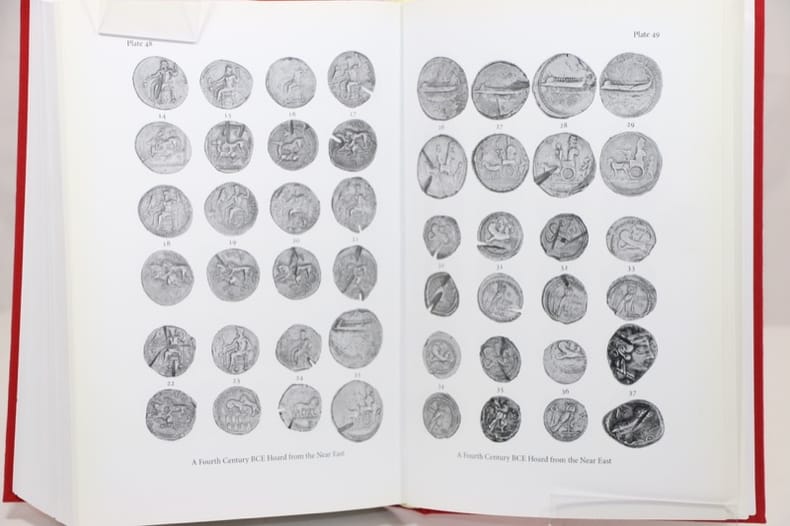
556374New-York, The American Numismatic society, 2008. 1 vol. in-8, reliure pleine toile rouge d'édition, VI-615pp., 117 planches, nombreuses ill. in-texte en noir.
502817Milano, Ennerre, 2001. In-4 cartonnage blanc éditeur, titre bleu au dos et plat sup., 133 pp., 83 planches réunissant 2330 monnaies reprod. en noir, bibliographie, index.
New English Paperback. Pbo. 4to. (29 x 21 cm). In Turkish. 379 p., color and b/w plts. Bizans sikkelerinde kutsal kisi tasvirleri. Depictions of saints on Byzantium coins. NUMISMATICS Coins Byzantine Empire Christianity Religious depictions Economy.
New New English Original bdg. Dust wrapper. 4to. (28 x 21 cm). In English and Turkish. [iv], 268 p., 55 color and b/w plts. The coins of Galatian Kingdom and the Roman coinage of Ancyra in Galatia.= Galatya Kralligi ve Roma dönemi Ankyra sehir sikkeleri.