PEREZ ChristineLivre Rare Book

1 610 résultats
170755Belles Lettres Paris 1986 In-8 ( 240 X 160 mm ) de 528 pages, broché sous couverture illustrée. Très nombreuses vignettes dans et hors-texte. Bon exemplaire.
189955447Graz, Akademische Druck- u. Verlagsanstalt, 1964 (Nachdruck der Ausgabe Moskau, 1899). 4°. Mit zahlr. Abbildungen auf 46 Tafeln. 3 Bll., 86 S., OLwd.
18657789Paris Firmin Didot Frères - Fils et Compagnie 1865 -in-12 demi-chagrin un volume, reliure demi chagrin rouge in-douze, dos 5 nerfs - titre et auteur frappés "or", date "or" en pied, filet à froid de part et d'autre des nerfs - légères épidermures au dos, tête lisse dorée, mors à double filets or, gouttière rognée, illustrations : près de 1000 figures principalement des pièces de monnaie, 675 pages, 1865 à Paris Librairie Firmin Didot Frères - Fils et Compagnie Editeur,
5827rédigé sur un plan nouveau par M.le chevalier de ROUJOUX. In 8 demi-cuir vert,titre et filets dorés.Faux-titre, tableau de l’Europe en frontispice,titre avec vignette, gravés.Titre,IV,694 pages,texte sur 2 colonnes,cartes dépliantes,mappemonde,Royaume de France divisés en 86 départements,par Hérisson 1829.Pavillons des différentes puissances,en couleurs.Cartes de l’Afrique,Amérique méridionale,Amérique septentrionale,Asie, Europe,1829.Six planches de monnaies,en couleurs.Paris Philippe Libraire 1829,Bon exemplaire
New New English Original bdg. Dust wrapper. 4to. (29 x 23 cm). A total of 36 articles following an interview with Prof. Guven Arsebuk.11 articles in English, 2 in German, the rest are in Turkish. 352 p., color and b/w ills. Archaeological essays in honour of homo amatus.= Güven Arsebük icin armagan yazilar. Edited by Mihriban Özbasaran, Oguz Tanindi, Ahmet Boratav. Contents: Onsoz¿un Sinirlarini Asmak (Ya da Guven Agabey'le "sinirlari zorlayan bir konusma") Prof. Dr. Guven Arsebuk¿e Ait Cesitli Yayinlar/Various Publications of Guven Arsebuk Abbasoglu, Haluk / Eski Yunan¿da Yikanma Balkan-Atli, Nur / Obsidien "Ticareti": Yeni Veriler, Yeni Modeller, Yeni Sorunlar. Bir Deneme Baykal-Seeher, Ayse ¿ Jurgen Seeher / Hattusa¿da Eski Hitit Donemi¿ne Ait Dev Bir Tahil Deposu Belli, Oktay / Van Bolgesi¿ndeki Yeni Boyali Magara Resimleri Bilgi, Onder / Ikiztepe¿den Unik Bir Buluntu: Kemik Tarak Caneva, Isabella / Hunting and Potting in Prehistoric Africa Cantay, Tanju / Sophrone Rabois-Bousquet (1864-1911) Prehistorya¿nin Icinde Dogmak ve Yasamak Cambel, Halet / Halet Cambel¿den Guven Arsebuk Cotuk, Yavuz / Insanin Embriyonik Gelisiminde Gorulen Evrimin Kanitlari Dincol, Ali ¿ Belkis Dincol / Zwei Hethitische Hieroglyphensiegel aus Yozgat und Konya Duru, Refik / Burdur Bolgesi Toplumlarinin Neolitik¿e Gecis Surecine Anadolu¿nun Diger Kulturlerinin Etkileri Uzerine Bir Deneme Efe, Turan / Pottery Distribution within the Early Bronze Age of Western Anatolia and its Implications Upon Cultural, Political (and Ethnic ?) Entities Ertug, Fusun / Wild Plant Gathering in a Greek Village: Misti in Cappadocia Esin, Ufuk / Kulturleri Ogrenmek Glazer, Mark / Illness and Culture: "Susto" and Soul Loss in the Mexican American Community of the Lower Rio Grande Valley of Texas Gulcur, Sevil / Animsamalar Kayacan, Nurcan / Melendiz Yerlesmelerinden Musular¿in Bolge Icindeki Yerinin Obsidien Endustrisi Cikisli Degerlendirilmesi Kuhn, Steven, L. / Flexibility and Variation in the Lower Paleolithic: A View from Yarimburgaz Cave Oksuz, Banu / Asikli Hoyuk Sigir Kemiklerinin Analiz Sonuclari Ozbasaran-Dede, Nilgun / Toumai ve Digerleri: Evrimin Kayip Halkalari Ozbek, Metin / Degirmentepe Kalkolitik Cagi Bebeklerinde Bas Daglamasi Ozdogan, Mehmet / Paleolitik Cag, Istanbul ve Yarimburgaz Magarasi ¿ 16 Yil Sonra Yarimburgaz¿in Dusundurdukleri Ozkan, Ayse / Arsivimden Dort Kare Pulhan, Gul / A New Old Assyrian Period Palace at Tell Leilan, Syria Runnels, Curtis / The Lower Palaeolithic of Greece and NW Turkey Sert, Gulay / "Mese Palamutu"nun Dusu Sevin, Veli / Elazig Muzesi'nden Bir Kemer ve Urartu Narratizmi Stiner, Mary, C. / Cave Bears and Paleolithic Artifacts in Yarimburgaz Cave, Turkey: A Taphonomic Investigation of the Causes of Spatial Association Tarhan, Taner, M. / Istanbul Raporum'dan Satir Baslari Taskiran, Harun / Paleolitik¿te Triedrique Pics (Ucyuzlu Kazmalar) ve Kargamis Baraj Golu Alanindan Ornekler Taskiran-Johnson, Ayse / Faked-Stone Reduction Techniques at CA-SNI-39, San Nicholas Island, California Tsoukala, Evangelia / Middle Pleistocene Ursid Remains from Yarimburgaz Cave Turk, Huseyin / Insan Evriminin Butunselligi Yakar, Jak / The Spiritual World of Sedentarized Hunter-Gatherers in Anatolia Yalcin, Unsal ¿ Gonul Yalcin / Zur Karaz-Keramik von Tepecik - Ostanatolien Yildirim-Balci, Semra / Asikli Hoyuk Ozel Yapilar Kompleksi Yontmatas Buluntulari Uzerine Bir Degerlendirme.
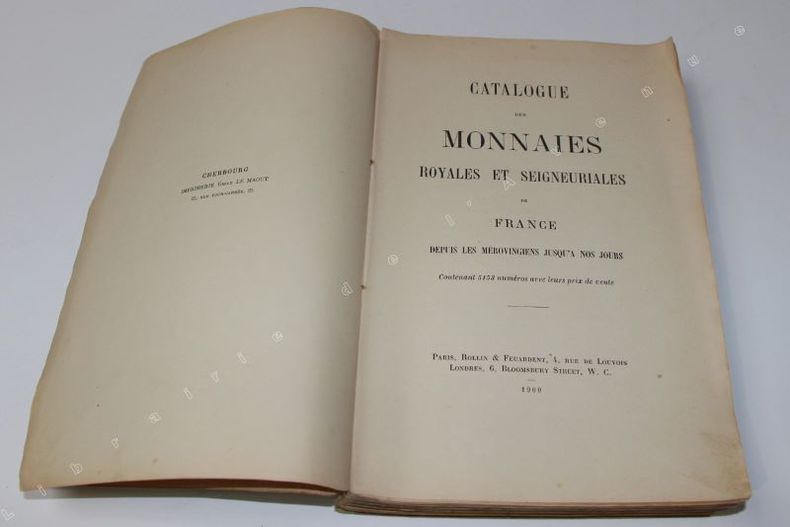
190083829Paris Londres, Rollin & Feuardent, impr. émile Le Maout 1900 In-8. Broché, couverture imprimée, 451 pp. Couverture ternie, pliures sur le dos, intérieur frais. Ouvrage peu courant.
1987109568Copernic 1987 In-8 cartonné 24,5 cm sur 15,8. 748 pages. Bon état d’occasion.
16117Varsovie, 2009 210 p., 50 planches, 2 cartes, relié éditeur. 21 x 29
186192020Abbeville, R; Housse, Imprimeur-éditeur 1861 Petit In-8 20 x 12,5 cm. Reliure demi-percaline bleu-marine, couvertures conservées, dos lisse orné dun petit fer doré encadré de filets dorés en tête et en queue, VI-431 pp. Bon exemplaire.
New English Original cloth bdg. 4to. (30 x 21 cm). In English. 94 p., 682 coins in 39 plts. Sylloge nummorum Graecorum, Turkey 1: The Muharrem Kayhan Collection. Part 2. The first volume of SNG Turkey was published in 2002 and contained 1076 coins from Muharrem Kayhan's collection. This second volume of the same collection contains 682 coins, most of which come from the Ionian cities. Ionia is followed by Mysia, Troas, Aiolis and Caria. Coins of the Achaemenid Kingdom as well as some Carian satraps or local rulers are also represented in the collection. Most of the coins are dated to the sixth-fourth century BC.
1017062838.Ghardcover. Good. Access codes and supplements are not guaranteed with used items. May be an ex-library book. hardcover
New English Original bdg. HC. In Italian. Color ills. 420 p., and many folding plts. Il III volume sugli scavi di Elaiussa Sebaste raccoglie, nella prima parte, i risultati delle indagini archeologiche condotte negli anni 2002-2005 nel complesso dell'agora e della basilica bizantina; nella seconda parte si affronta lo studio esaustivo dell'agora romana. Le ricerche hanno permesso di ricostruire dettagliatamente l'articolata stratificazione edilizia che ha interessato l'area nelle differenti fasi di occupazione, di elaborare in forma definitiva la planimetria dell'edificio pubblico di età medio-imperiale e di proporre efficaci ipotesi ricostruttive delle sue caratteristiche architettoniche e funzionali. Lo studio dei materiali di scavo ha permesso di inquadrare cronologicamente i momenti di impianto e di trasformazione del complesso, offrendo nuovi dati sul livello sociale degli abitanti e sui cambiamenti intercorsi nell'economia della città tra l'età medio-imperiale e l'epoca bizantina. Alle analisi antropologiche si devono inoltre interessanti informazioni sulla struttura demografica della città, sulla paleodieta e sullo stato di salute della popolazione in età bizantina. Il quadro delle conoscenze di Elaiussa Sebaste si arricchisce in questo modo, dopo il I e il II volume, di un ulteriore contributo, con nuovi spunti di riflessione sulla ricostruzione storica del centro urbano. Schneider, E. Equini / Premessa I. Il contesto topografico / C. Morselli II. Lo scavo 1. C. Giobbe / La periodizzazione 2. Braini, M. - C. Giobbe - C. Morselli / I risultati3. I materiali di eta' romana e bizantina 1. Borgia, E. / Le iscrizioni 2. Polosa, A. / The coins 3. Ferrazzoli, A.F. - M. Ricci / La ceramica 4. Ferrazzoli, A. F. - M. Ricci / Le lucerne 5. Ferrazzoli, A.F. / Altri materiali fittili 6. Guray, C. Gencler / The glass finds 7. Ricci, M. / I metalli 8. Paine, R. - R. Vargiu / Anthropological studies III. Il complesso monumentale 1. Morselli, C. / La planimetria e gli alzati: ipotesi ricostruttive. 2. Giobbe, C. / La decorazione architettonica 2.1. Classificazione tipologica 2.2. L'ordine architettonico: ipotesi ricostruttive 2.3. Inquadramento tipologico e cronologico IV. Conclusioni Giobbe, C. - C. Morselli / Tipologia, funzioni, cronologia. Mura, E. / Appendice. Abstract Bibliografia.
New New English Original cloth bdg. Dust wrapper. 4to. (29 x 22 cm). In English, German and Turkish. 259 p., b/w plts. Pisidian essays in honour of Haci Ali Ekinci.= Pisidya yazilari. Haci Ali Ekinci armagani. Edited by Hüseyin Metin, B. Ayça Polat Becks, Ralf Becks, Murat Firat. Becks, Ralf / Ein Neues Survey-Projekt in Sw-Pisidien: Seref Höyük - Komama und Umgebung.; Corsten, Thomas / An Inscription from Çavdir in the Burdur Museum and the Persistence of Ancient Place Names.; Çankaya, Alime / Burdur Müzesi - Toplum Diyalogu.; Duru, Refik / Bademagaci Höyügü'nden Sira Disi Bir Grup Buluntu.; Hülden, Oliver / Eine Archaische Vogelskulptur Aus 'Alt-Kibyra'.; Hürmüzlü, Bilge - Uygar Hecebil / Konana Antik Kenti ve Çevresinde Roma Dönemi Yol Sistemleri.; Kaska, Mehmet - Murat Firat / Aleksandria Troas Kazisi 2013 Yili Hellenistik Dönem Seramigi Bulgulari.; Labarre, Guy - Mehmet Özsait - Nesrin Özsait / La Cite de Lysinia sur les Rives du Lac Askania (Burdur).; Meier, Ludwig / Kibyra und die Räuber: Ein Neues Grabepigramm.; Metin, Hüseyin / Burdur Müzesi'nden Bir Kalip Yapimi Kâse Baskisi.; Özcan, Fikret / Pisidia Antiocheia'daki Kuzey Kilise Üzerine Bazi Gözlemler.; Özhanli, Mehmet / Pisidia Antiokheiasi Nekropolleri.; Poblome, Jeroen / Life in the Late Antique Countryside of Sagalassos.; Polat Becks, Bilge Ayça / Burdur Müzesi'nden Bir Adak Steli Isiginda Pisidia Bölgesi'nde Herakles Kültü.; Rens, Rob - Bea De Cupere / Blood, Sweat, Tears . And Fun! Gladiator and Animals Fights in Pisidia.; Tekin, Oguz / Ancient and Islamic Weights in the Burdur Museum.; Umurtak, Gülsün / Hacilar Büyük Höyük ilk Tunç Çagi I Yerlesmesi'nde Bulunmus Olan Bir Grup Mühür Üzerine Gözlemler.; Uzunaslan, Abdurrahman / A New Honorary Inscription on Emperor Constantine I from Pisidian Antioch.; Vandam, Ralf - Eva Kaptijn / Living in the Burdur Plain. A Diachronic Reconstruction of Human Subsistence (6500 - 200 BC) 165.; Waelkens, Marc / Hadrian and the 'Neokoria' of Sagalassos.; Waelkens, Marc / The Library of Titus Flavius Severianus Neon at Sagalassos.
New English Original bdg. HC. 4to. (28 x 20 cm). In English and Turkish. [viii], 251 p., color and b/w ills. Prologue General Information About Numismatics The Need for Coins Numismatics and Its Importance How the First Coins were Minted Images and Inscriptions Types Symbols Legends Countermarks and Punchmarks Raw Materials Units and Standards The Value of a Coin Bronze Coins Counterfeit Coins PHOKAIAN COINS Introduction ARCHAIC AGE PHOKAIAN COINS Archaic Age Phokaian Electrum Coins The First Alloying Term (625/600-522 BC) Coins with the Phokaian Insignia, the Seal Coins with the Griffin and its Interpretation Coins with Animal Images and their Interpretation Coins with the Insignia of Another City Coins with the River God Achelous Coins with Human Image Types Coins With Warrior Heads Coins With Female Heads Evaluation of the First Alloying Term Western Anatolia after the Persian Invasion The Second Alloying Term (522-478 BC) Changing the Alloy Composition The Ionian Revolt and Alliance Coins Coins Minted During the Second Alloying Term (Em. 29-50) Coins with the Seal Image Coins with the Griffin Image Coins with Animal Images Coins with the Insignia of Another City Coins with God and Goddess Images Coins Depicting Religious Festivals and Dances Coins with Warrior and Hero Images Coins with Gorgoneion Images The End of the Second Alloying Term Archaic Age Phokaian Silver Coins The Spread of the Phokaian Culture in the Archaiac Age The establishment of Phokaian colonies Migration Phokaian Coins in the Western Mediterranean CLASSICAL AGE PHOKAIAN COINS Economic and Political Developments Classical Age Phokaian Electrum Coins Overview of the Third Alloying Term Coins Minted in the First Section of the Third Alloying Term (478-387 BC), Em. 51-97 Coins with Animal Images Coins with the Insignia of Another City Coins with Warrior Images Coins with Cybele and Attis Coins with Other Gods and Goddesses Coins Depicting Religious Beliefs and Festivals Coins with Heads of Satraps Linked to Historical Events Coins with Human Heads The Last Persian Domination Period in Phokaia (387-326 BC) Electrum Coins minted in the Second Section of the Third Alloying Term (387-326 BC), Em. 98-112 Coins with Heads of Women, Nymphs and Goddesses Coin with Sappho Coin with Omphale Last Electrum Coins of Phokaia The End of the Electrum Coin Minting in Phokaia Other Subjects Related to the Electrum Coins in Phokaia Why Electrum? Electrum Coin Reverses The Problem of Counterfeit Coins The Value of Phokaian Coins Circulation Zone of Phokaian Coins Classical Age Phokaian Silver Coins Classical Age Phokaian Bronze Coins Phokaian Monetary Agreements The Monetary Agreement Between Phokaia and Mytilene Other Relations that Imply a Monetary Agreement Relations with Cyzicus Relations with Teos Relations with Lampsacus Relations with Erythrae Relations with Velia THE HELLENISTIC AGE Political Developments in Western Anatolia Coin Minting in the Hellenistic Age Raw Materials Types on the Coins Legends on the Coins Union Coins Western Anatolian City States and Their Own Coins Hellenistic Age Phokaian Coins Royal Coins Bronze Coins Coins with Hermes Coins with Athena Coins with Smardos Coins wit
New Persian Original bdg. HC. Roy. 8vo. (24 x 17 cm). Text in Persian; with bilingual title on cover in English and Persian. 141 p. Pre-Islamic coinage of Iran: the Achaemenid to the Sassanid.= Shinâkht-i sikkah'hâ-yi pîsh az Islâm: Az Hakhâmanishî tâ Sâsânî.
Fine English Paperback. 4to. (28 x 20 cm). In English and Turkish. [10], 208 p. Documents of numismatic importance in the Ottoman archives. Coinage - medals and orders, mints and their administration, mint masters and superintends, stampers of imperial monograms (tugra), counterfeiters etc.= Basbakanlik Devlet Arsivleri Osmanli Arsivi'ndeki nümismatik ile ilgili belgeler katalogu. (Darphaneler, ilgili kuruluslar, madenler, meskûkât, kaime, madalya, nisanlar vb.).
Fine English Paperback. Pbo. Roy. 8vo. (24 x 17 cm). In English and Turkish. 152 p., unnembered and numbered b/w plates. Ottoman coinage during the reigns of Sultan Mehmed Resad and Sultan Mehmed Vahdeddin.= Sultan Mehmed Resad ve Sultan Mehmed Vahdeddin dönemi Osmanli madeni paralari.
New English Paperback. 4to. (25 x 20 cm). In English and Turkish. [xvi], 242, [2] p., color ills. The Byzantine Court: Source of Power and Culture. Papers from the Second International Sevgi Gönül Byzantine Studies Symposium. The designation of Istanbul by the European Union's Council of Ministers as the European Capital of Culture for 2010 was instrumental in the decision to focus on Constantinople in the Second International Sevgi Gonul Byzantine Studies Symposium, which was held on 21-23 June 2010 at the Istanbul Archaeological Museum. The particular theme of the symposium, "The Byzantine Court: Source of Power and Culture," was selected, on the other hand, in view of Constantinople's essential role as Byzantine imperial capital soon after its foundation by the Roman Emperor Constantine the Great on 11 May 330. The aim of the symposium was to evaluate, from administrative, political, social, economic, and religious perspectives, the impact of the political power that spread out from the Great Palace and, as of the twelfth century, from the Blachernai Palace to the rest of the empire, and to investigate the reflections of this power in the cultural sphere. Presented in this volume are thirty out of the forty papers delivered at the Second International Sevgi Gonul Byzantine Studies Symposium. The papers have been grouped under the following four section headings: "Byzantine Palace Architecture," "The Byzantine Court as the Center of Imperial Power," "Ceremonies at the Court and in the City," and "Court Culture and Visual Arts.".
New English Paperback. 4to. (25 x 20 cm). In English and Turkish. [xvi], 242, [2] p., color ills. The Byzantine Court: Source of Power and Culture. Papers from the Second International Sevgi Gönül Byzantine Studies Symposium. The designation of Istanbul by the European Union's Council of Ministers as the European Capital of Culture for 2010 was instrumental in the decision to focus on Constantinople in the Second International Sevgi Gonul Byzantine Studies Symposium, which was held on 21-23 June 2010 at the Istanbul Archaeological Museum. The particular theme of the symposium, "The Byzantine Court: Source of Power and Culture," was selected, on the other hand, in view of Constantinople's essential role as Byzantine imperial capital soon after its foundation by the Roman Emperor Constantine the Great on 11 May 330. The aim of the symposium was to evaluate, from administrative, political, social, economic, and religious perspectives, the impact of the political power that spread out from the Great Palace and, as of the twelfth century, from the Blachernai Palace to the rest of the empire, and to investigate the reflections of this power in the cultural sphere. Presented in this volume are thirty out of the forty papers delivered at the Second International Sevgi Gonul Byzantine Studies Symposium. The papers have been grouped under the following four section headings: "Byzantine Palace Architecture," "The Byzantine Court as the Center of Imperial Power," "Ceremonies at the Court and in the City," and "Court Culture and Visual Arts.".
New English Paperback. Pbo. 4to. (29 x 24 cm). In English and Turkish. 303, [1] p., color ills. This catalogue has been prepared by Vehbi Koc Foundation on the occasion of the exhibition 'The Remnants: 12th and 13th Centuries Byzantine Objects in Turkey' on display from June 26th until 31th 2007 organised in conjunction with the First International Sevgi Gonul Symposium on Byzantine Studies. "The Remnants: 12th and 13th Centuries Byzantine Objects in Turkey" exhibition brings together works of art from the period concerned in a variety of materials, and mostly hitherto unpublished, from the museums in Turkey and aims at presenting the traces of intercultural interactions in art and the universality of art reaching out to the entire mankind and going beyond the political borders. Concomitantly, the exhibition presents the character of the artistic production in Byzantium within the historical circumstances of the 12th and 13th centuries.".
New English Paperback. Pbo. Oblong 4to. (26 x 28 cm). In English and Turkish. 283 p., color ills. Sadberk Hanim Museum opened on 14 October 1980 as Turkey's first private museum and this year celebrates its thirty-third anniversary. The collection of Turkish and Islamic artefacts gathered by Sadberk Koç formed the original nucleus of the museum collection, which has since been greatly expanded by donations and purchases. With the purchase of the Hüseyin Kocabas collection in 1983 the museum branched out into the field of antiquities. The Archaeological Section of Sadberk Hanim Museum is celebrating its 25th anniversary this year. The collection consisting of nearly 7000 objects ranges from the Late Neolithic Age to the Byzantine Period, making it possible to trace the course of successive Anatolian civilizations through their material culture. Archaeological Section of the museum has steadily grown over the years, with the purchase of rare items from overseas auctions and the acquisition of registered collections. Sadberk Hanim Museum Archaeological Section will have been open for 25 years in 2013 and it was decided to celebrate this anniversary with an exhibition entitled Traces of Ancient Ages, presenting 150 works that throw light on the periods to which they belong.
New English Paperback. 4to. (28 x 24 cm). In English and Turkish. 183 p., color and b/w ills. Setting forth concepts related to weighing and measuring meant developing both practical and philosophical links with the world. When ancient civilizations used seeds produced in the fertile soils of Mesopotamia to establish the first units of weight, the observations they made in relation to the act of measuring created a springboard for civilizations to thrive. The 2nd millennium BC saw the frontiers of discovery advancing along the trade routes between Mesopotamia and Anatolia. While the fascination with precision in weighing and measuring continued, there was a corresponding migration of myths from the realms of the gods to the land of mortals, and concepts like truth and justice became associated with the balancing of the suspended pans of weighing scales. In ancient Egypt the sins of the deceased were weighed on a set of scales, while in ancient Greek and Roman cultures, the weighing scale was a symbol of justice and an indispensable illustrative element in the depiction of gods and goddesses. In Byzantine society, too, the act of just and accurate weighing resonated deeply with ethical sensibilities and recalled the weighing of souls. And in the Ottoman Empire, precise weighing represented the foundations of trust, not only in trade but also just as notably in religious life. "Man is the measure of all things: of the things that are, that they are, of the things that are not, that they are not," proclaimed Protagoras. The endeavor to measure the world with a handful of units brought forth the capacity to recreate it in the abstract. As the measurement of discovery became the substance of myths, weighing and measuring, beyond being mere physical actions, became an important means of self-expression to those captivated by the universe and what lay beyond the boundaries of knowledge. With a selection of objects from the Suna and Inan Kiraç Foundation Anatolian Weights and Measures Collection, The Art of Weights and Measures aims to explore, through the eyes of civilizations, gods, merchants, master craftsmen, and their apprentices from the 2nd millennium BC to the present day, how weights and measures have shaped economies, cultures, and intercultural relations, their impact on social dynamics of trust, and their journey towards becoming standardized units.
New Turkish Original bdg. HC. 4to. (29 x 25 cm). In Turkish. 231 p., many numerous color and b/w ills. Dogu Roma sikkeleri, (M.S. 491-1453). A very comprehensive study on coins of Byzantium Empire. 1000 copies were printed.
New English Original bdg. HC. 4to. (30 x 21 cm). 371 p., color and b/w ills. Articles in Turkish, English and German. Vorwort / Önsöz H. Gönül Yalçin / Ünsal Yalçin: Ein Leben für die anatolische Archäologie = Ünsal Yalçin: Anadolu Arkeolojisine Adanmis Bir Hayat Oliver Stegemeier - Mitja Musberg - Julien Nicolas Villatte / Ünsal Yalçin: Lehrer Mentor Freund Schriftenverzeichnis Prof. Dr. Ünsal Yalçin Fokke Gerritsen - Rana Özbal - Piet Gerrits / A Red Floor At Neolithic Barcin Höyük: Special Or Not? Pinar Çayli, Isil Demirtas - Baris Eser - Sevil Gülçur - Varlik Indere / Güvercinkayasi'nda Sembolizma F. Gülden Ekmen / Notes on the 5th Millennium BC of the Western Black Sea Region: Idols from Inönü Cave Mehmet Özdogan / Tülintepe Revisited Hamza Ekmen / Inönü Magarasi'nda Bulunan Erken Tunç Çagi'na Ait Sütten Ikincil Ürün Üretiminde Kullanilan Bir Çömlek Üzerine Gözlemler Erkan Fidan / Yeni Arastirmalar Isiginda Kütahya'da Eski Anadolu Madenciligi Atila Türker / A Pithos Grave from Devret Höyük Jan-Krzysztof Bertram - Gülçin Ilgezdi Bertram / The Alisar 7M-11M - Ahlatlibel - Çayyolu III-Horizon in Central Anatolia. A Reminiscence to H. H. von der Osten' "Copper Age" Elif Genç / Kastamonu-Kinik 'Madenci Isligi' Üzerine Yeni Düsünceler Clemens Lichter / Gespanngräber Gian Maria Di Nocera / Middle Bronze Age Metals in the Upper Euphrates K. Serdar Girginer - O. Emre Köse / Tatarli Höyük'ten MÖ II. Binyila Tarihlenen Bir Grup Metal Silah Armagan Erkanal-Öktü / Panaztepe Kursun Eserleri Isiginda Madencilik ve Ikonografi Üzerine Bazi Düsünceler A. Tuba Ökse / A Bronze Horseman' from Salat Tepe Dating to the 17th Century BC Sevinç Günel / Çine-Tepecik Tasvir Sanatinda Boga Kültü' Yansimalari Özlem Sir-Gavaz / Hititçe Kaynaklara Göre Derekutugun Bölgesi'nin Tarihi Cografyasi Meltem Dogan-Alparslan - Metin Alparslan - Tolga Pelvanoglu / Berufe und Handwerk bei den Hethitern Ahmet Ünal / Altanatolisches Heilverfahren nach hethitischen Texten - ein Extrakt Jak Yakar / Assessing the LBA-EIA Ethno-Cultural Continuity in Eastern Anatolia Mirko Novák / Sirkeli Höyük. The Discovery and Exploration of a Complex Urban Landcape in Iron Age Cilicia Bekir Özer / Erken Demir Çagi Baslarina Ait Karia Fibulalari Hüseyin Cevizoglu / Iron Metallurgy in Ionia Mehmet Isikli & Hazal Ocak / "Ayanis Metal Sfenksi" Isiginda Yakindogu ve Anadolu Kültürlerinde Sfenks Üzerine Gözlemler H. Gönül Yalçin & Mareke Johanne Ubben / Eine Omphalosschale der schwarz glänzenden Ware aus Derekutugun Bilge Hürmüzlü / Preliminary Report on a Bone Workshop in Seleukeia Sidera Ibrahim Hakan Mert / Priene Dogu Nekropol'den Tonozlu Bir Mezar Gabriele Körlin - Sandra Peternek / Römischer Bergbau und Verhüttung auf dem Lüderich bei Rösrath Baoquan Song - Irene Eusgeld / Jade-Kultur in China Christof Berns / Steinbrüche in der Nekropole von Knidos Atalay Karatak - Ali Akin Akyol / Genel Hatlariyla Öntarihte Demir ve Çelik Moritz Jansen - Giacomo Benati / On the Beginnings of Gold Use in Southern Mesopotamia: the Rediscovery of an Artifact from the al- Ubaid Stratum at Ur in the Collections of the Penn Museum Yesim Batmaz - Atilla Batmaz / Tunç Korozyonunun Seramik Sirlarinda Renk Verici Olarak Kullanilmasi: Deneysel Bir Çalisma Michael Bode - Moritz Kiderlen - Georgios P. Mastrotheodoros - Eleni Filippaki - Yannis Bassiakos / Das Kupfer der griechischen spätgeometrischen Dreifußkessel (ca. 750 700 v. Chr.): eine Diskussion der chemischen und bleiisotopischen Analysen Ümit Güder / Searching for Ghosts in a Knife from the Sanctuary of Didyma Stephen Merkel / Archaeometallurgical Study of Two Carolingian-Ottonian Disc Brooches from Elsfleth-Hogenkamp, Germany Melek Meltem Yalçin / Das Verständnis von totaler Herrschaft bei Hannah Arendt mit einem Ausblick auf aktuelle populistische Bewegungen.
As New English Paperback. Roy. 8vo. (24 x 17 cm). In English and Turkish. 55, [1] p., many unnumbered b/w ills., 11 numerous b/w plates. Candarogullari [Isfendiyarid] states coin treasure struck in the name of Ilhanli ruler Ebu Said Bahadir Khan.= Ilhanli hükümdari Ebu Said Bahadir Han adina kesilmis olan Candarogullari Beyligi sikke definesi.