1 611 résultats
15407Genève, Mémoire lu à la Société d'Histoire et d'Archéologie de Genève, 1843, 1 demi percaline bradel in-8, 19 ff. blancs, gravure en frontispice, 66 pages, paginées 29 à 94, 17 ff. Blancs, dernier feuillet renforcé ;
50542Maison Florange Claude Burgan, Paris, 1997
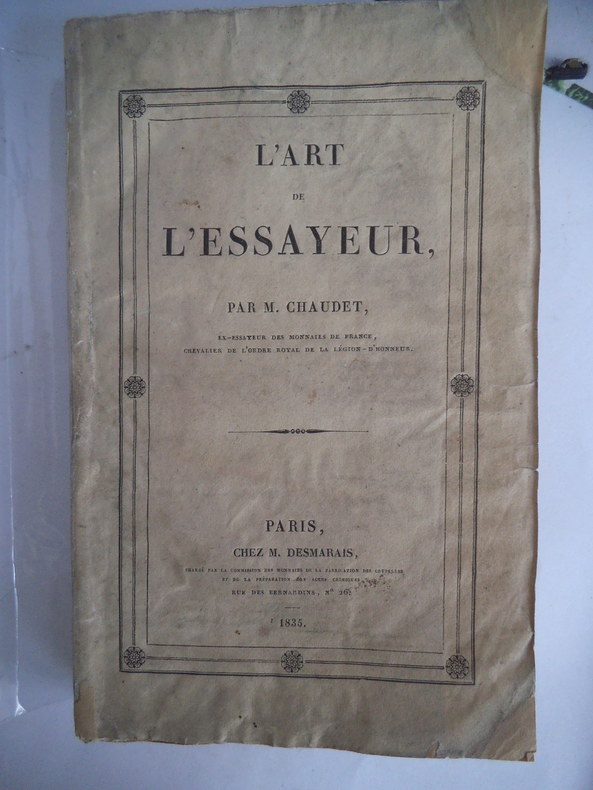
1329in 8 broché couverture jaune imprimée,faux-titre,titre,XVIII(table des matières),1 feuillet errata,396 pages,Desmarais 1835(mouillure en marge extérieure page de faux-titre et titre,rousseurs éparses habituelles
593388Sevilla, Fundacion El Monte, Universidad de Sevilla, 2004. In-4 broché, couv. ill. en coul., 431 pp., très nb. ill. en n/b. in et h.-t. (cartes, reprod. monnaies, tableaux, graphiques etc...), texte en espagnol sur 2 colonnes,
7506Bruxelles, imp. Gobbaerts, s.d. (fin XIXème), 1 Cahier, sans couverture. in-8 de de 5 pp., paginées 15 à 19 + 1 planche ;
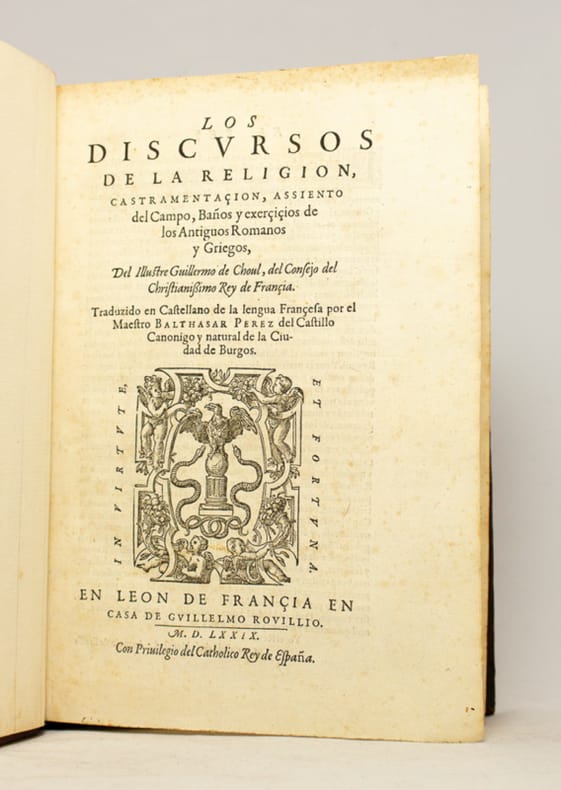
157916568En Leon de Françia, en casa de Guillelmo de Rovillio, 1579. In-4 de [8]-488-[44] pages (dernier ff. blanc) [*4;A-Z4; Aa-Zz4; AA-TT4; VV6], pleine basane brune, dos à nerfs orné de filets et fleurons dorés, tranches mouchetées. Reliure du XVIIe siècle.
New English Paperback. Pbo. Cr. 8vo. (21 x 12 cm). In English. 72 p., ills. Knidos. A guide to the ancient site. Knidos is a hidden treasure, situated on the far southwest coast of Turkey ¿ an ancient city in a setting of great natural beauty, remote, and yet redolent with history. Its rocky landscape dotted with patches of unspoilt wild vegetation combines with a pleasantly mild climate to give added attraction to the charm of this archaeological site, where winds provide a cool breeze even in hottest summer months. Because of its location at the end of a long peninsula, Knidos is hard to reach by road, and most visitors prefer to arrive by sea. However, those who choose to use the difficult overland route are rewarded with a journey through an attractive but changing landscape of pine forests, red and black rocky outcrops formed from cooled lava, and almond and olive groves, a main source of income for the local people. The last stage of the road passes through the ancient cemetery or necropolis area. Finally, one reaches the spot from where there is a uniquely beautiful view, and one looks out across theterraced slopes and harbours of Knidos. Although excavations have been carried out at the site for many years, Knidos, because of its remote and isolated location, has remained unspoilt and has not been overwhelmed by a large volume of tourist traffic. This book is intended to provide visitors with a brief history of this important ancient city and an easy guide to the site as it is today. The surviving ruined buildings and monuments are described in a set order, as listed in the contents, so that visitors are given the best route to follow. Those buildings that are most visible and whose excavation has been completed are listed first and in greater detail, while others, such as the Large Theatre, which are difficult to reach, or areas that are still being excavated or studied, like the Sanctuary of the Muses and the Necropolis, are described more briefly.
New English Paperback. Pbo. 4to. (28 x 20 cm). In German. 256 p. Color and b/w ills. Contents: 1. Das Kleine Theater. 1.1. Forschungsgeschichte: 1.1.1. Die Grabungen unter Charles Newton. 1.1.2. Die Grabungen unter Leitung von Iris Love. 1.1.3. Die Kampagne des Jahres 2006. 1.2. Baubeschreibung. 1.2.1. Das koilon. 1.2.2. Die Zugänge: parodoi und vomitoria/psalides. 1.2.3. Die orchestra. 1.2.4. skene und proskenion. 1. Bauphase. Untergeschoss mit Tunnelzugängen - Obergeschoss. Datierung des ersten Bühnenhauses. 2. oder spätere Bauphase. Datierung der Restaurierung durch die Knidierin Lykaithion. 1.2.5. Zerstörung und nachantike Nutzung. 1.3. Inschriften und Statuen aus dem Theater. 2. Der Tempeldes Dionysos- Diefrühchristliche Kirche C. 2.1. Forschungsgeschichte. 2.1.1. Die Grabungen unter Charles Newton. 2.1.2. Die Grabungen unter Iris Love. 2.1.3. Neuere Untersuchungen. 2.2. Baubeschreibung. 2.2.1. Die Säulen. 2.2.2. Kapitelle (K1-K4). 2.2.3. Epistyl. 2.2.4. Der figürliche Fries (Blöcke F1-F10). 2.3. Statuenfunde (S1-S3). 2.4. Verbaute und geborgene Inschriften. 2.5. Das Heiligtum des Dionysos. 2.6. Zur Umwandlung des Tempels in eine Kirche 103. 2.7. Exkurs: Lykaithion- Kaiserpriesterin im Dionysoskult? Gabriella Lini: Einige Bemerkungen zur Kirche C und ihrer Bauskulptur. 3. Die Halleim Nordendes Tempels. 3.1. Ausgrabungsgeschichte. 3.2. Baubeschreibung. 3.2.1. Die Anlage der Terrasse und der Stützmauer. 3.2.2. Die ursprüngliche Stoa: Die Hallen des Sostratos? 3.2.2.1. Datierung der ersten Bauphase. 3.2.3. Erneuerung und Ausbau der Halle im 2. Jahrhundert n.Chr. 3.2.3.1. Säulen. 3.2.3.2. Architrav. 3.2.3.3. Fries. 3.2.3.4. Konsolgesims. 3.2.3.5. Die Fassade der Kammern - Opus sectile in Buntmarmor - Die Bauinschrift. 3.2.3.6. Die Exedra des Symmachos. 3.2.4. Der westliche Bereich der Stoa. 3.2.5. Die Dachkonstruktion. 3.3. Die Zerstörung und teilweise Wiederbenutzung. 4. Zusammenfassung: DieTerrassemitdemDionysosheiligtum: Die Hafenagora? 5. FundeausderStoa(Auswahl). 5.1. Statuenbasen mit Inschriften. 5.1.1. Ehreninschrift für das Volk der Rhodier. 5.1.2. Ehreninschrift für den Gymnasiarchen Andronikos. 5.2. Skulpturen. 5.3. Kleinfunde. 5.3.1. Münzen. 5.3.2. Keramik. 5.3.3. Deniz Pastutmaz Sevmen: Stoa'da bulunan kandiller. 5.3.4. Zusammenfassung: Die Lampenfunde aus der Stoa
New English Original bdg. HC. 4to. (30 x 21 cm). In English and abstract in Turkish. 220 p., b/w ills. Preface.; Acknowledgements.; Turkish Abstract.; Introduction.; Epigraphical Research at Amorium.; Abbreviations and.; Bibliography.; The Roman Inscriptions at Amorium.; Site Plan.; Map of.; Eastern Phrygia.; Section 1: Roman Stone Inscriptions, cat. nos. 1-133.; Honorific Inscriptions.; Dedications.; Funerary Inscriptions.; Section 2: Byzantine Stone Inscriptions, cat. nos. 134-210.; Funerary Inscriptions Sarcophagi.; Monograms and Masons' Marks.; Appendix: cat. no. 147.;(Nikos Tsvikis).; Section 3: Stone Inscriptions from the Territory of Amorium, cat. nos. 211-389.; Doorstones.; Epigrams.; Varia.; Section 4: Graffiti and Stamps on Terracotta, cat. nos. G1-G70.; Section 5: Miscellanea, cat. nos. M1-M22.; Indices.; Personal Names.; Ethnics and.; Toponyms.; Deities.; Provenances.; Concordances.; Check-list of Amorium Publications.
173 p., 120 pl. Coins de la couverture pliés. Arrache au dos. Inv. 18255
1927140Bw1927 In4 - broché - non coupé - petit accroc a la coiffe supérieure - 102 pages + 32 planches hors texte - Première partie sur les 3 parues .
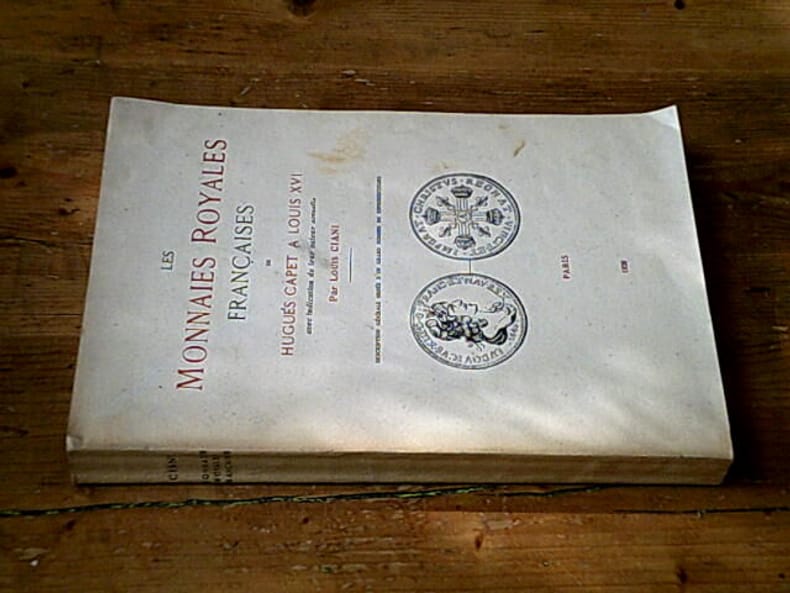
11568avec indications de leur valeur actuelle. In 8 plein cuir fauve à nerfs, titre, fers, filets roulette dorés. Faux-titre, titre, 499 pages, 2266 monnaies reproduites. Novembre 1965 réédition, à l’identique, de l’édition de 1926. Deux plats de couverture conservés, exemplaire bien relié, belle condition
1926238991926 502 pages Paris. in-8. 1926. broché. 502 pages. Description générale ornée d'un grand nombre de reproductions
197858041978 bibliothèque des arts Paris 1978 In4 327 pages 925 reproductions de monnaies
80 p., ill. n/b. et coul. Inv. 24956
2000119916Editions Claude Fayette 2000 Editions Claude Fayette 2000. In-8 plein cartonnage illustré éditeur. Nombreuses figures. Très bon état
Editions Claude Fayette 2000. In-8 plein cartonnage illustré éditeur. Nombreuses figures. Très bon état
New English Paperback. Pbo. Demy 8vo. (21 x 15 cm). Color ills. 141 p. The lapidary collection of the Museum of Saint Sophia constitutes a priceless patrimony of sculpted marbles; though little known, it deserves of complete and systematic study. This guidebook is conceived as a useful companion devoted to the scientific divulgation of this important collection of sculptures of the city of Istanbul. Each marble sculpture, pleasantly arranged in the blooming garden in front of Saint Sophia, represents a significant "tessera" in the mosaic of the Late Antique and Byzantine city. This book offers all visitors to the Museum the opportunity to become more acquainted with these "marble treasures", treasures so frequently disregarded as a result of the overshadowing magnificence of the Justinianic building.
186630617Paris Didier & Cie, Libraires et Éditeurs 1866 In-12 LXXII- 516 pp, mention de prix sur le plat, menus défauts à la reliure
185330637Paris Guillaumin & Cie 1853 2 volumes In-8 CII- 312 + 464 pp, illustrations in et hors texte
8338Bruxelles, imp. Gobbaerts, 1887, 1 br., couverture muette. in-8 de 10 pp. ;
4798Bruxelles, imp. Gobbaerts, 1888, 1 br., couverture muettes ; in-8 de 31 pages non coupées ;
10901Bruxelles, M.Hayez, 1860 14 x 21, 69 pp., broché, bon état (petits accrocs à la couverture)