KAZIM ERTÜRK, METIN ERÜRETEN.MareMagnum
JUSTIN ALivre Rare Book
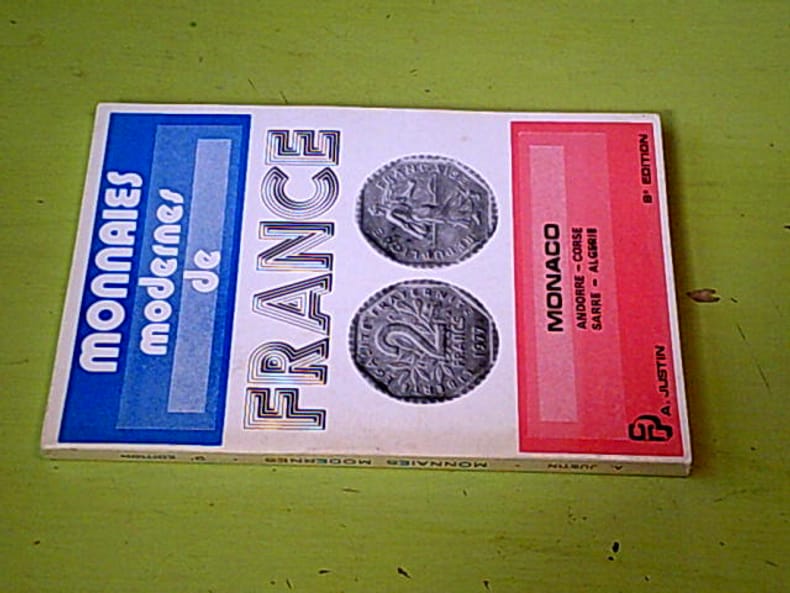
Monnaies modernes de france. Monaco Andorre Corse Sarre Algérie
197914216C.P.R 1979 in-8. 1979. broché. Figures en noir
Bouquiniste · Crevoux, France13,00 €
1 611 résultats
New New English Original bdg. Dust wrapper. Large roy. 8vo. (25 x 18 cm). In English and Turkish. 232 p., numerous b/w plates. The unidentified coins of Erzincan.= Meçhul Erzincan paralari.
New English Original cloth bdg. 4to. (34,5 x 24 cm). 308 p., 48 plates, 13 folding plan. B/w and color ills. In German and, abstract in Turkish and English. Patara II.2. Das theater von Patara. Ergebnisse der untersuchungen 2004 bis 2008.
55p., 33 pl. Inv. 24531
57p., 32 pl. Inv. 24532
45p., 25 pl. Inv. 24533
50p., 30 pl. Inv. 24534
66p., 40 pl. Inv. 24535
39p., 17 pl. Inv. 24845
30 p., 20 pl. Inv. 24846
New English Original bdg. HC. 4to. (30 x 23 cm). In German and abstract in Turkish. [xviii], 199 p. 77 ills., 2 folding tableau, 2 color and 71 b/w plates. Orientalising ceramics of Aiolis has always been a question mark due to lack of excavations and publications in the field. New light now can be shed by the help of finds from Pitane Necropolis excavation and Gryneion rescue excavations. The Geometric pottery of Aiolis is studied and formed into three main chronological phases of Wild Goat Style and influences from Ionia are also studied.
New Turkish Original bdg. Folio. (33 x 26 cm). In Turkish. [xiv], 53 p., 39 b/w plates, 2 color plts. Corpus Vasorum Antiquorum. Türkiye Cumhuriyeti (Turkish Republic). Fascicule 1: Silifke Museum.
New English Original bdg. 4to. (28 x 20 cm). In English. 232 p. Color ills. "Situated in Central Anatolia, Hattusa remained the capital city of the Hittites from 1650/1600 to around 1200 BC. Here, as recently as 2003 to 2005, the German Archaeological Institute has rebuilt one stretch of the mudbrick city wall. The funding for the endeavor -the first of its kind worldwide- has been generously provided by JT International. The scope of this project in experimental archaeology has been to recreate a part of the wall using the same materials the Hittites had at hand when they built their original walls so long ago. Each step necessary for the construction was fully documented so as to enable us to assess not only the amount of building materials required but also the manpower and time the Hittites must have invested in the various tasks of construction. This volume presents the results gleaned from this documentation. From the production of the first mudbrick to the dedication of the finished structure, each and every undertaking has been described in detail and is presented here accompanied by 573 illustrations".
New English Original bdg. 4to. (29 x 22 cm). In German. 232 p. Color ills. In German. Hattusa in Zentralanatolien war von 1650/1600 bis etwa 1200 v.Chr. die Hauptstadt der Hethiter. In den Jahren 2003 bis 2005 hat das Deutsche Archaeologische Institut hier einen Abschnitt der Lehmziegel-Stadtmauer rekonstruiert. Die Finanzierung dieses weltweit einmaligen Projekts ist von JT International ubernommen worden. Im Sinne der experimentellen Archaeologie wurde versucht, moglichst mit den Materialien, die auch den Hethitern zur Verfugung standen, zu bauen. Ausserdem wurden alle Schritte des Baus genau dokumentiert, um eine Vorstellung vom Aufwand fur eine solche Anlage zu bekommen - wieviel Material wurde gebraucht, wie viele Arbeitskräfte waren im Einsatz und welche Zeitspannen waren notig, um bestimmte Aufgaben zu erledigen. Das vorliegende Buch ist eine Dokumentation. Von der Herstellung der ersten Lehmziegel bis zur Einweihung des Bauwerks sind alle Schritte detailliert beschrieben und mit 573 Abbildungen dargestellt.
New English Paperback. Pbo. 4to. (27 x 20 cm). In English. Color ills. and photos. 208 p.: with 152 colour and 23 b/w photographs, 60 drawings and 8 plan diagrams Yazilikaya: Hittite rock sanctuary. The rock sanctuary of Yazilikaya is one of the most important ritual sites of the Late Bronze Age in Turkey. Its walls are decorated with unique rock-cut reliefs: over ninety male and female deities, animals and mythical beings - more than half of all known Hittite reliefs. The sanctuary once lay on the outskirts of Hattusa, capital of the Hittite Empire, in central Anatolia. The German Archaeological Institute has been excavating here since 1931 and the rock sanctuary of Yazilikaya has been thoroughly investigated in the process. While scientific literature is plentiful, what is lacking is a "complete Yazilikaya": a comprehensively illustrated publication in English intended both for experts and the broader reading public. This book is intended to fill that gap. It offers the reader a virtual tour of the sanctuary and can also serve as a guidebook for visitors to the site. At the same time it summarizes the results of earlier excavations as well as the latest research. Lavishly illustrated with spectacular new photographs of the rock massif, it contains a detailed description of the rock chambers with the reliefs and the accompanying temple buildings. This section is followed by chapters reconstructing the history of the sanctuary and discussing its still mysterious function. Other chapters focus on the Hittites and their capital city, the discovery of the site and its research history and much more besides - with the aim of bringing the ancient monument vividly to life before the reader's eyes.
New English Paperback. Pbo. 4to. (28 x 20 cm). In German. 208 p. Ills. Das Felsheiligtum von Yazilikaya ist einer der wichtigsten Kultplätze der späten Bronzezeit in der Türkei. Einzigartige Reliefs von über neunzig männlichen und weiblichen Gottheiten, Tieren und Fabelwesen schmücken seine Wände - mehr als die Hälfte aller bekannten hethitischen Reliefs sind hier versammelt. Dieses Heiligtum lag einst direkt vor den Toren von Hattusa, der Hauptstadt der Hethiter in Zentralanatolien. Hier führt das Deutsche Archäologische Institut seit 1931 Ausgrabungen durch, und in diesem Rahmen wurde auch das Felsheiligtum von Yazilikaya eingehend untersucht. Die wissenschaftliche Literatur ist umfangreich, aber es fehlte bisher eine umfassend bebilderte Darstellung des Heiligtums und seiner verschiedenen Aspekte, die sich sowohl an Fachleute als auch an eine breitere Leserschaft wendet. Das vorliegende Buch soll diese Lücke füllen: Es bietet dem Leser einen Rundgang durch das Heiligtum und kann auch als Führer vor Ort dienen. Gleichzeitig fasst es die Resultate der früheren Grabungen und die Ergebnisse neuer Forschungen zusammen. Sehr ausführlich bebildert und mit spektakulären Neuaufnahmen des Felsmassivs werden die Felskammern mit allen Reliefs sowie die zugehörigen Tempelgebäude detailliert vorgestellt. Eine Rekonstruktion der Geschichte dieses Heiligtums und seiner immer noch geheimnisvollen Funktion schließen sich an. Ergänzende Kapitel zu den Hethitern und ihrer Hauptstadt, zur Entdeckung und Forschungsgeschichte des Ortes u. a. m. liefern zusätzliche Informationen, mit denen dieser Platz vor den Augen des Lesers lebendig wird. Mit 152 Farb- und 23 S/W-Fotos, 60 Zeichnungen und 8 Plänen.
New English Paperback. Pbo. In Turkish. Color ills. 232 p. Situated in Central Anatolia, Hattusa remained the capital city of the Hittites from 1650/1600 to around 1200 BC. Here, as recently as 2003 to 2005, the German Archaeological Institute has rebuilt one stretch of the mudbrick city wall. The funding for the endeavor ?the first of its kind worldwide? has been generously provided by JT International. The scope of this project in experimental archaeology has been to recreate a part of the wall using the same materials the Hittites had at hand when they built their original walls so long ago. Each step necessary for the construction was fully documented so as to enable us to assess not only the amount of building materials required but also the manpower and time the Hittites must have invested in the various tasks of construction.This volume presents the results gleaned from this documentation. From the production of the first mudbrick to the dedication of the finished structure, each and every undertaking has been described in detail and is presented here accompanied by 573 illustrations.
Fine English Paperback. Pbo. Demy 8vo. (21 x 16 cm). Turkish edition. 196 p. "This guide includes a practical itinerary that leads you past all the most significant features of the ancient capital, including the rock-cut sanctuary of Yazilikaya nearby. Color photography and a wealth of reconstruction drawings accompany the descriptions -interesting, clear and easy to read- of each monument. You will also have at hand a brief history of the city, as well as bibliographical references for further reading in various languages.". Hattusa rehberi. Hitit baskentinde bir gün.
New English Paperback. Pbo. Demy 8vo. (21 x 16 cm). English Edition. 196 p., 159 b/w & color ills., 1 general plan to the site. This guide includes a practical itinerary that leads you past all the most significant features of the ancient capital, including the rock-cut sanctuary of Yazilikaya nearby. Color photography and a wealth of reconstruction drawings accompany the descriptions -interesting, clear and easy to read- of each monument. You will also have at hand a brief history of the city, as well as bibliographical references for further reading in various languages.
New English Paperback. Demy 8vo. (21 x 16 cm). Edition in English. 196 p. "This guide includes a practical itinerary that leads you past all the most significant features of the ancient capital, including the rock-cut sanctuary of Yazilikaya nearby. Color photography and a wealth of reconstruction drawings accompany the descriptions -interesting, clear and easy to read- of each monument. You will also have at hand a brief history of the city, as well as bibliographical references for further reading in various languages.".
New English Paperback. Pbo. 4to. (27 x 20 cm). In Turkish. Color ills. and photos. 208 p.: with 152 colour and 23 b/w photographs, 60 drawings and 8 plan diagrams Yazilikaya: Hittite rock sanctuary. The rock sanctuary of Yazilikaya is one of the most important ritual sites of the Late Bronze Age in Turkey. Its walls are decorated with unique rock-cut reliefs: over ninety male and female deities, animals and mythical beings - more than half of all known Hittite reliefs. The sanctuary once lay on the outskirts of Hattusa, capital of the Hittite Empire, in central Anatolia. The German Archaeological Institute has been excavating here since 1931 and the rock sanctuary of Yazilikaya has been thoroughly investigated in the process. While scientific literature is plentiful, what is lacking is a "complete Yazilikaya": a comprehensively illustrated publication in English intended both for experts and the broader reading public. This book is intended to fill that gap. It offers the reader a virtual tour of the sanctuary and can also serve as a guidebook for visitors to the site. At the same time it summarizes the results of earlier excavations as well as the latest research. Lavishly illustrated with spectacular new photographs of the rock massif, it contains a detailed description of the rock chambers with the reliefs and the accompanying temple buildings. This section is followed by chapters reconstructing the history of the sanctuary and discussing its still mysterious function. Other chapters focus on the Hittites and their capital city, the discovery of the site and its research history and much more besides - with the aim of bringing the ancient monument vividly to life before the reader's eyes.
New Turkish Original bdg. HC. 4to. (27 x 24 cm). In Turkish. 307 p., ills. Kommagene Kralligi Roma Imparatorlugu ile Part Kralligi arasinda Firat'in bati yakasinda MÖ 162 - MS 72 yillari arasinda 234 yil hüküm sürmüs tampon bir devlet. Bugünkü Adiyaman Kahramanmaras ve Gaziantep illerini kapsayan bölgede egemen olan bu krallik en parlak dönemini MÖ 69-36 yillari arasinda Kral Antiokhos I zamaninda yasamisti. Firat Kiyisinda Tanri Krallar adli bu eserde Jörg Wagner'in editörlügünde antik Kommagene bölgesinde yapilan yeni kazilar ve arastirmalar üzerine 22 makale yer almaktadir.
197914216C.P.R 1979 in-8. 1979. broché. Figures en noir
72 p., ., 893 lots la plupart illustrés en n/b. Coin de la couverture plié. Inv. 44085
15347Paris, Arnous de Rivière, 1878, 1 br., couverture muette. in-8 de 8 pp., illustrations ;
10429Mainz, Zabern, 1883, 1 br., taches sur la 1ère de couverture, petites déchirures au dos. in-8 de 96 pp. + 2 planches, exemplaire numéroté, tiré à 300 exemplaires, quelques mouillures dans les marges ;