FERRARI LA RENOTÈRE (Philippe de)Livre Rare Book
1 618 résultats
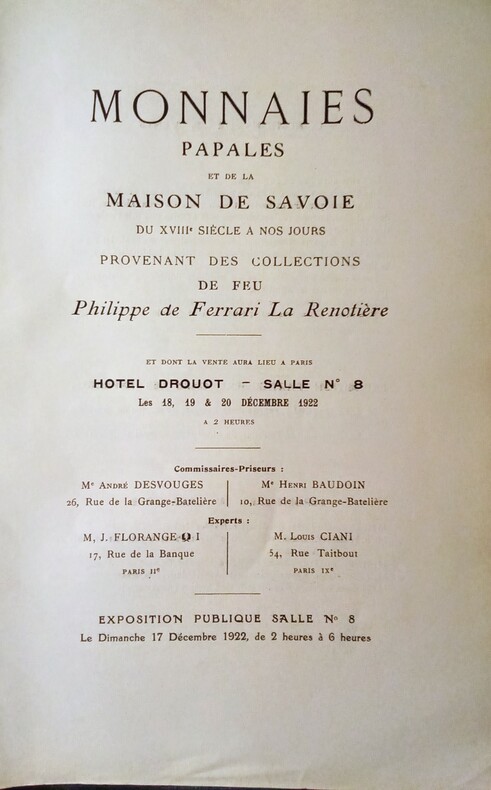
1922WOC-388Paris, Hotel Drouot,Salle n°8,les 18,19 & 20 décembre 1922 . Grand in-8 (27x18,5cm) broché, couverture grise imprimée en rouge, dos avec manque.55 pages de description +XIII planches de 1012 pièces.
197765381977 Serre éditeur nice 1977 In4 reliure éditeur 252 pages nombreuses planches de monnaies dans le texte
New English Original bdgç HC. 4to. (31 x 24 cm). 176 p., 180 color iills., 172 drawings. Based on the "Life of Rev. Grigol Handzta", the monasteries established and told in the Vita are visited and some identified and it is focused on the architecture with comparisons with Syria, Georgia and other regions of Anatolia. Artvin'deki Gürcü manastirlarinin mimarisi. (Rahip Grigol Handzta Dönemi). Bir 10. yüzyil elyazmasina göre Rahip Grigol Handzta'nin gezi güzergahindaki manastirlarin mimarisi.
New Turkish Original bdg. HC. Large Roy. 8vo. (25 x 18 cm). In Turkish. 589 p., 175 p., b/w plates. Uygarlik Anadolu'dan dogdu.
New English Original bdg. HC. In English. [xvi], [2], 329 p. Color and b/w ills. Contents: Arsebük, G.- F. C. Howell - S. L. Kuhn - W. R. Farrand - M. Özbasaran - M. C. Stiner / The caves of Yarimburgaz: Geological context and history of investigation. Farrand, W. R. - J. P. McMahon / The sedimentary infilling of Yarimburgaz Cave, Turkey. Blackwell, B. A. B. - H. P. Schwarcz - W. R. Farrand - J. Lundburg - A. R. Skinner - M. N. Divjak - J. I. B. Blickstein / Electron Spin Resonance (ESR) and 230th / 234U dating in the Lower Chamber at Yarimburgaz, Turkey. Königswald, W. V. - C. Lindenau - W. Santel / Ecological significance of the small mammal fauna from Yarimburgaz Cave (Turkish Thrace). Kuhn, S. L. / The Yarimburgaz lithic assemblage. Stiner, M. C. / A taphonomic study of bone assemblage formation and artifact-bear associations in Yarimburgaz Cave. Tsoukala, E. / Middle Pleistocene bears from Yarimburgaz Cave (Turkey). Howell, F. C. / The larger mammal fauna (exclusive of Ursidae) from Yarimburgaz Cave. Kuhn, S. L. - M. C. Stiner / Culture and biology in transition: Summary of findings and conclusion. Chapter abstracts. / General Plates.
1827LFA00b6c2 volumes de 689 et 871 pages, format 205 x 135 mm, relié cartonnage dos cuir (reliure en état moyen), publié en 1827, Janet & Cotelle Libraires (Paris)
17418Broché - 17,5 x 25 - 247 pp - réimpression sans date -réédition de l'ouvrage de 1841 -
New English Paperback. Pbo. 4to. (28 x 20 cm). In German and abstract in Turkish. 506 p., b/w and color ills. Byzas 21. Eisenzeitliche Nekropolen in westlichen Kleinasien. Struktur und Entwicklung zwischen dem 9. und 6. Jh. v. Chr. Contents: VORWORT (Herausgeber)., VORWORT (Eva-Maria Mohr).; HINWEISE: I. EINLEITUNG: II. FORSCHUNGSGESCHICHTE UND PUBLIKATIONSSTAND: III. DIE NEKROPOLEN UND BESTATTUNGSAREALE: 1. Bestandsaufnahme der Nekropolen und Bestattungsareale 2. Lage, Topographie und Infrastruktur 3. Intraurbane Bestattungen 4. Vor- und Nachnutzung des Bestattungsgeländes. IV. DIE GRÄBER - TYP, FORM UND VERBREITUNG: 1. Einfaches Erdgrab (Typ 1) 2. Brandschüttungsgrab (Typ 2) 3. Primäre Brandbestattung (Typ 3A und 3B) 4. Steinkistengrab (Typ 4A und 4B) 5. Plattensarkophag (Typ 4C) 6. Tonkiste (Typ 5) 7. Ziegelgrab (Typ 6) 8. Steinsarkophag (Typ 7) 9. Tonsarkophag (Typ 8) 10. Felskistengrab und Felssarkophag (Typ 9) 11. Enchytrismos A: Bestattungen in großen Pithoi (Typ 10A) 12. Enchytrismos B: Bestattungen in kleinen Gefäßen (Typ 10B) 13. Urnengrab (Typ 10C) 14. Phrygisches Felskammergrab (Typ 11A) 15. Lydisches Felskammergrab (Typ 11B) 16. Einfaches Felskammergrab (Typ 11C) 17. Felskammergrab vom Typ Soma (Typ 11D) 18. Holzkammergrab (Typ 12) 19. Lydisches Tumulus-Steinkammer-Grab (Typ 13A) 20. Nordlykisches Tumulus-Steinkammer-Grab (Typ 13B) 21. Lelegisches Tumulus-Steinkammer-Grab (Typ 13C) 22. Tholosgrab (Typ 14) 23. Sockelgrab - Terrassengrab (Typ 15) 24. Singuläre Grabbauten 25. Grabhorte - irreguläre Bestattungen - Kenotaphe 26. Grabtypen als sozial-gesellschaftliche Indikatoren V. ORGANISATION DER BESTATTUNGSAREALE, GRABBEZIRKE UND GRÄBER: 1. Organisation der Bestattungsareale 1.1. Planung und Anordnung 1.2. Funktionale und soziale Differenzierung 1.3. Orientierung der Bestattungen 2. Grabgruppen und Grabbezirke 2.1. Grabgruppen ohne architektonische Einfriedung 2.2. Rechteckig eingefasste Grabbezirke 2.3. Rund eingefasste Grabgruppen und Grabagglomerationen 3. Äußere Kennzeichnung der Gräber 3.1. Grabhügel und Hügel-Peribolos-Ensembles 3.2. Steine, einfache Steinstelen und Säulen 3.3. Anthropomorphe Stelen 3.4. Anthemienstelen 3.5. Türgrabsteine und Scheintüren 3.6. Grabvasen 3.7. Reliefierte Grabstelen 3.8. Löwen im sepulkralen Kontext 3.9. Kouros und Kore im sepulkralen Kontext 3.10. Grabcippi - Kugelkopfsteine. VI. BESTATTUNGSART UND BESTATTUNGSFORM: 1. Kremation und Inhumation in der Insel-Küsten-Region 2. Die Bestattungen im Hinterland 3. Biritualismus und Dualismusphänomene 4. Pyren und Aschedeponien 5. Anthropologische Untersuchungen 6. Bestattungsform 6.1. Mehrfachbestattungen in gebauten Kammergräbern 6.2. Reguläre Nachbestattungen in Felskammergräbern der Gruben primärer Brandbestattungen. VII. DIE BESTATTUNGSAREALE ALS KULTORT: 1. Totenfeier und Opfergaben. 1.1. Brandopfer und Opfergruben. 1.2. Sonstige Installationen. 1.3. Opfergaben, Libation und Kleinfunde. 2. Nekropolen und Gräber als 'memorial sites' 2.1. Bestattungsareale 2.2. Grabbezirke 2.3. Einzelne Gräber. 3. Exkurs: Überlegungen zum Wandel der Beigabenquantität im 7. und 6. Jh. VIII. SYNTHESE UND ANALYSE: 1. Struktur und Entwicklung der Nekropolen 2. Bestattungsart und Bestattungsform zwischen dem 9. und 6. Jh. 3. Beigabensitten und Brandopfer im Kontext des Wandels der Bestattungsart. 4. Lokale und überregionale Formen von Grabkultur. 4.1. Die Insel-Küsten-Region. 4.2. Das angrenzende Hinterland. 5. Schlussbemerkungen. IX. FUNDORTVERZEICHNIS. X. KATALOG DER FUNDORTE. XI. BIBLIOGRAPHIE. XII. ABSTRACT. XIII. ÖZET. XIV. ABBILDUNGS- UND TAFELVERZEICHNIS. XV. ABBILDUNGEN., XVI. TAFELN. ARHCEOLOGY Anatolian civilizations Prehistory Excavations.
New English Original bdg. HC. In Italian. Color ills. 420 p., and many folding plts. Il III volume sugli scavi di Elaiussa Sebaste raccoglie, nella prima parte, i risultati delle indagini archeologiche condotte negli anni 2002-2005 nel complesso dell'agora e della basilica bizantina; nella seconda parte si affronta lo studio esaustivo dell'agora romana. Le ricerche hanno permesso di ricostruire dettagliatamente l'articolata stratificazione edilizia che ha interessato l'area nelle differenti fasi di occupazione, di elaborare in forma definitiva la planimetria dell'edificio pubblico di età medio-imperiale e di proporre efficaci ipotesi ricostruttive delle sue caratteristiche architettoniche e funzionali. Lo studio dei materiali di scavo ha permesso di inquadrare cronologicamente i momenti di impianto e di trasformazione del complesso, offrendo nuovi dati sul livello sociale degli abitanti e sui cambiamenti intercorsi nell'economia della città tra l'età medio-imperiale e l'epoca bizantina. Alle analisi antropologiche si devono inoltre interessanti informazioni sulla struttura demografica della città, sulla paleodieta e sullo stato di salute della popolazione in età bizantina. Il quadro delle conoscenze di Elaiussa Sebaste si arricchisce in questo modo, dopo il I e il II volume, di un ulteriore contributo, con nuovi spunti di riflessione sulla ricostruzione storica del centro urbano. Schneider, E. Equini / Premessa I. Il contesto topografico / C. Morselli II. Lo scavo 1. C. Giobbe / La periodizzazione 2. Braini, M. - C. Giobbe - C. Morselli / I risultati3. I materiali di eta' romana e bizantina 1. Borgia, E. / Le iscrizioni 2. Polosa, A. / The coins 3. Ferrazzoli, A.F. - M. Ricci / La ceramica 4. Ferrazzoli, A. F. - M. Ricci / Le lucerne 5. Ferrazzoli, A.F. / Altri materiali fittili 6. Guray, C. Gencler / The glass finds 7. Ricci, M. / I metalli 8. Paine, R. - R. Vargiu / Anthropological studies III. Il complesso monumentale 1. Morselli, C. / La planimetria e gli alzati: ipotesi ricostruttive. 2. Giobbe, C. / La decorazione architettonica 2.1. Classificazione tipologica 2.2. L'ordine architettonico: ipotesi ricostruttive 2.3. Inquadramento tipologico e cronologico IV. Conclusioni Giobbe, C. - C. Morselli / Tipologia, funzioni, cronologia. Mura, E. / Appendice. Abstract Bibliografia.
17862relié- tome 1 - 12x19 - EUGENE LETTELIER - ANTIQUAIRE - Paris 1885
590479Conservation départementale des Musées de la Meuse, (1992). In-8 br., couv. ill. en couleurs, 54pp., nombreuses figures photographiques.
5391Lyon, région Rhône-alpes - direction des antiquités historiques, 1988, 1 br., couverture illustrée. in-4 de 127 pp., illustrations, plans ;
New Persian Original bdg. HC. Roy. 8vo. (24 x 17 cm). Text in Persian; with bilingual title on cover in English and Persian. 195 p., many unnumbered color plates of coins. Abbasid and Aghlabid gold coins of Karaj Abû Dolaf (Astaneh, Shazand County).= Sikkah'hâ-yi talâ-yi 'Abbâsî va Aghâbilah-i Karaj Abû Dûlâf (Shahr-i Âstânah-i Shâzand).
New English Original cloth bdg. 4to. (30 x 23 cm). In English and abstract in Turkish. 489 p., color and b/w ills. Patara IV. 3. Transport jars and stamped amphoras from Patara, 7th to 1st centuries BC. The maritime trade of a harbor city in Lycia. Contents: SERIES EDITOR'S FOREWORD.; PREFACE FOREWORD AND ACKNOWLEDGEMENTS BIBLIOGRAPHY ABBREVIATIONS. INTRODUCTION. I. GENERAL OVERVIEW OF THE POLITICAL AND COMMERCIAL DEVELOPMENT OF THE CITY. 1. Political Outline. 2. Commercial Development. II. THE ROLE OF AMPHORAS IN ANCIENT COMMERCE. III. COMMERCIAL AMPHORAS RECOVERED AT PATARA. 1. Chian Amphoras 2. Clazomenian Amphoras 3. Lesbian Amphoras 4. Samian Amphoras 5. Ionia.? (Zeest-Samos) Amphoras 6. Corinthian/Corcyrean Amphoras 7. Thasian Amphoras 8. Mendean Amphoras 9. Coan Amphoras 10. Lycian Amphoras 11. Knidian Amphoras 12. Rhodian Amphoras 13. Amphoras Produced in the Rhodian Peraia 13.1. Hieroteles Group 13.2. Band-Rimmed Amphoras 14. South Aegean Mushroom-Rimmed Amphoras 15. Nikandros Group 16. Cypriot Amphoras 17. Unidentified Amphoras. IV. GENERAL CONCLUSIONS REGARDING THE COMMERCIAL AMPHORA ASSEMBLAGES. V. STAMPED AMPHORA HANDLES AT PATARA AND THEIR SIGNIFICANCE 1. Rhodes 1.1. Eponyms. 1.1.1. Period I (ca. 304 - 235 BC). 1.1.2. Period II (ca. 234 - 199 BC) 1.1.3. Period III (ca. 198 - 161 BC) 1.1.4. Period IV (ca. 160 - 146 BC). 1.1.5. Period V (ca.145-108 BC) 1.1.6. Period VI (ca. 107 - 88/86 BC) 1.1.7. Period VII (ca. 85-40/Augustus BC). 1.2. Fabricants 1.2.1. Period I (ca. 304 - 235 BC) 1.2.2. Period II (ca. 234 - 199 BC) 1.2.3. Period III (ca.198 - 161 BC) 1.2.4. Period IV (ca. 160 - 146 BC) 1.2.5. Period V (ca. 145 - 108 BC) 1.2.6. Period VI-VII (ca. 107-88/86 BC - Augustus) 1.3. Illegible Stamps. 2. Rhodian Peraia 2.1. Eponyms 2.2. Fabricants 2.3. Illegible stamps. 3. Knidos. 3.1. Period I-II (ca. 325 - 220 BC) 3.2. Period III (ca. 219 - 188 BC) 3.3. Period IV (ca. 187 - 146 BC) 3.4. Period V (ca. 145 - 108 BC). 3.5. Period VI (ca. 107 - 78 BC) 3.6. Period VII (ca. 77 - 30 BC) 3.7. Illegible stamps. 4. Cyprus 5. Thasos 6. Cos 7. Chios 8. Nikandros 9. Parmeniskos 10. Unclassified Stamps VI. ASSESSMENT OF THE STAMPED AMPHORA HANDLES VII. CHRONOLOGICAL SUMMARY FOR THE AMPHORA REMAINS AT PATARA. 1. 7th - 6th centuries BC. 2. 5th - 4th centuries BC. 3. 3rd - 1st centuries BC. 4. Lycia's Place in Ancient Mediterranean Sea Trade as Seen Through Amphoras VIII. ARCHAEOMETRIC ANALYSIS OF THE AMPHORAS. 1. Archaeometric Analyses 1.1. Sampling and Documentation 1.2. Chromametric Analysis 1.3. Thin Section Optical Microscope Analysis 1.4. X-Ray Fluorescence Analysis 2. Evaluation of the Chemical Analysis Results of the Amphora and Soil Samples through Cluster Analysis 2.1. Soil Samples 2.2. Amphora Samples 2.3. Grouping of Amphora Samples with Soil Samples 3. General Archaeological Evaluations and Comparisons in Amphora Samples. Turkish abstract.
2014LFA-126721838Un ouvrage de 452 pages, format 160 x 240 mm, illustré, broché couverture couleurs, publié en 2014, bon état
New English Paperback. Cr. 8vo. (19 x 13 cm). In English. 170 p., color ills. Hierapolis / Pamukkale: Laodicea and city surrounding area. Colossae, Attouda, Trapezopolis, Apollonia Salbace, Sebastapolis, Heraklea Salbace, Heraclea Hieron, Aphrodisias, Tabai, Tripolis, Temple of Apollo Lairbenos, Mound (Höyük) of Beycesultan, Eumeneia, Akhan, Çardak Han, Kaklik Cave (The Ancient Cities 3).
New English Original bdg. HC. 4to. (31 x 27 cm). In Turkish. The Byzantine Building Inventory of Central Anatolia Region. Sustained its existence in Anatolia with its capital being Istanbul (Constantinopolis) for about 11 centuries, the Byzantine civilization is one of the last archeological levels of Anatolia and Thrace, while the remains of its material culture -at least those which are on the ground- comes second in Turkey, only after the monuments of Ottoman civilization. The building inventory of Byzantine period for Central Anatolia region has been published. The inventory prepared by Engin Akyürek, Özgü Çömezoglu, Ayça Tiryaki, Ali Yamaç, Nilay Karakaya, Mete Mimiroglu, Ferda Barut, Tolga Uyar, Seçkin Evcim and 7 contributing people, and contains all the Byzantine buildings and architectural remains in Central anatolia Region, dated from the beginning of Byzantine period (330) till its ending (1453). 622 buildings and building remains from Aksaray, Ankara, Çankiri, Çorum, Eskisehir, Karaman, Kayseri, Kirikkale, Kirsehir, Konya, Malatya, Nevsehir, Nigde, Sivas and Yozgat provinces of Central Anatolia Region, A bibliography consisting of 551 publications on Byzantine architecture in Central Anatolia Region, About 450 visual materials containing building plans and drawings, 2 maps pinpointing the selected Byzantine buildings in General Map of Central Anatolia Region and Selected Areas in Cappadocia, 'Mini Byzantine Glossary for the Enthusiast' containing 168 words, An introductory article on the Byzantine civilization in Central anatolia by Engin Akyurek, Also an index of all buildings showing the distribution by provinces and districts, and the abbreviations used in the inventory are included to the folder. A heavy volume.
New English Paperback. Pbo. Demy 8vo. (22 x 14 cm). In Turkish. 143 p., b/w ills. Uruk yayilim kuramlari. Tarihteki en eski kolonicileri barisçilar mi savasçilar mi? Kuramsal bir degerlendirme. Theories on spreading of Uruks. ARCHEOLOGY Mesopotamia Uruks.
New Turkish Paperback. Roy. 8vo. (24 x 17 cm). In Turkish. 238 p., b/w plates. Mardin Müzesi'ndeki Eyyûbî sikkeleri. Ayyubid coins in the Mardin Museum with these places of mint, materials, the rulers whose minted, dimensions and their decorated elements.
New Turkish Paperback. Demy 8vo. (21 x 15 cm). In Turkish. 216 p., ills. Frig kültürü ve uygarligi. MO 1200 yillarinda Anadolu?ya giris yaptigina inanilan Frigler, son arkeolojik bulgular isiginda MO 10. yuzyil gibi erken bir surecte merkezi yapilanmasini olusturmaya baslayarak, MO 9. yuzyildan itibaren Anadolu'nun en onemli siyasi egemenlerinden biri haline gelmistir. Her ne kadar bugune degin Friglerle ilgili gerceklestirilen pek cok calisma onlari MO 1200?lerde Anadolu'ya giris yapan yabanci bir topluluk olarak tanimlansa da Anadolu'nun Demir Cagi surecini derinden etkileyen bu guclu uygarligin kokeni konusu bilim dunyasinda tartisilmaya devam etmektedir. Bu calismayla, oncelikle Frig kulturu ve uygarligi konusunda halihazirda oldukca daginik durumda bulunan yayin ve tartismalarin derlenerek bir araya getirilmesi amaclanmistir. Bu amaca uygun olarak uygarligin tarihi cografyasi, siyasi tarihi, maddi-manevi kultur ogelerinin oz nitelikte sunulmasina gayret edilmis, son arkeolojik veriler isiginda Friglerin tartismalara konu olan kimligiyle ilgili sorulara da yanit aranmaya calisilmistir. Friglerin kim olduklari ya da nereden geldikleri gibi sorulardan bagimsiz ve uzerinde durulmasi gereken en onemli konu Anadolu kulturune sunduklari katkilaridir. Bu noktada, bugunku bilgilerimiz dogrultusunda varabilecegimiz en onemli sonuc, Friglerin ortaya koydugu kulturel yapilanmanin onlari Anadolu'nun yerel bir toplumu yapmakla kalmadigi, zamanla bu kadim ve koklu kulturu Bati?ya aktaran bir ana istasyon haline getirmis oldugudur.
96 p., 949 lots. la pluaprt illustrés en n/b. Inv. 44406 et 44428
96 p., 31 pl. n/b, 2 coul. Inv. 44602. Catalogue de la célèbre collection de N[adia] K[apamadji]
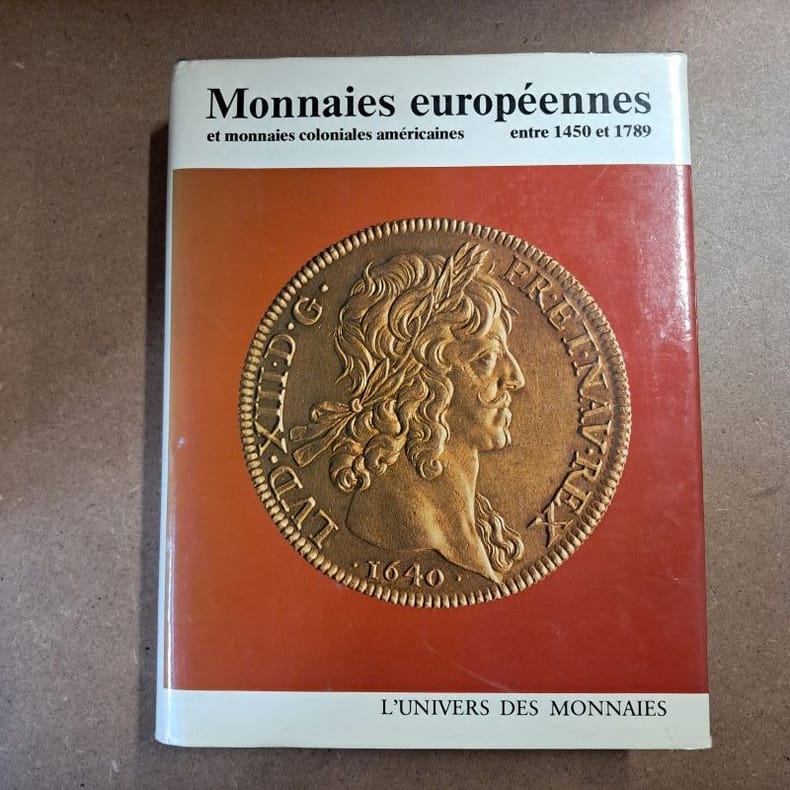
MON002M1978 / 327 pages. Relié avec jaquette. Editions Bibliothèque des Arts.
1978LFA-126729222Un ouvrage de 327 pages, format 195 x 250 mm, illustré, relié cartonnage sous jaquette couleurs, publié en 1978, Bibliothèque des Arts, bon état
19784821978 - reliure toile - Bibliothèque des Arts, Paris - Production Office du Livre - Smithsonian Institution, Washington - Collection "L'univers des monnaies" dirigée par Peter A. CLAYTON - 1978 - In-8 (25 x 19 cm) cartonnage toilé sous jaquette de l'éditeur - 326 pages - Nombreuses photographies en couleurs et en noir et blanc