FREYDIER, MBiblio.com
4 résultats
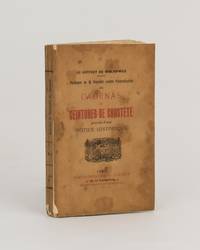
1880110970Paris: Bibliothèque des Curieux 1880. Paperback. Very Good. Paris Bibliothèque des Curieux circa 1880s/ 1750. Duodecimo iv 159 pages. Two-colour printed wrappers all edges uncut; spine lightly chipped; an excellent copy. Number 652 of 760 copies 'reservée aux souscripteurs'; advocacy against the use of padlocks and chastity belts. <p>Provenance: Glen Ralph with his Wilmar Library bookplate. Bibliothèque des Curieux paperback
1863013289Paris: Jules Gay 1863. Number 15 of an edition of 100 copies. Later cloth leather spine label. Two lithographed plates. . Limited. Hard Cover. Very Good/No Jacket. Jules Gay Hardcover
18632388Paris: Jules Gay 1863. Hardcover. Very good. 16mo. xv 1 56 pp. slightly toned. With 2 engraved plates depicting different models of "ceintures de chastete" i.e. chastity belts trifle foxed. Bound by Cyprien Lhuinte of Grenoble green half morocco over blue marbled boards spine a little sunned extremities slightly worn top edges gilt others untrimmed. Highly curious work containing a legal argument against forced use of chastity belts -- unknown to David Murray "Lawyers' Merriments." ¶ From the preface unsigned but by Gustave Brunet: "There exists few trials as bizarre as this one and we believe that the case involving Master Freydier remains unparalleled in the annals of legal literature" translation. ¶ THE CASE: Pierre Berlhe age 36 "seduced" Marie Lajon age 18 imprisoned her and forced her to wear a chastity belt after she had refused to marry him. She lodged a complaint with the civic authorities and retained the counsel of Nimes attorney Freydier his first name is not recorded. The lawyer here describes in considerable detail the chastity belt in question while embellishing his legal argument with references to Genesis Plato Saint Jerome Saint Isidore and others. ¶ First printed in 1750 ours is the first illustrated edition with 2 highly finished engravings of the aforementioned belt. Edition limited to 100 copies on papier verge published by Jules Gay the great bibliographer of human sexuality. ¶ The binder of our copy Cyprien Lhuinte of Grenoble remained unknown to Flety. ¶ PROVENANCE: unidentified armorial lion rampant supported by two lions rampant surmounted by the crown of a count with motto "Vigor Invirtute." ¶ Gay Amour III 753-4. Jules Gay hardcover
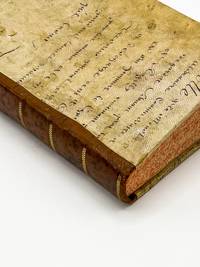
179348363Montpellier; Paris; Amsterdam; Paris; London: Augustin-François Rochard; Desenne; n. p.; Jussienne; John Adamson 1793. Very good plus. Sammelband of five French titles in one volume including a contemporary court argument against an abusive man who employed a chastity belt to control a woman - evidently a true account of a device frequently thought apocryphal. As scholar Albrecht Classen has shown in his landmark THE CHASTITY BELT: A Myth-Making Process 2007 the myth of the chastity belt remains stubbornly intractable. As he convincingly argues the medieval or sometimes Renaissance device as it is generally conceived was rarely actually used. Instead misinterpretation misunderstanding misreading and even outright deception and forgery have conspired to create an image of the chastity belt built more on symbolism and anxiety than scholarship and evidence. However even Classen does not seem to question the essential veracity of this harrowing tale told in PLAIDOYER DE MONSIEUR FREYDIER Montpellier Augustin-François Rochard: 1750. <br /> <br /> Marie Lajon - a young woman kidnapped abused and raped by Pierre Berlhe under false pretenses of an eventual marriage proposal - employed lawyer Monsieur Freydier to make her case in court. In his PLAIDOYER Freydier relates how Berlhe frequently dressed Lajon as a young male servant to bring her with him when he traveled for business but that when Lajon became pregnant his plans changed. Berlhe devised a monstrous solution to control her body even while they were apart: he forced her to wear a haphazard chastity belt of brass mesh locked with a key and several wax seals to prevent tampering. It was this device that prompted Lajon to seek help resulting in a court order served to Berlhe: he was to turn over the key and the seal to a clerk and two midwives would assist in the belt's removal recording their findings to be included in charges against him. Berlhe refused. <br /> <br /> In constructing his arguments for the jury Freydier noted that Berlhe had spent a great deal of time in Avignon a "nearly Italian city" "Ville presqu'Italienne" xxviii; Freydier posited that Berlhe got the idea from his chastity belt from the Italians who he claimed invented the device and used it widely. In a fairly lengthy diatribe against the jealous nature of the Italians and Spanish Freydier used Berlhe's chastity belt as an appeal to the court's French pride while also presenting evidence of his crimes. <br /> <br /> Unfortunately the result of the trial is not known though Freydier requested the judge "strike Berlhe's heart with a thunderbolt of severe judgment" "pour vous déterminer à frapper le cœur de l'insensible de la foudre d'un jugement sévère" xxxvii. Nevertheless the case was widely cited in discussions of the history of chastity belts as proof of the practice and it appears therefore that the PLAIDOYER is a rare true account of the device actually in use. Octavo five titles in one volume. 7'' x 4.25''. Contemporary mottled calf spine with waste parchment boards waste dated 12 April 1604. Edges sprinkled red. Illustrated with one fold-out engraving lacking engraving of chastity belt as usual. xvi 70; 94; xxxviii; xii 32; 222 pages; three titles lacking final blanks. Boards slightly bowed a bit of worming to top of spine. A couple leaves with tiny chips to margins; title page of final title with mild dampstaining. Tight. Augustin-François Rochard; Desenne; n. p.; Jussienne; John Adamson unknown