Maximilien RobespierreBiblio.com

116 résultats
29923337like new. unknown
1396290796.Ghardcover. Good. Access codes and supplements are not guaranteed with used items. May be an ex-library book. hardcover
3741118702.Gpaperback. Good. Access codes and supplements are not guaranteed with used items. May be an ex-library book. paperback
1245915940.Gpaperback. Good. Access codes and supplements are not guaranteed with used items. May be an ex-library book. paperback
0259765015.Gpaperback. Good. Access codes and supplements are not guaranteed with used items. May be an ex-library book. paperback
0666418209.Ghardcover. Good. Access codes and supplements are not guaranteed with used items. May be an ex-library book. hardcover
3563073058.Ghardcover. Good. Access codes and supplements are not guaranteed with used items. May be an ex-library book. hardcover
2007Q-184467584XVerso 2007-01-17. Paperback. New. New. In shrink wrap. Looks like an interesting title! Verso paperback
0365085685.Ghardcover. Good. Access codes and supplements are not guaranteed with used items. May be an ex-library book. hardcover
1334777594.Gpaperback. Good. Access codes and supplements are not guaranteed with used items. May be an ex-library book. paperback
0656751355.Ghardcover. Good. Access codes and supplements are not guaranteed with used items. May be an ex-library book. hardcover
036438509X.Gpaperback. Good. Access codes and supplements are not guaranteed with used items. May be an ex-library book. paperback
0260104108.Ghardcover. Good. Access codes and supplements are not guaranteed with used items. May be an ex-library book. hardcover
0656237945.Ghardcover. Good. Access codes and supplements are not guaranteed with used items. May be an ex-library book. hardcover
1334794650.Gpaperback. Good. Access codes and supplements are not guaranteed with used items. May be an ex-library book. paperback
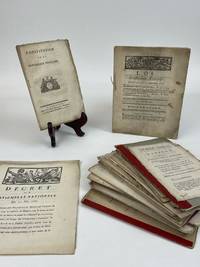
157113619101571 - 1947. <p style="margin-top:0pt; margin-bottom:0pt; text-indent:36pt;">The Russell Collection contains over 300 books broadsides and pieces of ephemera produced between the waning decades of the ancien regime and the fall of Napoleon Bonaparte. The collection was assembled in the early 1950s by William F. Russell 1890 – 1956 President of Columbia University’s Teacher’s College from 1949 to 1954. With material spanning the 16th to the early 20th century the majority of the collection was produced between 1775 and 1800. Highlights include early editions of the 1791 and 1793 French Constitutions letters written and signed by pioneering economist Anne Robert Jacques Turgot and official documents signed by Robespierre and other members of the Comite du Salut Public. </p> <br /> <p style="margin-top:0pt; margin-bottom:0pt; text-indent:36pt;">The Collection is comprised of the following components: 1 The French Monarchy and the Ancien Regime; 2 Ideological Roots of Revolution; 3 The Transition to Republicanism and Collapse of the Monarchy; 4 The National Convention and the Committee for Public Safety; 5 Historical and Contemporary Context; and 6 Miscellanea Ephemera Manuscripts and Books.</p> <br /> <p style="margin-top:0pt; margin-bottom:0pt; text-indent:36pt;">Most of the printed material was published by one of the two major publishing houses in Limoges. This concentration of material from a single city offers perspective on the publication and distribution of political and governmental texts in a particular city or departement one which was especially impacted by the Crown’s frequently shifting tax and trade policies. It also provides important insight into the early work and career of Anne Robert Jacques Turgot who served as intendant of Limoges from 1761 – 1774. </p> <br /> <p style="margin-top:0pt; margin-bottom:0pt; text-indent:36pt;">Limoges was home to several printing houses which at various times during the Monarchy and Revolution were designated as official printers of government documents for the region. Most notable among these were the Barbou and Dalesmes families. Both families had been established printers for centuries but the Barbou appear to have been too closely aligned with the ecclesiastical hierarchy – after 1791 all of the officially published material printed in Limoges was released by members of chez Dalesme. </p> <br /> <p style="margin-top:0pt; margin-bottom:0pt;"> </p> <p><br /> <p style="margin-top:0pt; margin-bottom:0pt;">1 The French Monarchy and the Ancien Regime</p> <br /> <p style="margin-top:0pt; margin-bottom:0pt; text-indent:36pt;">A significant portion of the collection is made up of documents from the reign of Louis XVI issued by the crown members of the regime and the Parisian Parlement in the two decades leading up to the Revolution. These items ranging from royal decrees to trial testimonies illustrate governmental practice under the monarchy especially as it relates to trade policy and criminal justice. </p> <br /> <p style="margin-top:0pt; margin-bottom:0pt;"> </p> <br /> <p style="margin-top:0pt; margin-bottom:0pt;"> </p> <p><br /> <p style="margin-top:0pt; margin-bottom:0pt;">2 Ideological Roots of Revolution</p> <br /> <p style="margin-top:0pt; margin-bottom:0pt; text-indent:36pt;">The Russell Collection includes a number of books and tracts from writers crucial to the development of revolutionary thought and discourse in France during the 18th-century. First or early editions by Mirabeau Raynal Mounier Marat and Condorcet written before and during the upheavals of the early 1790s reveal the increasingly liberal and radical intellectual currents among France’s intelligentsia. First or early editions of works by Jacques Necker and Turgot also appear shedding light on abortive efforts at modernization during the various governments under Louis XVI.</p> <br /> <p style="margin-top:0pt; margin-bottom:0pt;"> </p> <p><br /> <p style="margin-top:0pt; margin-bottom:0pt;">3 The Transition to Republicanism and Dissolution of the Monarchy</p> <br /> <p style="margin-top:0pt; margin-bottom:0pt; text-indent:36pt;">The full span of the National Assembly from its foundations during the Brienne and Necker governments to its ceding of legislative authority to the National Convention is captured through official printed documents Royal and republican periodicals regionally-drafted complaints and instructions and published addresses. Also included are first or early editions of the French Constitutions of 1791 and 1793 as well as various edicts and documents issued by Louis XVI during l’Assemblee Nationale. The formal inauguration of the National Convention and the removal of all executive powers from the King is represented both by an Extrait of the relevant Assembly session and in an officially published broadside explaining “des motif d’apres lesquels l’Assemblee Nationale a proclame la convocation d’un Convention nationale et prononce la suspension su Pouvoir executive dans les mains du Roi.â€</p> <br /> <p style="margin-top:0pt; margin-bottom:0pt;"> </p> <p><br /> <p style="margin-top:0pt; margin-bottom:0pt;">4 The National Convention and the Committee for Public Safety;</p> <br /> <p style="margin-top:0pt; margin-bottom:0pt; text-indent:36pt;">A substantial component of the Russell Collection is comprised of material created by or related to the Convention Nationale and the Comite du Salut Public. Nearly 90 official decrees from the legislative body are present in addition to numerous printed addresses departmental complaints and two officially published broadsides related to the trial of Louis XVI. Other highlights include printed decrees and orders from the Committee for Public Safety a document issued by the Parisian Communards and an order signed by seven members of the Committee. </p> <br /> <p style="margin-top:0pt; margin-bottom:0pt;"> </p> <p><br /> <p style="margin-top:0pt; margin-bottom:0pt;">5 Historical and Contemporary Context;</p> <br /> <p style="margin-top:0pt; margin-bottom:0pt; text-indent:36pt;">A subset of the Collection is made up of books and pamphlets responding to the events of the Revolution from contemporaneous accounts to late 19th-century histories. The works published during the 1790s and early 1800s whether biographies of revolutionaries or socio-political commentaries reveal the mix of horror regret enthusiasm and hope stirred up among emigres international observers and participants in the revolutionary melee. The texts printed after 1840 reflect the intensive documentary approach of the French historians in the latter half of the century. </p> <br /> <p style="margin-top:0pt; margin-bottom:0pt;"> </p> <p><br /> <p style="margin-top:0pt; margin-bottom:0pt;">6 Miscellaneous Documents regional subject-specific etc.</p> <br /> <p style="margin-top:0pt; margin-bottom:0pt; text-indent:36pt;">Also included are a number of items ephemera and manuscripts that are either subject specific and tangentially related to the French Revolution i.e.; treatises on the French language moral philosophy deduced from botanical studies 17th century medicine or specific to Limoges and the Haute-Vienne. The latter includes several 16th and 17th century manuscripts from Limoges and Orleans. Several 20th century books inscribed to the collector W.F. Russell appear in the collection as well. </p> <br /> <p style="margin-top:0pt; margin-bottom:0pt;"> </p> <p><br /> <p style="margin-top:0pt; margin-bottom:0pt;">All items are in good or better condition unless otherwise stated.</p> <br /> <br /> <p style="margin-top:0pt; margin-bottom:0pt;">To view the full inventory please click HERE.</p> . 1361910. Special Collections. unknown
179218578Paris: De l'Imprimerie de Mayer et Compagnie 1792. 8vo. Disbound. 16 pages. 8vo. The Brissotins were continuing to battle against the power and conduct of Robespierre. He had been elected public prosecutor of the criminal tribunal of Paris and resigned prior to taking his seat. He had spoken in March of the peaceful intentions of the Emperor Francois II attributing Emperor Leopold's demise as an act of Providence drawing severe criticism from the atheists and specific criticism from the Girondin deputy Guadet. On the 20th of April Louis XVI had proposed a declaration of war against the King of Bohemia and Hungary and the vote was carried unanimously. Robespierre was against it. Guadet attacked him denouncing him with an accusation of tyranny and Robespierre responded with his explanation of his behavior how he had done everything that he had done for the country to guarantee freedoms and establish equality how when his goals were reached he would retire into private life but how could he abandon the nation that needed him in its time of crisis. He also as usual strikes out at Lafayette. M & W IV 29526-61 De l'Imprimerie de Mayer et Compagnie unknown
102127741X.Gpaperback. Good. Access codes and supplements are not guaranteed with used items. May be an ex-library book. paperback
1019519118.Ghardcover. Good. Access codes and supplements are not guaranteed with used items. May be an ex-library book. hardcover
1016880499.Ghardcover. Good. Access codes and supplements are not guaranteed with used items. May be an ex-library book. hardcover
179418581Nismes: De l'Imprimerie Nationale de J. Gaude Imprimeur du Departement du Gard 1794. Reprinted by the Departement du Gard for distribution. 8vo. Stitched. 16 pp. Reprinted by the Departement du Gard for distribution. 8vo. His defence and explanation of the laws and actions of the revolution "La revoltion est la guerre de la liberte contre ses ennemis: la constitution est le régime de la liberté victorieuse & paisible". M & W IV 29526-45 variant De l'Imprimerie Nationale de J. Gaude, Imprimeur du Departement du Gard unknown
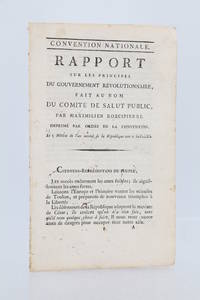
179383855Paris: Convention Nationale 1793. Fine. Convention Nationale Paris 5 Nivôse An II 25 Décembre 1793 12 x 19.50 cm broché First edition of this famous speech by Robespierre justifying the principle of revolutionary government and laying the foundations for the establishment of the Terror. Small black ink stains sometimes faded and some foxing. In autumn 1793 the threats weighing on the Republic had intensified both at the borders and in the heart of the country: Hébert the extremist ""enragé"" calling for a popular uprising the royalist threat still present the Indulgents demanding an end to the policy of Terror. On 5 Nivôse Year II December 25 1793 Robespierre went to the Committee of Public Safety to present the principles of revolutionary government. He warns from the very first words of his speech: recent victories Vendée defeats of December 12 and 23 recapture of Toulon on December 19 thanks to the notable action of Captain Bonaparte must not lull patriots into complacency. Counter-revolution remains very active within the country the Committee of Public Safety must confound the intrigues of the enemies of liberty and make revolutionary principles triumph. In his words: ""Le gouvernement révolutionnaire doit aux bons citoyens toute la protection nationale ; il ne doit aux ennemis du peuple que la mort."" ""Revolutionary government owes good citizens all national protection; it owes the enemies of the people nothing but death."" To carry out its action successfully the latter must find its way between two extremes: the moderatism preached by the ""indulgents"" and the excess aspired to by the ""enragés."" For Robespierre the dictatorship of the Committees like the Terror is justified because they alone will make it possible to end civil and foreign war. As long as the country is in conflict citizens will not be able to fully enjoy the Constitution. Counter-revolution must be annihilated. To this end Robespierre demands reform of the Revolutionary Tribunal. Reform that would find its culmination in the law of 22 Prairial Year II June 10 1794: suppression of defense hearing of witnesses when material evidence is lacking acquittal or death being the only possible verdicts. Thus the machinery of Terror is set in motion replacing with arbitrariness the principles and laws enacted by the Declaration of the Rights of Man and by the Constitution. cf Delphine DUBOIS and Régis LAPASIN on the site Nouvel éclairage sur l'histoire - L'histoire par l'image. Very rare copy of this founding speech of the policy of Terror which would ultimately lead its principal instigator Maximilien Robespierre to the scaffold. Convention Nationale unknown
1020453869.Ghardcover. Good. Access codes and supplements are not guaranteed with used items. May be an ex-library book. hardcover
179423050Paris: De L'Imprimerie Nationale 1794. First edition. 4 pages. 1 vols. 8vo. Disbound else a very good copy. First edition. 4 pages. 1 vols. 8vo. Recommending honors for bravery and dying for the nation on Fabre de l'Hérault. The Convention Nationale gave Fabre the honors of the Pantheon. M &W IV 29526-46 De L'Imprimerie Nationale unknown
0656557303.Gpaperback. Good. Access codes and supplements are not guaranteed with used items. May be an ex-library book. paperback