726 résultats
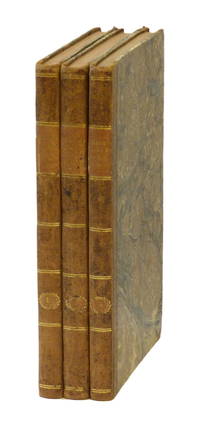
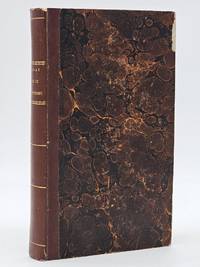
a38106Paris or London 1789 1790. 3 volumes bound in one volume. Hardcover. Octavo 204p. 172p. 207p. errata on final page 1/2 leather with marbled boards. Bound in is one full page of neat ink manuscript in French giving details about the book and identifying the authors of the sections. VG plus lightly worn. Very Attractive book in excellent condition. Text clean binding secure no ownership marks. Pictures available on request. . hardcover
18567N. P. n.d. 8vo. Disbound. 16 pages. Some staining spine torn away leaves loose and separate. 8vo. Criticising the behavior of certain members of the government Mirabeau used the example of a letter addressed to the Marquie de la Fayette from the "Les Officiers Municipaux de Rambouillet" questioning certain occurances and actions of the Assembly and King and what they are to expect with La Fayette's answer and as a response to this correspondence by the author he had composed a similar application in the form of a fable: "Imitation de la premiere fable du livre septieme des fables de la Fontaine". M & W III 24408. M & W III 24408 <br/><br/> unknown
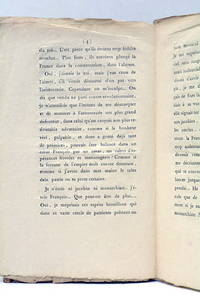
179118566Paris: Chez Petit & Maugi 1791. 8vo. Modern wrappers. 30 pages. Some light spotting. 8vo. In the introduction the editor voices his strongly anti-Jacobin sentiments- "traitez les jacobins comme on traite les fous et le bonheur pourra renaître en France." The author writes warning the people of the falseness behind the "liberties" touted to the people. M & W III 24413 Chez Petit [&] Maugi unknown
1776002061Londres 1776. Seconde edition augmentée et corrigée par l'Editeur de cet ouvrage. Un volume in 8o di VIII-2-308 pagine. Legatura coeva in piena pelle dorso liscio ornato e dorato angoli un po' usati. Seconda edizione molto più corretta della prima del saggio di Mirabeau che polemizza con Rousseau e le sue tesi ma in realtà attacca le monarchie del tempo e il dispotismo. Difesa della proprietà privata dellistruzione pubblica del contratto sociale: il re nest autre chose que le salarié de létat. Ined 3188. unknown
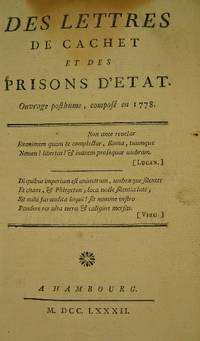
#[11107]Hambourg 1782. 2 volumes in 1. Modern half vellum. XIV323; 203 pp. First edition. - The French political thinker and statesman Mirabeau 1749-1791 went to the United Provinces where he lived by writing hack work for the booksellers; meanwhile Mirabeau had been condemned to death at Pontarlier for sedition and abduction and in May 1777 he was seized by the Dutch police sent to France and imprisoned by a lettre de cachet in the castle of Vincennes. His Lettres de cachet exhibits an accurate knowledge of French constitutional history skillfully marshaled to demonstrate that the system of lettres de cachet was not only philosophically unjust but constitutionally illegal. A plea in favor of the individual freedom defense of justice and humanity against despotism. - Small brown stain at top of first 70 pages. hardcover
178954453Kiøbenhavn Hegelunds Forlag 1789. Samtidigt helldrbd. i flammet kalv med overdådig rygforgyldning. Rygtitel fornyet forgyldt. 4460 pp. Trykt på skrivepapir. <br/><br/><em>Første danske udgave </em> unknown
98096Rotterdam/ Paris 1789. 8vo. Engr. portrait 4 139; engr. portrait 4 viii 148;4 xv blank 127 pp. Stain in upper margins in part one and two paper repair p. 116 in part one. Contemporary half calf gilt spines with red labels and marbled paper boards red marbled edges. The two portrait are of Fredric II and Catharine the Great. Behind the first part is a new titelpage with â€Letters d’un voyageur anglois†behind the third part is â€Essai sur la secte des illuminés†by Jean Pierre Louis de Luchet or La Roche du Maine Marquis de Luchet with a separate extra title leaf. Several editions of both works were published in 1789 at least five of â€Essaiâ€. Mirabeau’s â€Histoire secrete†was first printed in Alençon and made a scandal and was banned immediately after its publication. In the present edition the half-title and the title pages to part one and two are printed on different paper than the rest probably a titel-auflage. Luchet 1740-92 was a French officer journalist and librarian. In ’Essai sur la Secte des Illumines’ â€he denounces the leaders of the Bavarian Illuminati whom he accused of controlling Freemasonryâ€. hardcover
1314308874.Gpaperback. Good. Access codes and supplements are not guaranteed with used items. May be an ex-library book. paperback
1760EIRéo[MI72Paris: 1760. 1760. 12mo. pp. vi 426 2. modern bds. Published the same year as the first edition in quarto format. Mirabeau's strong criticisms of French methods of finance and taxation in this work particularly his attacks on the tax-farmers led to his temporary imprisonment and banishment from Paris. "It is not as might be supposed a mere plea for the Impôt Unique. It proposes a reorganization of financial administrative machinery the abolition of the Fermes a reduction in taxation upon salt with the object of increasing the total yield and a special tax upon tobacco farms. The Domaine the post and the Mint were to be further sources of revenue. Many just and valuable remarks on taxation are scattered throughout the volume and entitle the author to rank as one of the earliest important writers on the subject." Palgrave Einaudi 3946. Goldsmiths' 9603. Higgs 2298. Kress 5884. cfCioranescu II 45631. cfStourm pp. 100-101. cfTchemerzine VIII 285. Palgrave II pp. 774-78. F. [Paris]: 1760. unknown
1760304661760. A Hambourg chez ChrÂŽtien HÂŽrold 1760 - S.l. s.ÂŽ. 1761. 8 parties reliÂŽes en 7 vol. au format in-12 168 x 102 mm de 2 ff. n.fol. 308 pp. et 1 f. n.fol. ; 2 ff. n.fol. 426 pp. et 1 f. n.fol. ; 422 pp. et 1 f. n.fol. ; 2 ff. n.fol. et 336 pp. ; 2 ff. n.fol. vi - 281 pp. 2 ff. n.fol. et 1 f. bl. ; 2 ff. n.fol. et 205 pp. ; 2 ff. n.fol. 192 pp. et 2 ff. n.fol. ; 2 ff. n.fol. et 104 pp. ; viii - 422 pp. Reliures uniformes de l'ÂŽpoque de pleine basane glacÂŽe et marbrÂŽe blonde filet gras vertical ˆ froid portÂŽ sur chacun des plats dos ˆ nerfs ornÂŽs de filets gras ˆ froid caissons d'encadrement dorÂŽs important dÂŽcor fleuronnÂŽ dorÂŽ piÂces de titre de maroquin vieux-rouge titre dorÂŽ tomaison dorÂŽe palette dorÂŽe en tÂte et queue jeu de petits filets obliques dorÂŽs sur les coupes tranches saumon. Ensemble complet de ses 8 parties ; ici reliÂŽes en 7 volumes. A la fin du dernier a ÂŽtÂŽ reliÂŽ - sans page de titre - La ThÂŽorie de l'imp™t de Mirabeau. Ouvrage en outre complet de ses 6 tableaux dÂŽpliants. Primitivement paru en un volume ˆ Avignon en 1759 les derniÂres cinq autres parties qui composent cet ensemble parurent de 1758 ˆ 1760. En effet lorsque Mirabeau publia le prÂŽsent ouvrage il ne connaissait pas encore Quesnay. Ce dernier fut vivement impressionnÂŽ par L'Ami des hommes et trÂs rapidement de leur rencontre naquit l'ÂŽcole Physiocratique et les trois autres parties de l'Ami des Hommes seront le rÂŽsultat de la collaboration des deux hommes. Principal propagateur des doctrines ÂŽconomiques en France Riquetti propose ici un traitÂŽ fondamental pour la physiocratie alors naissante en partie inspirÂŽ de FranÂois Quesnay. On y trouve ici ÂŽnoncÂŽs des principes comme le primat de lÕagriculture et la condamnation de la finance du luxe et de la Ç cupiditÂŽ È dans un monde sous la conduite de propriÂŽtaires et dÕun ÇÊroi pasteurÊÈ. Aussi d'aprÂs l'auteur ''la vraie richesse ne consiste que dans la population. Or la population dÂŽpend de sa subsistance et la subsistance ne se tire que de l'agriculture. Ainsi pour ce physiocrate convaincu tout dÂŽpend de l'agriculture : elle reste le premier des arts. Mirabeau se rangera derriÂre l'idÂŽe que Ç Plus vous faites rapporter ˆ la terre et plus vous la peuplez È''. Riquetti comprit avec quelques autres la vÂŽritable nature du paysan franÂais sa dÂŽvotion ˆ la terre et sa persÂŽvÂŽrance ˆ endurer un travail dur et ÂŽreintant pour en obtenir une parcelle.Ê Le paysan nՎtait pas pauvre par paresse mais parce que le dÂŽcouragement de ne jamais rien obtenir le conduisait ˆ baisser les bras au milieu de beaucoup de contraintes. Il travaillerait toujours dur pour son propre intÂŽrÂt. Il fallait donc lui faciliter lÕaccÂs ˆ la propriÂŽtÂŽ rurale en supprimant les causes de son dÂŽcouragement.Ê En outre Mirabeau souligna le besoin dÕun traitement rural de lÕassistance publique convaincu quÕil ÂŽtait de la supÂŽrioritÂŽ de lÕagriculture sur toutes les autres formes de richesse. Les villes lui paraissaient comme des excroissances ÂŽconomiques sources de luxe qui rÂŽpandait son pouvoir de corruption sur les campagnes environnantes. Barbier I Dictionnaire des ouvrages anonymes 133 - Brunet III Manuel du libraire et de l'amateur de livres 1739 - Cioranescu II Bibliographie de la littÂŽrature franÂaise du XVIIIÂme siÂcle 45626 - TchÂŽmerzine VIII Bibliographie d'ÂŽditions d'auteurs franÂais 283 - QuÂŽrard VI La France littÂŽraire p. 154. Angles ÂŽlimÂŽs. Quelques abrasions ou petits manques superficiels affectant les plats. Quelques coiffes arasÂŽes. Dos prÂŽsentant un ÂŽclat lÂŽgÂrement altÂŽrÂŽ. Quelques rousseurs et feuillets parfois oxydÂŽs. Petite dÂŽchirure en marge d'une page de titre. Du reste bonne condition. b42961 unknown
178228463Londres Neuchâtel 1782. First Edition. Wrappers. vii 1 240pp. Contemporary gray wrappers with handwritten label affixed to the spine panel all edges uncut. Of particular interest are two chapters: chapter XVII titled Lettre du Comte de Chanmburg écrite de Rome au baron de Hohendorff commandant des troupes Hessoises en Amérique is attributed to Benjamin Franklin and appears here in book form for the first time The Papers of Benjamin Franklin Vol. 23 eds. William B. Willcox and Douglas M. Arnold 1983 p. 480; chapter XVI titled Avis aux Hessois & autres peuples de l'Allemagne vendus par leurs princes à L'Angleterre written by Honoré Gabriel Riqueti comte de Mirabeau and published originally as a pamphlet in 1777 is a call to Hessian mercenaries to join with the Americans in the overthrow of tyranny. Other sections are dedicated to bull fighting economics etc. Three ink stains to the front cover one of which barely affects the fore edge small worm hole to the margin of two of the leaves authors' names in pencil on the verso of the front cover. Internally fairly clean. About very good. ; Octavo. unknown
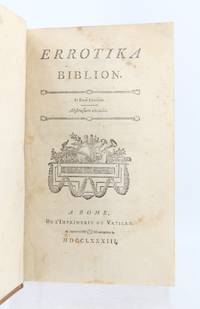
178385830Rome Neuchâtel Neuchâtel: De l'imprimerie du Vatican 1783. Fine. De l'imprimerie du Vatican Rome Neuchâtel Neuchâtel 1783 13 x 20.70 cm relié First edition. Bound with Reymond La Bataille d'Austerlitz poème dramatique en cinq actes Riom 1806; Huvier des Fontenelles La Targétade comédie un peu burlesque parodie d'Athalie de Racine de Racine 1791; de Bonnay La Prise des Annonciades n.p. n.d.; Abbé de Vermond La Cour plénière Héroï-tragi-comédie Paris 1788; Aymé Déportation et naufrage de J.J. Aymé Paris n.d.; Jourgniac de Saint-Médard Mon agonie de trente-huit heures Paris 1806. Contemporary beige half calf binding ochre paper boards smooth spine deep green morocco title-piece gilt title gilt stamped motifs. Some chafing to the boards scattered foxing. A few brown spots on the title page of La Prise des annonciades. Illustrated with a vignette on the title page of Errotika. Collection written by Mirabeau imprisoned in Vincennes at the same time as the Marquis de Sade. Various curiosities are culled from ancient writings relating to sexual practices such as onanism tribalism sodomy nymphomania etc. : ""The author in addition to the talent of perfectly mastering ancient languages writes very well in his own joking lightly and often drawing on Voltaire's style: in the very dirty pictures he sometimes presents he always uses honest or technical expressions: besides he seems well versed in the art of voluptuousness"" contemporary 18th century review quoted in Gay-Lem. II 151. According to the legend the book was relentlessly censored by the authorities and only fourteen copies of the first edition had survived - an estimate which seems to be quite inaccurate. After a second edition in 1792 the book was prohibited and included in the papal index. Another edition was destroyed in 1826 by the Royal Court of Paris and two further prosecutions were brought in 1856 and 1868 for ""outrage à la morale publique et aux bonnes murs"". The text was notably published by Guillaume Apollinaire along with other writings by Mirabeau in his 1910 edition in the Bibliothèque des Curieux series. De l'imprimerie du Vatican hardcover
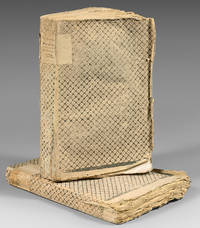
ABAA25-33<p>Hambourg n.n. 1782.</p><p>2 parts in 2 volumes 8vo of : I/ xiv pp. 1 l. 366 pp. 1 l. of errata; II/ 237 pp. ll. of the first quire interchanged wet stamp of a religious library repeated on the title p. 121 and on the last page of each volume.</p><p>Preserved untrimmed in its "dominoté paper" wrappers title labels on spines plexiglas box. <em>Original wrappers</em>.</p><p>217 x 142 mm.</p><p><strong>First edition of Mirabeau's Virulent work written during his detention in the Dungeon of Vincennes and speaking out against despotism.</strong></p><p>Graesse IV 535; Einaudi 3932; Cioranescu 45191; Conlon 82; Bûcher 573.</p><p>Mirabeau 1749-1791 was the son of the economist Victor Riquetti de Mirabeau. A French politician he was one of the most prominent figures of the Revolution and the most brilliant speaker of the Constituent Assembly. He had a very difficult relationship with his father and led a life of debauchery where he accumulated many debts. To get out of these debts he was locked up in prison by letters of seal at the request of his father on several occasions.</p><p>Mirabeau wrote the <em>Lettres de cachet</em> in the dungeon of Vincennes where he remained locked up for three and a half years at the same time as the Marquis de Sade. An eloquent work in which he vigorously denounced the abuses of arbitrary power <em>Les Lettres de cachet</em> is a veritable indictment beginning with a history of French criminal law; Mirabeau goes on to denounce violently the organization of the prison administration at the end of the Old Régime.</p><p><em>"Des Lettres de cachet' is not only an eloquent protest against despotism a warm advocacy in favor of individual freedom but also a real work of scholarship filled with historical examples and which implies immense reading".</em> Barbier.</p><p><em>"It is by history and by reason that Mirabeau fights against arbitrary detentions"</em> P. Negrin.</p><p><em>"Des Lettres de cachet deserves great praise. </em><em>The principles of natural law the basis of all society and all civilization are exposed and developed with as much force as clarity. Mirabeau already shows himself to be a great publicist and the writer gives a foretaste of the orator".</em> A. de Montor.</p><p><em>"This work new denunciation of the arbitrary power plea in favor of the individual freedom defense of justice and humanity against despotism had such a repercussion at the time that Vergennes asked Prussia to stop the publication of this licentious writing to seize it and to destroy the manuscript."</em> H. Aureole Bibliographie sur Mirabeau.</p><p><strong>A superb copy preserved as issued untimmed in its original wrappers in "dominote paper".</strong></p><p><strong>One of the largest copies known</strong> height: 217 mm.</p><p>The second volume is considered as rare because it was destroyed by the Prussian authorities at the request of the French government.</p><p>Provenance: the copy comes from the library of <em>Mr. Bidault</em> Gentleman of the Count of Artois future Charles X.</p><p><strong>FR</strong></p><p>Hambourg s.n. 1782.</p><p>2 tomes en 2 volumes in-8 de : I/ xiv pp. 1 f. 366 pp. 1 f. d'errata ; II/ 237 pp. ff. du premier cahier intervertis cachet humide d'une bibliothèque religieuse répété sur le titre la p. 121 et en dernière page de chaque volume.</p><p>Conservé non rogné dans ses brochures d'attente de papier dominoté étiquettes avec titre aux dos boite de plexiglass. <em>Brochures de l'époque.</em></p><p>217 x 142 mm.</p><p><strong>Edition originale du virulent ouvrage de Mirabeau écrit pendant sa détention au donjon de Vincennes et s'élevant contre le despotisme.</strong></p><p>Graesse IV 535 ; Einaudi 3932 ; Cioranescu 45191 ; Conlon 82 ; Bûcher 573.</p><p>Mirabeau 1749-1791 est le fils de l'économiste Victor Riquetti de Mirabeau. Homme politique français il est l'un des personnages les plus marquants de la Révolution et l'orateur de plus brillant de l'assemblée constituante. Il a des relations très difficiles avec son père et mène une vie de débauche où il accumule de nombreuses dettes. Pour le soustraire à ces dernières il sera enfermé par lettres de cachet en prison sur demande de son père à plusieurs reprises.</p><p>Mirabeau rédigea les Lettres de cachet dans le donjon de Vincennes où il resta enfermé pendant 3 ans et demi au même moment que le Marquis de Sade. Œuvre éloquente où il flétrit énergiquement les abus du pouvoir arbitraire Les Lettres de cachet sont un véritable réquisitoire débutant par une histoire du droit pénal français ; Mirabeau poursuit par l'organisation de l'administration pénitentiaire à la fin de l'Ancien Régime qu'il dénonce violemment.</p><p>" <em>'Des Lettres de cachet' n'est pas seulement une éloquente protestation contre le despotisme un plaidoyer chaleureux en faveur de la liberté individuelle mais encore un véritable travail d'érudition rempli d'exemples historiques et qui suppose d'immenses lectures</em> ". Barbier.</p><p>" <em>C'est par l'histoire et par la raison que Mirabeau combat les détentions arbitraires</em> " P. Negrin.</p><p>" <em>Des Lettres de cachet mérite de grands éloges. Les principes du droit naturel base de toute société et de toute civilisation y sont exposés et développés avec autant de force que de netteté. Mirabeau s'y montre déjà grand publiciste et l'écrivain y fait pressentir l'orateur</em> ". A. de Montor.</p><p>" <em>Cet ouvrage nouvelle dénonciation du pouvoir arbitraire plaidoyer en faveur de la liberté individuelle défense de la justice et de l'humanité contre le despotisme eut un tel retentissement à l'époque que Vergennes demanda à la Prusse d'arrêter la publication de cet écrit licencieux de le saisir et de détruire le manuscrit…</em> " H. Aureole Bibliographie sur Mirabeau.</p><p><strong>Superbe exemplaire conservé tel que paru à toutes marges car non rogné dans ses brochures d'attente de papier dominoté.</strong></p><p><strong>L'un des plus grands exemplaires connus</strong> hauteur : 217 mm.</p><p>Le second volume est considéré comme rare car il aurait été détruit par les autorités prussiennes à la requête du gouvernement français.</p><p>Provenance : l'exemplaire provient de la bibliothèque de <em>Mr. Bidault</em> Gentilhomme du Comte d'Artois futur Charles X.</p> hardcover
1792elala1480Paris: Le Jay 1792. 1792. 8vo. pp. 1 p.l. 176. Uncut in original wrs. joints split edges chipped wrs. stained scattered light foxing. A curious erotic work by the famous French orator and statesman. It was written during his imprisonment by a lettre de cachet in the castle of Vincennes in 1777 for having run off with another mans wife Marie Thérèse de Monnier his Sophie as he called her. He was condemned to death for rape and abduction but his eloquence in pleading his case resulted in the annulment of the sentence. The Errotika Biblion presents a comparison of the sexual mores of the ancient Greeks Romans and Hebrews with discussion of onanism bestiality incest pederasty lesbianism &c. Barbier II 172. Gay III 205-209. Quérard VI 257. cfCioranescu 45134. Paris: Le Jay, 1792. unknown
1776184025Londres.: No publisher. 1776. 2nd edition. 8vo. Contemporary quarter calf over marbled boards gilt spine title. Very good cover chipped at upper foredge otherwise a tight fresh copy. 20.5x12x2 cm. French text. Mirabeau denounces arbitrary royal power - ""Despotism is not a form of government . if it were so it would be criminal brigandage against which all men must unite."" Mirabeau is noted for his oratory and his statesmanship during the French Revolution. This is his first published work. weight: 0.8 lb. No publisher. hardcover
1789008991No Place: No Publisher 1789. Book. Very Good. Hardcover. First Edition. 8vo - over 7¾" - 9¾" tall. xvii 318 376 pp. Collated complete. Two volumes bound in contemporary marbled calf the backs ruled in gilt with gilt devices the covers gilt ruled framing delicate gilt floral scrolls marbled end papers. Very Good the boards rubbed scattered light toning. First edition of this scandalous anonymously published book which was condemned to be burned after it caused embarrassment to the French court. Uncommon in such lovely condition. No Publisher Hardcover
1789FIRst[MI10Alençon: Malassis le jeune 1789. 1789. 2 Volumes. 8vo. pp. 2 p.l. xvii 318; 2 p.l. 376 102 Correspondence Pour Servir De Suite. Potsdam: 1789. with half-titles. contemporary mottled calf rubbed joints cracked. armorial bookplate of Richard Howard. First Edition. Mirabeau's secret mission to the Court of Prussia in 1786-87 was a diplomatic failure and his anonymously published account was condemned by French law. Martin & Walter 24476. Stewart 1845. cfCioranescu 45214 citing incorrect date. 1st Edition. Hardcover. Very Good. [Alençon: Malassis le jeune], 1789. Hardcover
17588067Paris 1758. Second Edition of parts I-III first Edition of part IV. 8 192; 2 266 4; 6 264; 8 278 81pp. 2 vols. 4to. Contemporary mottled calf with gilt spines red morocco labels; covers a bit rubbed spine extremities and corners worn with slight chipping otherwise a very good copy internally crisp and clean. Frontispiece lacking as is often the case. Bookplates of A. de Seville. Second Edition of parts I-III first Edition of part IV. 8 192; 2 266 4; 6 264; 8 278 81pp. 2 vols. 4to. A work of fundamental importance whose appearance created a sensation throughout Europe was widely translated and reprinted and earned its author an international reputation "greater than that of any other economist before or after not excluding Adam Smith or Karl Marx." Schumpeter p. 175n Mirabeau argues that wealth is the product of population -- in particular agriculture -- and that a large populartion is desirable that religious toleration free enterprise a more equitable system of taxation and distribution of wealth were necessary components of a vital economy. The first three parts appeared in 1756; by 1758 Mirabeau had fallen under the influence of Quesnay and issued the fourth part in which the latter's influence is very much felt. The two between them it may be said founded the school of the physiocrats. A fifth and sixth part were added in 1760. Kress 5735; Higgs 1631; Goldsmith 9317 unknown
1758EIRAm[MI39<p>Parts I-III: Avignon: 1756 & Part IV: np: 1758. 1758. 4 Parts in 5 Volumes. 12mo. pp. 431 1; 578 1 leaf; 577 1; 4 p.l. 285; 1 p.l. 313 1 150 1 leaf. engraved frontis. in Vol. I. woodcut initials. An attractive set bound in 19th century tree sheep slight worming to lower front joint of Vol. I & lower front cover of Vol. III. First Duodecimo Edition; originally published in quarto format the same year. Fourth present here fifth and sixth parts containing material by other writers including Quesnay were published in 1758 and 1760. Mirabeau's treatise created a sensation throughout Europe and was widely reprinted and translated earning for its author "though only for a few years a.fame much greater than that of any other economist before or after not excluding Adam Smith or Karl Marx.". Schumpeter p. 175n In it Mirabeau intended to show that agriculture is the great source of subsistence and must be encouraged that a large population is desirable and that religious toleration free trade a more equal distribution of wealth and lower and equitable taxation are needed for the economic improvement of the country. The work attracted the attention of Quesnay and the meeting of the two men led to the formation of the physiocratic school. Quesnay contributed to the continuations including a portion of the fourth part and the Tableau Économique in part six. Goldsmiths' 9093 Vols. I-III. Higgs 1143 & 2160. Kress 5545. Quérard VI 154. Stourm p. 100n. Tchemerzine VIII 750 Vols. I-III. Coquelin & Guillaumin II pp. 190-91. cfEinaudi 3941.</p> [Parts I-III:] Avignon: 1756 & [Part IV:] np: 1758.
1792AQ14462A Paris: Chez F. Buisson 1792. 4 392pp. With half-title. Early twentieth-century calf-backed glazed orange paper boards lettered in gilt. Lightly rubbed sunned library shelf-marks in correction fluid to spine. Bookplate of Bath Reference Library to FEP with their occasional embossed stamps throughout closed tear to C8 just clipping text. The record of the political life of French statesman Emmanuel-Armand de Vignerot du Plessis de Richelieu duc d'Aiguillon 1720-1788 his governorship of Brittany as his service as Minister of Foreign Affairs during the reign of Louis XV. The work is commonly attributed to Honore-Gabriel de Riqueti comte de Mirabeau 1749-1791 with the role of editor assumed by Jean-Louis Giraud Soulavie 1752-1813. . Third edition. 8vo. Chez F. Buisson hardcover
185021454AB1850. 2 Bände in einem Band. Leipzig F.A.Brockhaus 1850. 8°. X 315 302 Seiten. Originaler Ganzleinenband mit vergoldetem Rückentitel. Sehr guter Zustand mit nur geringen äußerlichen Gebrauchsspuren. Oberes und unteres Kapital etwas bestossen. Breitrandiges unbeschnittenes Exemplar Seiten sind aufgeschnitten. Sehr gutes Papier ! KEINE Anstreichungen. Honoré Gabriel Victor de Riqueti Comte de Mirabeau seit dem Tod des Vaters am 13. Juli 1789 Marquis de Mirabeau 9. März 1749 in Le Bignon bei Nemours Département Loiret; 2. April 1791 in Paris war ein französischer Politiker Physiokrat Schriftsteller und Publizist in der Zeit der Aufklärung. Er beteiligte sich an der Französischen Revolution und nahm bis zu seinem plötzlichen Tod einflussreiche Positionen ein. Wie andere Aufklärer stellte Mirabeau die britische konstitutionelle Monarchie mit der Bill of Rights als Vorbild für ein anzustrebendes Gesellschaftsmodell dar. Zu seinen Vorstellungen einer zivilisierten Gesellschaft gehörte auch die jüdische Emanzipation. Das zeigte sich speziell in seinem 1786 erschienenen Essay Über Moses Mendelssohn und die bürgerliche Besserstellung der Juden. Darin verwendet sich der Atheist Mirabeau für den gläubigen Juden und deutschen Aufklärer Mendelssohn um ihn in Frankreich bekannt zu machen. Er behandelt dessen Werdegang und Verdienste geht ein auf die Judenverfolgung in Europa und geißelt den Rassenhass als eine Perversion des Geistes. In der Quintessenz seines menschenrechtlichen Plädoyers heißt es: Gibt es keine natürlichen Rechte die älter und heiliger sind als alle gesellschaftlichen Konventionen Es könnte dem Menschengeschlecht nur zum Heil gereichen wenn man den Unterschied zwischen Bürgern und Fremden endlich vergäße und in allen zuerst und vor allem den Menschen sähe. Bei den Wahlen zu den Generalständen im Mai 1789 wurde Mirabeau Abgeordneter des Dritten Standes. Aus der neuen Perspektive nach seinem Aufenthalt in England sah er den Adel und die Kirche als Haupthindernisse der Freiheit. Er war maßgeblich an der Abschaffung der Privilegien des Adels und an der Einziehung der Kirchengüter beteiligt. Einen an die Verfassung gebundenen König sah er aber weiterhin als notwendigen Bestandteil des politischen Systems an war jedoch zunehmend skeptisch was die Überlebenschancen der Monarchie anging. An seinem Todestag tätigte er diesbezüglich folgende Aussage: Ich nehme das Leichentuch der Monarchie mit mir. Um ihre Überreste werden nun die Parteien streiten. Am 29. Januar 1791 wählten die Abgeordneten ihn zum Präsidenten der Nationalversammlung womit er den Höhepunkt seiner Popularität erreichte. Diese erlitt allerdings einen Rückschlag als seine engen Beziehungen zum König posthum bekannt wurden den er insgeheim von Mai 1790 bis zu seinem Tode beraten hatte und von dem er seinen Lebensstil mit beträchtlichen Summen hatte finanzieren lassen. Konkret hatte der König die immensen Schulden Mirabeaus übernommen und diesem eine Monatsrente von 6.000 Livres zukommen lassen. Parallel zu seinen politischen Aktivitäten fertigte der schriftstellerisch begabte Mirabeau im Verborgenen einige erotische Werke an die bis heute einen großen Anklang finden. Als Le Rideau levé ou lEducation de Laure Der gelüftete Vorhang oder Lauras Erziehung 1786 anonym erschien hatte Mirabeau bereits ein abenteuerliches Leben hinter sich das ihn mehrmals entweder hinter Gittern sah oder als gefeierten Redner im Gerichtssaal wenn es galt den eigenen angeblich unschicklichen Lebenswandel zu verteidigen. Er konnte sich folglich keinen Ärger mehr leisten und entschied seine erotischen Bücher nicht unter dem eigenen Namen zu veröffentlichen. Lauras Erziehung führt den Leser in die noch heile Welt der besseren Stände am Vorabend der Französischen Revolution. Das Buch schildert die Erziehung und das Leben eines jungen Mädchens von der ersten erotischen Begegnung bis zu Orgien die detailliert beschrieben werden. Der Roman ist eines der freizügigsten erotischen Bücher der Aufklärung mit dem Mirabeau für sexuelle Freiheit und Selbstbestimmung der Geschlechter plädiert sowie für die Notwendigkeit einer Verbindung zwischen geistiger mit körperlicher Liebe. Nur dadurch entsteht seiner Meinung nach das vollkommene Glück. Dieses Weltbild passt in das philosophische Selbstverständnis der Aufklärung welches die größtmögliche Glückseligkeit der Menschen als Ideal sah. Lauras Erziehung wurde in mehrere Sprachen übersetzt und wird bis heute auch in Deutschland neu verlegt. Zu einem weiteren Klassiker der erotischen Literatur der Aufklärung wurde Hic-et-Haec 1798. Wikipedia unknown
1789BCG150061789. 2 Volumes Bound as One; Ouvrage Posthume; Blue library buckram with gold spine title; A good ex library copy; 318 & 376 pages. Size: 4.75"x7.75". Hardcover. Hardcover
38093Sans lieu De l'Imprimerie patriote Rue du Théâtre Français s.d. 1791. 8 pages. 21x14 Cm. Broché. Publié en 1791 au cur de la Révolution française cet ouvrage anonyme émerge dans un contexte de bouleversements politiques et sociaux profonds. Il dresse le portrait de Mirabeau figure emblématique de cette période turbulente en se concentrant sur son impact politique. L'auteur choisissant de rester dans l'ombre livre une analyse de la contribution de Mirabeau à la Révolution soulignant son rôle de médiateur entre le roi et le peuple. Rousseurs. Plis et traces de plis. Sans lieu, De l'Imprimerie patriote, Rue du Théâtre Français s.d. (1791). unknown
178957115Paris Chez Baudouin Imprimeur de l'Assamblée Nationale 1789. 8vo. Bound in an exquisite later red half morocco with gilt spine. Top edge gilt. 1 f. title-page 8 pp. "Déclaration des droits de l'Homme en société" 6 pp. "Articles de Constitution" 1 f. "Réponse du Roi" 1 f. blank. Woodcut head-pieces. Title-page slightly bowned otherwise in excellent condition. A truly excellent copy. <br/><br/><em>The exceedingly scarce true first printing in an incredibly rare form of off-print/separate printing of one of the most important and influential documents in the history of mankind namely the French Human Rights Declaration containing also the articles for the first French Constitution. This groundbreaking publication constitutes a monumental change in the structure of the human world providing all citizens with individual rights that we now take for granted. This monument of humanist thought appeared in the "Procès verbal de l'Assemblée Nationale" copies of which are also very difficult to obtain. There however the two parts appeared without a title-page and without the final blank which together constitute a form of wrappers for this off-print/separate printing of which only five or six other copies are known and which is present in merely one or two libraries world-wide. As far as we now only one other copy has been on the private market and that did not have the blank back wrapper. This exceedingly rare separate printing of the Human Rights Declaration with the Constitution was intended for the inner circle of those participating in its creation and was limited to a very restricted number of copies - all of which will have been owned by the creators of the Declaration. This epochal document is just as important today as it was when it was formulated during the French Revolution in 1789 and since 2003 the Declaration has been listed in the UNESCO Memory of World Register - "This fundamental legacy of the French Revolution formed the basis of the United Nations Declaration of 1948 and is of universal value". Few other documents in the history of mankind has done as much to determine the way we live and think the way Western societies are structured and governed and few other documents have had such a direct impact upon our constitutional rights and the way we view ourselves and others in society. It is here that we find the formulation of liberty and equality upon which so much of Western political and moral thought is based - that all "men are born and remain free and equal in rights" Article 1 which were specified as the rights of liberty private property the inviolability of the person and resistance to oppression Article 2; that all citizens were equal before the law and were to have the right to participate in legislation directly or indirectly Article 6; no one was to be arrested without a judicial order Article 7; Freedom of religion Article 10 and freedom of speech Article 11 were safeguarded within the bounds of public "order" and "law" etc. etc.The content of the document that were to change the Western world for good emerged largely from the ideals of the Enlightenment. "The sources of the Declaration included the major thinkers of the French Enlightenment such as Montesquieu who had urged the separation of powers and Jean-Jacques Rousseau who wrote of general will-the concept that the state represents the general will of the citizens. The idea that the individual must be safeguarded against arbitrary police or judicial action was anticipated by the 18th-century parlements as well as by writers such as Voltaire. French jurists and economists such as the physiocrats had insisted on the inviolability of private property." Encycl. Britt.The key drafts were prepared by Lafayette working at times with Thomas Jefferson. In August 1789 Honoré Mirabeau played a central role in conceptualizing and drafting the Declaration. On August 26 1789 in the midst of The French Revolution the last article of the Declaration was adopted by the National Constituent Assembly as the first step towards a constitution for France. "In 1789 the people of France brought about the abolishment of the absolute monarchy and set the stage for the establishment of the first French Republic. Just six weeks after the storming of the Bastille and barely three weeks after the abolition of feudalism the Declaration of the Rights of Man and of the Citizen French: La Déclaration des Droits de l'Homme et du Citoyen was adopted by the National Constituent Assembly as the first step toward writing a constitution for the Republic of France.The Declaration proclaims that all citizens are to be guaranteed the rights of "liberty property security and resistance to oppression." It argues that the need for law derives from the fact that ".the exercise of the natural rights of each man has only those borders which assure other members of the society the enjoyment of these same rights." Thus the Declaration sees law as an "expression of the general will" intended to promote this equality of rights and to forbid "only actions harmful to the society." www.humanrights.com. This sensational document became the crowning achievement of the French Revolution; it came to accelerate the overthrow of the "Ancien Régime" and sowed the seed of an extremely radical re-ordering of society. The Declaration interchanged the pre-revolutionary division of society -in the clergy the aristocracy and the common people- with a general equality - "All the citizens being equal in the eyes of the law are equally admissible to all public dignities places and employments according to their capacity and without distinction other than that of their virtues and of their talents" From Article VI upon which today's society is still based. It is hard to imagine a work that is more important to the foundation of the society that we live in today. </em> unknown
1788260481788. A Londres s.ÂŽ. Lejay 1788. Un fort vol. au format in-folio 433 x 277 mm de 3 ff. n.fol. 10 cartes gravÂŽes sur double-page 93 planches gravÂŽes tableaux et 1 f. bl. Ne subsiste plus de la reliure que le carton des plats. Important atlas au format in-4 comportant 10 sur 10 grandes cartes gravÂŽes sur double-page dressÂŽes par Mentelle Pays-Bas autrichiens Tyrol BohÂme-Moravie Etats entre la BaviÂre et la BohÂme Carte gÂŽnÂŽrale d'Allemagne Monarchie prussienne ˆ l'orient de Weser Possessions du roi de Prusse ˆ l'ouest du Weser Carte de la Haute-Saxe et de la Lusace Haut et Bas-Rhin BaviÂre. L'ouvrage recÂle en outre 93 sur 93 planches gravÂŽes dont double-pages ainsi que de nombreux tableaux dont dÂŽpliants. ''La parution de cet ouvrage fit faire banqueroute au libraire Lejay''. in QuÂŽrard. QuÂŽrard VI La France littÂŽraire p. 158. Petit travail de ver affectant les fonds de cahiers des feuillets liminaires ainsi que plus lÂŽgÂrement des cartes. L'une prÂŽsente des plissures une autre un petit manque angulaire ; une derniÂre des rousseurs. Chacune une discrÂte cerne marginale. Deux tableaux manquants. Plusieurs feuillets dÂŽsolidarisÂŽs. Quelques petites altÂŽrations ÂŽparses dans le corps d'ouvrage. Du reste belle condition. b42961 unknown